Stress & Hormones
A Stress-Resilience Routine
for Every Life Stage
Resilience isn't about avoiding stress. It's about recovering well from it, again and again, so that short-term strain doesn't become long-term wear and tear. The foundations are the same at every age: regular physical activity, enough sleep, strong relationships, a daily recovery practice and limited alcohol. The evidence behind them is strong. Physical activity reduced psychological distress in a review of more than 1,000 trials, and people with stronger social relationships had a 50% greater likelihood of survival across 148 studies. But the main stressors and hormonal changes shift with age: work pressure and building habits in the 20s and 30s; peak responsibilities, perimenopause and rising metabolic risk in the 40s and 50s; and retirement, loss and changing health from the 60s onwards. This guide brings together the evidence from this section into a practical routine for each stage of life.
Key numbers
| Finding | Detail |
|---|---|
| Physical activity and distress (97 reviews, 1,039 trials) | Reduced psychological distress, anxiety and depression; effects comparable to therapy or medication |
| Social relationships and survival (148 studies, 308,849 people) | 50% greater likelihood of survival with stronger social relationships |
| WHO activity guideline (adults) | 150-300 minutes of moderate activity a week, plus muscle strengthening on at least 2 days |
| WHO activity guideline (over 65) | As above, plus balance and strength training on at least 3 days a week |
| Depression risk around menopause (221 women followed from before menopause) | 2-4 times higher risk of major depression in perimenopause and early postmenopause |
| Time in nature | 20-30 minutes was the most efficient dose for lowering cortisol |
Why life stage matters
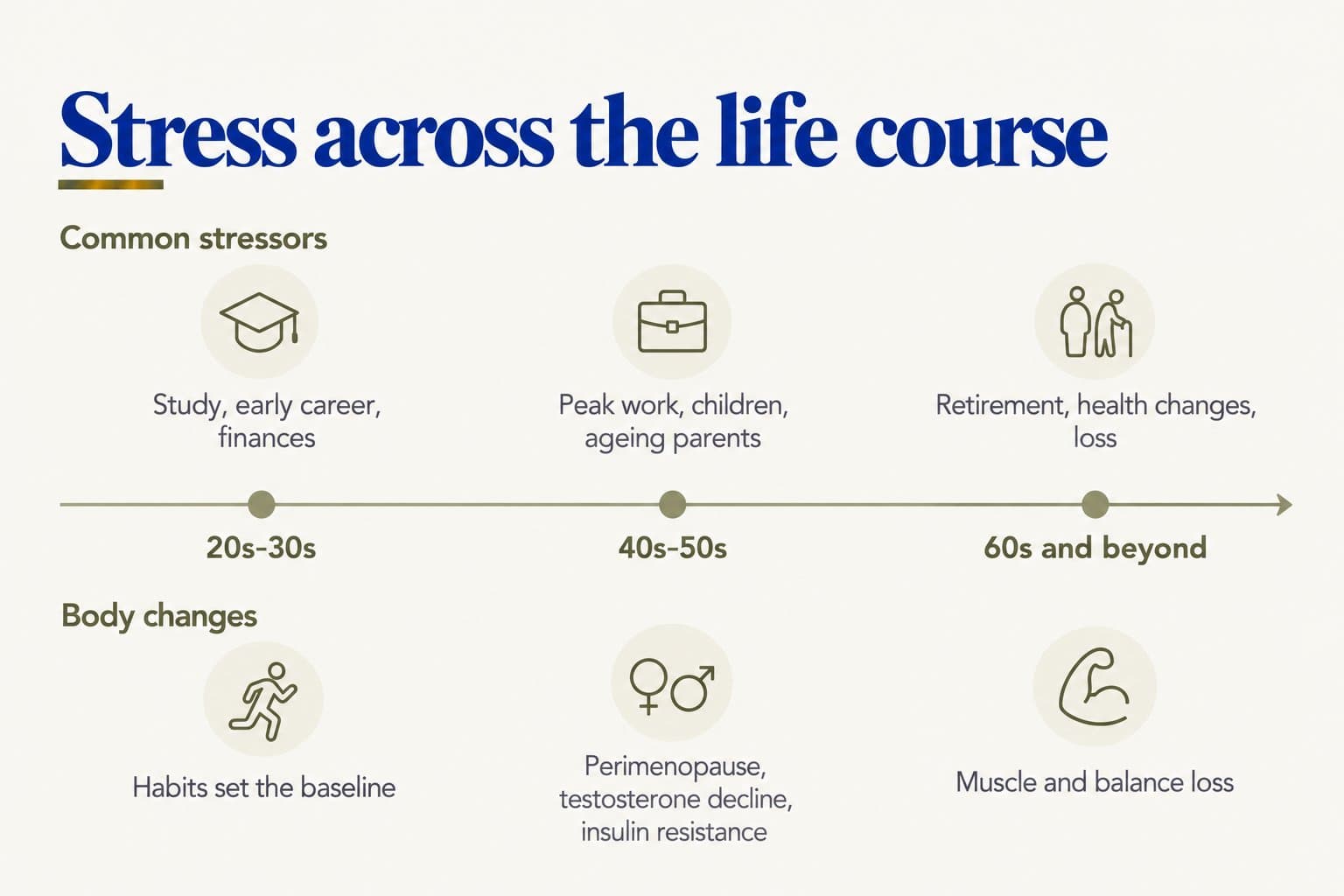
The stress response itself doesn't change much with age, but what triggers it, and how the body copes, does:
- →Stressors change: study and early careers, then parenting, caring for ageing parents and peak work demands, then retirement, bereavement and health concerns.
- →Hormones change: perimenopause and menopause in women, gradual testosterone decline in men, and rising insulin resistance for many people in midlife (see How Hormones Change With Age).
- →Consequences accumulate: repeated stress without enough recovery adds to "allostatic load", the cumulative wear and tear linked to heart disease, diabetes and earlier death (see Allostatic Load).
The foundations at every age
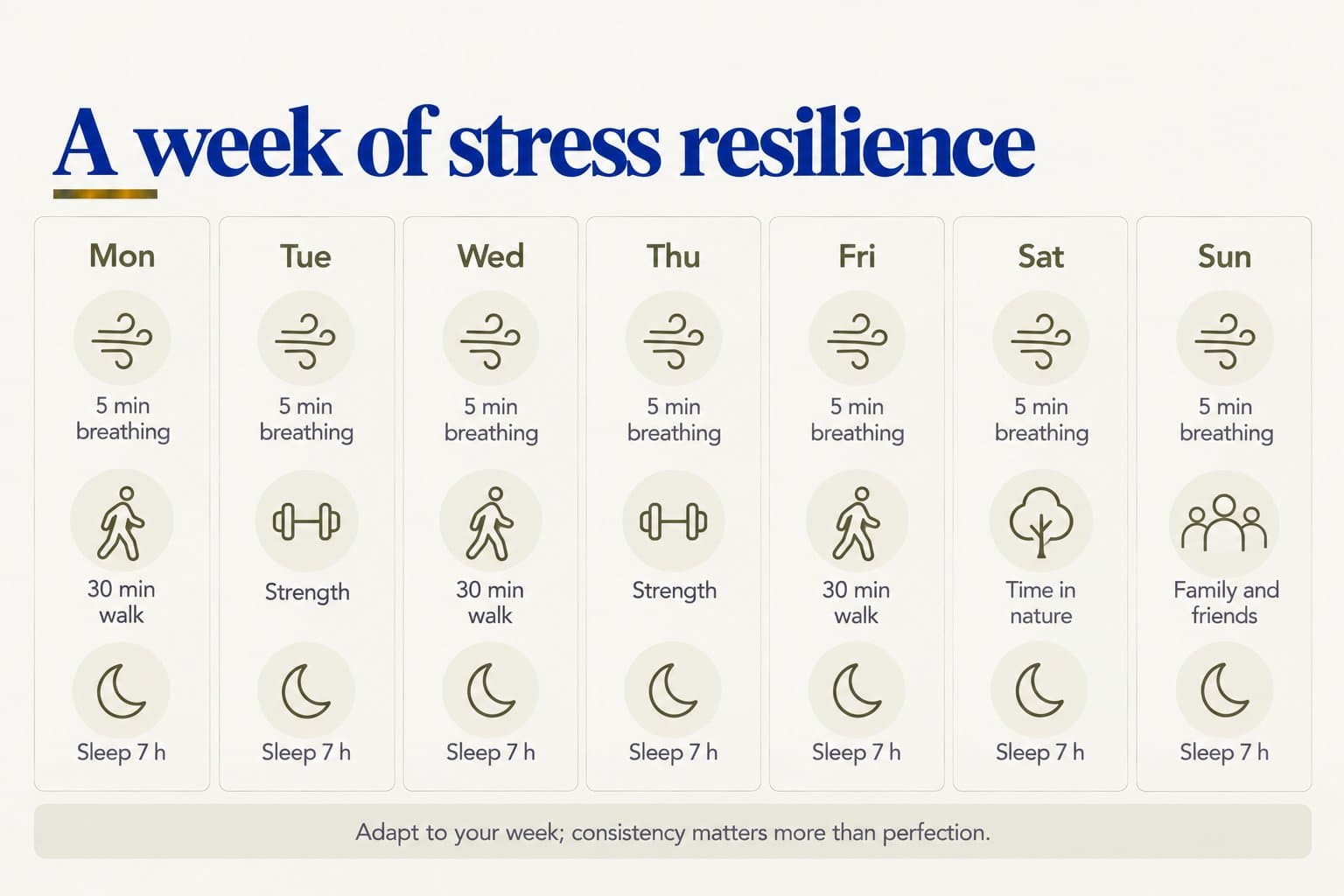
- →1. Move most days. Aim for 150-300 minutes of moderate activity a week plus strength training twice a week, following the WHO guidelines. Physical activity has the strongest evidence of any stress-reduction approach (see Stress-Reduction Techniques That Work).
- →2. Protect sleep. A regular schedule and about seven hours a night support mood, appetite hormones and testosterone (see Sleep and Memory Consolidation).
- →3. Invest in relationships. In a review of 148 studies, stronger social relationships were linked to a 50% greater likelihood of survival (see Social Connection and Cognitive Decline).
- →4. Practise daily recovery. Five minutes of slow breathing with a long exhale, a mindfulness practice or 20-30 minutes outdoors all help switch the stress system off (see Heart Rate Variability).
- →5. Eat for steady energy and a healthy waist, and limit alcohol (see Nutrition for Hormonal Health).
- →6. Address the sources of stress, not just the symptoms: workload, finances, relationships and boundaries.
Your 20s and 30s: build the habits
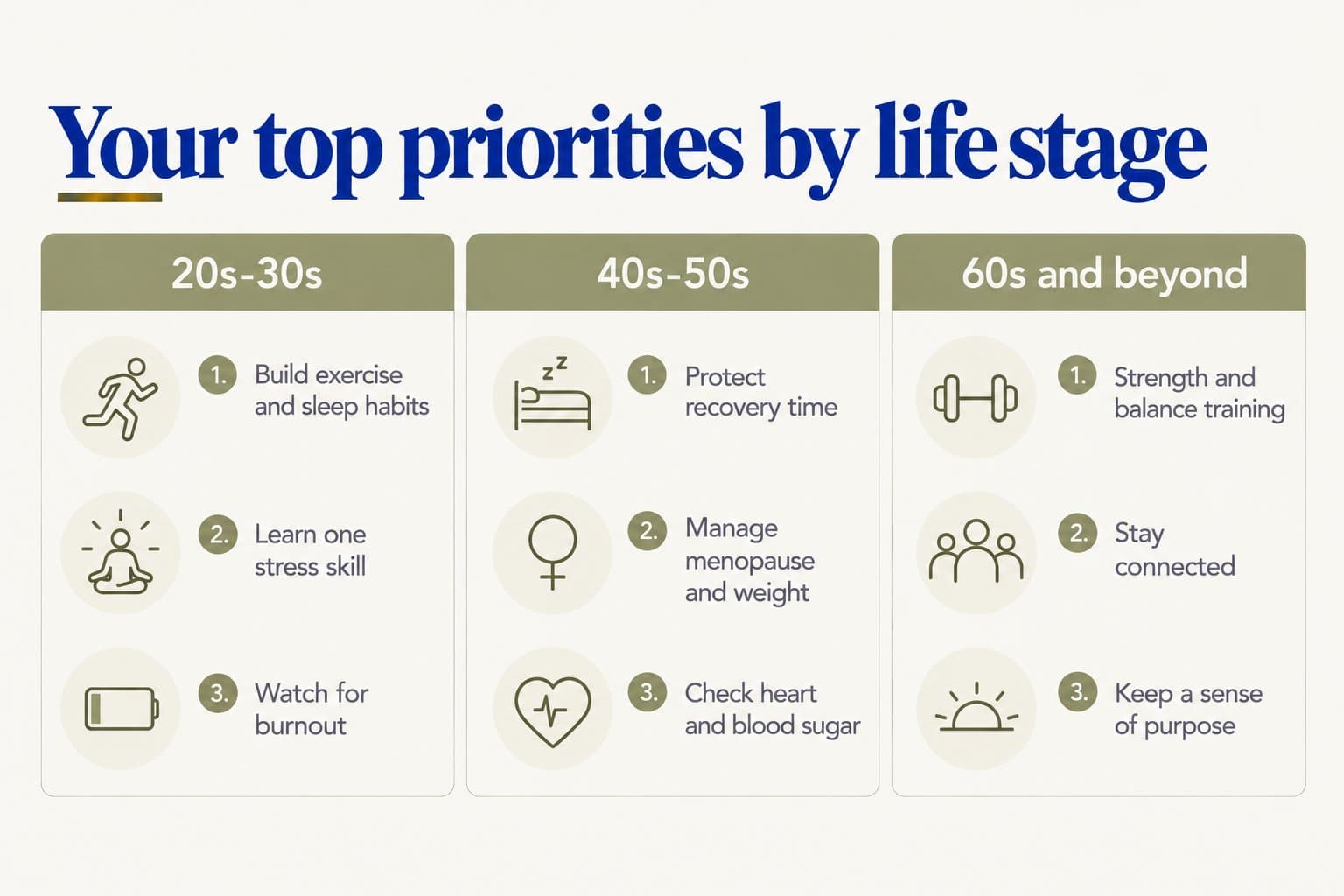
This is the stage to build routines that will carry you through busier decades.
- →Main stressors: exams and early careers, financial pressure, relationships, and often long hours with little recovery.
- →Watch for burnout: persistent exhaustion, cynicism about work and feeling less effective are warning signs (see Burnout).
- →Build the habit of exercise and sleep before work and family demands grow.
- →Learn one stress-management skill well, such as a CBT-based approach, mindfulness or slow breathing, so it's there when you need it.
- →Know your metabolic risk. South Asians develop diabetes at lower body weights, so a blood sugar test is worthwhile if you have risk factors such as family history or a large waist (see Insulin Resistance).
- →Keep alcohol and late-night screen time in check, as both erode sleep.
Your 40s and 50s: the pressure years
Midlife often brings the heaviest load: peak work responsibilities, children, and ageing parents, at the same time as hormonal and metabolic changes.
- →Women: perimenopause. Sleep disruption, hot flushes and mood changes are common, and the risk of major depression is 2-4 times higher in perimenopause and early postmenopause. Recognise the signs and seek help (see Perimenopause: Signs and Symptoms). For troublesome symptoms, menopausal hormone therapy is most effective when started before 60 or within 10 years of menopause (see Menopausal Hormone Therapy).
- →Men: weight, sleep and testosterone. Abdominal weight gain and poor sleep lower testosterone; addressing both helps more than supplements (see Testosterone Decline in Men).
- →Heart and metabolic health. In a global study, constant stress was linked to about twice the odds of a heart attack. Check blood pressure, blood sugar and cholesterol, and watch your waist (see Chronic Stress and Heart Disease and Stress, Cortisol and Belly Fat).
- →Protect time for exercise and recovery, even when time is short: a brisk 20-30-minute walk outdoors combines activity and nature.
- →Share the load. Caregiving for children and parents at the same time is a major stressor; ask for and accept help.
Your 60s and beyond: stay strong and connected
Later life brings its own transitions: retirement, changes in health, bereavement, and sometimes loneliness.
- →Add balance and strength training: the WHO recommends balance and strength activities on at least three days a week for adults over 65, alongside regular aerobic activity.
- →Stay socially connected. Retirement and loss can shrink social networks. Volunteering, religious and community activities, clubs and regular contact with family and friends all help.
- →Keep a sense of purpose, through work, learning, caring roles or community involvement.
- →Be cautious about "anti-ageing" hormones. Growth hormone and DHEA haven't been shown to help healthy older people (see Growth Hormone, DHEA and Other Anti-Ageing Hormones).
- →Interpret test results for your age. Normal thyroid (TSH) levels rise with age, so a mildly raised result may not need treatment (see Thyroid Function and Ageing).
- →Look out for low mood, which is common after major losses and treatable at any age (see Depression and Cognitive Decline).
When to get help
At any age, see a doctor or mental health professional if:
- →Stress, low mood or anxiety persist for more than a few weeks or affect daily life.
- →You're relying on alcohol, sleeping tablets or other substances to cope.
- →You have physical symptoms such as chest pain, palpitations, or unexplained weight change or fatigue.
- →You have thoughts of self-harm. Seek help urgently.
Applying this in Sri Lanka
- →Beat the heat: walk or exercise early in the morning or in the evening, or use shaded parks and indoor spaces.
- →Use existing community: family networks, temple, church and mosque activities, and community groups are valuable sources of support and purpose.
- →Watch rice portions and sugary tea, given the high rates of diabetes and prediabetes.
- →Make time for yourself, even within busy family and work commitments; short daily recovery practices fit into any schedule.
Practical notes
Stress resilience rests on a small set of habits that work at every age: regular activity, good sleep, strong relationships, a daily recovery practice, healthy eating and limited alcohol, plus practical steps to reduce the sources of stress. What changes across life is the emphasis: building habits in early adulthood, protecting recovery and managing hormonal and metabolic changes in midlife, and staying strong, connected and purposeful in later life. Small, consistent steps, started now and adapted as life changes, are what make the difference.
- Singh B, et al. Effectiveness of physical activity interventions for improving depression, anxiety and distress: an overview of systematic reviews. British Journal of Sports Medicine, 2023;57:1203-1209.
- Holt-Lunstad J, Smith TB, Layton JB. Social relationships and mortality risk: a meta-analytic review. PLOS Medicine, 2010;7(7):e1000316.
- Bull FC, et al. World Health Organization 2020 guidelines on physical activity and sedentary behaviour. British Journal of Sports Medicine, 2020;54(24):1451-1462.
- Bromberger JT, et al. Major depression during and after the menopausal transition: Study of Women's Health Across the Nation (SWAN). Psychological Medicine, 2011;41(9):1879-1888.
- Hunter MR, Gillespie BW, Chen SY. Urban nature experiences reduce stress in the context of daily life based on salivary biomarkers. Frontiers in Psychology, 2019;10:722.
- Rosengren A, et al. Association of psychosocial risk factors with risk of acute myocardial infarction in 11 119 cases and 13 648 controls from 52 countries (the INTERHEART study). The Lancet, 2004;364(9438):953-962.
Which life stage are you in,
and what's your biggest stressor?
Take the free Aevum Protocol assessment to see how your stress & hormones and 6 other longevity domains are performing — and get a personalised 90-day plan.
Take the Free Assessment →