Cognitive Longevity
Sleep and Memory Consolidation:
How Sleep Protects the Ageing Brain
Sleep isn't downtime for the brain. During deep sleep, the brain replays and stores the day's memories, and it appears to clear out waste products, including amyloid, the protein that builds up in Alzheimer's disease. Both processes weaken with age, partly because deep sleep itself declines. Over the long term, people who regularly sleep six hours or less in midlife have a higher risk of dementia decades later, and untreated sleep apnoea is linked to a higher risk of cognitive decline. The relationship runs both ways, though: early brain changes also disrupt sleep. This guide explains what sleep does for memory and gives practical recommendations for different situations, from healthy adults to people with insomnia, sleep apnoea or memory concerns.
Key numbers
| Finding | Detail |
|---|---|
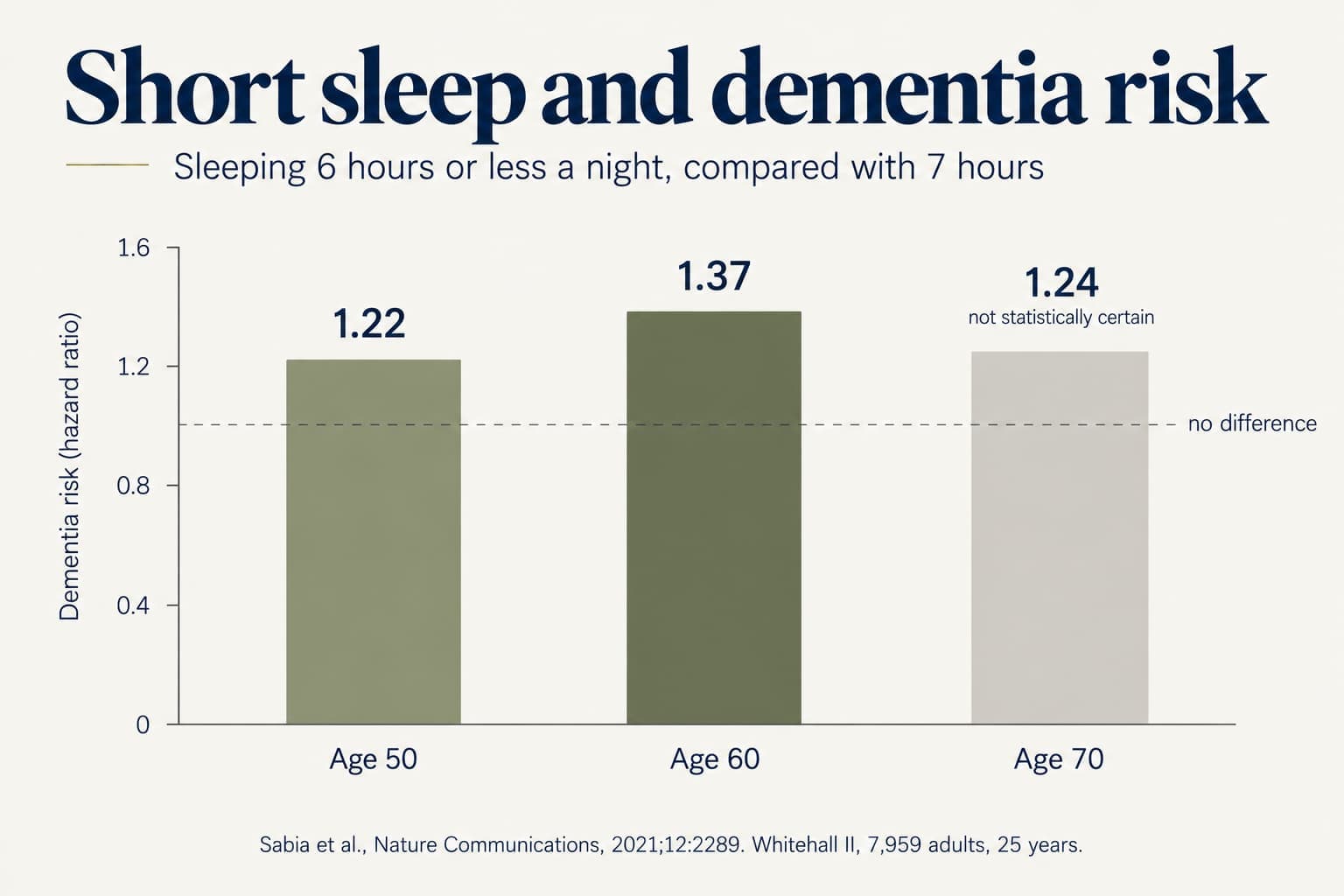
| Sleeping 6 hours or less at age 50 (Whitehall II, 7,959 people, 25 years) | 22% higher dementia risk (HR 1.22) |
| Sleeping 6 hours or less at age 60 | 37% higher dementia risk (HR 1.37) |
| Persistently short sleep at 50, 60 and 70 | 30% higher dementia risk vs. persistently normal sleep |
| One night without sleep (20 healthy adults) | Amyloid in the hippocampus and thalamus rose by about 5% |
| Sleep-disordered breathing in older women (298 women, ~5 years) | 85% higher odds of mild cognitive impairment or dementia |
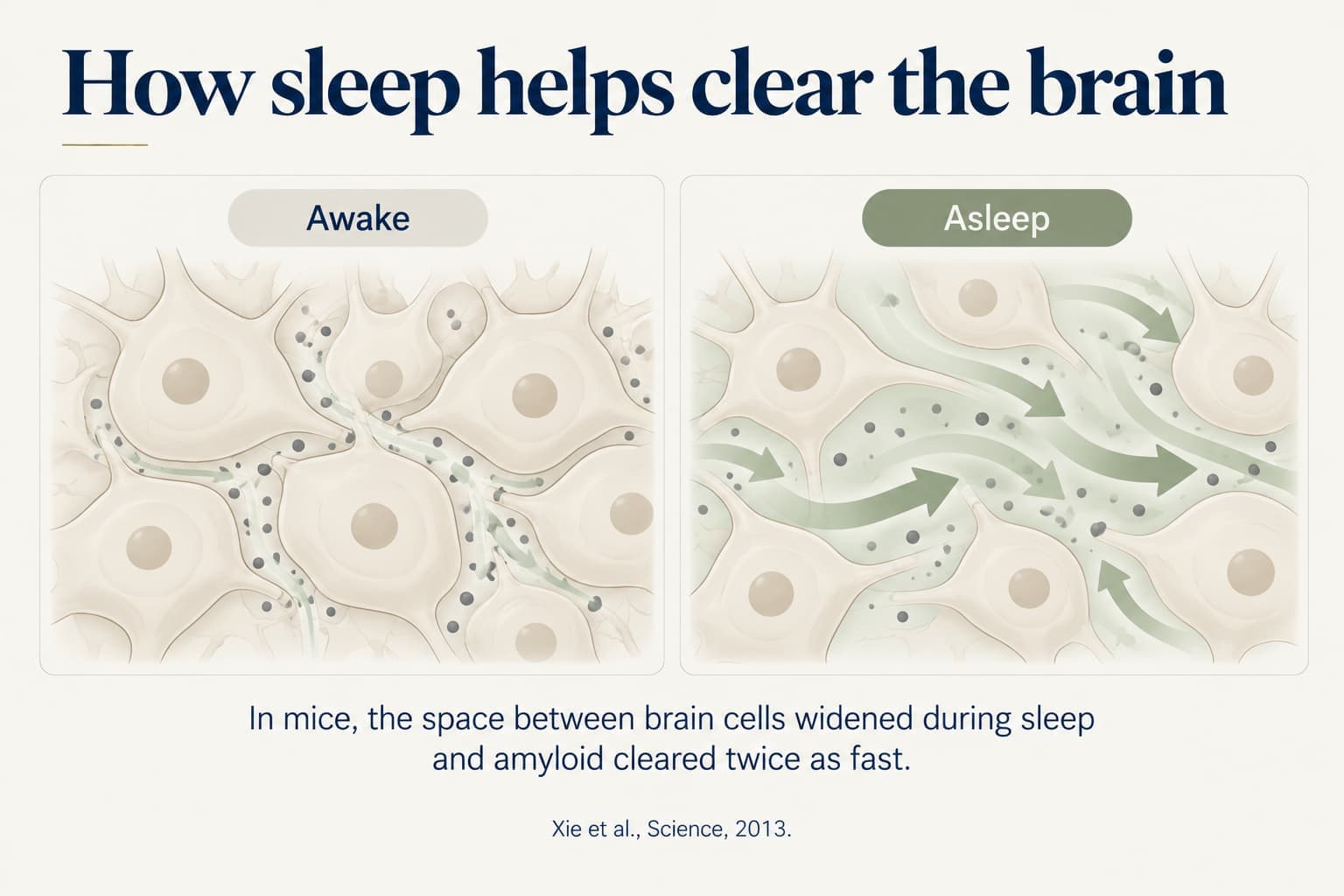
| During sleep in mice | Space between brain cells expanded by 60%; amyloid cleared twice as fast |
What sleep does for memory
Consolidation: turning the day into long-term memory. New memories start out fragile and depend on the hippocampus, the brain's short-term memory hub. During deep non-REM sleep, sometimes called slow-wave sleep, the brain replays recent experiences and transfers them to longer-term storage in the cortex. Large, slow brain waves and brief bursts of activity called sleep spindles help coordinate this process. The stages of sleep are covered in Sleep Architecture.
Deep sleep declines with age, and this seems to matter for memory. In a study from UC Berkeley, older adults with more shrinkage in the brain's medial prefrontal cortex had poorer-quality slow-wave sleep, and that in turn was linked to worse overnight memory retention. In other words, age-related brain changes can weaken deep sleep, and weaker deep sleep can weaken memory. For more on how the brain changes with age, see How the Brain Changes With Age.
Clearance: sleep as the brain's cleaning cycle. The brain has no conventional lymphatic system. Instead, fluid flowing around brain cells washes out waste, a network researchers call the glymphatic system. In a 2013 study in mice, the space between brain cells expanded by 60% during sleep, allowing much more fluid exchange, and amyloid was cleared twice as fast in sleeping mice as in awake ones.
That was an animal study, but human studies point the same way. In 20 healthy adults, one night without sleep raised amyloid levels in the hippocampus and thalamus by about 5%, measured with brain scans. In another study, deliberately disrupting deep sleep for a single night (using sounds, without fully waking people) was linked to higher amyloid in the spinal fluid the next morning, and poorer sleep at home over the previous week was linked to higher levels of tau, the other protein involved in Alzheimer's.
These are short-term changes in small studies, and they don't show that a few bad nights cause dementia. But they help explain how years of poor sleep might add up.
What the long-term studies show
Short sleep in midlife. The Whitehall II study followed 7,959 British civil servants for 25 years, during which 521 developed dementia. People who slept six hours or less at age 50 had a 22% higher risk of dementia than those who slept seven hours, and at age 60 the difference was 37%. At age 70 the pattern was similar but less certain. People whose sleep stayed short across their 50s, 60s and 70s had about a 30% higher risk than those who consistently slept a normal amount. These associations held after accounting for other health, lifestyle and mental-health factors.
The midlife timing matters. Sleep changes in the few years before dementia is diagnosed could be an early symptom of the disease. Short sleep at age 50, decades earlier, is less likely to be explained that way, which makes it more plausible that sleep is a genuine risk factor.
Sleep apnoea. Obstructive sleep apnoea, where breathing repeatedly stops or becomes shallow during sleep, starves the brain of oxygen and fragments sleep. In a study of 298 older women without dementia, those with sleep-disordered breathing had 85% higher odds of developing mild cognitive impairment or dementia over about five years (44.8% vs. 31.1%). Drops in blood oxygen, rather than simply broken sleep, seemed to drive the link.
Sleep apnoea is common, often undiagnosed, and treatable. Whether treatment (usually a CPAP machine) prevents cognitive decline hasn't been firmly established, but it improves sleep, daytime alertness and blood pressure, which are worthwhile in their own right (see Vascular Health and the Brain and Sleep Apnea).
It works both ways. Poor sleep may raise dementia risk, but early Alzheimer's changes also disrupt sleep, and amyloid build-up itself appears to weaken deep sleep. That creates a possible vicious circle. It also means that new or worsening sleep problems in later life are worth mentioning to a doctor, not just putting down to age. For a broader look at sleep, mood and cognition, see Sleep and Brain Health.
Recommendations by situation
Healthy adult
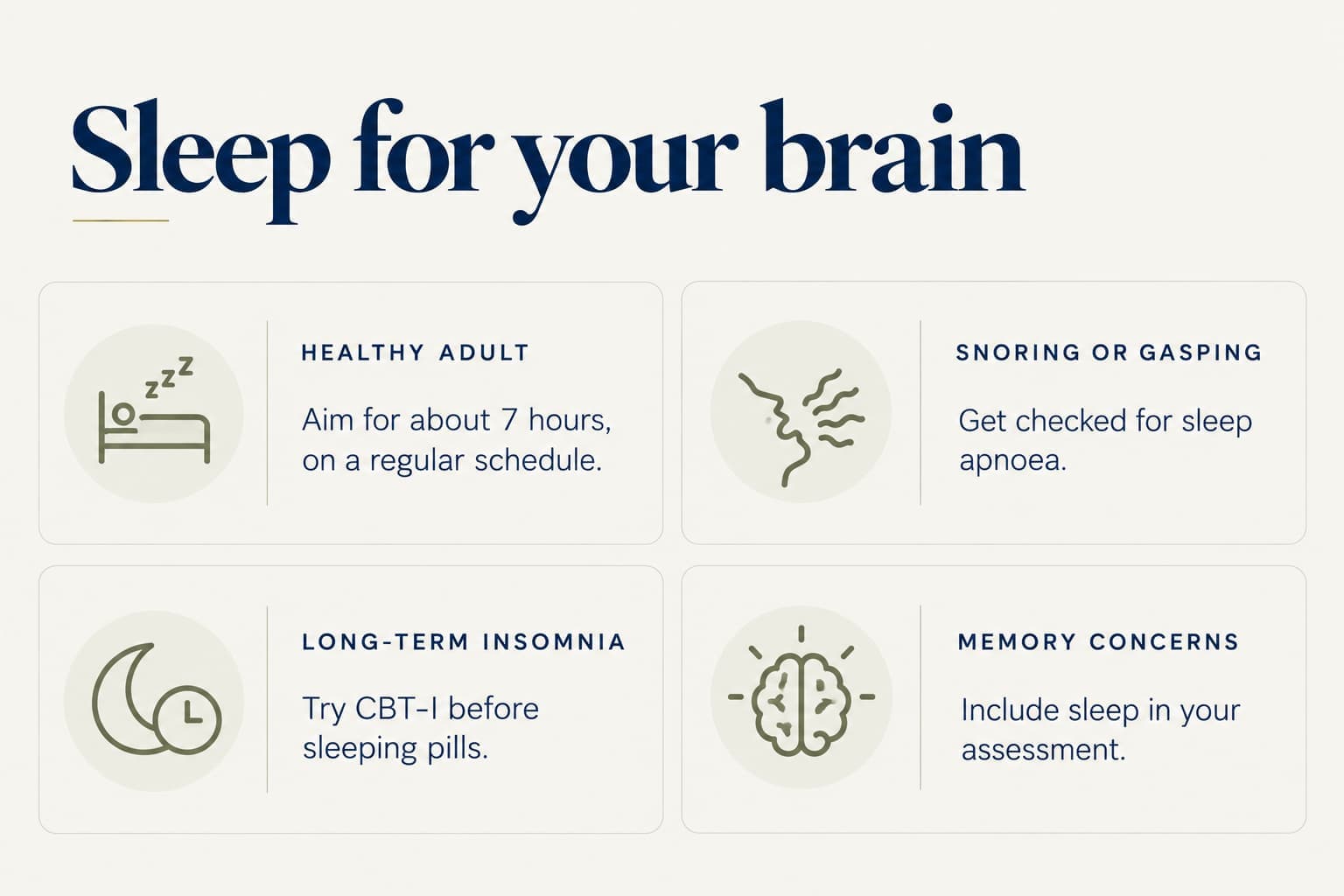
- →Aim for about seven hours a night. In Whitehall II, seven hours was the reference point, and regularly sleeping six hours or less was linked to higher risk.
- →Keep a regular schedule. Going to bed and waking at similar times, including at weekends, supports deep sleep.
- →Protect your sleep in midlife. The strongest link between short sleep and later dementia was at ages 50 and 60.
- →Get daytime light and activity. Regular exercise improves sleep quality (see Exercise and Brain Health).
- →Limit caffeine after early afternoon and alcohol in the evening. Alcohol can help you fall asleep but disrupts sleep later in the night. More on this in Sleep Hygiene.
Snoring, gasping or daytime sleepiness
- →Get checked for sleep apnoea, especially if a partner notices pauses in breathing or you have high blood pressure, diabetes or excess weight.
- →Treat it if it's confirmed. CPAP, weight loss, positional therapy or dental devices can all help, depending on severity.
Long-term insomnia
- →Try cognitive behavioural therapy for insomnia (CBT-I) first. The American College of Physicians recommends it as the first treatment for chronic insomnia in adults. It works on the habits and thoughts that keep insomnia going, and its benefits tend to last (see Insomnia).
- →Be cautious with sleeping pills, especially as you get older. Many common sleep medicines, particularly benzodiazepines and related "Z-drugs", can cause next-day drowsiness, confusion and falls in older adults. Don't stop a prescribed medicine suddenly, but review it with your doctor.
Memory concerns or mild cognitive impairment
- →Ask about sleep as part of the assessment. Untreated sleep apnoea, insomnia or sedating medicines can all worsen memory and are treatable (see Mild Cognitive Impairment).
- →Mention new sleep changes. A shift in sleep patterns in later life can be an early sign of brain changes and is worth discussing.
Shift workers and carers
- →Protect a regular sleep window where you can, keep your bedroom dark and quiet for daytime sleep, and use short naps to reduce sleep debt (see Napping).
- →Watch for chronic short sleep. If your schedule means you regularly get six hours or less, it's worth looking at what can change.
Practical tips for Sri Lanka
- →Keep the bedroom cool. Heat and humidity disrupt sleep; a fan, air conditioning on a moderate setting, or light cotton bedding can help.
- →Watch late meals and evening tea. Heavy late dinners and strong tea or coffee in the evening can delay and disturb sleep.
- →Manage noise. Earplugs or a white-noise fan can help in busy urban areas.
- →Mind screens late at night. Scrolling in bed delays sleep; set a cut-off time for phones and television.
Practical notes
Sleep is when the brain consolidates memories and seems to clear waste, including amyloid. Deep sleep weakens with age, and regularly short sleep in midlife is linked to higher dementia risk decades later. Much of the evidence is observational, and the link runs both ways. But the practical steps are low-risk and worthwhile for overall health: aim for around seven hours, keep a regular schedule, treat sleep apnoea, use CBT-I rather than long-term sleeping pills for insomnia, and mention new sleep problems in later life to your doctor.
- Sabia S, et al. Association of sleep duration in middle and old age with incidence of dementia. Nature Communications, 2021;12:2289.
- Mander BA, et al. Prefrontal atrophy, disrupted NREM slow waves and impaired hippocampal-dependent memory in aging. Nature Neuroscience, 2013;16(3):357-364.
- Xie L, et al. Sleep Drives Metabolite Clearance from the Adult Brain. Science, 2013;342:373-377.
- Shokri-Kojori E, et al. β-Amyloid accumulation in the human brain after one night of sleep deprivation. PNAS, 2018.
- Ju YS, et al. Slow wave sleep disruption increases cerebrospinal fluid amyloid-β levels. Brain, 2017;140(8):2104-2111.
- Yaffe K, et al. Sleep-disordered breathing, hypoxia, and risk of mild cognitive impairment and dementia in older women. JAMA, 2011;306(6):613-619.
- Qaseem A, et al. Management of Chronic Insomnia Disorder in Adults: A Clinical Practice Guideline From the American College of Physicians. Annals of Internal Medicine, 2016.
How many hours do you
actually sleep on a typical night?
Take the free Aevum Protocol assessment to see how your cognitive longevity and 6 other longevity domains are performing — and get a personalised 90-day plan.
Take the Free Assessment →