Sleep & Recovery
Sleep Hygiene: What
the Evidence Actually Supports
"Sleep hygiene" is one of the most widely repeated phrases in sleep advice — and, somewhat surprisingly, one of the least rigorously tested as a complete package. This article covers what's genuinely well-supported by evidence, with a focus on two factors — temperature and caffeine timing — that haven't been covered in depth elsewhere in this series, alongside a consolidated, honest summary of everything else already established across our other sleep articles.
Quick Summary
- →Sleep hygiene advice is widely given, but surprisingly few of its individual recommendations have been rigorously tested — one of the researchers behind a key caffeine study noted this directly, which is part of why this article focuses on the pieces with genuinely solid evidence behind them
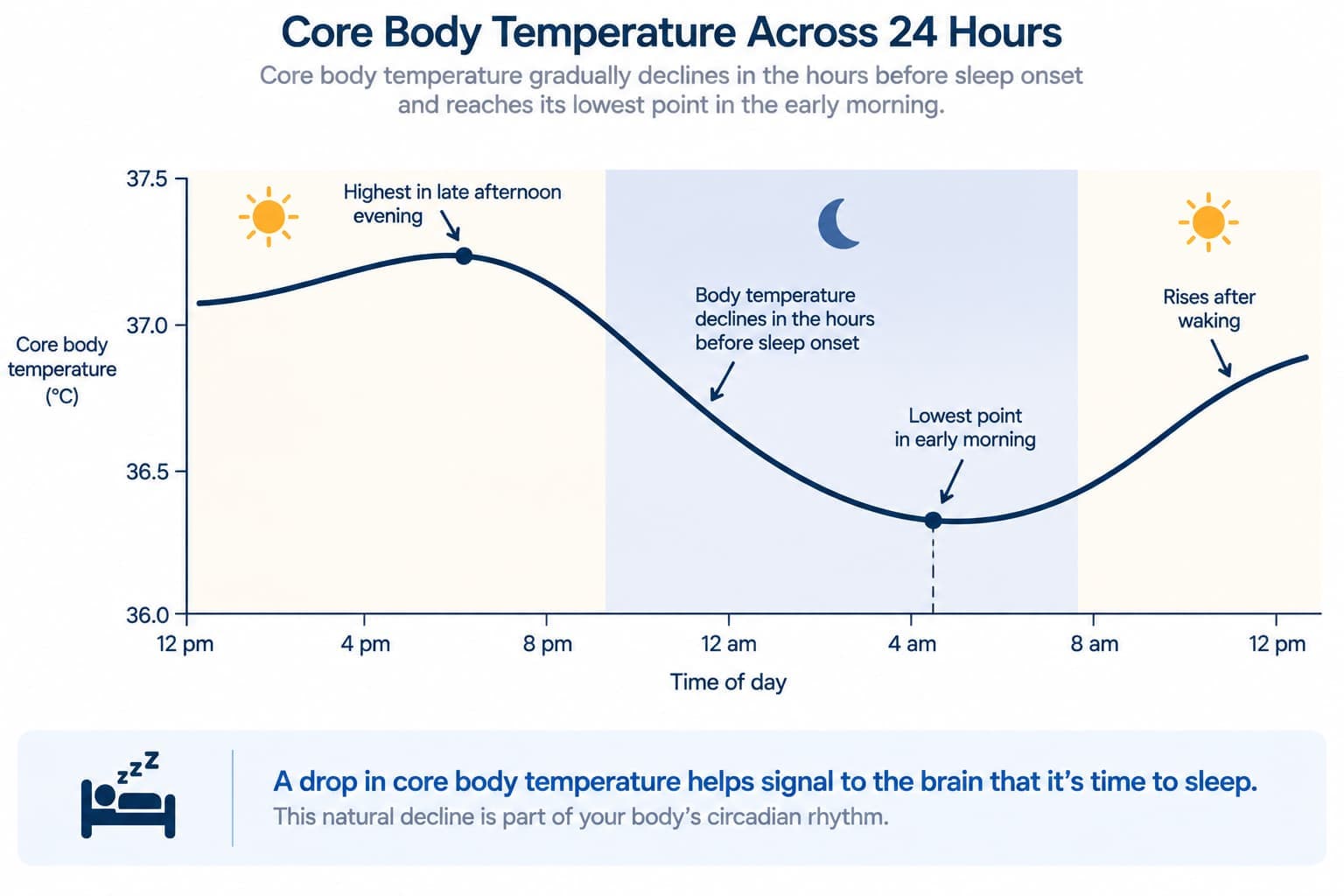
- →Core body temperature drops by roughly 1-2°F (0.5-1°C) in the hours before natural sleep onset — this drop isn't a side effect of getting sleepy, it's one of the actual mechanisms that triggers it, and a bedroom that's too warm works directly against it
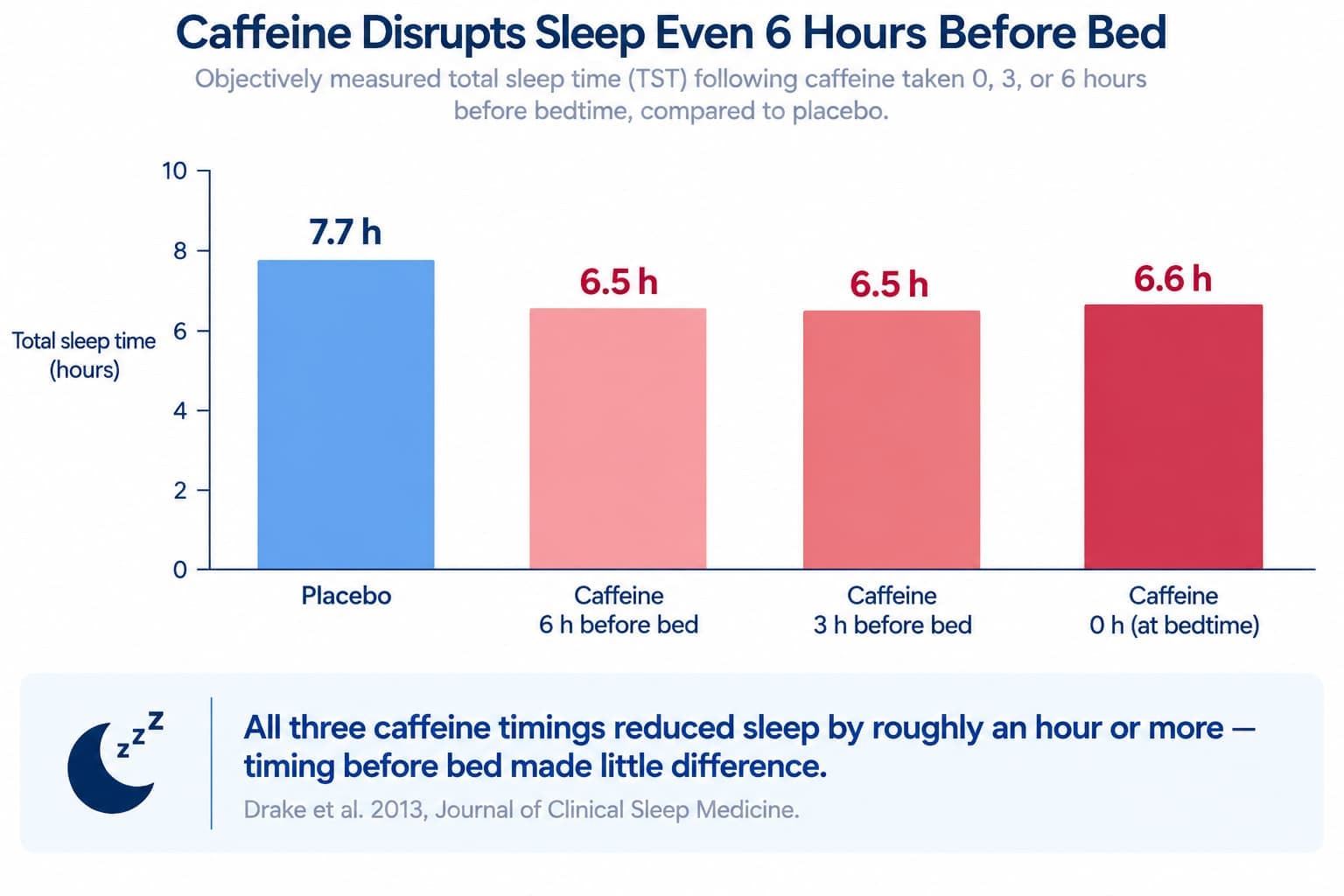
- →A landmark study found that caffeine taken 6 hours before bedtime still significantly reduced total sleep time — by more than an hour — and, strikingly, was almost as disruptive as caffeine taken right at bedtime, even though participants weren't subjectively aware their sleep had been disrupted
- →Sleep hygiene alone has weaker evidence for treating diagnosed chronic insomnia than CBT-I, covered in depth in our Insomnia article — this article's recommendations are best thought of as good general habits for otherwise healthy sleepers, not a substitute for proper treatment where insomnia is already established
- →Many of the most important, well-evidenced sleep habits are already covered in depth elsewhere in this series — light timing, alcohol's effect on REM, and schedule consistency all have their own dedicated treatment, cross-referenced here rather than repeated
Key numbers at a glance
| Measure | Figure |
|---|---|
| Core body temperature drop before sleep onset | ~1-2°F (0.5-1°C) |
| When this cooling process begins | ~2 hours before habitual bedtime |
| Recommended bedroom temperature range | ~65-68°F (18-20°C) |
| Sleep time reduction from caffeine taken 6h before bed | More than 1 hour |
| Recommended caffeine cutoff before bedtime | ~6 hours |
How it works: temperature and caffeine
Thermoregulation and sleep onset. Roughly two hours before habitual bedtime, core body temperature begins a gradual decline, continuing through the night and reaching its lowest point in the early morning hours. This isn't incidental — it's one of the body's actual mechanisms for initiating sleep, driven by peripheral vasodilation, where blood vessels in the hands and feet widen to release heat, cooling the body's core even as the extremities feel warmer. A bedroom that's too warm interferes directly with this process, delaying sleep onset and reducing the depth of slow-wave sleep, covered in our Sleep Architecture article. This is also the physiological explanation behind a genuinely counterintuitive but well-supported practice: a warm bath or shower 60-90 minutes before bed doesn't fight this cooling process — it accelerates it, by temporarily raising skin temperature and triggering a faster, more pronounced cooling rebound once out of the water.
Caffeine's mechanism and half-life. Caffeine works primarily by blocking adenosine receptors in the brain — adenosine is a molecule that gradually builds up during waking hours and promotes sleepiness, so blocking its receptors is what produces caffeine's alerting effect. Caffeine has a half-life of roughly 5-6 hours in most adults, meaning a substantial amount remains active in the body many hours after consumption — a coffee at 4pm can still have a meaningful, measurable amount of caffeine in the system at 10pm.
What the research shows
The caffeine timing study. A landmark 2013 study, whose authors explicitly noted that few systematic studies had actually tested the empirical basis of common sleep hygiene advice, set out to directly test caffeine timing. Healthy participants took a standard dose of caffeine (400mg, roughly equivalent to 2-3 cups of coffee) at 0, 3, or 6 hours before their normal bedtime, compared to a placebo. All three timings significantly disrupted objectively measured sleep — and even caffeine taken a full 6 hours before bedtime reduced total sleep time by more than an hour, almost as much as caffeine taken right at bedtime. Strikingly, participants' own subjective reports didn't reflect this disruption at the 6-hour mark — only the objective sleep monitor detected it, while at bedtime and 3 hours before, both the sleep diary and the monitor agreed. This is a genuinely important finding: afternoon caffeine can be quietly costing sleep quality without a person ever attributing the problem to their coffee habit.
Bedroom temperature research. Multiple studies converge on a similar range: roughly 65-68°F (18-20°C) as the practical sweet spot for adult sleep, broadly endorsed by major sleep health organisations. Research has found that even a moderate 3-5°F increase above this range is enough to measurably fragment sleep architecture — reducing slow-wave sleep, disrupting REM, and increasing nighttime awakenings — while temperatures that are too cold work against sleep in a different way, since the body diverts blood flow to preserve core temperature rather than allowing it to fall.
Exercise. Regular moderate-to-vigorous exercise is reasonably well supported as improving overall sleep quality, though timing matters — exercising very close to bedtime can be too stimulating for some people and is generally best avoided in the 2-3 hours immediately before sleep, while exercise earlier in the day carries no such downside and genuine sleep benefit.
Several genuinely important, well-evidenced sleep hygiene factors have their own dedicated treatment already: light exposure timing, including the value of morning light and the more limited evidence for blue-light-blocking glasses specifically, is covered in our Circadian Rhythm article. Alcohol's effect on sleep architecture, particularly its suppression of REM sleep, is covered in our Sleep Architecture article. Schedule consistency and its role in reinforcing both circadian timing and sleep architecture is covered across our Sleep Duration and Circadian Rhythm articles. Keeping the bed associated only with sleep (avoiding working, scrolling, or watching TV in bed) is a core component of the stimulus control technique within CBT-I, covered in our Insomnia article — genuinely more of a clinical insomnia treatment than a general hygiene tip, though it's a reasonable habit for anyone.
Recommendations by population group
- 1Anyone drinking coffee, tea, or other caffeinated drinks in the afternoon
Given the Drake study's findings, a genuine 6-hour caffeine cutoff before bedtime is worth adopting, even if sleep currently feels fine — the disruption may be happening without being noticed.
- 2Anyone who exercises regularly
Keep vigorous exercise outside the 2-3 hours immediately before bed where possible, but don't let this discourage regular exercise generally, given its overall positive relationship with sleep quality.
- 3Anyone struggling with bedroom temperature (couples with different preferences, hot climates, menopause-related night sweats)
Layering bedding, using a fan for evaporative cooling, or adjusting a thermostat to drop during sleeping hours are all reasonable ways to approach the 65-68°F target without requiring identical preferences from everyone in the bed.
- 4Anyone with diagnosed or suspected chronic insomnia
These general hygiene habits are worth maintaining, but shouldn't be treated as a complete treatment on their own — see our Insomnia article for the more comprehensive, evidence-backed approach (CBT-I) for insomnia specifically.
- 5General / longevity-focused
Temperature and caffeine timing are two of the more concrete, easily-controlled levers covered in this entire sleep series — genuinely worth prioritising given how directly modifiable they are compared to some of the less controllable factors (age-related changes, genetics) discussed elsewhere.
Practical notes
- →Set the bedroom temperature to roughly 65-68°F (18-20°C) — cool enough to support the body's natural cooling process, not so cold that the body has to work to stay warm
- →A warm bath or shower 60-90 minutes before bed genuinely helps sleep onset — the mechanism is real, not just folk wisdom
- →Treat 6 hours before bedtime as a genuine caffeine cutoff, not just early afternoon — the disruptive effect at 6 hours was large and measurable, even when unnoticed subjectively
- →Exercise regularly, but not right before bed — earlier in the day carries all the benefit with none of the pre-sleep stimulation risk
- →This article covers what hasn't been said elsewhere — for light, alcohol, consistency, and the bed-association principle, see the cross-referenced articles above rather than treating this as the complete picture on its own
Sleep hygiene, done properly, is less about a long checklist and more about a handful of genuinely well-tested habits — cool the room, respect the caffeine cutoff, and keep the rest of your routine consistent. For the broader picture on light, alcohol, sleep stages, and insomnia treatment specifically, see our Circadian Rhythm, Sleep Architecture, and Insomnia articles. If you'd like a clearer picture of your own sleep habits and health, our Longevity Doctors offer a free longevity assessment as a starting point.
How does your sleep
score on your longevity assessment?
Take the free Aevum Protocol assessment to see how your sleep & recovery and 6 other longevity domains are performing — and get a personalised 90-day plan.
Take the Free Assessment →