Stress & Hormones
Heart Rate Variability:
A Window Into Stress and Recovery, and How to Use It
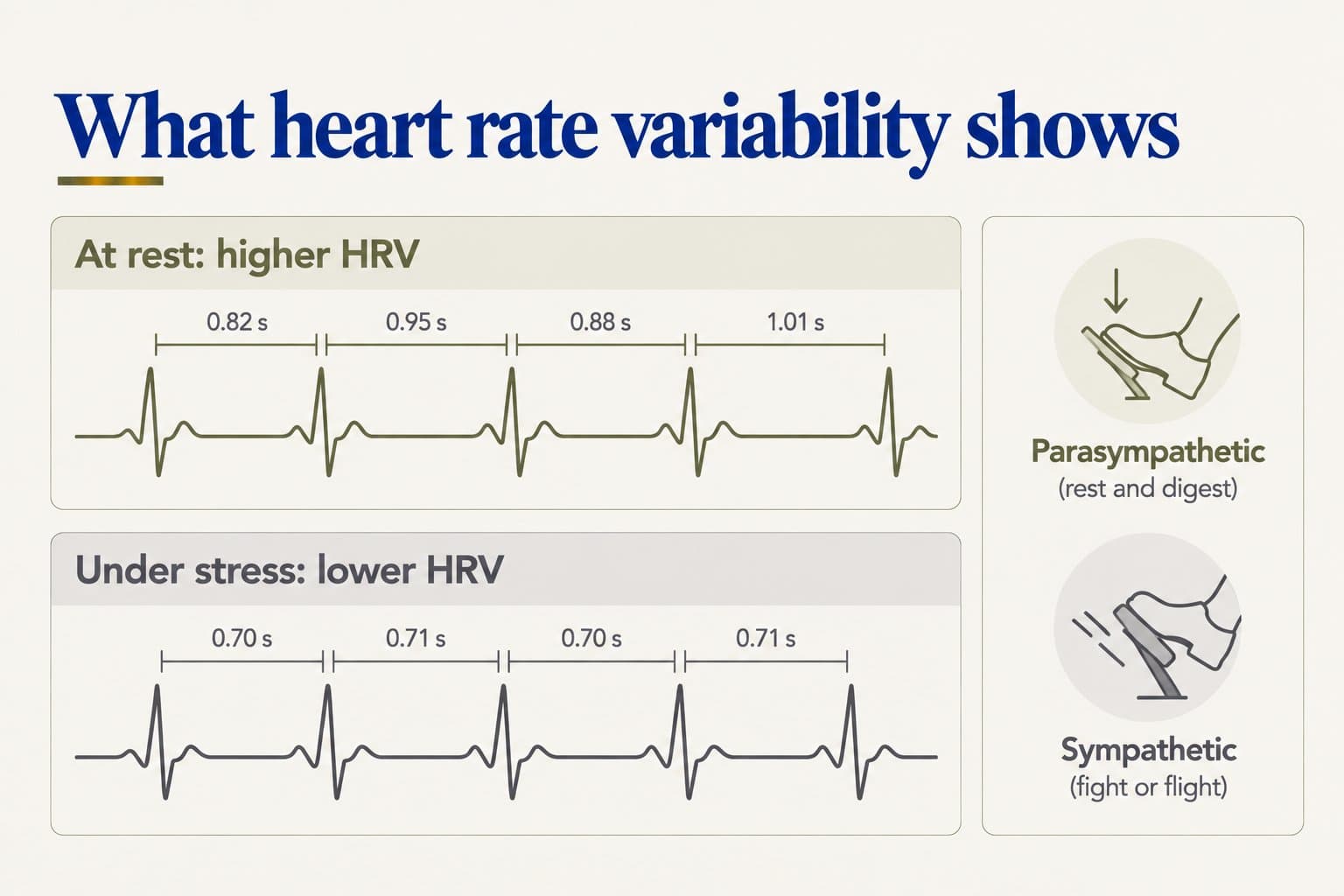
Your heart doesn't beat like a metronome. The time between beats changes slightly from one beat to the next, and this variation, called heart rate variability (HRV), reflects how flexibly the nervous system switches between "fight or flight" and "rest and digest". Psychological stress lowers HRV, mainly by reducing the calming parasympathetic activity, and a review of 37 studies supports HRV as an objective marker of stress. Over the long term, low HRV is linked to a 32-45% higher risk of a first heart attack or stroke in people without heart disease. HRV can also be trained: HRV biofeedback, which uses slow breathing at around six breaths a minute, produced a large reduction in stress and anxiety in a review of 24 studies. This guide explains what HRV tells you about stress, how to measure it sensibly, and practical ways to improve it.
Key numbers
| Finding | Detail |
|---|---|
| Stress and HRV (review of 37 studies) | Stress most often lowered parasympathetic ("rest and digest") activity, shown by a fall in high-frequency HRV |
| Low HRV and first cardiovascular event (meta-analysis, people without heart disease) | 32-45% higher risk with the lowest vs highest HRV |
| HRV and age (8 million wearable users) | High-frequency HRV fell by 82% between ages 20 and 60 in men; more daily activity went with higher HRV |
| HRV biofeedback for stress and anxiety (24 studies, 484 people) | Large reduction in self-reported stress and anxiety (effect size 0.83) |
| HRV biofeedback across outcomes (58 randomised trials) | Small-to-moderate overall benefit; largest for anxiety, depression and anger |
What HRV tells you about stress
The heart is controlled by two branches of the autonomic nervous system. The sympathetic branch speeds the heart up during stress or exercise, while the parasympathetic branch, mainly through the vagus nerve, slows it down and adjusts it beat by beat, for example speeding up slightly as you breathe in and slowing as you breathe out. When the parasympathetic "brake" is active and flexible, HRV is higher. Under stress, the brake eases off and HRV falls (see How the Stress Response Works).
A 2018 review of 37 studies found that HRV changed in response to psychological stress in most of them, most often through lower parasympathetic activity. Brain-imaging studies linked HRV to regions of the prefrontal cortex involved in appraising stressful situations. The authors concluded that HRV "is impacted by stress and supports its use for the objective assessment of psychological health and stress".
Chronic stress, poor sleep, alcohol, illness, overtraining and inactivity all tend to lower HRV, while fitness, good sleep and relaxation tend to raise it.
What the evidence shows
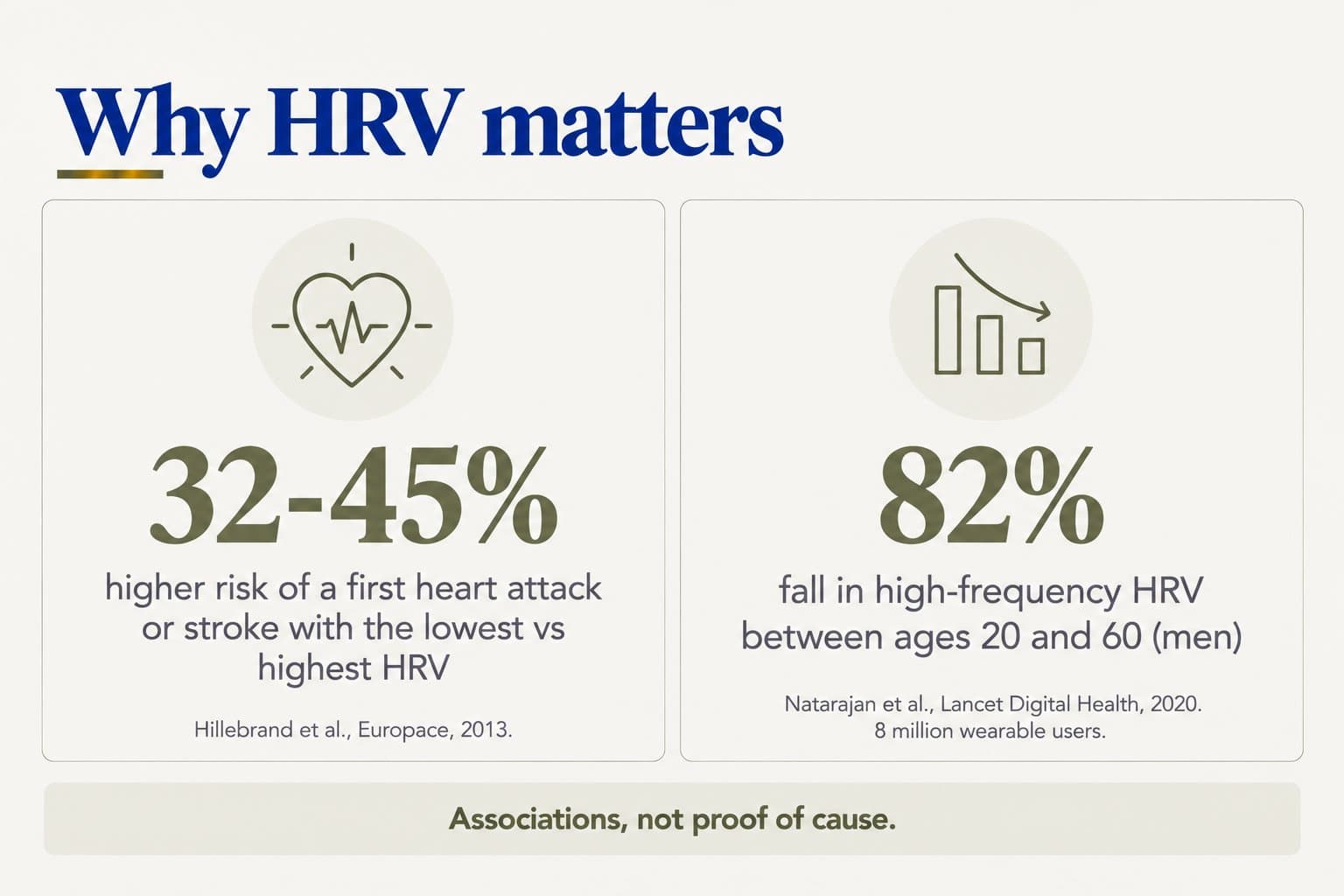
HRV is linked to long-term heart health. A 2013 meta-analysis pooled studies of people without known heart disease. Those with the lowest HRV had a 32-45% higher risk of a first cardiovascular event, such as a heart attack or stroke, than those with the highest HRV. Each 1% increase in one HRV measure (SDNN) was linked to about a 1% lower risk. These are associations: low HRV may partly reflect other risk factors, and there's no proof that raising HRV itself prevents heart disease. It fits with the wider evidence linking chronic stress to heart disease (see Chronic Stress and Heart Disease).
HRV falls with age, and activity helps. In a study of more than 8 million Fitbit users, all HRV measures declined with age, with parasympathetic measures falling fastest. In men measured early in the morning, high-frequency HRV fell by 82% between ages 20 and 60. People who were more active had higher HRV at every age, although this cross-sectional study couldn't prove that activity caused the difference. HRV also varied considerably through the day, peaking in the morning, which is why consistent timing matters when you measure it.
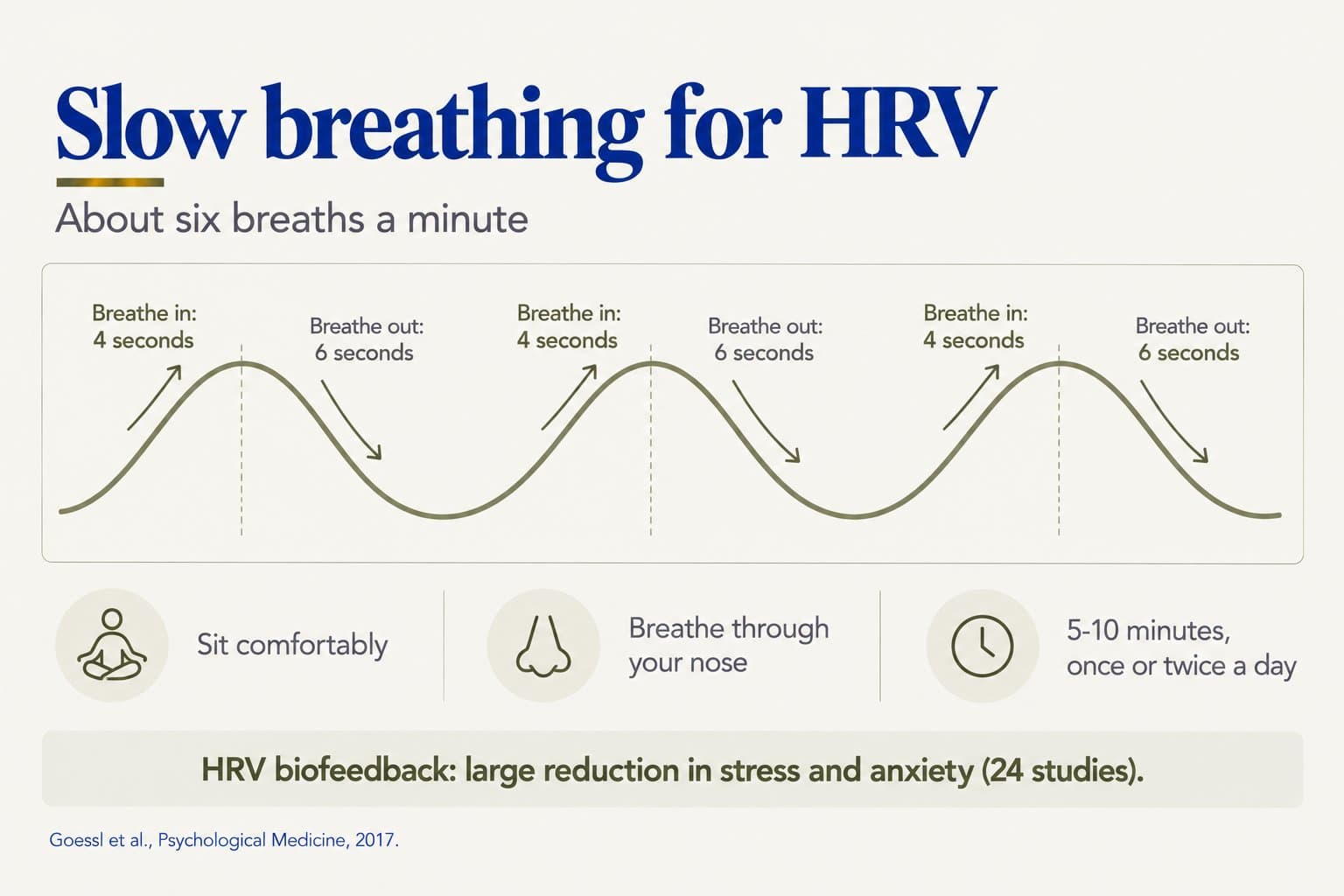
HRV biofeedback reduces stress and anxiety. HRV biofeedback trains people to breathe slowly, usually at around six breaths a minute, while watching their heart rhythm on a screen or device. At this pace, heart rate and breathing fall into sync, producing large, regular swings in heart rate and strengthening the parasympathetic reflexes.
- →A 2017 meta-analysis of 24 studies with 484 participants found that HRV biofeedback produced "a large reduction in self-reported stress and anxiety" compared with control groups (effect size 0.83). The effect was consistent regardless of study quality, number of sessions and whether people had an anxiety disorder.
- →A 2020 meta-analysis of 58 randomised trials found a small-to-moderate overall benefit across emotional and physical outcomes, with the largest effects for anxiety, depression and anger, and smaller effects for sleep and quality of life. Effects were larger against no treatment than against other active treatments.
You don't need specialist equipment to use the core technique: slow breathing at about six breaths a minute, with a slightly longer out-breath, can be practised anywhere (see Stress-Reduction Techniques That Work).
Wearable HRV: useful for trends, not absolute scores. Most wearables estimate HRV from an optical pulse sensor rather than an ECG, and their accuracy varies between devices. Proprietary "readiness" or "stress" scores built from HRV haven't been validated against long-term health outcomes. The accuracy of wearable HRV is covered in detail in Resting Heart Rate and HRV.
How to measure HRV sensibly
- →Use the same device, at the same time and in the same position. Many people use an overnight or first-thing-in-the-morning reading.
- →Compare yourself with yourself. HRV varies widely between individuals and falls with age, so your own baseline matters more than population averages.
- →Look at weekly trends, not single days. One low reading after a late night or a drink says little; a sustained drop over a week or more is more meaningful.
- →Use it as a prompt, not a verdict. A falling trend is a cue to look at sleep, stress, alcohol, illness and training load, alongside how you actually feel.
Recommendations by scenario
- →You want to use HRV to manage stress: track a weekly average from the same device and time of day, and note what's happening in your life when it drops.
- →Your HRV has been low for a week or more: check the usual suspects: poor sleep, alcohol, illness, heavy training or high stress. Prioritise recovery.
- →You feel anxious or stressed: try 5-10 minutes of slow breathing at about six breaths a minute, once or twice a day. Many HRV apps and wearables offer guided breathing.
- →You're inactive and want to improve your HRV: regular aerobic exercise and more daily movement are among the most reliable ways to support it (see Zone 2 Training).
- →You have palpitations, an irregular heartbeat, dizziness or fainting: see a doctor. Wearable HRV isn't designed to diagnose heart rhythm problems.
- →Checking your HRV is making you anxious: take a break from tracking. The habits that improve HRV work whether or not you measure them.
Practical notes
HRV is a useful window into how your nervous system is handling stress and recovery. Stress, poor sleep, alcohol and illness lower it; fitness, sleep and relaxation raise it. Low HRV is linked to higher cardiovascular risk, and HRV biofeedback, built around slow breathing at about six breaths a minute, reduces stress and anxiety. Wearables make HRV easy to track, but their numbers are best used as personal trends, measured consistently, rather than as precise scores. The most reliable way to improve HRV is the same as for stress itself: regular exercise, good sleep, less alcohol, and daily practices that activate the body's "rest and digest" system.
- Kim HG, et al. Stress and heart rate variability: a meta-analysis and review of the literature. Psychiatry Investigation, 2018;15(3):235-245.
- Hillebrand S, et al. Heart rate variability and first cardiovascular event in populations without known cardiovascular disease: meta-analysis and dose-response meta-regression. Europace, 2013;15(5):742-749.
- Natarajan A, et al. Heart rate variability with photoplethysmography in 8 million individuals: a cross-sectional study. The Lancet Digital Health, 2020;2(12):e650-e657.
- Goessl VC, Curtiss JE, Hofmann SG. The effect of heart rate variability biofeedback training on stress and anxiety: a meta-analysis. Psychological Medicine, 2017;47(15):2578-2586.
- Lehrer P, et al. Heart rate variability biofeedback improves emotional and physical health and performance: a systematic review and meta analysis. Applied Psychophysiology and Biofeedback, 2020;45(3):109-129.
Does your wearable track HRV,
and do you know your baseline?
Take the free Aevum Protocol assessment to see how your stress & hormones and 6 other longevity domains are performing — and get a personalised 90-day plan.
Take the Free Assessment →