Stress & Hormones
Stress-Reduction Techniques That Work:
A Practical, Evidence-Based Guide
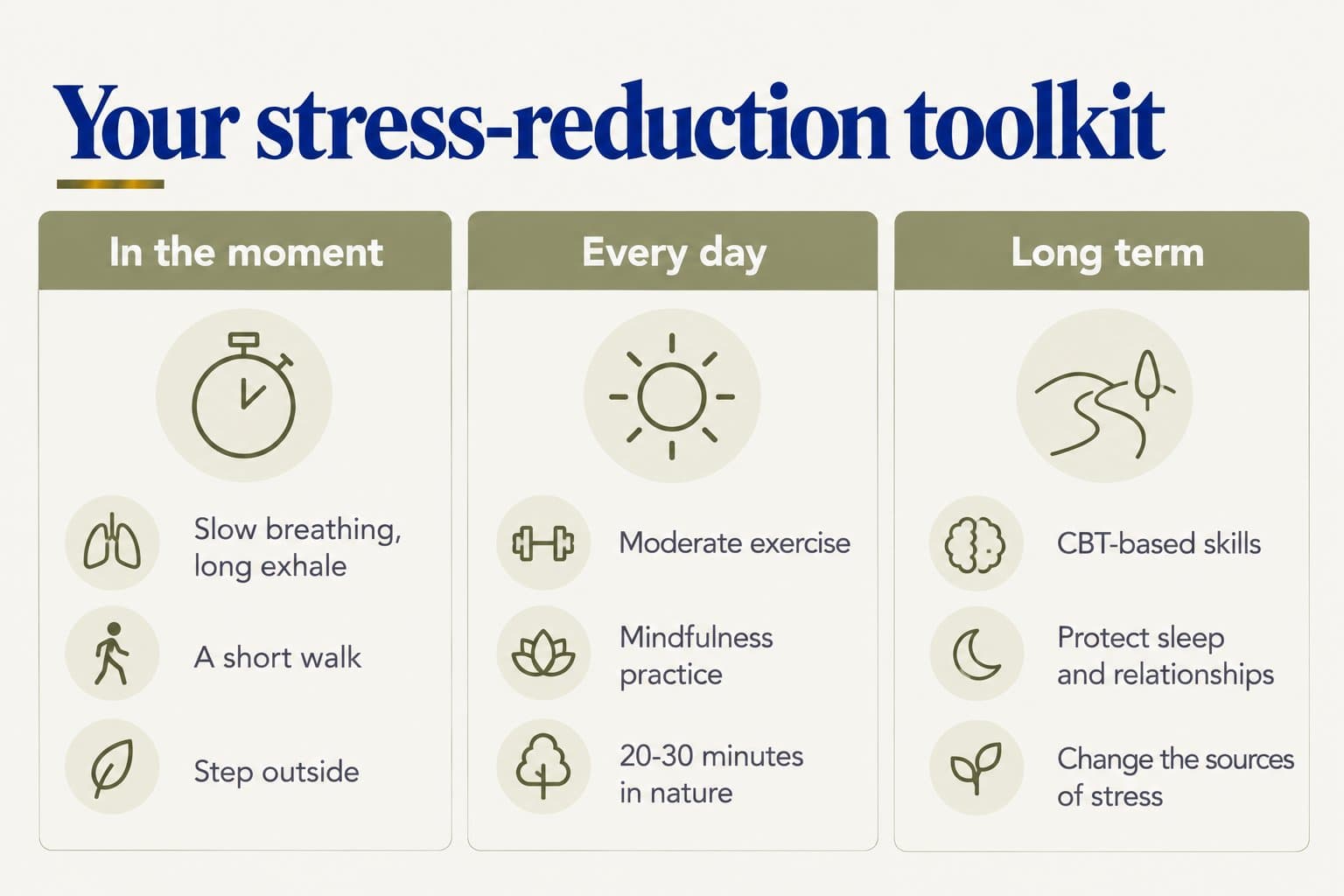
Stress can't be eliminated, but the way the body responds to it can be changed. The strongest evidence supports a small set of approaches. Physical activity reduces psychological distress, anxiety and depression, with effects comparable to talking therapy or medication in a review of more than 1,000 trials. Structured stress-management programmes, especially those based on cognitive behavioural therapy (CBT), have a medium-to-large effect on work stress. Meditation programmes produce small to moderate reductions in anxiety and depression. Quick tools help too: five minutes a day of slow breathing with long exhalations improved mood in a month-long trial, and 20-30 minutes in nature lowered stress hormone levels. No single technique suits everyone, and the best approach combines something for the moment, something daily, and changes to the causes of stress. This guide sets out what works and how to use it.
Key numbers
| Finding | Detail |
|---|---|
| Physical activity (97 reviews, 1,039 trials, 128,119 people) | Reduced psychological distress, anxiety and depression; effects comparable to or slightly greater than therapy or medication |
| Workplace stress-management programmes (36 studies, 2,847 people) | Medium-to-large overall effect; cognitive behavioural programmes worked best |
| Meditation programmes (47 trials, 3,515 people) | Small to moderate reductions in anxiety (effect size 0.38) and depression (0.30) at 8 weeks |
| Cyclic sighing, 5 minutes a day for a month (111 volunteers) | Bigger improvement in daily mood than mindfulness meditation; lowered resting breathing rate |
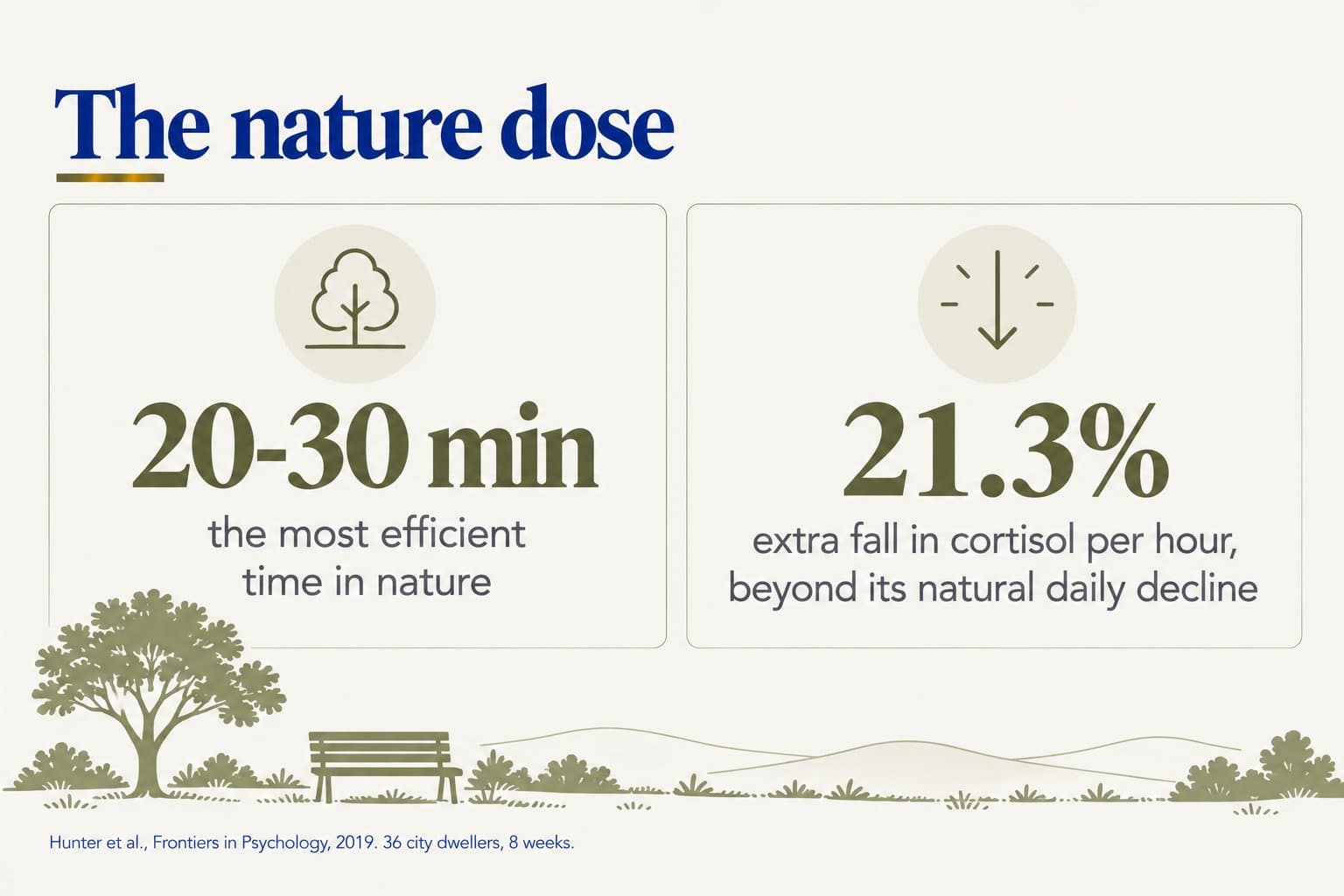
| Time in nature (36 city dwellers, 8 weeks) | 20-30 minutes was most efficient; cortisol fell 21.3% an hour more than its natural daily fall |
How stress reduction works
The stress response is designed to switch on quickly and switch off once a challenge has passed (see How the Stress Response Works). Chronic stress becomes harmful when the "off switch" doesn't get used, leading to wear and tear on the body (see Allostatic Load).
Stress-reduction techniques work in three broad ways:
- →Calming the body directly: slow breathing, physical activity and relaxation activate the parasympathetic "rest and digest" system.
- →Changing how stress is appraised: CBT and mindfulness change how people interpret and respond to stressful thoughts and situations.
- →Reducing the sources of stress: problem-solving, boundaries, support and changes at work or home.
The most useful approach combines all three.
What the evidence shows
Physical activity: the strongest all-round evidence. A 2023 umbrella review combined 97 systematic reviews covering 1,039 randomised trials and 128,119 people. Physical activity reduced symptoms of depression, anxiety and psychological distress, with the largest effect on distress. All types of activity helped, including walking, strength training, yoga and aerobic exercise, and moderate-to-high intensity worked better than low intensity. The authors noted that the benefits were "comparable to or slightly greater than" those of psychotherapy and medication.
Exercise also works directly on the stress system, and it lowers the risk of heart disease, diabetes and dementia at the same time (see Exercise and Brain Health and The Minimum Effective Dose).
Cognitive behavioural approaches: the most effective structured programmes. A meta-analysis of 36 workplace stress-management studies with 2,847 participants, averaging about 7 weeks, found a medium-to-large overall effect. Cognitive behavioural programmes, which teach people to identify and change unhelpful thought patterns and to solve problems, produced larger effects than other approaches, such as relaxation alone. Adding too many extra components reduced effectiveness.
CBT can be delivered by a therapist, in groups, or through structured self-help books and apps. It's also a first-line treatment for anxiety disorders and depression.
Meditation and mindfulness: modest but real. A 2014 systematic review in JAMA Internal Medicine included 47 randomised trials with 3,515 participants. Mindfulness meditation programmes produced moderate evidence of improvement in anxiety (effect size 0.38 at 8 weeks), depression (0.30) and pain. But the evidence for effects on stress itself, sleep and positive mood was weaker, and there was "no evidence that meditation programs were better than any active treatment", such as exercise. The authors concluded that meditation "can result in small to moderate reductions of multiple negative dimensions of psychological stress".
Structured programmes such as mindfulness-based stress reduction (MBSR) usually involve weekly classes over 8 weeks plus daily home practice. Mindfulness, stress management and small-group discussions also reduced burnout in doctors (see Burnout).
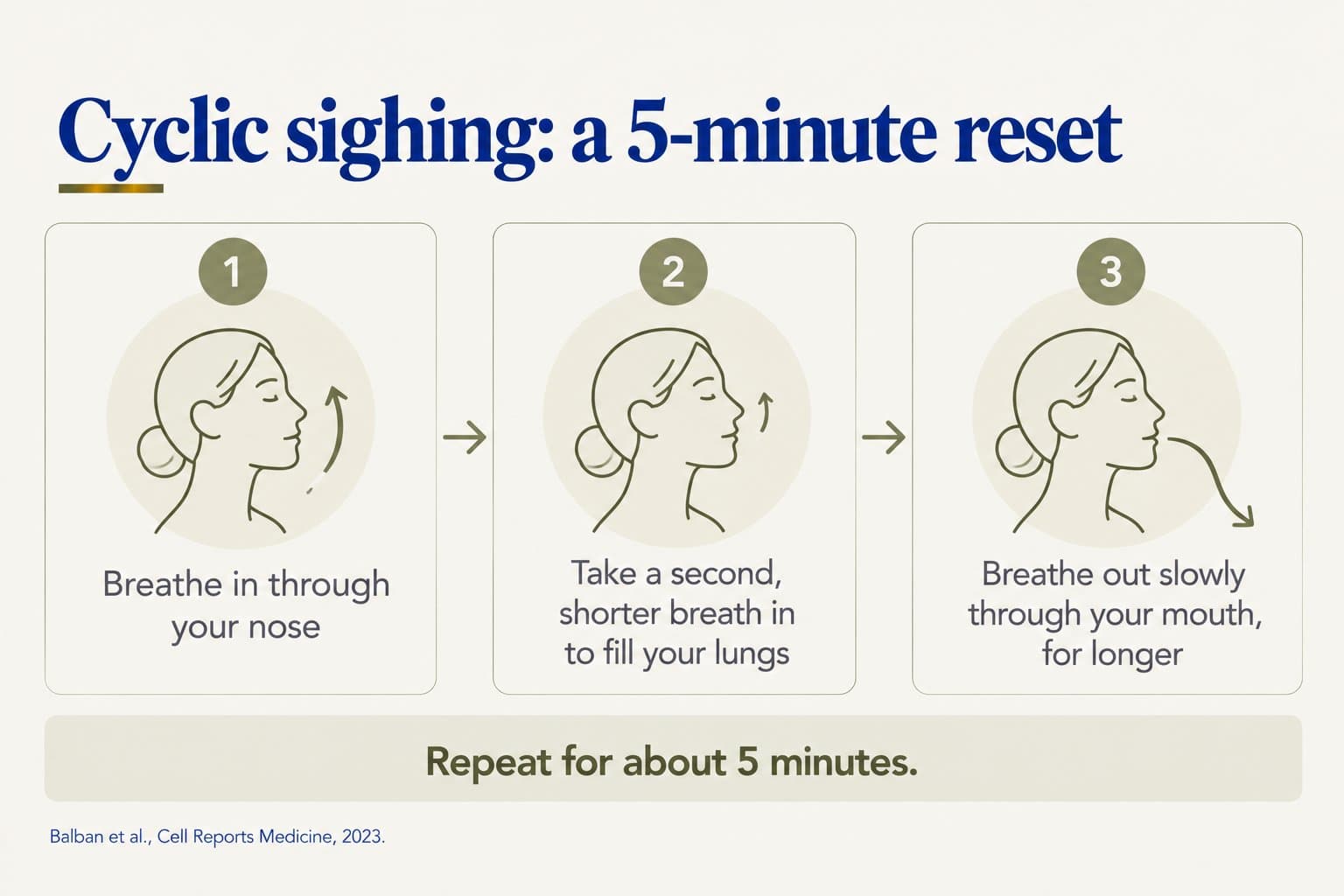
Slow breathing: a fast, free tool. In a 2023 Stanford study, 111 healthy adults practised one of four techniques for 5 minutes a day for a month: cyclic sighing (a double inhale followed by a long, slow exhale), box breathing, rapid breathing, or mindfulness meditation. All three breathing practices reduced anxiety and improved mood, and cyclic sighing produced the biggest improvement in positive mood. It was also the only technique that lowered people's resting breathing rate. This was a small, remotely run study of healthy volunteers, but slow breathing with longer exhalations is simple, free and can be used anywhere.
Breathing rate and heart rate variability are linked, and HRV biofeedback is covered in Heart Rate Variability.
Time in nature: a measurable effect. In a 2019 study, 36 city residents spent time in a natural setting of their choice at least three times a week for 8 weeks, with saliva samples taken before and after. A nature experience lowered cortisol by 21.3% an hour more than its normal daily fall. The biggest benefit came from 20-30 minutes, with smaller additional gains after that. Parks, gardens, tree-lined streets and beaches all count.
The foundations: sleep and social connection. Poor sleep amplifies the stress response and stress disrupts sleep, so protecting sleep is one of the most effective ways to break the cycle (see Sleep and Memory Consolidation). Social support buffers the effects of stress on the body and mind (see Social Connection and Cognitive Decline). Both are easy to neglect under pressure, and both matter.
What doesn't help, or helps less than claimed.
- →Alcohol, smoking and "comfort" eating: provide brief relief but worsen sleep, mood and long-term health (see Stress, Cortisol and Belly Fat).
- →Supplements marketed for stress or cortisol: evidence is limited, and even the best studied, ashwagandha, has low-certainty evidence (see Adaptogens: Ashwagandha and Rhodiola).
- →Relaxation alone, without addressing the cause: helps in the moment, but chronic stress from an unmanageable workload or situation needs practical change.
Recommendations by scenario
- →You feel stressed right now: try 1-5 minutes of cyclic sighing, or step outside for a short walk. Both calm the body within minutes.
- →You're under ongoing pressure and have little time: build in 20-30 minutes of moderate activity most days, ideally outdoors, which combines exercise and nature.
- →Your thoughts keep racing or spiralling: try a structured CBT-based programme, book or app, or a mindfulness course such as MBSR.
- →Your stress comes mainly from work: look at workload, control and support, and raise them with your manager if you can. Individual techniques help, but they can't fix an impossible workload (see Burnout).
- →You're sleeping badly because of stress: prioritise a regular sleep schedule, wind-down time and a device-free bedroom.
- →You have heart disease or high blood pressure: stress management is part of heart health; exercise and cardiac rehabilitation are especially valuable (see Chronic Stress and Heart Disease).
- →Stress is affecting your mood, sleep or daily life for weeks, or you feel hopeless: see a doctor or mental health professional. Anxiety and depression are common and treatable (see Depression and Cognitive Decline).
Practical notes
The most effective stress-reduction techniques are simple and well studied: regular physical activity, structured CBT-based approaches, mindfulness meditation, slow breathing with long exhalations, time in nature, good sleep and supportive relationships. They work best together: a quick tool for difficult moments, a daily habit such as a walk or breathing practice, and longer-term changes to the sources of stress. Start with one or two that fit your life, practise them regularly, and seek professional help if stress is persistent or overwhelming.
- Singh B, et al. Effectiveness of physical activity interventions for improving depression, anxiety and distress: an overview of systematic reviews. British Journal of Sports Medicine, 2023;57:1203-1209.
- Richardson KM, Rothstein HR. Effects of occupational stress management intervention programs: a meta-analysis. Journal of Occupational Health Psychology, 2008;13(1):69-93.
- Goyal M, et al. Meditation programs for psychological stress and well-being: a systematic review and meta-analysis. JAMA Internal Medicine, 2014;174(3):357-368.
- Balban MY, et al. Brief structured respiration practices enhance mood and reduce physiological arousal. Cell Reports Medicine, 2023;4(1):100895.
- Hunter MR, Gillespie BW, Chen SY. Urban nature experiences reduce stress in the context of daily life based on salivary biomarkers. Frontiers in Psychology, 2019;10:722.
- West CP, et al. Interventions to prevent and reduce physician burnout: a systematic review and meta-analysis. The Lancet, 2016;388:2272-2281.
What do you do when
stress starts to build?
Take the free Aevum Protocol assessment to see how your stress & hormones and 6 other longevity domains are performing — and get a personalised 90-day plan.
Take the Free Assessment →