Stress & Hormones
Allostatic Load:
How Stress Adds Up in the Body
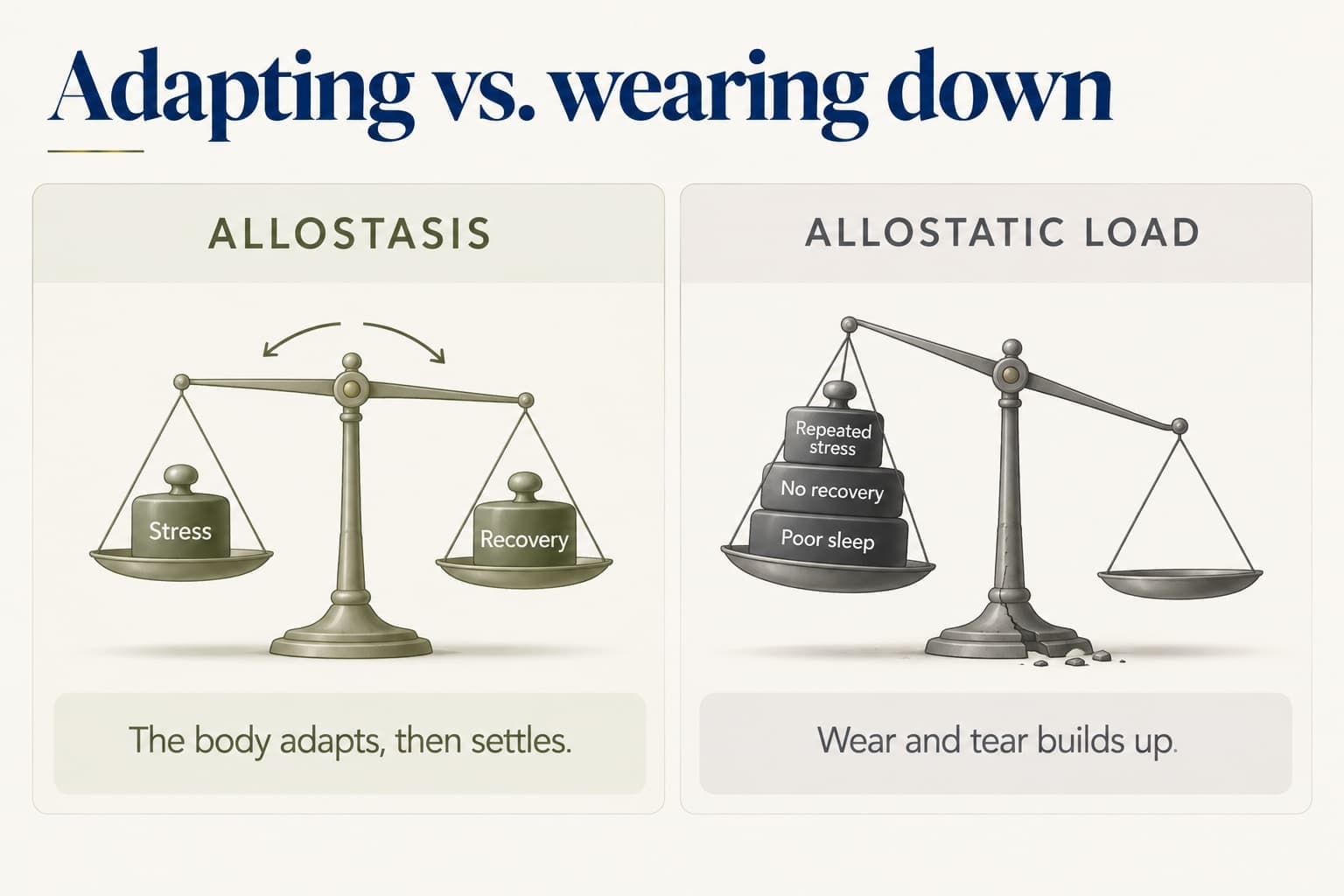
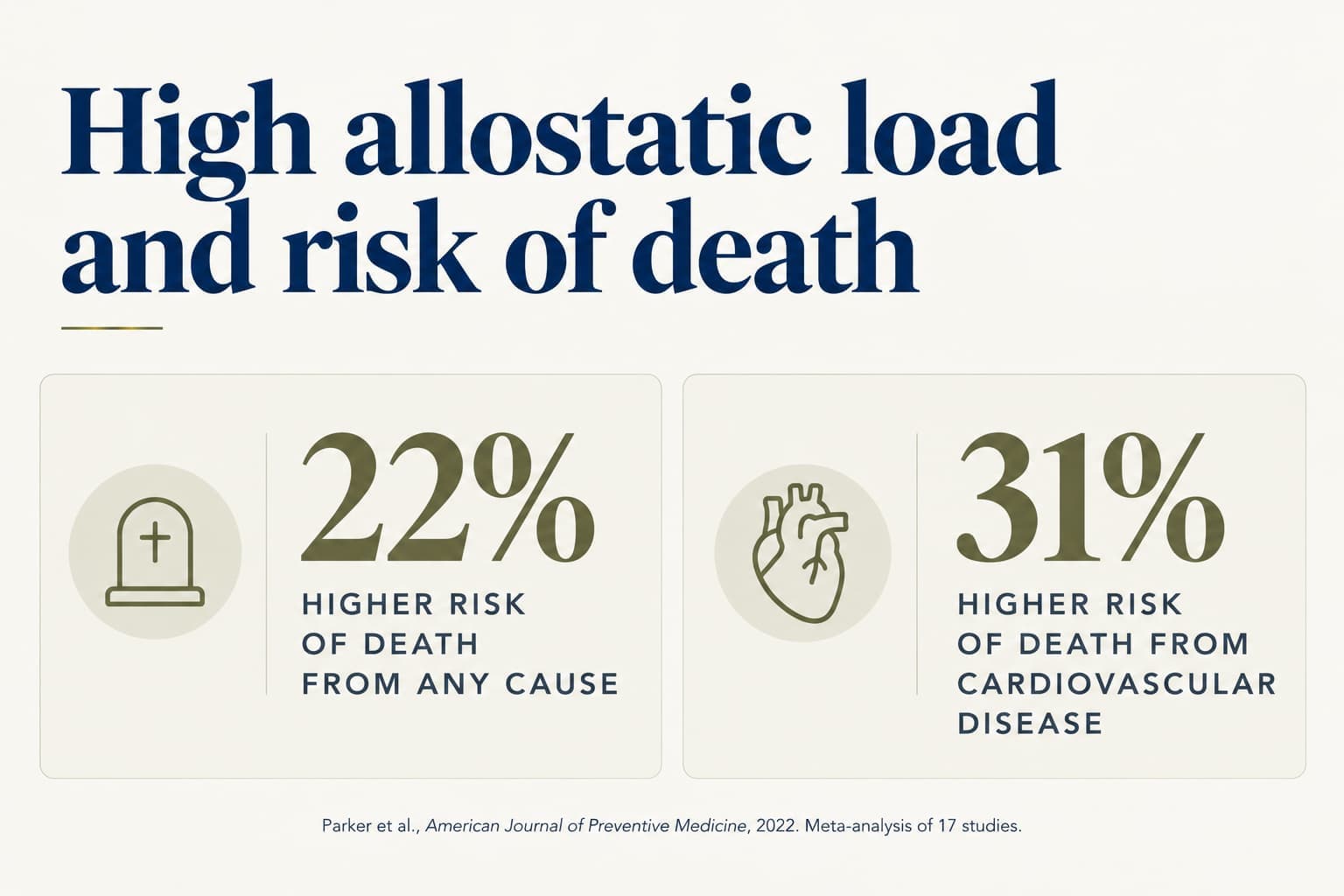
The body is built to adapt. When stress hits, hormones, blood pressure, blood sugar and the immune system all shift to meet the challenge, then settle back down. Scientists call this adaptive process allostasis. But when the system is pushed too often, too long, or fails to switch off, the adaptations themselves start to cause damage. That cumulative wear and tear is called allostatic load. It's measured by combining several everyday health markers, such as blood pressure, waist size, cholesterol, blood sugar and stress hormones, into a single score. In a 2022 analysis of 17 studies, people with high allostatic load had a 22% higher risk of death from any cause and a 31% higher risk of death from cardiovascular disease. This article explains the concept, how it's measured, what it predicts, and why it's useful for thinking about longevity.
Key numbers
| Finding | Detail |
|---|---|
| High allostatic load and death from any cause (meta-analysis, 17 studies) | 22% higher risk (HR 1.22) |
| High allostatic load and death from cardiovascular disease | 31% higher risk (HR 1.31) |
| Studies showing higher all-cause mortality with high allostatic load | All 17 included studies |
| Original allostatic load measure (MacArthur Studies of Successful Aging, adults aged 70-79) | 10 biological measurements combined into one score |
| Allostatic load and later decline in older adults (MacArthur, 7 years) | Predicted declines in physical and cognitive function |
How it works
Allostasis: stability through change. The older idea of homeostasis describes the body keeping things like temperature and blood pH within tight limits. Allostasis, a term developed by neuroscientist Bruce McEwen and colleagues, describes something more dynamic: the body actively changing its settings to meet demands. As McEwen put it, allostasis literally means "achieving stability through change."
When you face a stressful situation, your body raises cortisol, adrenaline, blood pressure and blood sugar, and adjusts the immune system (see How the Stress Response Works). That's allostasis working as intended.
Allostatic load: the price of adapting. McEwen defined allostatic load as "the wear and tear that results from either too much stress or from inefficient management of allostasis," such as not turning off the response when it's no longer needed. Over months and years, stress hormones and their downstream effects push blood pressure, blood sugar, body fat and inflammation in unhealthy directions.
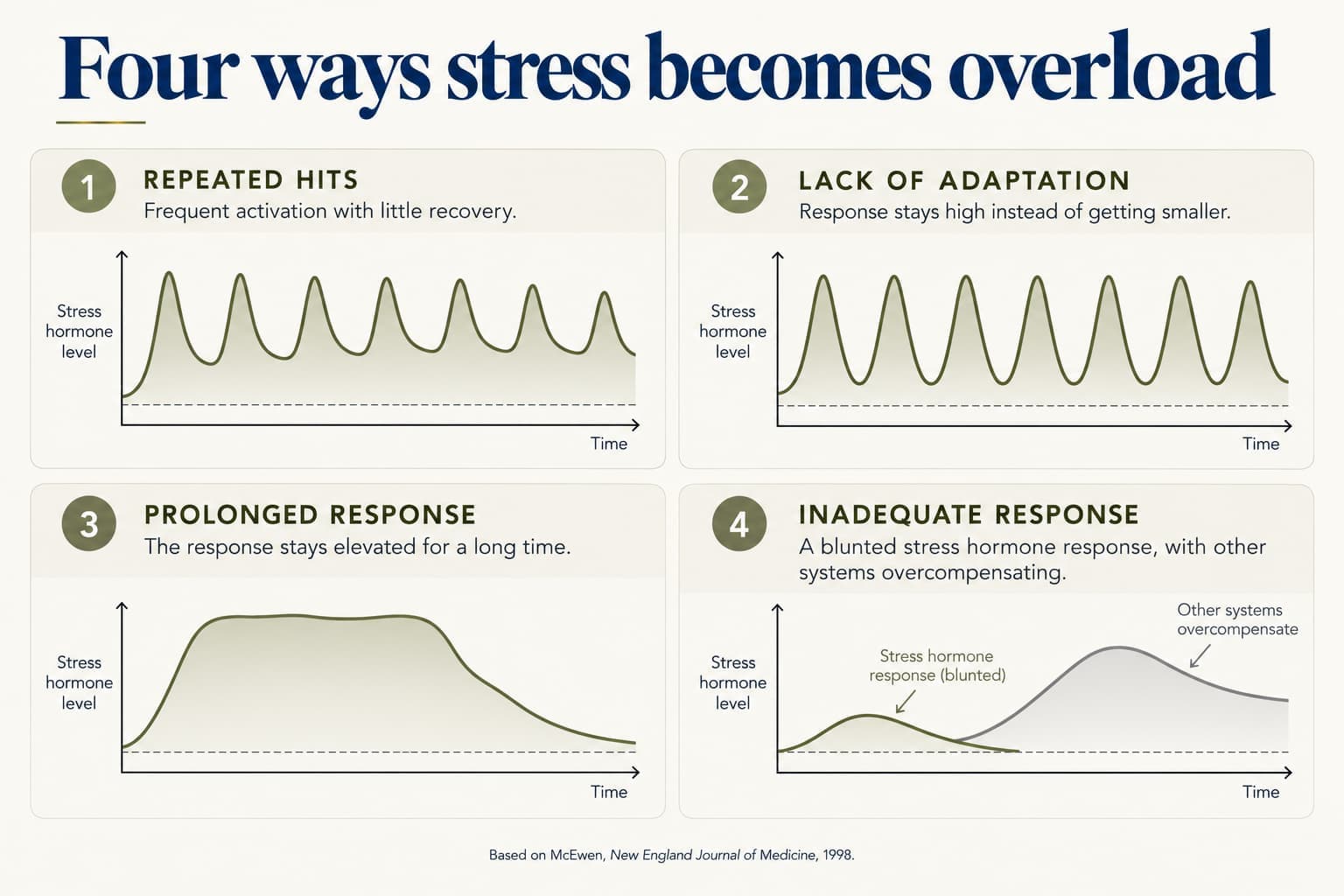
Four ways the system gets overloaded. McEwen described four patterns that lead to allostatic load:
- →1. Repeated hits: many stressful events, one after another, without enough recovery in between.
- →2. Lack of adaptation: failing to get used to the same stressor when it happens again and again.
- →3. Prolonged response: the stress response doesn't switch off when the stressor ends.
- →4. Inadequate response: one system under-responds, forcing others to overcompensate. For example, if cortisol doesn't rise enough, inflammation can run higher.
How it's measured. Allostatic load isn't a single blood test. Researchers combine several markers from different body systems into one score, typically counting how many fall into a high-risk range. The original measure, developed from the MacArthur Studies of Successful Aging in adults aged 70-79, combined 10 biological measurements. Common markers include:
- →Cardiovascular: blood pressure.
- →Metabolic: waist-to-hip ratio, cholesterol and HDL ("good") cholesterol, and HbA1c (long-term blood sugar).
- →Stress hormones: cortisol, adrenaline and noradrenaline, and DHEA-S.
- →Inflammation (in later versions): markers such as C-reactive protein.
There's no single agreed version. Different studies use different combinations of markers and cut-offs, which makes results harder to compare.
What the research shows
Allostatic load predicts decline and death. The concept was first tested in the MacArthur Studies of Successful Aging, a US study of high-functioning older adults. Higher allostatic load predicted cardiovascular disease and declines in physical and cognitive function over the following years, and a later analysis over seven years confirmed it as an independent predictor of functional decline.
In 2022, a systematic review and meta-analysis pooled the evidence on allostatic load and mortality. It found 17 eligible studies, and in every one, high allostatic load was linked to a higher risk of death from any cause. Pooling the data:
- →All-cause mortality: 22% higher risk (HR 1.22).
- →Cardiovascular mortality: 31% higher risk (HR 1.31).
The studies were generally of good quality, but the results varied a lot between them, largely because each used a different way of measuring allostatic load. The authors called for a standardised measure.
Why a combined score can be useful. No single marker captures the effect of long-term stress on the body. Blood pressure alone, or cholesterol alone, tells you about one system. Allostatic load tries to capture the combined, whole-body toll. That's why it often predicts outcomes better than individual markers, and why it's increasingly used in research on ageing, health inequalities and chronic stress.
Allostatic load and life circumstances. Allostatic load isn't just about personal stress levels. Research in the US has found higher allostatic load in groups facing more social and economic disadvantage, an idea sometimes called "weathering": the cumulative physical toll of long-term adversity. This is a reminder that stress affects health through life circumstances as well as individual choices.
Important limitations.
- →It's mainly a research tool. There's no standard clinical allostatic load test, and scores from different studies can't be directly compared.
- →Most studies are observational. They show that high allostatic load predicts poor outcomes, but can't prove that reducing it will change them.
- →Many of its components are familiar risk factors. Part of what allostatic load captures is simply high blood pressure, excess abdominal fat and poor blood sugar control, each already known to affect health.
Recommendations
- →Think in terms of total load. Stress affects multiple body systems at once. Looking after your health means addressing several of them together, not just one number.
- →Know your markers. Blood pressure, waist measurement, cholesterol and HbA1c are routine checks, and together they give a rough picture of the body's metabolic and cardiovascular strain.
- →Prioritise recovery. Sleep, physical activity, time outdoors and social connection help the stress system switch off. Practical techniques are covered in Stress-Reduction Techniques That Work.
- →Address the biggest components. Managing blood pressure, abdominal fat and blood sugar reduces the physical burden that allostatic load measures. Insulin resistance has its own article (see Insulin Resistance), and stress-related belly fat is covered in Stress, Cortisol and Belly Fat.
- →Look at long-term stressors, not just daily hassles. Ongoing pressures, such as caregiving, financial strain or job insecurity, are the kind of repeated, prolonged stress that builds allostatic load. Support and practical changes can help.
Practical notes
Allostatic load is a way of describing how stress, over time, becomes written into the body's physiology. It's measured by combining markers such as blood pressure, waist size, cholesterol, blood sugar and stress hormones, and high scores are consistently linked to decline and earlier death. It's mainly a research tool rather than a clinical test, but the idea behind it is practical: the goal isn't to avoid stress, but to limit how much wear and tear builds up by allowing the body to recover and by keeping its key systems in a healthy range.
- McEwen BS. Protective and damaging effects of stress mediators. New England Journal of Medicine, 1998;338:171-179.
- McEwen BS. Protective and damaging effects of stress mediators: central role of the brain. Dialogues in Clinical Neuroscience, 2006;8(4):367-381.
- Seeman TE, et al. Price of adaptation — allostatic load and its health consequences: MacArthur Studies of Successful Aging. Archives of Internal Medicine, 1997.
- Karlamangla AS, et al. Allostatic load as a predictor of functional decline: MacArthur Studies of Successful Aging. Journal of Clinical Epidemiology, 2002;55(7):696-710.
- Parker H, et al. Allostatic Load and Mortality: A Systematic Review and Meta-Analysis. American Journal of Preventive Medicine, 2022.
- Geronimus AT, et al. "Weathering" and age patterns of allostatic load scores among Blacks and Whites in the United States. American Journal of Public Health, 2006;96(5):826-833.
Do you know your blood pressure,
waist size and HbA1c?
Take the free Aevum Protocol assessment to see how your stress & hormones and 6 other longevity domains are performing — and get a personalised 90-day plan.
Take the Free Assessment →