Stress & Hormones
The Cortisol Rhythm and Health:
Why the Shape of Your Day Matters
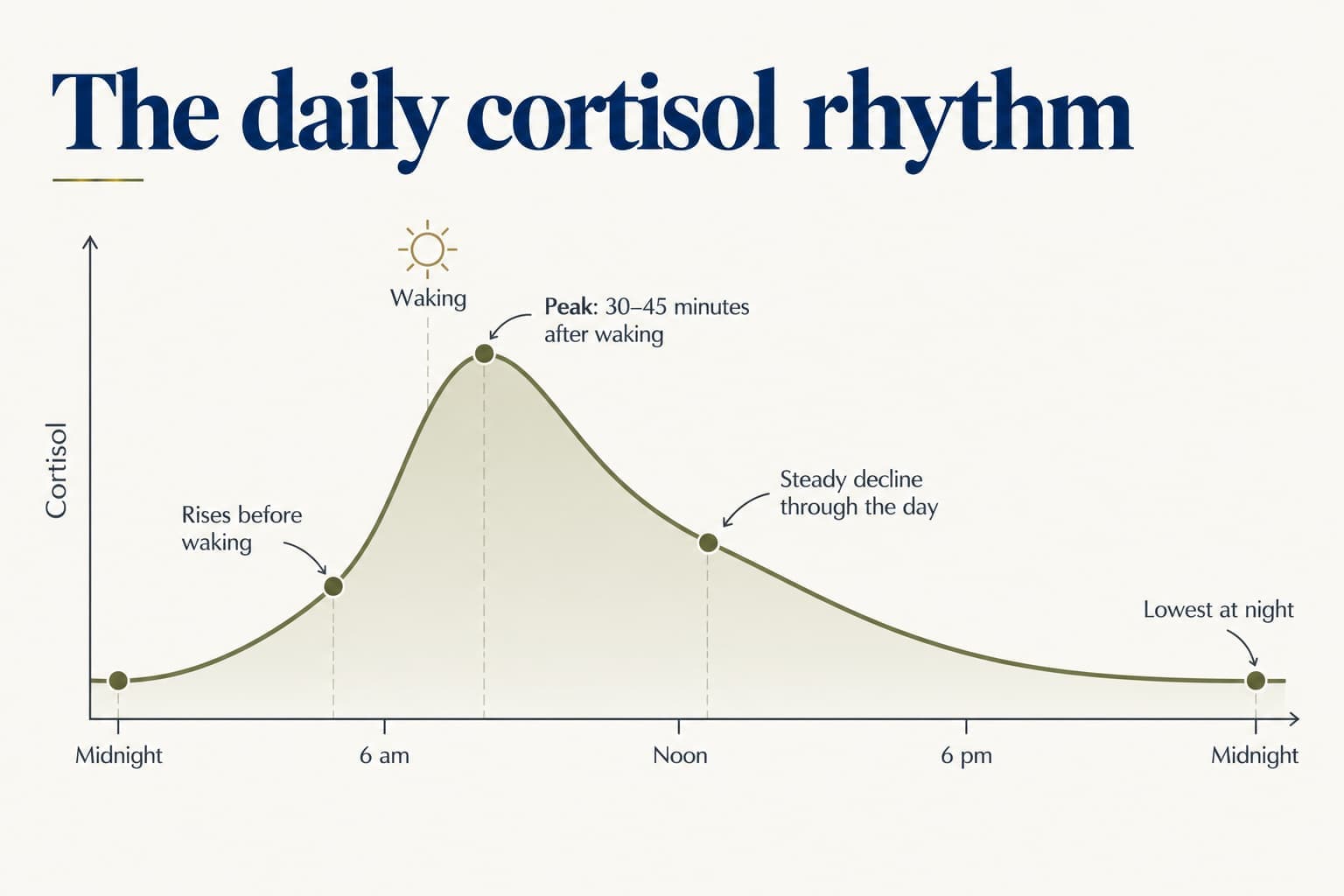
Cortisol is often called "the stress hormone", but it isn't simply good or bad, high or low. It follows a daily rhythm: it rises sharply in the first 30 to 45 minutes after waking, then falls steadily through the day to its lowest point around the middle of the night. That rhythm helps wake you up, time your energy, and coordinate body systems. Research increasingly suggests that the shape of this curve matters for health. People whose cortisol falls steeply across the day tend to do better than people with a flatter curve. In a large British study, a flatter daily cortisol slope was linked to a higher risk of death, particularly from cardiovascular disease. This article explains the rhythm, what disrupts it, what the research shows, and why a single "cortisol level" often tells you less than you'd think.
Key numbers
| Finding | Detail |
|---|---|
| Cortisol awakening response | Rise of about 50% to 156% in the first 30-45 minutes after waking |
| Flatter daily slope and poorer health (meta-analysis, 80 studies) | Linked to poorer health in 10 of 12 types of outcome; strongest for immune and inflammation measures |
| Flatter daily slope and death from any cause (Whitehall II, 4,047 adults, ~6 years) | 30% higher risk per 1 standard deviation flatter (HR 1.30) |
| Flatter daily slope and death from cardiovascular disease | HR 1.87 per 1 standard deviation flatter |
How it works
A daily rhythm, not a fixed level. Cortisol is released by the adrenal glands under the control of the brain's HPA axis, which also drives the stress response (see How the Stress Response Works). On top of the stress response, cortisol follows a built-in 24-hour pattern set by the body's master clock in the brain:
- →Early morning: cortisol starts rising in the last hours of sleep.
- →On waking: it surges. This is the cortisol awakening response, a rise of roughly 50% to 156% over the first 30-45 minutes.
- →Through the day: it declines steadily.
- →Night: it reaches its lowest point, allowing deep, restorative sleep.
This pattern helps you feel alert in the morning, supports energy and blood sugar during the day, and allows the body to rest and repair at night.
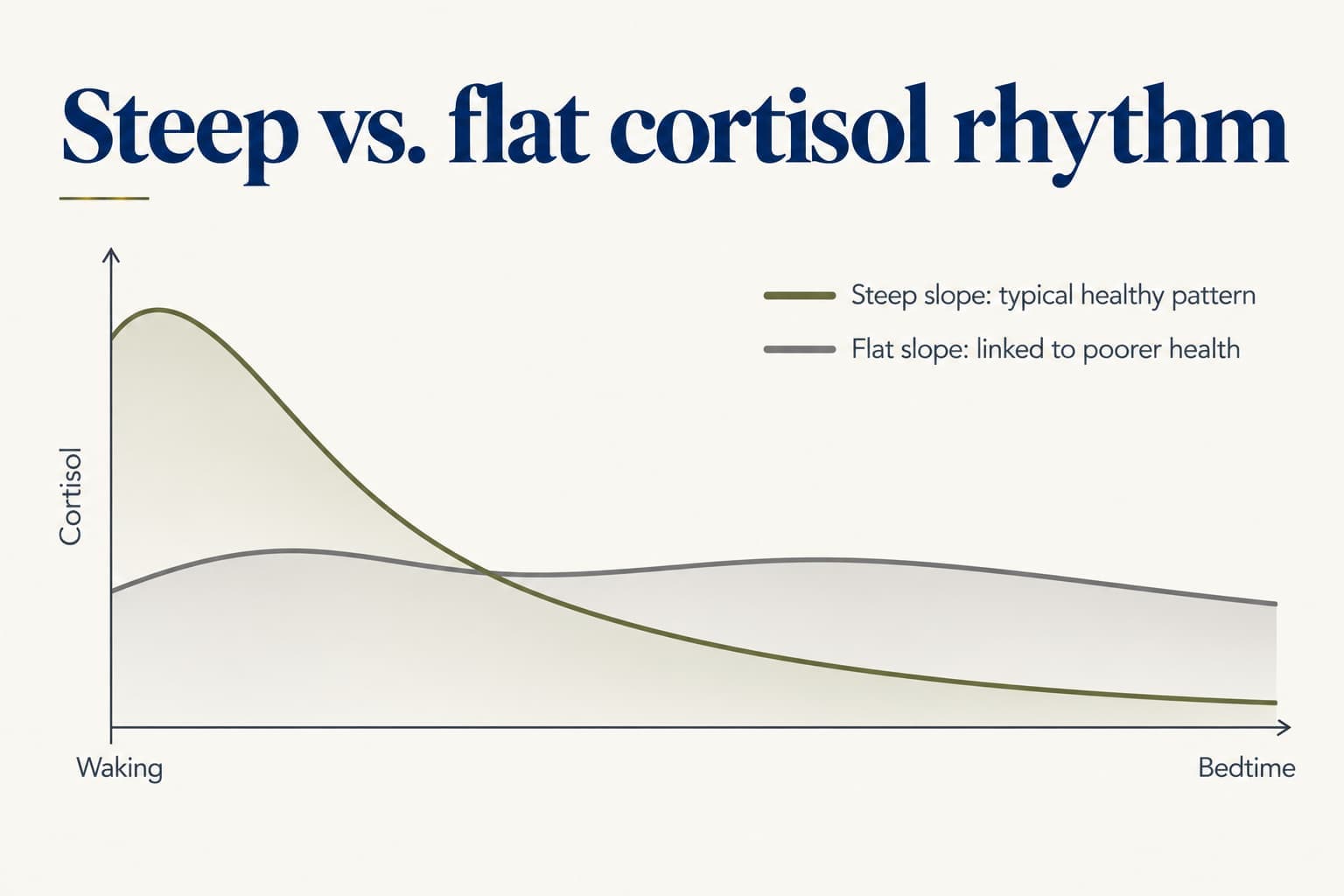
The "slope" is what researchers measure. Because cortisol changes so much through the day, a single measurement tells you little on its own. Researchers often focus on the diurnal slope: how steeply cortisol falls from morning to evening, usually measured with several saliva samples through the day.
- →A steep slope: high in the morning, low at night. This is the typical healthy pattern.
- →A flat slope: a lower morning level, a higher evening level, or both, so the curve is flattened.
A flatter slope suggests the rhythm is less well regulated.
What the research shows
Flatter slopes go with poorer health. In 2017, a systematic review and meta-analysis examined 179 associations from 80 studies linking the daily cortisol slope with health. Flatter slopes were linked to poorer health overall, and to poorer outcomes in 10 of 12 types of health measure examined, covering both mental and physical health. The strongest link was with immune and inflammation measures.
The authors suggested that flatter slopes may both reflect and contribute to disrupted body clocks and stress-related dysregulation, affecting many aspects of biology and behaviour. The individual effects were modest, and most studies were observational, so this doesn't prove that a flat slope causes poor health.
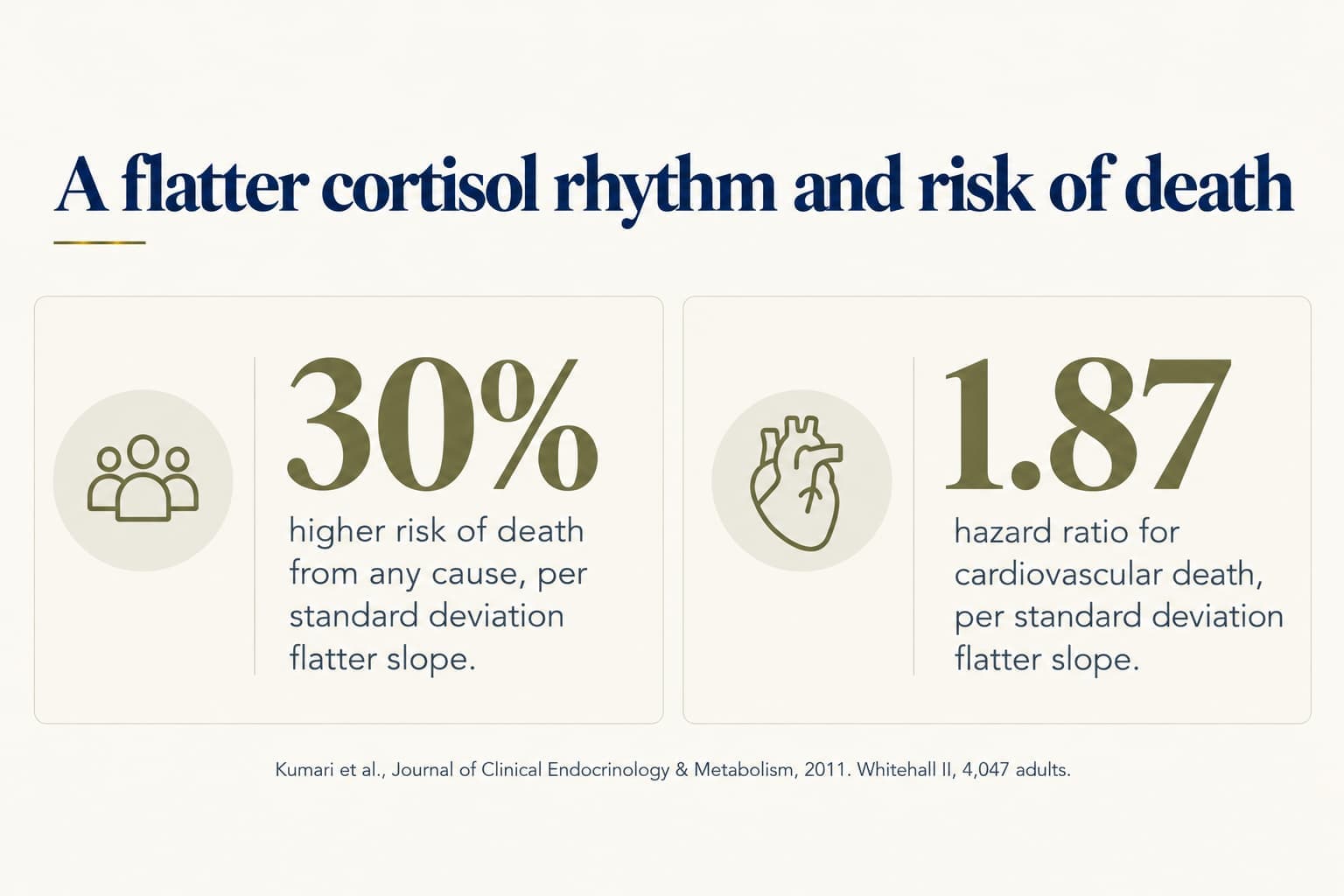
Flatter slopes and mortality. The Whitehall II study of British civil servants collected six saliva samples across a single day from 4,047 men and women, average age 61, and followed them for about six years. During that time, 139 people died, 32 from cardiovascular disease.
- →Each standard-deviation flatter slope was linked to a 30% higher risk of death from any cause (HR 1.30).
- →For cardiovascular deaths, the hazard ratio was 1.87 per standard deviation.
These findings held after accounting for other risk factors, though the number of cardiovascular deaths was small, so that estimate is less precise.
What flattens the curve. Research links flatter cortisol rhythms to:
- →Chronic stress, especially long-term stress with little recovery (see Allostatic Load).
- →Disrupted sleep and body-clock misalignment, including night-shift work and irregular sleep schedules.
- →Depression and chronic fatigue.
- →Poor health and inflammation.
In many of these cases, the relationship probably runs in both directions: stress and poor sleep flatten the rhythm, and a disrupted rhythm may worsen sleep, mood and metabolism.
Why a single cortisol test is often unhelpful. Because cortisol varies so much with time of day, recent stress, sleep and even the act of having blood drawn, a single random cortisol measurement usually says little about how well someone's stress system is working. Proper cortisol testing is mainly used to diagnose specific medical conditions:
- →Too much cortisol (Cushing's syndrome): tested with specific tests, such as late-night saliva cortisol, when the normal night-time low is lost.
- →Too little cortisol (adrenal insufficiency, such as Addison's disease): tested with morning cortisol and stimulation tests.
Commercial saliva cortisol panels marketed for "adrenal fatigue" or "cortisol imbalance" aren't a validated way to assess general health. Adrenal fatigue is covered in Adrenal Fatigue, and hormone testing in Hormone Testing.
Recommendations
The research on cortisol slopes is mostly observational, and there's little trial evidence on how to "fix" a flat rhythm directly. But the factors linked to a healthy rhythm are the same ones that support the body clock in general:
- →Keep a regular sleep and wake time, including at weekends.
- →Get bright light in the morning, ideally outdoors, and keep evenings dimmer.
- →Protect your sleep, aiming for about seven hours (see Sleep and Memory Consolidation).
- →Be physically active during the day, preferably not late at night if it disrupts your sleep.
- →Build daily recovery into stressful periods. Practical techniques are covered in Stress-Reduction Techniques That Work.
- →Shift workers: keep your sleep schedule as consistent as possible, protect a dark, quiet sleep environment, and discuss persistent sleep or health problems with a doctor.
- →Don't rely on commercial cortisol tests to diagnose stress or fatigue. If a doctor suspects a genuine cortisol disorder, specific medical tests are needed.
Practical notes
Cortisol isn't simply a "bad" stress hormone. It follows a daily rhythm that's essential for energy, alertness and recovery: a sharp morning rise, a steady decline, and a night-time low. Research suggests that a well-defined rhythm, falling steeply through the day, goes with better health, and that a flattened rhythm is linked to poorer health and higher mortality. The most practical ways to support a healthy rhythm are the basics of body-clock health: regular sleep and wake times, morning light, daytime activity and recovery from stress.
- Stalder T, et al. The Cortisol Awakening Response: Regulation and Functional Significance. Endocrine Reviews, 2025;46(1):43-59.
- Adam EK, et al. Diurnal cortisol slopes and mental and physical health outcomes: A systematic review and meta-analysis. Psychoneuroendocrinology, 2017;83:25-41.
- Kumari M, et al. Association of diurnal patterns in salivary cortisol with all-cause and cardiovascular mortality: findings from the Whitehall II study. Journal of Clinical Endocrinology & Metabolism, 2011;96(5):1478-1485.
Do you wake and sleep
at the same times every day?
Take the free Aevum Protocol assessment to see how your stress & hormones and 6 other longevity domains are performing — and get a personalised 90-day plan.
Take the Free Assessment →