Stress & Hormones
Adrenal Fatigue:
Why It Isn't a Real Diagnosis, and What Might Be Causing Your Tiredness
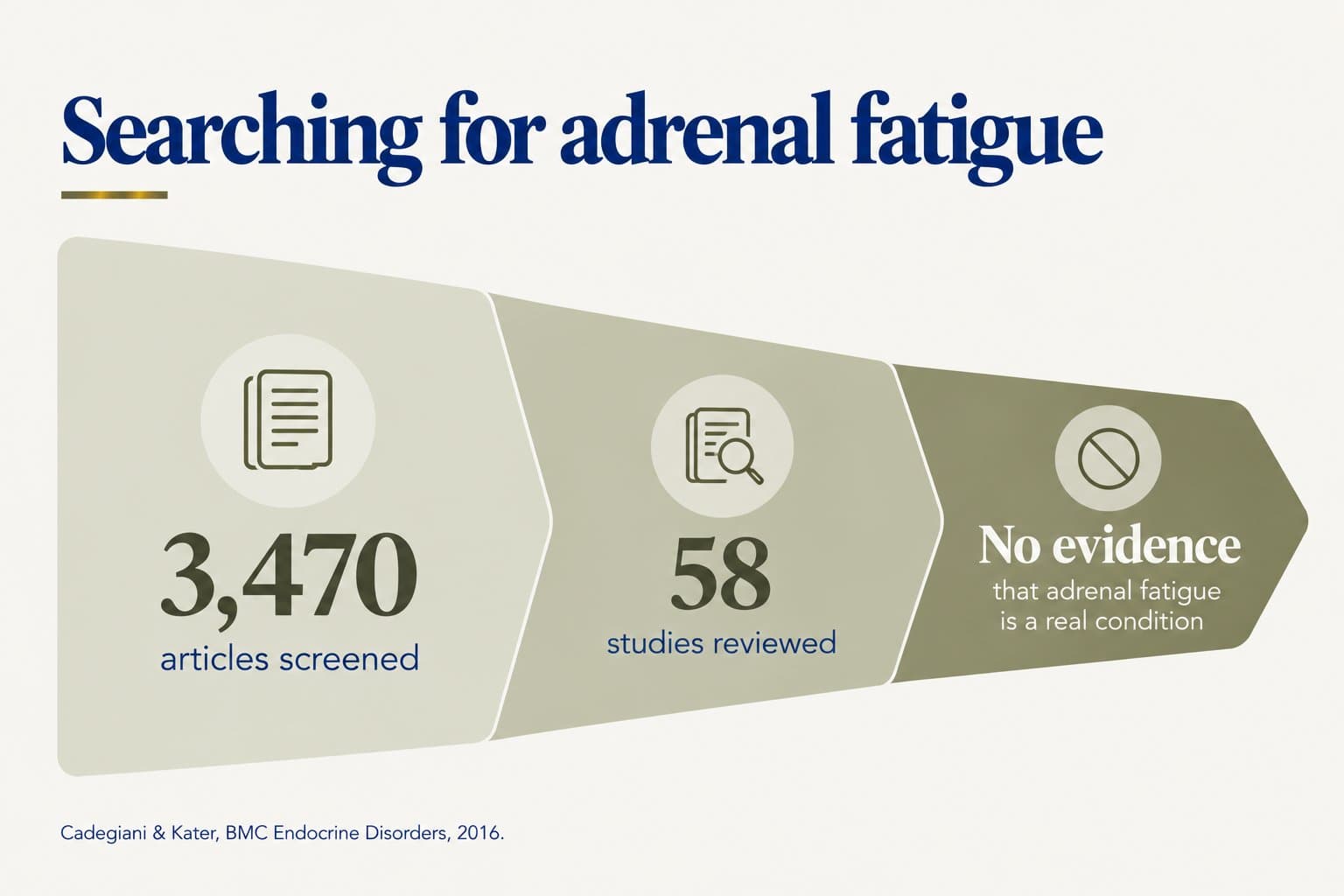
"Adrenal fatigue" is the idea that long-term stress wears out the adrenal glands, so they can't make enough cortisol, leaving people exhausted, foggy and craving salt or sugar. It's widely promoted online, with saliva tests and "adrenal support" supplements to match. But it isn't a recognised medical condition. A 2016 systematic review of 58 studies found no evidence that it exists, and the Endocrine Society states that "no scientific proof exists to support adrenal fatigue as a true medical condition". The concern is practical as well as scientific: when tested, all 12 over-the-counter "adrenal support" supplements contained thyroid hormone, and most contained at least one steroid hormone. The exhaustion people feel is real, though, and usually has a cause that can be found and treated. This article explains what the evidence shows, the rare adrenal condition that does exist, and what to check instead.
Key numbers
| Finding | Detail |
|---|---|
| Systematic review of "adrenal fatigue" (3,470 articles screened, 58 studies included) | No evidence it is a real medical condition; test results were conflicting |
| Endocrine Society position | "No scientific proof exists to support adrenal fatigue as a true medical condition" |
| "Adrenal support" supplements tested (12 products) | All contained thyroid hormone; most contained at least one steroid hormone |
| Real adrenal insufficiency (Addison's disease) | Rare: about 10-22 per 100,000 people in Europe, fewer in Asia |
The claim
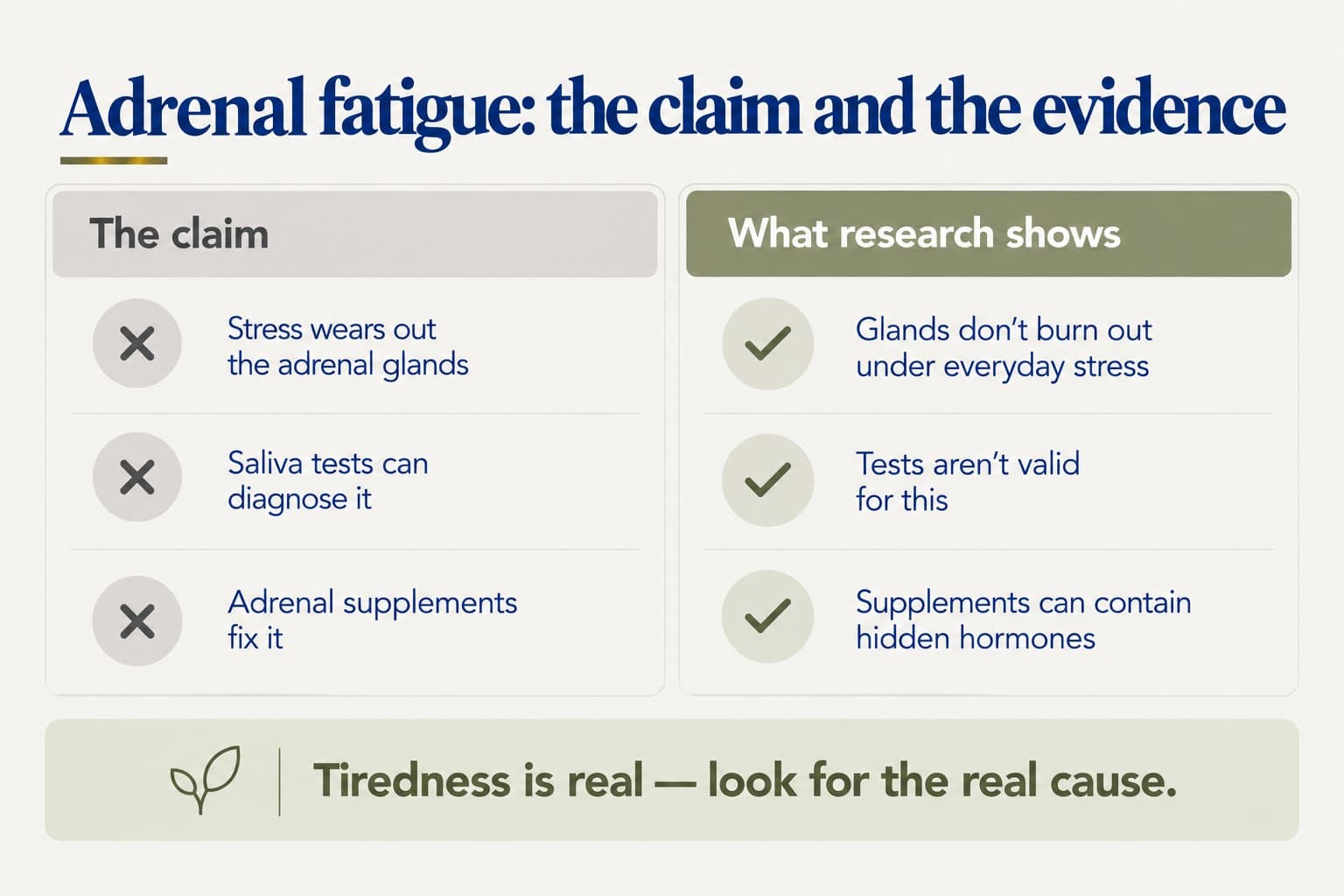
The term "adrenal fatigue" was coined in 1998 to describe a set of non-specific symptoms, including tiredness, trouble waking up, poor concentration, low mood, salt or sugar cravings and needing caffeine to get going. The theory is that chronic stress drives the adrenal glands to overproduce cortisol until they become "exhausted" and can't keep up.
This sounds plausible, because cortisol is the body's main stress hormone (see How the Stress Response Works). But the theory doesn't match how the stress system actually works. In healthy people, the adrenal glands don't "run out" under ordinary life stress. When chronic stress does affect cortisol, it tends to change the daily rhythm, for example flattening the normal morning peak and evening fall, rather than causing the glands to fail (see The Cortisol Rhythm and Health).
Evidence strength
Well established: adrenal fatigue hasn't been shown to exist. In 2016, researchers systematically searched the medical literature for any study testing adrenal function in people with "adrenal fatigue" or related symptoms. From 3,470 articles, 58 studies met their criteria: 33 in healthy people and 25 in people with symptoms. The most common tests were cortisol on waking, the cortisol rise after waking and the daily saliva cortisol rhythm. Results were conflicting across almost every test, regardless of study quality, and no consistent pattern identified an "adrenal fatigue" condition. The authors concluded that "there is no substantiation that 'adrenal fatigue' is an actual medical condition".
The Endocrine Society, the largest organisation of hormone specialists, takes the same position, and says that tests marketed for adrenal fatigue "are not based on scientific facts or supported by good scientific studies".
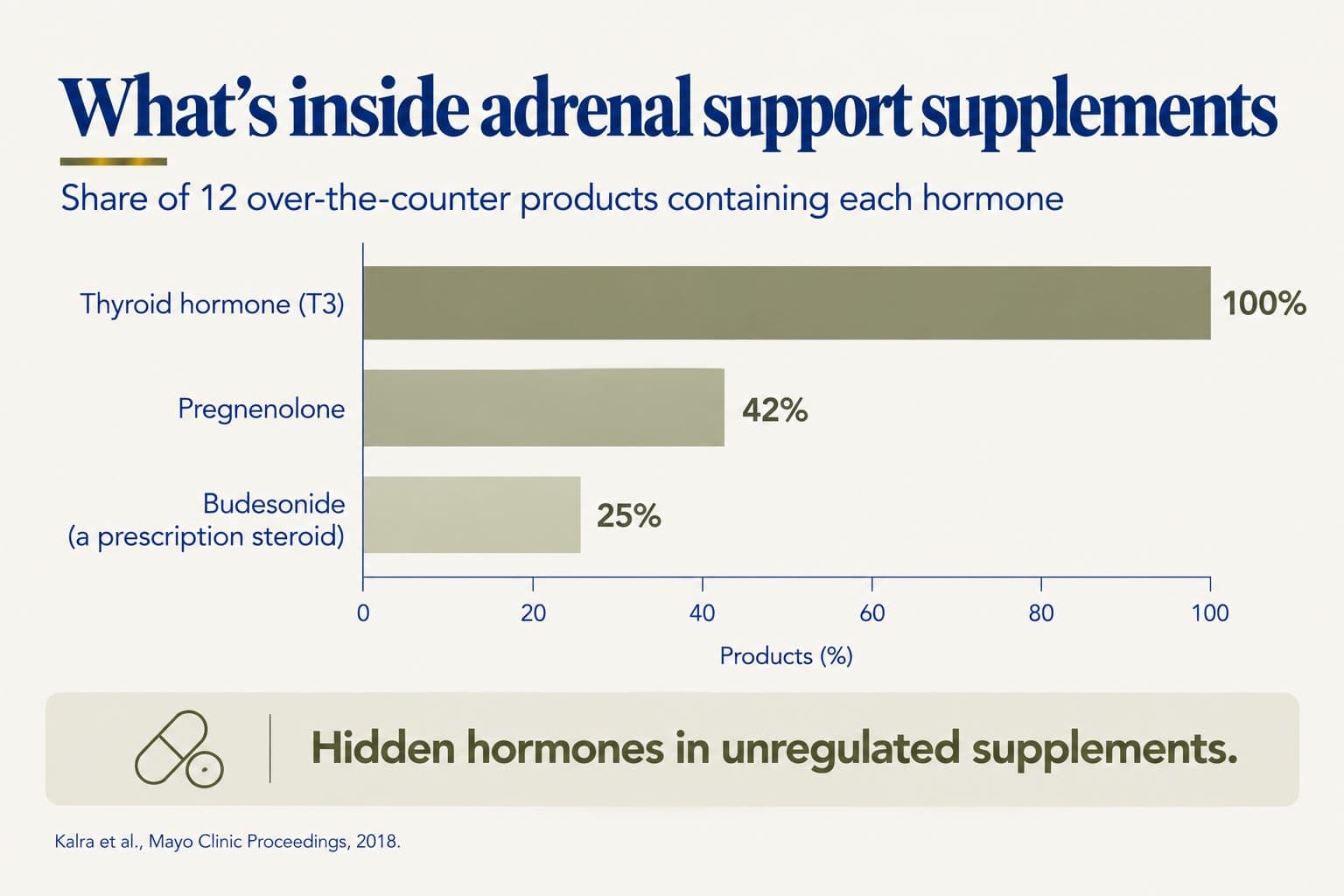
Well established: adrenal supplements can be risky. A 2018 Mayo Clinic study bought 12 over-the-counter supplements marketed for "adrenal support", "adrenal fatigue" or energy, and tested them for hormones. All 12 contained thyroid hormone (T3). Most contained at least one steroid hormone: 42% contained pregnenolone, 25% contained budesonide (a prescription steroid), and some contained cortisol or cortisone. The researchers warned of the risks of hidden ingredients in unregulated supplements.
The Endocrine Society warns that taking adrenal hormones you don't need can cause your own adrenal glands to stop working, and that people who then stop them suddenly may be at risk of a life-threatening adrenal crisis. Hidden thyroid hormone can also cause a fast heart rate, anxiety and, over time, bone loss.
Well established: real adrenal insufficiency exists, and is different. Adrenal insufficiency is a genuine, serious condition in which the adrenal glands don't make enough cortisol, and often aldosterone. Primary adrenal insufficiency (Addison's disease) is rare, affecting about 10-22 people per 100,000 in Europe and fewer in Asia. In the US and Europe, about 90% of cases are autoimmune. Adrenal insufficiency can also follow long-term use of steroid medicines, when they're stopped suddenly.
Unlike "adrenal fatigue", it has clear features and reliable tests:
- →Symptoms: worsening tiredness and weakness, weight loss, loss of appetite, nausea, dizziness on standing, salt craving and, in Addison's disease, darkening of the skin, especially in creases and scars and inside the mouth.
- →Tests: blood tests showing low cortisol with high ACTH, often low sodium and high potassium, confirmed by an ACTH (Synacthen) stimulation test.
- →Danger: untreated, it can lead to an adrenal crisis, with collapse, low blood pressure and low blood sugar, which is a medical emergency.
It's treated with replacement hormones and close medical follow-up, not supplements.
Not supported: saliva tests and "adrenal support" products.
- →Saliva cortisol panels sold for adrenal fatigue: not validated for this purpose. (Late-night saliva cortisol does have a real, specific use, in testing for cortisol excess.)
- →Adrenal glandular extracts and "adrenal support" blends: no evidence of benefit, and hidden hormones are a real risk.
- →Hydrocortisone for "adrenal fatigue": can suppress the body's own cortisol production and is not recommended without true adrenal insufficiency.
- →"Cortisol cocktails" and other social media fixes: no evidence they treat any adrenal problem.
Herbal adaptogens such as ashwagandha are often marketed alongside these products; they're covered in Adaptogens: Ashwagandha and Rhodiola.
What might be causing your tiredness
The symptoms blamed on adrenal fatigue are real and common. They usually have identifiable causes, many of them treatable:
- →Poor or insufficient sleep, or sleep apnoea (see Sleep and Memory Consolidation)
- →Depression or anxiety (see Depression and Cognitive Decline)
- →Burnout and chronic stress (see Burnout and Allostatic Load)
- →Underactive thyroid (see Thyroid Function and Ageing)
- →Anaemia or low iron, and low vitamin B12 or vitamin D
- →Diabetes or insulin resistance (see Insulin Resistance)
- →Perimenopause or low testosterone (see Perimenopause: Signs and Symptoms and Testosterone Decline in Men)
- →Medicines, alcohol, or recovery from an infection
Recommendations by situation
- →You feel exhausted and think you have adrenal fatigue: see a doctor for a proper assessment. Basic blood tests and a review of sleep, mood and medicines find many causes.
- →You've been offered a saliva test or "adrenal support" supplements: these aren't evidence-based, and supplements may contain undeclared hormones.
- →You're already taking adrenal supplements or hydrocortisone: don't stop suddenly, especially if you've taken them for weeks or more. Talk to a doctor, who may need to check your adrenal function and taper them safely.
- →You have weight loss, dizziness on standing, salt craving, darkening skin, or vomiting with weakness: see a doctor promptly; these can be signs of true adrenal insufficiency.
- →You've taken steroid tablets or injections for a long time: ask your doctor about the risk of adrenal suppression, and never stop steroids abruptly.
- →Your tests are normal but you're still worn out: focus on sleep, stress, activity and mood, which are where the evidence for improving energy lies.
Practical notes
Adrenal fatigue isn't a real medical diagnosis. There's no evidence the adrenal glands "burn out" under everyday stress, the tests marketed for it aren't valid, and the supplements sold for it may contain hidden thyroid and steroid hormones. The symptoms, however, are real, and usually have causes that can be diagnosed and treated, from poor sleep and depression to thyroid disease and anaemia. The genuine adrenal condition, adrenal insufficiency, is rare, serious and diagnosed with reliable blood tests. The most useful step for anyone who feels persistently exhausted is a proper medical assessment, not an adrenal supplement.
- Cadegiani FA, Kater CE. Adrenal fatigue does not exist: a systematic review. BMC Endocrine Disorders, 2016;16(1):48.
- Endocrine Society. Adrenal Fatigue. Endocrine Library, patient resource.
- Kalra S, et al. Over-the-Counter "Adrenal Support" Supplements Contain Thyroid and Steroid-Based Adrenal Hormones. Mayo Clinic Proceedings, 2018;93(3):286-287.
- Bornstein SR, et al. Diagnosis and Treatment of Primary Adrenal Insufficiency: An Endocrine Society Clinical Practice Guideline. Journal of Clinical Endocrinology & Metabolism, 2016;101(2):364-389.
- MSD Manual Professional Edition. Primary Adrenal Insufficiency (Addison Disease).
Have you been told your tiredness
is "adrenal fatigue"?
Take the free Aevum Protocol assessment to see how your stress & hormones and 6 other longevity domains are performing — and get a personalised 90-day plan.
Take the Free Assessment →