Stress & Hormones
Adaptogens:
What the Evidence Shows for Ashwagandha and Rhodiola
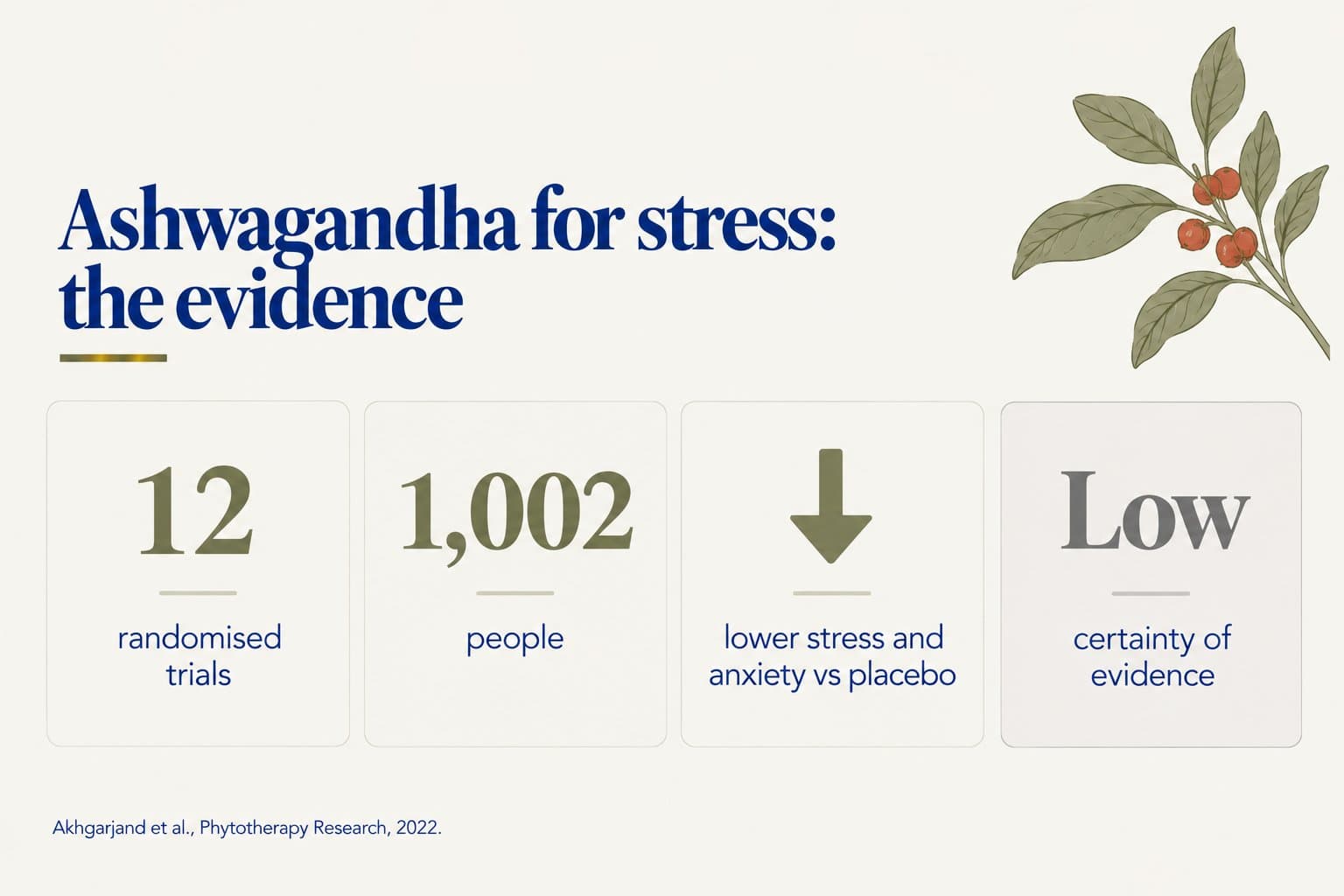
"Adaptogens" are herbs said to help the body resist and recover from stress. The two best studied are ashwagandha (Withania somnifera, known in Sri Lanka as amukkara) and rhodiola (Rhodiola rosea, or golden root). Ashwagandha has the stronger evidence: a 2022 meta-analysis of 12 trials with 1,002 people found it reduced stress and anxiety compared with placebo. But the certainty of that evidence was rated low, most trials were small and short, and rare cases of liver injury have been reported. Denmark banned ashwagandha in 2023 over safety concerns, though other major regulators haven't followed. Rhodiola's evidence is weaker: a systematic review found mixed results for fatigue, with every trial at high risk of bias or poorly reported. Neither herb is a substitute for addressing the causes of stress, and both are best treated as optional extras, used short term and with care.
Key numbers
| Finding | Detail |
|---|---|
| Ashwagandha for stress and anxiety (meta-analysis, 12 trials, 1,002 people) | Reduced stress and anxiety vs placebo; certainty of evidence low |
| Ashwagandha, 240 mg/day for 60 days (60 adults with chronic stress) | Anxiety scores fell more than with placebo; morning cortisol fell by about 23% |
| Ashwagandha safety (US National Institutes of Health) | Appears well tolerated for up to about 3 months; long-term safety unknown |
| Ashwagandha and liver injury | Rare cases, typically 2-12 weeks after starting; most resolve after stopping |
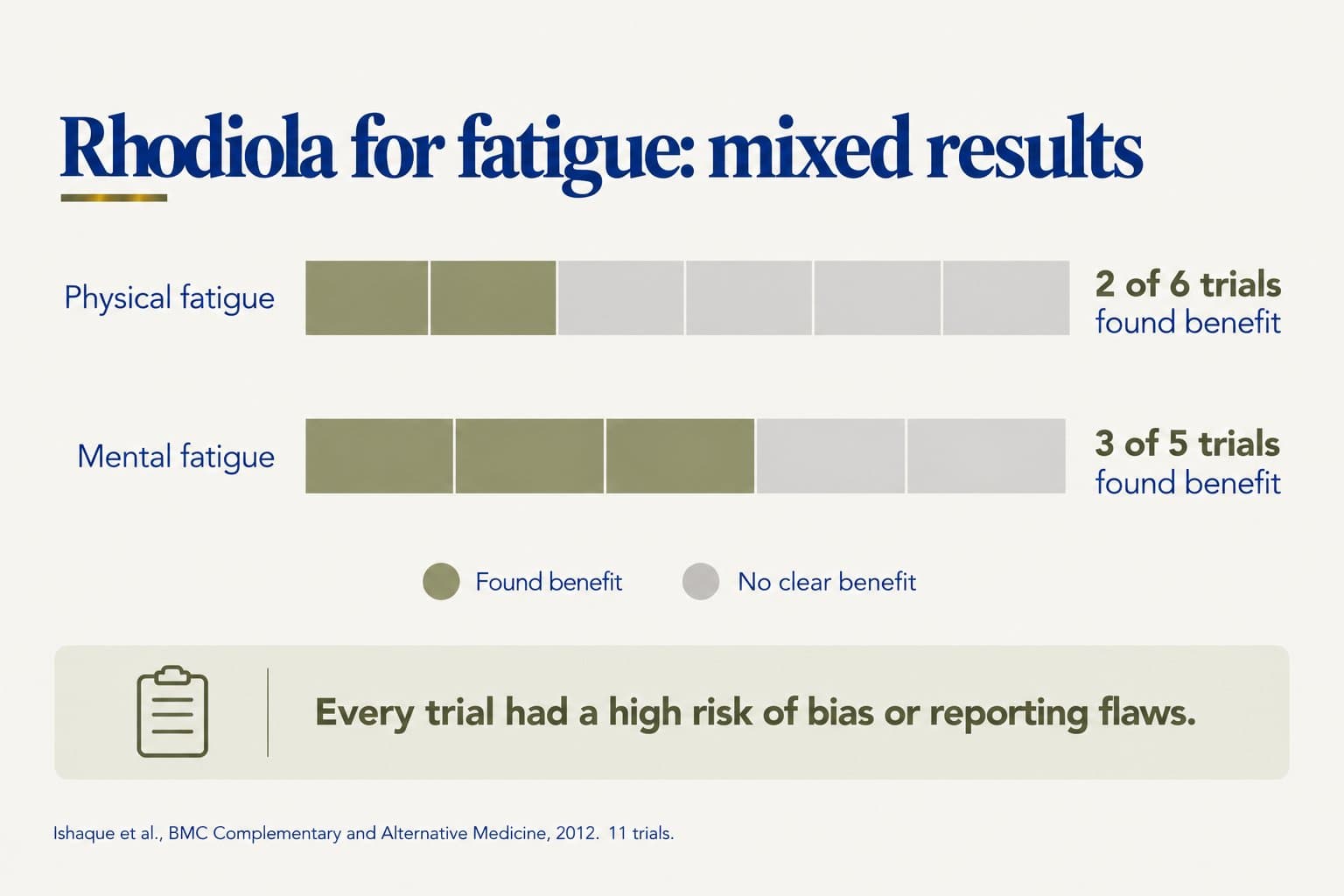
| Rhodiola for fatigue (systematic review, 11 trials) | 2 of 6 physical fatigue trials and 3 of 5 mental fatigue trials positive; all at high risk of bias or poorly reported |
What are adaptogens?
"Adaptogen" isn't a medical or pharmacological category. It's a term used to describe plants claimed to help the body "adapt" to physical and emotional stress and restore balance. Many come from traditional medicine systems: ashwagandha has a long history in Ayurveda and Sri Lankan traditional medicine, while rhodiola has been used in Scandinavia, Russia and Eastern Europe.
The appeal is understandable. Chronic stress affects sleep, mood, energy and long-term health (see How the Stress Response Works and Allostatic Load), and a natural remedy seems attractive. The question is whether these herbs work in trials, and whether they're safe.
Evidence strength
Low-to-moderate: ashwagandha for stress and anxiety. A 2022 systematic review and meta-analysis combined 12 randomised trials with 1,002 participants. Ashwagandha significantly reduced both anxiety and stress scores compared with placebo, with the stress benefit seen at doses of 300-600 mg a day. However, results varied widely between trials, and the authors rated the certainty of the evidence as low for both outcomes.
The US National Institutes of Health's Office of Dietary Supplements summarises the evidence similarly: trials of ashwagandha extract, mostly from India and lasting 6-8 weeks, found reductions in stress, anxiety and cortisol, with benefits appearing greater at 500-600 mg a day. A separate analysis of 5 studies found small improvements in sleep quality, more so in people with insomnia.
A typical example is a 2019 trial in which 60 adults with self-reported chronic stress took 240 mg of ashwagandha extract or placebo daily for 60 days. Anxiety scores fell more with ashwagandha, and in the ashwagandha group, morning cortisol fell from 14.2 to 10.8 mcg/dL, about 23%.
The limitations matter. Most trials were small, lasted two months or less, used different extracts and doses, were conducted mainly in India, and many were funded by supplement manufacturers. Findings from such trials tend to shrink when larger, independent studies are done.
Low: rhodiola for fatigue and stress. A 2012 systematic review found 11 randomised trials of rhodiola for physical or mental fatigue. Two of six trials in healthy people found benefit for physical fatigue, and three of five found benefit for mental fatigue. But every trial had a high risk of bias or reporting flaws that made its results hard to trust, and the authors concluded that methodological flaws limited any assessment of whether rhodiola works.
The European Medicines Agency recognises rhodiola as a "traditional herbal medicinal product for the relief of symptoms of stress, such as fatigue and exhaustion". This is based on long-standing traditional use, not on proof of effectiveness from clinical trials.
Not supported: the bigger claims.
- →"Balancing hormones" or "fixing adrenal fatigue": adrenal fatigue isn't a recognised condition (see Adrenal Fatigue), and there's no good evidence adaptogens restore hormone balance in healthy people.
- →Long-term disease prevention or longevity: no trials have tested this.
- →Replacing treatment: adaptogens aren't a substitute for treatment of anxiety disorders, depression or insomnia.
Safety
Ashwagandha. Ashwagandha "appears to be well tolerated for up to about 3 months of use", according to the NIH, with mild side effects such as stomach upset, loose stools, nausea and drowsiness. Its long-term safety isn't known.
- →Liver injury: rare but documented. The US LiverTox database rates ashwagandha as a "likely" cause of liver injury, which typically appears 2-12 weeks after starting, with jaundice and itching. Most cases resolve within 1-4 months of stopping, though rare severe cases have occurred, particularly in people with existing liver disease.
- →Thyroid: ashwagandha may raise thyroid hormone levels, and cases of an overactive thyroid have been reported.
- →Pregnancy: some experts advise against it during pregnancy.
- →Hormone-sensitive prostate cancer: it might not be safe.
- →Medicine interactions: possible with thyroid medicines, diabetes and blood pressure medicines, immunosuppressants and sedatives.
In 2023, Denmark banned ashwagandha, citing possible effects on thyroid and sex hormones and concerns about pregnancy, and saying a safe dose couldn't be established. These concerns were based mainly on animal studies and rare case reports, and the European Medicines Agency and the US FDA haven't taken similar action. The ban reflects uncertainty rather than proof of harm, but it's a reason for caution.
Rhodiola. Rhodiola seems generally well tolerated in short-term studies, but safety data are limited. The European Medicines Agency doesn't recommend it for under-18s or during pregnancy or breastfeeding, because safety hasn't been established.
Quality and labelling. Herbal supplements are loosely regulated in many countries. Products vary in which part of the plant is used, the extract strength and the dose, and may not contain what the label says.
Recommendations by situation
- →You're under ongoing stress and want to try ashwagandha: it's reasonable to try a standardised root extract short term (up to about 3 months), alongside, not instead of, sleep, exercise and stress reduction. Stop if you notice side effects.
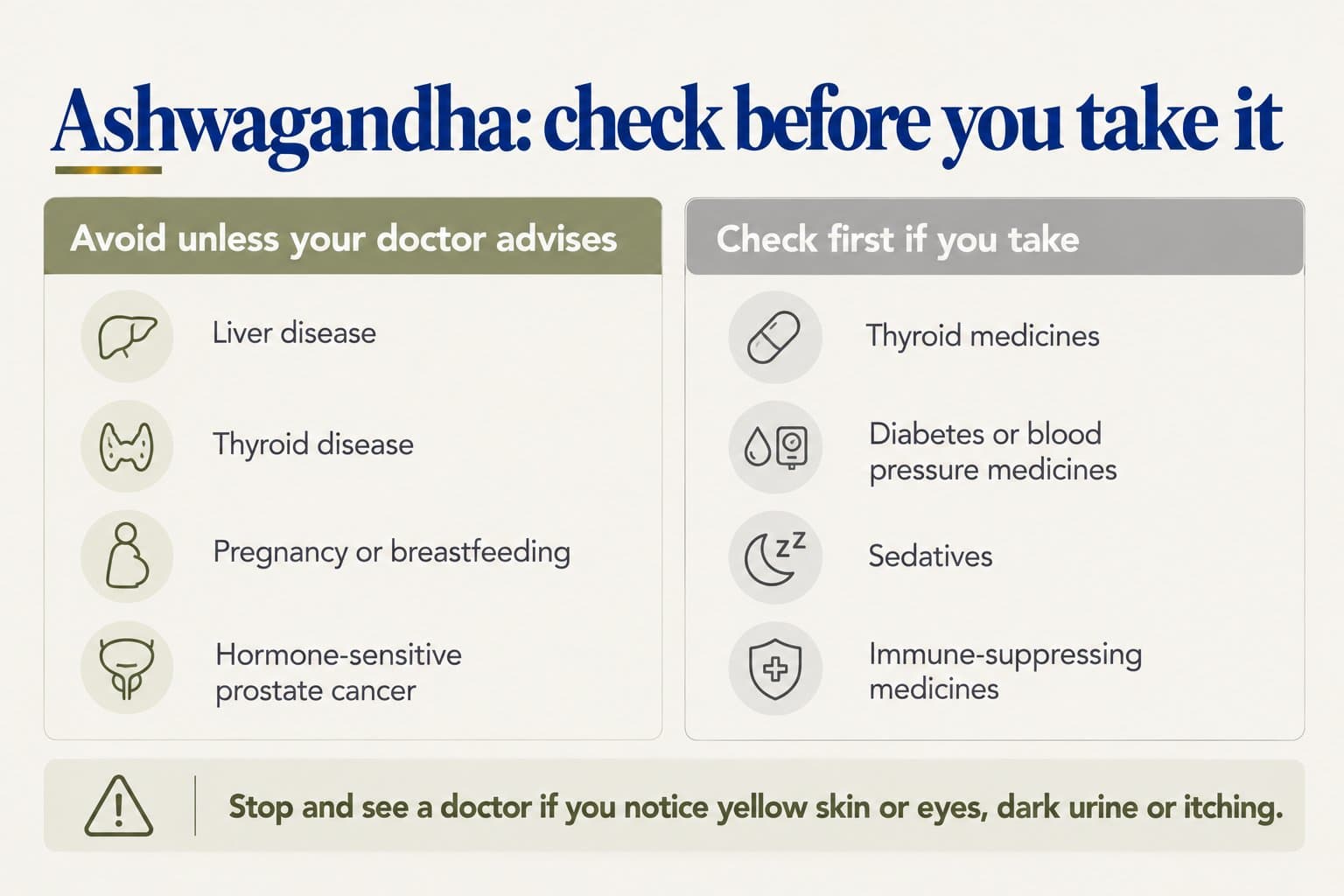
- →You have liver disease, thyroid disease or hormone-sensitive prostate cancer, or you're pregnant or breastfeeding: avoid ashwagandha unless your doctor advises otherwise.
- →You take thyroid, diabetes, blood pressure, sedative or immune-suppressing medicines: check with your doctor or pharmacist first.
- →You develop yellowing of the skin or eyes, dark urine, itching or pain in the upper right abdomen while taking ashwagandha: stop it and see a doctor promptly.
- →You're considering rhodiola for fatigue: the evidence is weak, so first look for causes of fatigue such as poor sleep, anaemia, thyroid problems or depression (see Adrenal Fatigue).
- →You have persistent anxiety, low mood or insomnia: see a doctor. Effective treatments exist, including talking therapies.
Evidence-based ways to manage stress, such as exercise, mindfulness and cognitive behavioural approaches, are covered in Stress-Reduction Techniques That Work.
Practical notes
Ashwagandha is the best-studied adaptogen, and small, short trials suggest it can modestly reduce stress and anxiety, but the overall certainty of evidence is low, long-term safety is unknown, and rare liver and thyroid problems have been reported. Rhodiola's evidence is weaker still, resting mainly on traditional use and flawed trials. Neither is a cure for chronic stress. If you choose to try one, use a reputable product, keep it short term, tell your doctor, and pair it with the foundations that have much stronger evidence: good sleep, regular exercise, social connection and practical steps to reduce the causes of stress.
- Akhgarjand C, et al. Does Ashwagandha supplementation have a beneficial effect on the management of anxiety and stress? A systematic review and meta-analysis of randomized controlled trials. Phytotherapy Research, 2022;36(11):4115-4124.
- Lopresti AL, et al. An investigation into the stress-relieving and pharmacological actions of an ashwagandha (Withania somnifera) extract: a randomized, double-blind, placebo-controlled study. Medicine (Baltimore), 2019;98(37):e17186.
- National Institutes of Health, Office of Dietary Supplements. Ashwagandha: Is it helpful for stress, anxiety, or sleep? Health Professional Fact Sheet.
- LiverTox: Clinical and Research Information on Drug-Induced Liver Injury. Ashwagandha. National Institute of Diabetes and Digestive and Kidney Diseases.
- Björnsson HK, et al. Ashwagandha-induced liver injury: a case series from Iceland and the US Drug-Induced Liver Injury Network. Liver International, 2020;40(4):825-829.
- Ishaque S, et al. Rhodiola rosea for physical and mental fatigue: a systematic review. BMC Complementary and Alternative Medicine, 2012;12:70.
- European Medicines Agency. European Union herbal monograph on Rhodiola rosea L., rhizoma et radix (Revision 1).
Are you taking ashwagandha
or another herbal supplement?
Take the free Aevum Protocol assessment to see how your stress & hormones and 6 other longevity domains are performing — and get a personalised 90-day plan.
Take the Free Assessment →