Stress & Hormones
Insulin Resistance:
The Hidden Driver of Metabolic Ageing
Insulin resistance happens when the body's cells stop responding well to insulin, the hormone that moves sugar out of the blood. To compensate, the pancreas makes more insulin, and for years blood sugar can stay normal while the strain builds silently. Eventually, if the pancreas can't keep up, blood sugar rises into the prediabetes range and then to type 2 diabetes. Insulin resistance is also closely tied to abdominal fat, fatty liver, high blood pressure, unhealthy cholesterol and heart disease. It's particularly relevant in Sri Lanka: a national survey found that about 23% of adults had diabetes and another 30% had prediabetes, and South Asians tend to develop metabolic problems at lower body weights than Europeans. The encouraging news is that it's highly responsive to lifestyle change: in a landmark US trial, lifestyle changes cut the risk of developing diabetes by 58%. This article explains what insulin resistance is, who's at risk, how it's detected, and what works.
Key numbers
| Finding | Detail |
|---|---|
| Diabetes in Sri Lankan adults (Sri Lanka Health and Ageing Study, 6,661 adults, 2018-19) | 23.0%; only 14.3% of adults had previously been diagnosed, so nearly 4 in 10 people with diabetes didn't know |
| Prediabetes in Sri Lankan adults | 30.5% |
| Lifestyle change and diabetes risk (Diabetes Prevention Program, 3,234 US adults, 2.8 years) | 58% lower risk; metformin 31% lower |
| Lifestyle change in Asian Indians with impaired glucose tolerance (Indian Diabetes Prevention Programme, 531 people) | 28.5% lower risk; metformin 26.4% lower |
| BMI and risk in Asian populations (WHO expert consultation) | Substantial diabetes and heart risk below the standard overweight cut-off of 25; action points suggested at 23 and 27.5 |
How insulin resistance develops
Insulin acts like a key that lets glucose into muscle, liver and fat cells (see Insulin and the Metabolic Hormones). In insulin resistance, the key works less well, so the pancreas produces more insulin to get the same effect.
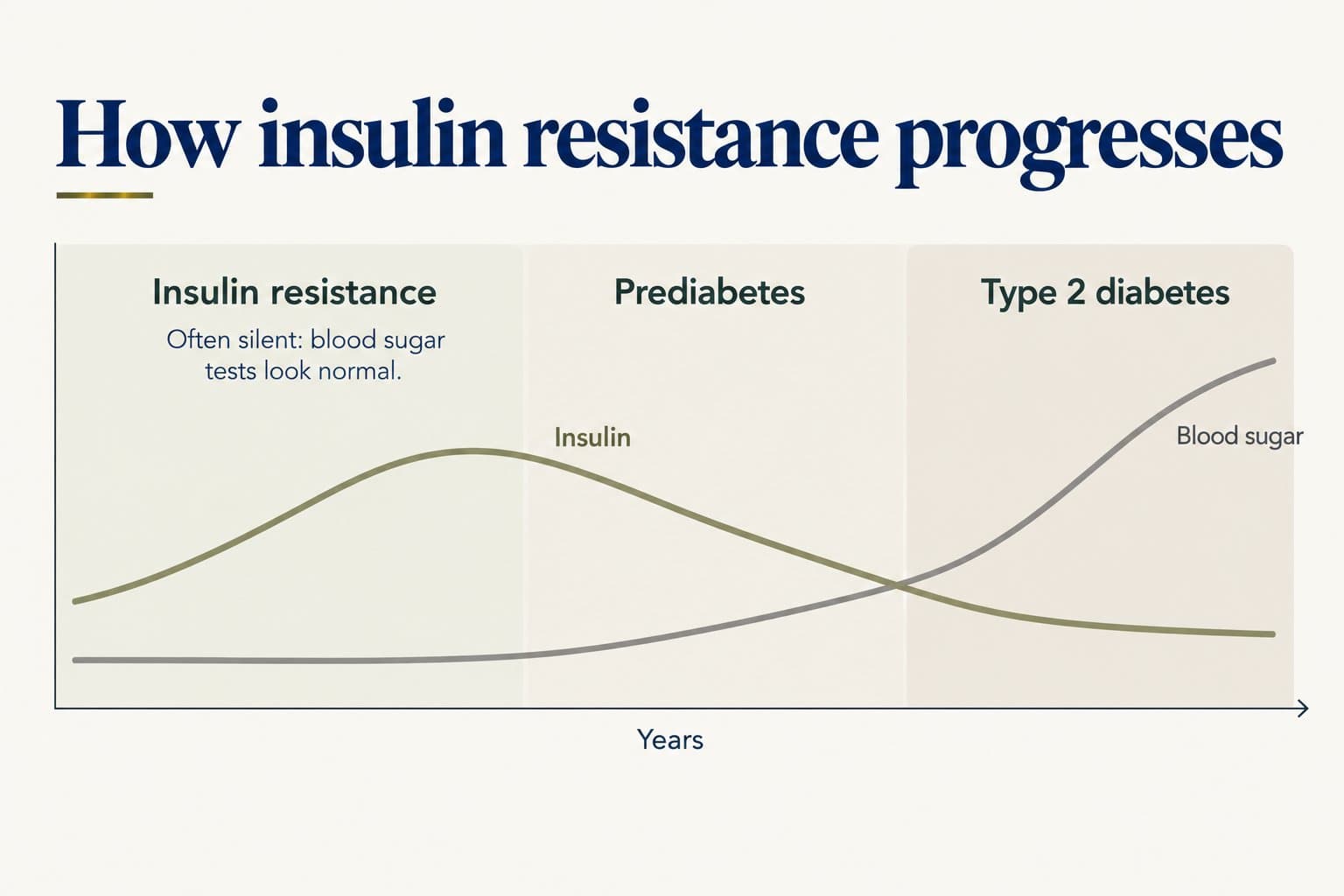
The process usually unfolds in stages:
- →1. Insulin resistance with normal blood sugar: the pancreas compensates by making extra insulin. Standard blood sugar tests look normal.
- →2. Prediabetes: the pancreas starts to struggle, and fasting blood sugar or HbA1c rises above normal but below the diabetes range.
- →3. Type 2 diabetes: the pancreas can no longer keep up, and blood sugar stays high.
Because the early stage is silent, many people have insulin resistance for years before it shows up on routine tests.
Where the fat is matters. Fat stored around the abdominal organs (visceral fat) and in the liver is much more strongly linked to insulin resistance than fat under the skin. This is why waist size is often a better guide to metabolic risk than weight alone.
Risk factor table: what drives insulin resistance
| Factor | Association | Modifiable? | Evidence strength |
|---|---|---|---|
| Excess abdominal fat | Central driver of insulin resistance and type 2 diabetes | Yes | Strong |
| Physical inactivity | Less glucose uptake by muscle; higher diabetes risk | Yes | Strong |
| South Asian ancestry | Higher risk at lower body weights; WHO suggests lower BMI action points for Asians | No, but it changes how early to act | Strong |
| Family history of type 2 diabetes | Higher risk | No | Strong |
| Age | Risk rises with age | No | Strong |
| Short or poor sleep | Shifts hunger hormones and worsens blood sugar control | Yes | Moderate |
| Chronic stress | Cortisol raises blood sugar and favours abdominal fat | Partly | Moderate |
What the research shows
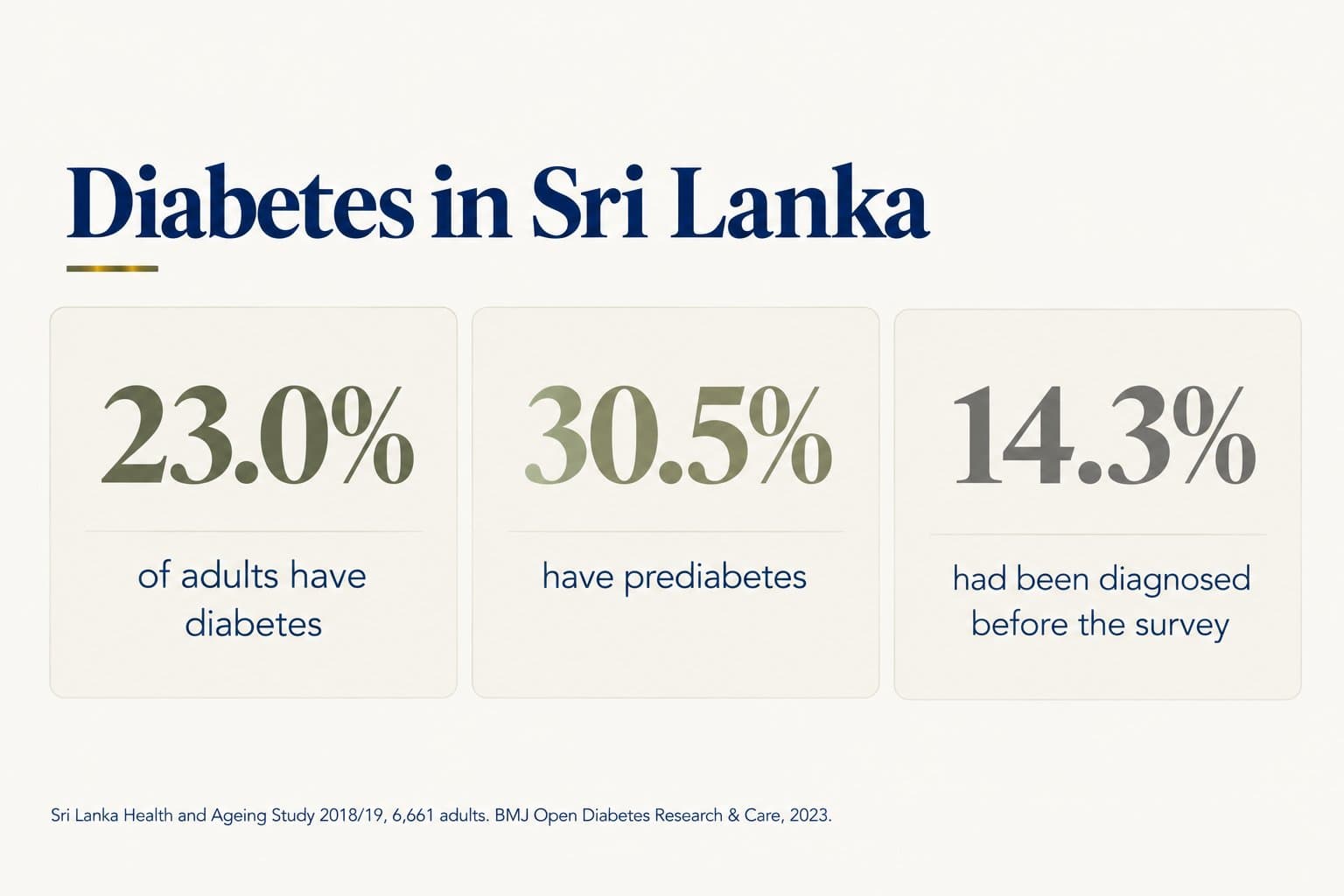
Sri Lanka is a diabetes hotspot. The Sri Lanka Health and Ageing Study, a nationally representative survey of 6,661 adults in 2018-19, found that 23.0% had diabetes and 30.5% had prediabetes. Only 14.3% of adults had previously been diagnosed with diabetes, meaning nearly 4 in 10 people with diabetes didn't know they had it. The researchers also noted diabetes and abnormal blood sugar in people of normal body weight, which calls for further research.
South Asians are at risk at lower body weights. A World Health Organization expert consultation in 2004 found that Asian populations have different relationships between BMI, body fat and health risk than European populations. A substantial proportion of Asian people had a high risk of type 2 diabetes and cardiovascular disease at BMIs below the standard overweight cut-off of 25. The consultation suggested additional public health action points at a BMI of 23 and 27.5. In practice, this means a "normal" BMI doesn't rule out insulin resistance in South Asians, and waist size and blood tests matter.
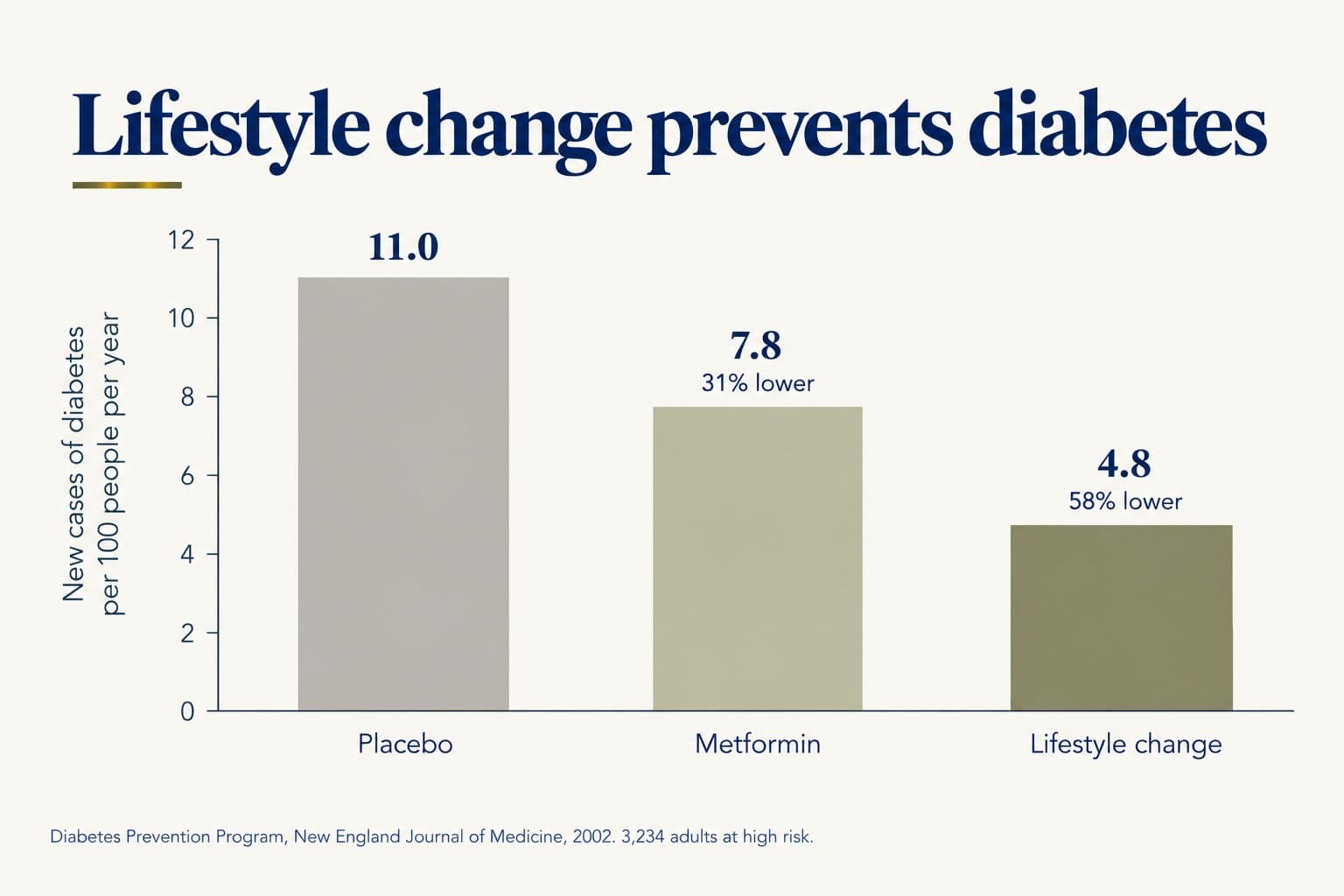
Lifestyle change works, and works well. The Diabetes Prevention Program randomised 3,234 US adults at high risk of type 2 diabetes (average age 51, average BMI 34) to an intensive lifestyle programme, metformin or placebo. The lifestyle programme aimed for 7% weight loss and 150 minutes a week of moderate activity. Over an average of 2.8 years, diabetes developed in 4.8 people per 100 per year on lifestyle change, 7.8 on metformin and 11.0 on placebo. That's a 58% reduction with lifestyle change and 31% with metformin. Only seven people needed to follow the lifestyle programme for three years to prevent one case of diabetes.
In India, the Indian Diabetes Prevention Programme tested similar approaches in 531 Asian Indians with impaired glucose tolerance. Over three years, diabetes developed in 55.0% of the control group, compared with 39.3% with lifestyle change and 40.5% with metformin: relative reductions of 28.5% and 26.4%. Combining the two didn't add further benefit. The smaller effect than in the US trial may partly reflect differences in the population and the intervention, but it confirms that prevention works in South Asians.
How it's detected
There's no single routine test for insulin resistance itself, but these standard tests identify its consequences:
- →Fasting blood glucose and HbA1c (average blood sugar over about three months) detect prediabetes and diabetes.
- →Waist circumference is a simple guide to abdominal fat.
- →Triglycerides and HDL cholesterol: high triglycerides and low HDL often go with insulin resistance.
- →Blood pressure, and liver tests or ultrasound, which can show fatty liver.
Fasting insulin and calculated scores such as HOMA-IR are sometimes used, but they aren't standardised for routine clinical use.
What you can actually change
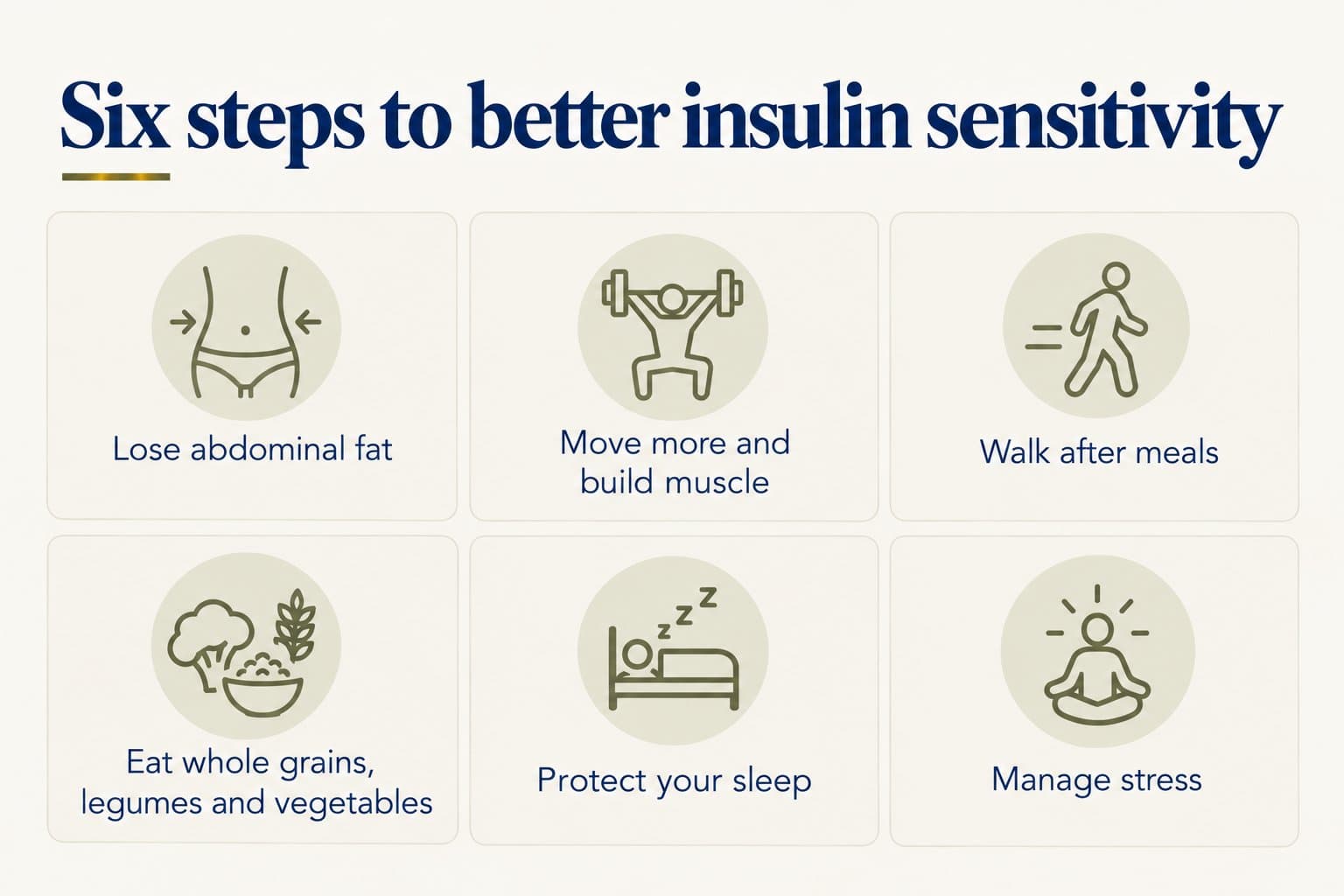
1. Reduce abdominal fat. Even modest weight loss, around 5-7% of body weight, significantly improves insulin sensitivity. The Diabetes Prevention Program's target was 7%.
2. Move more, and build muscle. Aim for at least 150 minutes a week of moderate activity plus strength training at least twice a week. Muscle is the body's main site of glucose uptake, and even a short walk after meals helps (see Exercise and Brain Health).
3. Improve your diet quality. Choose whole grains such as red rice, legumes like dhal, vegetables and fish, and cut back on sugary drinks, sweets, white rice in large portions and fried snacks (see The MIND Diet and Brain Health).
4. Protect your sleep. Short sleep raises hunger hormones and worsens blood sugar control (see Insulin and the Metabolic Hormones).
5. Manage chronic stress. Long-term stress hormones raise blood sugar and encourage abdominal fat (see Allostatic Load).
6. Get tested, and start earlier if you're South Asian. Because Sri Lankans and other South Asians develop diabetes at lower body weights, regular blood sugar testing is worthwhile, especially with a family history, a larger waist, high blood pressure, or a history of diabetes in pregnancy.
Recommendations
- →Know your numbers: fasting glucose or HbA1c, waist size, blood pressure and cholesterol.
- →Don't rely on BMI alone, especially if you're South Asian. A "normal" weight doesn't rule out insulin resistance.
- →If you have prediabetes, act now. Lifestyle change can cut the risk of progressing to diabetes by more than half.
- →Combine activity, diet, weight, sleep and stress management. Together they're far more powerful than any single change.
- →Ask about medication if needed. Metformin also reduces diabetes risk in people at high risk, and a doctor can advise whether it's appropriate.
Practical notes
Insulin resistance is common, silent and closely linked to abdominal fat, inactivity and ageing, and it's especially important in Sri Lanka, where nearly a quarter of adults have diabetes and nearly a third have prediabetes. South Asians face higher risk at lower body weights, so regular testing matters even for people who don't feel overweight. Large trials in the US and India show that lifestyle change substantially reduces the risk of progressing to diabetes. The most effective steps are losing abdominal fat, moving more, building muscle, eating well, sleeping well and managing stress.
- Rannan-Eliya RP, et al. Prevalence of diabetes and pre-diabetes in Sri Lanka: a new global hotspot - estimates from the Sri Lanka Health and Ageing Survey 2018/2019. BMJ Open Diabetes Research & Care, 2023;11(1).
- WHO Expert Consultation. Appropriate body-mass index for Asian populations and its implications for policy and intervention strategies. The Lancet, 2004;363:157-163.
- Diabetes Prevention Program Research Group. Reduction in the incidence of type 2 diabetes with lifestyle intervention or metformin. New England Journal of Medicine, 2002;346:393-403.
- Ramachandran A, et al. The Indian Diabetes Prevention Programme shows that lifestyle modification and metformin prevent type 2 diabetes in Asian Indian subjects with impaired glucose tolerance (IDPP-1). Diabetologia, 2006;49(2):289-297.
Do you know your HbA1c
and your waist size?
Take the free Aevum Protocol assessment to see how your stress & hormones and 6 other longevity domains are performing — and get a personalised 90-day plan.
Take the Free Assessment →