Stress & Hormones
Insulin and the Metabolic Hormones:
How Your Body Manages Energy
Every meal sets off a conversation between hormones. Insulin moves sugar out of the blood and into cells. Glucagon releases stored sugar between meals. Ghrelin, from the stomach, signals hunger and rises before meals. Leptin, from fat tissue, tells the brain how much energy is stored. GLP-1, from the gut, helps release insulin and makes you feel full, and it's the hormone copied by a new generation of weight-loss medicines. When this system works well, blood sugar stays steady and appetite matches the body's needs. When it's disrupted, by excess body fat, inactivity, poor sleep or chronic stress, the result can be insulin resistance, weight gain and eventually type 2 diabetes. This article explains the main metabolic hormones, how they work together, and how everyday habits affect them.
Key numbers
| Finding | Detail |
|---|---|
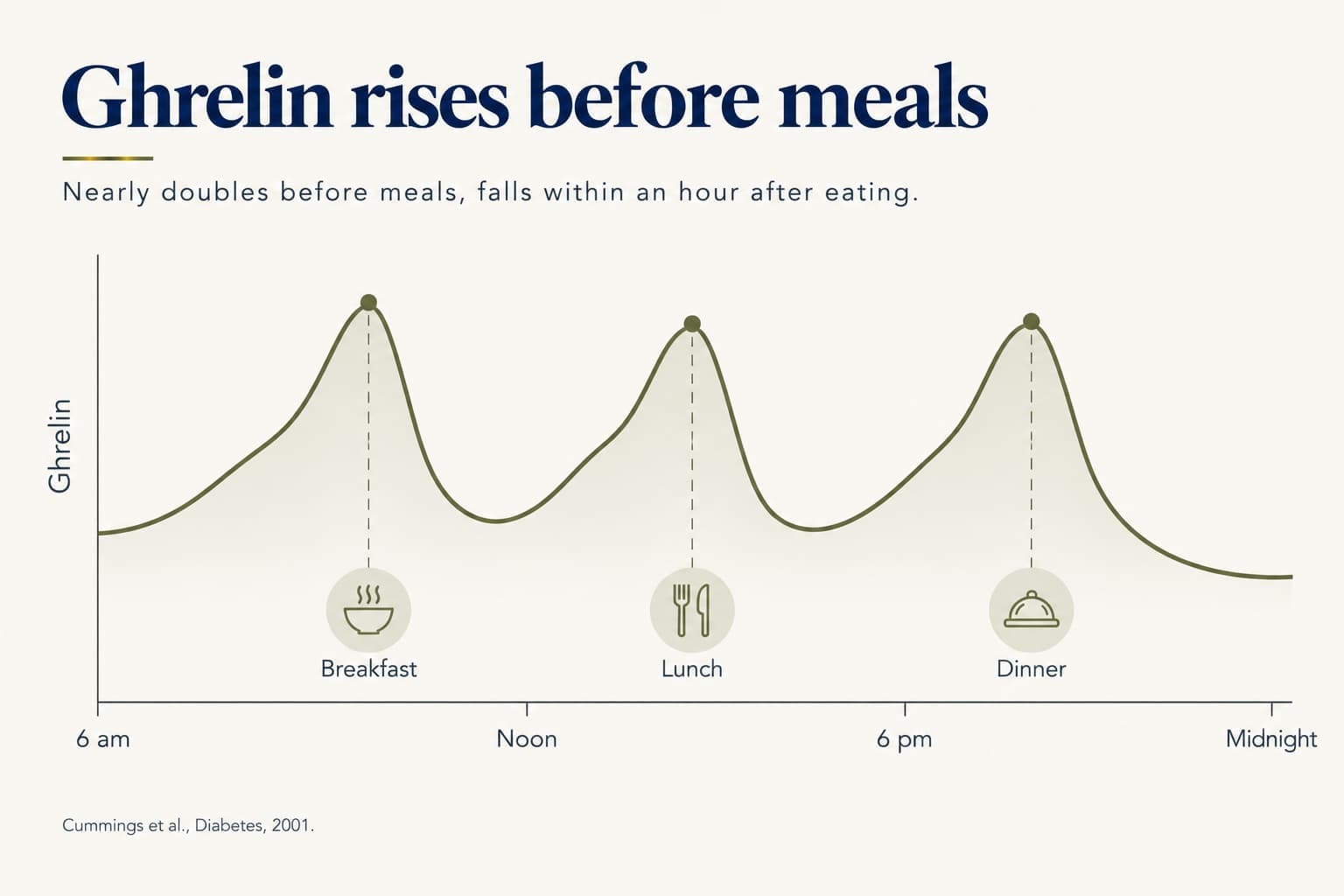
| Ghrelin before meals (10 healthy adults, sampled 38 times over 24 hours) | Nearly doubled just before each meal, then fell within an hour of eating |
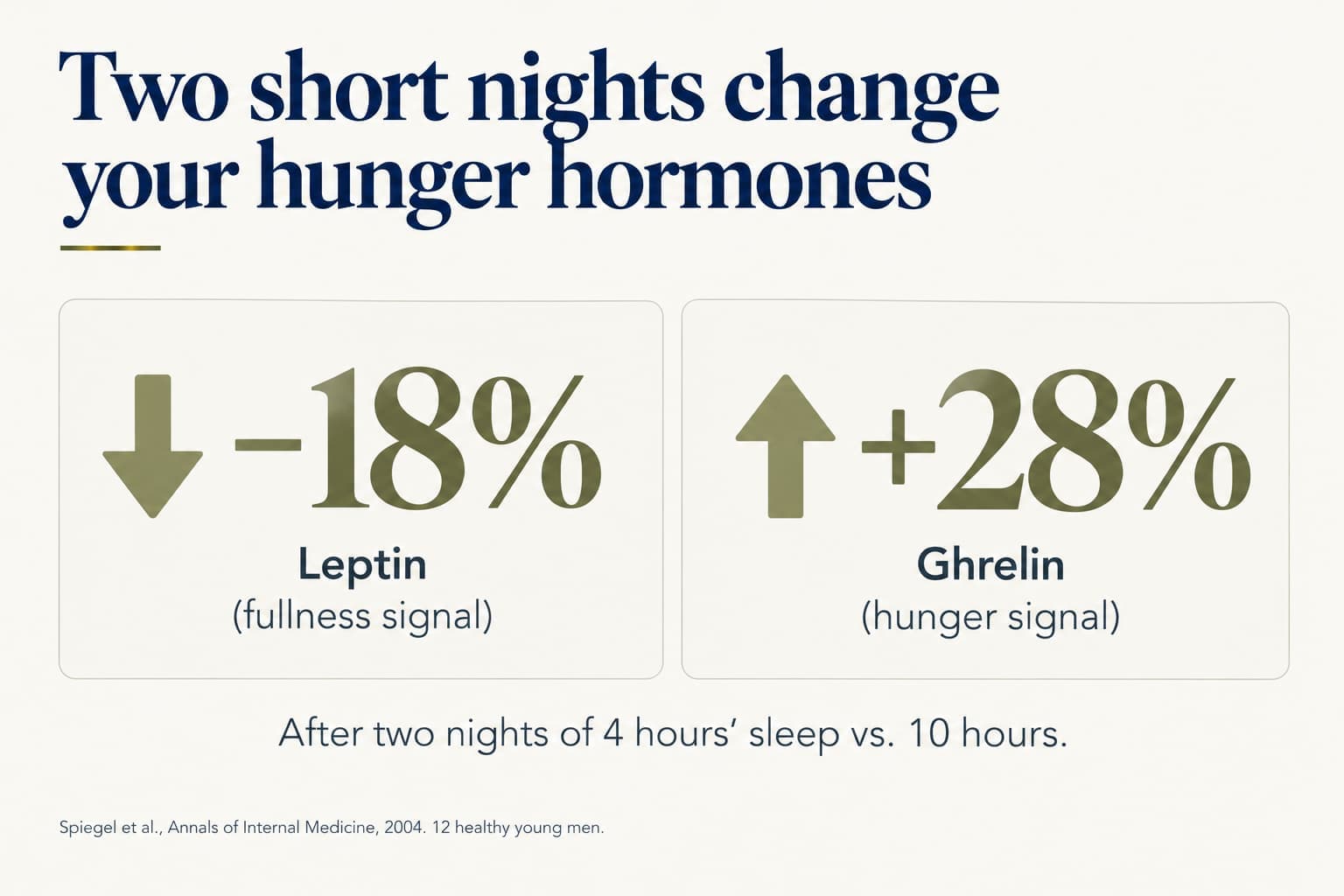
| Two nights of 4 hours' sleep vs. 10 hours (12 healthy young men) | Leptin down 18%, ghrelin up 28%, with more hunger and appetite |
| Semaglutide, a GLP-1-based medicine (STEP 1 trial, 1,961 adults, 68 weeks) | 14.9% average weight loss vs. 2.4% with placebo |
| Leptin levels | Rise in proportion to body fat |
How it works
Insulin: the storage hormone. Insulin is made by beta cells in the pancreas. After you eat, blood sugar (glucose) rises and the pancreas releases insulin. Insulin acts like a key, allowing muscle, liver and fat cells to take up glucose. It also tells the liver to store sugar and stop making new glucose, and tells fat tissue to store fat.
When cells stop responding well to insulin, a state called insulin resistance, the pancreas has to make more to keep blood sugar normal. Over time, if the pancreas can't keep up, blood sugar rises, first to prediabetes and then to type 2 diabetes. Insulin resistance often develops silently for years before blood sugar rises (see Insulin Resistance).
Glucagon: the release hormone. Glucagon, also from the pancreas, works in the opposite direction. Between meals and overnight, it tells the liver to release stored glucose so blood sugar doesn't fall too low. Insulin and glucagon act like a seesaw, keeping blood sugar within a narrow range.
Ghrelin: the hunger hormone. Ghrelin is made mainly by the stomach. It signals hunger to the brain. In a study that measured ghrelin 38 times over 24 hours in 10 healthy people eating on a fixed schedule, levels nearly doubled just before each meal and fell to their lowest within an hour after eating, suggesting ghrelin helps trigger the start of meals.
Leptin: the fullness and energy-store hormone. Leptin is made by fat cells, so levels rise with the amount of body fat. It tells the brain how much energy the body has stored, helping regulate appetite and energy use over the long term. People with more body fat have higher leptin, but the brain often responds less to it, a state called leptin resistance, which may be one reason weight loss is hard to maintain.
GLP-1: the gut's satiety signal. GLP-1 (glucagon-like peptide-1) is released by the gut after eating. It helps the pancreas release insulin when blood sugar is high, reduces glucagon, slows stomach emptying and signals fullness to the brain. Medicines that mimic GLP-1, such as semaglutide, were first developed for diabetes and are now used for weight management. In the STEP 1 trial of 1,961 adults with overweight or obesity, weekly semaglutide injections led to an average 14.9% weight loss over 68 weeks, compared with 2.4% with placebo, alongside lifestyle support. Stomach and gut side effects were common.
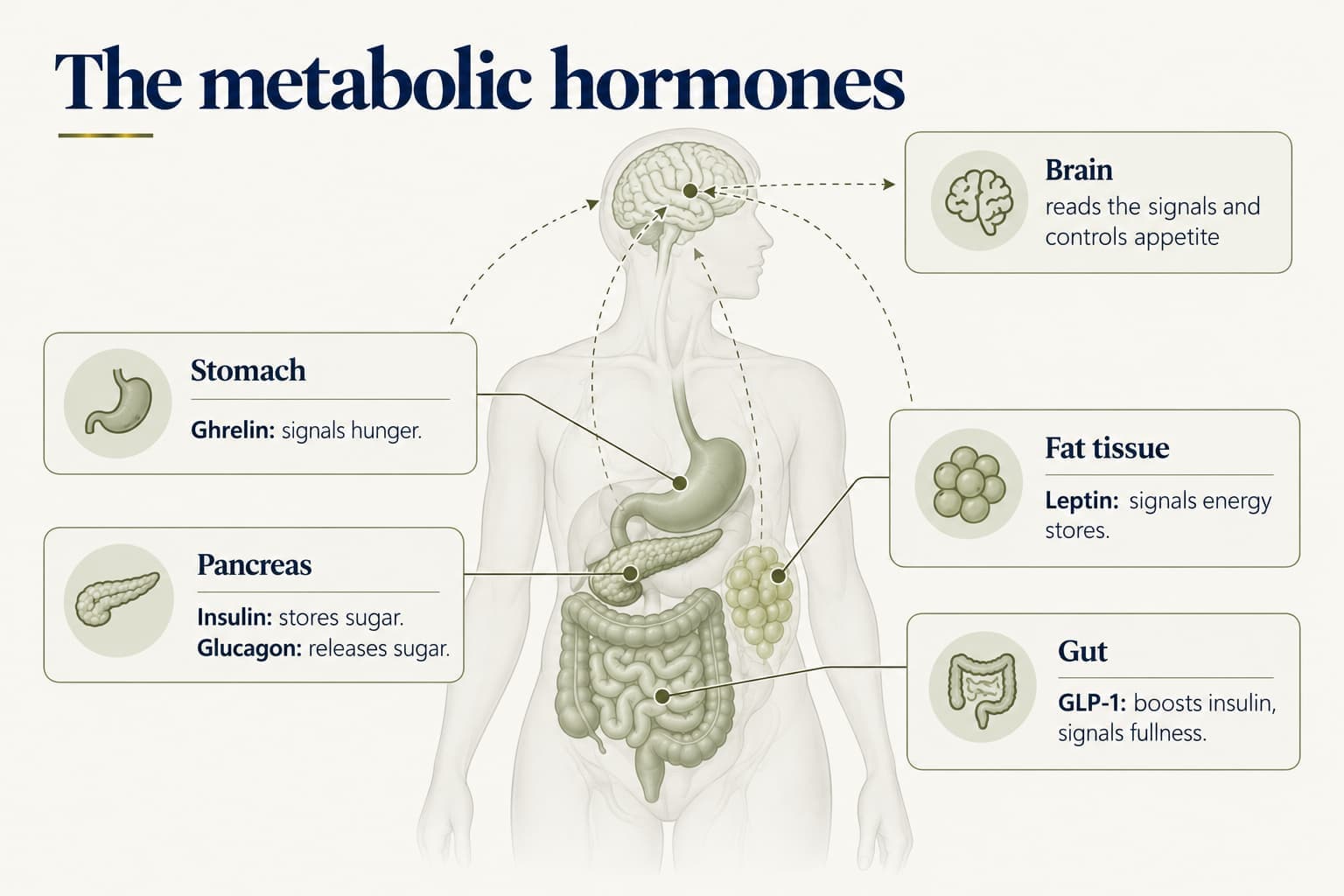
Cortisol and adrenaline. Stress hormones also affect metabolism. Cortisol and adrenaline raise blood sugar to provide energy in an emergency (see How the Stress Response Works). When stress is chronic, persistently raised cortisol can worsen insulin resistance and encourage fat storage around the abdomen, which is covered in Stress, Cortisol and Belly Fat.
What the research shows
Meals set the daily rhythm of hunger hormones. Metabolic hormones rise and fall across the day in response to meals, sleep and the body clock. Ghrelin's pre-meal rise and post-meal fall is one of the clearest examples. Regular meal patterns help these signals work predictably.
Sleep loss upsets the balance. In a classic 2004 study, 12 healthy young men spent two nights with only four hours in bed and two nights with 10 hours. After short sleep, leptin (the fullness signal) was 18% lower and ghrelin (the hunger signal) was 28% higher, and the men reported more hunger and appetite, especially for high-carbohydrate foods. This helps explain why short sleep is linked to weight gain and poorer blood sugar control (see Sleep and Memory Consolidation).
Body fat changes the signals. As body fat increases, leptin rises but the brain responds less, and insulin resistance tends to develop, particularly with fat stored around the abdomen and in the liver. Losing even a modest amount of weight can improve insulin sensitivity.
Muscle is a major metabolic organ. Skeletal muscle is the largest site of glucose uptake after meals. Physical activity helps muscles take up glucose, including through routes that don't depend on insulin, and regular exercise improves insulin sensitivity. This is one reason both aerobic exercise and strength training help prevent type 2 diabetes.
Recommendations
- →Move after meals. Even a short walk helps muscles use glucose from a meal.
- →Build and keep muscle with regular strength training.
- →Protect your sleep. Short sleep shifts hunger hormones in the wrong direction.
- →Eat regular, balanced meals with fibre, protein and minimally processed carbohydrates, which support steady blood sugar and fullness.
- →Watch your waist, not just your weight. Abdominal fat is closely linked to insulin resistance.
- →Manage chronic stress, which can raise blood sugar and encourage abdominal fat (see Allostatic Load).
- →Know your numbers. Fasting glucose and HbA1c are simple tests for blood sugar problems. Your doctor can advise how often to check, especially if you have a family history of diabetes.
- →GLP-1 medicines are prescription treatments, not lifestyle shortcuts. They can be effective for some people with obesity or diabetes but need medical supervision.
Practical notes
Insulin, glucagon, ghrelin, leptin and GLP-1 work together to balance blood sugar, appetite and energy storage. Everyday habits have a big influence on them: sleep, physical activity, muscle mass, body fat, meal patterns and stress all shift how these hormones behave. The practical message is that looking after metabolic health isn't just about what you eat, but also about how well you sleep, how much you move and how you manage stress. Insulin Resistance looks at what happens when this system starts to break down.
- Cummings DE, et al. A preprandial rise in plasma ghrelin levels suggests a role in meal initiation in humans. Diabetes, 2001;50(8):1714-1719.
- Spiegel K, et al. Brief communication: Sleep curtailment in healthy young men is associated with decreased leptin levels, elevated ghrelin levels, and increased hunger and appetite. Annals of Internal Medicine, 2004;141(11):846-850.
- Considine RV, et al. Serum immunoreactive-leptin concentrations in normal-weight and obese humans. New England Journal of Medicine, 1996;334:292-295.
- Wilding JPH, et al. Once-weekly semaglutide in adults with overweight or obesity (STEP 1). New England Journal of Medicine, 2021.
When did you last check
your fasting glucose or HbA1c?
Take the free Aevum Protocol assessment to see how your stress & hormones and 6 other longevity domains are performing — and get a personalised 90-day plan.
Take the Free Assessment →