Stress & Hormones
Nutrition for Hormonal Health:
What Actually Makes a Difference
"Hormone-balancing" diets, detox teas and supplements are heavily marketed, but the nutrition that genuinely affects hormones is less exotic. The biggest lever is body weight, especially abdominal fat: losing excess weight improves insulin sensitivity and raises testosterone, and in the Diabetes Prevention Program, weight loss plus activity cut the risk of diabetes by 58%. Beyond that, a few specific findings stand out. Very low-fat diets lowered men's testosterone by about 10-15% in a review of controlled studies. Soy, often feared as "feminising", had no effect on men's testosterone or oestrogen in 41 clinical studies, while soy isoflavones modestly reduced hot flushes in menopausal women. And iodine, essential for thyroid hormones, is well covered in Sri Lanka thanks to iodised salt. This guide sets out what matters, what doesn't, and how to eat for healthy hormones at every stage of life.
Key numbers
| Finding | Detail |
|---|---|
| Lifestyle change and diabetes (Diabetes Prevention Program, 3,234 adults) | Weight loss plus activity cut diabetes risk by 58% |
| Weight loss and testosterone (meta-analysis, 24 studies) | Low-calorie diets raised total testosterone by about 2.9 nmol/L |
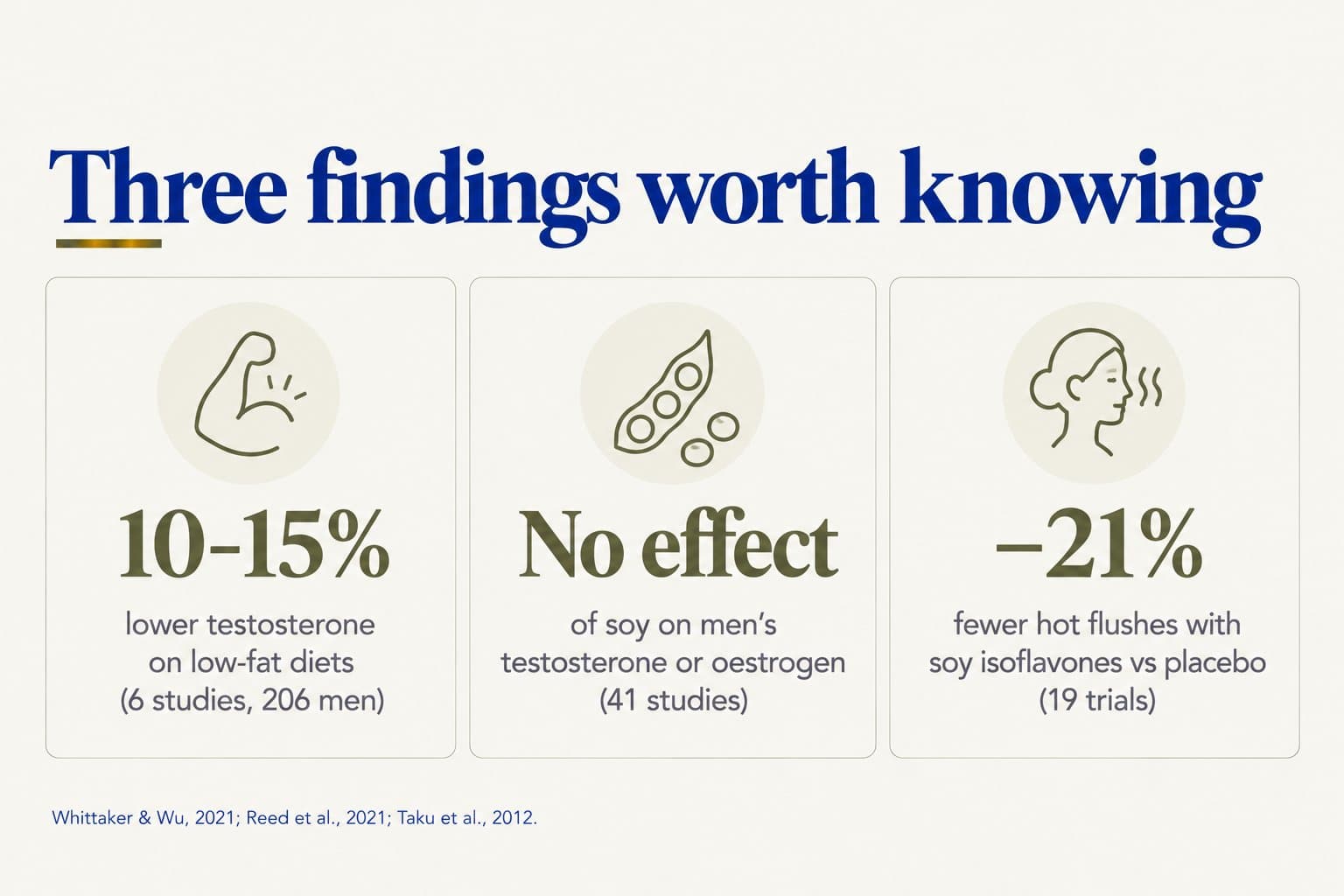
| Low-fat diets and testosterone (6 controlled studies, 206 men) | Testosterone about 10-15% lower on low-fat diets |
| Soy and male hormones (41 clinical studies) | No effect on testosterone or oestrogen levels in men |
| Soy isoflavones and hot flushes (19 trials) | Hot flush frequency down 20.6% and severity down 26.2% vs placebo |
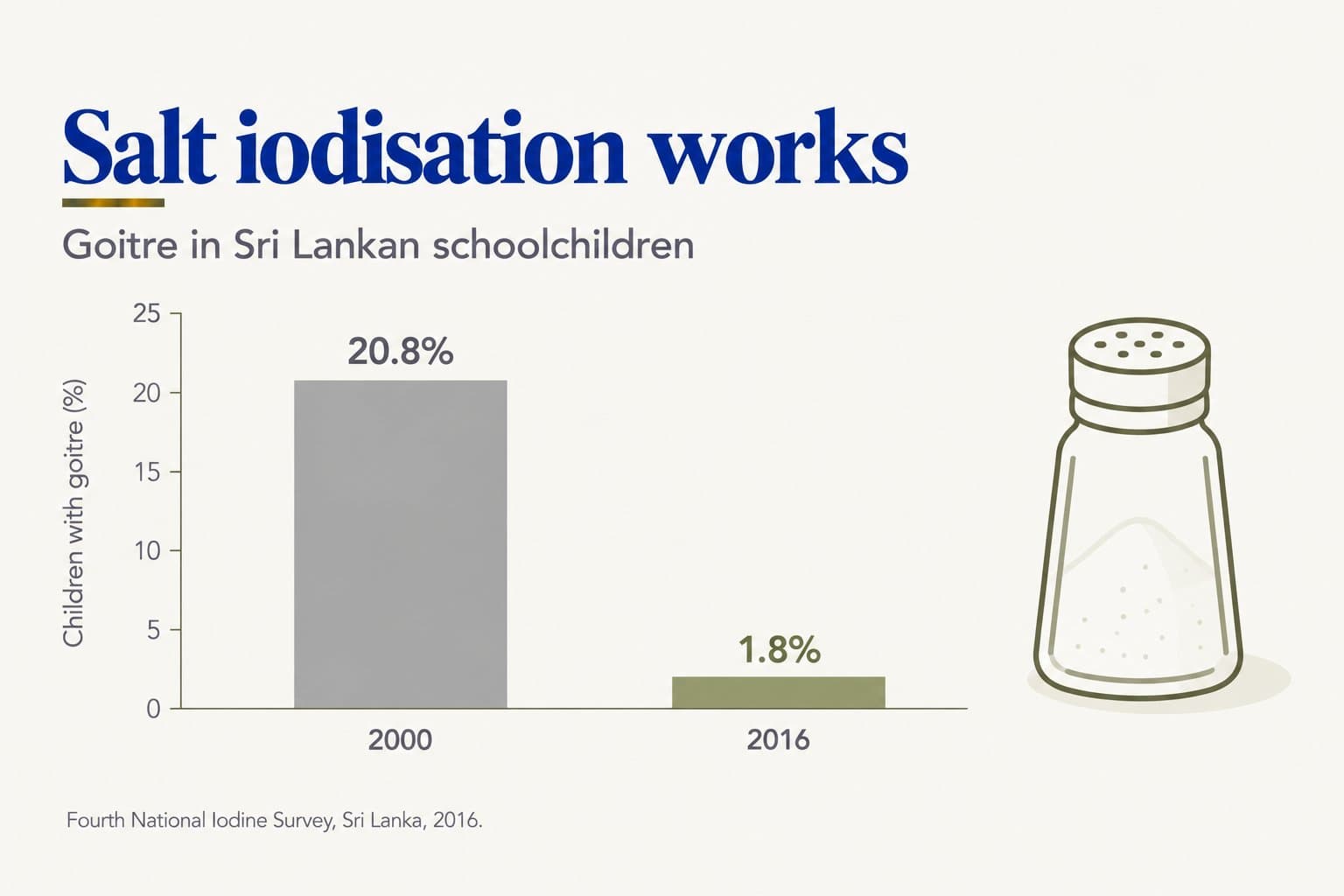
| Iodine in Sri Lanka (2016 national survey) | Schoolchildren's iodine levels optimal; goitre in 1.8%, down from 20.8% in 2000 |
How diet affects hormones
Food influences hormones in a few main ways:
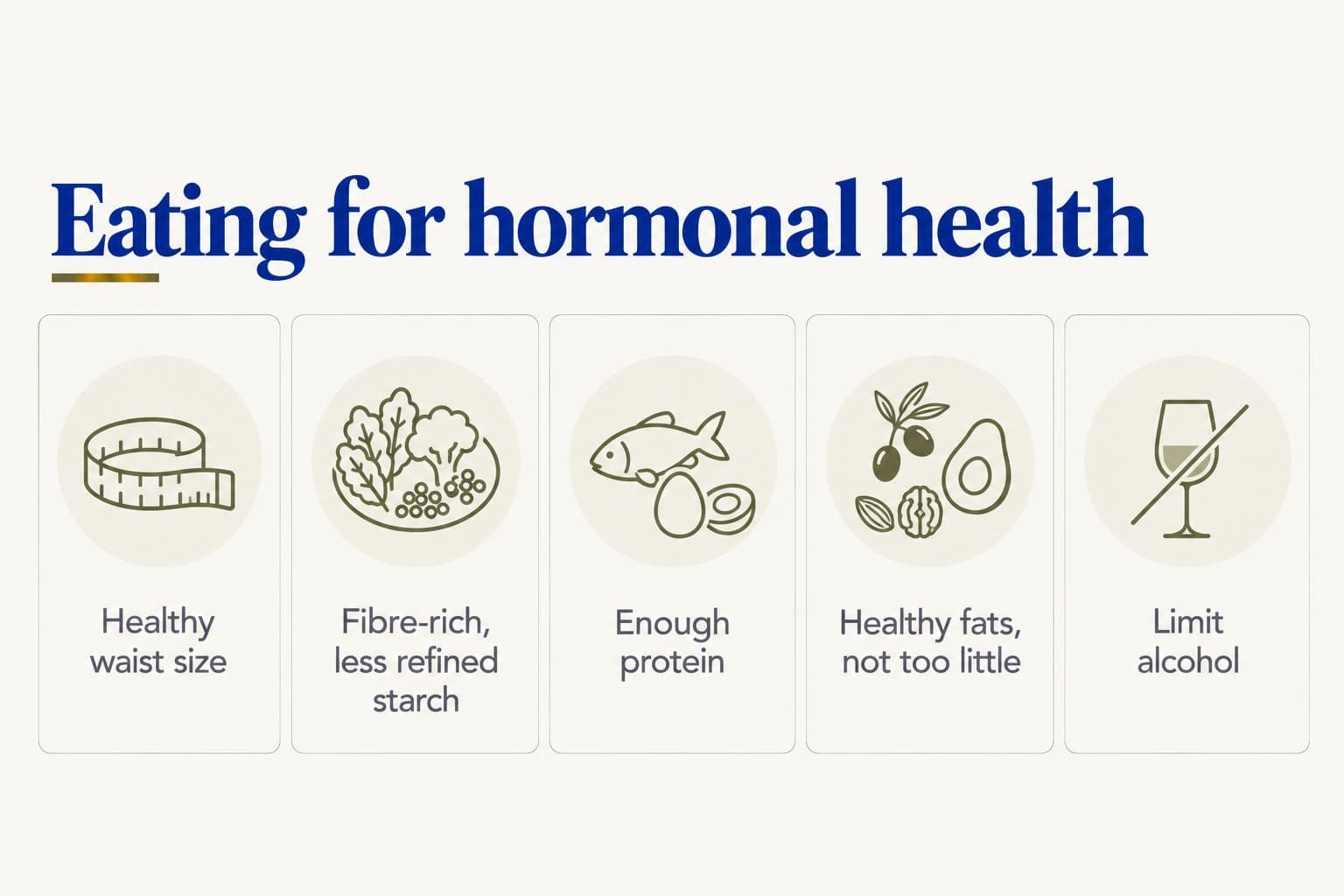
- →Body fat, especially around the abdomen, drives insulin resistance, lowers testosterone in men and changes oestrogen levels (see Insulin Resistance and Stress, Cortisol and Belly Fat).
- →Meals and blood sugar shape insulin and appetite hormones such as ghrelin and leptin (see Insulin and the Metabolic Hormones).
- →Specific nutrients are building blocks for hormones, such as iodine for thyroid hormones, and cholesterol and fat for sex hormones.
- →Alcohol disrupts sleep, raises oestrogen and lowers testosterone, and adds to abdominal fat.
The overall pattern of what you eat, and your weight over time, matters far more than any single "hormone-boosting" food.
What the evidence shows
Weight and waist size: the biggest lever. Excess weight, especially visceral fat, is the most important nutrition-related driver of hormonal problems. In the Diabetes Prevention Program, 3,234 adults with prediabetes who aimed for 7% weight loss and 150 minutes of activity a week cut their risk of type 2 diabetes by 58%. In men, a review of 24 studies found that low-calorie diets raised total testosterone by about 2.9 nmol/L, with bigger rises after greater weight loss (see Testosterone Decline in Men). For South Asians, health risks rise at lower body weights, so a healthy waist size matters even at a "normal" BMI.
Dietary fat: don't cut it too low. A 2021 meta-analysis of 6 controlled studies with 206 men found that low-fat diets lowered total and free testosterone, by about 10-15% on average. The review was small, and the authors called for more trials, but it suggests that very low-fat diets aren't ideal for men concerned about testosterone. Healthy fats, from fish, nuts, seeds and plant oils, remain part of a balanced diet.
Soy: reassuring for men, modest help for women. Soy contains isoflavones, plant compounds with weak oestrogen-like effects, which has led to fears that soy "feminises" men. A 2021 meta-analysis of 41 clinical studies found that neither soy protein nor isoflavones affected testosterone, free testosterone or oestrogen levels in men, regardless of dose or duration. Soya meat and other soy foods, widely eaten in Sri Lanka, are a good protein source.
For women, a 2012 meta-analysis of 19 trials found that soy isoflavone supplements, at a median dose of 54 mg a day, reduced hot flush frequency by 20.6% and severity by 26.2% compared with placebo. That's a modest effect, far smaller than menopausal hormone therapy's roughly 75% reduction, but it may help some women with mild symptoms (see Menopausal Hormone Therapy).
Iodine: covered in Sri Lanka. The thyroid needs iodine to make its hormones. Sri Lanka's salt iodisation programme has been highly successful: in the 2016 national survey, schoolchildren's iodine levels were in the optimal range, and goitre (an enlarged thyroid) affected 1.8% of children, down from 20.8% in 2000. Using iodised salt is enough for most people. Iodine supplements or kelp tablets aren't needed and, in excess, can themselves disturb thyroid function (see Thyroid Function and Ageing).
Protein, bone and menopause. After menopause, bone loss speeds up (see Menopause and Long-Term Health). Adequate protein, calcium and vitamin D, alongside resistance training, help protect bone and muscle (see Bone Density and Resistance Training).
What doesn't have good evidence.
- →"Hormone-balancing" or "adrenal" diets, detox teas and cleanses: no evidence that they balance hormones (see Adrenal Fatigue).
- →"Seed cycling" (eating different seeds at different points in the menstrual cycle): no clinical evidence.
- →"Testosterone-boosting" supplements: most lack good evidence, and some contain undeclared ingredients.
- →Cutting out entire food groups without a medical reason: rarely needed, and can make it harder to eat enough protein, fibre and nutrients.
Recommendations by scenario
- →You're carrying extra weight around your middle: focus on gradual weight loss through a balanced, lower-calorie diet with plenty of vegetables, pulses and lean protein, and smaller portions of rice and other refined starches. This is the most effective dietary step for insulin, testosterone and long-term health.
- →You're a man worried about testosterone: lose excess weight, limit alcohol, and don't cut fat to very low levels. Soy foods are fine.
- →You're going through menopause: prioritise protein, calcium-rich foods and vitamin D for bone. Soy foods or isoflavones may modestly ease mild hot flushes.
- →You have prediabetes or insulin resistance: reduce refined carbohydrates and sugary drinks, increase fibre from vegetables, pulses and whole grains, and combine diet with regular activity.
- →You have a thyroid condition: use iodised salt, but avoid iodine or kelp supplements unless your doctor advises them.
- →You're under chronic stress: watch for stress eating and alcohol; regular meals and good sleep help keep appetite hormones in check (see Stress-Reduction Techniques That Work).
Practical notes
Nutrition supports hormonal health mainly through a healthy weight and waist size, steady blood sugar, enough protein and essential nutrients, and limited alcohol. A few specific points stand out: very low-fat diets may lower men's testosterone, soy is safe for men and may modestly help menopausal hot flushes, and iodised salt covers most people's iodine needs in Sri Lanka. Beyond that, "hormone-balancing" diets and supplements offer little. The same balanced eating pattern that protects the heart and brain also protects hormonal health.
- Diabetes Prevention Program Research Group. Reduction in the incidence of type 2 diabetes with lifestyle intervention or metformin. New England Journal of Medicine, 2002;346(6):393-403.
- Corona G, et al. Body weight loss reverts obesity-associated hypogonadotropic hypogonadism: a systematic review and meta-analysis. European Journal of Endocrinology, 2013;168(6):829-843.
- Whittaker J, Wu K. Low-fat diets and testosterone in men: systematic review and meta-analysis of intervention studies. Journal of Steroid Biochemistry and Molecular Biology, 2021;210:105878.
- Reed KE, et al. Neither soy nor isoflavone intake affects male reproductive hormones: an expanded and updated meta-analysis of clinical studies. Reproductive Toxicology, 2021;100:60-67.
- Taku K, et al. Extracted or synthesized soybean isoflavones reduce menopausal hot flash frequency and severity: systematic review and meta-analysis of randomized controlled trials. Menopause, 2012;19(7):776-790.
- Medical Research Institute, Sri Lanka, with UNICEF and WFP. Iodine Deficiency Status in Sri Lanka: Fourth National Survey, 2016.
Have you tried a "hormone-balancing"
diet or supplement?
Take the free Aevum Protocol assessment to see how your stress & hormones and 6 other longevity domains are performing — and get a personalised 90-day plan.
Take the Free Assessment →