Stress & Hormones
Menopause and Long-Term Health:
Bone, Heart, Metabolism and Beyond
Menopause is often discussed in terms of hot flushes and sleep problems, which can be significant. But the fall in oestrogen also changes long-term health risks, especially for bones and the heart. Bone loss speeds up around the final period, averaging about 2% a year for several years. Cholesterol, abdominal fat and blood pressure tend to worsen during the transition, and women who reach menopause early have a higher risk of heart disease. None of this means menopause is a disease: it's a natural stage of life. But it's a key window for prevention, because the habits and checks put in place in the late 40s and 50s shape health for decades. This article sets out the main long-term changes, how big they are, and what you can do about them.
Key numbers
| Finding | Detail |
|---|---|
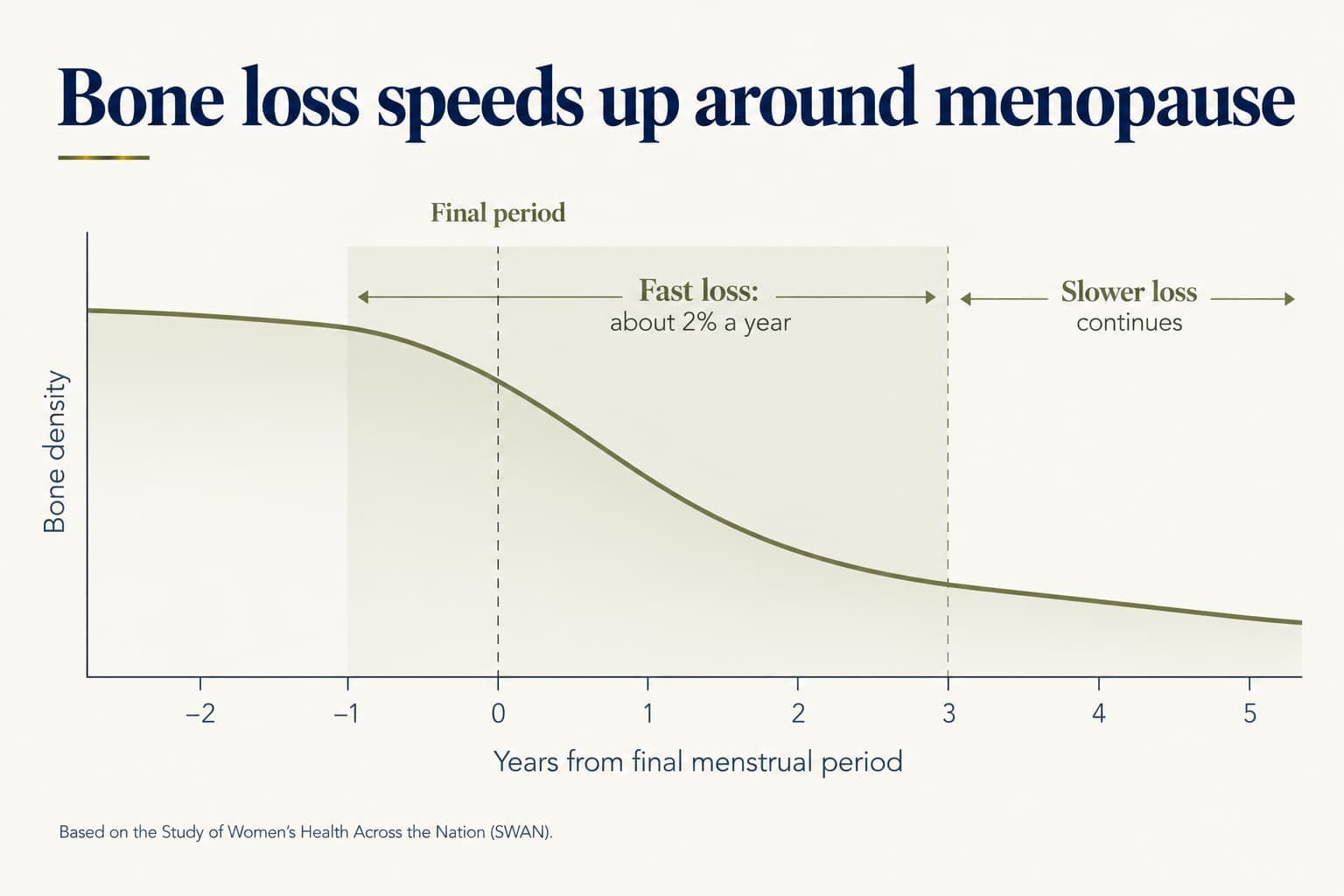
| Bone loss around menopause (SWAN study) | Starts about a year before the final period; averages about 2% a year for around 3 years; about 10% over 10 years |
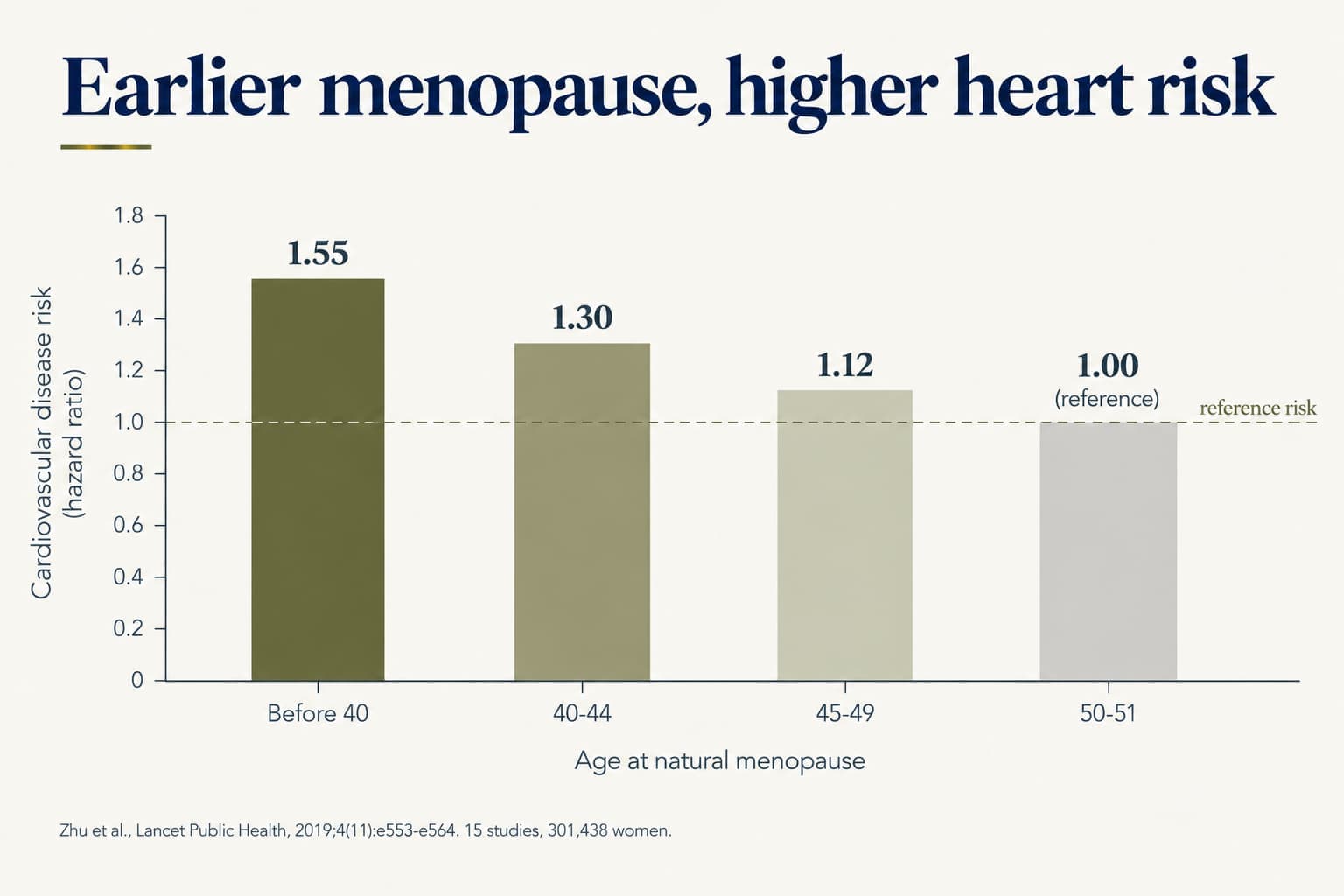
| Premature menopause (before 40) and cardiovascular disease (15 studies, 301,438 women) | 55% higher risk (HR 1.55) vs. menopause at 50-51 |
| Early menopause (40-44) | 30% higher risk (HR 1.30) |
| Menopause at 45-49 | 12% higher risk (HR 1.12) |
| Hot flushes and night sweats (American Heart Association) | Affect about 80% of midlife women; linked to worse cardiovascular risk factors |
Risk factor table: menopause and long-term health
| Change or factor | Association | Modifiable? | Evidence strength |
|---|---|---|---|
| Faster bone loss | ~2% a year for ~3 years around the final period; more fractures later in women who lose more | Partly: exercise, calcium, vitamin D, not smoking, medication where needed | Strong (large cohort) |
| Earlier menopause | Higher cardiovascular risk: HR 1.55 before 40, 1.30 at 40-44 | Timing mostly not; the risk it brings is | Strong (pooled cohort data) |
| Rising LDL cholesterol and apolipoprotein B | Occur in response to menopause itself, not just ageing | Yes: diet, exercise, medication | Strong (AHA statement) |
| More abdominal (visceral) fat, less muscle | Linked to higher cardiovascular risk, even at normal body weight | Yes: exercise, especially strength training; diet | Strong (AHA statement) |
| Hot flushes and night sweats | Linked to worse cardiovascular risk factors and subclinical atherosclerosis | Symptoms treatable; long-term effect of treating them on heart risk unclear | Moderate (observational) |
What the research shows
Bones: a period of rapid loss. Oestrogen helps protect bone. The Study of Women's Health Across the Nation (SWAN), which has followed a large, ethnically diverse group of US women through the menopause transition, found that rapid bone loss starts about one year before the final menstrual period. It continues quickly for around three years, averaging about 2% a year, with greater losses in the spine than the hip, and then slows. Over 10 years, the total decline is about 10%. Bone quality and strength decline too.
This matters because women who lose more bone during the transition have more fractures later, and women with earlier menopause have lower bone density and more fractures after menopause.
Heart and blood vessels: risk rises across the transition. Heart disease is the leading cause of death in women, and menopause is a turning point. In 2020, the American Heart Association published a scientific statement on the menopause transition and cardiovascular risk. Key points included:
- →Cholesterol: LDL cholesterol and apolipoprotein B rise in response to menopause itself, not just with age.
- →Body fat: after menopause, women tend to have more central (visceral) fat and less muscle, which is linked to higher cardiovascular risk even at a normal body weight.
- →Hot flushes: vasomotor symptoms affect about 80% of midlife women and are linked to subclinical atherosclerosis and worse cardiovascular risk factors.
- →Lifestyle works: lifestyle interventions during the transition can prevent weight gain and lower triglycerides, blood pressure, blood sugar and insulin.
Earlier menopause means earlier risk. A 2019 pooled analysis of 15 studies with 301,438 women across five countries and regions looked at age at natural menopause and later cardiovascular disease. Compared with women who reached menopause at 50-51:
- →Before 40 (premature menopause): 55% higher risk.
- →40-44 (early menopause): 30% higher risk.
- →45-49: 12% higher risk.
The extra risk was clearest before age 60 and faded with age, with no significant difference by 70. This makes early menopause an important piece of information for doctors assessing heart risk.
Other changes. Menopause also affects sleep, mood, weight distribution, vaginal and urinary health, and joint and muscle symptoms. Many of these improve over time, but some, such as vaginal dryness and urinary symptoms, can persist or worsen without treatment. Symptoms and how to recognise the transition are covered in Perimenopause: Recognising the Signs and Symptoms.
What you can actually change
1. Protect your bones
- →Strength and impact exercise: resistance training and weight-bearing activity, such as brisk walking, stair climbing or jumping exercises if safe, help maintain bone and muscle (see Exercise and Joint Health).
- →Calcium and vitamin D: aim to meet needs through diet, with supplements if your intake or levels are low.
- →Don't smoke, and keep alcohol low.
- →Ask about bone density testing if you had early menopause or have other risk factors such as low body weight, previous fractures, steroid use or a family history of hip fracture.
2. Know and manage your heart risk
- →Check blood pressure, cholesterol and blood sugar regularly from your 40s, and more closely during and after the transition.
- →Tell your doctor if you had early or premature menopause. It's a recognised cardiovascular risk factor.
- →Treat high blood pressure and cholesterol if needed; the menopause transition is a good time to reassess.
3. Target abdominal fat and muscle loss
- →Combine aerobic exercise with strength training at least twice a week.
- →Focus on waist size, not just weight.
- →Eat a pattern rich in vegetables, legumes, whole grains and fish (see The MIND Diet and Brain Health), with enough protein to support muscle.
4. Take symptoms seriously
- →Discuss troublesome hot flushes, sleep problems or mood changes with a doctor. Effective treatments exist, including menopausal hormone therapy for suitable women, and non-hormonal options. Menopausal hormone therapy has its own Evidence Check (see Menopausal Hormone Therapy).
- →Don't ignore vaginal or urinary symptoms, which are common and treatable.
5. Protect sleep and manage stress. Sleep disruption and stress are common during the transition and affect weight, blood sugar and mood (see Sleep and Memory Consolidation and How the Stress Response Works).
Recommendations
- →Treat the menopause transition as a prevention window. Changes in bone, cholesterol and body fat accelerate around this time.
- →Start strength training if you haven't already. It's one of the few interventions that helps bone, muscle and metabolism together.
- →Get your cardiovascular risk factors checked and mention the age of your menopause.
- →Consider bone density assessment if you had early menopause or have other risk factors.
- →Seek help for symptoms. There's no need to endure severe symptoms without discussing treatment options.
Practical notes
Menopause is a natural stage of life, not an illness. But the fall in oestrogen brings real long-term changes: faster bone loss, less favourable cholesterol, more abdominal fat and a rising heart risk, especially in women who reach menopause early. The good news is that the same foundations covered throughout this series, strength training, aerobic activity, a healthy diet, good sleep and regular checks of blood pressure, cholesterol and blood sugar, directly address these risks. The transition is one of the most valuable times in a woman's life to invest in long-term health.
- Study of Women's Health Across the Nation (SWAN). Fact Sheet: Bone Health over the Menopause Transition. swanstudy.org.
- Greendale GA, et al. Bone mineral density loss in relation to the final menstrual period in a multiethnic cohort: results from the Study of Women's Health Across the Nation (SWAN). Journal of Bone and Mineral Research, 2012.
- El Khoudary SR, et al. Menopause Transition and Cardiovascular Disease Risk: Implications for Timing of Early Prevention: A Scientific Statement From the American Heart Association. Circulation, 2020.
- Zhu D, et al. Age at natural menopause and risk of incident cardiovascular disease: a pooled analysis of individual patient data. Lancet Public Health, 2019;4(11):e553-e564.
Do you know how old you were
at menopause, or when it might be?
Take the free Aevum Protocol assessment to see how your stress & hormones and 6 other longevity domains are performing — and get a personalised 90-day plan.
Take the Free Assessment →