Stress & Hormones
Perimenopause:
Recognising the Signs and Symptoms
Perimenopause is the transition leading up to menopause, when hormone levels become irregular before periods stop for good. It usually begins in the 40s and can last several years. The first sign is often a change in the menstrual cycle, but many women first notice hot flushes, disrupted sleep, mood changes, low mood or anxiety, or "brain fog", sometimes before they connect these to hormones. Symptoms can last much longer than many people expect: in a large US study, frequent hot flushes and night sweats lasted a median of 7.4 years. Perimenopause is also a time of higher risk for depression. For most women over 45, no blood test is needed to diagnose it: it's recognised from symptoms and changes in periods. This article explains the stages, the most common symptoms, how long they last, and what helps.
Key numbers
| Finding | Detail |
|---|---|
| Early menopause transition | Cycle length starts to vary by 7 or more days from normal |
| Late menopause transition | 60 days or more without a period; lasts about 1-3 years |
| Hot flushes and night sweats (American Heart Association) | Affect about 80% of midlife women |
| Frequent hot flushes and night sweats (SWAN, 1,449 women) | Median total duration 7.4 years; median 4.5 years after the final period |
| Risk of major depression (SWAN, 221 women) | 2-4 times higher during perimenopause and early postmenopause than before |
| Genitourinary syndrome of menopause (vaginal and urinary symptoms) | Affects about 27-84% of postmenopausal women; underdiagnosed and undertreated |
The stages of reproductive ageing
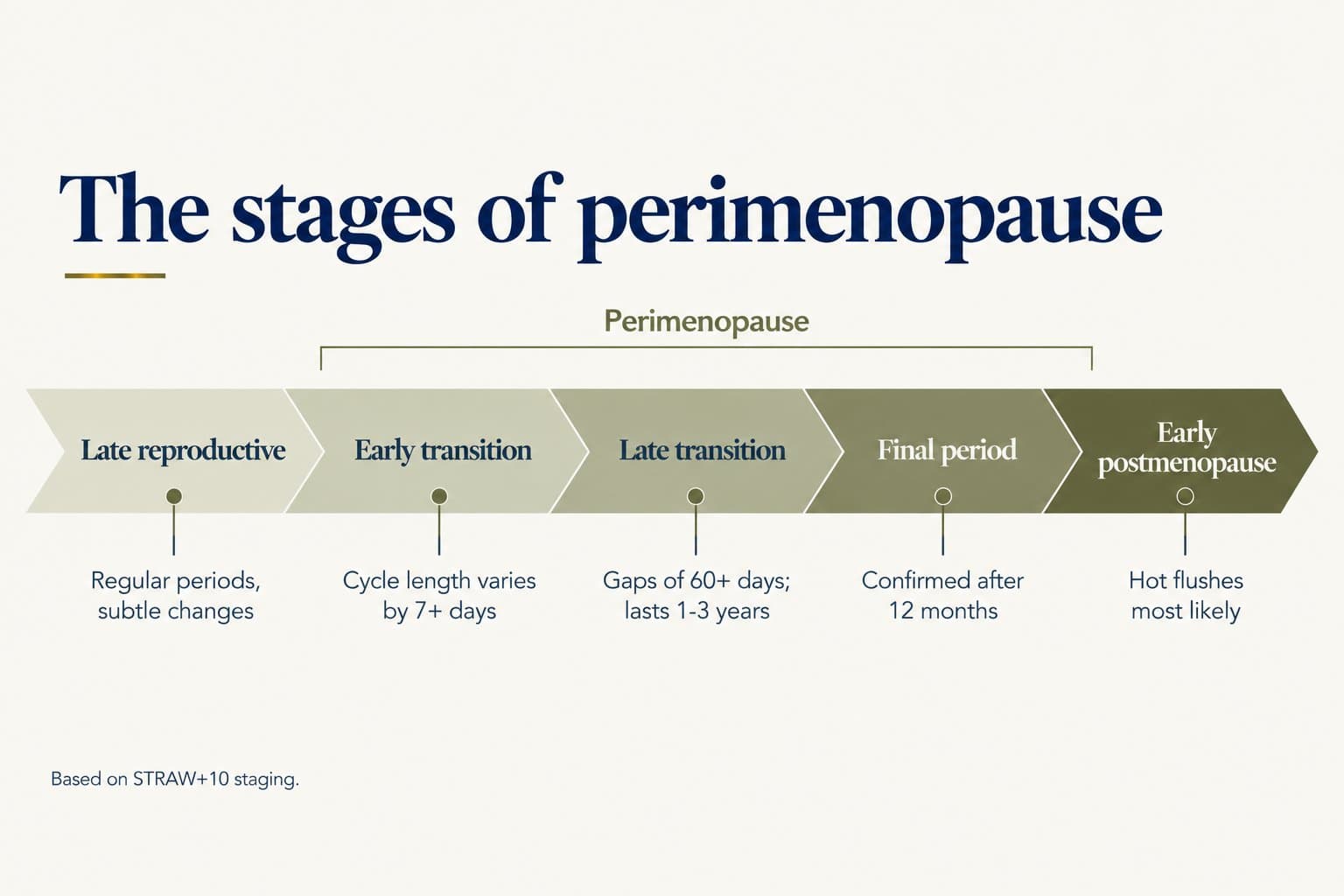
Researchers use a system called STRAW+10 to describe the stages leading up to and after menopause:
- →Late reproductive years: periods are still regular, but subtle hormone changes begin.
- →Early menopause transition: the length of the cycle starts to vary, by seven or more days from what's normal for you.
- →Late menopause transition: periods become much further apart, with gaps of 60 days or more. This stage usually lasts one to three years, and hot flushes become likely.
- →Menopause: the final menstrual period, confirmed after 12 months without a period.
- →Early postmenopause: the first few years after the final period, when hot flushes are most likely.
"Perimenopause" covers the menopause transition plus the first year after the final period. In the US, the average age of menopause is 52, and most women start the transition between 45 and 55 (see How Hormones Change With Age).
Risk factor table: common perimenopause symptoms
| Symptom | How common / when | Treatable? | Evidence strength |
|---|---|---|---|
| Irregular periods | The defining early sign; cycles vary, then lengthen | Usually no treatment needed; check heavy or unusual bleeding | Strong (staging criteria) |
| Hot flushes and night sweats | ~80% of midlife women; median 7.4 years in total | Yes: hormonal and non-hormonal options | Strong (large cohort) |
| Low mood and depression | 2-4 times higher risk of major depression during the transition | Yes: talking therapies, medication, symptom treatment | Moderate (cohort) |
| Sleep problems | Common, often linked to night sweats | Yes: treat night sweats, CBT for insomnia | Moderate |
| Vaginal dryness and urinary symptoms | 27-84% of postmenopausal women; tend to persist | Yes: lubricants, moisturisers, low-dose vaginal oestrogen | Strong (expert position statement) |
| "Brain fog" (memory and concentration) | Commonly reported during the transition | Often improves after the transition; address sleep and mood | Moderate |
What the research shows
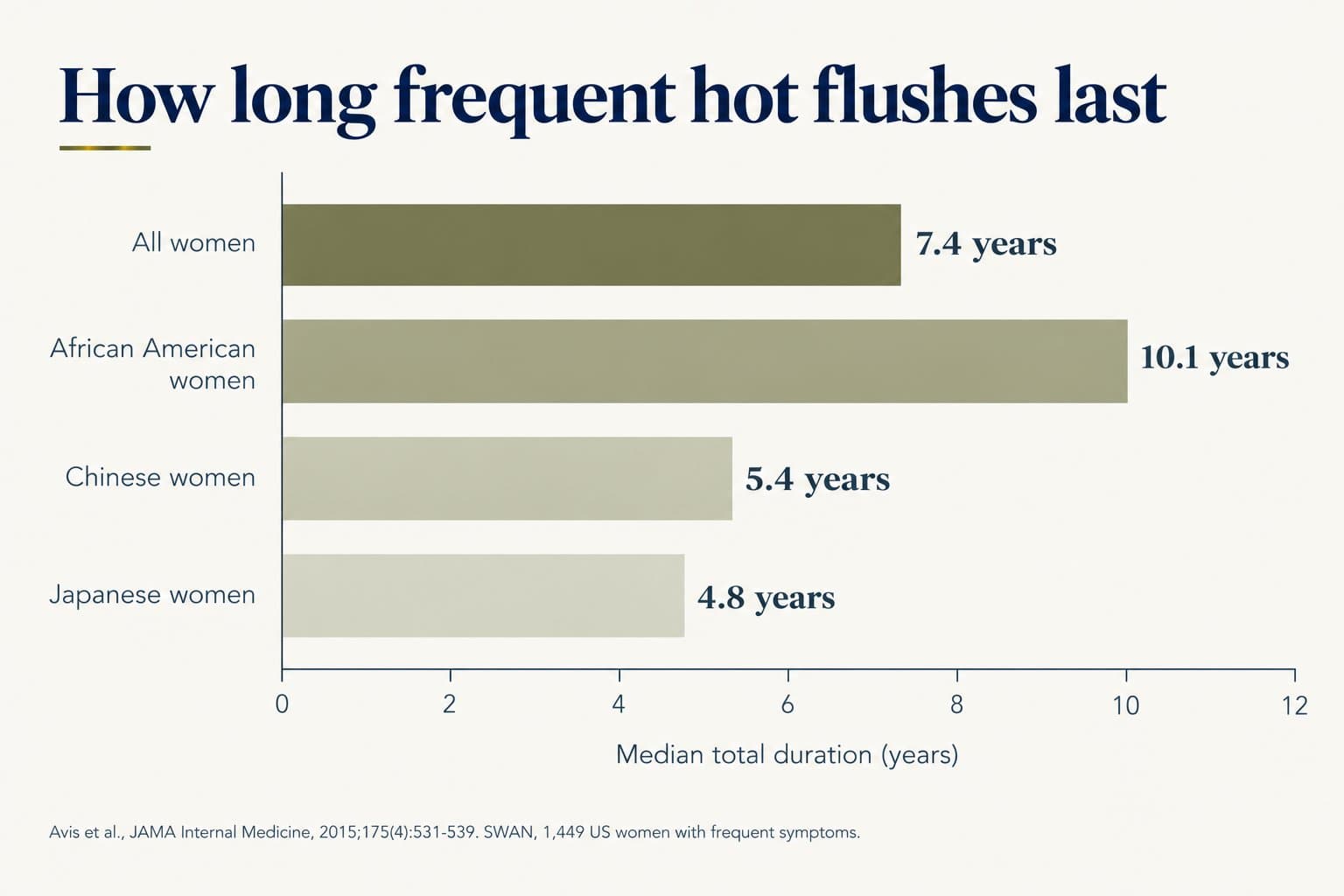
Hot flushes last longer than many expect. The Study of Women's Health Across the Nation (SWAN), which followed a diverse group of US women through menopause, found that among 1,449 women with frequent hot flushes or night sweats, the median total duration was 7.4 years. Among women whose final period was observed, symptoms continued for a median of 4.5 years afterwards. Duration varied by ethnic group: African American women had the longest (median 10.1 years), and Japanese and Chinese women the shortest (4.8 and 5.4 years). Women whose symptoms began earlier in the transition tended to have them for longer.
These findings challenged older advice that hot flushes last only a few months to two years. They also mean women and doctors should plan for symptoms that may last many years.
Mood: a window of higher risk. In a SWAN study of 221 women followed from before menopause, women were two to four times more likely to have an episode of major depression during perimenopause or early postmenopause than before. The higher risk held even after accounting for a past history of depression and hormone levels. Anxiety, irritability and mood swings are also common. Mood changes during this time are real and treatable, not something to simply endure (see Depression and Cognitive Decline).
Vaginal and urinary symptoms. The genitourinary syndrome of menopause, which includes vaginal dryness, discomfort during sex, and urinary urgency or frequent infections, affects an estimated 27% to 84% of postmenopausal women. Unlike hot flushes, these symptoms often don't improve on their own. The North American Menopause Society describes the condition as underdiagnosed and undertreated, even though effective treatments, from lubricants and moisturisers to low-dose vaginal oestrogen, are available.
Diagnosis: symptoms, not blood tests. Hormone levels fluctuate widely during perimenopause, often from week to week, so a single blood test is unreliable. The UK's National Institute for Health and Care Excellence (NICE) recommends diagnosing perimenopause without laboratory tests in otherwise healthy women over 45 with menopausal symptoms, based on hot flushes and irregular periods. It recommends considering an FSH test only in women aged 40 to 45 with symptoms, or in women under 40 in whom menopause is suspected.
When symptoms need a closer look
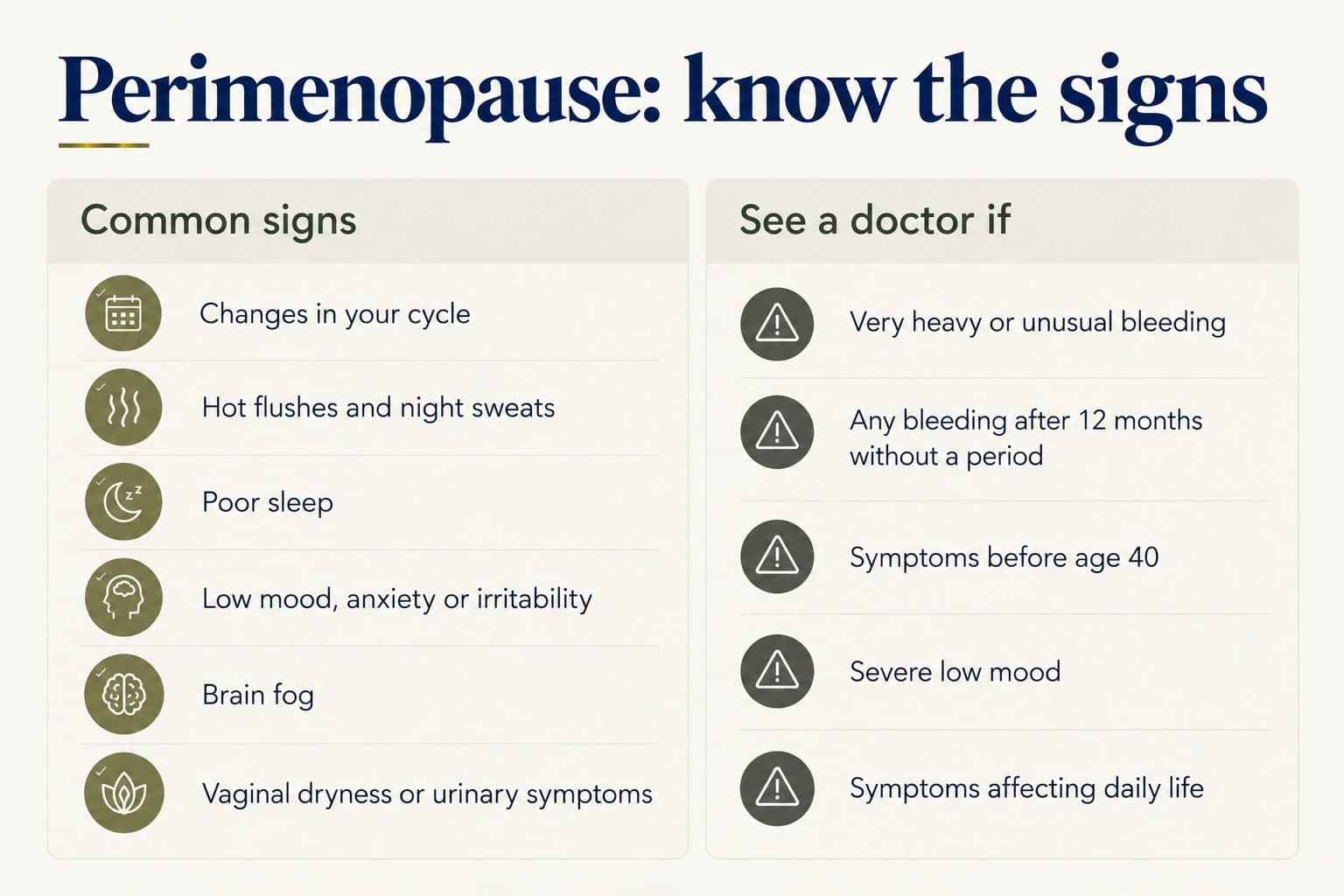
Some changes shouldn't be assumed to be perimenopause and are worth checking with a doctor:
- →Very heavy bleeding, bleeding between periods, bleeding after sex, or any bleeding after 12 months without a period.
- →Symptoms before age 40, which could indicate premature ovarian insufficiency and needs assessment.
- →Severe low mood, or thoughts of self-harm.
- →Symptoms that could have other causes, such as thyroid problems, anaemia or medication side effects. Thyroid function has its own article: see Thyroid Function and Ageing.
What you can actually change
1. Recognise it early. Knowing that irregular periods, sleep changes, hot flushes and mood shifts can all be part of perimenopause helps you seek support sooner rather than struggling for years.
2. Treat symptoms that affect your life. Effective options exist:
- →Menopausal hormone therapy is the most effective treatment for hot flushes and night sweats in suitable women. It has its own Evidence Check (see Menopausal Hormone Therapy).
- →Non-hormonal options, including some prescription medicines and cognitive behavioural therapy, can reduce hot flushes and improve sleep and mood.
- →Vaginal treatments, such as lubricants, moisturisers and low-dose vaginal oestrogen, help genitourinary symptoms.
3. Support sleep. Keep the bedroom cool, wear light layers, keep a regular schedule, and limit alcohol and caffeine later in the day (see Sleep and Memory Consolidation).
4. Look after mood and stress. Regular exercise, social connection and stress management help, and professional support is important if low mood persists (see How the Stress Response Works).
5. Use the transition as a prevention window. Perimenopause is when bone loss speeds up and heart risk factors start to worsen. Starting strength training and checking blood pressure, cholesterol and blood sugar now pays off long term (see Menopause and Long-Term Health).
Recommendations
- →Track your cycle and symptoms for a few months. It helps you and your doctor see patterns.
- →Don't rely on a single hormone blood test if you're over 45. Diagnosis is usually based on symptoms and cycle changes.
- →Talk to a doctor if symptoms are affecting sleep, work, relationships or mood. You don't have to "put up with it".
- →Get unusual bleeding checked rather than assuming it's perimenopause.
- →Use this time to invest in long-term health: strength training, heart health checks, sleep and stress management.
Practical notes
Perimenopause is a natural transition, but its symptoms can be significant and long-lasting: frequent hot flushes last a median of more than seven years, the risk of depression rises, and vaginal and urinary symptoms often persist without treatment. For most women over 45, diagnosis is based on symptoms and changes in periods rather than blood tests. Effective treatments are available, and the transition is also a valuable time to put long-term health habits in place.
- Harlow SD, et al. Executive summary of the Stages of Reproductive Aging Workshop + 10 (STRAW+10). 2012.
- Avis NE, et al. Duration of menopausal vasomotor symptoms over the menopause transition. JAMA Internal Medicine, 2015;175(4):531-539.
- Bromberger JT, et al. Major depression during and after the menopausal transition: Study of Women's Health Across the Nation (SWAN). Psychological Medicine, 2011;41(9):1879-1888.
- The North American Menopause Society. The 2020 genitourinary syndrome of menopause position statement. Menopause, 2020.
- National Institute for Health and Care Excellence. Menopause: diagnosis and management (NG23).
- El Khoudary SR, et al. Menopause Transition and Cardiovascular Disease Risk: Implications for Timing of Early Prevention: A Scientific Statement From the American Heart Association. Circulation, 2020.
Have your periods, sleep or mood
changed in the past year?
Take the free Aevum Protocol assessment to see how your stress & hormones and 6 other longevity domains are performing — and get a personalised 90-day plan.
Take the Free Assessment →