Stress & Hormones
Testosterone Decline in Men:
What's Normal Ageing and What Isn't
Testosterone falls gradually as men age, by about 1-2% a year from midlife. For most men, levels stay within the normal range and the decline causes few problems. A smaller group develops true low testosterone with symptoms, known as hypogonadism. In a large European study, only about 2% of men aged 40-79 met strict criteria combining low testosterone with sexual symptoms. Just as important, age isn't the only factor: excess weight, poor sleep and poor general health all lower testosterone, and they're largely changeable. Losing weight raised testosterone substantially in a review of 24 studies, and one week of short sleep lowered it by 10-15% in young men. This article explains what's normal, what counts as a genuine problem, how it should be tested, and what you can do.
Key numbers
| Finding | Detail |
|---|---|
| Testosterone decline with age (Massachusetts Male Aging Study, men 40-70) | Total testosterone fell about 1.6% a year; bioavailable testosterone about 2-3% a year |
| Late-onset hypogonadism (European Male Ageing Study, 3,369 men 40-79) | About 2% met strict criteria: low testosterone plus three sexual symptoms |
| Men with a low reading who are normal on retesting (Endocrine Society) | About 30% |
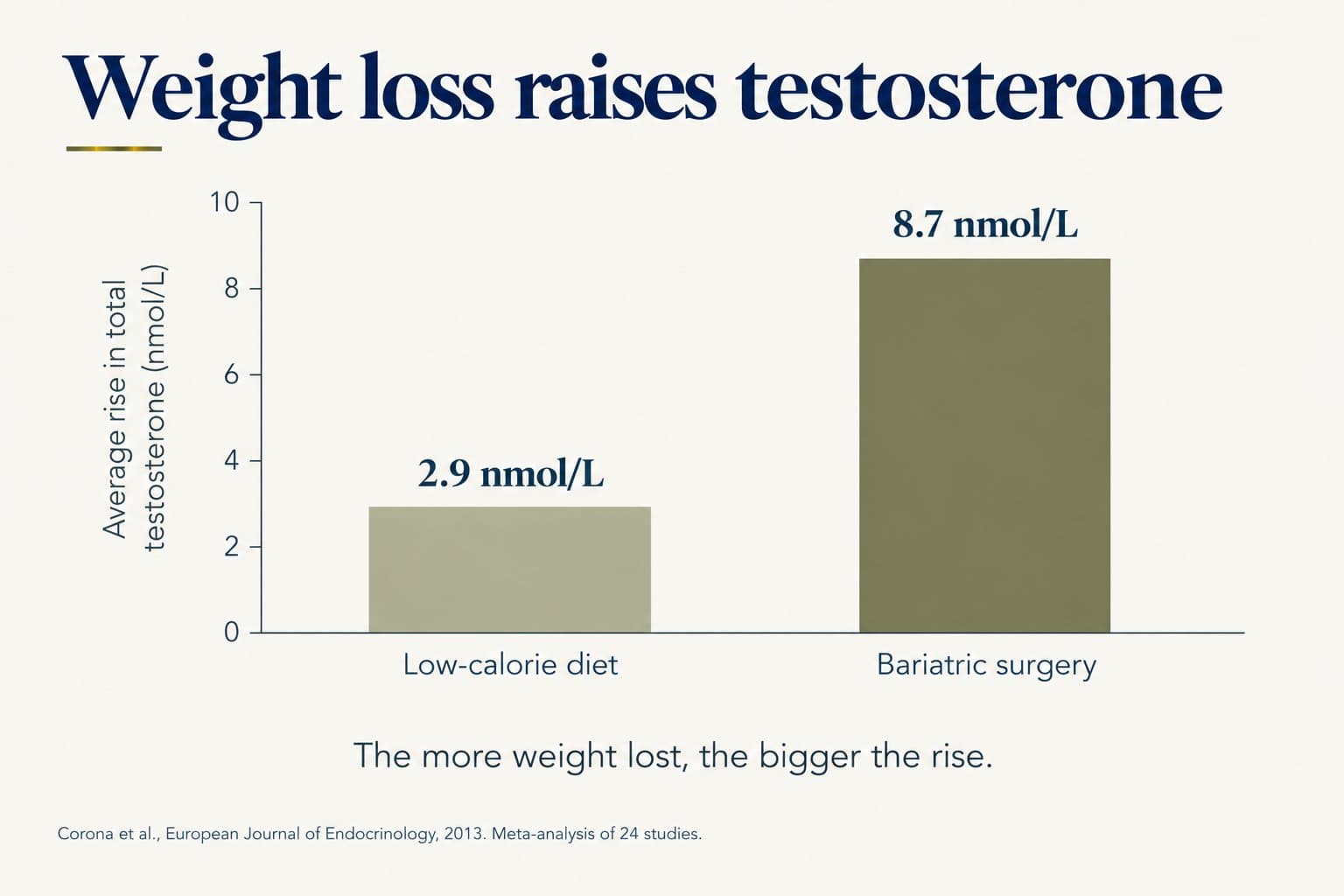
| Weight loss and testosterone (meta-analysis, 24 studies) | Low-calorie diets raised total testosterone by about 2.9 nmol/L; bariatric surgery by about 8.7 nmol/L |
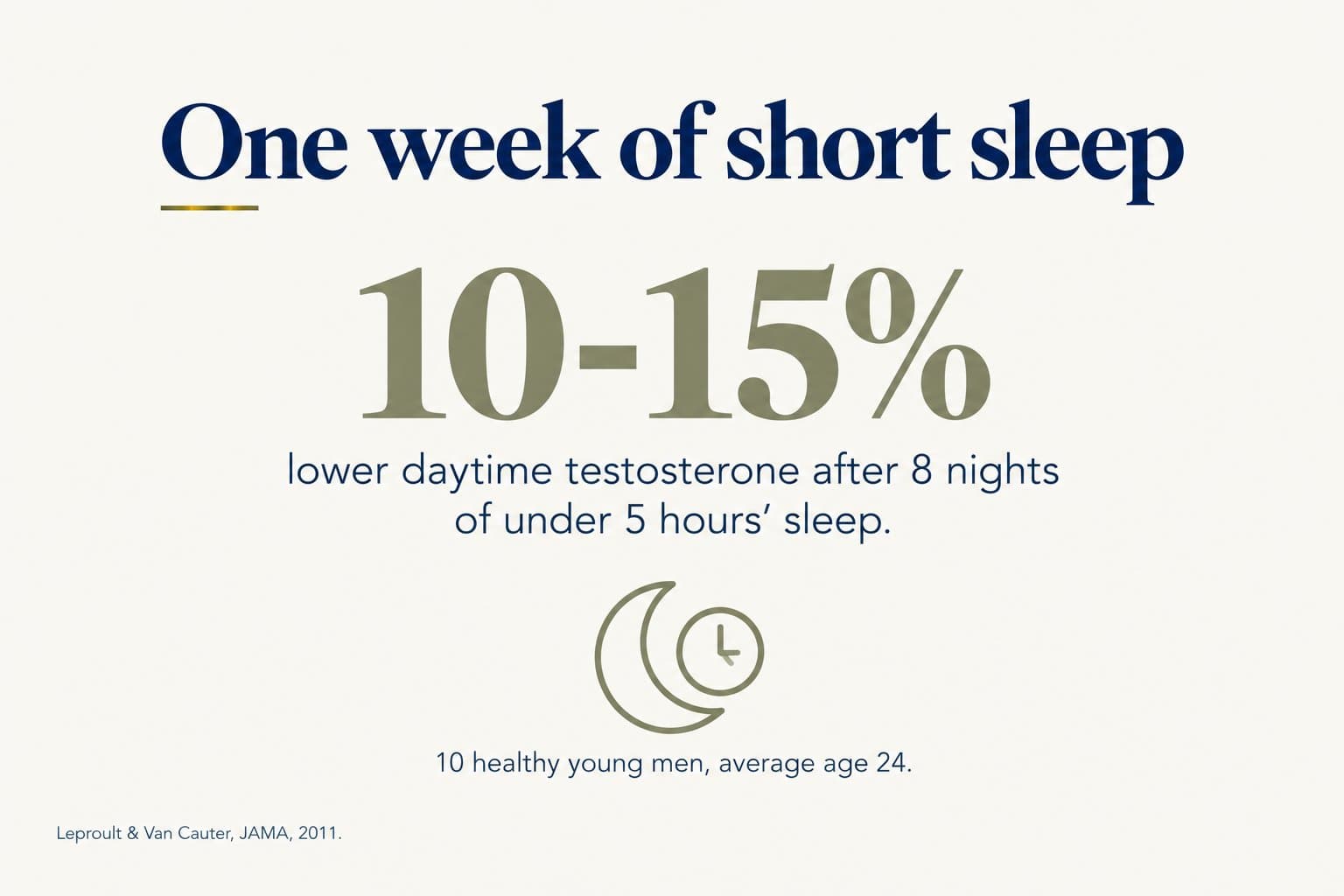
| One week of under 5 hours' sleep (10 young men) | Daytime testosterone fell 10-15% |
| Good general health (Massachusetts Male Aging Study) | Added 10-15% to androgen levels |
How testosterone changes with age
Testosterone is made mainly in the testes, under the control of signals from the brain. With age, both the testes and these brain signals become less active. At the same time, the level of the protein that binds testosterone in the blood (SHBG) rises, so the amount of "free" or bioavailable testosterone, the portion available to tissues, falls faster than total testosterone.
In the Massachusetts Male Aging Study, which followed more than 1,000 men for 7-10 years, total testosterone fell by about 1.6% a year and bioavailable testosterone by about 2-3% a year. Men in good health had androgen levels 10-15% higher than those in poorer health. See How Hormones Change With Age for how this compares with other hormone changes.
Normal decline vs. hypogonadism
A gradual fall in testosterone is normal. The question is whether levels are low enough, and symptoms clear enough, to count as a medical condition.
The European Male Ageing Study examined 3,369 men aged 40-79 to find out which symptoms actually track with low testosterone. Of the many symptoms often blamed on low testosterone, only three sexual symptoms were clearly linked:
- →Poor morning erections
- →Low sexual desire
- →Erectile dysfunction
Symptoms like fatigue, low mood or reduced physical capacity were less specific. They're common in men with normal testosterone and have many other possible causes. Using a strict definition, all three sexual symptoms together with low total and free testosterone, only about 2% of men met the criteria for late-onset hypogonadism.
Risk factor table: what lowers testosterone
| Factor | Effect | Modifiable? | Evidence strength |
|---|---|---|---|
| Age | Total testosterone falls ~1.6% a year from midlife | No | Strong (long-term cohort) |
| Excess body fat | Weight loss raised testosterone ~2.9 nmol/L with diet, ~8.7 nmol/L after bariatric surgery; bigger loss, bigger rise | Yes | Strong (meta-analysis of 24 studies) |
| Short sleep | One week of under 5 hours' sleep lowered daytime testosterone 10-15% in young men | Yes | Moderate (small controlled study) |
| Poor general health and chronic illness | Good health added 10-15% to androgen levels | Partly | Moderate (cohort) |
| Certain medicines (for example, opioids and steroids) | Can suppress testosterone production | Often, with medical review | Established clinical knowledge |
What the research shows
Weight is one of the biggest levers. Excess body fat lowers testosterone, partly because fat tissue converts testosterone into oestrogen and partly through effects on the brain's hormone signals. A 2013 systematic review and meta-analysis of 24 studies found that weight loss raised both bound and free testosterone. Low-calorie diets raised total testosterone by an average of about 2.9 nmol/L, and bariatric surgery by about 8.7 nmol/L. The more weight people lost, the bigger the rise. For many men with low testosterone and obesity, weight loss addresses the cause rather than just the number (see Insulin and the Metabolic Hormones and Insulin Resistance).
Sleep matters, even in young men. In a 2011 study, 10 healthy young men (average age 24) spent three nights with up to 10 hours in bed, then eight nights sleeping less than five hours. After a week of short sleep, their daytime testosterone levels fell by 10-15%, and their mood and sense of vigour declined. The researchers noted that this drop was similar to 10-15 years of ageing. Sleep apnoea, which fragments sleep, is also linked to lower testosterone (see Sleep and Memory Consolidation).
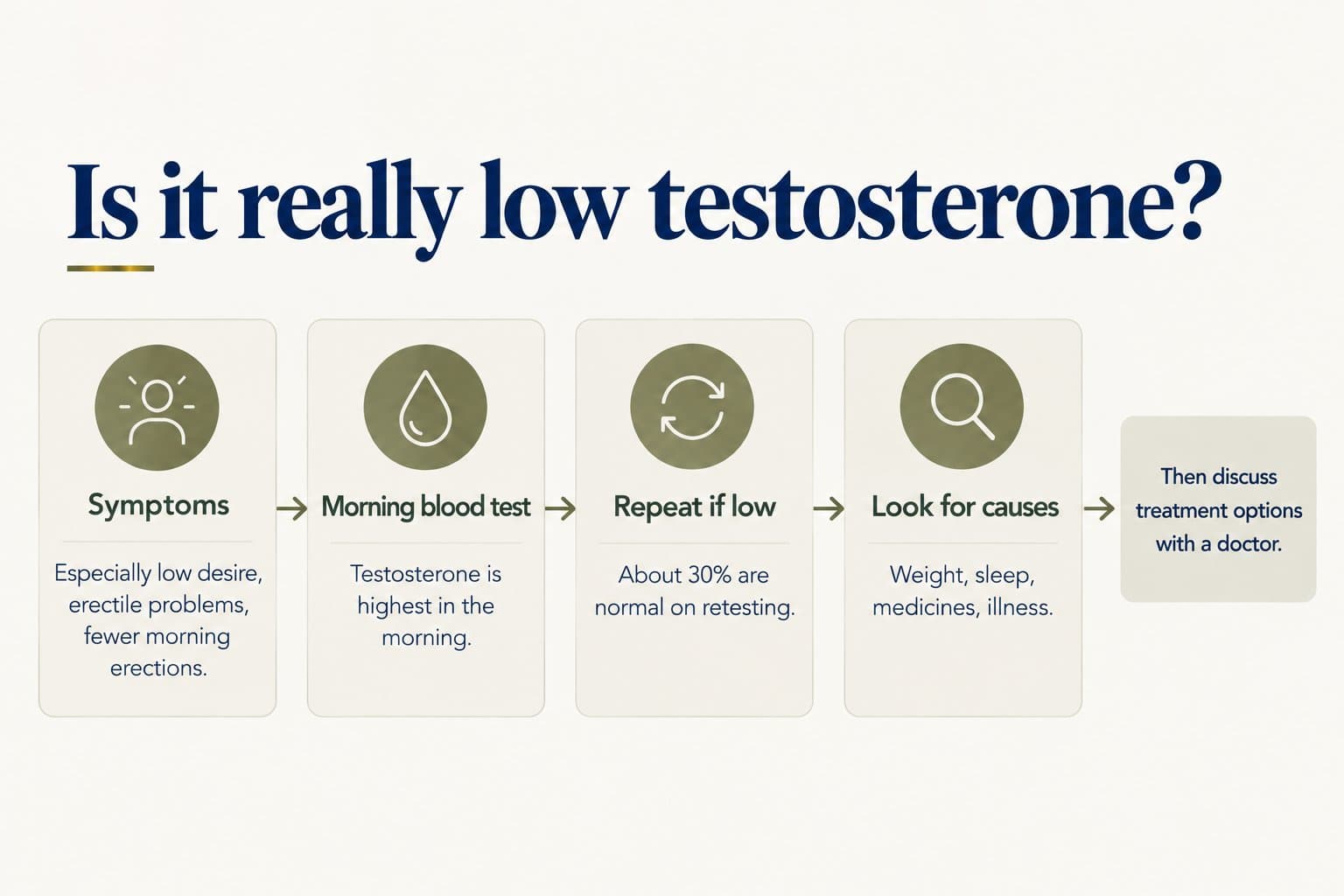
Testing needs to be done properly. Testosterone varies through the day and from day to day. The Endocrine Society's 2018 guideline recommends that men be diagnosed with hypogonadism only if they have symptoms and testosterone levels that are "unequivocally and consistently low". Testing should be repeated, because about 30% of men with a low first reading have normal levels when retested. Tests are usually done in the morning, when levels are highest. The guideline also states that otherwise healthy men don't need to be screened, and recommends against routinely prescribing testosterone to all men over 65 with low levels.
Low testosterone is often a marker, not just a cause. Low testosterone is linked with obesity, type 2 diabetes, heart disease and poorer health generally. But much of this link runs the other way: illness, inactivity and weight gain lower testosterone. That's why treating the underlying causes, where possible, comes first, and why replacing testosterone doesn't automatically fix the associated health problems. Testosterone therapy is covered in its own Evidence Check (see Testosterone Therapy).
What you can actually change
1. Lose excess weight, especially around the waist. Weight loss is one of the most effective ways to raise testosterone naturally, and it improves insulin sensitivity, blood pressure and heart risk at the same time.
2. Protect your sleep. Aim for about seven hours, keep a regular schedule, and get checked for sleep apnoea if you snore loudly or feel sleepy during the day.
3. Exercise regularly, including strength training. Physical activity helps with weight, insulin sensitivity, mood and muscle mass, all of which interact with testosterone (see Exercise and Brain Health).
4. Review medicines and alcohol. Some medicines, including opioid painkillers and steroids, can lower testosterone. Heavy drinking can too. Don't stop prescribed medicines without advice, but ask your doctor whether any could be contributing.
5. Manage chronic illness and stress. Controlling diabetes, managing stress and treating depression support overall hormone health (see How the Stress Response Works and Stress-Reduction Techniques That Work).
Recommendations
- →Don't assume every symptom is "low T". Fatigue and low mood have many causes. Sexual symptoms are the most specific signs.
- →If you have symptoms, get tested properly: a morning blood test, repeated if low, with a doctor who can look for underlying causes.
- →Avoid online or commercial testosterone "boosters" and don't start testosterone without a proper diagnosis.
- →Start with weight, sleep, exercise and a medicine review. These address common causes and improve health in other ways too.
- →If true hypogonadism is diagnosed, discuss the benefits and risks of treatment with a doctor.
Practical notes
Testosterone declines slowly with age, but for most men it stays in the normal range, and only a small proportion develop true hypogonadism. Excess weight, short sleep and poor health lower testosterone substantially, and all can be changed. Diagnosis should be based on clear symptoms plus repeatedly low morning levels, not a single test or a questionnaire. For most men, the most effective steps are the same ones that protect long-term health in general: a healthy weight, good sleep, regular exercise and a review of medicines.
- Feldman HA, et al. Age trends in the level of serum testosterone and other hormones in middle-aged men: longitudinal results from the Massachusetts Male Aging Study. Journal of Clinical Endocrinology & Metabolism, 2002;87(2):589-598.
- Wu FCW, et al. Identification of late-onset hypogonadism in middle-aged and elderly men. New England Journal of Medicine, 2010;363(2):123-135.
- Bhasin S, et al. Testosterone Therapy in Men With Hypogonadism: An Endocrine Society Clinical Practice Guideline. Journal of Clinical Endocrinology & Metabolism, 2018;103(5):1715-1744.
- Corona G, et al. Body weight loss reverts obesity-associated hypogonadotropic hypogonadism: a systematic review and meta-analysis. European Journal of Endocrinology, 2013;168(6):829-843.
- Leproult R, Van Cauter E. Effect of 1 week of sleep restriction on testosterone levels in young healthy men. JAMA, 2011;305(21):2173-2174.
Have you had your testosterone
checked, and was it a morning test?
Take the free Aevum Protocol assessment to see how your stress & hormones and 6 other longevity domains are performing — and get a personalised 90-day plan.
Take the Free Assessment →