Stress & Hormones
Growth Hormone, DHEA and Other "Anti-Ageing" Hormones:
What the Evidence Shows
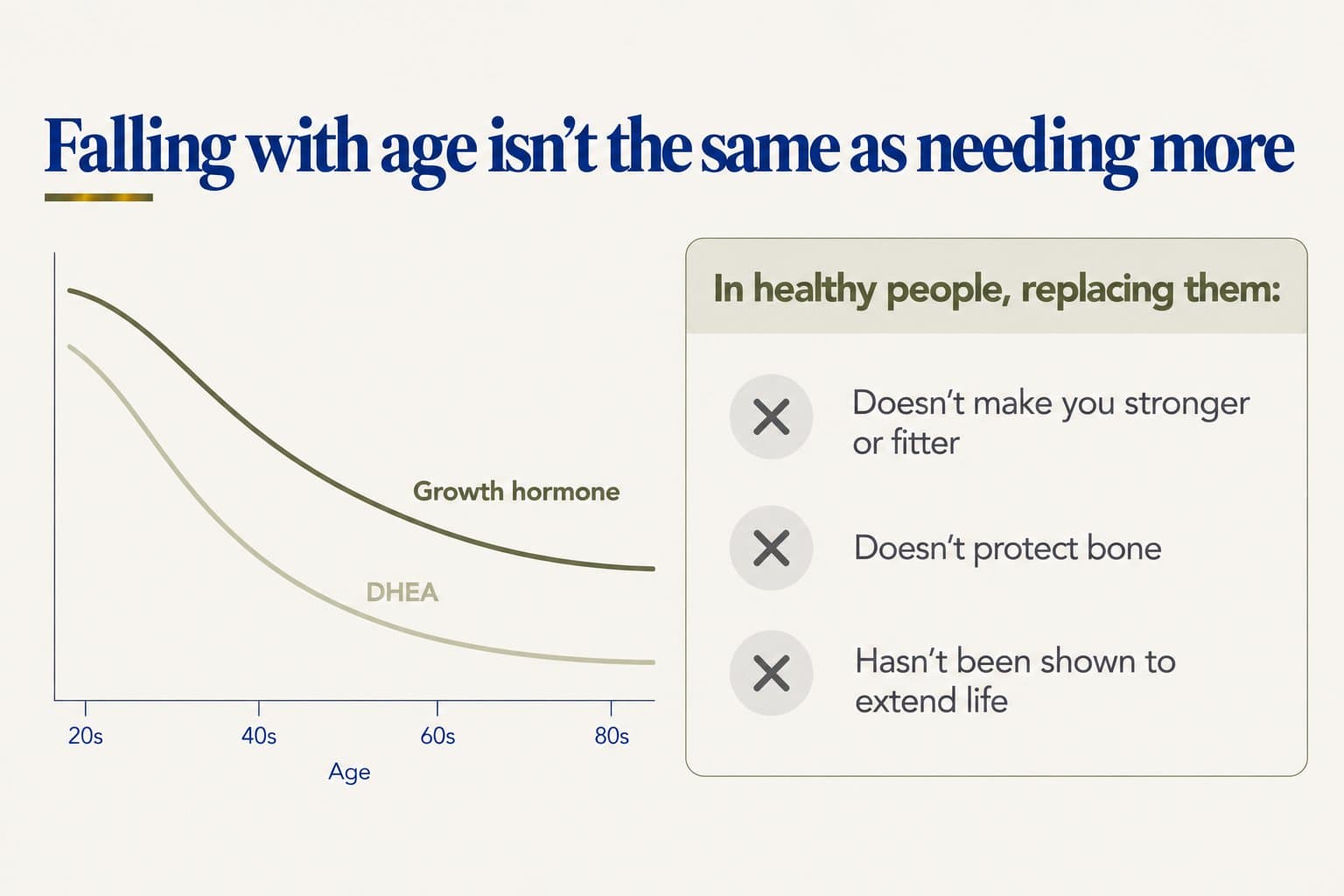
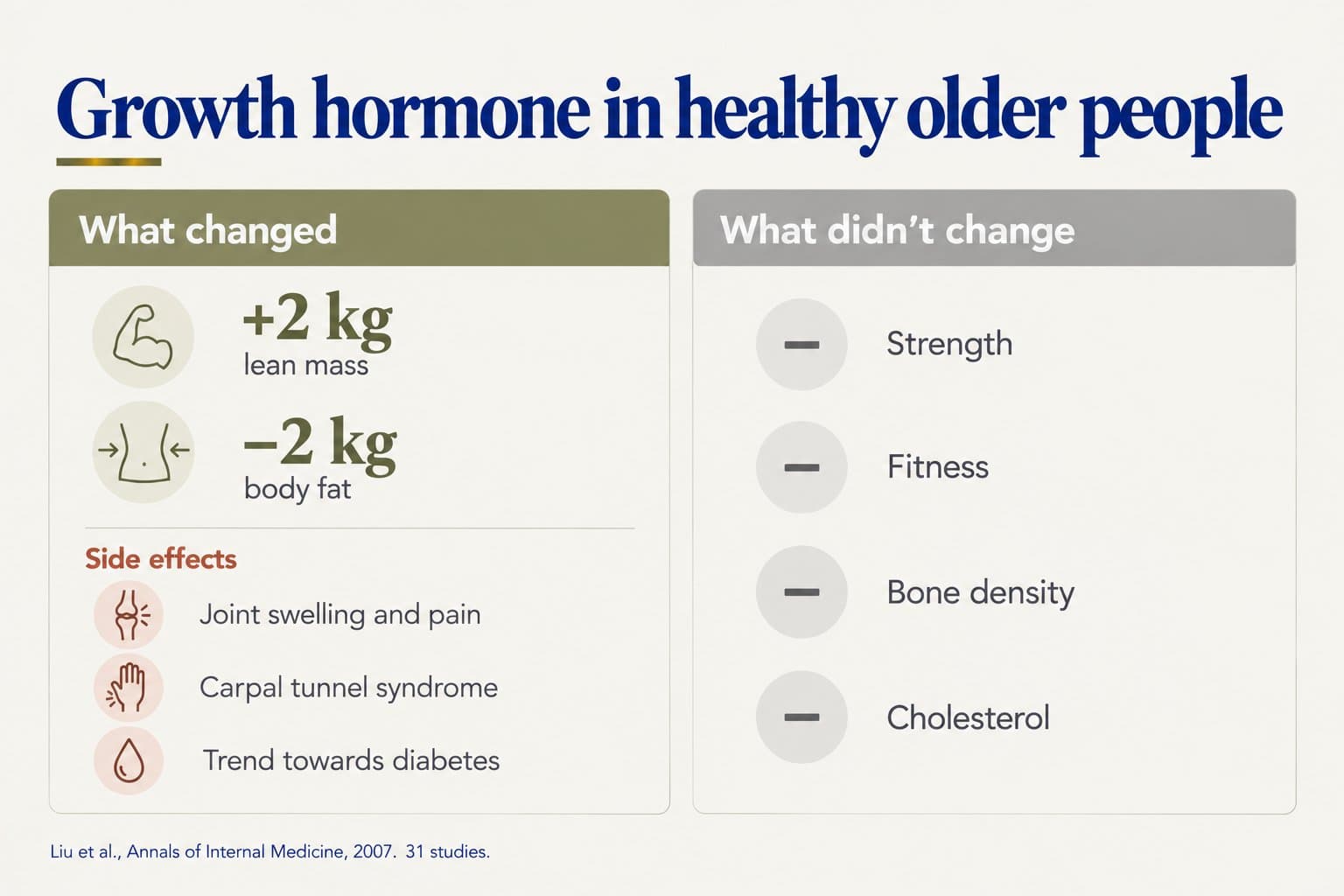
Growth hormone and DHEA both fall with age, and both are sold as ways to turn back the clock. The logic sounds simple: if levels fall as we age, topping them up should slow ageing. The trials don't support it. In healthy older people, growth hormone added about 2 kg of lean mass and removed about 2 kg of fat, but it didn't improve strength, fitness, bone density or cholesterol, and it caused joint pain, swelling and carpal tunnel syndrome, with a trend towards diabetes. In the US, giving growth hormone for anti-ageing is illegal. DHEA, a widely available supplement, showed no physiologically relevant benefits in a two-year trial in older men and women, and a review of 23 trials in postmenopausal women found no significant effect on sexual function, weight or bone. Falling hormone levels are part of normal ageing, not a deficiency to be corrected. This article explains what these hormones do, what the trials found, and what actually works instead.
Key numbers
| Finding | Detail |
|---|---|
| Growth hormone in healthy older people (31 studies, average 6 months) | About 2 kg more lean mass and 2 kg less fat; no improvement in strength, fitness, bone density or cholesterol |
| Growth hormone side effects (same review) | Joint swelling and pain, carpal tunnel syndrome, and a trend towards new diabetes or prediabetes |
| The 1990 study that started the trend (12 treated men over 60, 6 months) | Lean mass up 8.8%, fat down 14.4%; strength and function not measured |
| DHEA in older men and women (2-year placebo-controlled trial) | No physiologically relevant benefits on body composition, physical performance, bone or glucose |
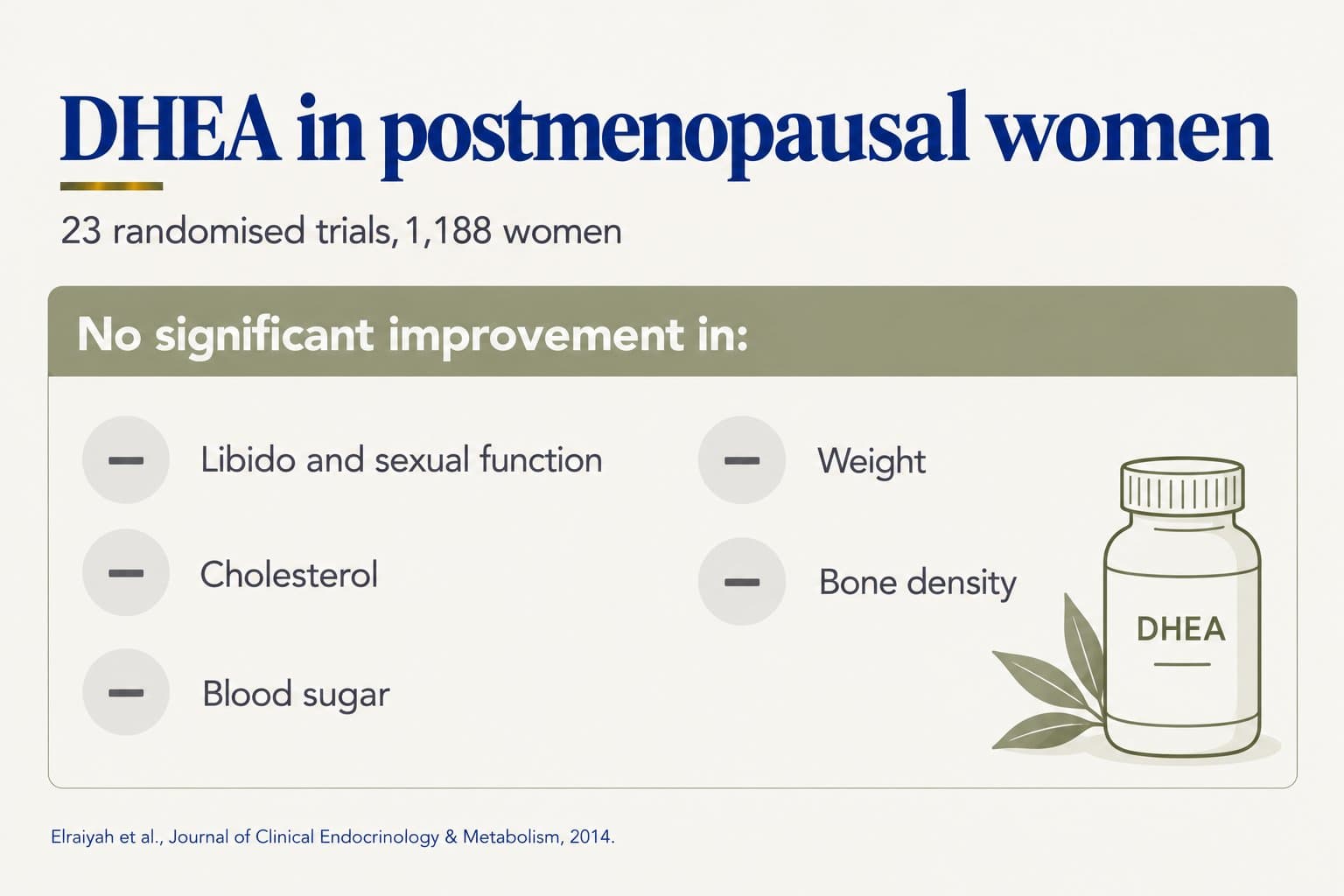
| DHEA in postmenopausal women (23 trials, 1,188 women) | No significant improvement in libido or sexual function, cholesterol, glucose, weight or bone density |
Why these hormones are marketed for ageing
Growth hormone (GH) is made by the pituitary gland and acts largely through a second hormone, IGF-1, made in the liver. It drives growth in childhood and helps regulate body composition, muscle, bone and metabolism in adults. GH secretion falls steadily from early adulthood, a change sometimes called the "somatopause".
DHEA (dehydroepiandrosterone) is made mainly by the adrenal glands and can be converted in the body to testosterone and oestrogens. Levels peak in the twenties and fall by 80-90% by the eighth and ninth decades (see How Hormones Change With Age).
Because low levels of both are linked with older age, more body fat and less muscle, they've been promoted as "youth hormones". But a hormone falling with age doesn't mean replacing it is helpful, or safe.
Evidence strength
Well established: growth hormone doesn't reverse ageing in healthy people. The anti-ageing interest in growth hormone began with a 1990 study in which 12 healthy men over 60 received GH injections for six months. Their lean body mass rose by 8.8% and fat fell by 14.4% compared with untreated men. The study didn't measure strength or function, and even at the time the researchers suggested any use should focus on frail older people rather than healthy ageing.
Later research tested the idea properly. A 2007 systematic review from Stanford combined 31 studies of healthy older people treated with GH for an average of about six months. GH increased lean body mass by about 2 kg and reduced body fat by about 2 kg, with no change in overall weight. But it had no meaningful effect on bone density, cholesterol or fitness (maximum oxygen uptake), and extra lean mass didn't translate into more strength. The lead author concluded that there was "no data out there to suggest that giving growth hormone to an otherwise healthy person will make him or her live longer".
Well established: growth hormone has real side effects. In the same review, people treated with GH more often had soft tissue swelling, joint pain and carpal tunnel syndrome, and there was a trend towards new diagnoses of diabetes or prediabetes. Because GH and IGF-1 promote cell growth, there are also long-standing concerns about cancer risk with long-term use. A 2025 review cautioned against using GH for anti-ageing, concluding that its long-term safety and benefits remain uncertain.
In the United States, distributing growth hormone for anti-ageing or body-building is illegal. It's approved only for specific conditions, such as proven GH deficiency in children and adults, and some muscle-wasting diseases. It's also banned in sport.
Moderate: DHEA doesn't deliver anti-ageing benefits. DHEA is sold over the counter in some countries and is heavily marketed for energy, libido and ageing. A two-year placebo-controlled trial published in 2006 gave DHEA to older women, and DHEA or low-dose testosterone to older men, all with low hormone levels. Neither hormone had physiologically relevant benefits on body composition, physical performance, bone density, glucose tolerance or quality of life.
In women, a 2014 systematic review of 23 randomised trials with 1,188 postmenopausal women found that DHEA didn't significantly improve libido or sexual function, and had no significant effect on cholesterol, blood glucose, weight or bone density. The trials had moderate to high risk of bias, so confidence in the results is low, but there's no good evidence of benefit.
One exception: low-dose DHEA used as a vaginal insert (prasterone) can treat vaginal dryness and painful sex after menopause. This is a local treatment, not an anti-ageing therapy (see Perimenopause: Signs and Symptoms).
Not supported: other "anti-ageing" hormones and boosters.
- →GH "releasers", secretagogues and peptides: promoted as a safer way to raise GH, but there are no long-term trials showing they slow ageing or improve health, and their safety is largely unknown.
- →Pregnenolone: a hormone precursor sold as a supplement for memory and mood, with no good evidence of benefit. It was the most common steroid hormone found hidden in "adrenal support" supplements (see Adrenal Fatigue).
- →"Hormone optimisation" to youthful levels: there's no evidence that restoring hormones to the levels of a 25-year-old improves health or longevity in people without a true deficiency.
Testosterone and menopausal hormone therapy are different: both have clear medical uses when there's a genuine deficiency with symptoms, and are covered in Testosterone Therapy and Menopausal Hormone Therapy.
What works instead
The changes GH and DHEA are marketed for (less muscle, more fat, lower energy) respond to approaches with much stronger evidence:
- →Resistance training: builds muscle and strength, and protects bone (see Bone Density and Resistance Training).
- →Enough protein: supports muscle maintenance with age.
- →Sleep: most growth hormone is released during deep sleep, and poor sleep affects many hormones (see Sleep and Memory Consolidation).
- →Healthy weight and waist size: excess abdominal fat lowers both GH and testosterone (see Insulin Resistance).
Recommendations by situation
- →You're offered growth hormone, GH peptides or "hormone optimisation" for ageing: there's no evidence it slows ageing, it carries real risks, and in many countries it's illegal for this use.
- →You're considering DHEA supplements: trials in older adults show no meaningful benefit. Supplements may contain more or less than their label states, and DHEA can raise testosterone and oestrogen levels.
- →You have a hormone-sensitive cancer, or a history of one: avoid DHEA and GH unless your specialist advises otherwise.
- →You have symptoms that could reflect a genuine hormone problem, such as unexplained fatigue, weight change or low libido: see a doctor for proper assessment rather than self-treating.
- →You have diagnosed pituitary disease or adult GH deficiency: GH replacement can be an appropriate treatment under an endocrinologist.
- →You have vaginal dryness or painful sex after menopause: ask about local treatments, including vaginal oestrogen or vaginal DHEA.
Hormone testing, including when it's useful and when it isn't, is covered in Hormone Testing.
Practical notes
Growth hormone and DHEA both fall with age, but replacing them doesn't turn back the clock. Growth hormone changes body composition on paper without making healthy older people stronger or fitter, causes side effects, and is illegal for anti-ageing use in the US. DHEA shows no meaningful benefits in well-designed trials. Falling hormone levels are part of normal ageing, not a disease. The things these hormones promise, such as more muscle, less fat and more energy, are better achieved with strength training, good sleep, enough protein and a healthy weight.
- Rudman D, et al. Effects of human growth hormone in men over 60 years old. New England Journal of Medicine, 1990;323(1):1-6.
- Liu H, et al. Systematic review: the safety and efficacy of growth hormone in the healthy elderly. Annals of Internal Medicine, 2007;146(2):104-115.
- Perls TT, Reisman NR, Olshansky SJ. Provision or distribution of growth hormone for "antiaging": clinical and legal issues. JAMA, 2005;294(16):2086-2090.
- Fernández-Garza LE, et al. Growth hormone and aging: a clinical review. Frontiers in Aging, 2025;6:1549453.
- Nair KS, et al. DHEA in elderly women and DHEA or testosterone in elderly men. New England Journal of Medicine, 2006;355(16):1647-1659.
- Elraiyah T, et al. The benefits and harms of systemic dehydroepiandrosterone (DHEA) in postmenopausal women with normal adrenal function: a systematic review and meta-analysis. Journal of Clinical Endocrinology & Metabolism, 2014;99(10):3536-3542.
Have you been offered hormones
to "turn back the clock"?
Take the free Aevum Protocol assessment to see how your stress & hormones and 6 other longevity domains are performing — and get a personalised 90-day plan.
Take the Free Assessment →