Cardiovascular & Metabolic Health
A Heart-Healthy Routine for Every Life Stage:
What to Focus on in Your 20s to Your 70s and Beyond
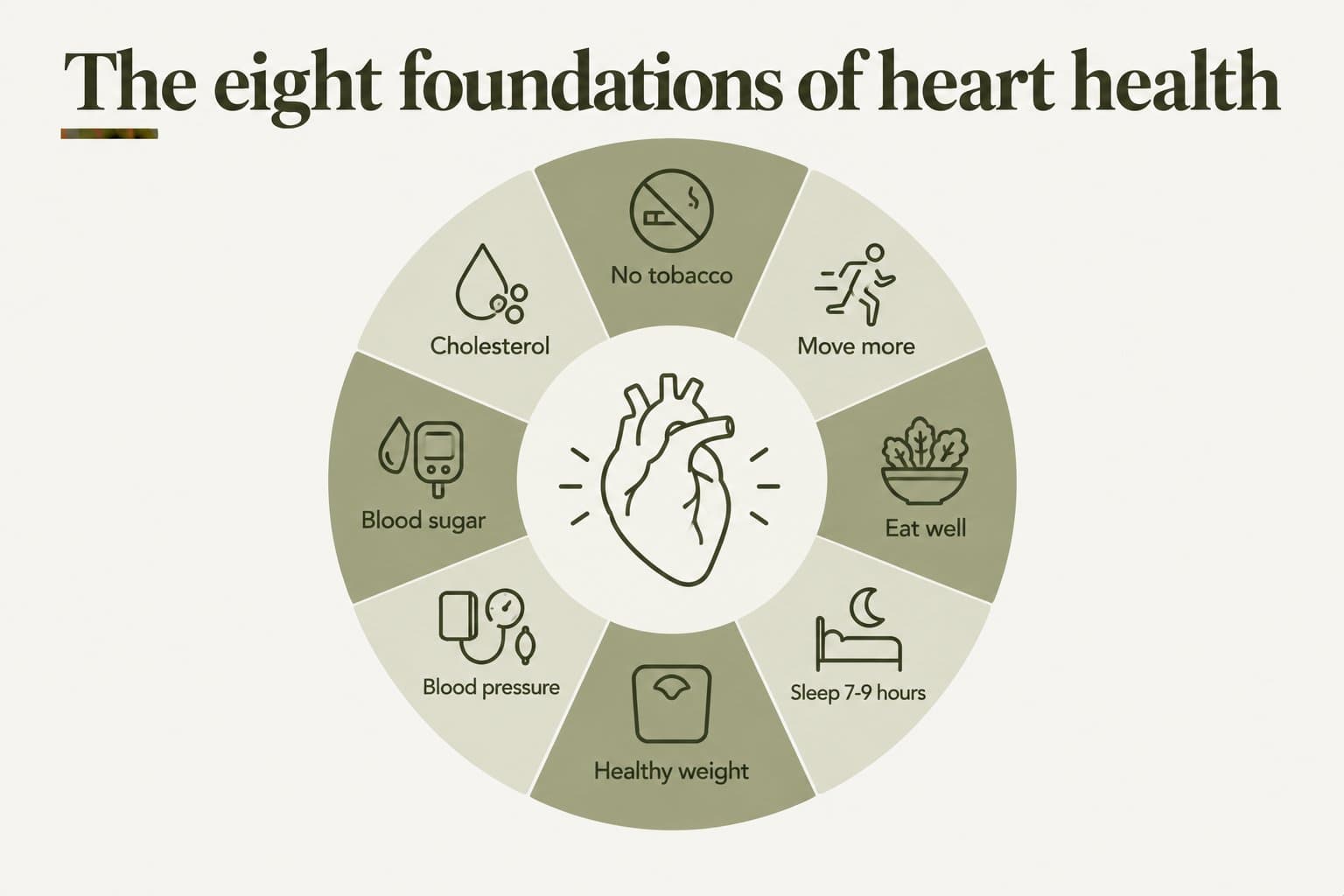
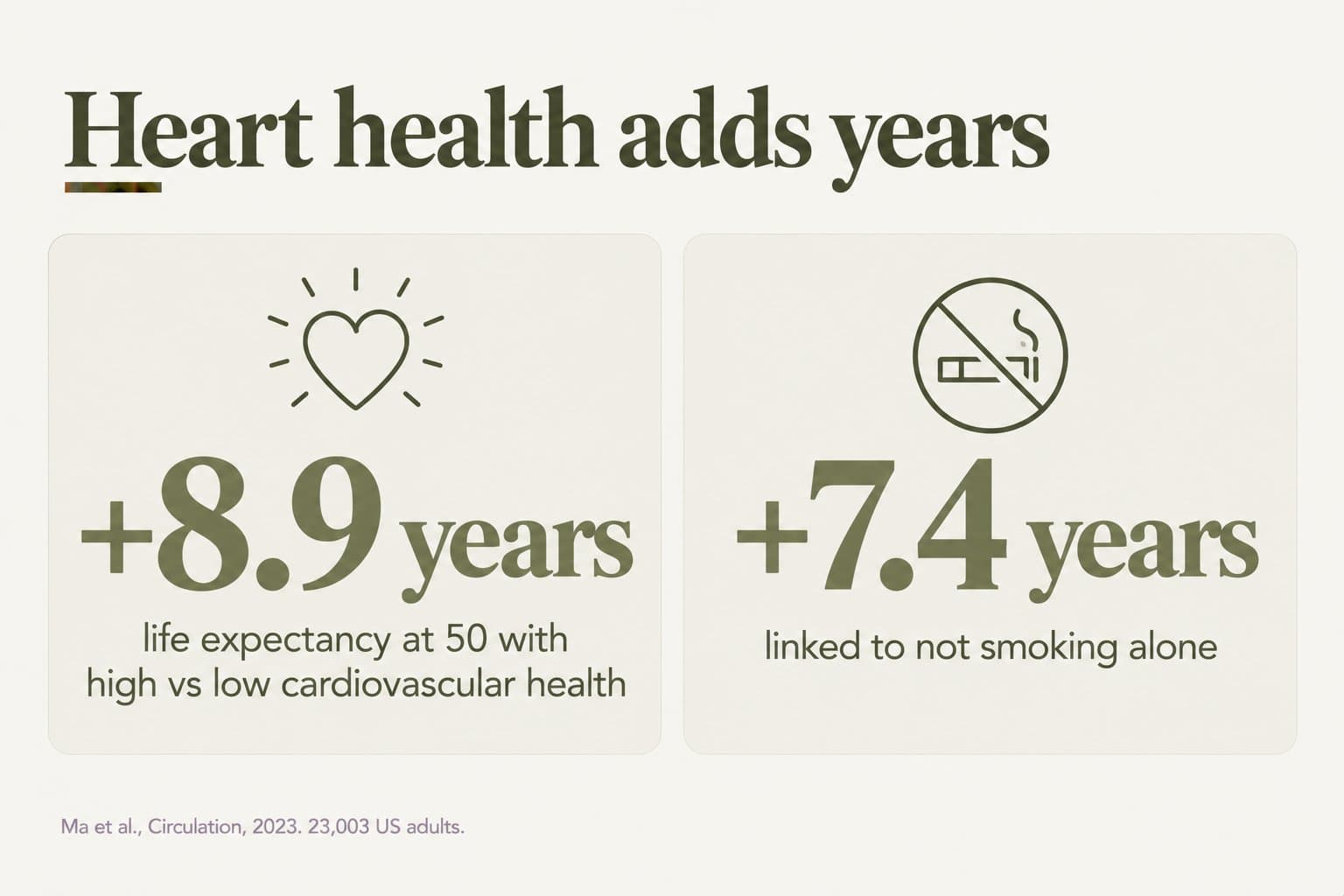
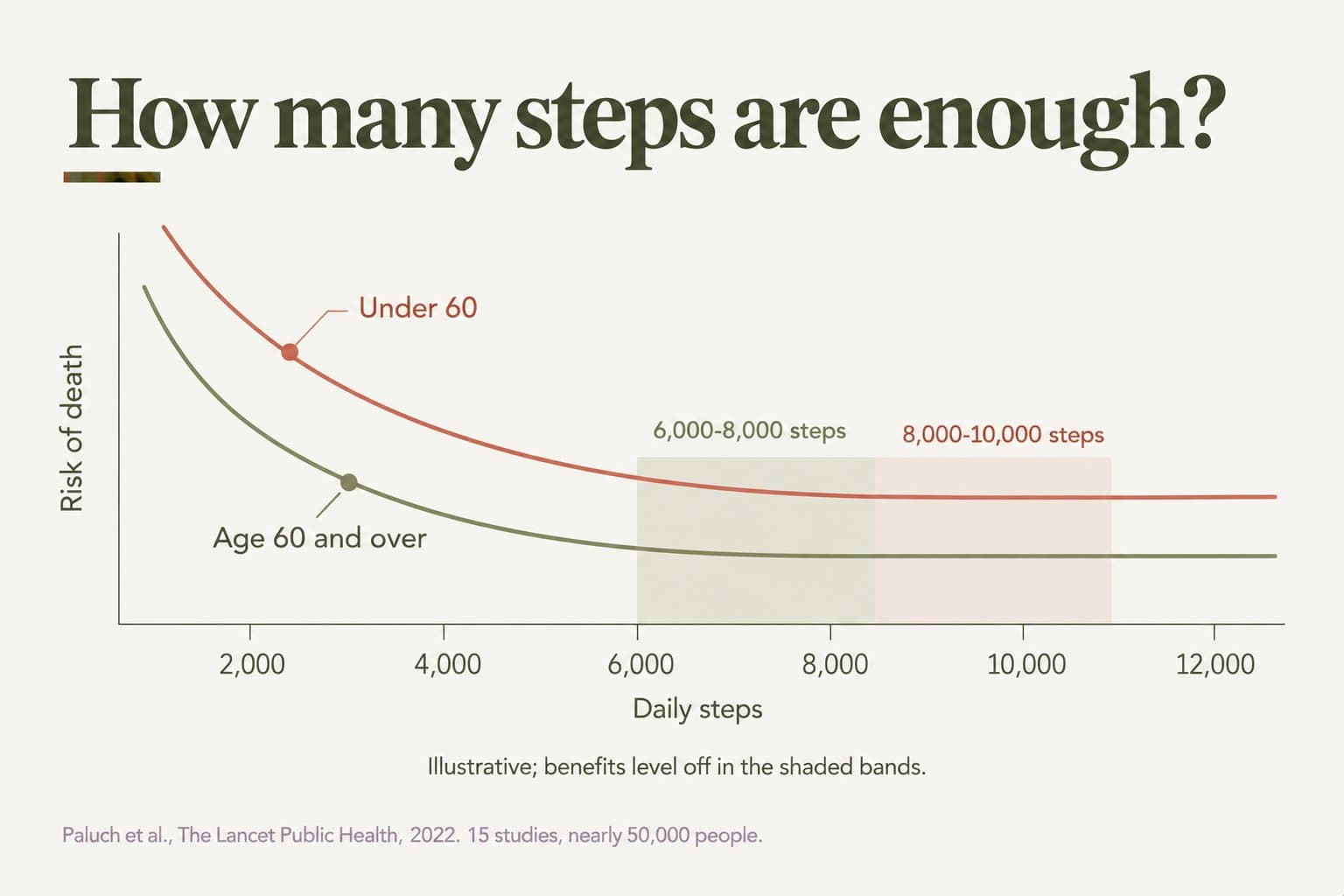
Heart disease develops over decades, so the habits that protect your heart matter at every age, but the priorities shift as you get older. The American Heart Association's "Life's Essential 8" sums up the foundations: not smoking, being active, eating well, sleeping well, and keeping weight, blood pressure, blood sugar and cholesterol in healthy ranges. In a study of 23,003 US adults, people with the highest scores on these eight measures could expect to live 8.9 years longer from age 50 than those with the lowest scores, and not smoking alone was linked to 7.4 extra years. Movement is one of the easiest wins: in 15 studies of nearly 50,000 people, the benefits of walking levelled off at about 6,000-8,000 steps a day for people over 60 and 8,000-10,000 for younger adults. This guide brings together the evidence from this section into a practical routine, with what to focus on in your 20s and 30s, 40s and 50s, and 60s and beyond.
Key numbers
| Finding | Detail |
|---|---|
| High vs low cardiovascular health score (23,003 US adults) | 8.9 more years of life expectancy from age 50 |
| Not smoking (same study) | Linked to 7.4 additional years, the largest single factor |
| Daily steps and risk of death (15 studies, nearly 50,000 people) | Benefits level off at 6,000-8,000 steps a day over 60, and 8,000-10,000 under 60 |
| WHO physical activity guidelines (2020) | 150-300 minutes of moderate or 75-150 minutes of vigorous activity a week, plus strength training at least twice a week |
| Ideal vs poor cardiovascular health (136,599 UK adults) | Years free of chronic disease made up about 76% of life from 50 in men and 83% in women, vs 65% and 69% |
The foundations: Life's Essential 8
The same eight factors protect the heart at every age:
- 1. Don't smoke or use tobacco, including smokeless tobacco and vaping.
- 2. Be physically active, combining aerobic and strength exercise.
- 3. Eat well: mostly vegetables, fruit, pulses, whole grains, nuts and fish, with less salt, sugar, refined carbohydrates and saturated fat.
- 4. Sleep 7-9 hours a night (see Sleep and Cardiovascular Health).
- 5. Keep a healthy weight and waist (see What Metabolic Health Really Means).
- 6. Control blood pressure (see Blood Pressure Explained).
- 7. Control blood sugar (see Insulin Resistance).
- 8. Control cholesterol (see LDL, ApoB and Lipoprotein(a)).
Why it's worth it
In a 2023 study of 23,003 US adults, those with the highest cardiovascular health scores on these eight measures had an average of 8.9 more years of life expectancy at age 50 than those with the lowest scores. Not smoking, sleep, physical activity and blood sugar control had the greatest individual effects, with not smoking alone linked to 7.4 extra years. In a UK study of 136,599 adults, people with ideal cardiovascular health spent a larger share of their lives free of chronic diseases such as heart disease, cancer, diabetes and dementia.
A weekly heart-healthy routine
| Area | What to aim for |
|---|---|
| Walking and daily movement | 8,000-10,000 steps a day under 60, 6,000-8,000 over 60; break up long periods of sitting |
| Aerobic exercise | 150-300 minutes of moderate activity (brisk walking, cycling, swimming) or 75-150 minutes of vigorous activity a week |
| Strength training | At least twice a week; include short isometric holds such as wall squats, which lower blood pressure |
| Balance | At least three days a week from about 65, combined with strength work |
| Meals | Half the plate vegetables; smaller portions of white rice and refined flour; pulses, fish or lean protein daily; less coconut oil |
| Salt | Under 5 g a day; cook with less salt and limit salty snacks, pickles and dried fish |
| Alcohol | None is best; if you drink, keep it low |
| Sleep | 7-9 hours, with a regular schedule; get snoring checked |
| Stress | Daily wind-down: a walk, slow breathing, time with others |
| Numbers | Know your blood pressure, cholesterol, blood sugar and waist |
Practical detail on each area is covered in Lowering Blood Pressure Without Medication, Lowering LDL Cholesterol and Zone 2 Training.
By life stage
Your 20s and 30s: build the foundations. Atherosclerosis starts early, and the LDL, blood pressure and blood sugar you have in these decades add up over a lifetime (see How Atherosclerosis Develops).
- Build an exercise habit you enjoy, including strength training.
- Establish healthy eating and cooking habits, and keep alcohol low.
- Never start smoking, or stop now.
- Know your numbers: blood pressure, a lipid profile from 20, and lipoprotein(a) once. South Asians and people with a family history should check blood sugar early.
- For women, pre-eclampsia, gestational diabetes and polycystic ovary syndrome are early warning signs worth following up (see Women's Heart Disease).
Your 40s and 50s: find and fix risk factors. This is when blood pressure, weight, blood sugar and cholesterol often start to drift, and when heart attacks begin to occur, earlier in South Asians (see South Asian Cardiovascular Risk).
- Get a 10-year risk assessment and act on it (see Cardiovascular Risk Scores and Heart Age).
- Screen for diabetes, fatty liver and, if you have risk factors, kidney disease (see Cardiometabolic Screening: Which Tests You Need, When, and Why).
- Protect muscle with strength training as muscle naturally declines.
- Watch your waist: abdominal fat drives insulin resistance.
- For women, blood pressure and LDL often rise around menopause; check them regularly.
- If medicines are recommended, such as for blood pressure or cholesterol, take them alongside lifestyle changes, not instead.
Your 60s, 70s and beyond: stay strong and active. The goals shift towards preserving function, independence and quality of life.
- Keep walking, aiming for 6,000-8,000 steps a day, and add strength and balance training at least three days a week to prevent falls.
- Keep blood pressure well controlled, which also protects the brain (see Hypertension and Longevity).
- Check your pulse for atrial fibrillation (see Atrial Fibrillation).
- Review your medicines regularly; for example, don't start aspirin for prevention without discussing it with your doctor (see Aspirin for Heart Disease Prevention).
- Keep eating enough protein and stay socially connected.
Recommendations by scenario
| Scenario | Where to start |
|---|---|
| Young, healthy, busy | Walk daily, strength train twice a week, cook more meals at home, check blood pressure and lipids once |
| Family history of early heart disease | Test lipids and Lp(a) early, and share results with relatives |
| Sedentary desk job | Break up sitting every 30-60 minutes, walk after meals, add short strength sessions |
| Recently diagnosed with high blood pressure, cholesterol or prediabetes | Make one change at a time, starting with salt, walking and portion size, and recheck in 3 months |
| After pregnancy complications or early menopause | Treat it as a heart health warning; regular checks and a healthy routine |
| Over 65 with joint problems | Walking, swimming or cycling, plus chair-based strength and balance exercises |
| Already have heart disease | Follow a cardiac rehabilitation programme and take prescribed medicines consistently |
Practical notes
A heart-healthy life comes from a few habits repeated over years: not smoking, moving every day, eating mostly whole foods with less salt and coconut oil, sleeping well, and knowing and controlling your blood pressure, cholesterol and blood sugar. In your 20s and 30s, build the habits; in your 40s and 50s, find and fix risk factors; from your 60s, stay strong, active and connected. People with high cardiovascular health can expect to live years longer, and more of those years free of chronic disease. It's never too early, or too late, to start.
- Ma H, et al. Cardiovascular health and life expectancy among adults in the United States. Circulation, 2023;147(15):1137-1146.
- Paluch AE, et al. Daily steps and all-cause mortality: a meta-analysis of 15 international cohorts. The Lancet Public Health, 2022;7(3):e219-e228.
- Bull FC, et al. World Health Organization 2020 guidelines on physical activity and sedentary behaviour. British Journal of Sports Medicine, 2020;54(24):1451-1462.
- American Heart Association. Heart-healthy lifestyle linked to a longer life, free of chronic health conditions. Newsroom, 2023.
- Lloyd-Jones DM, et al. Life's Essential 8: updating and enhancing the American Heart Association's construct of cardiovascular health. Circulation, 2022;146(5):e18-e43.
Free longevity assessment
Which of the eight foundations
needs your attention first?
Take the free Aevum Protocol assessment to see how your cardiovascular & metabolic health and 6 other longevity domains are performing — and get a personalised 90-day plan.
Take the free assessmentKeep reading
Related articles
Cardiovascular & Metabolic Health
Cardiometabolic Screening: Which Tests You Need, When, and Why
Cardiovascular & Metabolic Health
Lowering Blood Pressure Without Medication: A Practical, Evidence-Based Guide
Cardiovascular & Metabolic Health