Cardiovascular & Metabolic Health
LDL, ApoB and Lipoprotein(a):
Understanding Cholesterol Beyond the Basic Test
A standard cholesterol test reports total cholesterol, LDL ("bad") cholesterol, HDL ("good") cholesterol and triglycerides. But what actually drives plaque in the arteries is the number of cholesterol-carrying particles that enter the artery wall, and each of these particles carries one protein called apolipoprotein B (ApoB). In a UK study of nearly 390,000 people, ApoB was the lipid measure that best captured heart attack risk. A second particle, lipoprotein(a), or Lp(a), is set largely by your genes, is raised in about 1 in 5 people worldwide, tends to be higher in people of South Asian ancestry, and isn't picked up by a standard test. The European Atherosclerosis Society recommends measuring it at least once in every adult's life. And HDL isn't as protective as once thought: raising it through genetic variants didn't lower heart attack risk. This article explains what each number means and which ones matter most.
Key numbers
| Finding | Detail |
|---|---|
| ApoB and heart attack risk (UK Biobank, 389,529 people without heart disease) | Only ApoB remained linked to heart attack risk when lipid measures were considered together (HR 1.27 per standard deviation) |
| People with high Lp(a) | About 20% worldwide have levels above 50 mg/dL |
| Lp(a) testing (European Atherosclerosis Society, 2022) | Measure at least once in adult life; above 50 mg/dL (125 nmol/L) is high risk, under 30 mg/dL (75 nmol/L) low risk |
| Genetically higher HDL (heart attack study using gene variants) | No lower risk of heart attack (OR 0.99) despite higher HDL |
| LDL goals (European guidelines, 2019) | Under 55 mg/dL (1.4 mmol/L) at very high risk; under 70 (1.8) at high risk; under 100 (2.6) at moderate risk; under 116 (3.0) at low risk |
The cholesterol particles
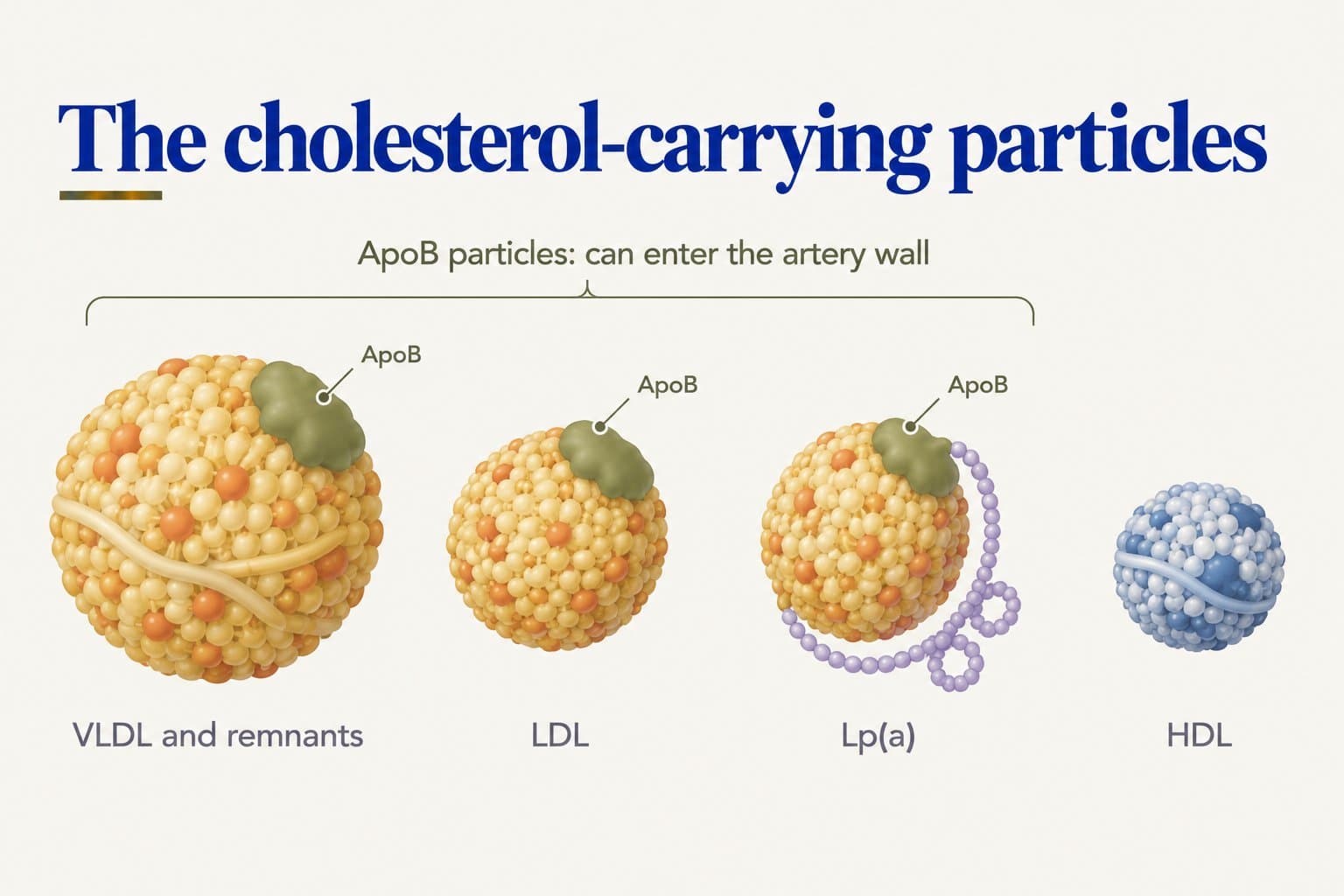
Cholesterol and fats don't dissolve in blood, so they travel inside particles called lipoproteins. The main ones are:
- LDL (low-density lipoprotein): carries most of the cholesterol in the blood to tissues. It's the main particle that gets trapped in artery walls (see How Atherosclerosis Develops).
- VLDL and remnants: carry triglycerides from the liver; as they're broken down, their cholesterol-rich remnants can also enter artery walls.
- Lipoprotein(a), or Lp(a): an LDL-like particle with an extra protein attached, which makes it more likely to promote plaque, inflammation and clotting.
- HDL (high-density lipoprotein): carries cholesterol away from tissues back to the liver.
Every LDL, VLDL, remnant and Lp(a) particle carries exactly one ApoB protein. HDL doesn't. So measuring ApoB effectively counts the total number of plaque-causing particles.
What each number tells you
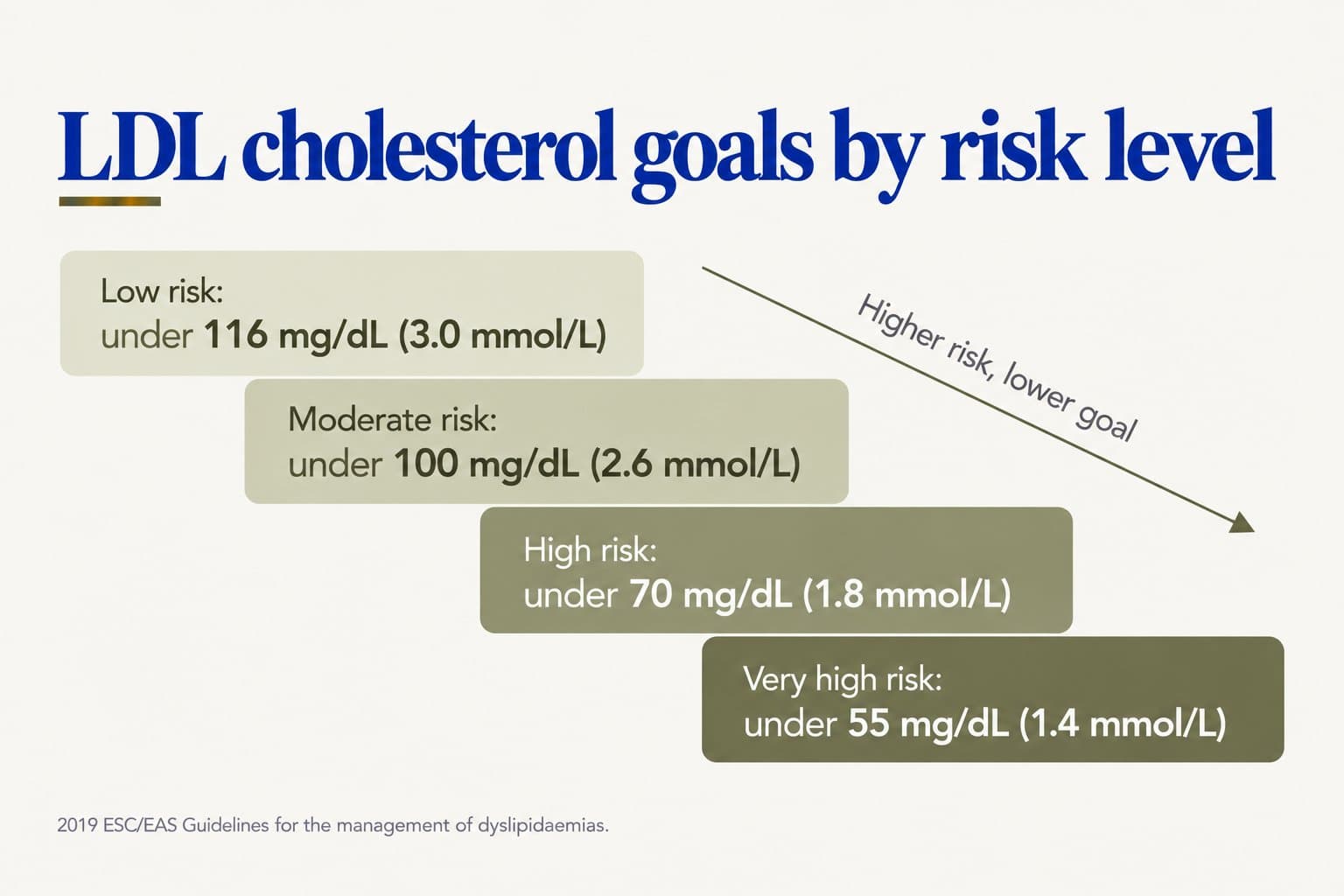
LDL cholesterol: the standard target. LDL cholesterol measures how much cholesterol is carried in LDL particles. It's the main target of treatment, and decades of evidence show that lowering it reduces heart attacks and strokes in proportion to how much, and for how long, it's lowered. The European guidelines set lower goals for people at higher risk:
| Risk level | LDL goal |
|---|---|
| Very high risk (for example, existing heart disease) | Under 55 mg/dL (1.4 mmol/L), and at least 50% lower than before treatment |
| High risk | Under 70 mg/dL (1.8 mmol/L), and at least 50% lower than before treatment |
| Moderate risk | Under 100 mg/dL (2.6 mmol/L) |
| Low risk | Under 116 mg/dL (3.0 mmol/L) |
ApoB: counting the particles. Two people can have the same LDL cholesterol but different numbers of particles. People with high triglycerides, diabetes, insulin resistance or excess abdominal fat often have many small LDL particles, each carrying less cholesterol, so LDL cholesterol can underestimate their risk.
In UK Biobank, researchers followed 389,529 people without heart disease. When ApoB, LDL cholesterol and triglyceride-rich particles were considered together, only ApoB was independently linked to heart attack risk (hazard ratio 1.27 per standard deviation). The authors concluded that risk "was best captured by the number of apoB-containing lipoproteins", suggesting ApoB may be the primary driver of atherosclerosis. European guidelines recommend ApoB particularly for people with high triglycerides, diabetes, obesity or very low LDL cholesterol.
Non-HDL cholesterol (total cholesterol minus HDL) is a simpler alternative that captures cholesterol in all ApoB particles, and can be calculated from a standard test.
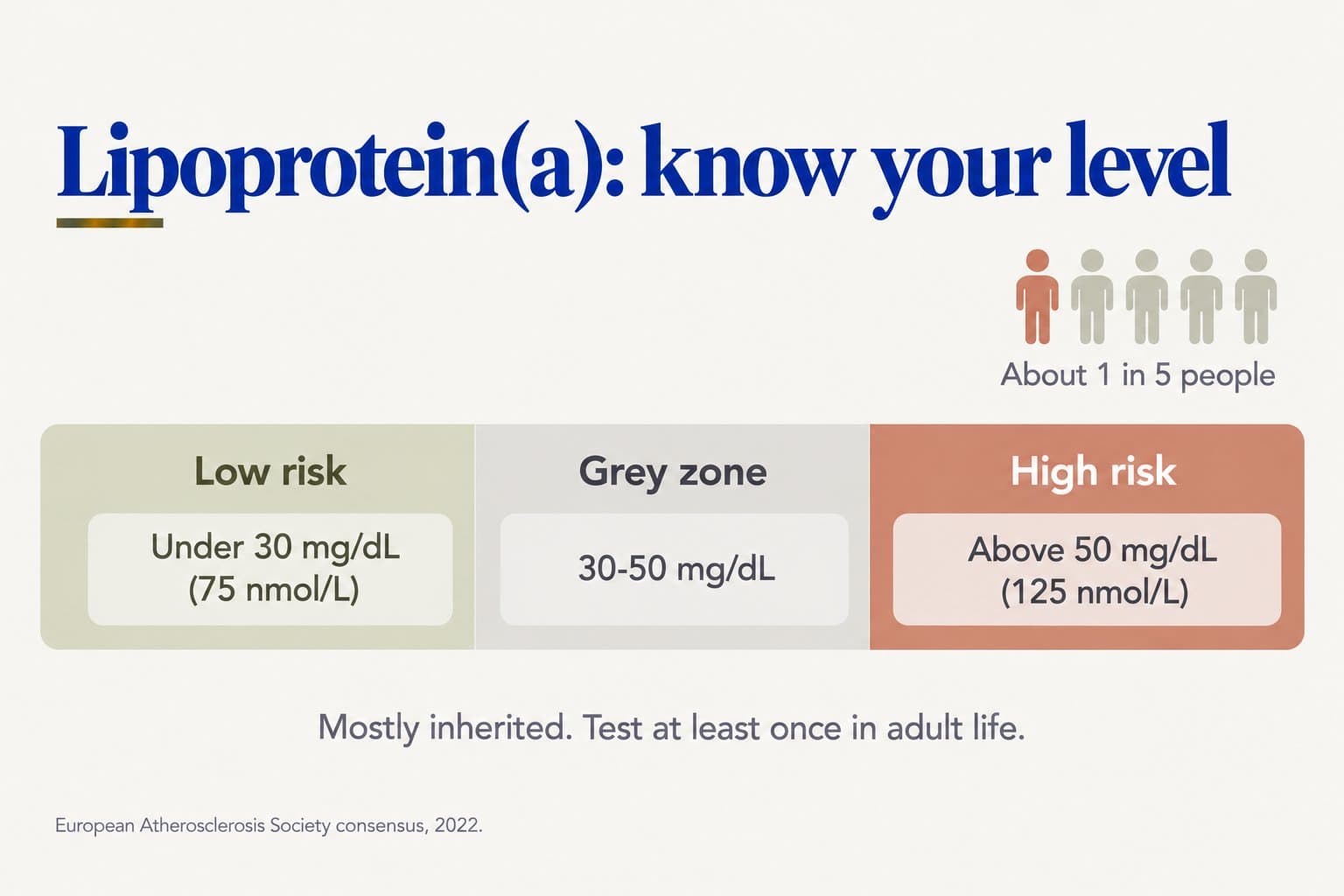
Lipoprotein(a): the inherited risk factor. Lp(a) levels are determined mainly by a single gene (LPA) and stay fairly stable throughout life. About 20% of people worldwide have levels above 50 mg/dL. Median levels are higher in people of South Asian and African ancestry, though a given Lp(a) level carries similar risk across ethnic groups.
High Lp(a) raises the risk of heart attack, stroke and narrowing of the aortic valve, even when LDL is normal. It isn't included in a standard cholesterol test. The European Atherosclerosis Society's 2022 consensus recommends:
- Testing at least once in adult life for everyone.
- Interpreting levels as: under 30 mg/dL (75 nmol/L) low risk; 30-50 mg/dL grey zone; above 50 mg/dL (125 nmol/L) high risk. The risk rises continuously with higher levels.
- Testing family members of people with high Lp(a), familial high cholesterol or early heart disease.
Lp(a) is hardly affected by diet or exercise, and statins don't meaningfully lower it. Several drugs designed to lower it are being tested in large trials. For now, people with high Lp(a) benefit most from aggressively managing everything else: LDL, blood pressure, smoking, blood sugar and weight.
HDL: not the protector it seemed. People with higher HDL have fewer heart attacks, which led to the idea of HDL as "good cholesterol". But genetic studies suggest this isn't causal. In a 2012 study, people carrying a gene variant that raised HDL by 0.14 mmol/L had no lower heart attack risk (odds ratio 0.99), and a combined genetic score for higher HDL also showed no benefit. Drugs that raise HDL have also failed to prevent heart attacks. Low HDL remains a useful marker of metabolic risk, but raising it isn't a treatment goal.
Triglycerides: a marker of metabolic health. High triglycerides usually reflect insulin resistance, excess weight, alcohol or refined carbohydrates (see Insulin Resistance). The particles that carry them add to ApoB and contribute to risk, and very high levels can cause pancreatitis.
Why this matters for longevity
Because atherosclerosis is driven by the lifetime number of ApoB particles in the blood, knowing your LDL, ApoB and Lp(a) early gives you the most time to act. A single Lp(a) test can identify an inherited risk that would otherwise stay hidden, which is especially relevant for South Asians. And focusing on the particles that cause disease, rather than on raising HDL, points to the strategies that actually work. Ways to lower LDL, including when medicines are needed, are covered in Lowering LDL Cholesterol.
Practical notes
- Get a full lipid profile (total, LDL, HDL, triglycerides) from early adulthood, and non-HDL cholesterol, which can be calculated from it.
- Ask about ApoB if you have high triglycerides, diabetes, insulin resistance or a large waist.
- Have your Lp(a) measured once, especially if you have a family history of early heart disease or stroke, or are of South Asian ancestry.
- Don't take comfort from high HDL alone; focus on LDL, ApoB and your overall risk.
- Marston NA, et al. Association of apolipoprotein B-containing lipoproteins and risk of myocardial infarction in individuals with and without atherosclerosis: distinguishing between particle concentration, type, and content. JAMA Cardiology, 2022;7(3):250-256.
- Kronenberg F, et al. Lipoprotein(a) in atherosclerotic cardiovascular disease and aortic stenosis: a European Atherosclerosis Society consensus statement. European Heart Journal, 2022;43(39):3925-3946.
- National Lipid Association. The ABCs of Lipoprotein(a).
- Voight BF, et al. Plasma HDL cholesterol and risk of myocardial infarction: a mendelian randomisation study. The Lancet, 2012;380(9841):572-580.
- Mach F, et al. 2019 ESC/EAS Guidelines for the management of dyslipidaemias: lipid modification to reduce cardiovascular risk. European Heart Journal, 2020;41(1):111-188.
Free longevity assessment
Have you ever had your ApoB
or Lp(a) measured?
Take the free Aevum Protocol assessment to see how your cardiovascular & metabolic health and 6 other longevity domains are performing — and get a personalised 90-day plan.
Take the free assessmentKeep reading
Related articles
Cardiovascular & Metabolic Health
How Atherosclerosis Develops: The Decades-Long Process Behind Heart Attacks and Strokes
Cardiovascular & Metabolic Health
Lowering LDL Cholesterol: A Practical Guide to Diet, Lifestyle and Medicines
Cardiovascular & Metabolic Health