Cardiovascular & Metabolic Health
South Asian Cardiovascular Risk:
Why Heart Disease Strikes Earlier, and What You Can Do About It
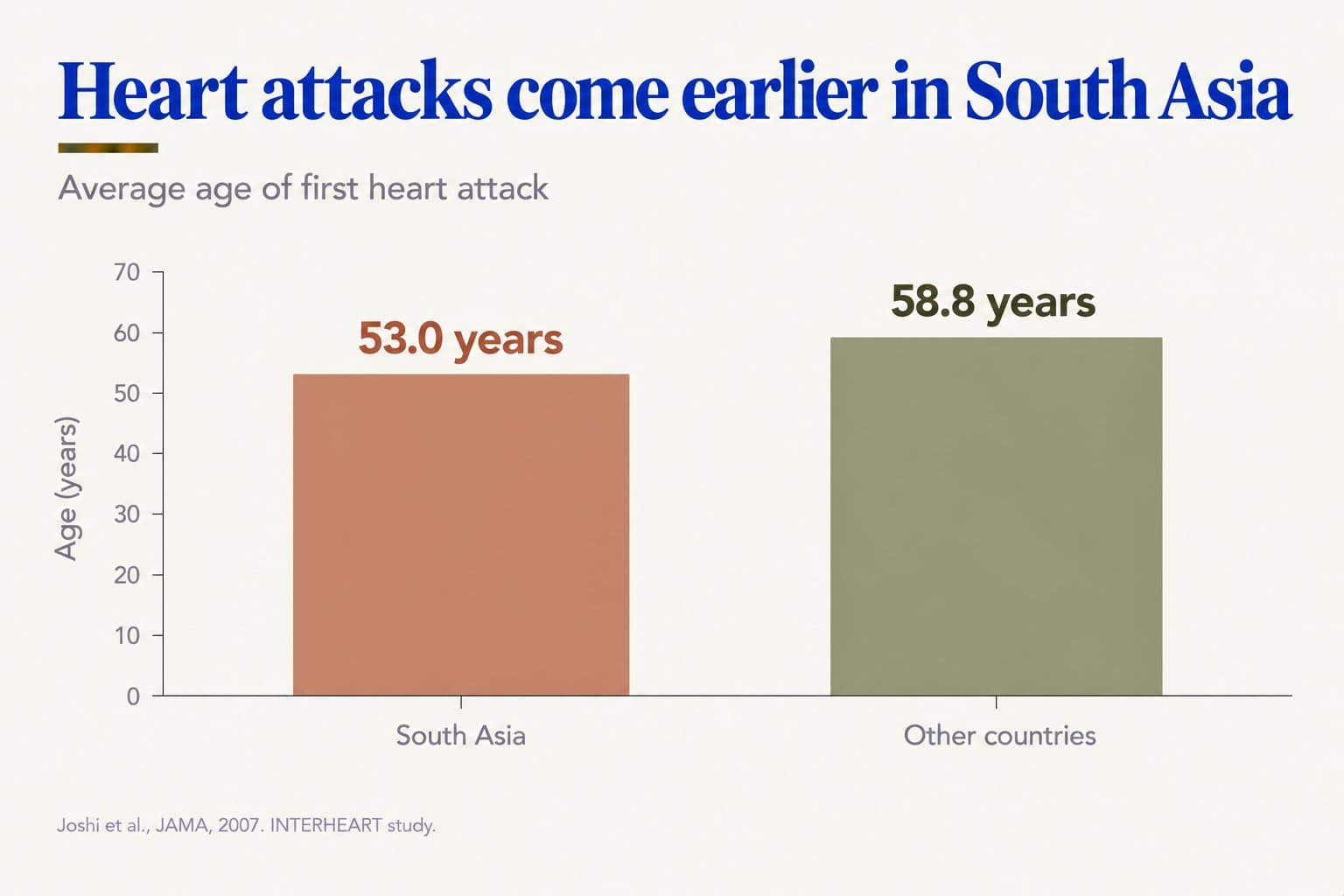
People of South Asian ancestry, from Sri Lanka, India, Pakistan, Bangladesh and Nepal, develop heart disease earlier and more often than many other groups. In the international INTERHEART study, the average age of a first heart attack was 53 in South Asia, compared with about 59 elsewhere. In UK Biobank, middle-aged South Asians had about twice the risk of heart attack and stroke as people of European ancestry, yet a standard US risk calculator predicted only a slightly higher risk. Part of the reason is that South Asians tend to store more fat around the abdomen and organs and develop insulin resistance and diabetes at lower body weights: in a study of 1.5 million people in England, the diabetes risk of a white person with a BMI of 30 was reached by South Asians at a BMI of just 23.9. The encouraging news is that the same modifiable risk factors explain most heart attacks in South Asians as in everyone else. They simply appear earlier and need to be caught and treated earlier. This article explains why the risk is higher and what to do about it.
Key numbers
| Finding | Detail |
|---|---|
| Average age of first heart attack (INTERHEART, 1,732 South Asian cases) | 53.0 years in South Asia vs 58.8 years in other countries |
| Share of heart attack risk explained by nine modifiable factors (same study) | 86% in South Asians, 88% in other countries |
| Heart attack and stroke risk (UK Biobank, 8,124 South Asian and 449,349 European adults, 11 years) | About twice as high in South Asians (6.8% vs 4.4%; HR 2.03) |
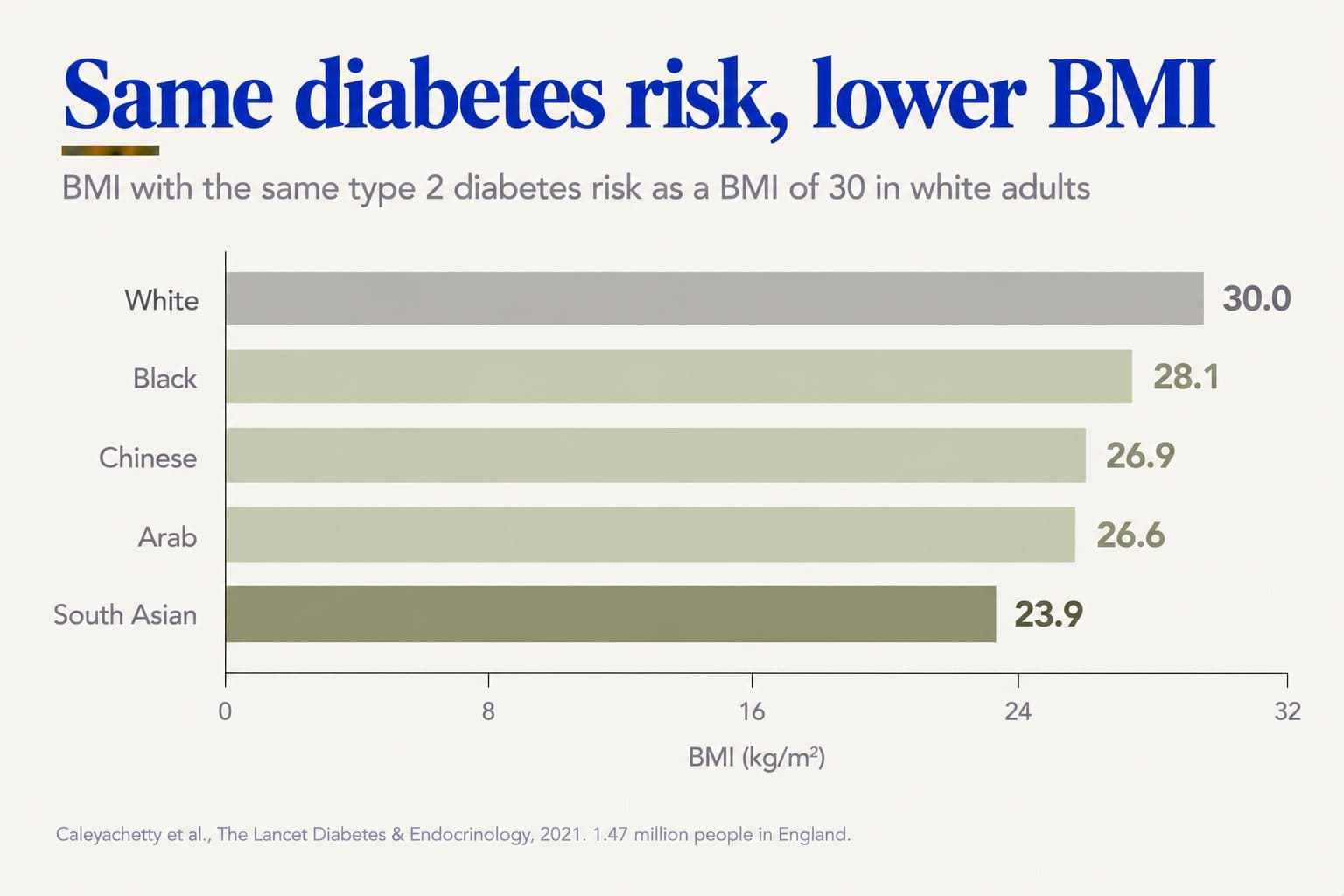
| BMI giving the same diabetes risk as a BMI of 30 in white adults (1.47 million people in England) | 23.9 in South Asians |
| Premature deaths from non-communicable diseases in Sri Lanka (2001-2010) | Chance of dying from them between ages 30 and 70 rose from 15.8% to 19.1%, with cardiovascular disease the leading cause |
Why South Asians face higher risk
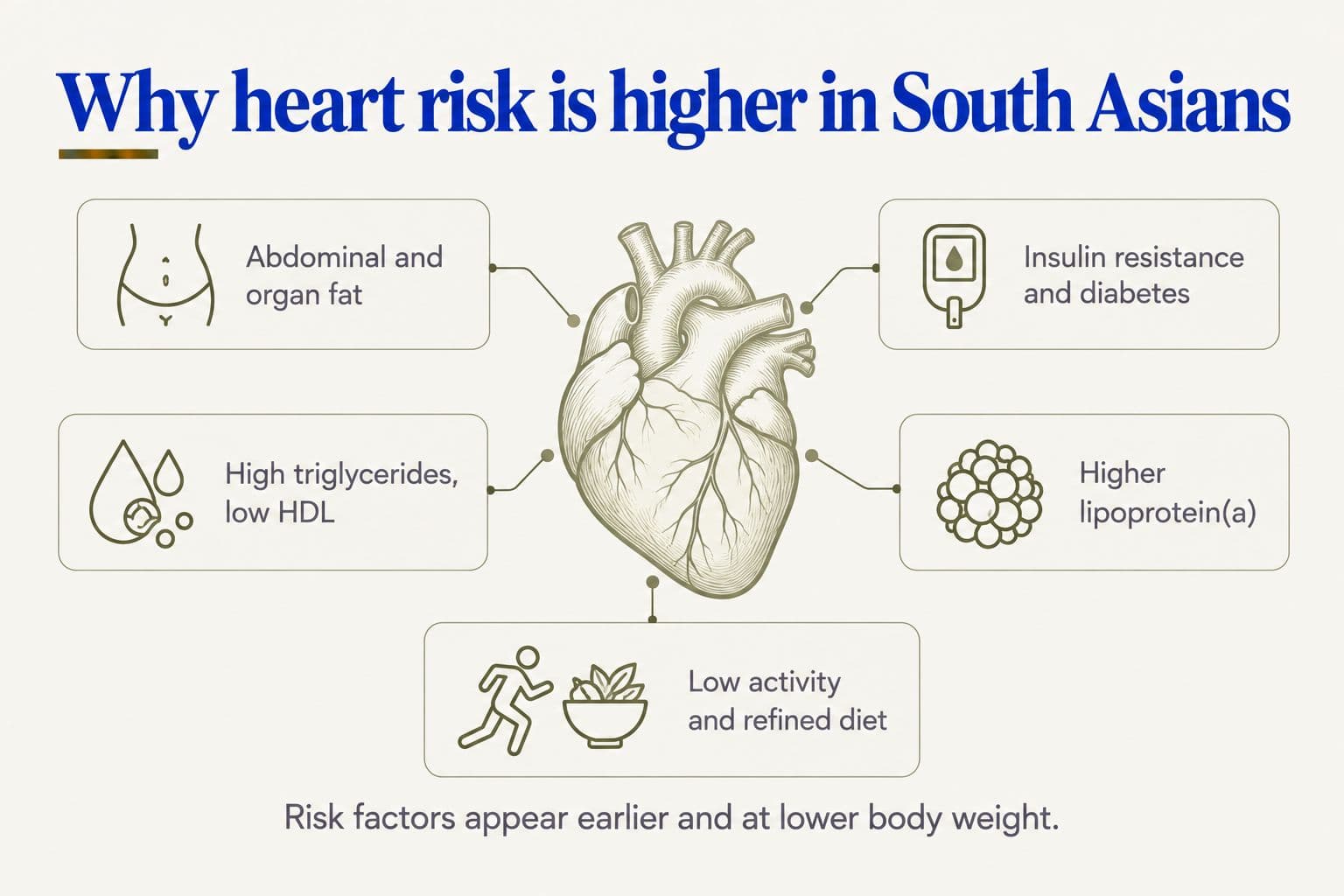
There's no single cause. Several factors cluster together, and they tend to appear at younger ages:
- Fat stored in the wrong places: at the same body weight, South Asians tend to carry more fat around the abdomen, liver and other organs, and less muscle. This "thin on the outside, fat on the inside" pattern drives insulin resistance (see Insulin Resistance).
- Diabetes at a younger age and lower weight: diabetes roughly doubles cardiovascular risk (see Diabetes and Heart Disease), and it's very common in Sri Lanka.
- An unfavourable cholesterol pattern: high triglycerides, low HDL and a high ratio of harmful to protective particles, often with a normal-looking LDL (see LDL, ApoB and Lipoprotein(a)).
- Higher lipoprotein(a): an inherited particle that raises risk, with higher average levels in people of South Asian ancestry.
- Lifestyle factors: low levels of physical activity, diets high in refined carbohydrates and low in fruit and vegetables, and tobacco use, including smokeless tobacco.
These factors also make South Asians more prone to metabolic syndrome and fatty liver (see What Metabolic Health Really Means and Fatty Liver Disease (MASLD)).
What drives South Asian heart risk
| Factor | Effect | Modifiable? | Evidence strength |
|---|---|---|---|
| Abdominal and organ fat | Higher at the same BMI; drives insulin resistance | Yes | Strong |
| Insulin resistance and diabetes | More common and earlier; roughly doubles risk | Yes | Strong |
| High triglycerides, low HDL, high ApoB | More common; harmful particle count can be high even with normal LDL | Yes | Strong |
| High blood pressure | Linked to a steeper rise in risk in South Asians | Yes | Moderate |
| Lipoprotein(a) | Higher average levels; raises risk | Not with lifestyle | Moderate |
| Low physical activity | Much less common in South Asian adults | Yes | Strong |
| Diet low in fruit and vegetables, high in refined carbohydrates | Common; worsens blood sugar and triglycerides | Yes | Moderate |
| Tobacco, including smokeless | Greatly raises risk | Yes | Strong |
| Family history of early heart disease | Raises risk | No, but a reason to screen early | Strong |
What the research shows
Heart attacks come about five years earlier. The INTERHEART study compared people having their first heart attack with matched controls across 52 countries. In the South Asian part of the study, which included 1,732 people with a heart attack and 2,204 controls from India, Pakistan, Bangladesh, Nepal and Sri Lanka, the average age of a first heart attack was 53.0 years, compared with 58.8 years in other countries.
South Asians without heart disease were less likely to have protective habits: only 6.1% did moderate or vigorous exercise, compared with 21.6% elsewhere, and 26.5% ate fruit and vegetables daily, compared with 45.2%. A harmful cholesterol pattern, a high ratio of ApoB to ApoA-I, was more common (43.8% vs 31.8%), as was diabetes.
Crucially, the same nine modifiable risk factors, including smoking, cholesterol, blood pressure, diabetes, abdominal obesity, diet, exercise and stress, explained 86% of heart attack risk in South Asians and 88% elsewhere. The authors concluded that the earlier heart attacks in South Asians "can be largely explained by higher risk factor levels at younger ages."
Risk is about twice as high, and standard calculators miss it. A 2021 study followed 8,124 middle-aged adults of South Asian ancestry and 449,349 of European ancestry in UK Biobank for a median of 11 years. Heart attacks, strokes and related events occurred in 6.8% of South Asians compared with 4.4% of Europeans, about twice the risk (HR 2.03). Blood pressure appeared to matter more: each 20 mmHg rise in systolic blood pressure was linked to a 33% higher risk in South Asians, compared with 12% in Europeans.
Yet the widely used US Pooled Cohort Equations predicted only about 1.1 times higher risk for South Asians after accounting for age and sex. Hypertension, diabetes and central obesity explained more of the risk in South Asians, but some excess risk remained even after adjusting for known factors. This is why American guidelines treat South Asian ancestry as a "risk-enhancing factor", and why risk scores need interpreting with care (see Cardiovascular Risk Scores and Heart Age).
Metabolic risk starts at a lower weight. A 2021 study of 1,472,819 people in England, including 75,956 South Asians, looked at the BMI at which each ethnic group reached the same risk of type 2 diabetes as a white person with a BMI of 30, the usual threshold for obesity. For South Asians, it was 23.9, a weight usually considered "normal". The equivalent figures were 26.6 for Arab, 26.9 for Chinese and 28.1 for Black adults. Standard BMI cut-offs can therefore falsely reassure South Asians.
The burden in Sri Lanka. Cardiovascular disease is the leading cause of premature death from non-communicable diseases in Sri Lanka. Between 2001 and 2010, the chance of dying from these diseases between the ages of 30 and 70 rose from 15.8% to 19.1%, with cardiovascular disease the largest contributor, followed by cancer and diabetes. Diabetes affects about 1 in 5 Sri Lankan adults, and high blood pressure, metabolic syndrome and fatty liver are all common.
What you can actually change
1. Start checking earlier. Because risk factors appear younger, don't wait until your 40s or 50s. Have your blood pressure, fasting glucose or HbA1c, and a full lipid profile checked from early adulthood, and more often if you have a family history of early heart disease or diabetes.
2. Use South Asian thresholds for weight and waist. For people of Asian ancestry, the World Health Organization suggests action at a BMI of 23 (increased risk) and 27.5 (high risk), rather than 25 and 30. Waist size is often more useful: aim for under 90 cm for men and under 80 cm for women.
3. Have your lipoprotein(a) measured once. A single test identifies an inherited risk that a standard cholesterol test misses. If it's high, it's a reason to control everything else more tightly.
4. Make physical activity non-negotiable. Low activity was one of the biggest gaps in INTERHEART. Aim for at least 150 minutes of moderate activity a week plus strength training twice a week; building muscle improves insulin sensitivity (see Zone 2 Training).
5. Rebalance the plate. Reduce portions of white rice, refined flour and sweets, and fill more of the plate with vegetables, pulses, fish and whole grains. Limit sugary drinks and deep-fried foods.
6. Avoid all tobacco. This includes cigarettes, beedi and chewing tobacco.
7. Treat risk factors fully, and early. If your blood pressure, cholesterol or blood sugar is raised, treatment thresholds may be reached sooner than you expect. Make sure your doctor knows your ancestry and family history when estimating your risk.
Recommendations
- Know your numbers by your 20s and 30s: blood pressure, blood sugar, lipids and waist size.
- Don't be reassured by a "normal" BMI; check your waist and blood sugar.
- Ask for an Lp(a) test and, if you have high triglycerides or diabetes, an ApoB test.
- Mention South Asian ancestry and any early heart disease in the family when your cardiovascular risk is assessed.
- Screen your family if you've had a heart attack young or have high Lp(a) or diabetes.
Practical notes
South Asians, including Sri Lankans, develop heart disease about five years earlier and at lower body weights than many other groups, mainly because risk factors such as abdominal fat, insulin resistance, diabetes and an unfavourable cholesterol pattern appear earlier. Standard risk calculators and BMI cut-offs can underestimate this. But the same modifiable factors explain most of the risk, so earlier screening, South Asian-specific thresholds, regular activity, better diet quality, avoiding tobacco and prompt treatment can close much of the gap.
- Joshi P, et al. Risk factors for early myocardial infarction in South Asians compared with individuals in other countries. JAMA, 2007;297(3):286-294.
- Patel AP, et al. Quantifying and understanding the higher risk of atherosclerotic cardiovascular disease among South Asian individuals: results from the UK Biobank prospective cohort study. Circulation, 2021;144(6):410-422.
- Caleyachetty R, et al. Ethnicity-specific BMI cutoffs for obesity based on type 2 diabetes risk in England: a population-based cohort study. The Lancet Diabetes & Endocrinology, 2021;9(7):419-426.
- Ediriweera DS, et al. Increase in premature mortality due to non-communicable diseases in Sri Lanka during the first decade of the twenty-first century. BMC Public Health, 2018;18:584.
- Volgman AS, et al. Atherosclerotic cardiovascular disease in South Asians in the United States: epidemiology, risk factors, and treatments: a scientific statement from the American Heart Association. Circulation, 2018;138(1):e1-e34.
- WHO Expert Consultation. Appropriate body-mass index for Asian populations and its implications for policy and intervention strategies. The Lancet, 2004;363(9403):157-163.
Free longevity assessment
Has your heart risk been assessed
with your ancestry in mind?
Take the free Aevum Protocol assessment to see how your cardiovascular & metabolic health and 6 other longevity domains are performing — and get a personalised 90-day plan.
Take the free assessmentKeep reading
Related articles
Cardiovascular & Metabolic Health
Cardiovascular Risk Scores and Heart Age: What Your Numbers Add Up To
Cardiovascular & Metabolic Health
What Metabolic Health Really Means, and Why Most People Don't Have It
Cardiovascular & Metabolic Health