Cardiovascular & Metabolic Health
What Metabolic Health Really Means,
and Why Most People Don't Have It
"Metabolic health" describes how well your body handles energy: how it processes sugar and fat, stores fat, and keeps blood pressure in check. It's usually judged by five simple measures: waist size, blood pressure, fasting blood sugar, triglycerides and HDL cholesterol. When three or more are out of range, doctors call it metabolic syndrome, a cluster that raises the risk of type 2 diabetes, heart disease, stroke and fatty liver disease. Optimal metabolic health is surprisingly rare. In US national data, only 12.2% of adults had all five measures in the healthy range without medication, and fewer than 1% of adults with obesity did. In Sri Lanka, about a quarter of adults had metabolic syndrome in a national study, rising to more than a third in urban areas. And because South Asians tend to store fat around the organs at lower body weights, metabolic health can be poor even at a "normal" weight. This article explains the measures, what they mean together, and why metabolic health is central to longevity.
Key numbers
| Finding | Detail |
|---|---|
| Optimal metabolic health in US adults (8,721 adults, 2009-2016) | 12.2% had all five measures in the healthy range without medication |
| Adults with obesity (same study) | Fewer than 1% were metabolically healthy |
| Optimal cardiometabolic health, broader measure (about 55,000 US adults) | Only 6.8% in 2017-18 |
| Metabolic syndrome in Sri Lanka (national study, 4,485 adults) | 24.3% age-adjusted; 34.8% in urban vs 21.6% in rural adults |
| Most common abnormalities among Sri Lankan adults (same study) | High blood pressure, low HDL and high triglycerides |
The five measures
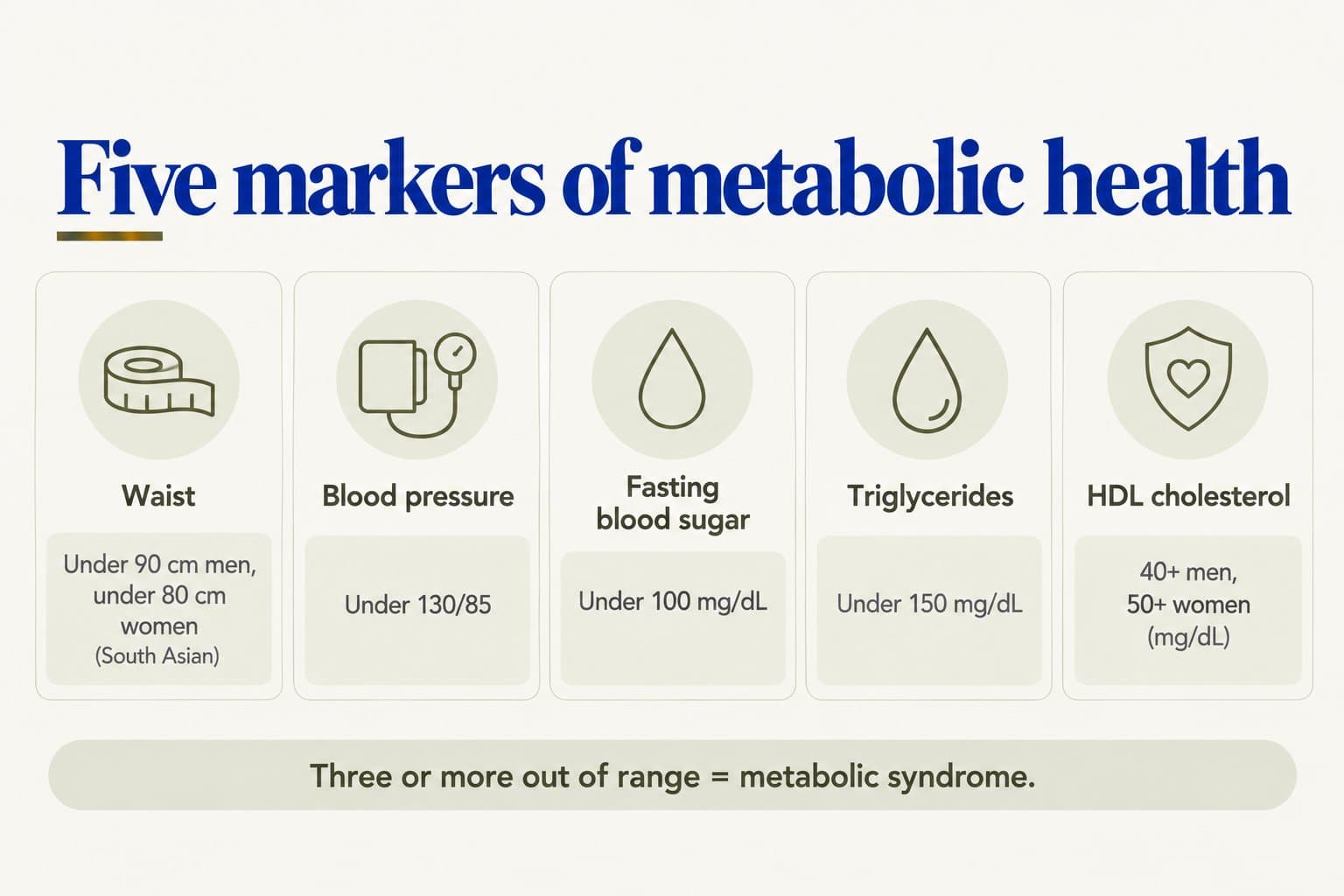
Metabolic health is usually assessed with five routine measurements. The internationally agreed definition of metabolic syndrome is three or more of:
| Measure | Out of range |
|---|---|
| Waist size | Above the threshold for your population (for South Asians, usually 90 cm or more for men and 80 cm or more for women) |
| Triglycerides | 150 mg/dL (1.7 mmol/L) or more, or on treatment |
| HDL cholesterol | Under 40 mg/dL (1.0 mmol/L) in men or under 50 mg/dL (1.3 mmol/L) in women, or on treatment |
| Blood pressure | 130/85 mmHg or more, or on treatment |
| Fasting blood sugar | 100 mg/dL (5.6 mmol/L) or more, or on treatment |
Optimal metabolic health means all five are in the healthy range without needing medication.
What ties them together
These five measures tend to go wrong together because they share common roots:
- Insulin resistance: when the body's cells respond poorly to insulin, the pancreas makes more of it. Over time, this raises blood sugar and triglycerides, lowers HDL and contributes to high blood pressure (see Insulin Resistance).
- Visceral fat: fat stored deep around the organs, especially the liver, releases fatty acids and inflammatory signals that worsen insulin resistance. Waist size is a simple marker of it (see Stress, Cortisol and Belly Fat).
- Lifestyle drivers: inactivity, excess calories, refined carbohydrates and sugary drinks, alcohol, poor sleep and chronic stress all push the measures in the wrong direction (see Insulin and the Metabolic Hormones).
Together, these changes damage blood vessels, the heart, liver and kidneys, and speed up atherosclerosis (see How Atherosclerosis Develops).
What the research shows
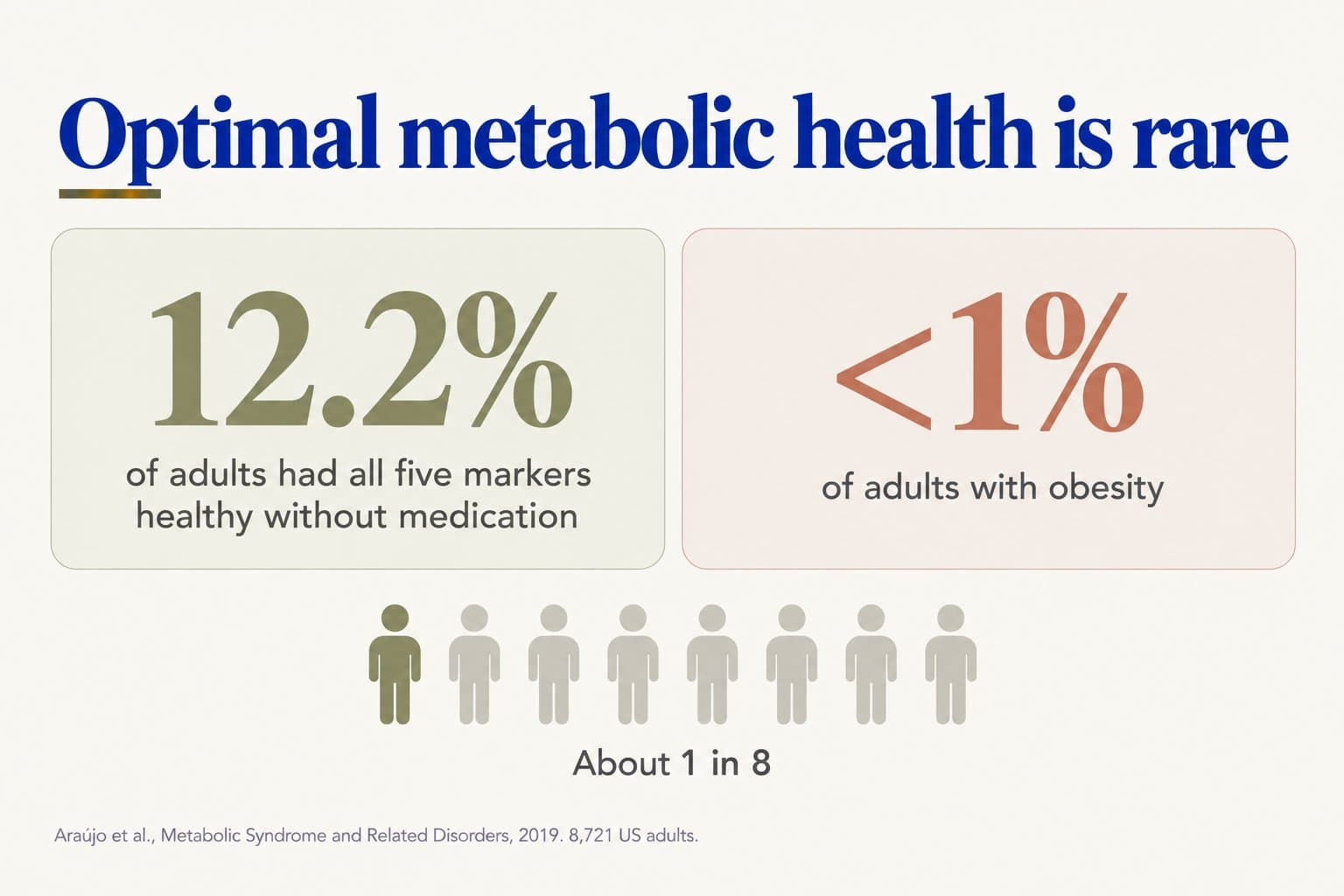
Optimal metabolic health is rare. A study of 8,721 US adults in the National Health and Nutrition Examination Survey (2009-2016) looked at the five measures. Only 12.2% of adults had all five in the optimal range without medication, described by the authors as "only one in eight". Fewer than 1% of adults with obesity met the definition, and none of those who were physically inactive, current smokers or had not completed high school.
A broader analysis of about 55,000 US adults, which also included weight and existing cardiovascular disease, found that only 6.8% had optimal cardiometabolic health in 2017-18, and that the share with healthy weight and blood sugar had fallen over two decades.
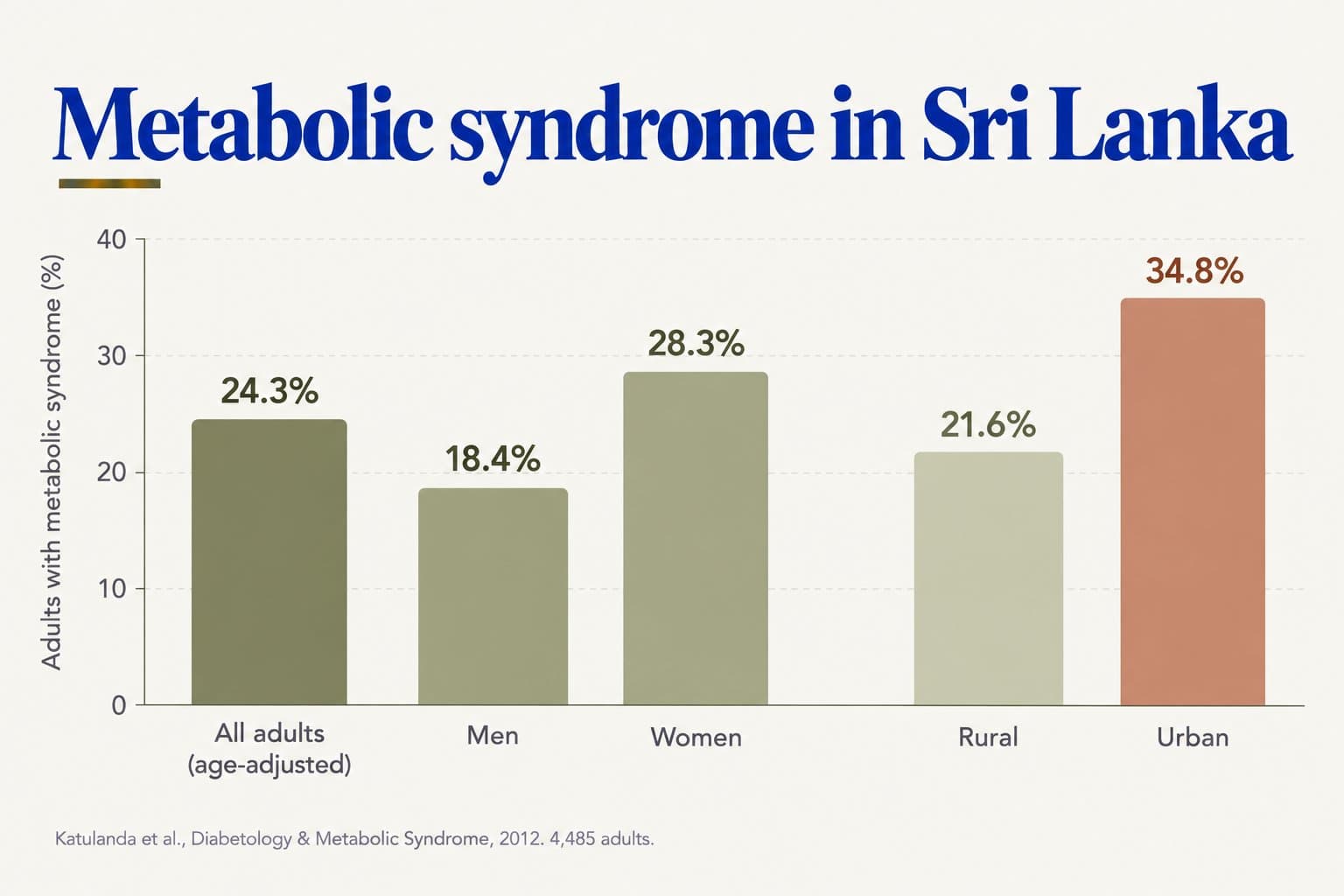
Metabolic syndrome is common in Sri Lanka. In a national study of 4,485 Sri Lankan adults, the age-adjusted prevalence of metabolic syndrome was 24.3%, using the International Diabetes Federation definition. It was more common in women (28.3%) than men (18.4%), and in urban (34.8%) than rural (21.6%) areas. High blood pressure, low HDL and high triglycerides were the most common problems.
Weight isn't the whole story. Body weight and metabolic health are linked, but they aren't the same thing:
- Normal weight, metabolically unhealthy: some people, particularly South Asians, carry excess visceral fat and have insulin resistance at a normal BMI. This is one reason diabetes develops at lower body weights in South Asian populations.
- "Metabolically healthy obesity": some people with obesity have normal blood pressure, blood sugar and lipids. But this state is uncommon and often temporary, and many people move to an unhealthy profile over time.
This is why checking the five measures matters more than weight alone, and why waist size is often more informative than BMI.
Why this matters for longevity
Metabolic health sits upstream of many of the leading causes of death and disability: heart disease, stroke, type 2 diabetes, fatty liver disease, kidney disease and some cancers. It's also highly responsive to lifestyle. Physical activity, especially combining aerobic exercise with strength training, improves insulin sensitivity; modest weight loss around the waist improves all five measures; and better sleep and stress management help too. Because the measures are cheap and routine, knowing where you stand is one of the simplest steps toward a longer, healthier life.
Practical notes
- Know your five numbers: waist, blood pressure, fasting glucose (or HbA1c), triglycerides and HDL.
- Measure your waist: at the level of the navel, after breathing out. For South Asians, aim for under 90 cm for men and under 80 cm for women.
- Don't be reassured by a normal weight alone, especially if you're South Asian or have a family history of diabetes.
- Start with activity and diet: regular movement, fewer refined carbohydrates and sugary drinks, more fibre and protein, and less alcohol improve all five measures at once.
- Araújo J, Cai J, Stevens J. Prevalence of optimal metabolic health in American adults: National Health and Nutrition Examination Survey 2009-2016. Metabolic Syndrome and Related Disorders, 2019;17(1):46-52.
- O'Hearn M, et al. Trends and disparities in cardiometabolic health among U.S. adults, 1999-2018. Journal of the American College of Cardiology, 2022;80(2):138-151.
- Katulanda P, et al. Metabolic syndrome among Sri Lankan adults: prevalence, patterns and correlates. Diabetology & Metabolic Syndrome, 2012;4:24.
- Alberti KGMM, et al. Harmonizing the metabolic syndrome: a joint interim statement. Circulation, 2009;120(16):1640-1645.
Free longevity assessment
Do you know all five of your
metabolic health numbers?
Take the free Aevum Protocol assessment to see how your cardiovascular & metabolic health and 6 other longevity domains are performing — and get a personalised 90-day plan.
Take the free assessmentKeep reading
Related articles
Stress & Hormones
Insulin Resistance: The Hidden Driver of Metabolic Ageing
Cardiovascular & Metabolic Health
Fatty Liver Disease (MASLD): The Silent Metabolic Condition That Affects the Heart
Cardiovascular & Metabolic Health