Cardiovascular & Metabolic Health
Fatty Liver Disease (MASLD):
The Silent Metabolic Condition That Affects the Heart
Fatty liver disease, now called metabolic dysfunction-associated steatotic liver disease (MASLD), is the build-up of fat in the liver linked to excess weight, insulin resistance, high blood pressure or abnormal blood fats. It's the most common liver condition in the world, affecting about 30% of adults, and it's rising fast. In urban Sri Lanka, about a third of adults had it in one community study. Most people have no symptoms and normal-looking routine liver tests. In some, fat leads to inflammation (steatohepatitis, or MASH) and scarring (fibrosis), which can progress to cirrhosis and liver cancer. But the biggest threat for most people is to the heart: in a review of 36 studies and nearly 6 million people, fatty liver was linked to a 45% higher risk of heart attacks and strokes, and advanced liver scarring to a 2.5-fold higher risk. The good news is that it's reversible. Losing 10% or more of body weight resolved liver inflammation in 90% of people in one study. This article explains what fatty liver is, why it matters for the heart, and what you can do.
Key numbers
| Finding | Detail |
|---|---|
| Global prevalence of fatty liver (1990-2019 studies) | About 30% of adults; rising from 25% in 1990-2006 to 38% in 2016-2019 |
| Fatty liver in urban Sri Lankans (Ragama Health Study) | 32.6% of adults |
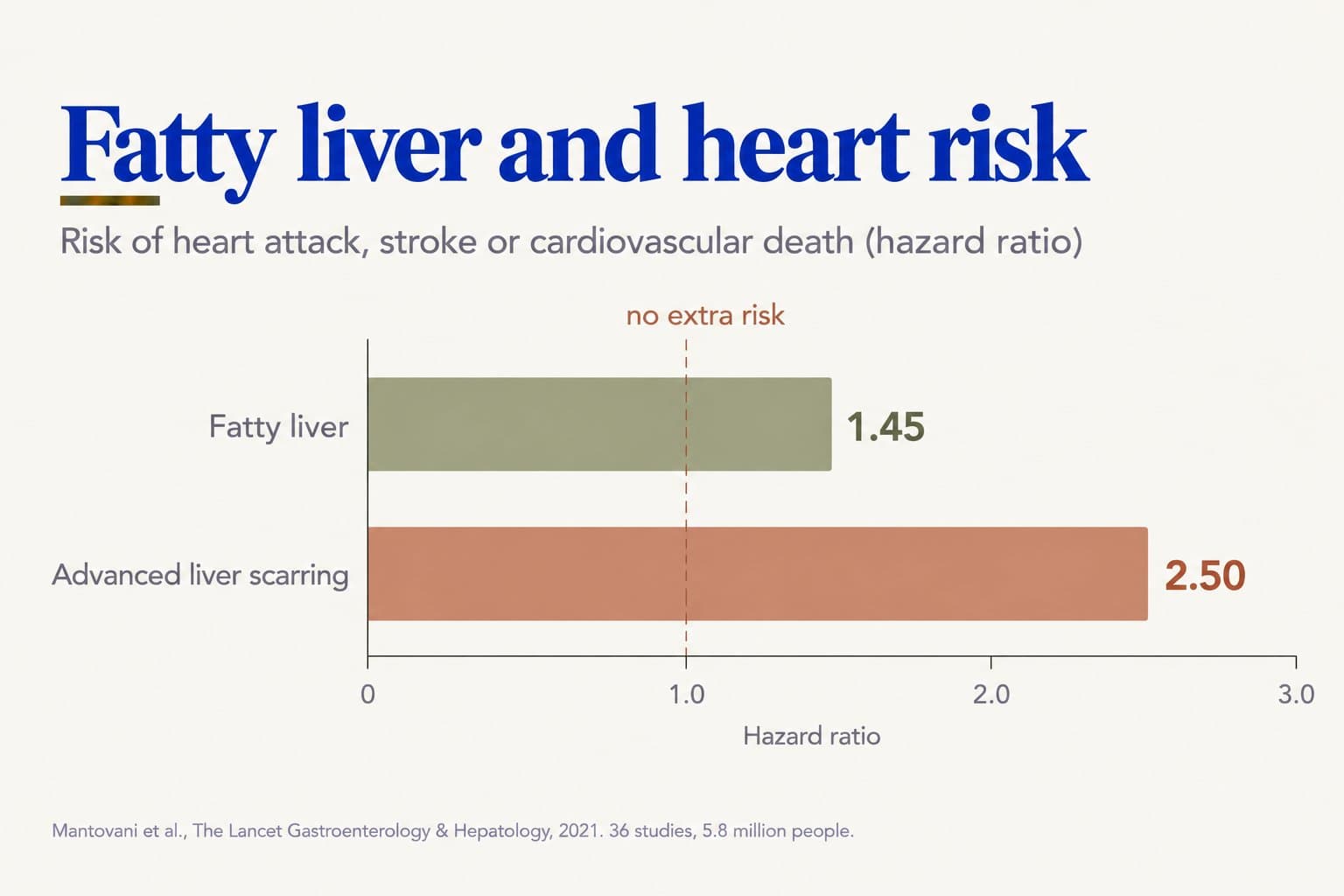
| Fatty liver and cardiovascular events (36 studies, 5.8 million people) | 45% higher risk of heart attack, stroke or cardiovascular death (HR 1.45) |
| Advanced liver scarring and cardiovascular events (same review) | 2.5 times the risk (HR 2.50) |
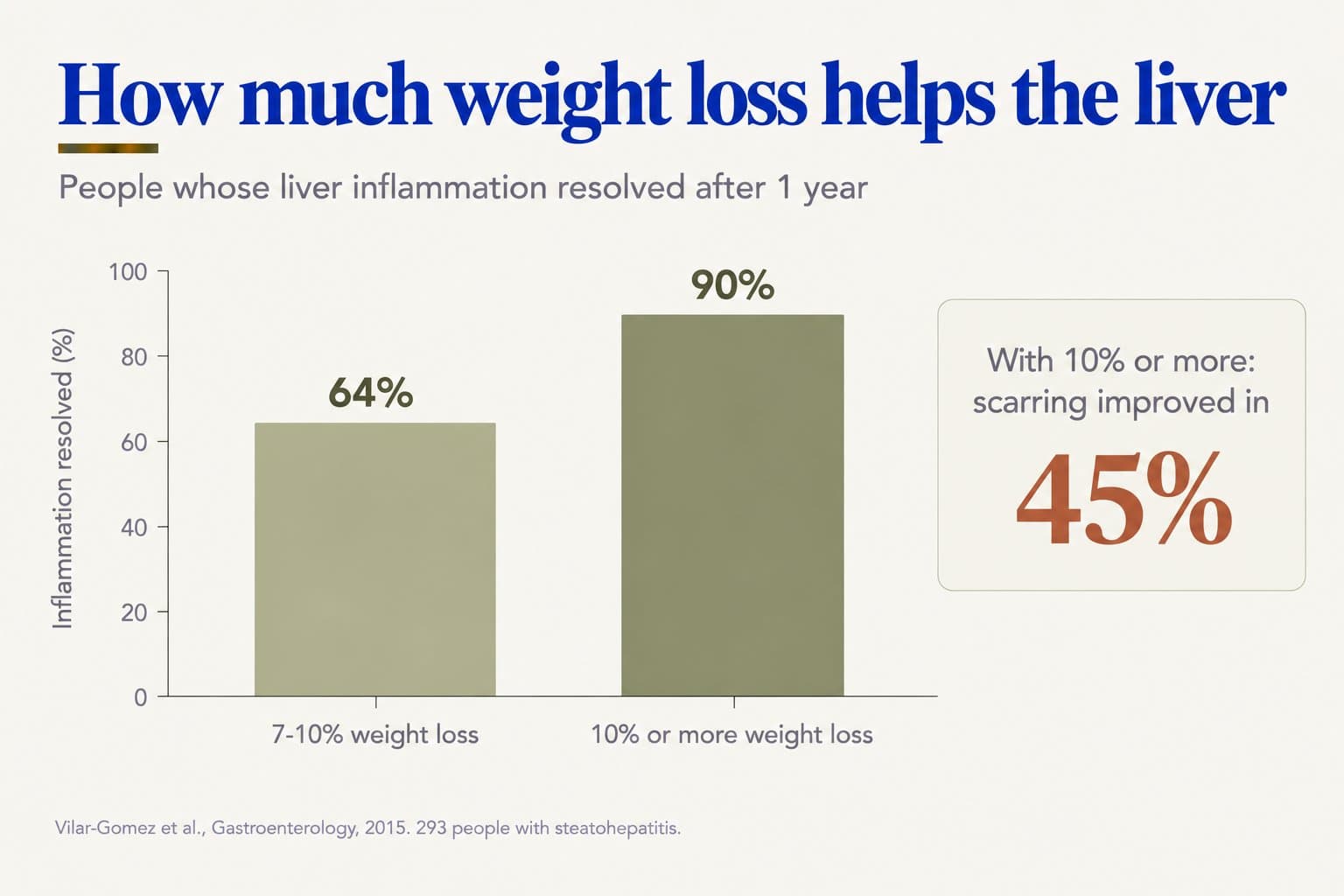
| Weight loss of 10% or more (293 people with steatohepatitis, 1 year) | Liver inflammation resolved in 90%; scarring improved in 45% |
What fatty liver disease is
A healthy liver contains little fat. In MASLD, fat builds up in liver cells, and the condition is linked to at least one sign of metabolic dysfunction: excess weight or waist size, raised blood sugar, high blood pressure, high triglycerides or low HDL.
The name changed in 2023 from "non-alcoholic fatty liver disease" (NAFLD) to MASLD, to describe the cause more accurately and without stigma. The new terms are:
- MASLD: fatty liver with at least one cardiometabolic risk factor.
- MASH: fatty liver with inflammation and liver cell injury (previously NASH).
- MetALD: MASLD in people who also drink more than moderate amounts of alcohol.
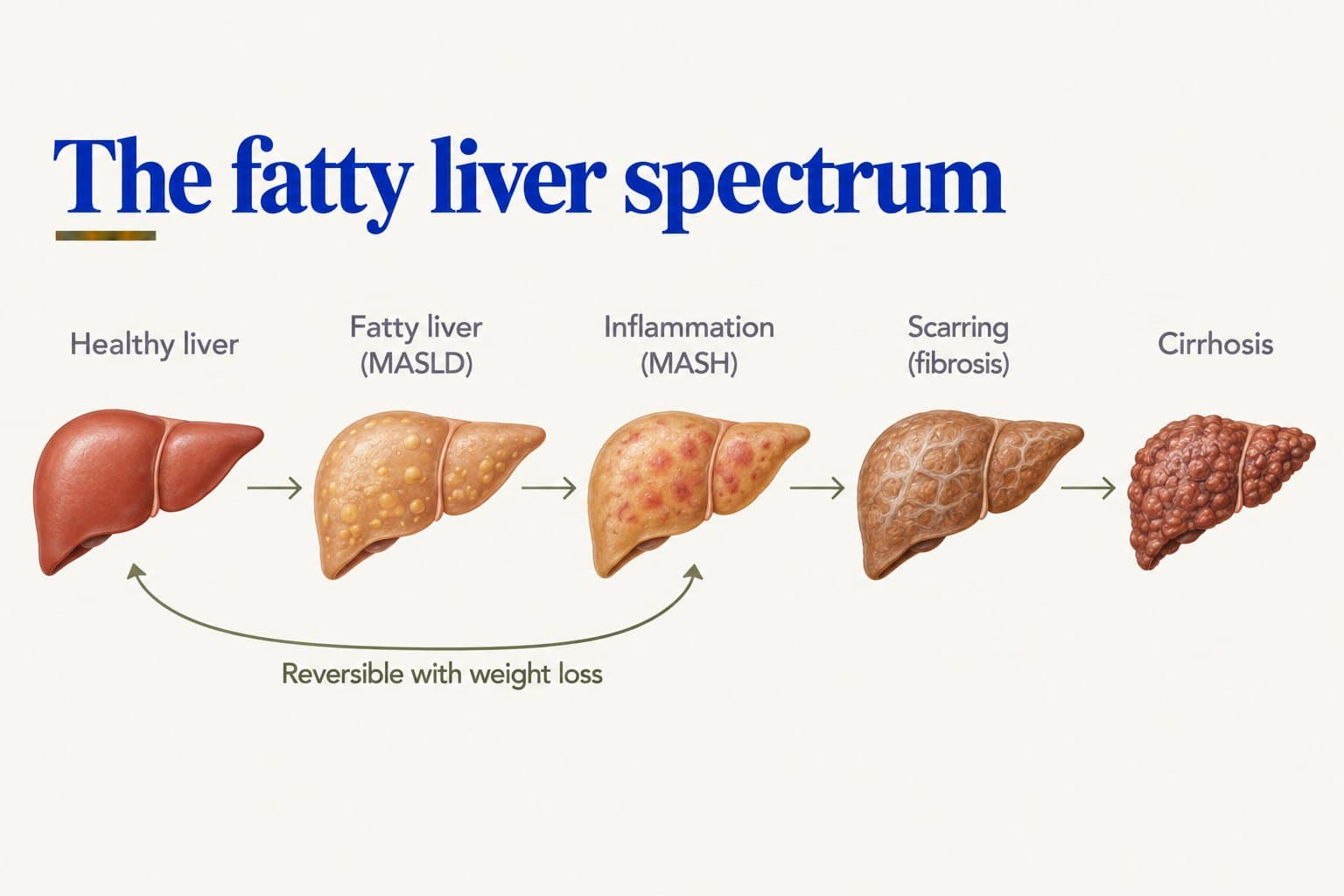
Fatty liver can progress along a spectrum, although most people never progress beyond simple fat:
- 1. Fatty liver (steatosis)
- 2. Inflammation (MASH)
- 3. Scarring (fibrosis)
- 4. Cirrhosis, with a risk of liver failure and liver cancer
The degree of scarring is the strongest predictor of liver-related problems.
Why it matters for the heart
Fatty liver and heart disease share the same roots: insulin resistance, visceral fat, high triglycerides, high blood pressure and inflammation (see What Metabolic Health Really Means). A fatty liver also releases more triglyceride-rich particles, inflammatory signals and clotting factors into the blood, which may accelerate atherosclerosis (see How Atherosclerosis Develops). For most people with fatty liver, heart disease is a greater threat than liver failure.
What drives fatty liver
| Factor | Effect | Modifiable? | Evidence strength |
|---|---|---|---|
| Excess weight, especially abdominal fat | Main driver | Yes | Strong |
| Insulin resistance and type 2 diabetes | Greatly increase risk and progression | Yes | Strong |
| High triglycerides, low HDL | Common in fatty liver | Yes | Strong |
| High blood pressure | Part of the metabolic cluster | Yes | Strong |
| Sugary drinks and refined carbohydrates | Promote liver fat, especially fructose | Yes | Moderate |
| Alcohol | Adds to liver damage | Yes | Strong |
| Physical inactivity | Increases liver fat; exercise reduces it | Yes | Strong |
| Genetics and South Asian ancestry | Higher risk at lower body weight | No | Moderate |
What the research shows
It's common, and becoming more so. A 2023 systematic review estimated the global prevalence of fatty liver at about 30% of adults, increasing from 25% in studies from 1990-2006 to 38% in 2016-2019. In Sri Lanka, the Ragama Health Study found fatty liver in 32.6% of urban adults.
It raises cardiovascular risk. A 2021 meta-analysis in The Lancet Gastroenterology & Hepatology pooled 36 studies with 5,802,226 people followed for a median of 6.5 years. People with fatty liver had a 45% higher risk of fatal or non-fatal cardiovascular events (HR 1.45), and the risk rose with the severity of liver disease, reaching 2.5 times higher with advanced scarring (HR 2.50). These links held after accounting for age, sex, body fat, diabetes and other risk factors.
Weight loss can reverse it, but it has to be substantial. In a 2015 study of 293 people with steatohepatitis confirmed by biopsy, a year of lifestyle change produced clear dose-dependent benefits. Among those who lost 10% or more of their body weight, liver inflammation resolved in 90%, scarring improved in 45% and stabilised in the rest. With 7-10% weight loss, inflammation resolved in 64%.
Smaller changes may not be enough. In the Ragama study, 705 Sri Lankan adults with fatty liver were followed for 7 years with community lifestyle advice. Their average weight fell by only 1.6%, physical activity decreased, and none had complete resolution of fatty liver.
What you can actually change
1. Find out if you have it. Fatty liver is often found on an ultrasound done for another reason. If you have diabetes, obesity or two or more metabolic risk factors, ask your doctor about checking for it. A simple blood-based score called FIB-4 helps estimate the risk of scarring, with a scan to measure liver stiffness if needed.
2. Aim for 7-10% weight loss. Weight loss is the most effective treatment. Losing 5% reduces liver fat; 7-10% can reverse inflammation, and 10% or more gives the best chance of reversing scarring.
3. Cut sugary drinks and refined carbohydrates. Sugary drinks, sweets and large portions of white rice and refined flour promote liver fat. Emphasise vegetables, pulses, whole grains, fish and healthy fats.
4. Move more. Both aerobic and resistance exercise reduce liver fat, even without much weight loss (see Zone 2 Training).
5. Limit alcohol. Alcohol adds to liver damage in people with fatty liver.
6. Treat the heart risk factors. Because heart disease is the main threat, manage blood pressure, cholesterol and blood sugar. Statins are safe in fatty liver and reduce cardiovascular risk. Some medicines for diabetes and weight loss also reduce liver fat, and new treatments for steatohepatitis with scarring are now available for selected patients.
Recommendations
- Don't ignore "a bit of fat on the liver" on a scan: it's a sign of metabolic dysfunction and higher heart risk.
- Ask for a FIB-4 score if you have fatty liver, to check your risk of scarring.
- Set a meaningful weight-loss goal of 7-10%, with support if needed.
- Get your cardiovascular risk assessed: blood pressure, lipids, blood sugar and kidney function.
- See a specialist if tests suggest significant scarring.
Practical notes
Fatty liver disease affects about a third of adults, including in Sri Lanka, and usually causes no symptoms. It's a marker of metabolic dysfunction that raises the risk of heart attack and stroke, and in some people progresses to liver scarring. It's also highly reversible: losing 7-10% of body weight, cutting sugary drinks and refined carbohydrates, exercising and limiting alcohol can reduce liver fat, reverse inflammation and protect the heart.
- Rinella ME, et al. A multisociety Delphi consensus statement on new fatty liver disease nomenclature. Journal of Hepatology, 2023;79(6):1542-1556.
- Younossi ZM, et al. The global epidemiology of nonalcoholic fatty liver disease (NAFLD) and nonalcoholic steatohepatitis (NASH): a systematic review. Hepatology, 2023;77(4):1335-1347.
- Mantovani A, et al. Non-alcoholic fatty liver disease and risk of fatal and non-fatal cardiovascular events: an updated systematic review and meta-analysis. The Lancet Gastroenterology & Hepatology, 2021;6(11):903-913.
- Vilar-Gomez E, et al. Weight loss through lifestyle modification significantly reduces features of nonalcoholic steatohepatitis. Gastroenterology, 2015;149(2):367-378.
- Niriella MA, et al. Non-resolution of non-alcoholic fatty liver disease (NAFLD) among urban, adult Sri Lankans: a prospective, community-based, cohort study. PLOS ONE, 2019;14(11):e0224474.
Free longevity assessment
Has a scan ever mentioned
fat on your liver?
Take the free Aevum Protocol assessment to see how your cardiovascular & metabolic health and 6 other longevity domains are performing — and get a personalised 90-day plan.
Take the free assessmentKeep reading