Cardiovascular & Metabolic Health
Diabetes and Heart Disease:
Why They're Linked and How to Break the Connection
Heart disease and stroke are the leading causes of death in people with type 2 diabetes. In a combined analysis of 102 studies and nearly 700,000 people, diabetes roughly doubled the risk of coronary heart disease and ischaemic stroke. This matters greatly in Sri Lanka, where about 1 in 5 adults has diabetes. But diabetes doesn't have to mean heart disease. In a Swedish study of more than 270,000 people with type 2 diabetes, those who kept five risk factors on target, blood sugar, LDL cholesterol, blood pressure, kidney health and not smoking, had little or no excess risk of death, heart attack or stroke compared with people without diabetes. And in the Steno-2 trial, treating all these risk factors intensively together added a median of 7.9 years of life. This article explains why diabetes damages the heart and blood vessels, and what makes the biggest difference.
Key numbers
| Finding | Detail |
|---|---|
| Diabetes and vascular disease (102 studies, 698,782 people) | About twice the risk of coronary heart disease (HR 2.00) and ischaemic stroke (HR 2.27) |
| Diabetes in Sri Lanka (national survey) | 23.0% of adults |
| Five risk factors on target (Swedish registry, 271,174 people with type 2 diabetes) | Risk of death, heart attack and stroke close to that of people without diabetes |
| Heart failure, even with all five on target (same study) | Still 45% higher (HR 1.45) |
| Intensive multifactorial treatment (Steno-2 trial, 160 people, 21 years) | Median 7.9 years longer life; first cardiovascular event delayed by a median of 8.1 years |
Why diabetes damages the heart and blood vessels
Type 2 diabetes is usually the end result of years of insulin resistance (see Insulin Resistance). Several processes then combine to damage the cardiovascular system:
- High blood sugar damages the lining of blood vessels and makes proteins "sticky" (glycated), stiffening arteries.
- Abnormal blood fats: high triglycerides, low HDL and many small LDL particles, often with a higher ApoB (see LDL, ApoB and Lipoprotein(a)).
- High blood pressure, which often accompanies diabetes.
- Inflammation and a tendency to clot.
- Kidney damage, which further raises blood pressure and cardiovascular risk.
- Effects on the heart muscle itself, raising the risk of heart failure.
The result is faster, more widespread atherosclerosis (see How Atherosclerosis Develops). Heart attacks in people with diabetes can also cause fewer typical symptoms, so they may be missed.
What drives heart disease in diabetes
| Factor | Effect | Modifiable? | Evidence strength |
|---|---|---|---|
| Blood sugar (HbA1c) | Higher HbA1c linked to more heart attacks and strokes | Yes | Strong |
| LDL cholesterol | Major driver; lowering it clearly reduces events | Yes | Strong |
| Blood pressure | Major driver of stroke, heart failure and kidney damage | Yes | Strong |
| Smoking | Greatly amplifies risk | Yes | Strong |
| Kidney damage (protein in the urine) | Marker and driver of higher cardiovascular risk | Partly | Strong |
| Physical inactivity | One of the strongest predictors of poor outcomes | Yes | Moderate |
| Younger age at diagnosis | Much higher excess risk compared with peers | No, but earlier treatment helps | Moderate |
| Duration of diabetes | Risk rises the longer diabetes is present | No | Strong |
What the research shows
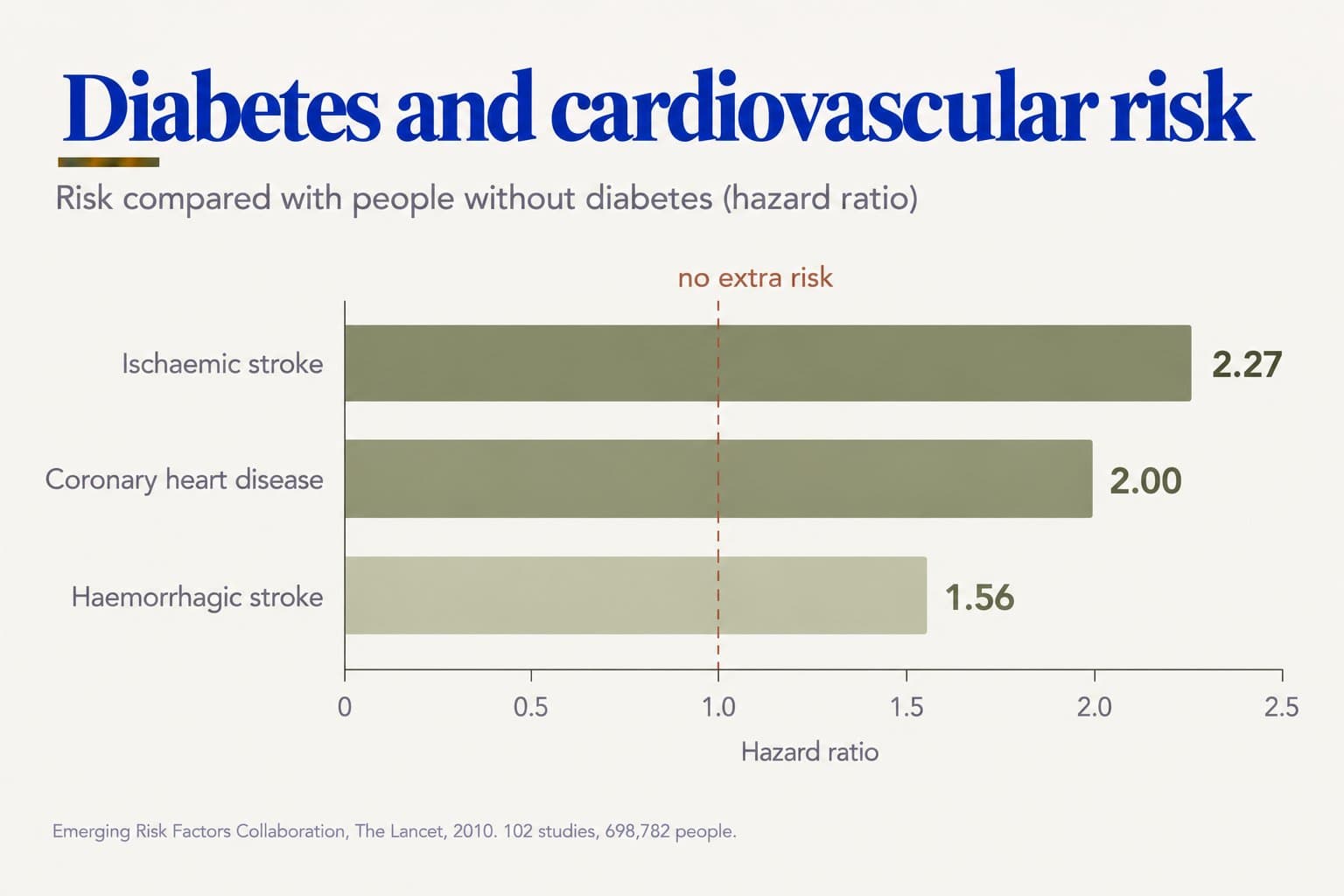
Diabetes roughly doubles cardiovascular risk. The Emerging Risk Factors Collaboration combined individual data from 698,782 people in 102 prospective studies. Compared with people without diabetes, those with diabetes had about twice the risk of coronary heart disease (HR 2.00), more than twice the risk of ischaemic stroke (HR 2.27), and a 56% higher risk of haemorrhagic stroke. The researchers estimated that where 10% of the population has diabetes, it accounts for about 11% of vascular deaths. In Sri Lanka, where 23% of adults have diabetes, the share is likely to be substantially higher.
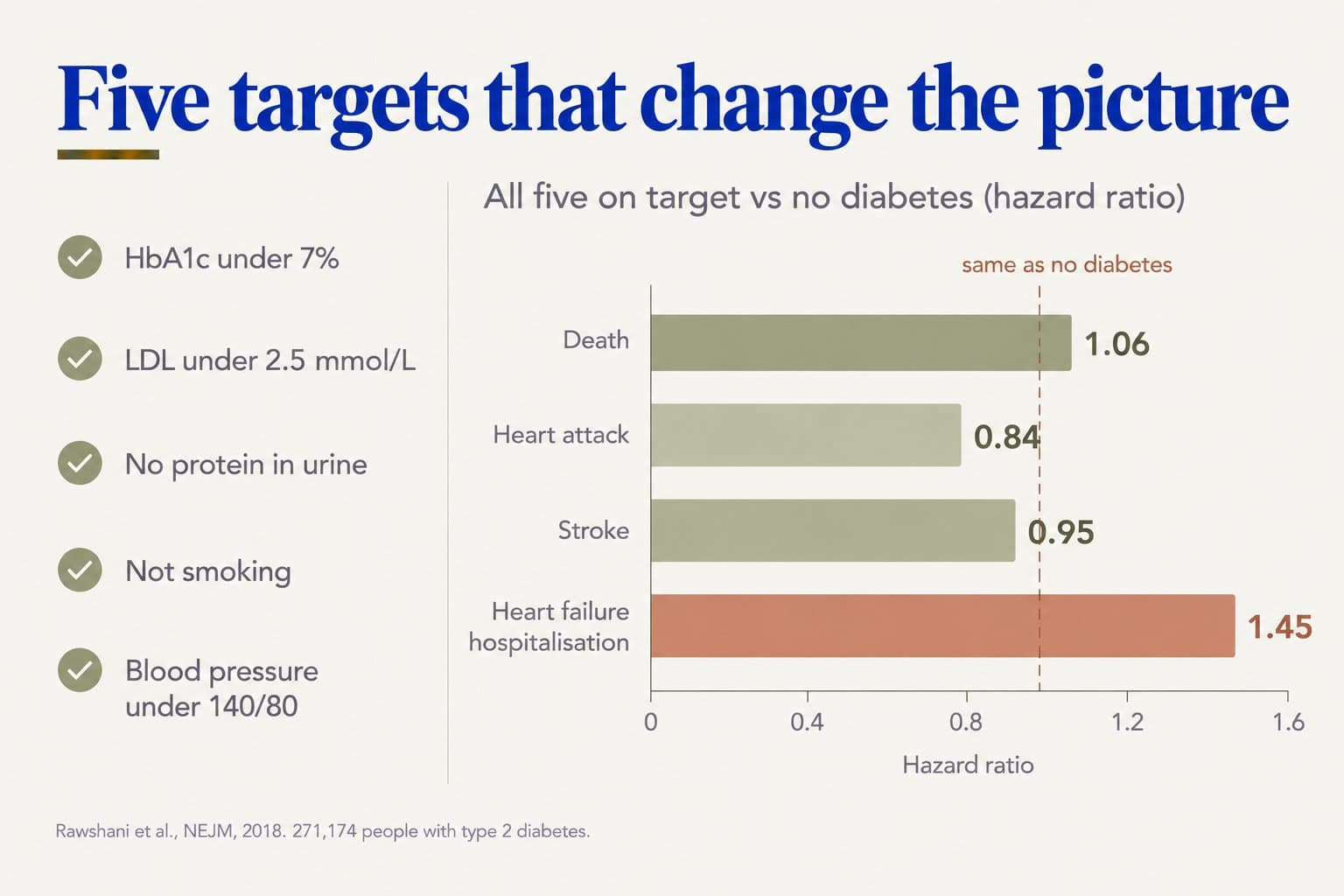
Controlling five risk factors can remove most of the excess risk. A 2018 study in the New England Journal of Medicine followed 271,174 people with type 2 diabetes in the Swedish National Diabetes Register, compared with 1.3 million people without diabetes, for a median of 5.7 years. It looked at five risk factors: HbA1c under 7.0% (53 mmol/mol), LDL cholesterol under 2.5 mmol/L (97 mg/dL), no protein in the urine, not smoking, and blood pressure under 140/80 mmHg. People with all five on target had:
- About the same risk of death (HR 1.06) and stroke (HR 0.95) as people without diabetes
- A slightly lower risk of heart attack (HR 0.84)
- A 45% higher risk of hospitalisation for heart failure (HR 1.45)
The excess risk was greatest in younger people: those under 55 with poor risk factor control had nearly five times the risk of death and eight times the risk of heart attack. Low physical activity, smoking, high HbA1c, blood pressure and LDL were the strongest predictors of poor outcomes.
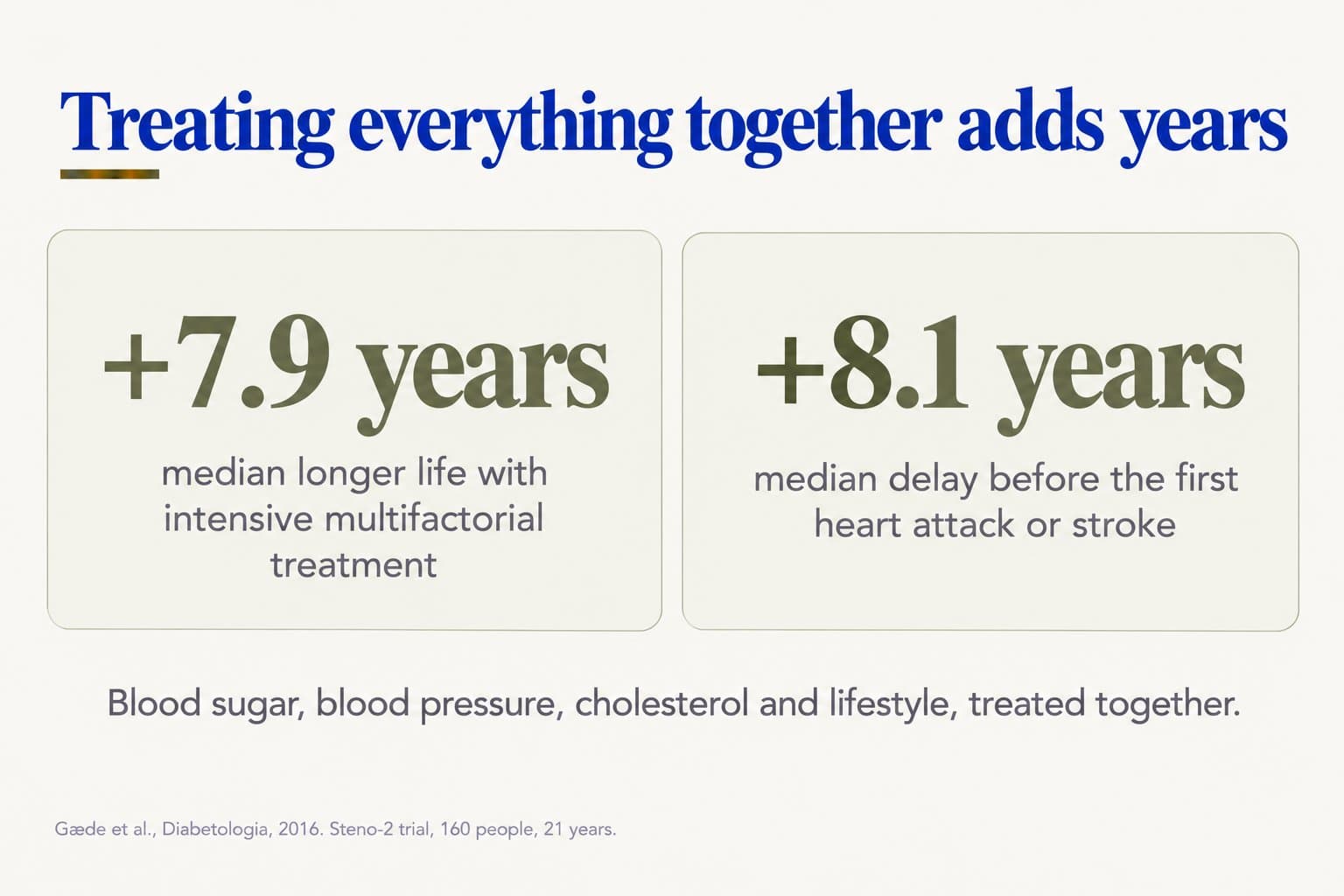
Treating everything together adds years of life. The Steno-2 trial in Denmark randomly assigned 160 people with type 2 diabetes and early kidney damage to conventional care or an intensive, target-driven approach tackling blood sugar, blood pressure, cholesterol, lifestyle and aspirin together, for 7.8 years. After 21 years of follow-up, people in the intensive group lived a median of 7.9 years longer, and their first cardiovascular event came a median of 8.1 years later. There were 38 deaths in the intensive group compared with 55 in the conventional group.
Newer diabetes medicines protect the heart. Some newer diabetes medicines do more than lower blood sugar. SGLT2 inhibitors reduce heart failure hospitalisations and slow kidney disease, and GLP-1 receptor agonists reduce heart attacks and strokes in people with diabetes and existing heart disease or high risk. GLP-1 medicines are covered in GLP-1 Medications.
What you can actually change
1. Know your blood sugar status. Get an HbA1c or fasting glucose test, especially if you have a family history of diabetes, a large waist or South Asian ancestry, even at a normal weight. Prediabetes is the best time to act (see Insulin Resistance).
2. Treat all five risk factors, not just sugar. Blood sugar, LDL cholesterol, blood pressure, kidney health and smoking all matter. Most people with diabetes benefit from a statin.
3. Move every day. Physical activity was one of the strongest predictors of outcomes in the Swedish study, and it improves blood sugar, blood pressure and cholesterol at once.
4. Lose excess weight. Weight loss, especially around the waist, improves blood sugar control and can put type 2 diabetes into remission in some people.
5. Don't smoke. Smoking multiplies the cardiovascular risk of diabetes.
6. Check your kidneys and feet. A yearly urine albumin test and kidney function blood test pick up early kidney damage, which raises heart risk. Kidney health is covered in Kidney Health and Cardiometabolic Risk.
Recommendations
- If you have diabetes, treat it as a heart condition too: ask about your LDL, blood pressure and kidney targets, not just your HbA1c.
- Ask whether a heart-protective diabetes medicine is right for you, especially if you have heart disease, heart failure, kidney disease or high risk.
- Act early if you're young: the younger you are at diagnosis, the more years of excess risk there are to prevent.
- Report breathlessness, ankle swelling or reduced exercise tolerance, as heart failure risk remains higher even with good control.
Practical notes
Diabetes roughly doubles the risk of heart attack and stroke, but that risk isn't fixed. People who keep blood sugar, LDL cholesterol, blood pressure and kidney health on target and don't smoke can have little or no excess risk of death, heart attack or stroke, and treating all these factors together has been shown to add years of life. Physical activity, weight management and heart-protective medicines, where appropriate, make the biggest difference.
- Emerging Risk Factors Collaboration. Diabetes mellitus, fasting blood glucose concentration, and risk of vascular disease: a collaborative meta-analysis of 102 prospective studies. The Lancet, 2010;375(9733):2215-2222.
- Rawshani A, et al. Risk factors, mortality, and cardiovascular outcomes in patients with type 2 diabetes. New England Journal of Medicine, 2018;379(7):633-644.
- Gæde P, et al. Years of life gained by multifactorial intervention in patients with type 2 diabetes mellitus and microalbuminuria: 21 years follow-up on the Steno-2 randomised trial. Diabetologia, 2016;59(11):2298-2307.
- Rannan-Eliya RP, et al. Prevalence of diabetes and pre-diabetes in Sri Lanka: a new global hotspot. Estimates from the Sri Lanka Health and Ageing Survey 2018/2019. BMJ Open Diabetes Research & Care, 2023;11(1).
Free longevity assessment
If you have diabetes, do you know
all five of your targets?
Take the free Aevum Protocol assessment to see how your cardiovascular & metabolic health and 6 other longevity domains are performing — and get a personalised 90-day plan.
Take the free assessmentKeep reading