Cardiovascular & Metabolic Health
Kidney Health and Cardiometabolic Risk:
Why Your Kidneys and Heart Rise and Fall Together
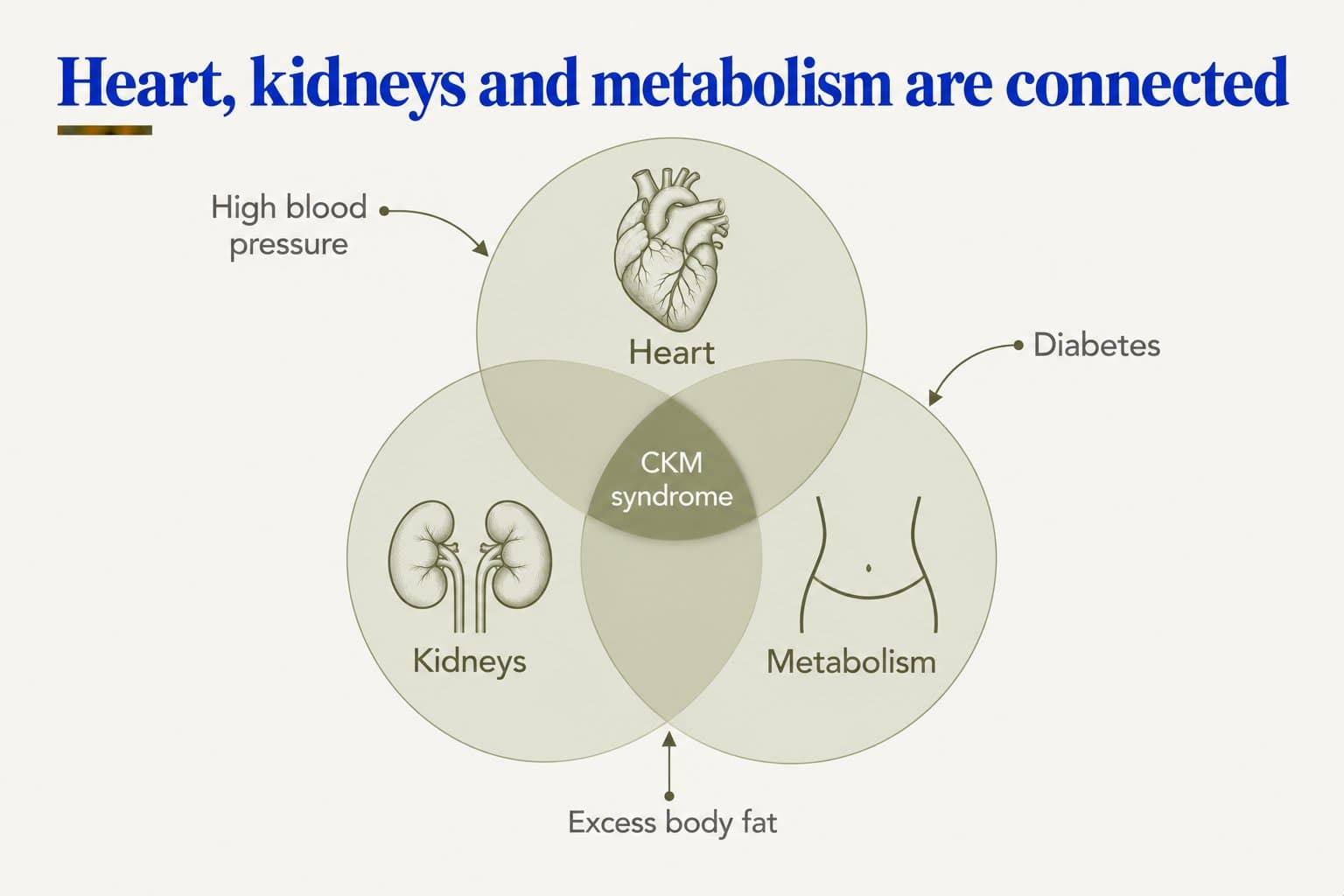
Your kidneys and heart are closely linked. The same conditions that damage the heart, especially diabetes and high blood pressure, also damage the kidneys, and kidney disease in turn raises the risk of heart attack, stroke and heart failure. In fact, people with chronic kidney disease are more likely to die of cardiovascular disease than to reach kidney failure. Chronic kidney disease affected about 9% of the world's population, nearly 700 million people, in 2017, and impaired kidney function was responsible for about 1 in 13 cardiovascular deaths. Yet it's usually silent: in the US, as many as 9 in 10 adults with it don't know they have it. Two simple tests, a blood test for kidney function (eGFR) and a urine test for protein (albumin), pick it up early, and both independently predict risk. Newer medicines such as SGLT2 inhibitors now protect both the kidneys and the heart. The American Heart Association calls this overlap of heart disease, kidney disease, diabetes and obesity "cardiovascular-kidney-metabolic syndrome". This article explains the connection and how to protect both organs.
Key numbers
| Finding | Detail |
|---|---|
| Global prevalence of chronic kidney disease (2017) | 9.1% of people, 697.5 million cases |
| Cardiovascular deaths due to impaired kidney function (same study) | 7.6% of all cardiovascular deaths, 1.4 million |
| US adults with chronic kidney disease (CDC) | More than 1 in 7; as many as 9 in 10 don't know they have it |
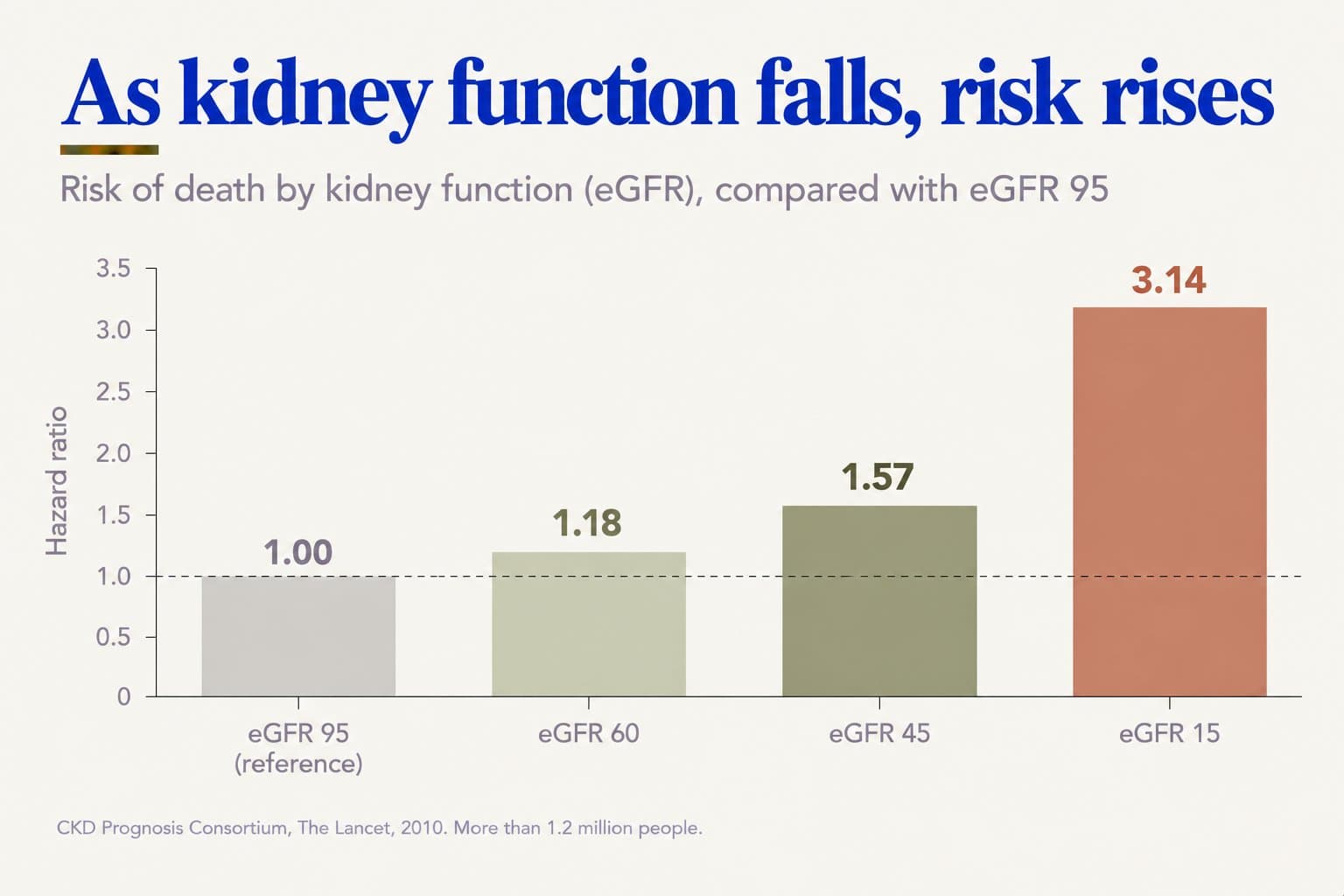
| Kidney function and risk of death (more than 1.2 million people) | Risk 1.57 times higher at eGFR 45 and 3.14 times at eGFR 15, compared with 95 |
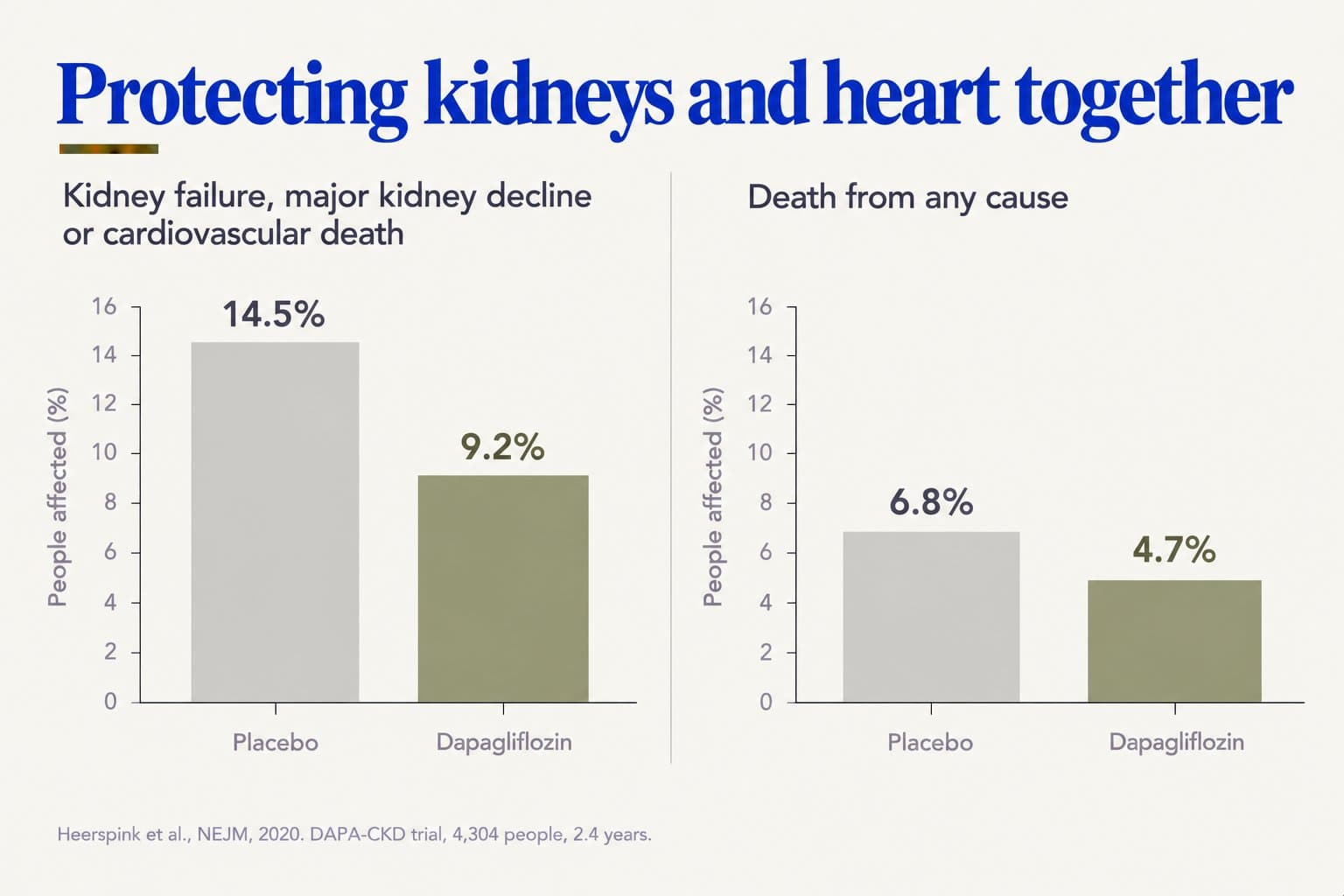
| SGLT2 inhibitor in chronic kidney disease (DAPA-CKD, 4,304 people) | Kidney failure, major kidney decline or cardiovascular death cut from 14.5% to 9.2%; deaths from 6.8% to 4.7% |
What the kidneys do, and how they're measured
Your kidneys filter waste and excess fluid from the blood, balance salt and minerals, and help control blood pressure and red blood cell production. Chronic kidney disease (CKD) means reduced kidney function or signs of kidney damage lasting more than three months. It's measured with two tests:
- eGFR (estimated glomerular filtration rate): calculated from a blood creatinine test, it estimates how well the kidneys filter. Normal is roughly 90 or above; below 60 for three months or more indicates CKD.
- Urine albumin-to-creatinine ratio (ACR): measures a protein, albumin, leaking into the urine, an early sign of damage to the kidneys' filters and to blood vessels generally. An ACR of 30 mg/g (3 mg/mmol) or more indicates kidney damage.
Both are needed: many people have a normal eGFR but raised albumin, which a blood test alone would miss.
Why the kidneys and heart are linked
- Shared causes: diabetes and high blood pressure are the leading causes of both kidney failure and heart disease. In the US, they account for 2 in 3 new cases of kidney failure.
- Damaged kidneys raise blood pressure, by retaining salt and fluid and activating hormones that constrict blood vessels, which strains the heart.
- Albumin in the urine reflects damage to blood vessel linings throughout the body, including the arteries of the heart and brain.
- Kidney disease speeds up atherosclerosis and hardens arteries, partly through inflammation and abnormal calcium and phosphate handling (see How Atherosclerosis Develops).
- Fluid overload and anaemia add to the strain on the heart, raising the risk of heart failure.
The American Heart Association's 2023 advisory brought these connections together as cardiovascular-kidney-metabolic (CKM) syndrome, staged from 0 (no risk factors) through excess body fat (stage 1), metabolic risk factors or kidney disease (stage 2), early silent heart disease (stage 3) and established cardiovascular disease (stage 4). In the US, 1 in 3 adults has three or more of these risk factors.
What harms the kidneys (and the heart)
| Factor | Effect | Modifiable? | Evidence strength |
|---|---|---|---|
| Diabetes | Leading cause of kidney failure; raises heart risk | Yes | Strong |
| High blood pressure | Damages kidney blood vessels; worsened by kidney disease | Yes | Strong |
| Obesity and metabolic syndrome | Increase the kidneys' workload and risk of diabetes and hypertension | Yes | Strong |
| Smoking | Accelerates kidney decline and vascular damage | Yes | Strong |
| Regular use of anti-inflammatory painkillers (NSAIDs) | Can harm the kidneys, especially with existing CKD or dehydration | Yes | Moderate |
| Heat stress and dehydration | Linked to kidney injury, especially in agricultural workers | Partly | Moderate |
| Age | Kidney function declines with age | No | Strong |
| Family history of kidney disease | Raises risk | No | Moderate |
What the research shows
Kidney disease is common, costly and silent. The Global Burden of Disease study estimated that 697.5 million people, 9.1% of the global population, had CKD in 2017. It caused 1.2 million deaths directly, and impaired kidney function accounted for a further 1.4 million cardiovascular deaths, 7.6% of the total. In the US, more than 1 in 7 adults has CKD, and as many as 9 in 10 of them don't know it, because symptoms usually appear only when kidney function is badly damaged.
Both kidney tests predict risk. The CKD Prognosis Consortium pooled data from more than 1.2 million people in the general population. Compared with an eGFR of 95, the risk of death was 18% higher at an eGFR of 60, 57% higher at 45 and more than three times higher at 15. Albumin in the urine predicted risk independently, with no safe threshold: risk rose steadily as albumin levels increased, starting at levels well below those traditionally considered abnormal. These findings underpin the current definition of CKD, which uses both tests.
Medicines that protect both kidneys and heart. SGLT2 inhibitors, originally developed for diabetes, lower blood sugar by making the kidneys excrete glucose, but they also reduce pressure inside the kidneys' filters. In the DAPA-CKD trial, 4,304 people with CKD and raised urine albumin, about two-thirds with type 2 diabetes, were given dapagliflozin or a placebo. Over an average of 2.4 years, the combined risk of a 50% or greater decline in kidney function, kidney failure, or death from kidney or cardiovascular causes fell from 14.5% to 9.2% (HR 0.61), and deaths from any cause fell from 6.8% to 4.7% (HR 0.69). The benefit was seen in people with and without diabetes, and the trial was stopped early because of clear benefit. Blood pressure medicines of the ACE inhibitor and ARB classes also slow kidney decline, particularly when albumin is raised. GLP-1 medicines are covered in GLP-1 Medications.
A Sri Lankan concern: CKD of uncertain cause. Alongside CKD caused by diabetes and high blood pressure, Sri Lanka has a form of kidney disease with no obvious cause, called CKD of uncertain aetiology (CKDu), affecting mainly farming communities in the dry zone. A study in three districts of the North Central Province from 2010 to 2012 found age-standardised prevalence of 12.9% in men and 16.9% in women, with more severe disease in men. The causes are still debated; heavy metals, agrochemicals, water quality, heat stress and dehydration are among the suspected factors. It's a reminder that kidney screening matters in Sri Lanka even for people without diabetes or high blood pressure.
What you can actually change
1. Get both kidney tests. If you have diabetes, high blood pressure, heart disease, obesity or a family history of kidney disease, ask for an eGFR and a urine albumin-to-creatinine ratio at least once a year. If you've lived or worked in a CKDu-affected area, ask about screening too.
2. Control blood pressure. Blood pressure control is the foundation of kidney protection (see Hypertension and Longevity). If you have raised urine albumin, ACE inhibitors or ARBs are usually preferred.
3. Control blood sugar. Good diabetes control slows kidney damage (see Diabetes and Heart Disease).
4. Ask about kidney-protective medicines. If you have CKD, especially with raised urine albumin, ask your doctor whether an SGLT2 inhibitor is suitable, with or without diabetes.
5. Be careful with painkillers and supplements. Avoid regular use of anti-inflammatory painkillers such as ibuprofen and diclofenac without medical advice, and be cautious with unregulated herbal remedies.
6. Stay hydrated, especially in the heat. Drink enough water during hot weather and physical work.
7. Don't smoke, move more and manage your weight. These protect the kidneys and heart together (see What Metabolic Health Really Means).
Recommendations
- Know your eGFR and ACR, not just your creatinine.
- Don't ignore protein in the urine, even with normal kidney function: it's a marker of cardiovascular as well as kidney risk.
- If you have CKD, treat your heart risk too: blood pressure, cholesterol and blood sugar. Most people with CKD benefit from a statin.
- Review your medicines with your doctor if your kidney function is reduced, as some doses need adjusting.
- See a kidney specialist if eGFR is falling quickly, is below 30, or urine albumin is very high.
Practical notes
Chronic kidney disease affects about 1 in 10 people worldwide and is usually silent until advanced. It shares its main causes with heart disease, and it raises the risk of heart attack, stroke and heart failure. Two simple tests, eGFR and urine albumin, identify it early, and controlling blood pressure and blood sugar, avoiding kidney-harming medicines, staying hydrated and, where appropriate, taking kidney-protective medicines like SGLT2 inhibitors protect both the kidneys and the heart.
- GBD Chronic Kidney Disease Collaboration. Global, regional, and national burden of chronic kidney disease, 1990-2017: a systematic analysis for the Global Burden of Disease Study 2017. The Lancet, 2020;395(10225):709-733.
- Centers for Disease Control and Prevention. Chronic Kidney Disease Basics.
- Chronic Kidney Disease Prognosis Consortium (Matsushita K, et al.). Association of estimated glomerular filtration rate and albuminuria with all-cause and cardiovascular mortality in general population cohorts: a collaborative meta-analysis. The Lancet, 2010;375(9731):2073-2081.
- Heerspink HJL, et al. Dapagliflozin in patients with chronic kidney disease. New England Journal of Medicine, 2020;383(15):1436-1446.
- Ndumele CE, et al. Cardiovascular-kidney-metabolic health: a presidential advisory from the American Heart Association. Circulation, 2023;148(20):1606-1635.
- Jayatilake N, et al. Chronic kidney disease of uncertain aetiology: prevalence and causative factors in a developing country. BMC Nephrology, 2013;14:180.
Free longevity assessment
Do you know your eGFR
and urine albumin result?
Take the free Aevum Protocol assessment to see how your cardiovascular & metabolic health and 6 other longevity domains are performing — and get a personalised 90-day plan.
Take the free assessmentKeep reading
Related articles
Cardiovascular & Metabolic Health
Diabetes and Heart Disease: Why They're Linked and How to Break the Connection
Cardiovascular & Metabolic Health
Hypertension and Longevity: Why High Blood Pressure Matters and What Lowering It Achieves
Cardiovascular & Metabolic Health