Cardiovascular & Metabolic Health
GLP-1 Medications:
What the Evidence Shows for Weight and Heart Health
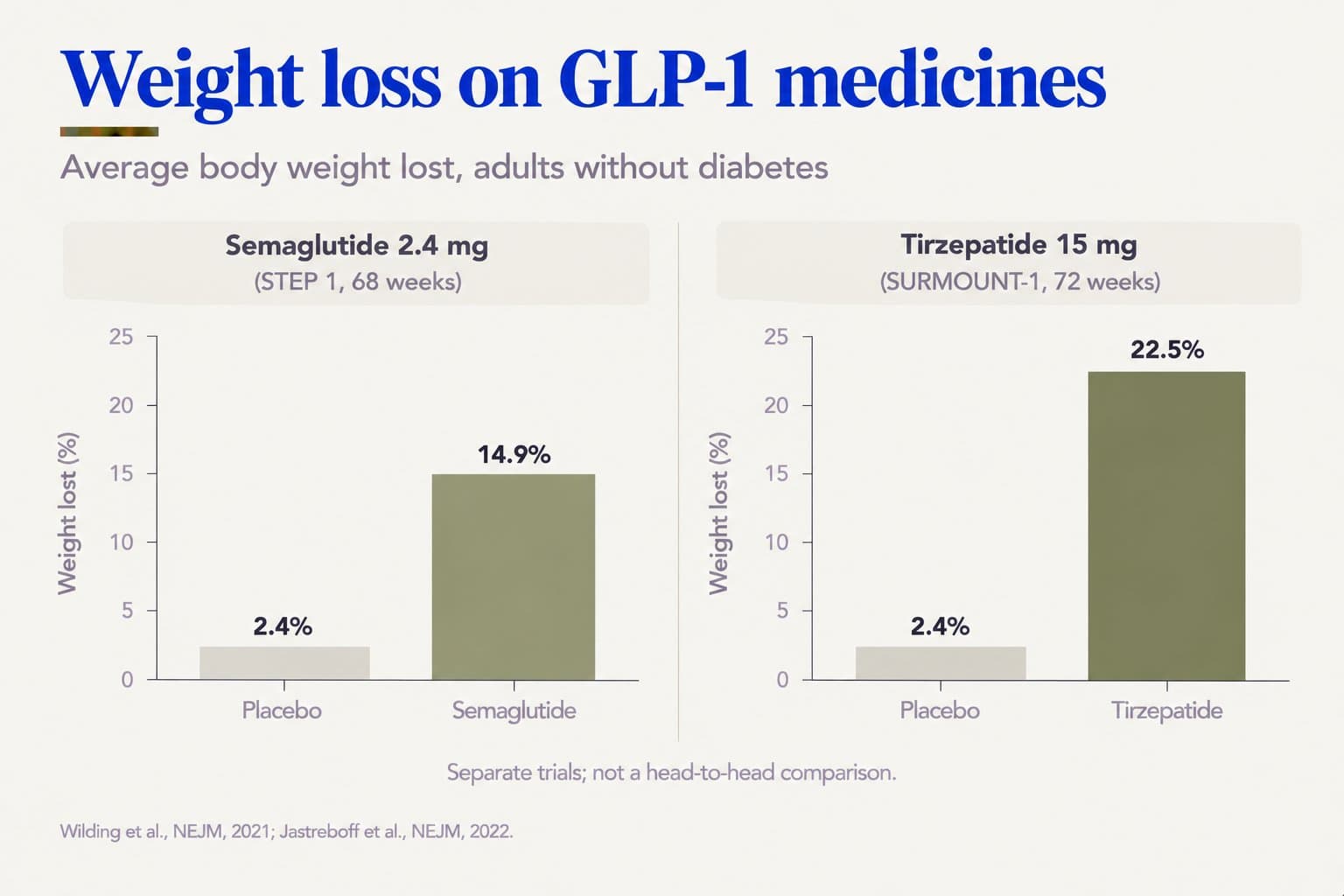
GLP-1 medications, such as semaglutide (Ozempic, Wegovy) and tirzepatide (Mounjaro, Zepbound), were developed for type 2 diabetes and are now widely used for weight loss. They mimic gut hormones that reduce appetite and slow stomach emptying. The evidence for weight loss is strong: in major trials, adults without diabetes lost about 15% of their body weight on semaglutide and about 22% on tirzepatide over roughly 16-18 months, compared with 2-3% on placebo. Importantly, they also protect the heart: in the SELECT trial of 17,604 people with overweight or obesity and existing heart disease, semaglutide reduced heart attacks, strokes and cardiovascular deaths by 20%. But they aren't a quick fix. Gastrointestinal side effects are common, some of the weight lost is muscle, and when the medicine is stopped most of the weight tends to come back. This article sets out what's well proven, what's uncertain and how to use these medicines wisely.
Key numbers
| Finding | Detail |
|---|---|
| Semaglutide 2.4 mg weekly (STEP 1, 1,961 adults without diabetes, 68 weeks) | 14.9% weight loss vs 2.4% on placebo |
| Tirzepatide 15 mg weekly (SURMOUNT-1, 2,539 adults without diabetes, 72 weeks) | 22.5% weight loss vs 2.4% on placebo, in people who stayed on treatment |
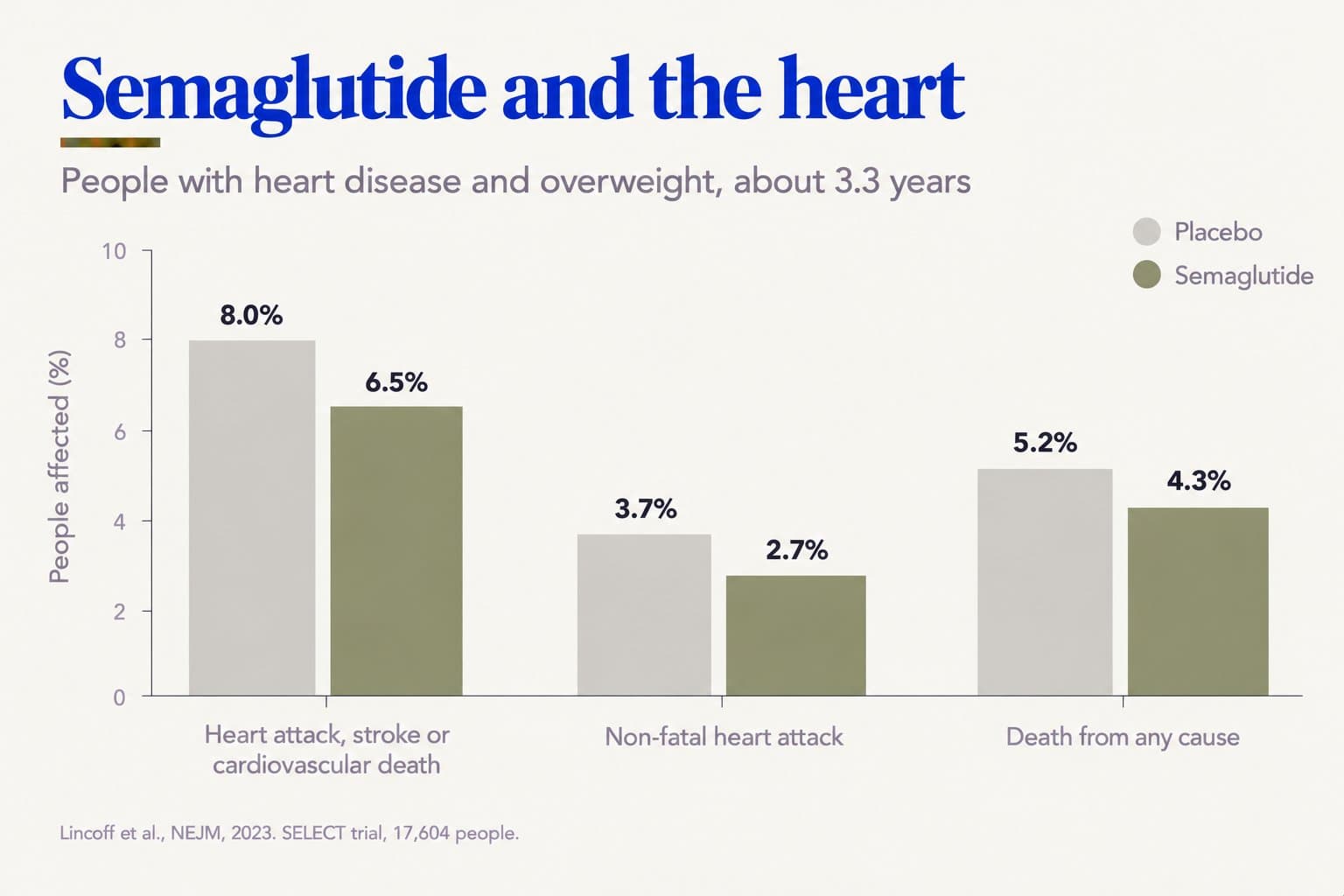
| Semaglutide in people with heart disease and overweight (SELECT, 17,604 people, about 3.3 years) | Heart attacks, strokes and cardiovascular deaths reduced from 8.0% to 6.5%, a 20% reduction |
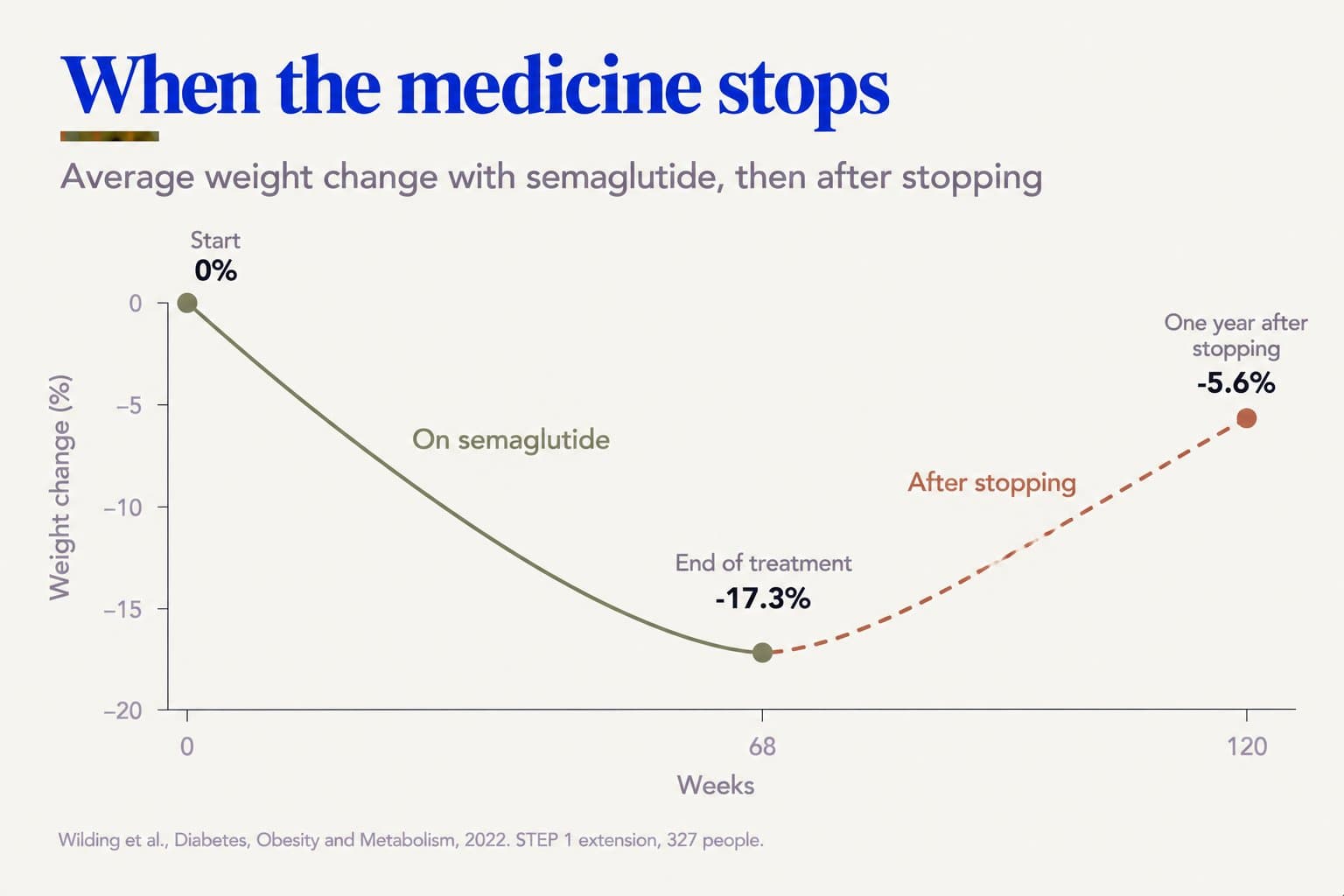
| Stopping semaglutide (STEP 1 extension, 327 people) | Weight loss of 17.3% at 68 weeks fell to a net 5.6% a year after stopping |
| Stopped treatment because of side effects (SELECT) | 16.6% on semaglutide vs 8.2% on placebo |
How GLP-1 medications work
GLP-1 (glucagon-like peptide-1) is a hormone released by the gut after eating. It stimulates insulin release when blood sugar is high, reduces glucagon, slows stomach emptying and acts on the brain to reduce appetite and food cravings. GLP-1 receptor agonists such as semaglutide and liraglutide mimic this hormone but last much longer, allowing weekly or daily injections (an oral form of semaglutide also exists). Tirzepatide also acts on a second gut hormone receptor, GIP, and produces greater weight loss.
These medicines may benefit the heart through weight loss, lower blood pressure, better blood sugar and lipids, and reduced inflammation, and possibly through direct effects on blood vessels.
Evidence strength
Strong: large, sustained weight loss while taking them. In STEP 1, 1,961 adults with obesity, or overweight with a weight-related condition, and without diabetes, took semaglutide 2.4 mg weekly or a placebo alongside lifestyle advice. After 68 weeks, average weight loss was 14.9% with semaglutide compared with 2.4% with placebo, and 86.4% lost at least 5% of their body weight, compared with 31.5% on placebo.
In SURMOUNT-1, 2,539 similar adults took tirzepatide or a placebo for 72 weeks. Among those who stayed on treatment, the highest dose (15 mg) produced an average weight loss of 22.5%, compared with 2.4% on placebo, and up to 63% lost 20% or more of their body weight.
Strong: semaglutide reduces heart attacks and strokes in people with heart disease. The SELECT trial enrolled 17,604 people with a BMI of 27 or more and established cardiovascular disease, but without diabetes. Over about 3.3 years, major cardiovascular events (cardiovascular death, heart attack or stroke) occurred in 6.5% on semaglutide compared with 8.0% on placebo, a 20% reduction (HR 0.80). Non-fatal heart attacks fell from 3.7% to 2.7%, and deaths from any cause from 5.2% to 4.3%. Average weight loss at two years was 9.4%, compared with 0.9% on placebo. Further analyses suggest the heart benefit began early and wasn't fully explained by the amount of weight lost.
In people with type 2 diabetes at high cardiovascular risk, several trials have shown that GLP-1 medicines reduce major cardiovascular events, and they're recommended for this group (see Diabetes and Heart Disease).
Strong: most of the weight returns after stopping. In an extension of STEP 1, 327 participants were followed for a year after stopping treatment. People on semaglutide had lost 17.3% of their body weight by week 68, but regained about two-thirds of it within a year, leaving a net loss of 5.6%. Improvements in blood pressure, blood sugar and other markers largely went back towards where they started. The researchers concluded that obesity is a chronic condition and that ongoing treatment is needed to maintain the benefits.
Moderate: some of the weight lost is muscle. When people lose weight by any method, they lose some lean mass as well as fat. In a STEP 1 substudy, both fat mass and lean mass fell, although the proportion of lean mass relative to body weight increased. How much this matters for strength and function, particularly in older adults, is still being studied. Resistance training and adequate protein intake help preserve muscle during weight loss.
Uncertain: long-term effects and use beyond the studied groups. Trials have followed people for a few years, so effects over decades are unknown. The heart benefit has been proven in people with established cardiovascular disease or diabetes; whether it extends to people with obesity but lower risk is still being studied. There's no good evidence for "microdosing" or for use by people who aren't overweight.
Not supported: unregulated or compounded versions. Products bought online or from unregulated sources may contain the wrong dose, impurities or no active ingredient at all.
Side effects and safety
- Gastrointestinal effects are common: in STEP 1, 74.2% on semaglutide had nausea, diarrhoea, vomiting or constipation, compared with 47.9% on placebo. They're usually mild to moderate, most common when starting or increasing the dose, and ease over time.
- Stopping because of side effects: 16.6% on semaglutide vs 8.2% on placebo in SELECT.
- Gallbladder problems such as gallstones are more common (2.6% vs 1.2% in STEP 1), partly because of rapid weight loss.
- Pancreatitis is rare; seek help for severe, persistent abdominal pain.
- Not suitable during pregnancy or when trying to conceive, or for people with a personal or family history of certain thyroid cancers (medullary thyroid cancer) or multiple endocrine neoplasia type 2.
- Low blood sugar is uncommon unless combined with insulin or sulfonylureas.
Recommendations by situation
| Situation | What the evidence supports |
|---|---|
| Established heart disease and a BMI of 27 or more | Semaglutide has been shown to reduce heart attacks and strokes; discuss with your doctor |
| Type 2 diabetes with heart disease or high risk | A GLP-1 medicine is often recommended for heart and blood sugar benefits |
| Obesity with weight-related conditions (such as high blood pressure, prediabetes or fatty liver) | Can be effective alongside lifestyle changes; plan for long-term use |
| Modest excess weight without health problems | Lifestyle changes first; the balance of benefits and costs is less clear |
| Starting treatment | Increase the dose slowly, eat smaller meals, keep up protein intake and do strength training |
| Thinking of stopping | Expect weight regain unless lifestyle habits are firmly established; discuss a plan with your doctor |
Remember that for South Asians, weight-related risk starts at a lower BMI (see South Asian Cardiovascular Risk).
Practical notes
GLP-1 medications produce substantial weight loss and, for people with heart disease and overweight, reduce heart attacks, strokes and cardiovascular deaths. They also help with related conditions such as fatty liver disease (see Fatty Liver Disease (MASLD)). But they work only while they're taken, gastrointestinal side effects are common, and some of the weight lost is muscle. They're most effective as part of a long-term plan that includes a healthy diet, regular strength and aerobic exercise (see Zone 2 Training) and management of blood pressure, cholesterol and blood sugar (see What Metabolic Health Really Means).
- Wilding JPH, et al. Once-weekly semaglutide in adults with overweight or obesity (STEP 1). New England Journal of Medicine, 2021;384(11):989-1002.
- Jastreboff AM, et al. Tirzepatide once weekly for the treatment of obesity (SURMOUNT-1). New England Journal of Medicine, 2022;387(3):205-216.
- Lincoff AM, et al. Semaglutide and cardiovascular outcomes in obesity without diabetes (SELECT). New England Journal of Medicine, 2023;389(24):2221-2232.
- Wilding JPH, et al. Weight regain and cardiometabolic effects after withdrawal of semaglutide: the STEP 1 trial extension. Diabetes, Obesity and Metabolism, 2022;24(8):1553-1564.
Free longevity assessment
Considering a GLP-1 medicine?
Plan for the long term first.
Take the free Aevum Protocol assessment to see how your cardiovascular & metabolic health and 6 other longevity domains are performing — and get a personalised 90-day plan.
Take the free assessmentKeep reading
Related articles
Cardiovascular & Metabolic Health
Diabetes and Heart Disease: Why They're Linked and How to Break the Connection
Cardiovascular & Metabolic Health
What Metabolic Health Really Means, and Why Most People Don't Have It
Cardiovascular & Metabolic Health