Cardiovascular & Metabolic Health
Hypertension and Longevity:
Why High Blood Pressure Matters and What Lowering It Achieves
High blood pressure (hypertension) is the world's leading modifiable cause of heart attacks, strokes, heart failure, kidney disease and vascular dementia. It affects about 1.28 billion adults aged 30 to 79 worldwide, and in 2019, around half of men and two in five women with it hadn't been diagnosed, while fewer than a quarter had it under control. Because it usually causes no symptoms, the damage builds silently for years. The good news is that lowering blood pressure works, and works across the board: in a review of 123 trials with more than 600,000 people, each 10 mmHg reduction in systolic pressure cut major cardiovascular events by 20%, strokes by 27%, heart failure by 28% and deaths from any cause by 13%. This article explains what high blood pressure does to the body, who's at risk, and what you can change.
Key numbers
| Finding | Detail |
|---|---|
| People with hypertension worldwide (NCD-RisC, 2019, ages 30-79) | About 1.28 billion |
| Undiagnosed (same analysis) | About 41% of women and 51% of men with hypertension |
| Controlled (same analysis) | 23% of women and 18% of men |
| Each 10 mmHg lower systolic pressure (123 trials, 613,815 people) | 20% fewer major cardiovascular events, 27% fewer strokes, 28% less heart failure, 13% fewer deaths |
| High blood pressure in Sri Lanka (national survey) | 28.2% of adults at 140/90 or above; nearly half undiagnosed |
What high blood pressure does to the body
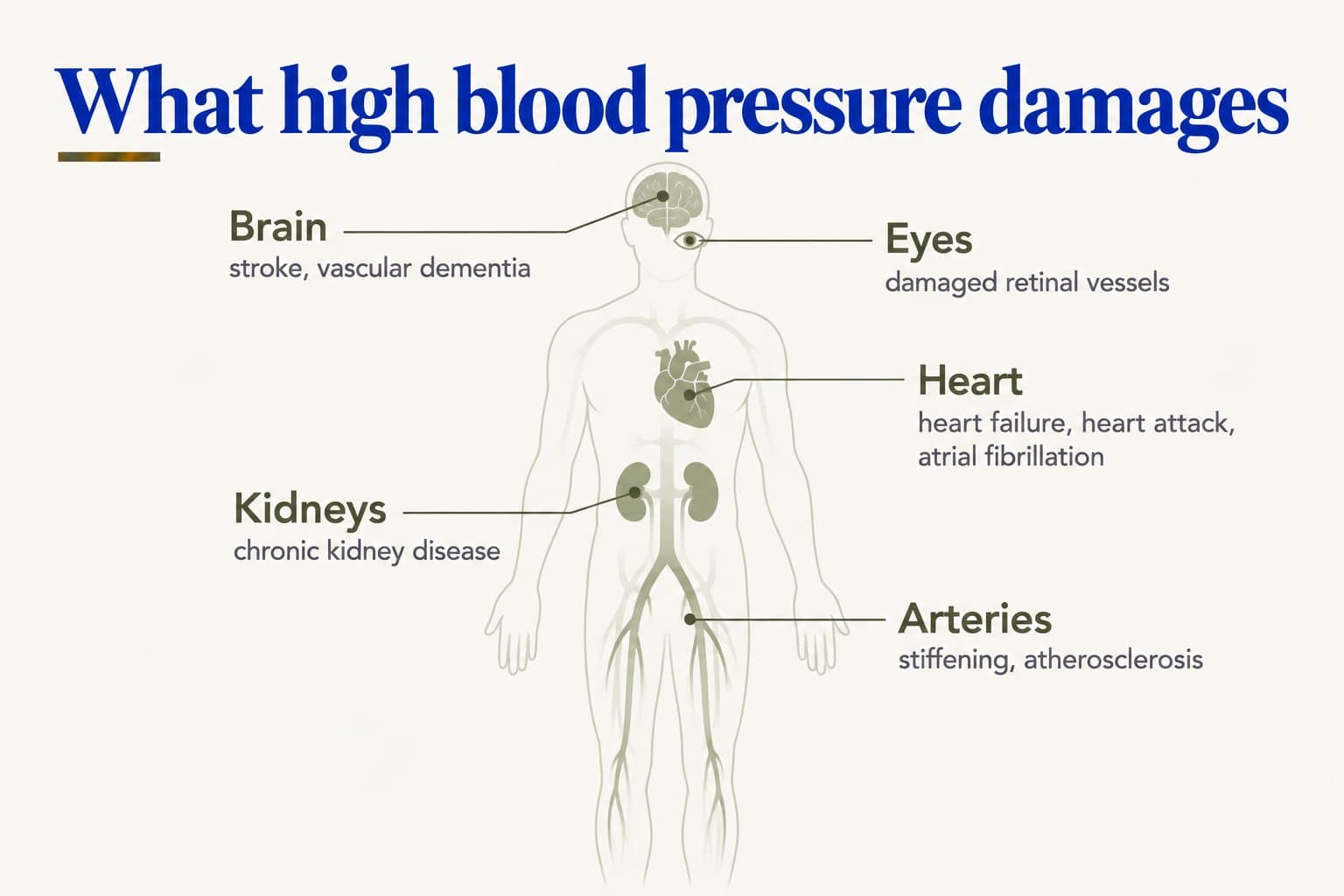
Every heartbeat pushes blood against the artery walls. When that pressure stays high, it damages the arteries and the organs they supply:
- Arteries: the lining is injured and the walls thicken and stiffen, speeding up atherosclerosis (see How Atherosclerosis Develops).
- Brain: the leading cause of stroke, both from blocked vessels and bleeding, and a major contributor to vascular dementia and cognitive decline (see Vascular Health and the Brain).
- Heart: the heart muscle thickens to pump against higher pressure, raising the risk of heart failure, heart attack and atrial fibrillation.
- Kidneys: small blood vessels in the kidneys are damaged, which can lead to chronic kidney disease, which in turn raises blood pressure further.
- Eyes: the small vessels at the back of the eye can be damaged.
What raises blood pressure
| Factor | Effect | Modifiable? | Evidence strength |
|---|---|---|---|
| Age | Blood pressure rises as arteries stiffen | No | Strong |
| Family history and genetics | Higher risk if parents have hypertension | No | Strong |
| Excess weight, especially around the waist | Raises blood pressure; losing weight lowers it | Yes | Strong |
| High salt intake | Raises blood pressure, especially in salt-sensitive people | Yes | Strong |
| Low physical activity | Higher blood pressure; exercise lowers it | Yes | Strong |
| Alcohol | Regular heavy drinking raises blood pressure | Yes | Strong |
| Poor sleep and sleep apnoea | Raise blood pressure, especially at night | Yes | Moderate |
| Chronic stress | Contributes to raised blood pressure | Partly | Moderate |
| Kidney disease, hormonal conditions and some medicines | Can cause "secondary" hypertension | Often treatable | Strong |
What the research shows
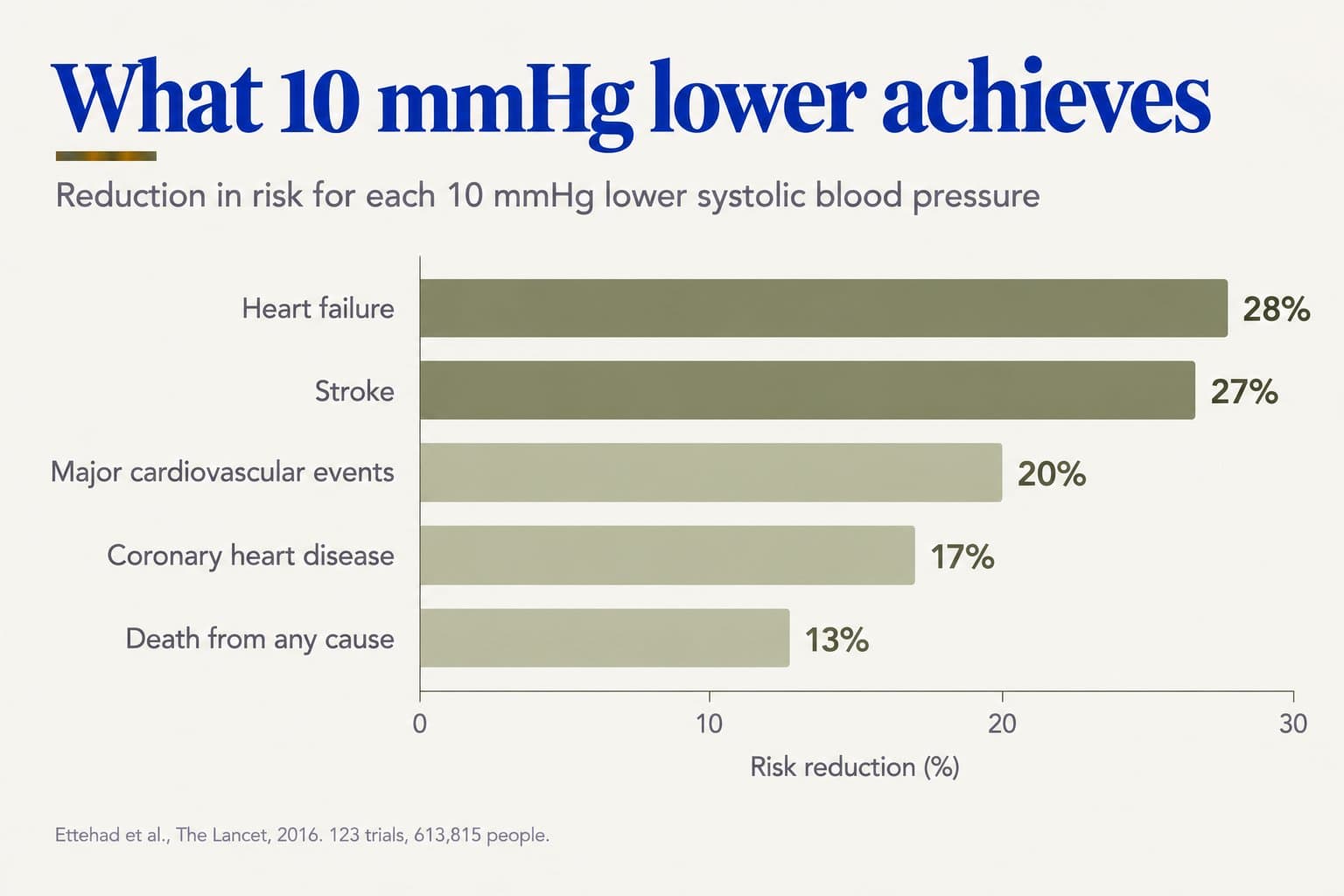
Lowering blood pressure prevents heart attacks, strokes and deaths. A 2016 systematic review in The Lancet combined 123 randomised trials with 613,815 participants. Every 10 mmHg reduction in systolic blood pressure reduced:
- Major cardiovascular events by 20%
- Coronary heart disease by 17%
- Stroke by 27%
- Heart failure by 28%
- Deaths from any cause by 13%
The benefits were broadly consistent regardless of starting blood pressure, which supports the idea that lower is better for most people at raised risk (see Blood Pressure Explained).
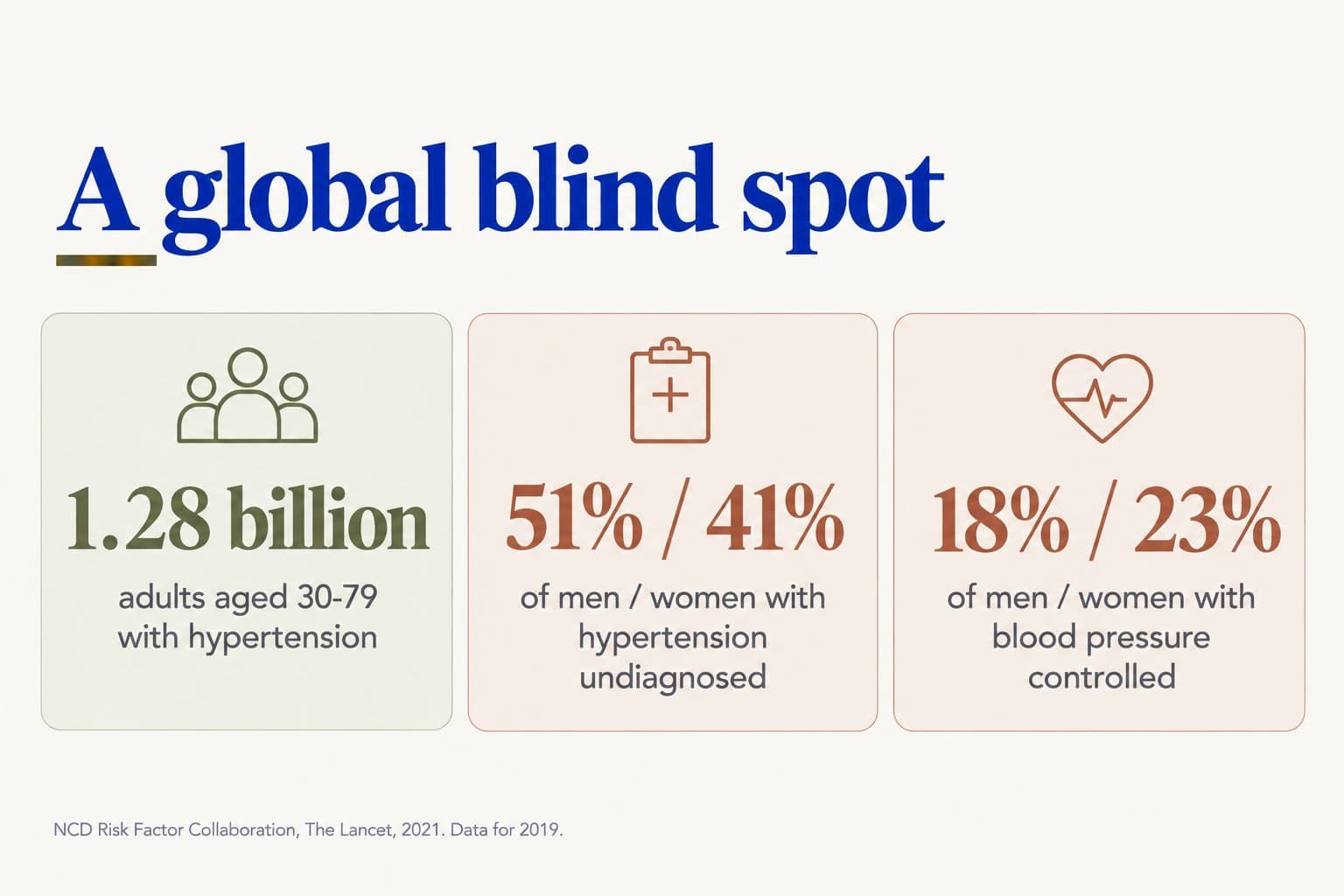
Hypertension is common and poorly controlled worldwide. The NCD Risk Factor Collaboration analysed 1,201 population studies with 104 million participants. In 2019, 626 million women and 652 million men aged 30-79 had hypertension. About 41% of women and 51% of men with hypertension hadn't been diagnosed, only 47% of women and 38% of men were being treated, and just 23% of women and 18% of men had their blood pressure controlled. In Sri Lanka's national survey, 28.2% of adults had blood pressure of 140/90 or above, and nearly half of them didn't know.
Blood pressure and the brain. High blood pressure in midlife is one of the leading modifiable risk factors for dementia (see Alzheimer's Disease: Risk Factors You Can Actually Change). In the SPRINT MIND study, part of a trial of more than 9,300 people, intensive blood pressure lowering reduced mild cognitive impairment and the combined risk of mild cognitive impairment and dementia. The reduction in dementia alone wasn't statistically significant, possibly because the trial was stopped early for its cardiovascular benefits.
What you can actually change
1. Know your numbers and confirm them. Have your blood pressure checked at least yearly, measured correctly, and confirm raised readings with home or 24-hour monitoring.
2. Lose excess weight, especially around the waist. Weight loss is one of the most effective ways to lower blood pressure, and it improves blood sugar and cholesterol at the same time.
3. Cut salt and eat more potassium-rich foods. Most salt comes from processed foods, bread, sauces, pickles and salted fish. Eat more vegetables, fruit and pulses, which provide potassium.
4. Move regularly. Aerobic exercise, strength training and even isometric exercises such as wall sits lower blood pressure (see Zone 2 Training).
5. Limit alcohol, protect sleep and manage stress. Heavy drinking, short sleep, untreated sleep apnoea and chronic stress all raise blood pressure (see Sleep and Cardiovascular Health and Stress-Reduction Techniques That Work).
6. Take medication when it's needed, and keep taking it. Lifestyle changes often aren't enough on their own. Blood pressure medicines are safe, inexpensive and highly effective, and most people need more than one to reach their target. Stopping them without advice is a common reason blood pressure goes uncontrolled.
Practical ways to lower blood pressure are covered in Lowering Blood Pressure Without Medication, and how to monitor it at home in Home Blood Pressure Monitoring.
Recommendations
- Treat high blood pressure as urgent but silent: it damages organs for years before symptoms appear.
- Aim for the target your doctor recommends, often a systolic pressure of 120-129 mmHg if it can be reached safely.
- Combine lifestyle change with medication when needed, rather than choosing one or the other.
- Ask about underlying causes if your blood pressure is very high, rises suddenly, starts at a young age, or stays high despite three medicines.
- Check your kidney function and blood sugar, which are closely linked to blood pressure.
Practical notes
High blood pressure is common, often undiagnosed, and one of the biggest drivers of heart attack, stroke, heart failure, kidney disease and dementia. Lowering it is one of the most effective things medicine can do: each 10 mmHg reduction in systolic pressure cuts strokes by more than a quarter and deaths by 13%. Knowing your numbers, measuring them properly, making the lifestyle changes that work and taking medication when needed can add years of healthy life.
- Ettehad D, et al. Blood pressure lowering for prevention of cardiovascular disease and death: a systematic review and meta-analysis. The Lancet, 2016;387(10022):957-967.
- NCD Risk Factor Collaboration (NCD-RisC). Worldwide trends in hypertension prevalence and progress in treatment and control from 1990 to 2019: a pooled analysis of 1201 population-representative studies with 104 million participants. The Lancet, 2021;398(10304):957-980.
- SPRINT MIND Investigators. Effect of intensive vs standard blood pressure control on probable dementia: a randomized clinical trial. JAMA, 2019;321(6):553-561.
- Rannan-Eliya RP, et al. Prevalence and associations of hypertension in Sri Lankan adults: estimates from the SLHAS 2018-19 survey using JNC7 and ACC/AHA 2017 guidelines. Global Heart, 2022;17(1):50.
- McEvoy JW, et al. 2024 ESC Guidelines for the management of elevated blood pressure and hypertension. European Heart Journal, 2024;45(38):3912-4018.
Free longevity assessment
Is your blood pressure
at a level that protects you?
Take the free Aevum Protocol assessment to see how your cardiovascular & metabolic health and 6 other longevity domains are performing — and get a personalised 90-day plan.
Take the free assessmentKeep reading
Related articles
Cardiovascular & Metabolic Health
Blood Pressure Explained: What the Numbers Mean and How to Measure It Properly
Cardiovascular & Metabolic Health
Lowering Blood Pressure Without Medication: A Practical, Evidence-Based Guide
Cardiovascular & Metabolic Health