Cardiovascular & Metabolic Health
Home Blood Pressure Monitoring:
How to Measure Accurately and What Your Numbers Mean
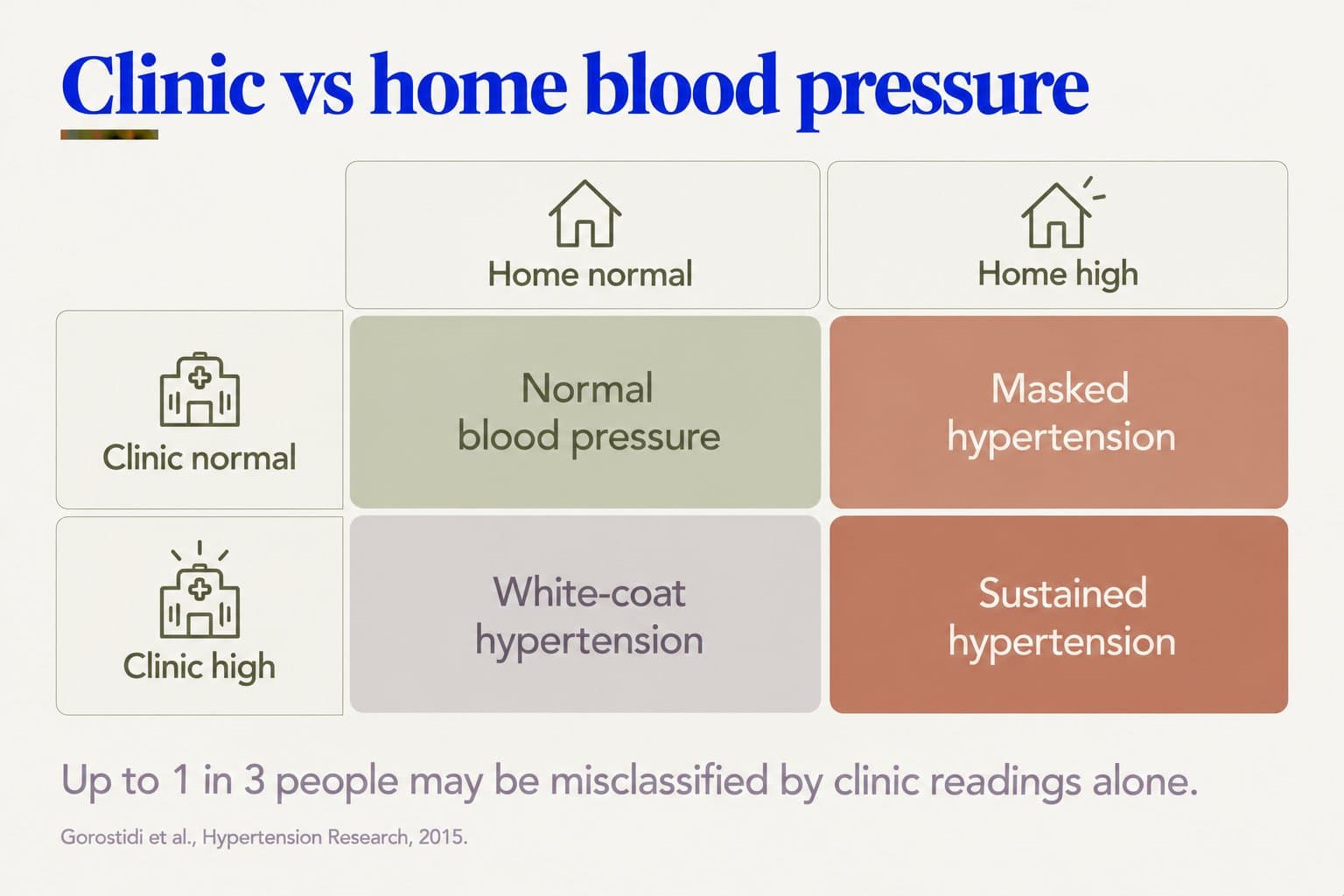
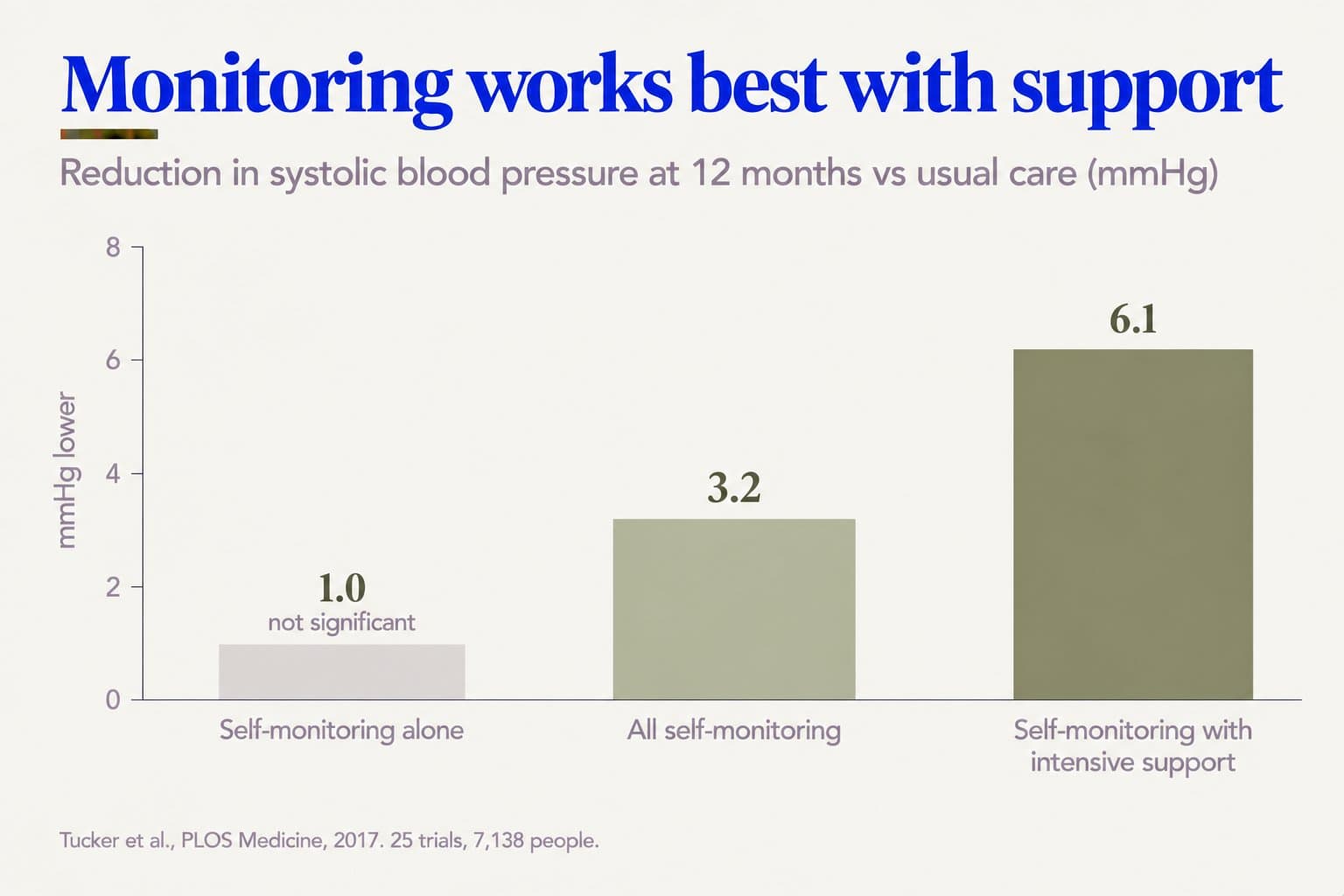
A single blood pressure reading at the clinic can be misleading. Some people's blood pressure rises only in the clinic ("white-coat hypertension"), while others have normal clinic readings but high blood pressure the rest of the time ("masked hypertension"). In registry studies, up to one in three people in each situation was misclassified by clinic readings alone. Measuring at home, with a validated upper-arm monitor over several days, gives a truer picture and is now recommended by guidelines for diagnosing and managing high blood pressure. A home average of about 135/85 mmHg corresponds to a clinic reading of 140/90. Home monitoring also helps treatment: in an analysis of 25 trials, self-monitoring lowered systolic blood pressure by 3.2 mmHg overall, and by 6.1 mmHg when combined with support such as medicine adjustments and education. This guide explains how to choose a monitor, measure correctly and make sense of your readings.
Key numbers
| Finding | Detail |
|---|---|
| White-coat and masked hypertension (national and international registries) | Up to 1 in 3 people in each group misclassified by clinic readings |
| Home threshold equivalent to a clinic reading of 140/90 mmHg | About 135/85 mmHg |
| Home monitoring vs clinic readings for detecting high blood pressure | More sensitive (90% vs 81%) and more specific (84% vs 76%) |
| Self-monitoring and blood pressure at 12 months (25 trials, individual data from 7,138 people) | 3.2 mmHg lower systolic overall; 6.1 mmHg lower with intensive support; 1.0 mmHg (not significant) with monitoring alone |
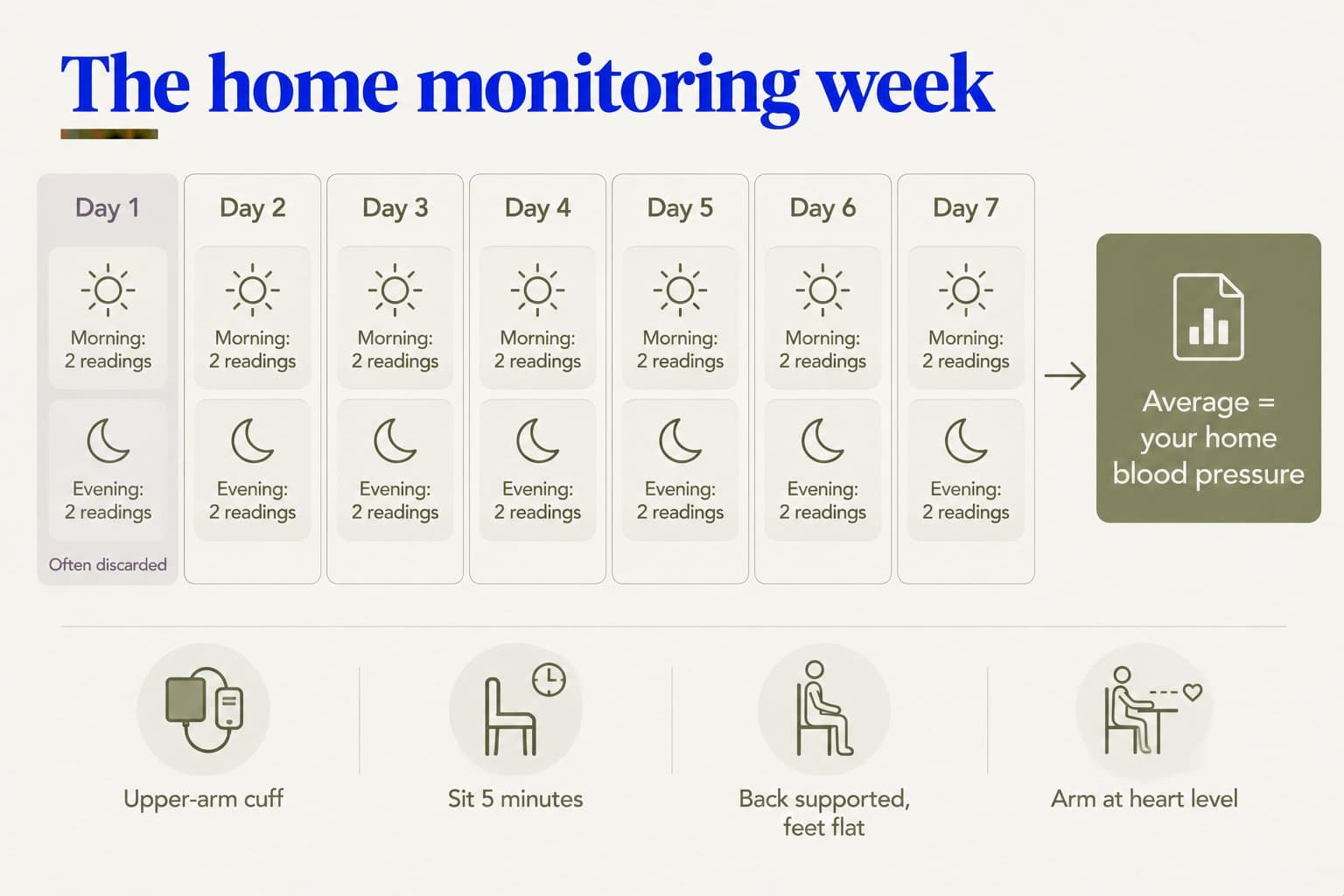
| Recommended protocol | Two readings, one minute apart, morning and evening, for 3 to 7 days |
Why measure at home?
Blood pressure varies throughout the day, and clinic readings capture only a moment, often when you're anxious or rushed. Home readings, averaged over several days, better reflect your usual blood pressure and are more closely linked to future heart and kidney problems. They help to:
- Confirm a diagnosis before starting treatment, and avoid unnecessary medicine for white-coat hypertension.
- Detect masked hypertension, which carries a similar cardiovascular risk to sustained high blood pressure.
- Check whether lifestyle changes or medicines are working (see Lowering Blood Pressure Without Medication).
- Keep you engaged in managing your own health.
Choosing a monitor
- Use an upper-arm cuff monitor. Wrist monitors and smartwatches are more affected by arm position and are generally less accurate.
- Choose a validated device. Check an independent validation list, such as the US Validated Device Listing (validatebp.org) or STRIDE BP.
- Get the right cuff size. The inflatable part should cover 75-100% of the distance around your upper arm. A cuff that's too small gives falsely high readings.
- Check it against a clinic reading when you first buy it, and every year or two.
How to measure correctly
Small errors can shift readings by 5-10 mmHg or more (see Blood Pressure Explained). Each time:
- 1. Avoid caffeine, exercise and smoking for 30 minutes beforehand, and empty your bladder.
- 2. Sit quietly for 5 minutes, back supported, feet flat on the floor, legs uncrossed.
- 3. Rest your arm on a table with the cuff at heart level, on bare skin.
- 4. Don't talk or use your phone during the measurement.
- 5. Take two readings, one minute apart, and record both.
The home monitoring protocol
For diagnosis, or after a change in treatment:
- Measure twice a day: in the morning, before medicines and breakfast, and in the evening.
- Take two readings each time, one minute apart.
- Continue for at least 3 days, ideally 7. Many guidelines suggest ignoring the first day's readings, which tend to be higher.
- Average all the readings and share them with your doctor.
For long-term monitoring once blood pressure is controlled, a few readings a week, or a week of readings before a clinic visit, is usually enough.
What your numbers mean
| Home average | What it suggests |
|---|---|
| Below 120/80 mmHg | Optimal |
| 120-134 / 80-84 mmHg | Above optimal; focus on lifestyle and recheck |
| 135/85 mmHg or higher | In the high blood pressure range; see your doctor |
| 180/120 mmHg or higher | Repeat after resting; if still this high, seek urgent medical advice, and emergency care if you have chest pain, breathlessness, weakness, confusion or severe headache |
If you're on treatment, your doctor may set a lower personal target. Don't adjust medicines based on a single reading; look at the average over several days.
Does home monitoring improve blood pressure?
A 2017 analysis of individual data from 25 trials found that self-monitoring lowered clinic systolic blood pressure by 3.2 mmHg at 12 months compared with usual care. But the effect depended on what was done with the readings: monitoring alone made no significant difference (1.0 mmHg), whereas combining it with support, such as medicine adjustments by a doctor or pharmacist, education or lifestyle counselling, lowered systolic pressure by 6.1 mmHg. Readings are only useful if they lead to action.
Recommendations by scenario
| Scenario | What to do |
|---|---|
| A single high reading at the clinic | Measure at home for 7 days before deciding on treatment |
| Normal clinic readings but high readings at a pharmacy or at home, or signs of organ damage | Ask about masked hypertension; home or 24-hour monitoring |
| Starting or changing blood pressure medicine | Measure for a week, 2-4 weeks after the change, and share the average |
| Blood pressure controlled | A few readings a week, or a week before each review |
| Pregnant | Home monitoring is useful, but follow your obstetric team's advice and report high readings promptly |
| Irregular pulse or atrial fibrillation | Readings may be less reliable; take extra readings and discuss with your doctor |
| Anxious about readings | Measure less often, on a set schedule, and focus on averages rather than single numbers |
Practical notes
Home blood pressure monitoring gives a more accurate picture than clinic readings alone, uncovering white-coat and masked hypertension and showing whether treatment is working. Use a validated upper-arm monitor with the right cuff size, measure correctly, and follow a simple schedule of two readings morning and evening for up to a week. A home average of 135/85 mmHg or higher suggests high blood pressure (see Hypertension and Longevity). Most importantly, share your readings with your doctor, because monitoring helps most when it leads to action.
- Gorostidi M, et al. Prevalence of white-coat and masked hypertension in national and international registries. Hypertension Research, 2015;38(1):1-7.
- Tucker KL, et al. Self-monitoring of blood pressure in hypertension: a systematic review and individual patient data meta-analysis. PLOS Medicine, 2017;14(9):e1002389.
- American Academy of Family Physicians. Home blood pressure monitoring. American Family Physician, 2021;104(3):237-243.
- McEvoy JW, et al. 2024 ESC Guidelines for the management of elevated blood pressure and hypertension. European Heart Journal, 2024;45(38):3912-4018.
Free longevity assessment
Do you know your average
home blood pressure?
Take the free Aevum Protocol assessment to see how your cardiovascular & metabolic health and 6 other longevity domains are performing — and get a personalised 90-day plan.
Take the free assessmentKeep reading
Related articles
Cardiovascular & Metabolic Health
Blood Pressure Explained: What the Numbers Mean and How to Measure It Properly
Cardiovascular & Metabolic Health
Hypertension and Longevity: Why High Blood Pressure Matters and What Lowering It Achieves
Cardiovascular & Metabolic Health