Cardiovascular & Metabolic Health
Lowering Blood Pressure Without Medication:
A Practical, Evidence-Based Guide
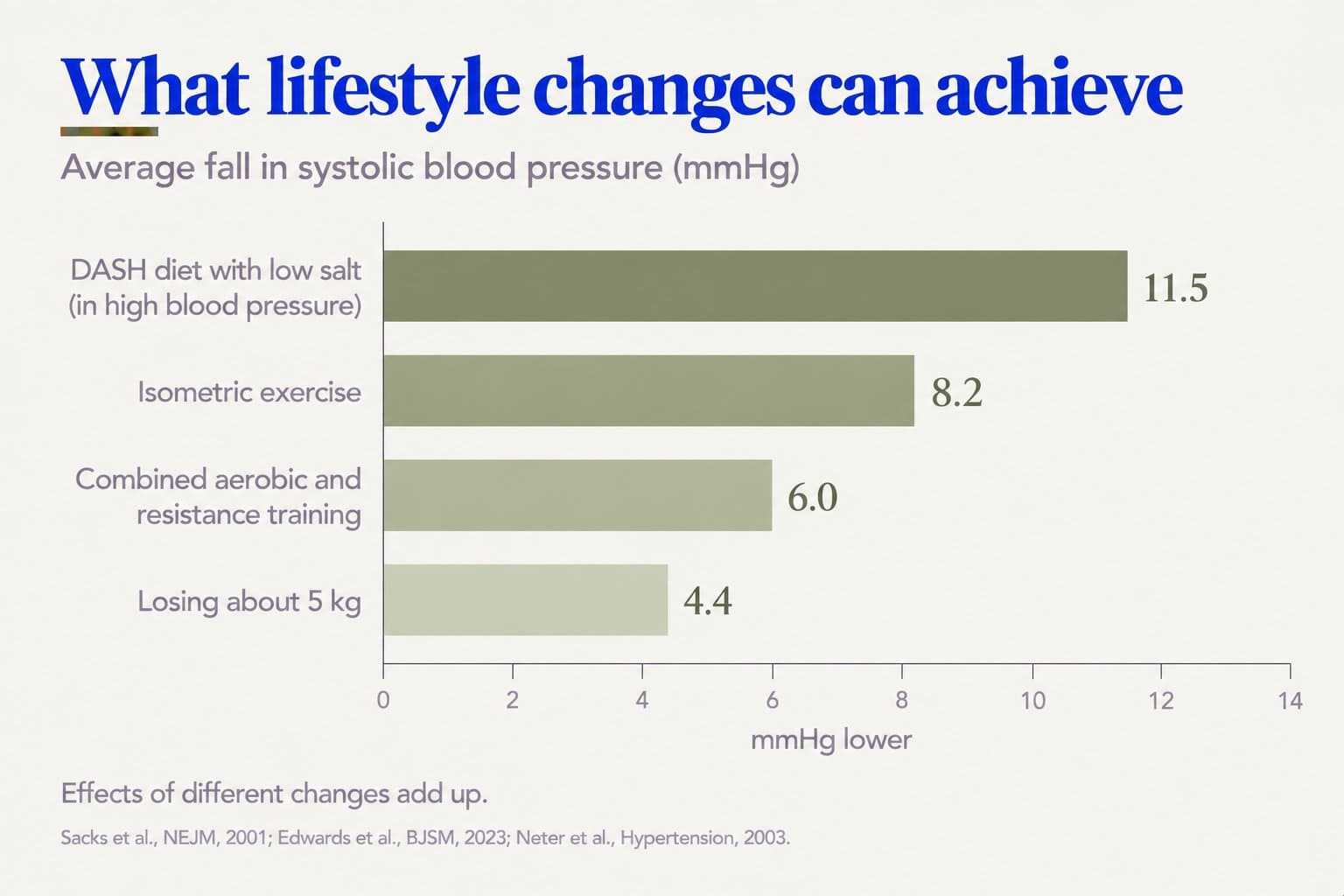
Lifestyle changes can lower blood pressure as much as a single medicine, and they're the first step recommended for anyone with raised or high blood pressure. In a landmark US trial, a diet rich in fruit, vegetables and low-fat dairy combined with less salt lowered systolic blood pressure by 11.5 mmHg in people with high blood pressure. Losing about 5 kg lowers systolic pressure by around 4-5 mmHg. Exercise helps too, and a large analysis of 270 trials found that isometric exercises, such as wall squats and handgrips, lowered systolic pressure by about 8 mmHg. Salt matters especially in Sri Lanka, where adults eat about 8.3 g a day, well above the recommended limit of 5 g. Swapping regular salt for a potassium-enriched salt substitute cut strokes, heart attacks and deaths in a trial of nearly 21,000 people. This guide explains which changes work best, how much each can achieve and how to put them into practice.
Key numbers
| Finding | Detail |
|---|---|
| DASH diet with low salt (DASH-Sodium trial) | Systolic blood pressure lowered by 11.5 mmHg in people with high blood pressure |
| Weight loss (25 trials, 4,874 people) | About 1 mmHg lower systolic pressure per kg lost; about 4.4 mmHg for 5 kg |
| Isometric exercise (270 trials, 15,827 people) | Systolic pressure lowered by 8.2 mmHg, the most of any exercise type |
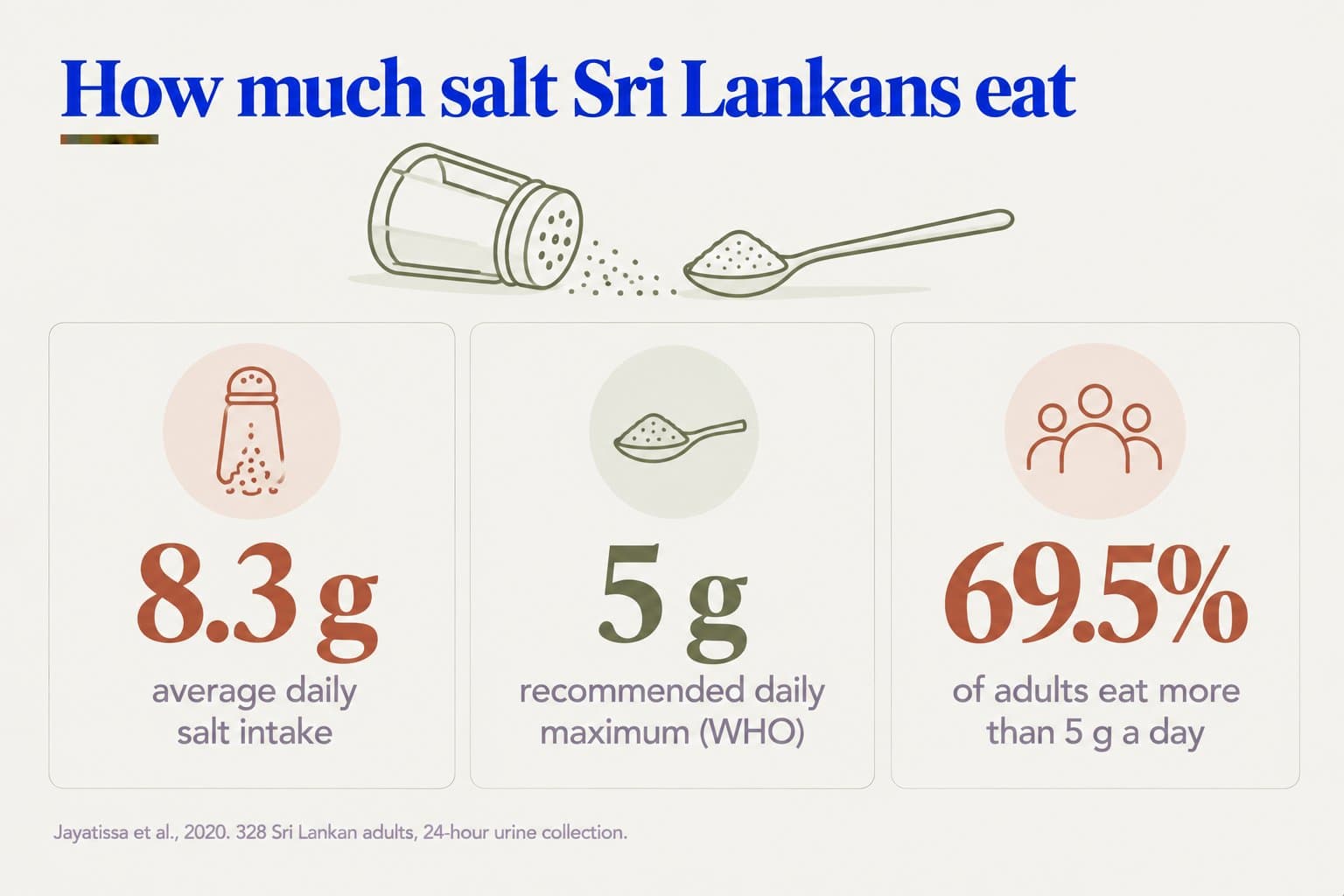
| Salt intake in Sri Lankan adults (328 people) | 8.3 g a day, 1.6 times the WHO limit; 69.5% ate more than 5 g |
| Potassium-enriched salt substitute (20,995 people, 4.7 years) | Fewer strokes, major cardiovascular events and deaths than regular salt |
How lifestyle lowers blood pressure
Blood pressure depends on how much blood the heart pumps, how much fluid is in the circulation and how relaxed or stiff the blood vessels are (see Blood Pressure Explained). Lifestyle changes act on all three: less salt and more potassium reduce fluid retention, weight loss and exercise reduce the workload on the heart and improve how blood vessels relax, and less alcohol and better sleep calm the nervous system's effect on blood vessels. The effects of different changes add up, so combining several gives the biggest reduction.
What the evidence shows
Salt and potassium: the biggest dietary lever. Most salt in the diet comes from food that's already salty or processed. In a 2020 study of 328 Sri Lankan adults using 24-hour urine collections, the most accurate method, average salt intake was 8.3 g a day, 1.6 times the World Health Organization's recommended maximum of 5 g, and 69.5% ate more than 5 g. Potassium intake was only about 1,265 mg a day, far below recommendations, giving a sodium-to-potassium ratio 7 times higher than advised.
In the Salt Substitute and Stroke Study, 20,995 older adults in rural China with a history of stroke or high blood pressure replaced their regular salt with a substitute containing less sodium and added potassium. Over 4.7 years, strokes fell from 33.65 to 29.14 per 1,000 person-years, and major cardiovascular events and deaths also fell, with no increase in serious high potassium levels. Salt substitutes aren't suitable for everyone, though: people with kidney disease, or taking medicines that raise potassium, should check with their doctor first.
The DASH eating pattern. The Dietary Approaches to Stop Hypertension (DASH) diet is rich in vegetables, fruit, pulses, nuts, whole grains and low-fat dairy, and low in red meat, sweets and sugary drinks. In the original DASH trial, the diet lowered blood pressure by 11.4/5.5 mmHg in people with high blood pressure. In the follow-up DASH-Sodium trial, combining the DASH diet with low salt lowered blood pressure by 11.5/5.7 mmHg in people with high blood pressure, a reduction the researchers noted was larger than a single medicine typically achieves.
Weight loss. A meta-analysis of 25 trials with 4,874 people found that losing an average of 5.1 kg lowered blood pressure by 4.4/3.6 mmHg, about 1 mmHg of systolic pressure per kilogram. People who lost more than 5 kg saw larger falls, of about 6.6/5.1 mmHg. Losing abdominal fat is especially helpful (see What Metabolic Health Really Means).
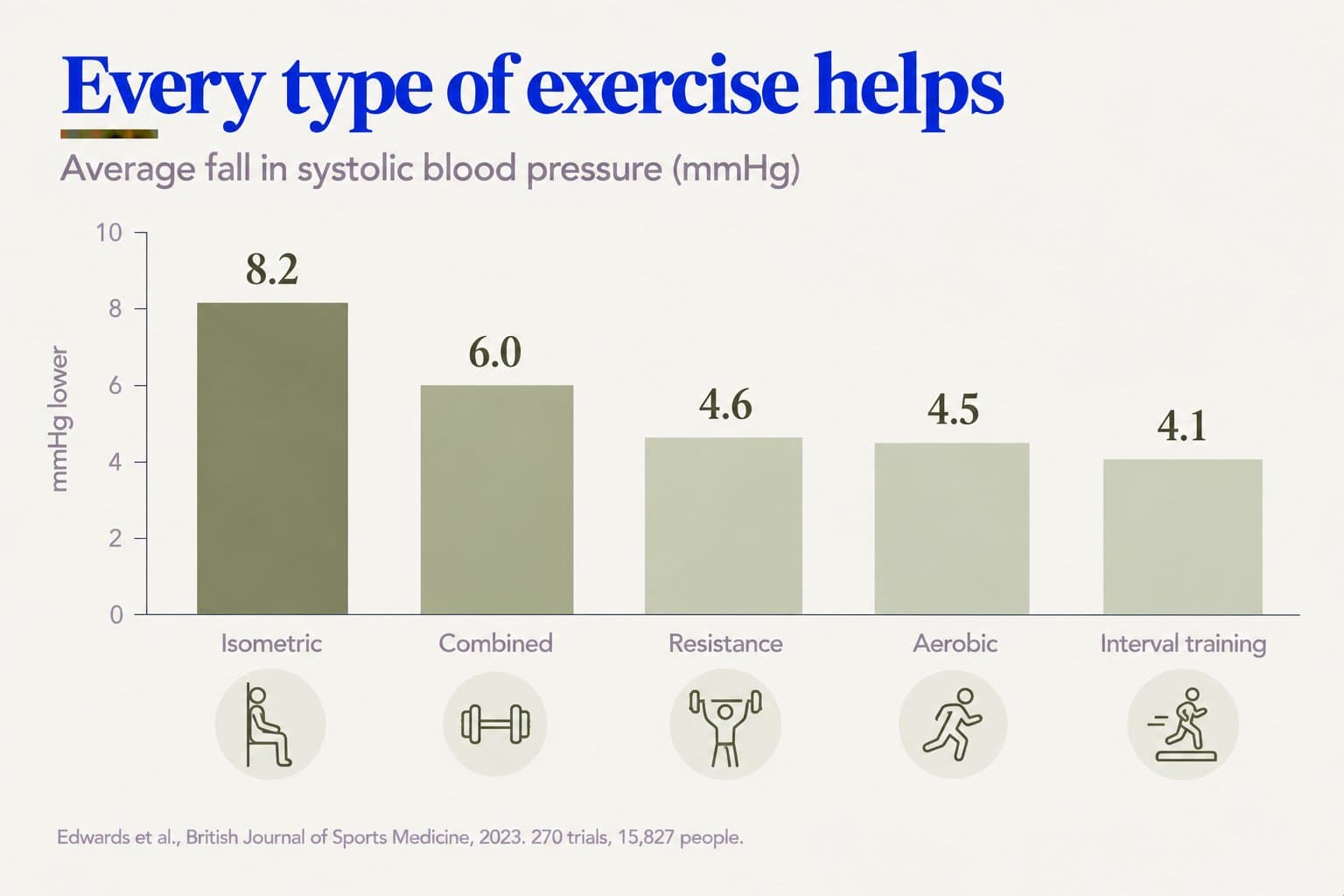
Exercise: all types help, and isometric exercise stands out. A 2023 analysis in the British Journal of Sports Medicine combined 270 trials with 15,827 people. All types of exercise lowered resting blood pressure:
- Isometric exercise (holding a position, such as a wall squat, plank or handgrip): 8.2/4.0 mmHg
- Combined aerobic and resistance training: 6.0/2.5 mmHg
- Dynamic resistance training (weights or bands): 4.6/3.0 mmHg
- Aerobic exercise (walking, cycling, swimming): 4.5/2.5 mmHg
- High-intensity interval training: 4.1/2.5 mmHg
The isometric wall squat was the single most effective exercise for systolic pressure. Isometric programmes usually involve short holds of about 2 minutes, repeated several times, three times a week. Aerobic exercise remains important for overall heart health and fitness (see Zone 2 Training).
Alcohol. Regular heavy drinking raises blood pressure, and cutting back lowers it, with the biggest effect in people who drink more than two drinks a day. Reducing alcohol also lowers the risk of atrial fibrillation (see Atrial Fibrillation).
Sleep, stress and smoking. Short sleep and untreated sleep apnoea raise blood pressure, so treating them helps (see Sleep and Cardiovascular Health). Stress-reduction techniques such as slow breathing and meditation produce small reductions (see Stress-Reduction Techniques That Work). Smoking doesn't cause lasting high blood pressure in the same way, but it greatly multiplies the damage high blood pressure does to arteries, so stopping is essential.
Practical tips for cutting salt in a Sri Lankan diet
- Cook with less salt and taste before adding more; the palate adjusts within a few weeks.
- Limit high-salt foods such as dried and salted fish, pickles, papadams, processed meats, instant noodles, salted snacks and bottled sauces.
- Watch hidden salt in bread, short eats and restaurant meals.
- Flavour with lime, garlic, ginger, curry leaves, pepper and spices instead of salt.
- Eat more potassium-rich foods: vegetables, leafy greens, fruit such as bananas and papaya, pulses and king coconut water.
Recommendations by scenario
| Scenario | What to prioritise |
|---|---|
| Elevated blood pressure (120-139/70-89) | Salt reduction, DASH-style eating, regular exercise and weight management for 3-6 months, then recheck |
| High blood pressure, not yet on medicine | Lifestyle changes now, but don't delay medicine if your doctor recommends it; many people need both |
| Already on blood pressure medicine | Lifestyle changes add to the effect and may allow fewer or lower doses; don't stop medicines without advice |
| Busy, short on time | Add isometric exercise (a few 2-minute wall squats or handgrips, three times a week) and a daily walk |
| Overweight | Aim for 5-10% weight loss; each kilogram lost helps |
| Drink more than two drinks a day | Cut back substantially |
| Kidney disease or on potassium-raising medicines | Ask your doctor before using salt substitutes or increasing potassium |
| Snoring, pauses in breathing or daytime sleepiness | Get checked for sleep apnoea |
Practical notes
Lifestyle changes are powerful: cutting salt and eating a DASH-style diet can lower systolic pressure by more than 10 mmHg, isometric exercise by about 8 mmHg, and losing weight by about 1 mmHg per kilogram. The effects add up, and even small reductions lower the risk of stroke and heart disease (see Hypertension and Longevity). In Sri Lanka, reducing salt and increasing potassium-rich foods is one of the most valuable changes. Monitoring your blood pressure at home shows whether your changes are working (see Home Blood Pressure Monitoring).
- Sacks FM, et al. Effects on blood pressure of reduced dietary sodium and the Dietary Approaches to Stop Hypertension (DASH) diet. New England Journal of Medicine, 2001;344(1):3-10.
- Appel LJ, et al. A clinical trial of the effects of dietary patterns on blood pressure. New England Journal of Medicine, 1997;336(16):1117-1124.
- Neter JE, et al. Influence of weight reduction on blood pressure: a meta-analysis of randomized controlled trials. Hypertension, 2003;42(5):878-884.
- Edwards JJ, et al. Exercise training and resting blood pressure: a large-scale pairwise and network meta-analysis of randomised controlled trials. British Journal of Sports Medicine, 2023;57(20):1317-1326.
- Neal B, et al. Effect of salt substitution on cardiovascular events and death. New England Journal of Medicine, 2021;385(12):1067-1077.
- Jayatissa R, et al. Estimation of salt intake, potassium intake and sodium-to-potassium ratio by 24-hour urinary excretion: an urban-rural study in Sri Lanka. medRxiv, 2020.
Free longevity assessment
Which change could you make
this week to lower your blood pressure?
Take the free Aevum Protocol assessment to see how your cardiovascular & metabolic health and 6 other longevity domains are performing — and get a personalised 90-day plan.
Take the free assessmentKeep reading
Related articles
Cardiovascular & Metabolic Health
Hypertension and Longevity: Why High Blood Pressure Matters and What Lowering It Achieves
Cardiovascular & Metabolic Health
Blood Pressure Explained: What the Numbers Mean and How to Measure It Properly
Cardiovascular & Metabolic Health