Nutrition & Metabolism
The DASH Diet:
Eating to Lower Blood Pressure
DASH stands for Dietary Approaches to Stop Hypertension. Unlike most named diets, it was designed by scientists and tested in carefully controlled feeding trials, with the specific aim of lowering blood pressure. It's rich in vegetables, fruit, whole grains, low-fat dairy, legumes, nuts, fish and poultry, and low in red meat, sweets, sugary drinks, saturated fat and salt. The results are impressive. In the original 1997 DASH trial of 459 adults, the diet lowered blood pressure by 5.5/3.0 mmHg within eight weeks, and by 11.4/5.5 mmHg in people with high blood pressure, without weight loss or salt reduction. When combined with low salt intake in the DASH-Sodium trial, it lowered systolic blood pressure by 11.5 mmHg in people with hypertension, and by about 21 mmHg in those whose systolic pressure started at 150 or more, an effect comparable to or larger than many blood pressure medicines. Large observational studies of nearly a million people link a DASH-style diet with about 20% lower risk of cardiovascular disease, coronary heart disease, stroke and type 2 diabetes. It's safe, flexible and recommended in hypertension guidelines worldwide. For Sri Lankans, whose average salt intake is about double the recommended limit, the salt-reduction part matters especially. This article explains what DASH is, what you eat, what the evidence shows, who should be careful, and how to follow it with Sri Lankan food.
Key numbers
| Finding | Detail |
|---|---|
| Original DASH trial (459 adults, 8 weeks) | Blood pressure 5.5/3.0 mmHg lower vs control; 11.4/5.5 mmHg lower in people with hypertension |
| DASH-Sodium (412 adults) | DASH + 1,500 mg sodium: systolic 11.5 mmHg lower in people with hypertension, 7.1 mmHg lower in those without |
| Starting systolic 150 mmHg or higher | DASH + low sodium lowered systolic pressure by about 21 mmHg |
| Observational studies (15 cohorts, 942,140 people) | About 20% lower cardiovascular disease, 21% coronary heart disease, 19% stroke, 18% diabetes |
| Trials (31 trials, 4,414 people) | Systolic −5.2 mmHg, diastolic −2.6 mmHg, HbA1c −0.53%, weight −1.4 kg |
| Sodium targets | 2,300 mg a day (about 1 teaspoon of salt); 1,500 mg for a greater effect |
What it is
The DASH diet was developed in the 1990s by researchers funded by the US National Heart, Lung, and Blood Institute (NHLBI). Rather than restricting one nutrient, they designed an overall eating pattern rich in nutrients linked to lower blood pressure, particularly potassium, magnesium, calcium, fibre and protein, and low in saturated fat, sugar and salt.
There are two parts:
- The DASH eating pattern: what you eat.
- Sodium reduction: how much salt you eat. The two together have the biggest effect.
DASH doesn't require special foods, supplements or eliminating whole food groups. It's also the basis of the MIND diet, which combines DASH and Mediterranean principles for brain health (see The MIND Diet and Brain Health).
What you eat
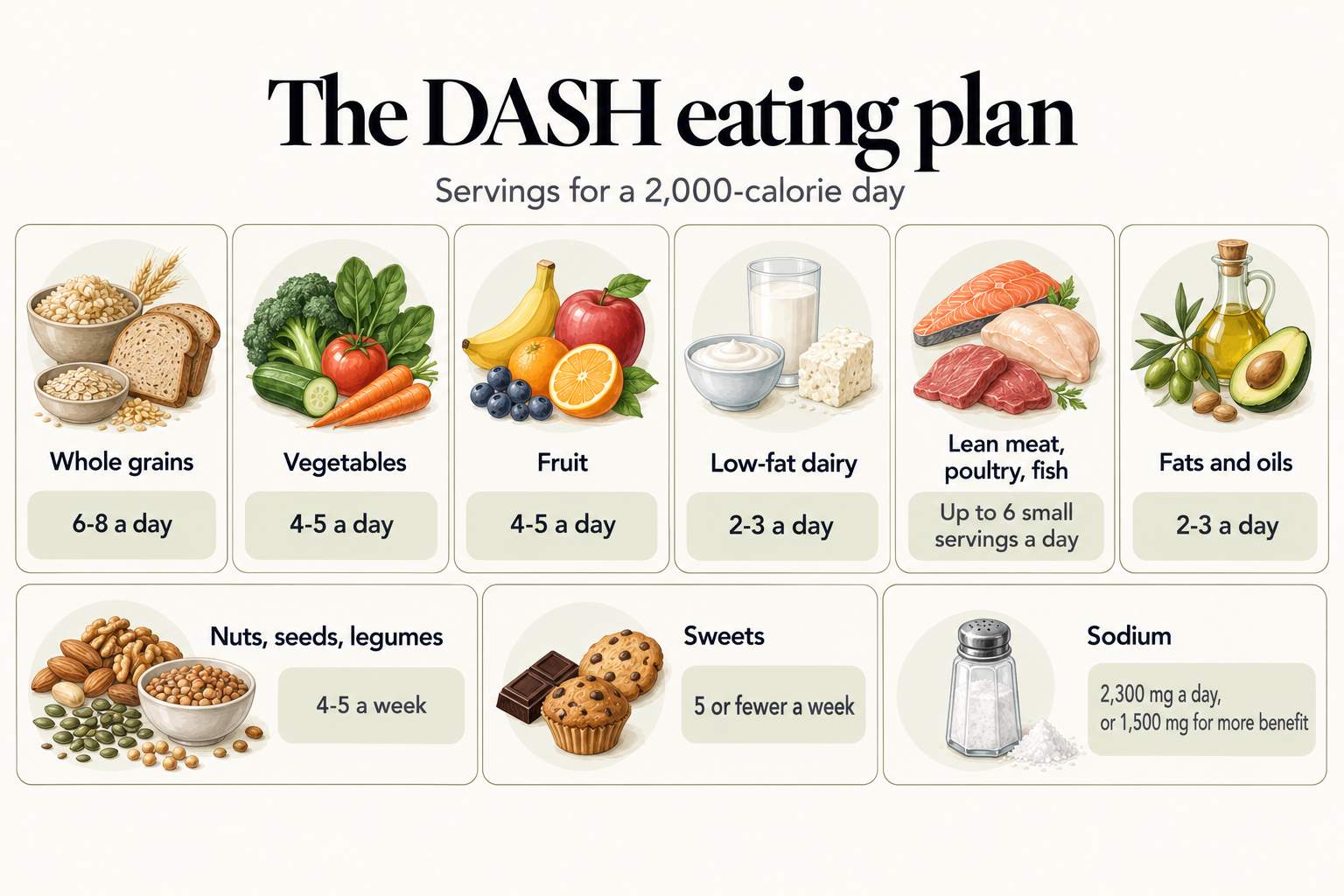
The NHLBI's servings for a 2,000-calorie day:
| Food group | Servings | Examples |
|---|---|---|
| Grains, mostly whole | 6-8 a day | Red or brown rice, whole wheat roti or bread, oats, kurakkan |
| Vegetables | 4-5 a day | Leafy greens, beans, carrots, cabbage, gourds, tomatoes |
| Fruit | 4-5 a day | Banana, papaya, guava, orange, mango |
| Low-fat or fat-free dairy | 2-3 a day | Low-fat milk, curd, yoghurt |
| Lean meat, poultry and fish | 6 or fewer a day (1 serving = about 30 g) | Fish, skinless chicken, eggs |
| Nuts, seeds and legumes | 4-5 a week | Dhal, chickpeas, peanuts, cashews, sesame |
| Fats and oils | 2-3 a day | Vegetable oils, soft margarine |
| Sweets and added sugars | 5 or fewer a week | Jaggery, jam, sweets |
| Sodium | 2,300 mg a day, or 1,500 mg for more benefit | About 1 teaspoon of salt, or less |
The plan recommends limiting fatty meats, full-fat dairy, tropical oils such as coconut and palm oil, sugary drinks and sweets.
How it works
DASH probably lowers blood pressure through several effects working together:
- More potassium: from vegetables, fruit, legumes and dairy, which helps the kidneys excrete sodium and relaxes blood vessels.
- More magnesium and calcium: linked to better blood vessel function.
- Less sodium: salt raises blood pressure by increasing fluid volume and stiffening blood vessels.
- More fibre and less saturated fat: improving cholesterol and blood vessel health.
- Fewer sugary drinks and sweets: helping weight and blood sugar.
Blood pressure falls within about two weeks of starting the diet in feeding trials, and the effect lasts as long as you keep to it.
What the evidence shows
The original DASH trial. In the original DASH trial, published in the New England Journal of Medicine in 1997, 459 adults with blood pressure in the high-normal to stage 1 hypertension range were given all their meals for eight weeks. They were assigned to a typical American diet, a diet rich in fruit and vegetables, or the full DASH "combination" diet. Salt intake and body weight were kept steady. Compared with the control diet, the DASH diet lowered blood pressure by 5.5/3.0 mmHg overall, and by 11.4/5.5 mmHg in people who had hypertension. The fruit-and-vegetable diet alone had about half the effect on systolic pressure.
Adding salt reduction: DASH-Sodium. In the DASH-Sodium trial, published in 2001, 412 adults were assigned to the DASH diet or a typical American diet, and each ate three sodium levels for 30 days each: 3,300 mg (typical US intake), 2,400 mg and 1,500 mg a day. Lowering salt reduced blood pressure on both diets, in men and women, and in people with and without hypertension. In people with hypertension, DASH at the lowest sodium level lowered systolic pressure by 11.5 mmHg compared with the control diet at the highest sodium level; in those without hypertension, by 7.1 mmHg. As lead researcher Frank Sacks put it, the effect was "equal to or greater than the result you would expect from treatment with a single hypertension medication."
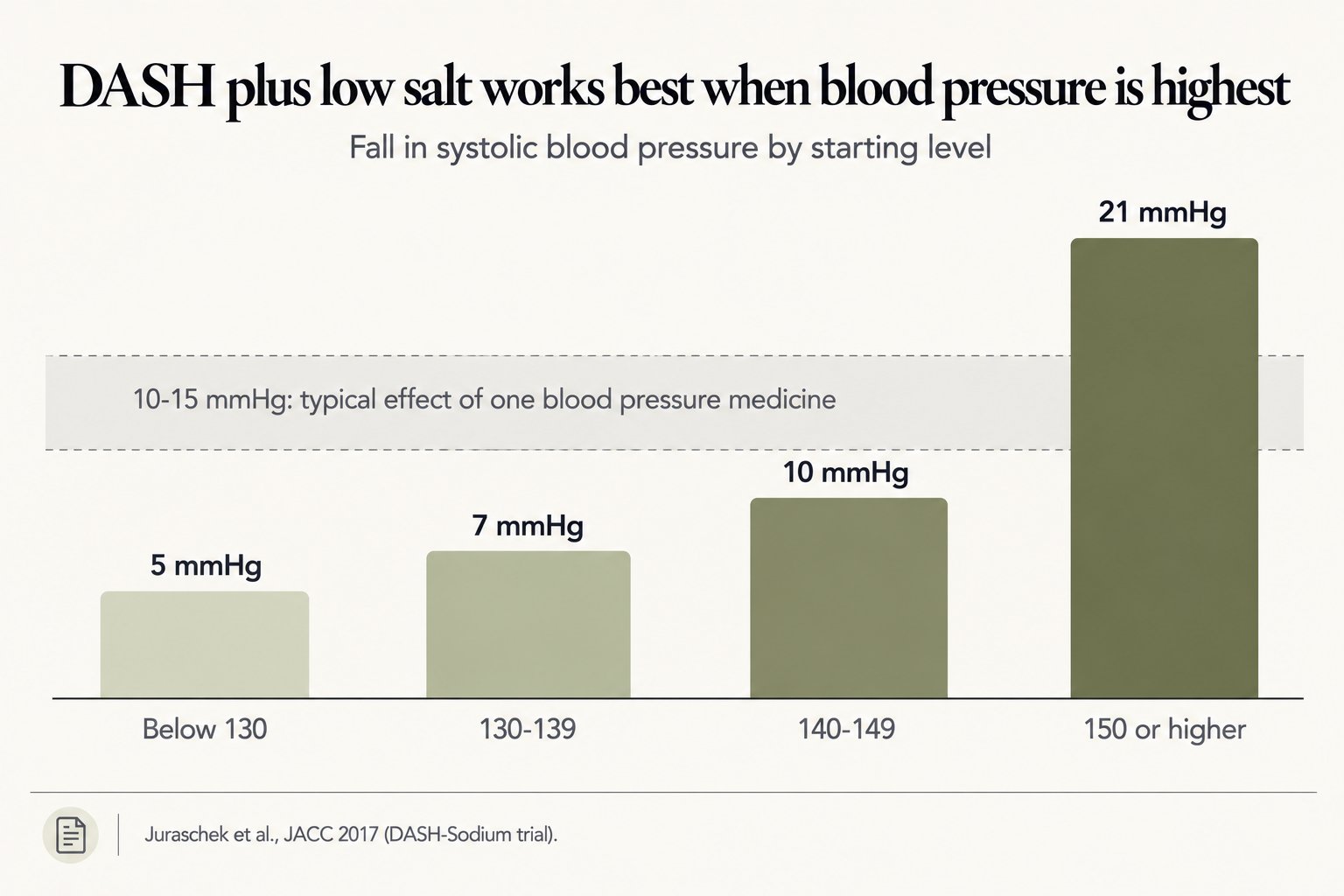
A 2017 reanalysis in the Journal of the American College of Cardiology found that the higher the starting blood pressure, the bigger the effect. In people whose systolic pressure started at 150 mmHg or higher, DASH plus low sodium lowered it by about 21 mmHg, compared with about 5 mmHg in those below 130. Established blood pressure medicines lower systolic pressure by an average of about 10-15 mmHg. The study didn't include people with systolic pressure of 160 or above, heart disease or diabetes treated with medication.
Heart disease, stroke and diabetes. In a 2019 umbrella review in Nutrients, Laura Chiavaroli and colleagues pooled evidence from 15 cohorts with 942,140 people. Those whose diets most closely matched DASH had about 20% lower risk of cardiovascular disease, 21% lower risk of coronary heart disease, 19% lower risk of stroke and 18% lower risk of type 2 diabetes. In 31 controlled trials with 4,414 participants, DASH lowered systolic blood pressure by 5.2 mmHg, diastolic by 2.6 mmHg, LDL cholesterol slightly, HbA1c by 0.53% and body weight by 1.4 kg. The authors rated the certainty of evidence as moderate for blood pressure and low for cardiovascular disease.
Guidelines. The DASH diet is recommended in major hypertension guidelines, including the 2025 American Heart Association/American College of Cardiology guideline and the 2024 European Society of Cardiology guideline, alongside salt reduction, weight loss, physical activity and limiting alcohol (see Hypertension: A Complete Guide).
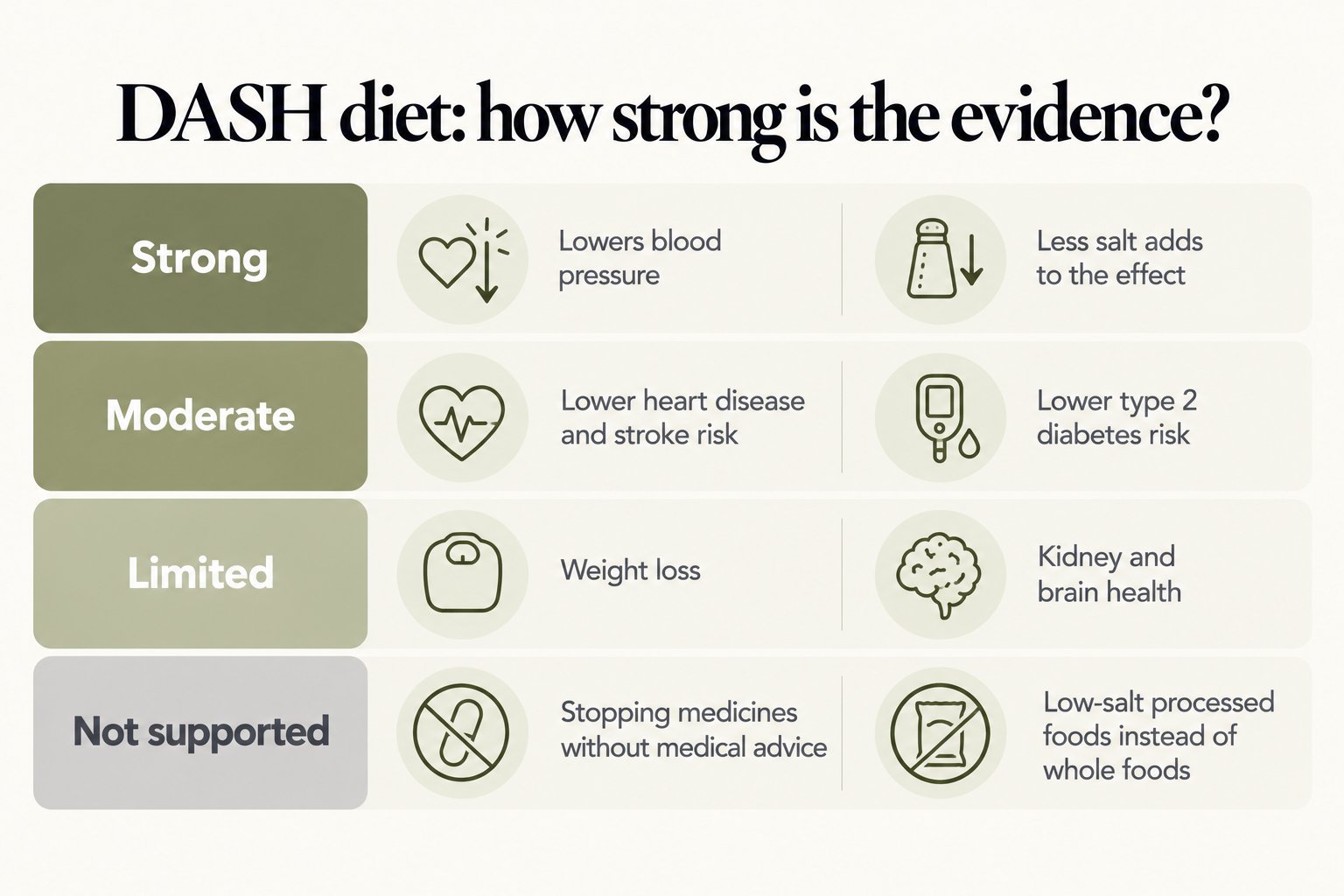
Evidence strength
Strong.
- Lowers blood pressure: well-controlled feeding trials, with larger effects in people with hypertension.
- Salt reduction adds to the effect.
Moderate.
- Lower risk of cardiovascular disease, heart disease and stroke: consistent observational studies, supported by its effects on blood pressure and cholesterol.
- Lower risk of type 2 diabetes and modest improvements in blood sugar.
Limited.
- Weight loss: modest; DASH isn't designed as a weight-loss diet unless calories are reduced.
- Kidney protection and brain health: promising but less studied.
Not supported.
- Replacing blood pressure medicines without medical advice: some people may reduce medication, but only under a doctor's supervision.
- "Low-salt" processed foods as a substitute for whole foods.
Important limitations.
- The landmark trials provided all meals; following DASH in everyday life is harder, and real-world effects are often smaller.
- Most trials were done in the US; there's little research in South Asian populations.
- DASH's emphasis on low-fat dairy and Western foods needs adapting to local diets.
Risks and who should be careful
DASH is safe for almost everyone, including children, pregnant women and older adults. Points to watch:
- Kidney disease: DASH is high in potassium and phosphorus. People with moderate to advanced chronic kidney disease should follow individual advice from their doctor or dietitian (see Kidney Health and Cardiometabolic Risk).
- Medicines that raise potassium: such as ACE inhibitors (e.g. enalapril), angiotensin receptor blockers (e.g. losartan) and spironolactone. Ask your doctor whether your potassium needs checking, and don't use potassium-based salt substitutes without advice.
- Blood pressure medicines: if your blood pressure falls substantially, your doctor may need to adjust your medicines. Don't stop them on your own.
- Digestive upset: increase fruit, vegetables and fibre gradually, with plenty of water.
- Dairy: if you're lactose intolerant, choose curd, yoghurt or lactose-free milk.
A Sri Lankan version
Sri Lankan food can fit DASH well, but salt is the biggest challenge. Most Sri Lankans eat more than the WHO limit of 5 g of salt a day, about 2,000 mg of sodium, and average intake is roughly double the limit. Much of it comes from:
- Salt added during cooking and at the table.
- Dried and salted fish (karawala), Maldive fish and salted sprats.
- Pickles, chutneys, lunu miris and papadam.
- Bread, buns and bakery items.
- Short eats, instant noodles, packet soups and snacks.
- Soy sauce, stock cubes and ready-made curry mixes.
- Processed meats such as sausages.
Practical DASH swaps for Sri Lankan meals:
- Vegetables at every meal: two or more vegetable curries, mallung or salads with rice.
- Fruit daily: banana, papaya, guava, orange or seasonal fruit instead of sweets.
- Whole grains: red or brown rice, kurakkan, whole wheat roti, oats.
- Legumes and nuts: dhal, chickpeas, mung beans, cowpeas and a handful of unsalted peanuts or cashews.
- Protein: fresh fish, skinless chicken and eggs instead of dried fish or processed meats.
- Dairy: low-fat milk, curd and yoghurt.
- Fats: use coconut milk and coconut oil sparingly; prefer vegetable oils for cooking.
- Flavour without salt: use lime, goraka, garlic, ginger, curry leaves, pandan, pepper, chilli, cinnamon and other spices.
- Reduce salt gradually: taste buds adapt within a few weeks.
See Lowering Blood Pressure Without Medication for more ways to bring your blood pressure down.
Why this matters for longevity
High blood pressure is the world's leading risk factor for death, mainly through heart attacks, strokes, heart failure and kidney disease, and it's common in Sri Lanka. DASH is one of the few diets proven in controlled trials to lower it, sometimes as much as a medicine, and it's linked to lower risk of heart disease, stroke and diabetes. Its principles, more vegetables, fruit, legumes and whole grains, less salt, sugar and processed food, are shared by every healthy eating pattern, and it can be followed for life.
Recommendations by situation
| Situation | What to consider |
|---|---|
| High-normal blood pressure | DASH and salt reduction may prevent hypertension |
| Hypertension, not yet on medicine | DASH plus low salt can lower blood pressure substantially; follow up with your doctor |
| Hypertension on medicine | Continue your medicines; DASH adds to their effect and may allow dose reduction under supervision |
| Prediabetes or type 2 diabetes | DASH is suitable; watch rice and fruit portions |
| Chronic kidney disease | Get individual advice on potassium, phosphorus and protein |
| On ACE inhibitors, ARBs or spironolactone | Ask about potassium checks; avoid potassium salt substitutes without advice |
| Pregnant | DASH-style eating is safe; don't restrict calories |
| Healthy adult wanting to eat for longevity | DASH or Mediterranean-style eating are both excellent choices |
Practical notes
Start with salt: stop adding salt at the table, use less in cooking, and cut down on dried fish, pickles, papadam, bread, short eats and instant noodles. Then add a vegetable and a fruit serving to every meal, switch to red or brown rice, have dhal or another legume daily and choose fresh fish or chicken over processed meats. Check your blood pressure at home before and after a few weeks to see the difference (see Home Blood Pressure Monitoring). If you have kidney disease or take blood pressure medicines, talk to your doctor before making big changes. Our Longevity Doctors can measure your blood pressure accurately, assess your heart and kidney health and help you build a DASH-style eating plan around Sri Lankan food, starting with the free longevity assessment.
- Appel LJ, et al. A clinical trial of the effects of dietary patterns on blood pressure. New England Journal of Medicine, 1997;336(16):1117-1124.
- Sacks FM, et al. Effects on blood pressure of reduced dietary sodium and the Dietary Approaches to Stop Hypertension (DASH) diet. New England Journal of Medicine, 2001;344(1):3-10.
- Juraschek SP, et al. Effects of sodium reduction and the DASH diet in relation to baseline blood pressure. Journal of the American College of Cardiology, 2017;70(23):2841-2848.
- Chiavaroli L, et al. DASH dietary pattern and cardiometabolic outcomes: an umbrella review of systematic reviews and meta-analyses. Nutrients, 2019;11(2):338.
- National Heart, Lung, and Blood Institute. DASH Eating Plan.
- World Health Organization. Salt reduction in Sri Lanka.
Free longevity assessment
Want to lower your blood pressure
through what you eat?
Take the free Aevum Protocol assessment to see how your nutrition & metabolism and 6 other longevity domains are performing — and get a personalised 90-day plan.
Take the free assessmentKeep reading
Related articles
Cardiovascular & Metabolic Health
Hypertension: A Complete Guide to Diagnosis, Types and Treatment Based on the Latest Guidelines
Cardiovascular & Metabolic Health
Lowering Blood Pressure Without Medication: A Practical, Evidence-Based Guide
Nutrition & Metabolism