Cardiovascular & Metabolic Health
Hypertension: A Complete Guide
to Diagnosis, Types and Treatment Based on the Latest Guidelines
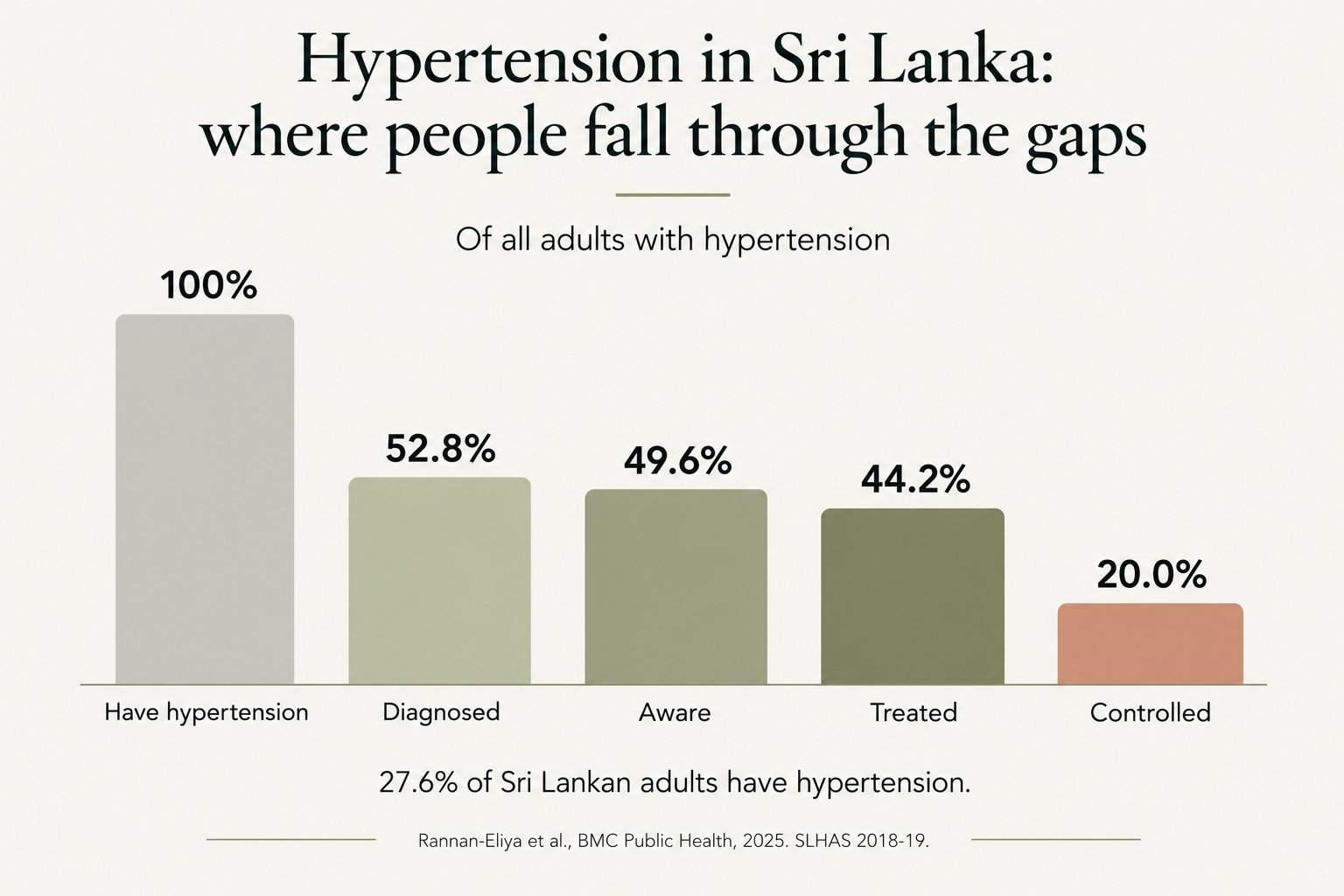
High blood pressure (hypertension) is the world's leading treatable cause of heart attack, stroke, heart failure, kidney disease and dementia, yet it usually causes no symptoms. The World Health Organization estimates that 1.4 billion people had hypertension in 2024, and only about one in five had it under control. In Sri Lanka, a nationally representative study found that 27.6% of adults had hypertension, but only half knew about it and just 20.0% had it controlled. Two major guidelines now shape care. The 2025 American Heart Association and American College of Cardiology (AHA/ACC) guideline defines hypertension as 130/80 mmHg or above, uses the new PREVENT calculator to decide when to start medicines, and sets a target below 130/80 for almost all adults, with below 120 systolic encouraged where safe. The 2024 European Society of Cardiology (ESC) guideline defines hypertension as 140/90 or above, adds a new "elevated blood pressure" category from 120/70, and recommends a systolic target of 120-129 mmHg for most treated adults. Both now recommend confirming the diagnosis with home or 24-hour readings, starting most people with two medicines in a single pill, checking for hidden causes such as primary aldosteronism, and combining treatment with lifestyle change. Every 10 mmHg reduction in systolic pressure cuts major cardiovascular events by about 20%. This guide explains how hypertension is diagnosed, its types and causes, the tests you need, and every treatment option, from salt and exercise to medicines and newer procedures.
Key numbers
| Measure | Detail |
|---|---|
| Global burden (WHO, 2025) | 1.4 billion adults; only about 1 in 5 controlled |
| Sri Lanka (SLHAS, 2018-19) | 27.6% of adults; 49.6% aware, 44.2% treated, 20.0% controlled |
| Hypertension (AHA/ACC 2025) | 130/80 mmHg or above (stage 1: 130-139/80-89; stage 2: 140/90 or above) |
| Hypertension (ESC 2024) | 140/90 mmHg or above; "elevated" 120-139/70-89 |
| Home blood pressure threshold (ESC, ISH) | Average 135/85 mmHg or above |
| Treatment target | Below 130/80 (AHA/ACC); systolic 120-129 (ESC) if tolerated |
| Benefit of treatment | Each 10 mmHg lower systolic: about 20% fewer major cardiovascular events, 27% fewer strokes, 13% fewer deaths |
| Severe hypertension | Above 180/120 mmHg (AHA/ACC); emergency if organ damage is present |
What blood pressure is and why it rises
Blood pressure is the force of blood against the walls of your arteries. The top number (systolic) is the pressure when the heart contracts; the bottom number (diastolic) is the pressure when it relaxes between beats. It's measured in millimetres of mercury (mmHg).
Blood pressure depends on how much blood the heart pumps and how much the arteries resist that flow. Over time, several systems push it up: stiffening of the arteries with age, excess salt and too little potassium, extra body weight, overactivity of the hormone system that controls salt and water (the renin-angiotensin-aldosterone system), increased activity of the "fight or flight" nervous system, poor sleep, alcohol, and genes. In about 90% of people, no single cause is found; this is called primary or essential hypertension (see Blood Pressure Explained).
High pressure damages the inner lining of arteries, speeds up atherosclerosis and forces the heart to work harder. A large meta-analysis of 123 trials found that every 10 mmHg reduction in systolic pressure lowered major cardiovascular events by 20%, coronary heart disease by 17%, stroke by 27%, heart failure by 28% and death from any cause by 13% (see Hypertension and Longevity).
How hypertension is defined: the two main guidelines
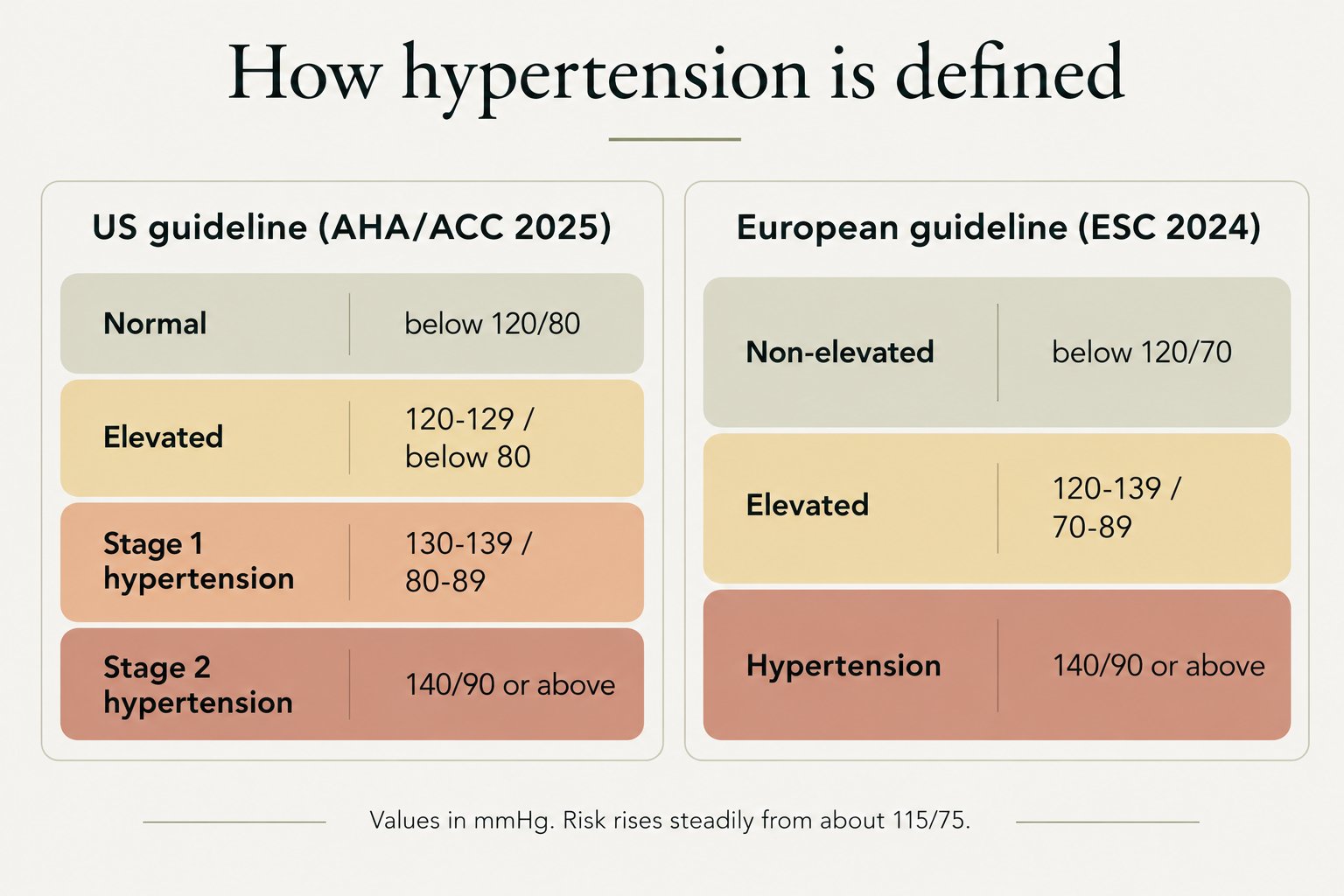
The two most widely used guidelines classify blood pressure differently, although their treatment advice has moved closer together.
AHA/ACC 2025 (United States)
| Category | Systolic | And/or | Diastolic |
|---|---|---|---|
| Normal | Below 120 | and | Below 80 |
| Elevated | 120-129 | and | Below 80 |
| Stage 1 hypertension | 130-139 | or | 80-89 |
| Stage 2 hypertension | 140 or above | or | 90 or above |
ESC 2024 (Europe)
| Category | Systolic | And/or | Diastolic |
|---|---|---|---|
| Non-elevated | Below 120 | and | Below 70 |
| Elevated | 120-139 | or | 70-89 |
| Hypertension | 140 or above | or | 90 or above |
The European guideline dropped the older grades 1-3 and introduced "elevated blood pressure" to reflect the fact that risk rises steadily from about 115/75 mmHg, with no sharp cut-off. The International Society of Hypertension (2020) also uses 140/90. Many doctors in Sri Lanka also use the 140/90 threshold, but the key message from all guidelines is the same: risk starts well below 140/90, and the decision to treat depends on your overall cardiovascular risk as well as the numbers.
How hypertension is diagnosed
Measuring blood pressure correctly. A single high reading doesn't mean you have hypertension. Readings vary from minute to minute and are easily raised by poor technique. Both guidelines stress correct measurement:
- 1. Avoid caffeine, smoking and exercise for 30 minutes beforehand, and empty your bladder.
- 2. Sit quietly for 5 minutes, with your back supported, feet flat on the floor and legs uncrossed.
- 3. Rest your arm on a table at heart level, with the cuff on a bare upper arm.
- 4. Use a validated upper-arm device with the correct cuff size; a cuff that's too small gives falsely high readings.
- 5. Don't talk during the reading.
- 6. Take at least two readings, about one minute apart, and use the average. At the first visit, measure both arms and use the arm with the higher reading from then on.
The AHA/ACC guideline classifies blood pressure using the average of at least two careful readings on at least two separate occasions. Cuffless devices such as smartwatches aren't yet accurate enough to diagnose or manage hypertension. In people with atrial fibrillation, the ESC recommends manual measurement, because most automatic devices aren't validated for an irregular heartbeat.
Confirming the diagnosis outside the clinic. Both guidelines recommend confirming hypertension with out-of-office readings when possible, because up to one in three people have different readings at home and in the clinic. There are two methods:
- Home blood pressure monitoring: two readings, one minute apart, in the morning and evening for 3-7 days (see Home Blood Pressure Monitoring).
- 24-hour ambulatory monitoring: a portable cuff that measures every 15-30 minutes over a day and night, including during sleep. It's the most accurate method.
Out-of-office readings run slightly lower than clinic readings, so the thresholds differ. According to the International Society of Hypertension, hypertension is diagnosed when:
| Method | Threshold |
|---|---|
| Clinic (ESC, ISH) | 140/90 mmHg or above |
| Home average | 135/85 mmHg or above |
| 24-hour ambulatory average | 130/80 mmHg or above |
| Daytime ambulatory average | 135/85 mmHg or above |
| Night-time ambulatory average | 120/70 mmHg or above |
US guidelines use lower out-of-office thresholds to match their 130/80 definition, so ask your doctor which targets apply to you.
When to screen. The ESC recommends checking blood pressure at least every 3 years before age 40, and every year from 40 or if your blood pressure is in the elevated range. In Sri Lanka, free Healthy Lifestyle Centres check blood pressure for adults over 35 (see Health Screening by Age).
Types of hypertension
By cause.
- Primary (essential) hypertension: about 90% of cases, with no single identifiable cause. It reflects a mix of genes, ageing, weight, salt, alcohol, inactivity, stress and sleep.
- Secondary hypertension: up to 10% of cases, caused by a specific, often treatable, condition (see below).
By pattern of readings.
- Sustained hypertension: high both in the clinic and at home.
- White-coat hypertension: high in the clinic but normal at home. It may still carry a slightly higher risk than normal blood pressure and should be monitored.
- Masked hypertension: normal in the clinic but high at home. It carries a risk similar to sustained hypertension, and is often missed. It's more common in people who smoke, drink alcohol, are stressed at work or have diabetes or kidney disease.
- Nocturnal hypertension and "non-dipping": blood pressure normally falls by 10-20% during sleep. When it doesn't, risk is higher. This is common with sleep apnoea, kidney disease and diabetes, and can only be detected with 24-hour monitoring.
By which number is raised.
- Isolated systolic hypertension: a high top number with a normal bottom number. It's the most common form in older adults, reflecting stiffening of the large arteries, and it's as important to treat as other forms.
- Isolated diastolic hypertension: a high bottom number only, more common in younger adults.
By severity and response to treatment.
- Resistant hypertension: blood pressure that remains above target despite three medicines of different classes, including a diuretic, at maximum tolerated doses. The ESC definition is blood pressure of 140/90 or above on a diuretic, a renin-angiotensin system blocker and a calcium channel blocker, confirmed with out-of-office readings after excluding "pseudo-resistance" (poor technique, white-coat effect or not taking medicines).
- Severe hypertension: above 180/120 mmHg without signs of acute organ damage. The 2025 AHA/ACC guideline replaced the older term "hypertensive urgency" with this term.
- Hypertensive emergency: very high blood pressure with acute organ damage, such as stroke, heart attack, acute heart failure, aortic dissection, sudden kidney injury, or confusion and severe headache (hypertensive encephalopathy). This needs emergency hospital care.
Hypertension in pregnancy.
- Chronic hypertension: present before pregnancy or diagnosed before 20 weeks.
- Gestational hypertension: new hypertension after 20 weeks.
- Pre-eclampsia: hypertension after 20 weeks with protein in the urine or signs of organ involvement. It can be dangerous for mother and baby.
Secondary hypertension: hidden causes worth finding
A secondary cause is more likely if hypertension starts before age 30-40, comes on suddenly, is severe or resistant to treatment, causes more organ damage than expected, or comes with low potassium. The ESC recommends screening for secondary causes in adults diagnosed before 40 and, in young adults with obesity, checking first for sleep apnoea.
| Cause | Clues | Key test |
|---|---|---|
| Primary aldosteronism | Resistant hypertension, low potassium, adrenal nodule, sleep apnoea | Aldosterone-renin ratio |
| Obstructive sleep apnoea | Snoring, daytime sleepiness, obesity, night-time hypertension | Sleep study |
| Chronic kidney disease | Abnormal creatinine, protein in urine | eGFR, urine albumin |
| Renal artery stenosis | Sudden onset, worsening kidney function on ACE inhibitors, young women (fibromuscular dysplasia) | Kidney artery imaging |
| Medicines and substances | Painkillers (NSAIDs), decongestants, steroids, some contraceptive pills, stimulants, liquorice, alcohol | Medication review |
| Thyroid disease | Weight change, palpitations, heat or cold intolerance | Thyroid function |
| Phaeochromocytoma | Episodes of headache, sweating and palpitations | Plasma or urine metanephrines |
| Cushing's syndrome | Weight gain, purple stretch marks, easy bruising | Cortisol tests |
| Coarctation of the aorta | Young age, weak leg pulses | Echocardiogram |
Primary aldosteronism deserves special attention. It happens when the adrenal glands make too much aldosterone, causing salt retention. It's far more common than once thought, and it causes more heart and kidney damage than primary hypertension at the same blood pressure, yet it's often curable with surgery or treatable with a targeted medicine. The ESC recommends screening for it in all adults with confirmed hypertension. The 2025 AHA/ACC guideline recommends screening everyone with resistant hypertension, whether or not their potassium is low, and widens screening to people with unexplained low potassium, sleep apnoea, an adrenal nodule, a family history of early hypertension or stroke before age 40. Most blood pressure medicines can be continued during the initial screening test, except mineralocorticoid receptor antagonists such as spironolactone, so testing doesn't need to be delayed.
The initial assessment
Once hypertension is confirmed, the aim is to check for organ damage, estimate overall cardiovascular risk and look for secondary causes. A standard assessment includes:
- History: symptoms, family history, smoking, alcohol, diet, sleep and snoring, medicines and supplements, pregnancy history in women (pre-eclampsia and gestational diabetes increase later risk).
- Examination: weight, waist size, heart and pulse, signs of secondary causes, and the back of the eyes when indicated.
- Blood tests: sodium, potassium, creatinine and estimated glomerular filtration rate (eGFR), fasting glucose or HbA1c, a lipid profile, and often thyroid function, calcium, uric acid and a full blood count.
- Urine tests: urinalysis and the urine albumin-to-creatinine ratio (UACR). The 2025 AHA/ACC guideline now recommends UACR for everyone with hypertension, because albumin in the urine is an early sign of kidney and blood vessel damage.
- ECG: to check for an enlarged heart muscle (left ventricular hypertrophy), rhythm problems such as atrial fibrillation, and signs of previous heart damage.
- Further tests when indicated: echocardiogram, 24-hour monitoring and tests for secondary causes.
Estimating cardiovascular risk. Treatment decisions for people with mildly raised blood pressure depend on overall risk. The 2025 AHA/ACC guideline uses the PREVENT calculator, which estimates 10-year risk of heart attack, stroke and heart failure, and includes kidney function. The ESC uses SCORE2 (and SCORE2-OP for people 70 and over). South Asians have higher cardiovascular risk than these calculators may estimate, so family history, diabetes and other risk factors should also be considered (see Cardiovascular Risk Scores and Heart Age and South Asian Cardiovascular Risk).
When to start medicines
AHA/ACC 2025.
- Stage 2 hypertension (140/90 or above): start medicines alongside lifestyle changes.
- Stage 1 hypertension (130-139/80-89) with cardiovascular disease, diabetes, chronic kidney disease or a 10-year PREVENT risk of 7.5% or more: start medicines alongside lifestyle changes.
- Stage 1 with a PREVENT risk below 7.5%: try lifestyle changes for 3-6 months, then start medicines if blood pressure remains 130/80 or above.
- Elevated blood pressure (120-129/below 80): lifestyle changes.
ESC 2024.
- Hypertension (140/90 or above): start medicines alongside lifestyle changes.
- Elevated blood pressure with systolic 130-139: after 3 months of lifestyle changes, start medicines if you have established cardiovascular disease, diabetes, chronic kidney disease or organ damage, a 10-year SCORE2 risk above 10%, or a risk of 5-10% plus risk modifiers. Risk modifiers include South Asian or other high-risk ethnicity, a family history of early heart disease, pregnancy complications, autoimmune inflammatory disease, HIV, severe mental illness and socioeconomic deprivation.
- Elevated blood pressure at lower risk: lifestyle changes and regular monitoring.
Treatment targets
- AHA/ACC 2025: below 130/80 mmHg for all adults, with systolic below 120 encouraged where it can be achieved safely. A systolic target below 130 is recommended specifically to lower the risk of mild cognitive impairment and dementia.
- ESC 2024: systolic 120-129 mmHg (and ideally diastolic 70-79) for most treated adults, if well tolerated. When this isn't tolerated, the aim is "as low as reasonably achievable". More lenient targets (for example, below 140/90) may be appropriate for people aged 85 and over, frail people, those with symptomatic drops in blood pressure on standing, or limited life expectancy.
The evidence behind lower targets.
- SPRINT (US, 2015): in high-risk adults without diabetes, targeting systolic below 120 rather than below 140 reduced major cardiovascular events by about 25% and deaths by about 27%.
- ESPRIT (China, 2024): in 11,255 high-risk adults aged 50 and over, targeting below 120 (achieved 119 mmHg) versus below 140 (achieved 135) reduced major cardiovascular events by 12% and cardiovascular deaths by 39% over 3.4 years. Fainting was slightly more common (0.4% vs 0.1%).
- BPROAD (China, 2025): in 12,821 adults with type 2 diabetes, targeting below 120 reduced major cardiovascular events by 21% over 4.2 years, with no increase in serious side effects.
Treatment option 1: lifestyle changes
Lifestyle changes are recommended for everyone with raised blood pressure, whether or not they take medicines. Several have effects comparable to a single medicine (see Lowering Blood Pressure Without Medication).
- Reduce salt: the ESC recommends less than 2 g of sodium (about 5 g of salt, one level teaspoon) a day. Sri Lankans eat about 8.3 g a day on average. In the DASH-Sodium trial, a low-salt DASH diet lowered systolic pressure by 11.5 mmHg in people with hypertension.
- Use a potassium-enriched salt substitute: both guidelines support this, unless you have kidney disease or take medicines that raise potassium. In the SSaSS trial of 20,995 people, a salt substitute reduced strokes, major cardiovascular events and deaths.
- Eat more potassium-rich foods: vegetables, fruit, legumes and nuts, as in the DASH and Mediterranean diets.
- Lose excess weight: blood pressure falls by about 1 mmHg per kilogram lost. The AHA/ACC guideline suggests a goal of at least 5% weight loss if you're overweight, and says GLP-1 medicines may be considered for some people with hypertension and obesity. The ESC suggests a waist below 94 cm for men and 80 cm for women.
- Exercise: at least 150 minutes a week of moderate aerobic activity, plus resistance training two to three times a week. In a meta-analysis of 270 trials, isometric exercise such as wall squats and handgrip lowered systolic pressure by 8.2 mmHg, aerobic exercise by 4.5 and resistance training by 4.6.
- Cut down or stop alcohol: both guidelines recommend reducing or avoiding it; the ESC advises avoiding alcohol altogether.
- Stop smoking: it doesn't cause sustained hypertension, but it greatly multiplies cardiovascular risk.
- Sleep and stress: treat sleep apnoea, aim for seven or more hours of sleep, and manage stress.
Treatment option 2: medicines
First-line medicines. Both guidelines recommend three main classes as first choice for most people:
| Class | Examples | How it works | Common side effects |
|---|---|---|---|
| ACE inhibitors | Enalapril, perindopril, ramipril | Block the hormone system that narrows arteries and retains salt | Dry cough, raised potassium, rarely facial swelling |
| Angiotensin receptor blockers (ARBs) | Losartan, telmisartan, valsartan, olmesartan | Block the same system further down | Raised potassium, dizziness |
| Calcium channel blockers (dihydropyridine) | Amlodipine, nifedipine (long-acting), cilnidipine | Relax artery walls | Ankle swelling, flushing, headache |
| Thiazide-type and thiazide-like diuretics | Indapamide, chlorthalidone, hydrochlorothiazide | Help the kidneys remove salt and water | Low potassium or sodium, raised blood sugar or uric acid, more urination |
ACE inhibitors and ARBs shouldn't be combined, and both must be avoided in pregnancy. Long-acting, once-daily medicines are preferred.
Other medicines.
- Beta-blockers (bisoprolol, metoprolol, carvedilol, nebivolol): not first-line for hypertension alone, but used at any step when there's a specific reason, such as angina, a previous heart attack, heart failure with reduced pumping function, or atrial fibrillation.
- Mineralocorticoid receptor antagonists (spironolactone, eplerenone): the preferred fourth medicine for resistant hypertension, and treatment for primary aldosteronism.
- Others for resistant hypertension: amiloride, alpha-blockers (doxazosin), centrally acting drugs (methyldopa, clonidine, moxonidine), direct vasodilators (hydralazine, minoxidil) and, in the AHA/ACC guideline, the dual endothelin receptor antagonist aprocitentan.
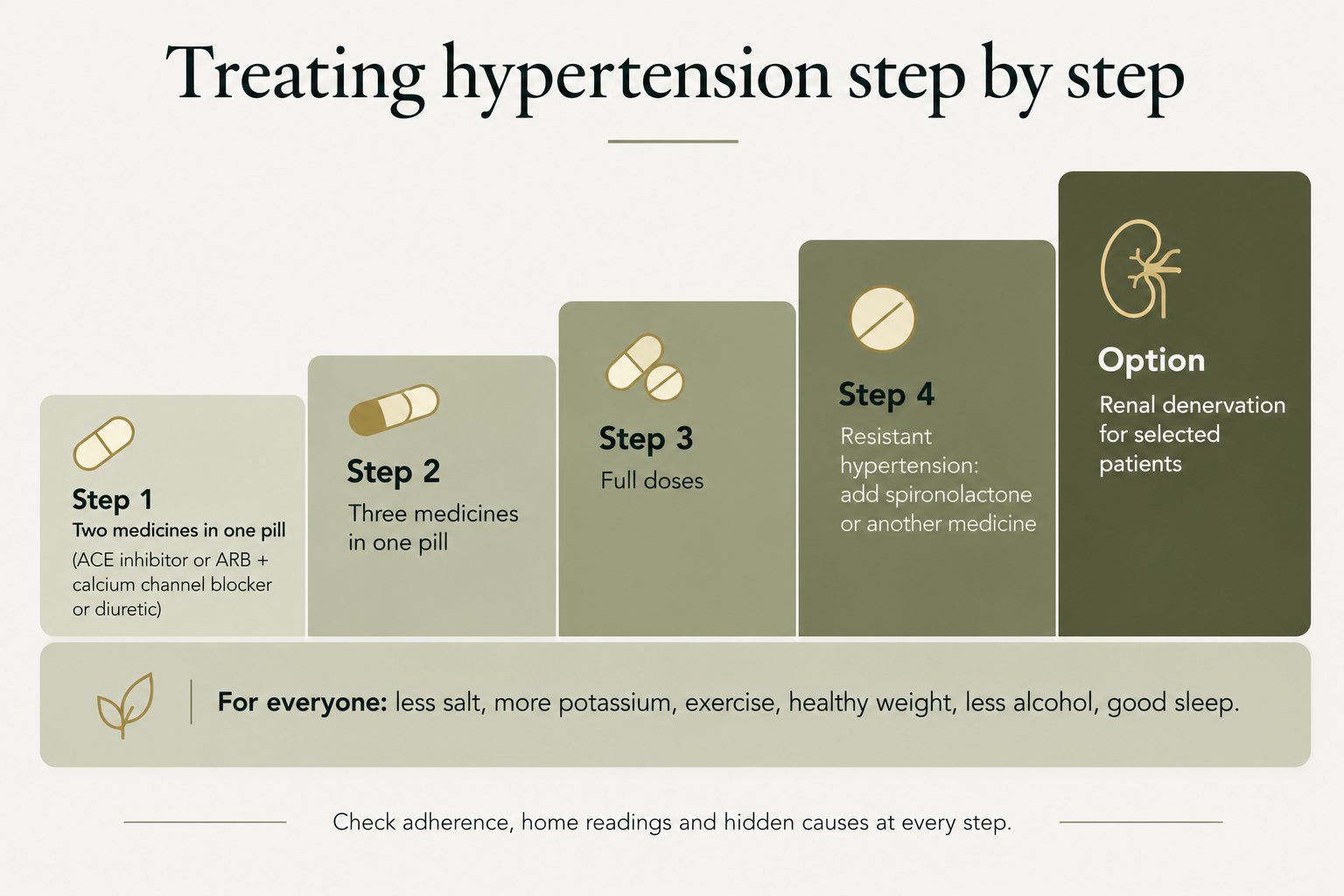
How treatment is started and stepped up. The biggest change in recent guidelines is starting with two medicines in one pill for most people, rather than one medicine at a time. This lowers blood pressure faster, causes fewer side effects than a single medicine at high dose, and makes it easier to take treatment every day.
- Step 1: a low-dose combination of an ACE inhibitor or ARB plus either a calcium channel blocker or a diuretic, ideally as a single pill. The ESC recommends this for most people; the AHA/ACC recommends it for stage 2 hypertension, while a single medicine is reasonable for stage 1. One medicine may be appropriate for people aged 85 and over, frail people, those at risk of fainting or those with only mildly raised blood pressure.
- Step 2: a three-drug combination: ACE inhibitor or ARB, plus calcium channel blocker, plus thiazide-like diuretic, ideally as a single pill.
- Step 3: increase to full doses.
- Step 4 (resistant hypertension): check adherence, technique and secondary causes, then add spironolactone (the AHA/ACC suggests this if eGFR is 45 or above and potassium allows) or another option above.
The ESC recommends follow-up every 1-3 months (ideally monthly) until blood pressure is controlled, then at least yearly. Medicines usually need to be continued long-term; stopping them typically lets blood pressure rise again.
Choosing medicines for specific conditions
| Condition | Preferred approach |
|---|---|
| Diabetes with albumin in the urine | ACE inhibitor or ARB; target below 130/80 |
| Chronic kidney disease | ACE inhibitor or ARB; avoid salt substitutes and watch potassium |
| Coronary heart disease or previous heart attack | Beta-blocker plus ACE inhibitor or ARB |
| Heart failure with reduced pumping | ACE inhibitor, ARB or sacubitril-valsartan, beta-blocker, spironolactone and an SGLT2 inhibitor |
| Atrial fibrillation | Beta-blocker or rate-limiting medicine as part of the combination |
| Previous stroke | Combination therapy; target below 130/80 |
| Gout | Prefer losartan or a calcium channel blocker; diuretics can trigger gout |
| Pregnancy or planning pregnancy | Labetalol, long-acting nifedipine or methyldopa; avoid ACE inhibitors and ARBs |
| Older and frail adults | Start low, go slow, and check for drops in blood pressure on standing |
Treatment option 3: renal denervation
Renal denervation is a minimally invasive procedure that uses a catheter, passed through an artery in the groin, to deliver energy that calms the overactive nerves around the kidney arteries. In sham-controlled trials, it lowered office systolic pressure by about 6 mmHg and 24-hour systolic pressure by about 4 mmHg more than a placebo procedure. The ESC says it may be considered for resistant hypertension, or for uncontrolled hypertension on fewer than three medicines if the person prefers it after discussing the risks and benefits, at experienced centres, and not when eGFR is below 40. The AHA/ACC guideline says it may be considered in carefully selected patients after secondary causes have been checked and medicines reviewed, through a multidisciplinary team. It adds to medicines rather than replacing them, and long-term data on heart attacks and strokes are still awaited.
Hypertension in special situations
Pregnancy. High blood pressure in pregnancy needs specialist care. In the CHAP trial of 2,404 pregnant women with mild chronic hypertension, treating to below 140/90 reduced the combined risk of severe pre-eclampsia, early delivery, placental abruption and baby loss (30.2% vs 37.0%), without affecting the baby's growth. The AHA/ACC guideline recommends a target below 140/90 for chronic hypertension in pregnancy, urgent treatment within 30-60 minutes for readings of 160/110 or above, discussion of low-dose aspirin to reduce the risk of pre-eclampsia, and avoiding ACE inhibitors, ARBs, mineralocorticoid receptor antagonists and atenolol. Women who've had pre-eclampsia or gestational hypertension have a higher lifelong risk of heart disease and should have their blood pressure checked regularly afterwards (see Women's Heart Disease).
Older adults. Isolated systolic hypertension is common with age, and treatment reduces stroke, heart failure and death even in people over 80. Medicines should be started at lower doses and increased gradually, with blood pressure checked standing as well as sitting, because drops on standing can cause dizziness and falls. Targets should be adjusted for frailty and overall health.
Young adults. Hypertension under 40 should prompt a search for secondary causes. Even when no cause is found, treatment matters, because years of raised pressure add up to lifetime damage.
Severe hypertension and emergencies. A reading above 180/120 mmHg should be repeated after rest. If there are no symptoms of organ damage, the 2025 AHA/ACC guideline recommends starting, restarting or increasing oral medicines and arranging prompt follow-up as an outpatient, rather than rapidly lowering pressure, which can be harmful. Seek emergency care immediately if very high blood pressure comes with chest pain, shortness of breath, severe headache, confusion, weakness or numbness on one side, difficulty speaking, vision changes or reduced urine. A hypertensive emergency is treated in hospital with carefully controlled lowering of blood pressure, usually with intravenous medicines.
Why treatment so often fails, and how to fix it
Despite cheap, effective medicines, only one in five people with hypertension worldwide, and in Sri Lanka, have it under control. The Sri Lanka Health and Ageing Study found a "care cascade" in which half of people with hypertension didn't know they had it, 44.2% were taking treatment and 20.0% were controlled.
Common reasons and solutions:
- Not knowing: most people have no symptoms. Regular checks are the only way to find it.
- Therapeutic inertia: treatment isn't stepped up when blood pressure stays above target. Regular follow-up and clear targets help.
- Missed doses and side effects: single-pill combinations, once-daily dosing and switching medicines that cause side effects improve adherence.
- Inaccurate readings: home monitoring with a validated device, combined with support from a care team, improves control.
- Untreated secondary causes: primary aldosteronism and sleep apnoea are common in people whose blood pressure is hard to control.
- Hidden contributors: salt, alcohol, painkillers (NSAIDs), decongestants and some herbal products can all raise blood pressure.
Why this matters for longevity
Hypertension is the single largest modifiable risk factor for death worldwide, and one of the most powerful levers for healthy ageing. It accelerates the hardening of arteries, damages the small blood vessels of the brain and kidneys, and is a major risk factor for dementia. The 2025 AHA/ACC guideline now makes a strong recommendation to keep systolic blood pressure below 130 to reduce the risk of cognitive decline. Because the damage builds silently over decades, knowing your numbers early, confirming them at home, and treating promptly to target protect your heart, brain and kidneys for the rest of your life (see Hypertension and Longevity and The Major Diseases of Ageing).
Recommendations by situation
| Situation | What the guidelines recommend |
|---|---|
| Normal (below 120/80) | Healthy lifestyle; check at least every 3 years under 40, yearly from 40 |
| Elevated (120-129/below 80 US; 120-139/70-89 Europe) | Lifestyle changes; assess cardiovascular risk; recheck within 3-6 months |
| 130-139/80-89 with low risk | Lifestyle for 3-6 months; start medicines if still above 130/80 |
| 130-139/80-89 with diabetes, kidney disease, heart disease or high risk | Lifestyle plus medicines; target below 130/80 |
| 140/90 or above | Confirm with home or 24-hour readings; lifestyle plus a two-drug single pill for most |
| Resistant to three medicines | Check adherence and technique; screen for primary aldosteronism and sleep apnoea; add spironolactone |
| Above 180/120 without symptoms | Repeat after rest; start or increase oral medicines; see a doctor promptly |
| Above 180/120 with chest pain, breathlessness, confusion or stroke symptoms | Emergency care immediately |
| Pregnant or planning pregnancy | Specialist care; switch from ACE inhibitors or ARBs; target below 140/90 |
| Aged 85+ or frail | Individualised, gentler targets; check for dizziness on standing |
Practical notes
Hypertension is common, silent and very treatable. If you've had a high reading, confirm it with home or 24-hour monitoring before starting medicines, ask for urine albumin, kidney, glucose and cholesterol tests and an ECG, and make sure secondary causes such as primary aldosteronism and sleep apnoea are considered if your blood pressure is hard to control or started young. Most people need lifestyle change and medicines together, often two medicines in one pill. Aim for the target agreed with your doctor, usually below 130/80, measure at home, and don't stop medicines without advice. Our Longevity Doctors can assess your blood pressure, overall cardiovascular risk and organ health in one review, and build a plan to reach your target, starting with the free longevity assessment.
- Jones DW, et al. 2025 AHA/ACC/AANP/AAPA/ABC/ACCP/ACPM/AGS/AMA/ASPC/NMA/PCNA/SGIM guideline for the prevention, detection, evaluation and management of high blood pressure in adults. Hypertension, 2025. doi:10.1161/HYP.0000000000000249 (also published in Circulation 2025;152(11):e114-e218).
- McEvoy JW, et al. 2024 ESC guidelines for the management of elevated blood pressure and hypertension. European Heart Journal, 2024;45(38):3912-4018.
- Unger T, et al. 2020 International Society of Hypertension global hypertension practice guidelines. Hypertension, 2020;75(6):1334-1357.
- World Health Organization. Global report on hypertension 2025. Geneva: WHO, 2025.
- Rannan-Eliya RP, et al. Hypertension diagnosis, awareness, treatment, and control in Sri Lankan adults: a nationally representative cross-sectional study. BMC Public Health, 2025;25:1531.
- Ettehad D, et al. Blood pressure lowering for prevention of cardiovascular disease and death: a systematic review and meta-analysis. Lancet, 2016;387(10022):957-967.
- SPRINT Research Group. A randomized trial of intensive versus standard blood-pressure control. New England Journal of Medicine, 2015;373(22):2103-2116.
- Liu J, et al. Lowering systolic blood pressure to less than 120 mm Hg versus less than 140 mm Hg in patients with high cardiovascular risk with and without diabetes or previous stroke (ESPRIT). Lancet, 2024;404(10449):245-255.
- Bi Y, et al. Intensive blood-pressure control in patients with type 2 diabetes (BPROAD). New England Journal of Medicine, 2025;392(12):1155-1167.
- Tita AT, et al. Treatment for mild chronic hypertension during pregnancy (CHAP). New England Journal of Medicine, 2022;386(19):1781-1792.
- Sacks FM, et al. Effects on blood pressure of reduced dietary sodium and the Dietary Approaches to Stop Hypertension (DASH) diet. New England Journal of Medicine, 2001;344(1):3-10.
- Neal B, et al. Effect of salt substitution on cardiovascular events and death (SSaSS). New England Journal of Medicine, 2021;385(12):1067-1077.
- Edwards JJ, et al. Exercise training and resting blood pressure: a large-scale pairwise and network meta-analysis of randomised controlled trials. British Journal of Sports Medicine, 2023;57(20):1317-1326.
- Jayatissa R, et al. Salt and potassium intake among Sri Lankan adults. medRxiv, 2020.
Free longevity assessment
Is your blood pressure
really under control?
Take the free Aevum Protocol assessment to see how your cardiovascular & metabolic health and 6 other longevity domains are performing — and get a personalised 90-day plan.
Take the free assessmentKeep reading
Related articles
Cardiovascular & Metabolic Health
Hypertension and Longevity: Why High Blood Pressure Matters and What Lowering It Achieves
Cardiovascular & Metabolic Health
Home Blood Pressure Monitoring: How to Measure Accurately and What Your Numbers Mean
Cardiovascular & Metabolic Health