Longevity 101
Health Screening by Age:
Which Checks You Need and When
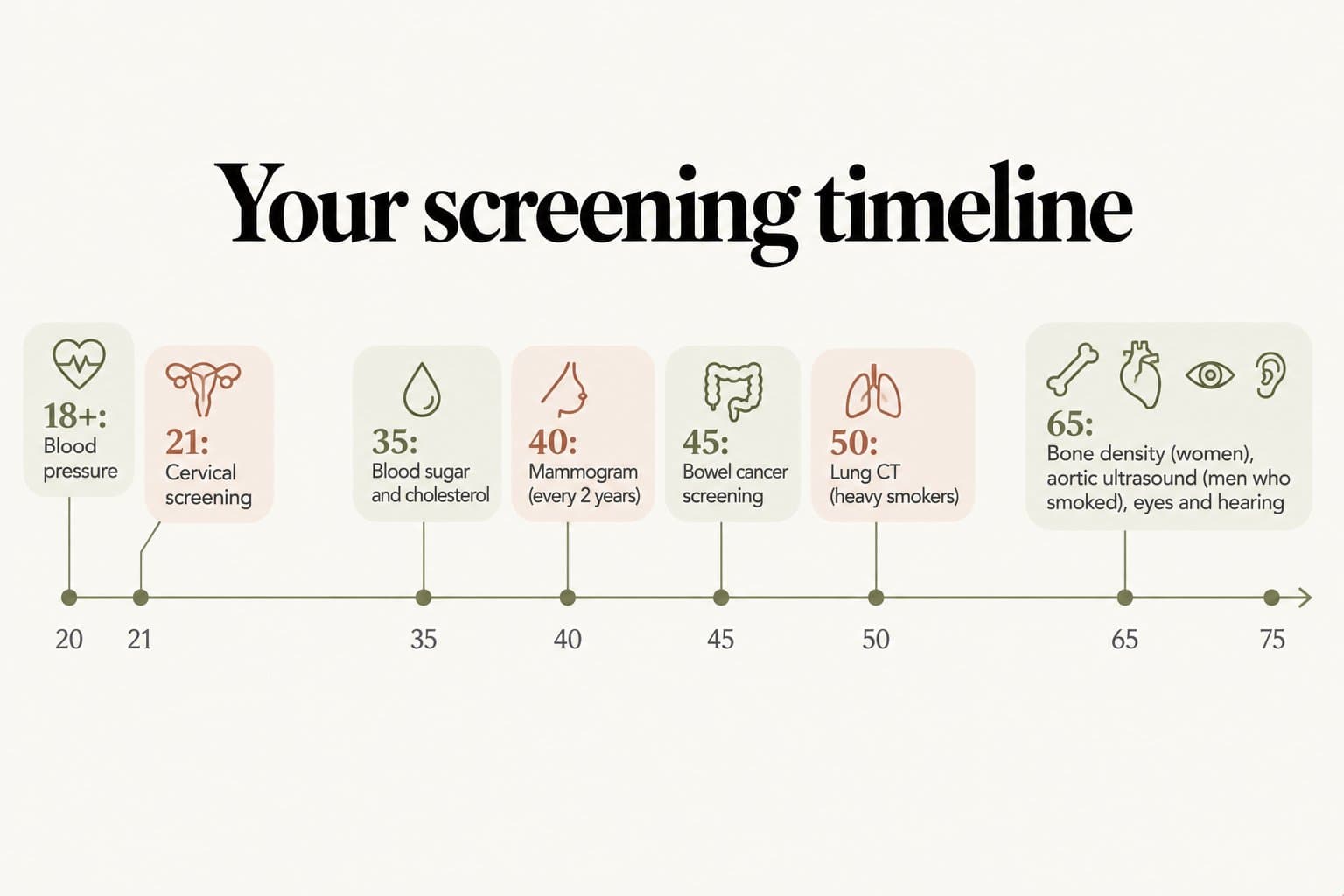
Screening means looking for disease or risk factors before you have symptoms, when they're easier to treat or prevent. The right checks depend on your age, sex, family history and lifestyle. International guidelines, such as those from the US Preventive Services Task Force (USPSTF), give a useful framework. Blood pressure should be checked regularly from early adulthood. Adults aged 35-70 who are overweight should be screened for prediabetes and diabetes; for South Asians, who develop diabetes at lower body weights, this matters even more. Bowel cancer screening is now recommended from 45 to 75, mammograms every two years from 40 to 74, cervical screening from 21 to 65, and annual low-dose CT scans for lung cancer from 50 to 80 for people with a significant smoking history. Women 65 and over should have a bone density scan. In Sri Lanka, free Healthy Lifestyle Centres check blood pressure, blood sugar, cholesterol, weight and waist size for adults over 35, but only about 11% of eligible adults in one study had used them. This article sets out a practical screening schedule by age and explains how to adapt it to your own risks.
Key numbers
| Check | When (general population) |
|---|---|
| Blood pressure | Regularly from 18; at least yearly from 40 or if at risk |
| Prediabetes and diabetes | Ages 35-70 if overweight; earlier for South Asians and people with risk factors |
| Bowel (colorectal) cancer | Ages 45-75 |
| Breast cancer (mammogram) | Every 2 years from 40 to 74 |
| Cervical cancer | Ages 21-65 (every 3-5 years, depending on test) |
| Lung cancer (low-dose CT) | Yearly from 50 to 80 with 20+ pack-years of smoking, if current or quit within 15 years |
| Osteoporosis (bone density) | Women 65+; younger postmenopausal women at increased risk |
| Abdominal aortic aneurysm | One-time ultrasound for men aged 65-75 who have ever smoked |
What the evidence shows
Why screening works. Many of the most important conditions, such as high blood pressure, diabetes, high cholesterol, kidney disease and early cancers, cause no symptoms for years. Finding them early allows treatment before damage occurs (see The Major Diseases of Ageing). But screening should be targeted: tests in people at low risk can lead to false alarms and unnecessary procedures (see Longevity Testing).
Heart and metabolic checks.
- Blood pressure: check at least every few years from age 18, and at least yearly from 40 or if you have risk factors such as excess weight or a family history.
- Diabetes: the USPSTF recommends screening adults aged 35-70 with overweight or obesity. Because South Asians develop diabetes at lower body weights, with overweight defined from a BMI of 23 rather than 25, many doctors screen South Asian adults earlier and at lower weights (see Your Key Longevity Numbers).
- Cholesterol and cardiovascular risk: a lipid profile and overall heart risk assessment, usually from the 20s to 40s depending on risk, repeated every few years.
- Kidney function: blood and urine tests if you have diabetes, high blood pressure or a family history of kidney disease.
Cancer screening.
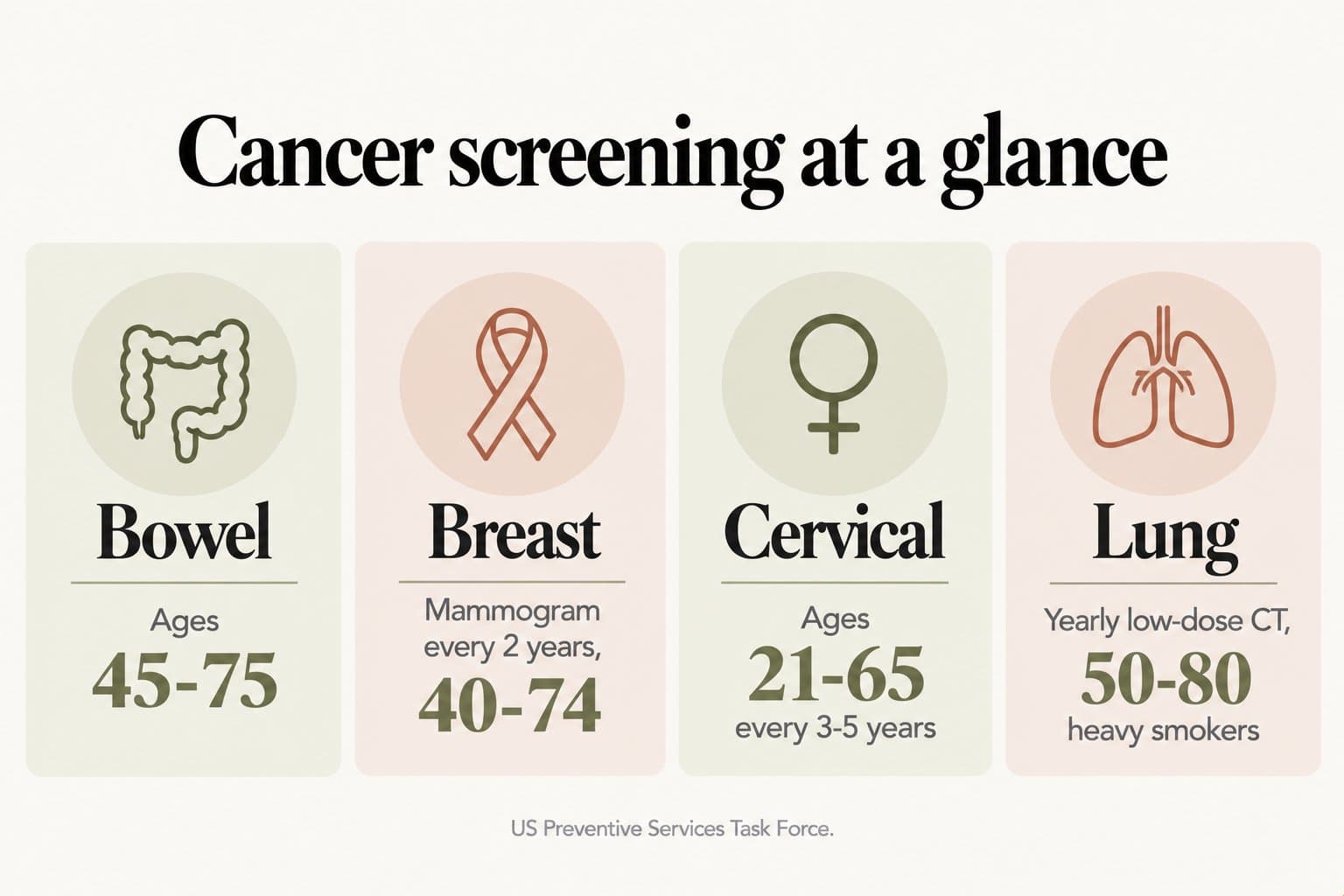
- Bowel cancer: in 2021, the USPSTF lowered the starting age from 50 to 45, recommending screening from 45 to 75, with individual decisions from 76 to 85. Options include stool tests every year and colonoscopy every 10 years.
- Breast cancer: in 2024, the USPSTF recommended mammograms every two years for women aged 40-74, replacing its earlier advice to start routine screening at 50.
- Cervical cancer: cytology (Pap test) every 3 years from 21 to 29; from 30 to 65, HPV testing every 5 years, combined testing every 5 years or cytology every 3 years.
- Lung cancer: annual low-dose CT from 50 to 80 for people with at least 20 pack-years of smoking who still smoke or quit within the past 15 years.
Later-life checks.
- Osteoporosis: in 2025, the USPSTF recommended bone density scans (DXA) for women 65 and over, and for younger postmenopausal women at increased risk of fracture. Evidence for routine screening in men is insufficient, so decisions are individual.
- Abdominal aortic aneurysm: a one-time ultrasound for men aged 65-75 who have ever smoked.
- Eyes and hearing: regular eye checks from 65 (yearly with diabetes) and hearing tests if you notice symptoms. Untreated hearing and vision loss are risk factors for dementia.
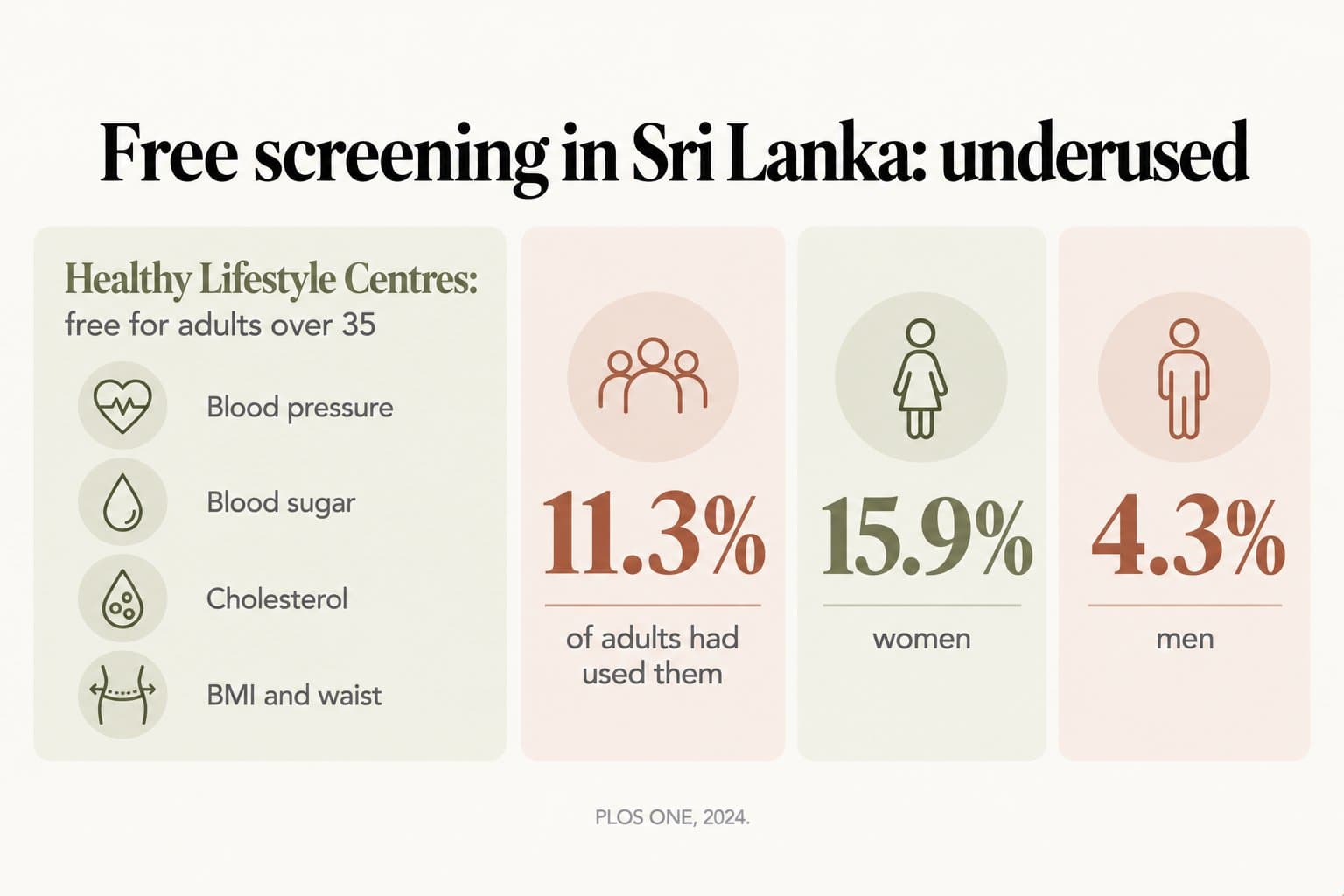
Screening in Sri Lanka. Sri Lanka's Ministry of Health runs free Healthy Lifestyle Centres in primary care institutions for adults over 35. They measure BMI, waist circumference, blood pressure, fasting blood sugar and total cholesterol, assess cardiovascular risk and give lifestyle advice. Yet a 2024 study found that only 11.3% of adults aged 35-65 in its sample had used them, with women (15.9%) much more likely than men (4.3%). Given that more than half of Sri Lankans with raised blood pressure don't know it, these services are an underused resource (see Ageing and Health in Sri Lanka).
Recommendations by scenario
| Scenario | What to do |
|---|---|
| In your 20s and 30s | Blood pressure, weight and waist; cholesterol at least once; cervical screening for women; know your family history |
| Turning 35-40 | Add blood sugar or HbA1c and a cardiovascular risk check; use a Healthy Lifestyle Centre if available |
| Turning 40-45 | Mammograms every 2 years for women; bowel screening from 45 |
| In your 50s and 60s | Continue the above; lung CT if you're a heavy smoker or recent ex-smoker |
| 65 and over | Bone density for women; aortic aneurysm ultrasound for men who smoked; eyes and hearing |
| Strong family history (early heart disease, cancer, diabetes) | Start earlier and screen more often; discuss genetic counselling if appropriate |
Practical notes
These recommendations are a starting point, mostly based on US guidelines, and should be adapted to your personal and family history and to local guidance. If you have symptoms, don't wait for routine screening: see a doctor. Keep a simple record of your results and dates, so you know when each check is due. The numbers to track at each check are explained in Your Key Longevity Numbers. Our Longevity Doctors can create a personalised screening plan based on your age, risks and family history, starting with the free longevity assessment.
- US Preventive Services Task Force. Screening for colorectal cancer: final recommendation statement. 2021.
- US Preventive Services Task Force. Screening for breast cancer: recommendation statement. 2024.
- US Preventive Services Task Force. Screening for cervical cancer: recommendation statement. 2018.
- US Preventive Services Task Force. Screening for lung cancer: recommendation statement. 2021.
- US Preventive Services Task Force. Screening for prediabetes and type 2 diabetes: recommendation statement. 2021.
- US Preventive Services Task Force. Osteoporosis to prevent fractures: screening. 2025.
- MedlinePlus. Health screenings for men age 65 and older.
- Under-utilisation of noncommunicable disease screening and healthy lifestyle promotion centres: a cross-sectional study from Sri Lanka. PLOS ONE, 2024;19(4):e0301510.
Free longevity assessment
Not sure which checks
you're due for?
Take the free Aevum Protocol assessment to see how your longevity 101 and 6 other longevity domains are performing — and get a personalised 90-day plan.
Take the free assessment