Longevity 101
The Major Diseases of Ageing:
Heart Disease, Cancer, Dementia and Type 2 Diabetes
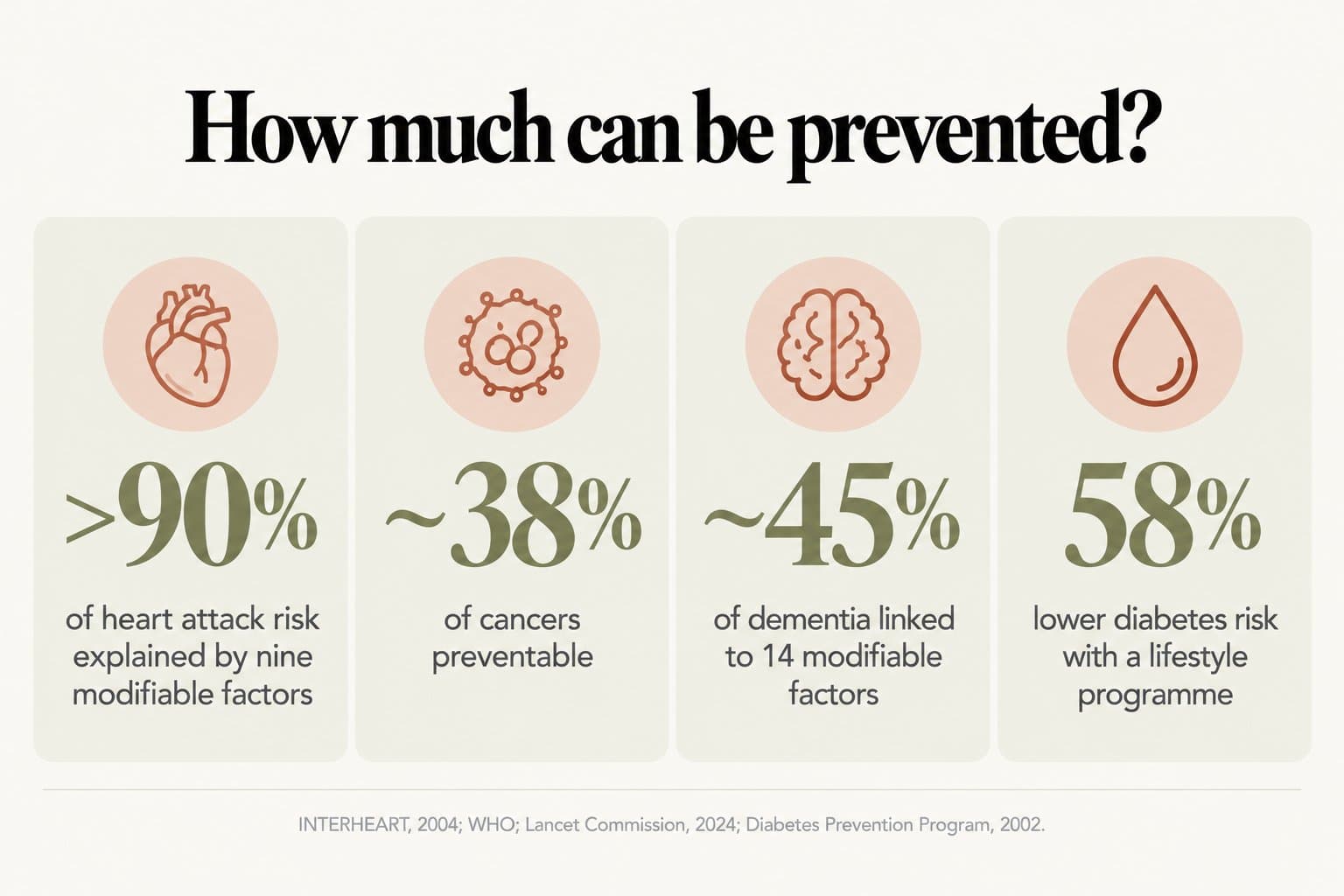
Four conditions do the most to shorten healthy life: cardiovascular disease, cancer, dementia and type 2 diabetes. Cardiovascular disease alone caused at least 19 million deaths worldwide in 2021, and cancer nearly 10 million in 2024. Dementia and diabetes add years of disability and raise the risk of the others. These diseases have more in common than it seems. They share many of the same risk factors, such as smoking, high blood pressure, high cholesterol, excess weight, inactivity, unhealthy diet and excess alcohol, and the same underlying biology of ageing. That's also why so much of them can be prevented. In the INTERHEART study across 52 countries, nine measurable risk factors explained more than 90% of the risk of a heart attack. The World Health Organization estimates that about 38% of cancers are preventable. The 2024 Lancet Commission found that 14 modifiable factors account for about 45% of dementia cases worldwide. And in the Diabetes Prevention Program, a lifestyle programme cut the risk of developing type 2 diabetes by 58%. This article explains each of the four diseases, what they share and how to reduce your risk.
Key numbers
| Finding | Detail |
|---|---|
| Heart attack risk factors (INTERHEART, 52 countries) | Nine modifiable factors explained over 90% of risk |
| Cancer (WHO) | Nearly 10 million deaths in 2024; about 38% of cancers preventable |
| Dementia (Lancet Commission, 2024) | 14 modifiable risk factors account for about 45% of cases |
| Type 2 diabetes (Diabetes Prevention Program, 3,234 adults) | Lifestyle programme cut risk by 58%; metformin by 31% |
| Cardiovascular disease (WHO, 2021) | At least 19 million deaths, the leading cause of death worldwide |
The four diseases and what links them
- Cardiovascular disease: heart attacks, strokes, heart failure and related conditions, mainly caused by atherosclerosis, the build-up of fatty plaque in arteries. It's the leading cause of death worldwide and in Sri Lanka (see Ageing and Health in Sri Lanka).
- Cancer: the uncontrolled growth of abnormal cells. Lung, breast and colorectal cancers are the most commonly diagnosed worldwide.
- Dementia: progressive loss of memory and thinking that interferes with daily life; Alzheimer's disease is the most common type.
- Type 2 diabetes: persistently high blood sugar caused by insulin resistance, which damages blood vessels, nerves, kidneys and eyes, and raises the risk of heart disease and dementia (see Insulin Resistance).
These conditions share common roots: chronic inflammation, insulin resistance, damaged blood vessels and the biological processes of ageing (see The Hallmarks of Ageing). They often occur together, and having one raises the risk of the others.

What the research shows
Cardiovascular disease: most risk is modifiable. The INTERHEART study compared nearly 30,000 people with and without a first heart attack in 52 countries. It found that nine easily measured and modifiable risk factors, including smoking, abnormal blood lipids, high blood pressure, diabetes, abdominal obesity, stress, diet and physical inactivity, "could explain more than 90 per cent of the risk of a heart attack globally and in all regions and major ethnic groups". Smoking and abnormal lipids were the strongest (see Inflammation and Heart Disease and Lowering LDL Cholesterol).
Cancer: about four in ten are preventable. According to the WHO, cancer caused nearly 10 million deaths in 2024, about one in six deaths globally. About 38% of cancers are preventable by avoiding risk factors and using proven prevention strategies, and nearly a quarter of cancer deaths are due to tobacco, alcohol, high body mass index, low fruit and vegetable intake and physical inactivity. Infections such as HPV and hepatitis also cause many cancers and can be prevented by vaccination. Many cancers, including breast, cervical, oral and colorectal cancers, can be cured if detected early.
Dementia: nearly half of cases linked to modifiable factors. The 2024 Lancet Commission on dementia identified 14 modifiable risk factors across life: less education in early life; hearing loss, high LDL cholesterol, depression, traumatic brain injury, physical inactivity, diabetes, smoking, high blood pressure, obesity and excess alcohol in midlife; and social isolation, air pollution and untreated vision loss in later life. Together they account for about 45% of dementia cases worldwide, with hearing loss and high LDL cholesterol the largest contributors at 7% each (see The MIND Diet and Brain Health).
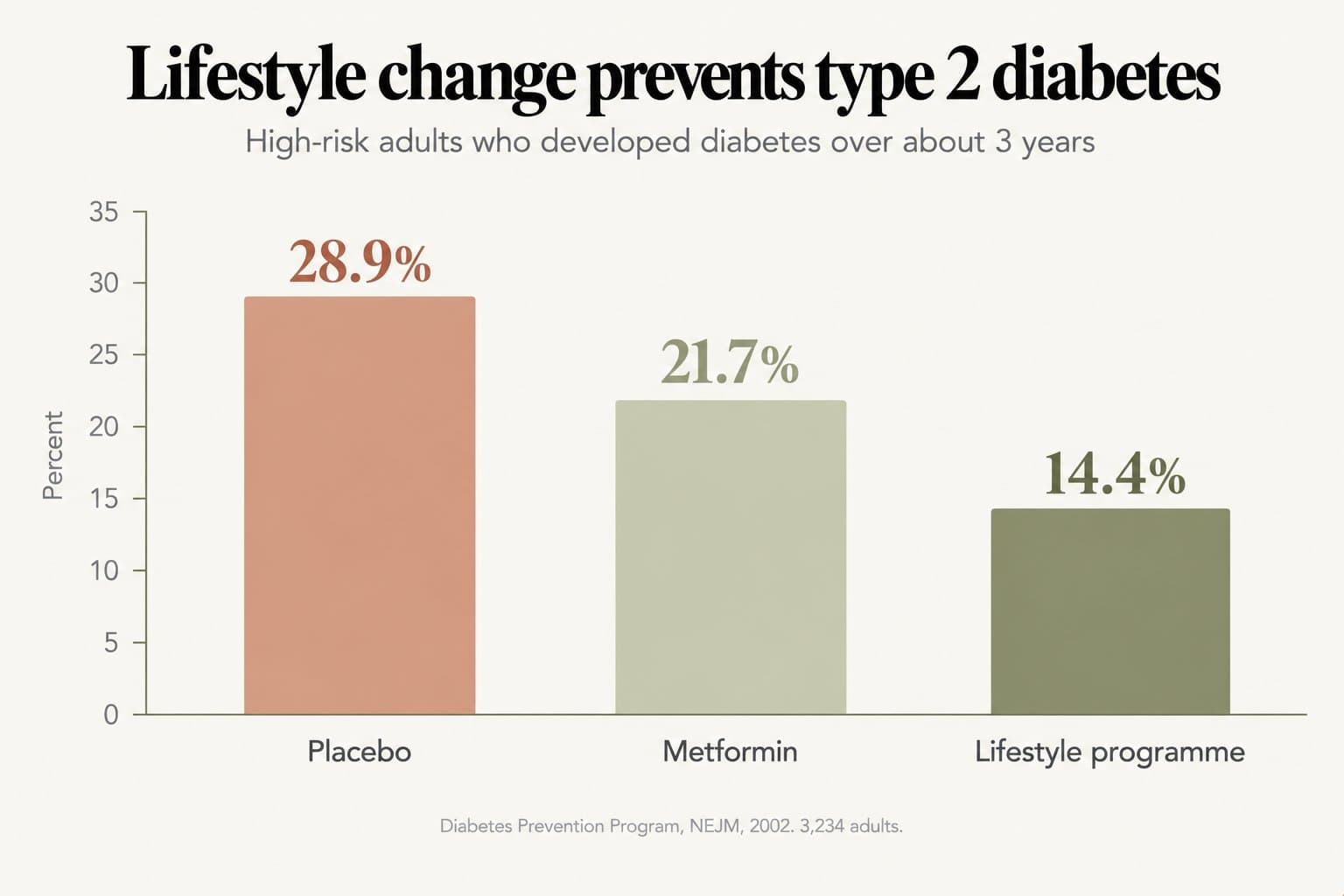
Type 2 diabetes: lifestyle change works. The US Diabetes Prevention Program randomly assigned 3,234 adults at high risk of diabetes to a lifestyle programme, metformin or placebo. The lifestyle goals were at least 7% weight loss and at least 150 minutes of physical activity a week. After an average of 2.8 years, 14.4% of the lifestyle group had developed diabetes, compared with 21.7% on metformin and 28.9% on placebo: a 58% reduction with lifestyle and 31% with metformin.
Why this matters for longevity
These four diseases are responsible for most of the years lost to death and disability in later life. Because they share risk factors, a single set of actions, such as not smoking, controlling blood pressure, cholesterol and blood sugar, staying active, eating well, keeping a healthy weight and limiting alcohol, reduces the risk of all four at once. Many of their warning signs, such as high blood pressure, raised blood sugar and high cholesterol, can be found years in advance with simple tests. A screening schedule by age is covered in Health Screening by Age, and the key numbers to know in Your Key Longevity Numbers.
Practical notes
Know your family history, because early heart disease, certain cancers, diabetes or dementia in close relatives may mean you need earlier or more frequent checks. Have your blood pressure, cholesterol, blood sugar and weight checked regularly, follow recommended cancer screening, get your hearing and vision checked as you age, and keep vaccinations such as HPV and hepatitis B up to date. Most of all, focus on the everyday habits that protect against all four diseases together (see From Hallmarks to Habits). Our Longevity Doctors offer focused risk checks for heart disease, dementia, cancer and diabetes, starting with the free longevity assessment.
- World Health Organization. Noncommunicable diseases. Fact sheet, September 2025.
- World Health Organization. Cancer. Fact sheet.
- Yusuf S, et al. Effect of potentially modifiable risk factors associated with myocardial infarction in 52 countries (the INTERHEART study): case-control study. The Lancet, 2004;364(9438):937-952.
- Livingston G, et al. Dementia prevention, intervention, and care: 2024 report of the Lancet standing Commission. The Lancet, 2024;404(10452):572-628.
- Diabetes Prevention Program Research Group. Reduction in the incidence of type 2 diabetes with lifestyle intervention or metformin. New England Journal of Medicine, 2002;346(6):393-403.
Free longevity assessment
Want to know your risk of
the major diseases of ageing?
Take the free Aevum Protocol assessment to see how your longevity 101 and 6 other longevity domains are performing — and get a personalised 90-day plan.
Take the free assessment