Longevity 101
Your Key Longevity Numbers:
The 10 Measures Worth Knowing
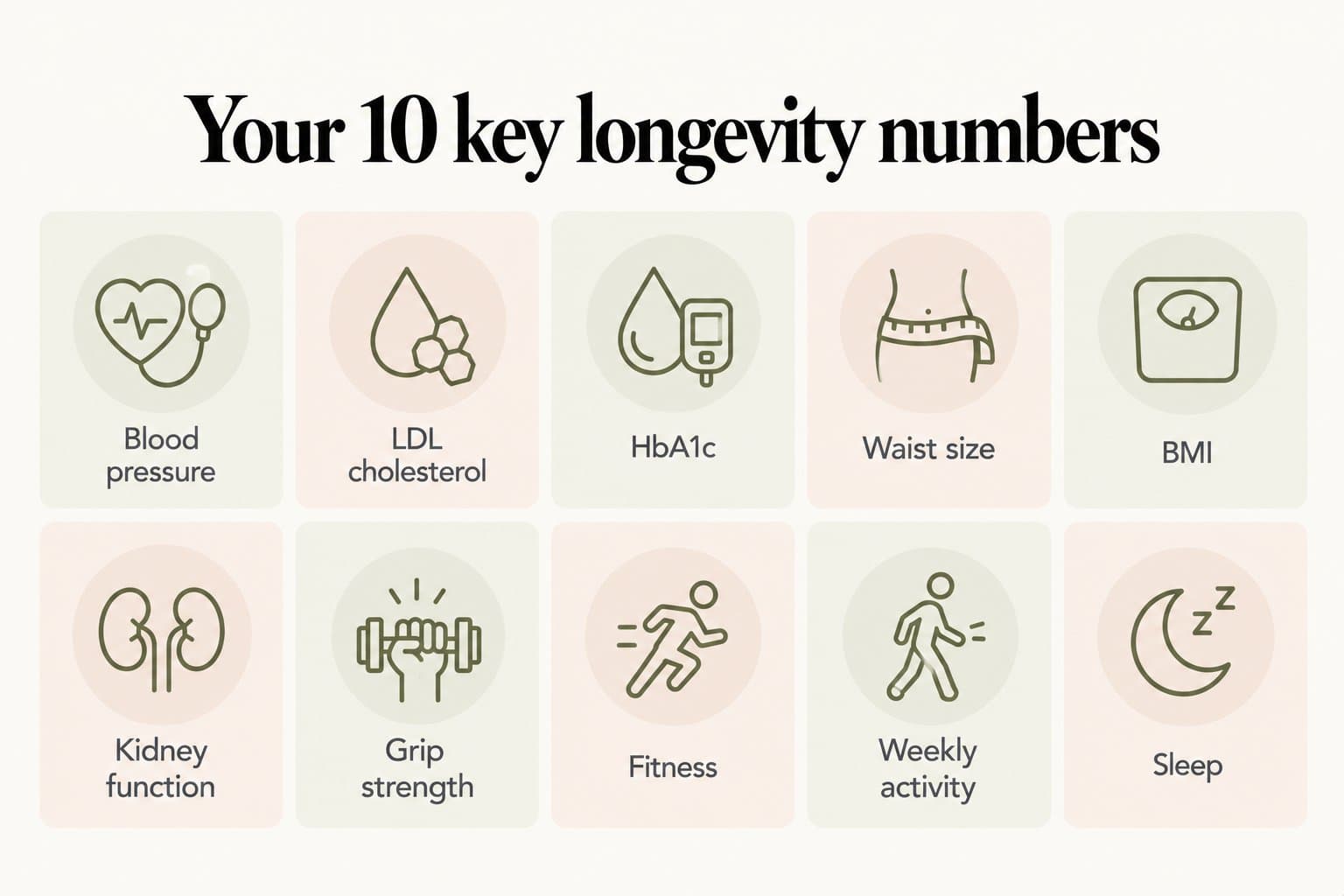
You don't need expensive tests to understand how well you're ageing. A handful of simple, well-established numbers tell you most of what matters, and many of them can be changed. This guide covers ten: blood pressure, LDL cholesterol, HbA1c (average blood sugar), waist size, BMI, kidney function, grip strength, fitness, weekly physical activity and sleep. Many people don't know their numbers. Worldwide, an estimated 1.4 billion adults aged 30-79 have high blood pressure, and 44% of them don't know it. In Sri Lanka, more than half of adults with raised blood pressure were unaware. For South Asians, some targets are stricter than international defaults: overweight starts at a BMI of 23 rather than 25, and a waist above 90 cm for men or 80 cm for women signals higher risk. Physical measures matter just as much as blood tests: each 5 kg lower grip strength was linked to 16% higher mortality, and elite fitness to 80% lower risk of death than low fitness. Knowing your numbers, and tracking them over time, is one of the simplest and most powerful steps you can take for a longer, healthier life. This article explains each number, its healthy range and what to do if it's off target.
Key numbers
| Measure | Healthy target |
|---|---|
| Blood pressure | Below 140/90 mmHg (hypertension threshold); lower is generally better |
| LDL cholesterol | Below 3.0 mmol/L (116 mg/dL) if low risk; lower targets if higher risk |
| HbA1c | Below 5.7%; 5.7-6.4% is prediabetes; 6.5% or above is diabetes |
| Waist (South Asian) | Men below 90 cm; women below 80 cm |
| BMI (Asian) | Below 23; 23-27.4 is overweight; 27.5 or above is obesity |
| Kidney function | eGFR 60 or above and urine albumin-to-creatinine ratio below 30 mg/g |
| Physical activity | 150-300 minutes of moderate activity a week plus strength training on 2 or more days |
| Sleep | 7 or more hours a night for adults |
What the evidence shows
Heart and metabolic numbers
1. Blood pressure. The World Health Organization diagnoses hypertension when blood pressure is 140/90 mmHg or above on two separate days. In 2024, about 1.4 billion adults aged 30-79 worldwide had hypertension, and 44% were unaware of it. In Sri Lanka's 2021 national survey, 34.8% of adults aged 30-70 had raised blood pressure, and 54% of them didn't know (see Ageing and Health in Sri Lanka). Many guidelines treat lower readings as healthier and act earlier in people at higher risk (see Lowering Blood Pressure Without Medication).
2. LDL cholesterol. LDL is the main cholesterol that builds up in artery walls. European guidelines set a target below 3.0 mmol/L (116 mg/dL) for people at low risk, falling to below 2.6, 1.8 and 1.4 mmol/L as risk rises (see Lowering LDL Cholesterol).
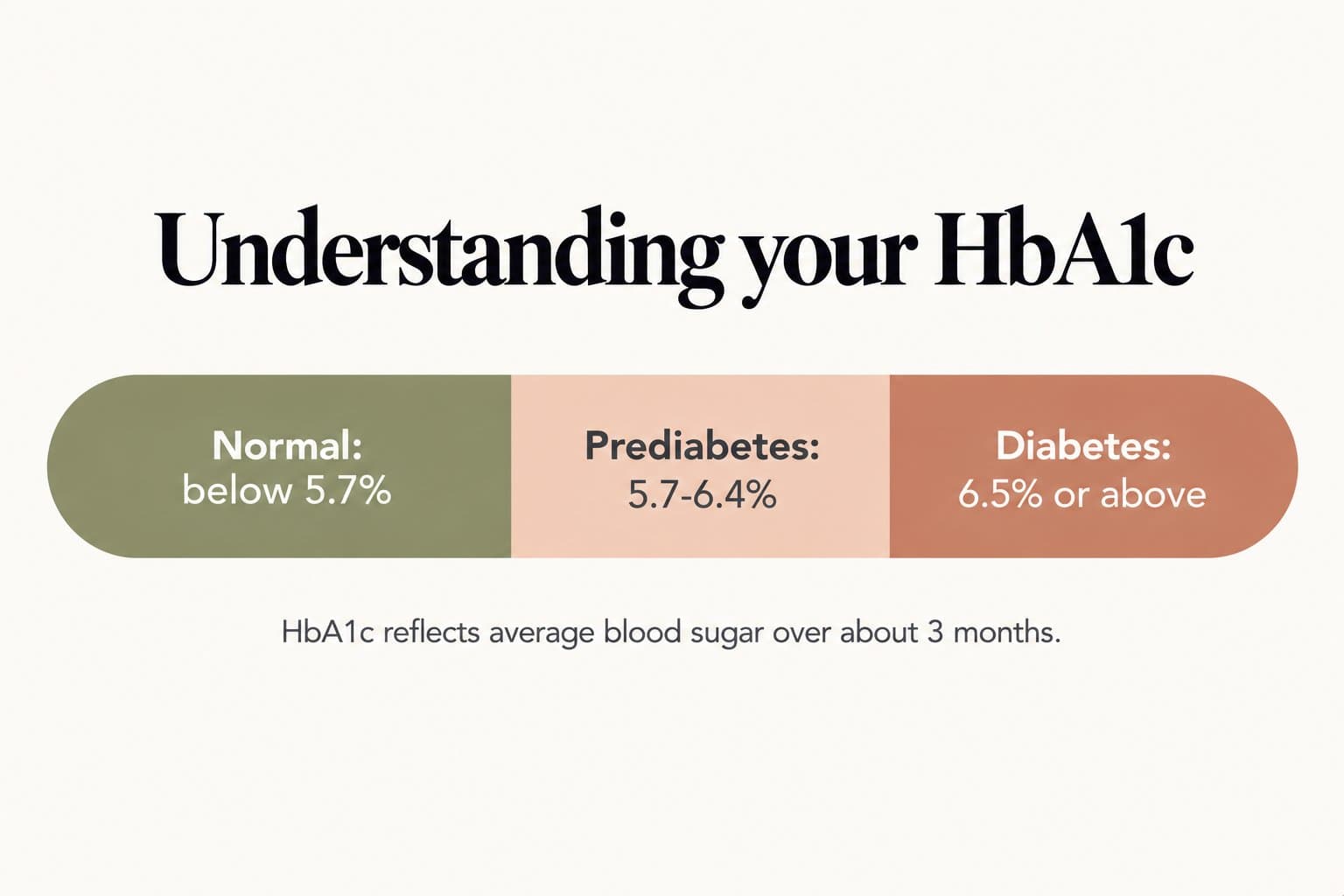
3. HbA1c. HbA1c reflects average blood sugar over about three months. Below 5.7% is normal, 5.7-6.4% indicates prediabetes, and 6.5% or above indicates diabetes (see Insulin Resistance).
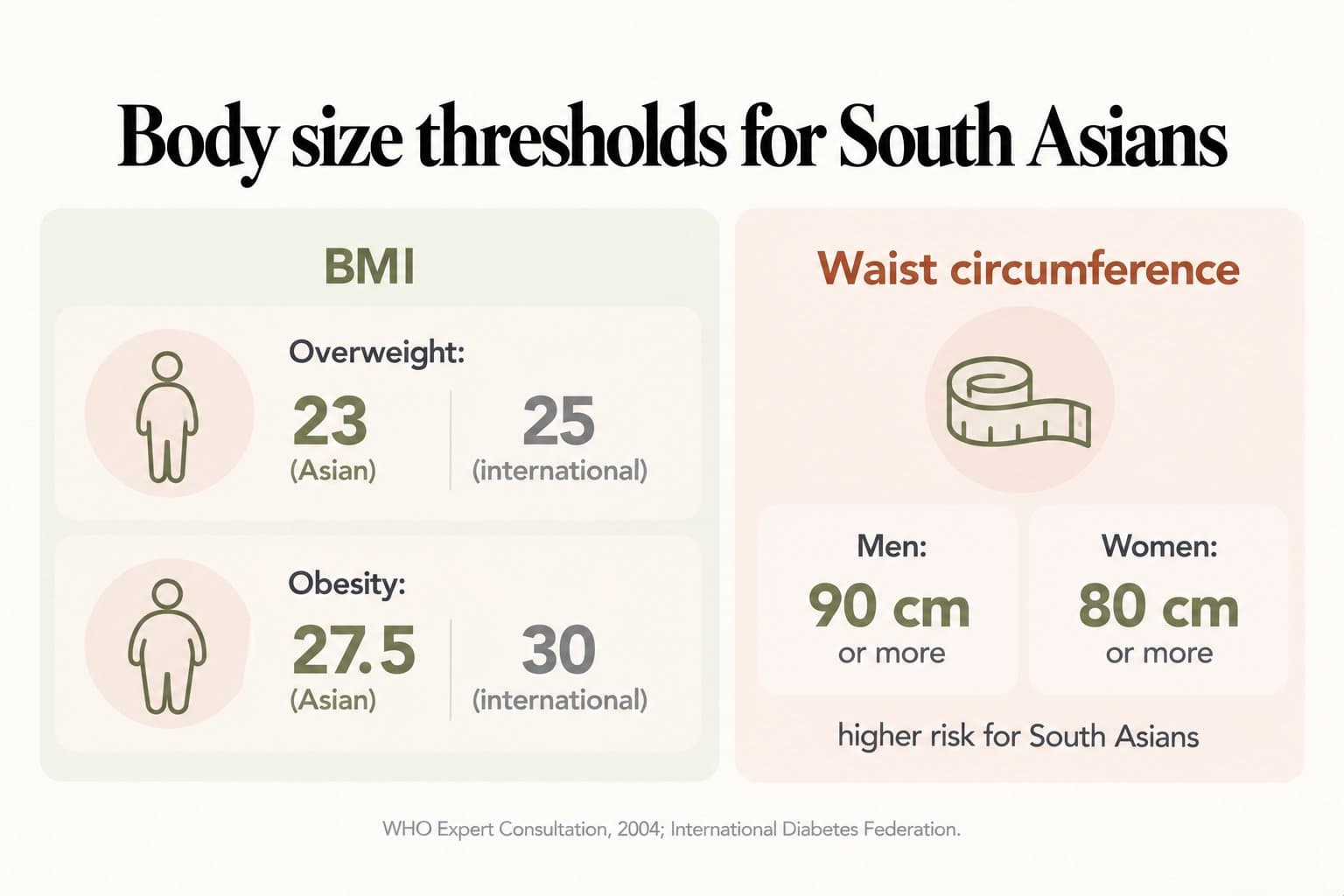
4. Waist size and 5. BMI. For Asian populations, the WHO recommends lower BMI action points than the international standard: overweight from 23 and obesity from 27.5, rather than 25 and 30. For South Asians, a waist circumference of 90 cm or more in men and 80 cm or more in women indicates higher risk. Waist size often reveals risk that BMI misses, because fat around the abdomen is more harmful.
6. Kidney function. Two simple tests, a blood test for estimated glomerular filtration rate (eGFR) and a urine test for albumin-to-creatinine ratio (ACR), check kidney health. Chronic kidney disease is diagnosed when eGFR is below 60 or ACR is 30 mg/g or higher on two tests more than 90 days apart. Kidney disease often causes no symptoms until advanced, and high blood pressure and diabetes are major causes.
Function and fitness numbers
7. Grip strength. In the PURE study of 139,691 adults in 17 countries, each 5 kg lower grip strength was linked to 16% higher all-cause mortality, making it a stronger predictor of death than systolic blood pressure (see How Is Biological Age Calculated?).
8. Fitness. Cardiorespiratory fitness, measured by a treadmill test or estimated VO2 max, is one of the strongest predictors of long life: in 122,007 people, elite fitness was linked to an 80% lower risk of death than low fitness.
Lifestyle numbers
9. Weekly physical activity. The WHO recommends that adults do 150-300 minutes of moderate-intensity aerobic activity a week (or 75-150 minutes of vigorous activity), plus muscle-strengthening activity on two or more days. Adults over 65 should also include balance and strength activities on three or more days a week. Some activity is better than none.
10. Sleep. The American Academy of Sleep Medicine and Sleep Research Society recommend that adults sleep seven or more hours a night regularly; six hours or less is "inadequate to sustain health and safety".
Recommendations by scenario
| Scenario | What to do |
|---|---|
| Don't know your numbers | Check blood pressure, HbA1c, cholesterol, kidney function, weight and waist this year |
| Blood pressure 130-139/85-89 | Cut salt, move more and recheck; discuss with your doctor |
| HbA1c 5.7-6.4% (prediabetes) | Aim for 5-7% weight loss and 150 minutes of activity a week |
| South Asian with BMI 23-25 | Check waist, blood sugar and lipids even if your weight seems normal |
| Weak grip or low fitness | Start strength and aerobic training; recheck in 3-6 months |
| Sleeping under 7 hours | Prioritise sleep timing and habits |
| Family history of early heart disease or diabetes | Start checks earlier and repeat more often |
For practical sleep habits, see Sleep Hygiene.
Practical notes
Know your numbers, write them down and track them over time. Many can be checked cheaply: blood pressure at home or a pharmacy, waist size with a tape measure, and HbA1c, cholesterol and kidney function with routine blood and urine tests. Physical measures such as grip strength and fitness can be tested in a clinic. Trends matter more than single readings, and the goal isn't perfection but steady improvement in the numbers furthest from target. Which checks you need at each age is covered in Health Screening by Age. Our Longevity Doctors can measure and interpret all ten numbers and help you set priorities, starting with the free longevity assessment.
- World Health Organization. Hypertension. Fact sheet, September 2025.
- Mach F, et al. 2019 ESC/EAS guidelines for the management of dyslipidaemias. European Heart Journal, 2020;41(1):111-188.
- American Diabetes Association. Standards of care in diabetes: diagnosis and classification. 2025.
- WHO Expert Consultation. Appropriate body-mass index for Asian populations and its implications for policy and intervention strategies. The Lancet, 2004;363(9403):157-163.
- Kidney Disease: Improving Global Outcomes (KDIGO). 2024 clinical practice guideline for the evaluation and management of chronic kidney disease.
- Leong DP, et al. Prognostic value of grip strength: findings from the PURE study. The Lancet, 2015;386(9990):266-273.
- Bull FC, et al. World Health Organization 2020 guidelines on physical activity and sedentary behaviour. British Journal of Sports Medicine, 2020;54(24):1451-1462.
- Watson NF, et al. Recommended amount of sleep for a healthy adult: a joint consensus statement of the American Academy of Sleep Medicine and Sleep Research Society. Journal of Clinical Sleep Medicine, 2015;11(6):591-592.
Free longevity assessment
Do you know all ten
of your numbers?
Take the free Aevum Protocol assessment to see how your longevity 101 and 6 other longevity domains are performing — and get a personalised 90-day plan.
Take the free assessment