Longevity 101
Ageing and Health in Sri Lanka:
Why Longevity Matters Here and Now
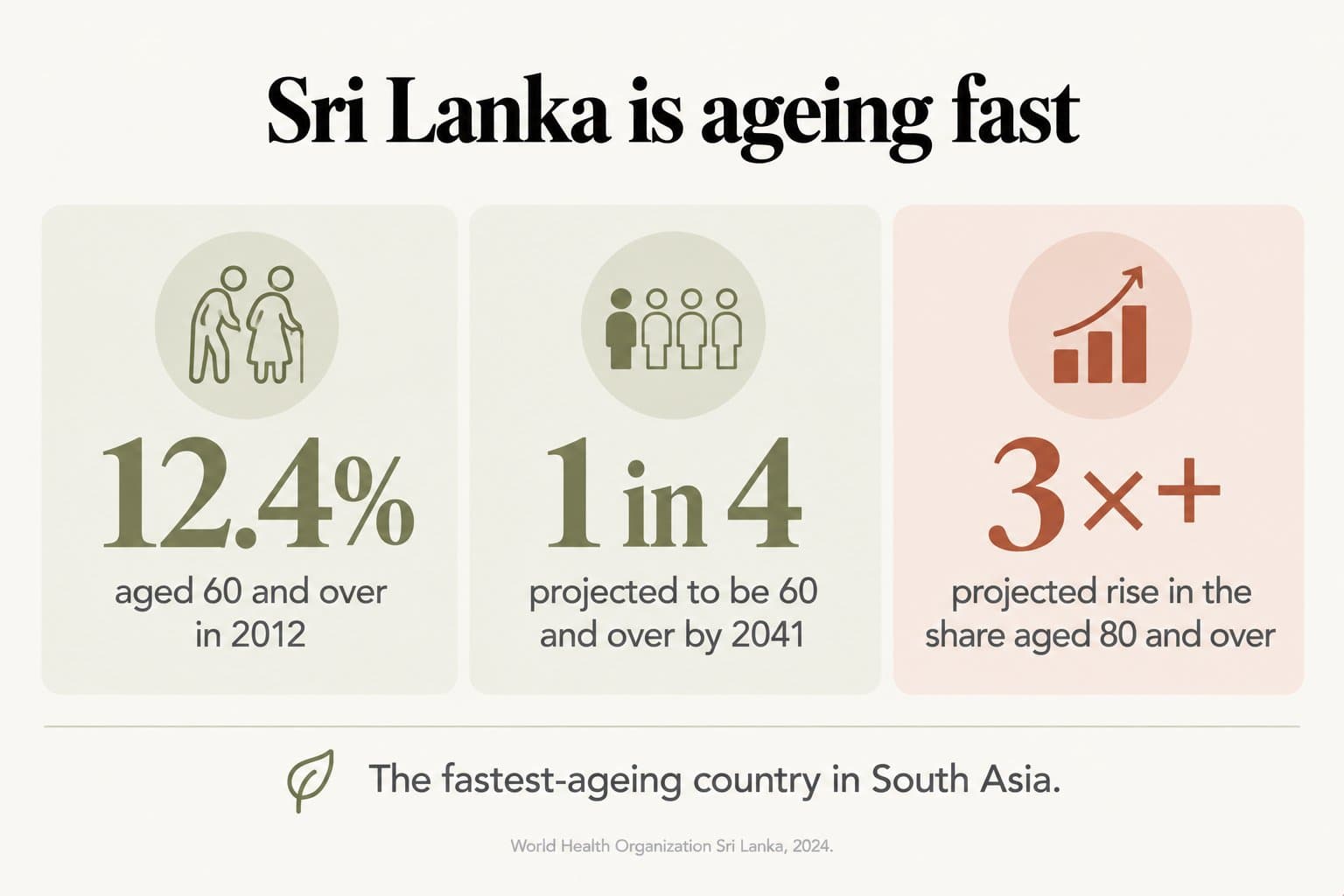
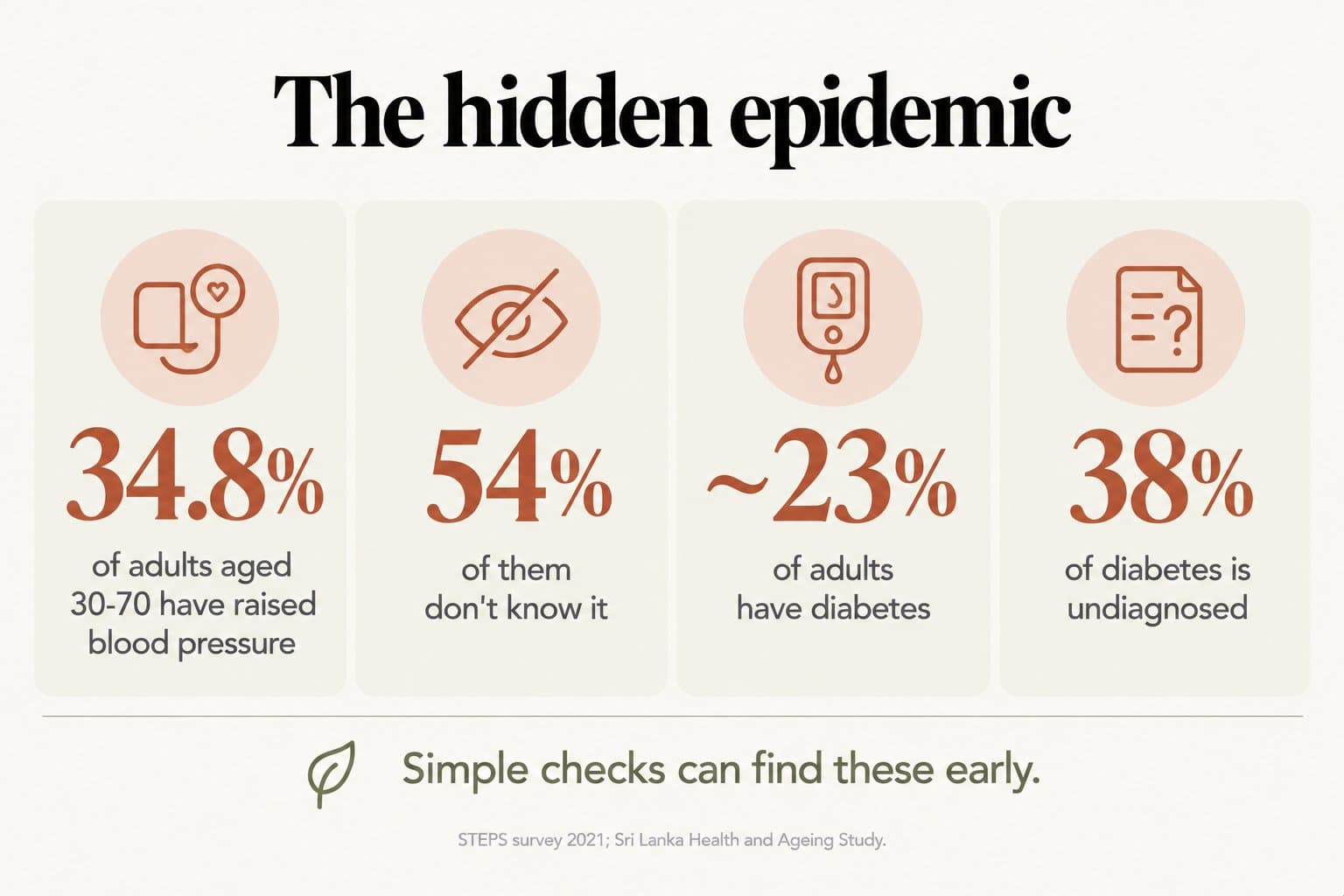
Sri Lanka has long been admired for achieving good health outcomes at relatively low cost. But the country is now facing two major shifts at once. First, it's ageing fast: described by the World Health Organization as the fastest-ageing country in South Asia, Sri Lanka had 12.4% of its population aged 60 or over in 2012, and this is projected to reach one in four people by 2041. Second, chronic noncommunicable diseases (NCDs) now dominate: they're estimated to cause 83% of all deaths, led by heart disease. Many of these conditions are hidden. In the 2021 national STEPS survey, 34.8% of adults aged 30-70 had raised blood pressure, and 54% of them didn't know it. Nearly one in four adults has diabetes and almost a third has prediabetes, with 38% of diabetes undiagnosed. Diet is a major factor: average salt intake is about double the recommended limit. The good news is that most of these risks can be detected early with simple tests and reduced with lifestyle changes and treatment. This article explains the health picture in Sri Lanka and why acting early matters for individuals and families.
Key numbers
| Finding | Detail |
|---|---|
| Older population (WHO Sri Lanka) | 12.4% aged 60+ in 2012; projected 1 in 4 by 2041; fastest-ageing country in South Asia |
| Deaths from NCDs (WHO country profile) | 83% of all deaths; cardiovascular disease 34% |
| Risk of dying early from the four main NCDs (ages 30-70) | 17% overall: 22% of men, 13% of women |
| Raised blood pressure (STEPS 2021, adults 30-70) | 34.8%; 54% of those affected unaware |
| Diabetes (Sri Lanka Health and Ageing Study) | About 23% of adults; 31% prediabetes; 38% of diabetes undiagnosed |
A rapidly ageing nation
According to WHO Sri Lanka, the proportion of people aged 60 and over rose to 12.4% (2.5 million people) in 2012 and is projected to double by 2041, when one in four Sri Lankans will be older adults. The proportion aged 80 and over, 1.3% in 2012, is projected to more than triple. This reflects real success: longer lives and smaller families. But it also means that many more people will live with chronic conditions, and that families, who provide much of the care for older relatives, will feel the effects (see The Hallmarks of Ageing).
The shift to chronic disease
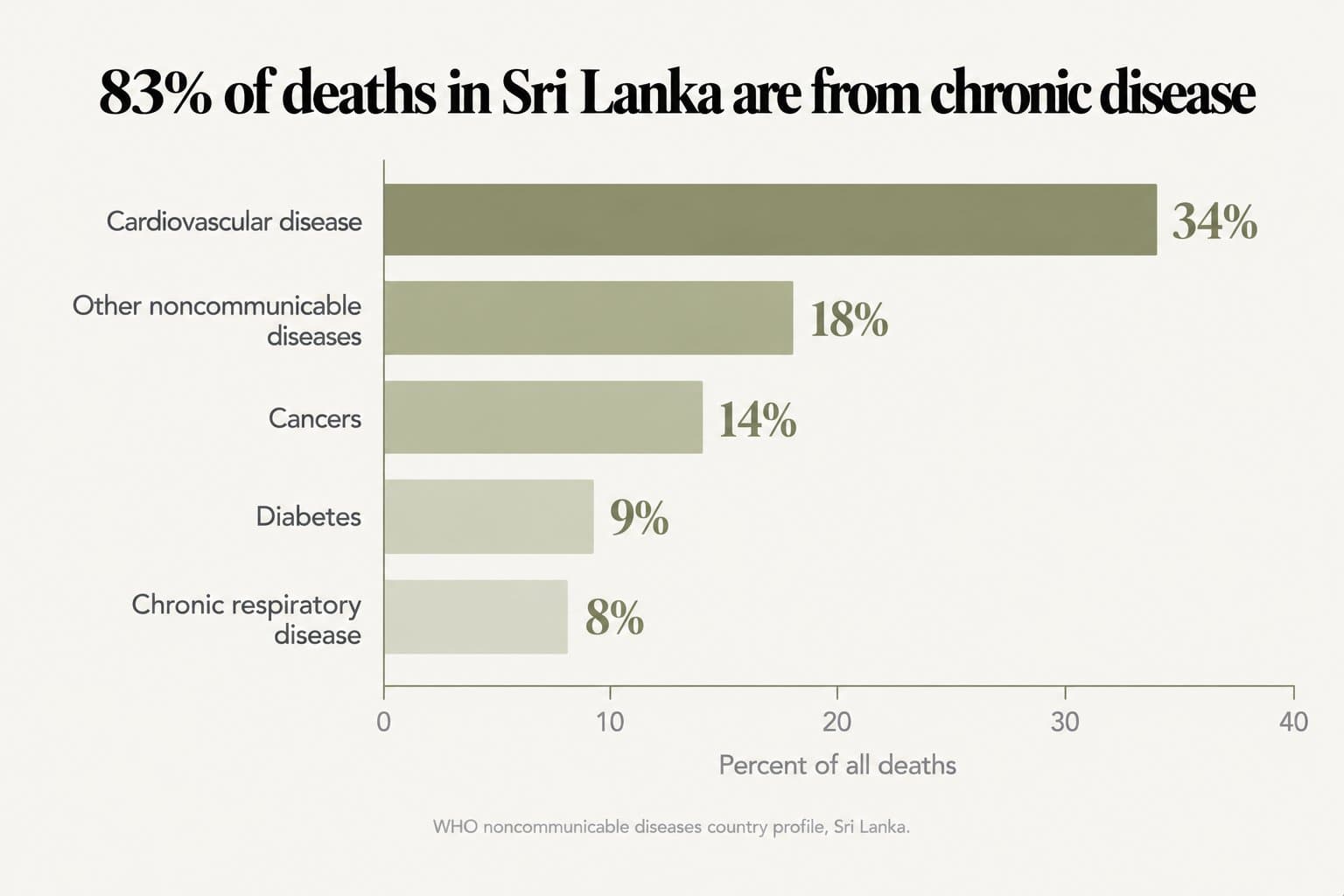
The WHO estimates that NCDs account for 83% of all deaths in Sri Lanka. Cardiovascular disease causes 34% of deaths, cancers 14%, diabetes 9% and chronic respiratory disease 8%, with other NCDs making up 18%. The risk of dying between 30 and 70 from one of the four main NCDs was estimated at 17%, higher in men (22%) than women (13%).
What the research shows
High blood pressure: common and often hidden. The 2021 STEPS national survey found raised blood pressure in 34.8% of adults aged 30-70, an increase of nearly 25% since 2015. More than half (54%) didn't know they had it, and only about 1.5 million of an estimated 4.3 million adults with hypertension were receiving treatment. High blood pressure is a leading cause of stroke, heart attack and kidney disease (see Lowering Blood Pressure Without Medication).
Diabetes and prediabetes. The Sri Lanka Health and Ageing Study, a national survey of more than 6,000 adults, found that about 23% had diabetes and 31% had prediabetes, and 38% of those with diabetes were undiagnosed (see Insulin Resistance and Sugar and Refined Carbohydrates).
Risk factors in everyday life.
- Salt: most Sri Lankans eat more than the WHO limit of 5 g a day, with average intake about double. Hidden sources include dried fish, pickles, short eats and instant noodles (see Building a Longevity Plate).
- Sugar and refined carbohydrates: large portions of white rice, sweetened tea and snacks contribute to diabetes risk.
- Physical inactivity: the WHO country profile estimated that 29% of adults were insufficiently active, more women (37%) than men (21%).
- Tobacco and alcohol: in the WHO profile, 28% of men smoked. In a national survey, 53.1% of men drank alcohol, compared with 2.0% of women (see Alcohol and Longevity).
Why this matters for longevity
Sri Lanka's health challenges are largely the same chronic diseases that shorten healthy life worldwide, but they're developing in a population that's ageing faster than its neighbours and often detected late. Because high blood pressure and diabetes cause no symptoms for years, many people only learn they have them after a heart attack, stroke or kidney damage. Early detection, simple lifestyle changes and consistent treatment can prevent much of this harm (see What Is Longevity Medicine?). The major diseases of ageing are covered in The Major Diseases of Ageing, and a screening schedule by age in Health Screening by Age.
Practical notes
The most important first steps are simple and inexpensive: know your blood pressure, blood sugar (or HbA1c), cholesterol, weight and waist size, and repeat them regularly from your 30s onwards, or earlier if you have a family history. Cut back on salt, sugar and refined carbohydrates, build more movement into your day, avoid tobacco and limit alcohol. Encourage older relatives to have regular checks too. Our Longevity Doctors can help you understand your risks in the Sri Lankan context, starting with the free longevity assessment.
- World Health Organization Sri Lanka. Ageing with dignity: the importance of strengthening care and support systems for older persons worldwide. 2024.
- World Health Organization. Noncommunicable diseases country profile: Sri Lanka. 2018.
- World Health Organization Sri Lanka. World Hypertension Day 2025 (citing the Sri Lanka STEPS survey 2021).
- Institute for Health Policy. Sri Lanka Health and Ageing Study: diabetes and prediabetes prevalence. 2019.
- World Health Organization Sri Lanka. National meeting on implementing the National Salt Reduction Strategy. 2020.
- Sri Lanka Health and Ageing Study: alcohol consumption in Sri Lankan adults, 2018-19. 2025.
Free longevity assessment
Do you know your blood pressure
and blood sugar?
Take the free Aevum Protocol assessment to see how your longevity 101 and 6 other longevity domains are performing — and get a personalised 90-day plan.
Take the free assessment