Nutrition & Metabolism
Building a Longevity Plate:
A Practical Guide to Healthier Rice and Curry
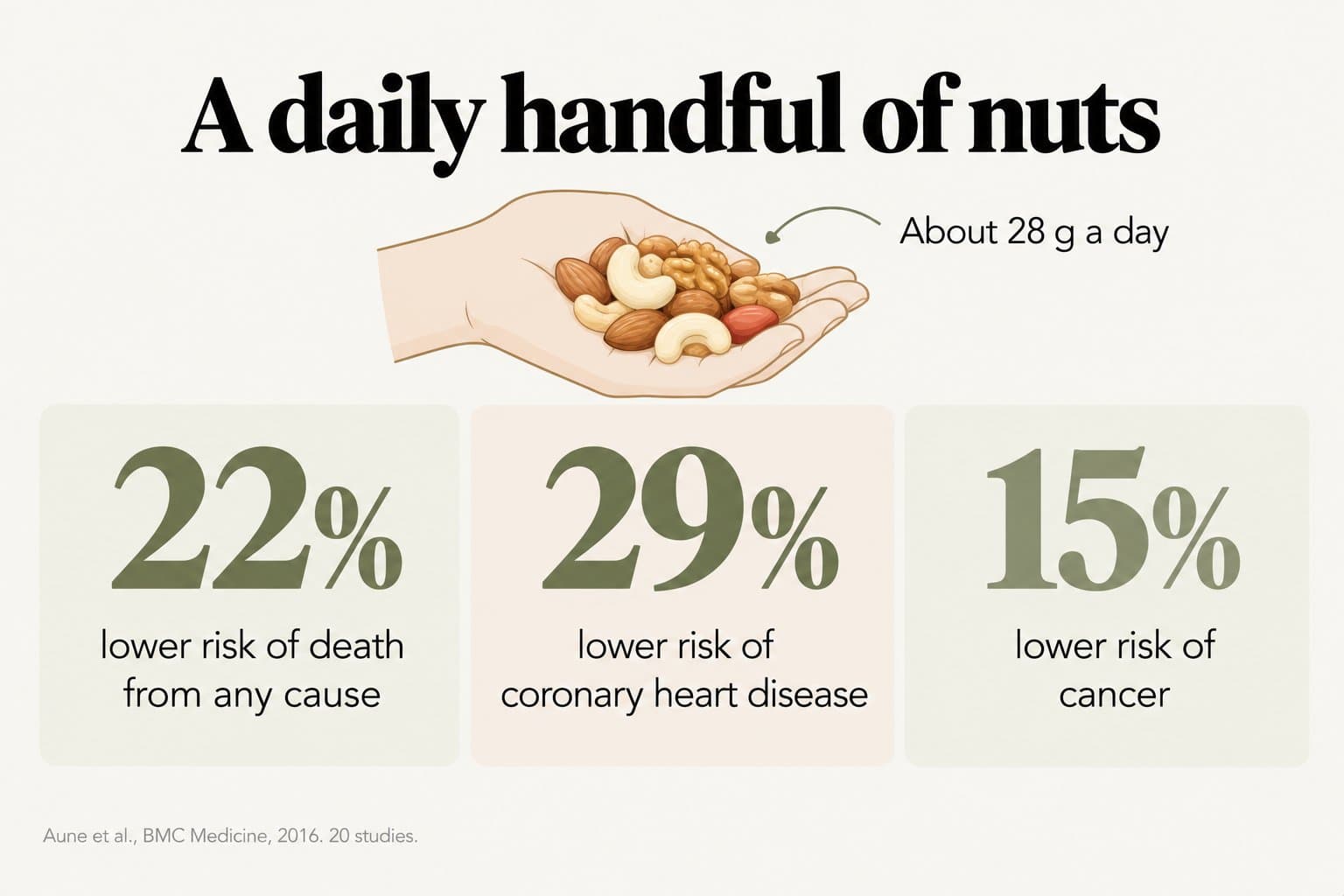
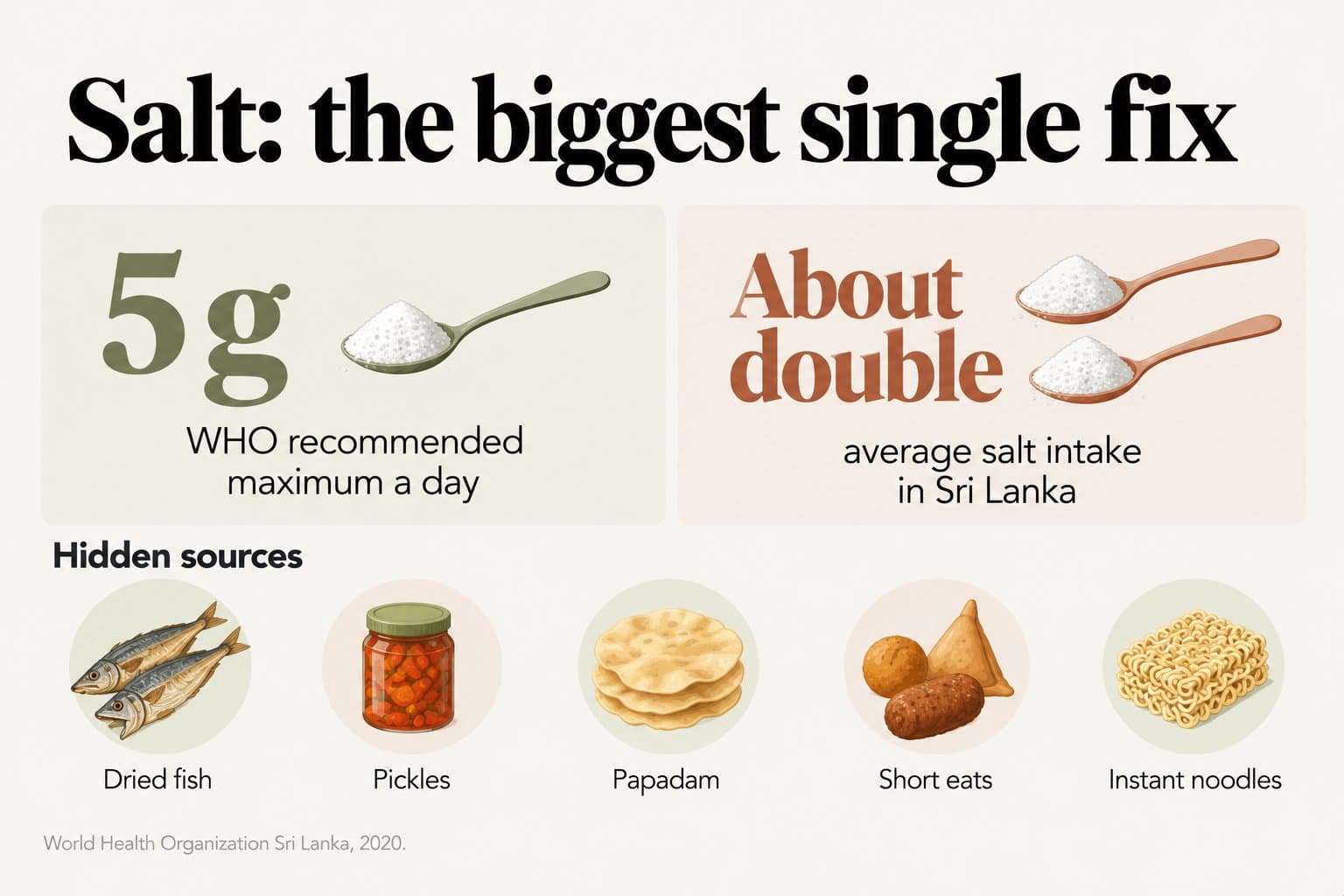
Knowing the science of healthy eating is one thing; putting it on a plate every day is another. The simplest tool is a plate model. Harvard's Healthy Eating Plate suggests filling half your plate with vegetables and fruit, a quarter with whole grains and a quarter with healthy protein, cooking with healthy oils and drinking water, tea or coffee instead of sugary drinks. A traditional Sri Lankan rice and curry meal already has many of the right ingredients: dhal, vegetables, leafy greens, fish and spices. The main changes are in the proportions and a few choices: a smaller portion of red or less-polished rice, more vegetables and mallung, a daily serving of legumes, fish more often, and less salt. Nuts and seeds deserve a place too: in a review of 20 studies, eating about a handful (28 g) a day was linked to a 22% lower risk of death. Salt is a key target, as average intake in Sri Lanka is about double the WHO limit of 5 g a day. This guide turns the evidence into everyday meals.
Key numbers
| Finding | Detail |
|---|---|
| Healthy Eating Plate (Harvard) | ½ vegetables and fruit; ¼ whole grains; ¼ healthy protein; healthy oils; water, tea or coffee |
| Nuts (20 studies, per 28 g a day) | 22% lower risk of death; 29% lower risk of coronary heart disease; 15% lower total cancer risk |
| Salt intake in Sri Lanka (WHO) | About double the recommended maximum of 5 g a day |
| Fibre target (WHO-commissioned review) | At least 25-29 g a day |
| Fish | About 1-2 servings a week linked to 36% lower risk of coronary death |
The longevity plate
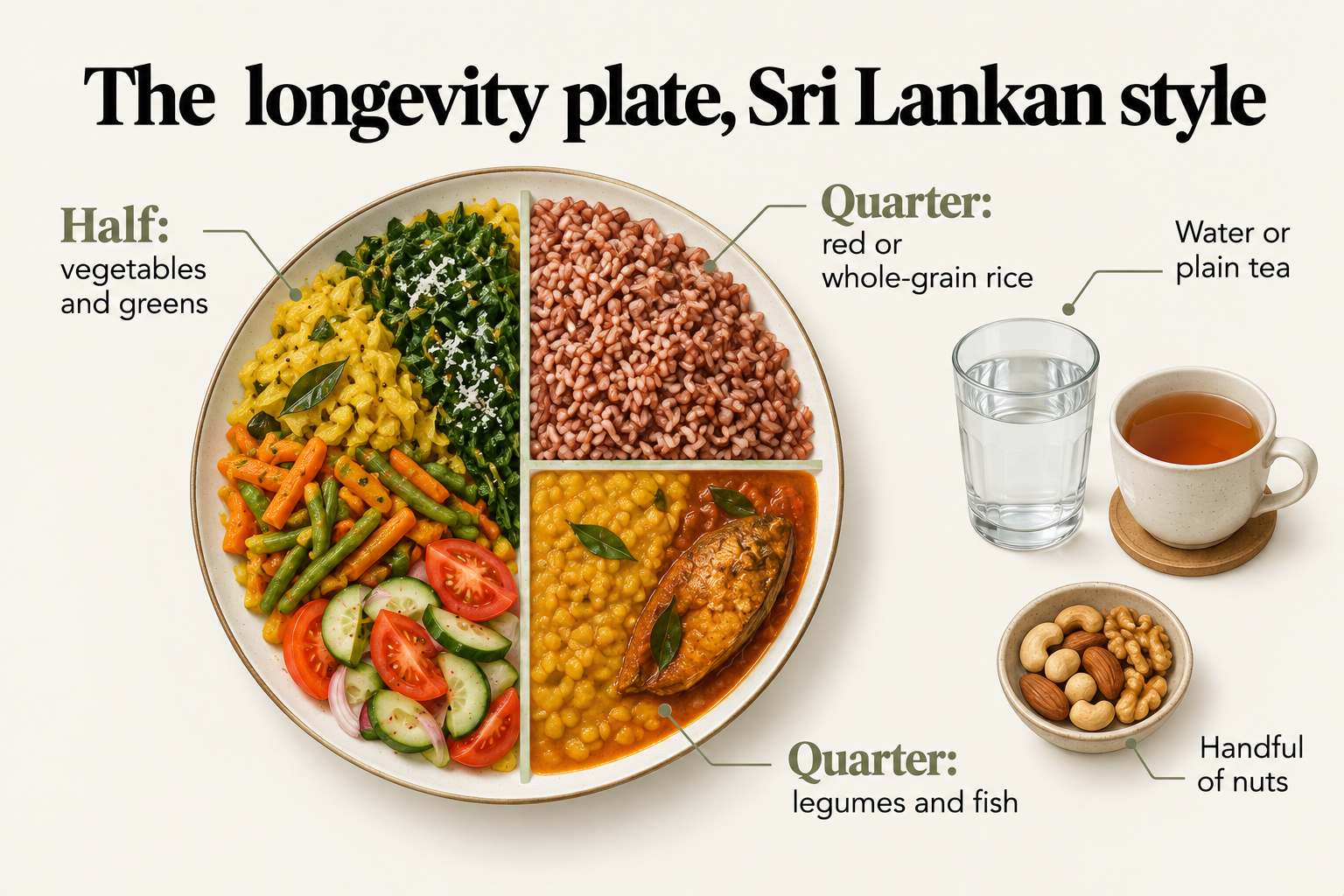
The Healthy Eating Plate, developed by the Harvard T.H. Chan School of Public Health, divides a meal into simple proportions:
- Half: vegetables and fruit, aiming for colour and variety. Potatoes don't count as vegetables because of their effect on blood sugar.
- A quarter: whole grains, such as brown or red rice, oats and whole wheat.
- A quarter: healthy protein, such as fish, poultry, beans and nuts. Limit red meat and avoid processed meat.
- Healthy oils in moderation, and avoid partially hydrogenated (trans) fats.
- Drinks: water, tea or coffee; limit juice and avoid sugary drinks.
Its central message is that "the type of carbohydrate in the diet is more important than the amount".
Adapting it to rice and curry
Rice: smaller portion, better grain. In many Sri Lankan meals, rice fills most of the plate. Move it to about a quarter and choose red, brown or less-polished rice, or rotate with kurakkan, oats or other whole grains (see Know Your Rice and Sugar and Refined Carbohydrates). String hoppers, hoppers and pittu made from white flour count as refined grains; red rice flour or kurakkan versions are better choices.
Vegetables and greens: half the plate. Aim for at least two or three vegetable curries or salads per meal, including a leafy green mallung (gotukola, kankun, mukunuwenna or kathurumurunga). Vary the colours: pumpkin, carrots, beetroot, beans, brinjal, okra, gourds and tomatoes. Variety also feeds the gut microbiome; try to reach 30 different plant foods a week (see The Gut Microbiome and Fermented Foods).
Protein: legumes daily, fish often. Include dhal, chickpeas, green gram, cowpea or soya every day (see Know Your Legumes). Eat fish, especially small oily fish such as sardines and mackerel, at least twice a week. Eggs and chicken are good choices; keep red meat occasional and processed meat rare (see Meat, Fish and Eggs).
Fats: use, don't drown. Coconut milk and coconut oil are central to Sri Lankan cooking. Use them in moderation, rather than in large amounts in every curry, and include other sources of healthy fats such as fish, nuts and seeds (see Fats in the Sri Lankan Diet). Limit deep-fried foods, and avoid reusing frying oil many times.
Nuts and seeds: a daily handful. A 2016 meta-analysis of 20 studies found that each 28 g a day of nuts, about a handful, was linked to a 22% lower risk of death from any cause, a 29% lower risk of coronary heart disease and a 15% lower risk of cancer, with similar results for tree nuts and peanuts. Cashews, peanuts, almonds and sesame or flax seeds all count. Choose unsalted, unsweetened versions.
Spices: flavour instead of salt. Turmeric, cinnamon, curry leaves, garlic, ginger, pepper, cumin and coriander add flavour and colour without salt and contain compounds with antioxidant and anti-inflammatory effects in laboratory studies. Evidence that they extend life on their own is limited, so their main value is making healthy food tasty. Ceylon (true) cinnamon contains much less coumarin, a compound that can harm the liver in large amounts, than the cassia cinnamon common in other countries.
Salt: the biggest single fix. According to the WHO, most Sri Lankans eat more than the recommended maximum of 5 g of salt a day, with average intake about double. Salt comes from cooking, but also from dried fish, Maldive fish, pickles, papadam, bread, short eats and instant noodles. High salt intake raises blood pressure, a leading cause of stroke and heart disease (see Lowering Blood Pressure Without Medication).
Drinks. Drink water as the default. Plain tea and coffee are fine, but reduce the sugar and condensed milk (see Tea, Coffee and Longevity). Limit fruit juice and avoid soft drinks.
A sample day
- Breakfast: red rice string hoppers or kurakkan roti with dhal curry and pol sambol, or oats with fruit and nuts; plain tea with little or no sugar.
- Lunch: a quarter plate of red rice, fish curry, dhal, gotukola mallung, a vegetable curry and a cucumber and tomato salad.
- Snack: a handful of unsalted nuts, a piece of fruit or plain curd.
- Dinner: a lighter version of lunch, or vegetable and egg curry with a small portion of whole-grain roti.
Recommendations by scenario
| Scenario | What to do |
|---|---|
| Busy weekday | Cook a big pot of dhal and two vegetable curries for several days; add a quick mallung |
| Eating out | Choose rice and curry over fried rice or kottu; ask for more vegetables and less rice |
| Overweight or prediabetes | Halve the rice, double the vegetables and add protein to every meal |
| High blood pressure | Cut salty extras (dried fish, pickles, papadam) and cook with less salt and more spices |
| Vegetarian | Include legumes, soya and nuts daily, plus curd or milk; check vitamin B12 |
| Older adult | Include protein at every meal (fish, eggs, dhal, milk) to protect muscle |
| Feeding a family | Serve vegetables first and let rice be the side, not the base |
Practical notes
You don't need to give up rice and curry to eat for longevity. Change the proportions so vegetables and greens fill half the plate, make rice a quarter and choose whole grains, include legumes daily and fish often, enjoy a handful of nuts, use spices instead of salt, and drink water or plain tea. Small, consistent changes to everyday meals add up to one of the most powerful things you can do for long-term health (see Eating Patterns for Longevity). Nutrition at different life stages is covered in Nutrition by Life Stage.
- Harvard T.H. Chan School of Public Health. Healthy Eating Plate. The Nutrition Source.
- Aune D, et al. Nut consumption and risk of cardiovascular disease, total cancer, all-cause and cause-specific mortality: a systematic review and dose-response meta-analysis of prospective studies. BMC Medicine, 2016;14:207.
- World Health Organization Sri Lanka. National meeting on implementing the National Salt Reduction Strategy. 2020.
- Reynolds A, et al. Carbohydrate quality and human health: a series of systematic reviews and meta-analyses. The Lancet, 2019;393(10170):434-445.
- Mozaffarian D, Rimm EB. Fish intake, contaminants, and human health: evaluating the risks and the benefits. JAMA, 2006;296(15):1885-1899.
Free longevity assessment
How much of your plate
is rice today?
Take the free Aevum Protocol assessment to see how your nutrition & metabolism and 6 other longevity domains are performing — and get a personalised 90-day plan.
Take the free assessmentKeep reading
Related articles
Nutrition & Metabolism
Know Your Rice: Understanding White, Brown, Red & Black Rice in the Sri Lankan Context
Nutrition & Metabolism
Eating Patterns for Longevity: What the Mediterranean Diet and Other Healthy Patterns Have in Common
Nutrition & Metabolism