Nutrition & Metabolism
The Gut Microbiome and Fermented Foods:
How Gut Bacteria Shape Healthy Ageing
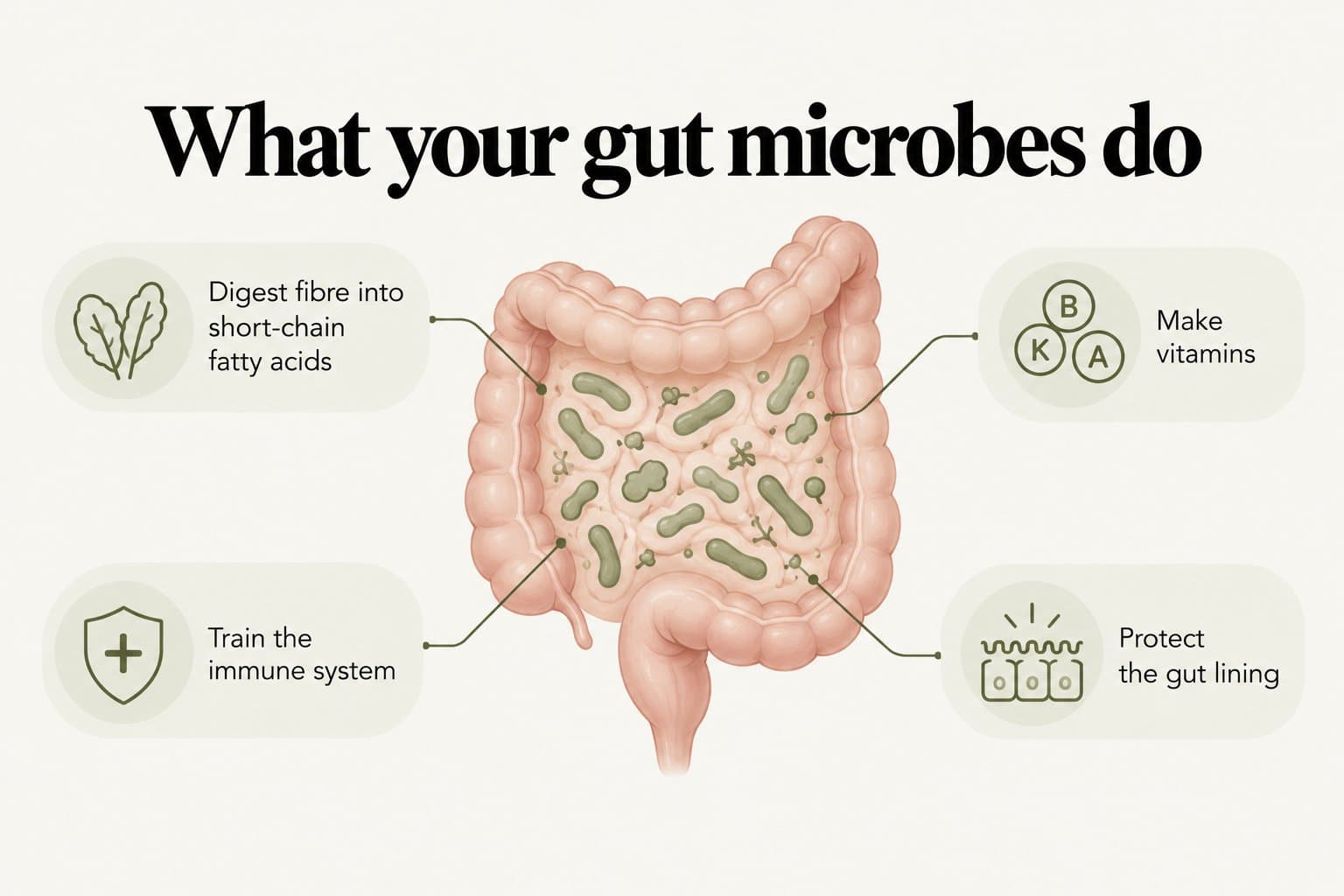
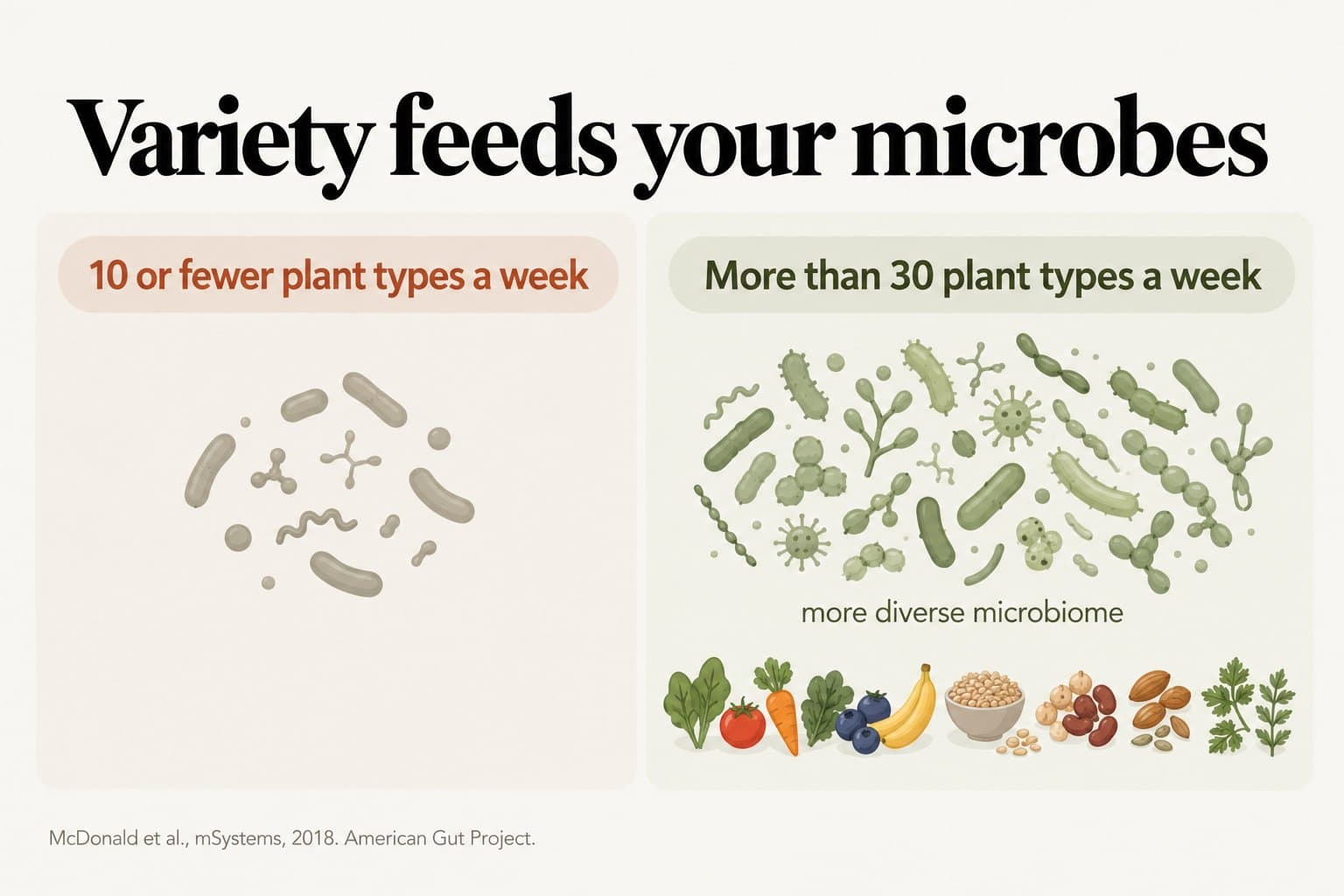
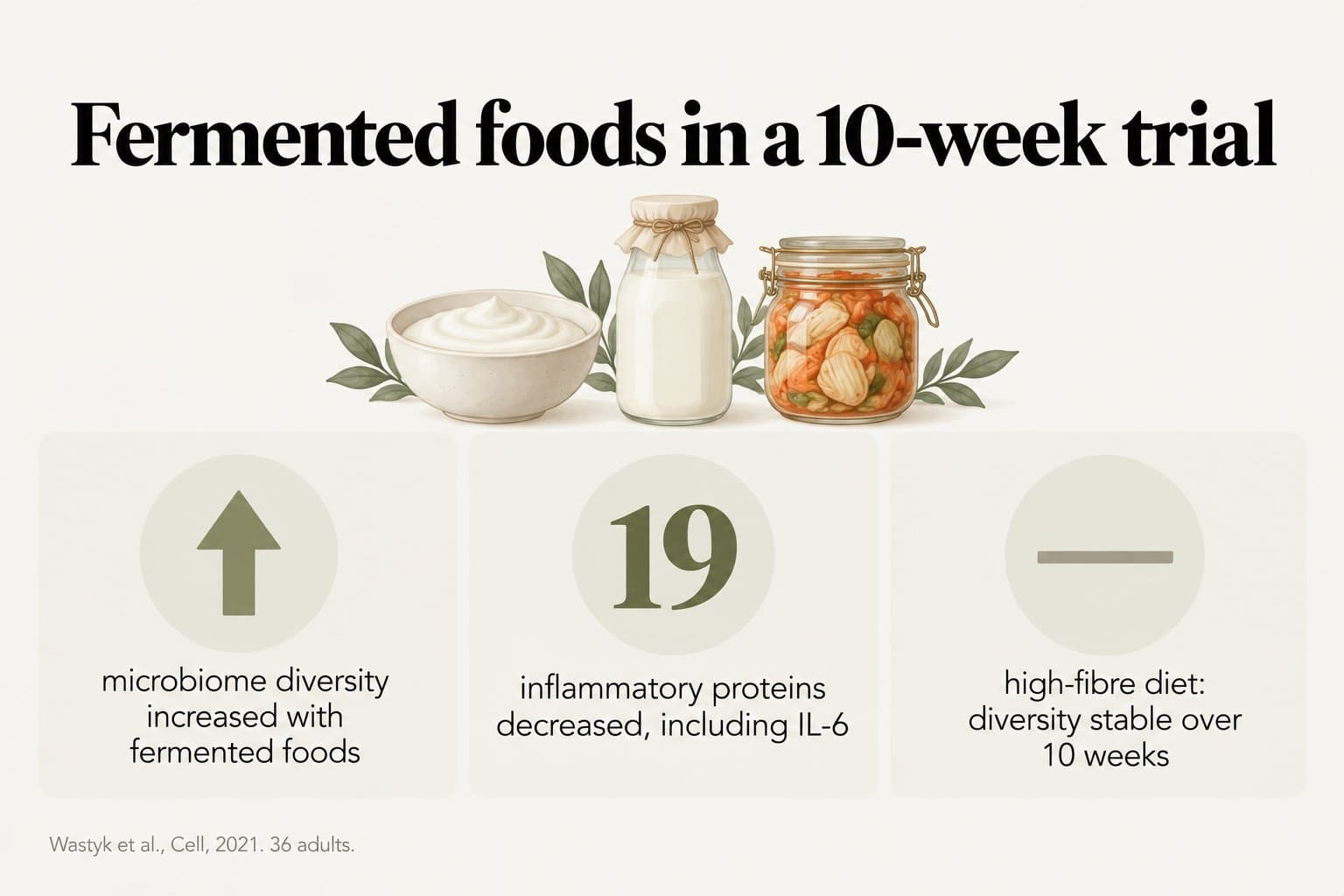
Your gut is home to trillions of bacteria and other microbes, collectively called the gut microbiome. They help digest fibre, make vitamins and short-chain fatty acids, train the immune system and protect the gut lining. Diet is one of the strongest influences on the microbiome, and research increasingly links it to healthy ageing. A study of over 9,000 people found that, in healthy older adults, the microbiome becomes increasingly unique with age, and that this pattern predicted survival in people in their late 70s to 90s. Two simple habits stand out. In the American Gut Project, people who ate more than 30 different plant foods a week had more diverse microbiomes than those who ate 10 or fewer. And in a Stanford trial, adults who ate more fermented foods, such as yoghurt, kefir and fermented vegetables, for 10 weeks had a more diverse microbiome and lower levels of 19 inflammatory proteins. The microbiome is a young science, and many claims about probiotics and "gut health" products run ahead of the evidence. This article explains what's known and what you can do.
Key numbers
| Finding | Detail |
|---|---|
| Gut microbiome and ageing (over 9,000 people, 3 cohorts) | Increasing microbiome uniqueness with age predicted survival in adults aged 78-98 |
| Plant variety (American Gut Project, 11,336 people) | Over 30 plant types a week linked to a more diverse microbiome than 10 or fewer |
| Fermented food trial (36 adults, 10 weeks, Stanford) | More microbial diversity; 19 inflammatory proteins decreased |
| High-fibre arm of the same trial | Microbial diversity stable on average; no decrease in inflammatory proteins |
| Fibre intake for health (WHO-commissioned review) | At least 25-29 grams a day |
What the gut microbiome does
The large intestine contains the densest community of microbes in the body. Together, they:
- Digest fibre that human enzymes can't break down, producing short-chain fatty acids such as butyrate, which nourish the cells lining the colon and help regulate inflammation and metabolism.
- Make vitamins, including vitamin K and some B vitamins.
- Train and regulate the immune system, much of which is located in and around the gut.
- Protect the gut barrier and compete with harmful microbes.
- Influence metabolism, appetite and possibly mood, through signals to the liver, fat tissue and brain.
An unhealthy microbiome, with fewer species and more inflammatory microbes, has been linked to obesity, type 2 diabetes, inflammatory bowel disease, heart disease and other conditions, although in many cases it's not yet clear whether the microbiome is a cause or a consequence.
What shapes your microbiome
- Diet: fibre and plant variety feed beneficial microbes; diets high in ultra-processed foods and low in fibre reduce diversity.
- Antibiotics: can sharply reduce diversity, and recovery may take months.
- Age: the microbiome changes across life, from birth to old age.
- Other factors: medicines such as acid-reducing drugs, illness, stress, sleep, physical activity, alcohol and where you live.
What the research shows
The microbiome and healthy ageing. A 2021 study in Nature Metabolism analysed the microbiomes of over 9,000 people aged 18 to 101 in three groups. From mid-to-late adulthood, healthy people's microbiomes became increasingly unique, drifting away from those of other people, while common bacteria such as Bacteroides declined. In more than 900 community-dwelling adults aged 78-98, this uniqueness pattern predicted survival: those whose microbiomes kept a more typical, less unique composition had a higher risk of death. Uniqueness was also linked to blood levels of microbial metabolites, including some previously associated with longevity. The study shows an association, not cause and effect, but suggests the microbiome changes in a healthy way as we age.
Plant variety. The American Gut Project, a citizen-science study of 11,336 people in more than 40 countries, found that people who ate more than 30 different plant types a week had more diverse microbiomes than those who ate 10 or fewer. They also had fewer antibiotic-resistance genes in their gut bacteria. This finding, though based on small groups of participants, is the origin of the popular "30 plants a week" advice. Plants include vegetables, fruits, whole grains, legumes, nuts, seeds, herbs and spices.
Fermented foods vs fibre. In a 2021 Stanford trial published in Cell, 36 healthy adults were assigned to 10 weeks of either a high-fermented-food diet, including yoghurt, kefir, fermented cottage cheese, kimchi, fermented vegetables and kombucha, or a high-fibre diet. In the fermented-food group, microbial diversity increased, with larger effects at higher intakes, four types of immune cells showed less activation, and 19 inflammatory proteins in the blood decreased, including interleukin-6. The researchers described it as one of the first examples of a simple dietary change reproducibly remodelling the microbiome.
The high-fibre group didn't see the same changes: microbial diversity stayed stable on average, and none of the 19 inflammatory proteins fell. The authors suggested that, after years of low-fibre diets, many people's microbiomes may lack the microbes needed to fully use extra fibre. This was a small, short trial, and fibre remains strongly linked to lower disease risk in large studies (see Fibre in the Sri Lankan Diet). The best approach is likely both: plenty of fibre and regular fermented foods.
Probiotics and "gut health" products. Fermented foods contain live microbes, but probiotic supplements are a different matter. Some specific probiotic strains have evidence for specific uses, such as reducing diarrhoea linked to antibiotics, but there's little evidence that general probiotic supplements improve health in healthy people. Products differ widely in the strains and amounts they contain. For most people, food is a better first step than supplements.
Fermented foods in a Sri Lankan diet
Sri Lanka has a rich tradition of fermented foods:
- Curd and yoghurt: buffalo curd and plain yoghurt are excellent sources of live cultures. Choose unsweetened versions and add fruit rather than treacle or sugar (see Fresh Milk vs Powdered Milk).
- Fermented batters: hoppers, idli and dosa are made from fermented batters; the microbes are mostly killed by cooking, but fermentation can improve digestibility.
- Pickles: traditionally fermented pickles contain live microbes, but many commercial versions are made with vinegar, and most are high in salt.
Kefir, kimchi and sauerkraut are increasingly available and can also be made at home.
Why this matters for longevity
The gut microbiome influences inflammation, metabolism and immunity, three key drivers of ageing. Chronic, low-grade inflammation in particular is linked to heart disease, diabetes, dementia and frailty (see Inflammation and Heart Disease). A diverse, plant-rich diet with regular fermented foods supports a healthier microbiome and is consistent with the eating patterns linked to longer life (see Eating Patterns for Longevity).
Practical notes
- Aim for variety: try to eat 30 or more different plant foods a week, counting vegetables, fruit, whole grains, legumes, nuts, seeds, herbs and spices.
- Eat fermented foods daily: a serving or two of plain curd, yoghurt or kefir is a simple start.
- Get enough fibre: at least 25-29 grams a day from whole grains, legumes, vegetables and fruit; increase gradually to avoid bloating.
- Limit ultra-processed foods (see Ultra-Processed Foods).
- Use antibiotics only when needed, and follow medical advice.
- Be cautious about expensive gut-health supplements and tests: the evidence for most is limited.
- Wilmanski T, et al. Gut microbiome pattern reflects healthy ageing and predicts survival in humans. Nature Metabolism, 2021;3(2):274-286.
- McDonald D, et al. American Gut: an open platform for citizen science microbiome research. mSystems, 2018;3(3):e00031-18.
- Wastyk HC, et al. Gut-microbiota-targeted diets modulate human immune status. Cell, 2021;184(16):4137-4153.
- Reynolds A, et al. Carbohydrate quality and human health: a series of systematic reviews and meta-analyses. The Lancet, 2019;393(10170):434-445.
Free longevity assessment
How many different plant foods
did you eat this week?
Take the free Aevum Protocol assessment to see how your nutrition & metabolism and 6 other longevity domains are performing — and get a personalised 90-day plan.
Take the free assessmentKeep reading
Related articles
Nutrition & Metabolism
Fibre in the Sri Lankan Diet: The Nutrient Everyone Underestimates
Nutrition & Metabolism
Ultra-Processed Foods: What They Are, Why They Matter and How to Read a Label
Nutrition & Metabolism