Nutrition & Metabolism
Ultra-Processed Foods:
What They Are, Why They Matter and How to Read a Label
Ultra-processed foods (UPFs) are industrial products made mostly from refined ingredients and additives, such as soft drinks, packaged snacks, biscuits, instant noodles, sweetened breakfast cereals, processed meats and many ready meals. They're cheap, convenient and designed to be very tasty, and they now make up a large share of diets around the world. Evidence of harm has grown rapidly. In a US National Institutes of Health trial, people offered an ultra-processed diet ate about 500 more calories a day and gained 0.9 kg in two weeks, compared with an unprocessed diet with meals matched for calories, sugar, fat and fibre. A 2024 BMJ review of 45 meta-analyses covering almost 10 million people found convincing evidence linking high UPF intake to about a 50% higher risk of death from cardiovascular disease, a 48-53% higher risk of anxiety and common mental disorders, and a 12% higher risk of type 2 diabetes, plus a 21% higher risk of death from any cause. Not every processed food is harmful, and the evidence is mostly observational, but eating mostly fresh and minimally processed food is a sensible goal. This article explains how to recognise UPFs, why they matter and how to read labels, including Sri Lanka's colour-coded labels.
Key numbers
| Finding | Detail |
|---|---|
| UPF diet trial (20 adults, NIH, 2 weeks per diet) | About 500 more calories a day; 0.9 kg gained vs 0.9 kg lost on the unprocessed diet |
| UPFs and health (45 meta-analyses, almost 10 million people) | Convincing evidence for ~50% higher cardiovascular death, 48-53% higher anxiety and common mental disorders, 12% higher type 2 diabetes |
| UPFs and death from any cause (same review) | 21% higher risk (highly suggestive evidence) |
| UPFs and depression (same review) | 22% higher risk |
| Sri Lanka's colour-coded labels | Sugar in drinks from 2016; sugar, salt and fat in solid foods from January 2020 |
What makes a food "ultra-processed"
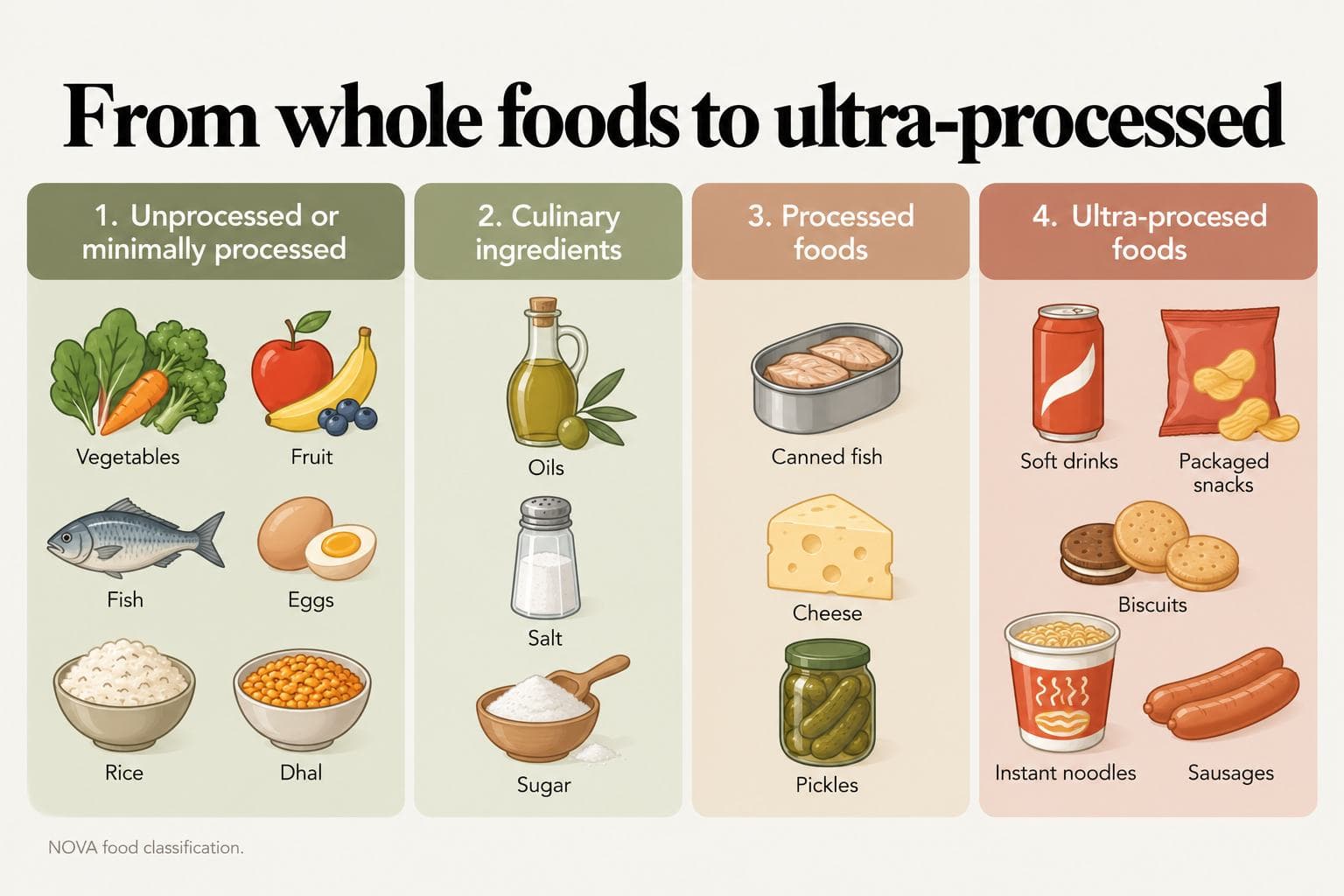
The NOVA system, the most widely used classification, sorts foods into four groups by how much they've been processed:
- 1. Unprocessed or minimally processed foods: fresh vegetables, fruit, eggs, fish, meat, milk, rice, dhal, plain curd, nuts.
- 2. Processed culinary ingredients: oils, butter, sugar and salt, used in home cooking.
- 3. Processed foods: simple products made by adding salt, sugar or oil to foods, such as canned fish, cheese, freshly made bread and pickles.
- 4. Ultra-processed foods: industrial formulations made mostly from substances extracted from foods (such as refined starches, sugars, oils and proteins) plus additives like flavourings, colours, emulsifiers and sweeteners, with little or no whole food.
A useful rule of thumb: if the ingredient list is long and includes things you wouldn't find in a home kitchen, such as glucose syrup, hydrogenated oil, flavour enhancers, emulsifiers or colours, it's probably ultra-processed.
Common examples include soft drinks and energy drinks, packaged snacks and chips, biscuits and cakes, instant noodles, sweetened breakfast cereals, flavoured yoghurts, sausages, meatballs and other processed meats, and many fast foods.
Why ultra-processed foods matter
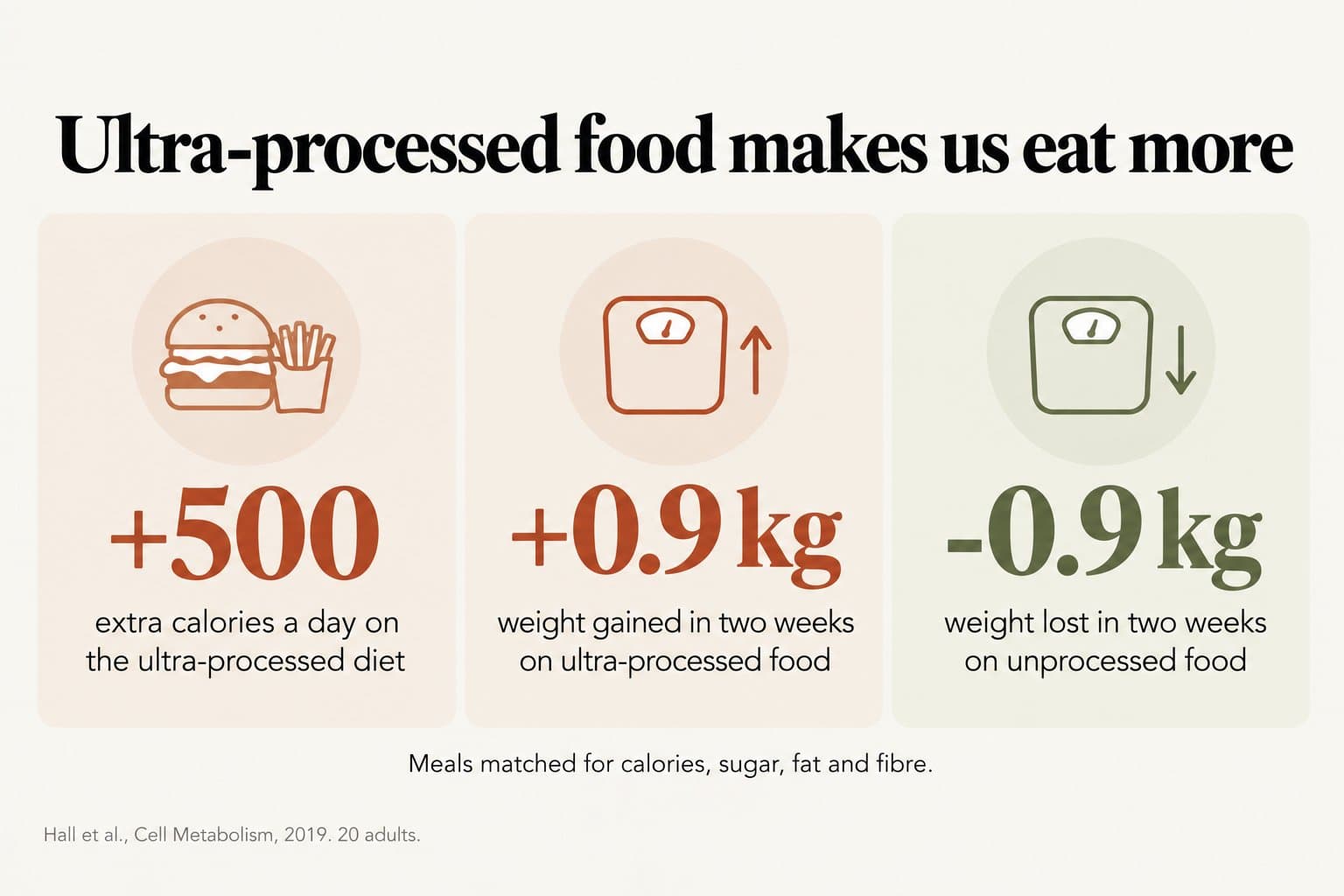
They make us eat more. In 2019, US National Institutes of Health researchers ran the first randomised trial of UPFs. Twenty adults lived at the research centre for a month, eating an ultra-processed diet for two weeks and an unprocessed diet for two weeks, in random order. The meals offered were matched for calories, sugar, fibre, fat and carbohydrate, and participants could eat as much as they liked. On the ultra-processed diet, they ate about 500 more calories a day, ate faster and gained 0.9 kg; on the unprocessed diet, they lost a similar amount. The researchers concluded that UPFs cause overeating and weight gain.
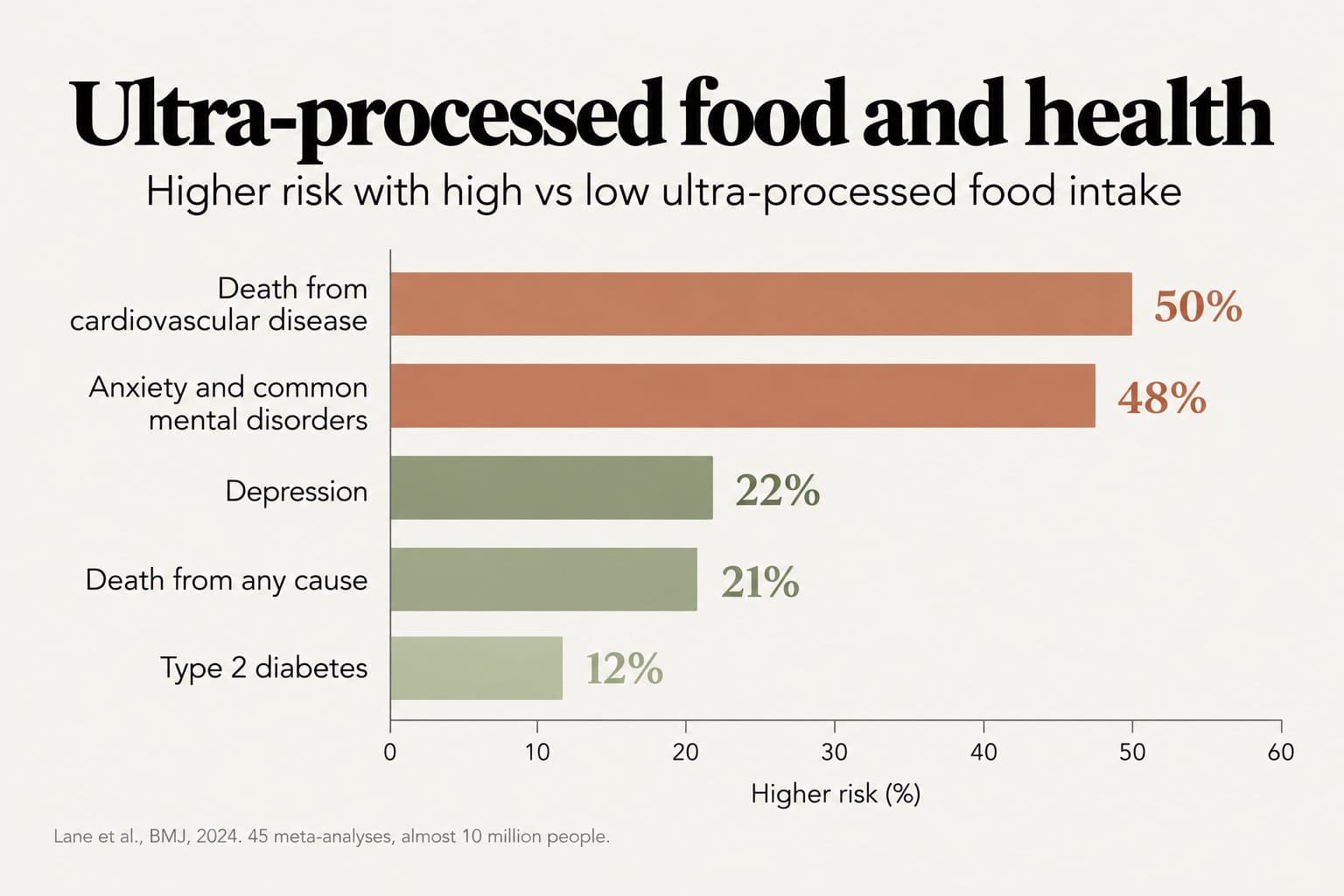
They're linked to many chronic diseases. A 2024 umbrella review in The BMJ combined 45 meta-analyses, including almost 10 million participants, and found that higher UPF intake was linked to 32 harmful health outcomes. The evidence was rated as convincing for:
- Death from cardiovascular disease: about 50% higher risk.
- Anxiety and common mental disorders: 48-53% higher risk.
- Type 2 diabetes: 12% higher risk.
There was highly suggestive evidence for a 21% higher risk of death from any cause, a 40-66% higher risk of death from heart disease, obesity, sleep problems and a 22% higher risk of depression. These are mostly observational studies, so they show association rather than proof, but the consistency across many outcomes is striking.
Why they might be harmful.
- High in sugar, refined starch, salt and unhealthy fats, and low in fibre, vitamins and minerals (see Sugar and Refined Carbohydrates).
- Soft textures and intense flavours that make them quick to eat and easy to overeat.
- Displacement: they crowd out vegetables, legumes, whole grains and fruit.
- Additives and packaging chemicals: some emulsifiers and sweeteners may affect the gut microbiome, and plastic packaging can be a source of chemicals such as phthalates, although human evidence is still developing (see The Gut Microbiome and Fermented Foods and Endocrine Disruptors and Fertility).
Risk factor table: ultra-processed foods and health
| Factor | Effect | Modifiable? | Evidence strength |
|---|---|---|---|
| Sugary drinks and energy drinks | Excess sugar and calories; linked to weight gain and diabetes | Yes | Strong |
| Processed meats (sausages, ham, bacon) | Linked to bowel cancer and heart disease | Yes | Strong |
| Packaged snacks, biscuits and sweets | High in sugar, salt and unhealthy fat; easy to overeat | Yes | Moderate |
| Instant noodles and ready meals | High in salt and refined starch, low in fibre | Yes | Moderate |
| Sweetened cereals and flavoured yoghurts | Hidden sugars; marketed as healthy | Yes | Moderate |
| Eating quickly and while distracted | Encourages overeating | Yes | Moderate |
| Low cost and easy availability of UPFs | Drives higher intake | Partly | Strong |
What you can actually change
1. Swap your biggest sources first. Most people get much of their UPF intake from a few foods. Replace sugary drinks with water, plain tea or coffee, and swap packaged snacks for fruit, nuts, roasted chickpeas or plain curd.
2. Cook simple meals at home. Rice, dhal, vegetables, fish and eggs prepared at home are minimally processed. Batch cooking helps on busy days.
3. Choose the less-processed version. Plain curd instead of flavoured yoghurt, oats instead of sweetened cereals, fresh fish or chicken instead of sausages or nuggets, and wholemeal bread with a short ingredient list.
4. Read the label.
- Check the ingredient list: ingredients are listed in order of quantity. A short list of recognisable foods is a good sign; long lists with additives, syrups and modified starches suggest ultra-processing.
- Look for hidden sugars: sugar, glucose syrup, sucrose, dextrose, fructose, maltose, honey and fruit juice concentrate.
- Use Sri Lanka's colour codes: since 2016 for drinks and January 2020 for solid foods, many packaged products carry a red, amber or green code for sugar, salt and fat. Choose more green, fewer reds.
- Compare per 100 g, not per serving, as serving sizes vary.
- Don't trust front-of-pack claims such as "natural", "multigrain" or "low fat" without checking the label.
5. Don't aim for perfection. Some processed foods, such as canned fish, plain yoghurt, frozen vegetables and wholemeal bread, are convenient and healthy. The goal is to make fresh and minimally processed foods the base of your diet.
Recommendations
- Build most meals around whole and minimally processed foods (see Eating Patterns for Longevity).
- Make sugary drinks an occasional treat, not a daily habit.
- Limit processed meats (see Meat, Fish and Eggs).
- Read labels and use the colour codes when choosing packaged foods.
- Be especially careful with children's diets, as habits formed early tend to last.
Practical notes
Ultra-processed foods are designed to be convenient and hard to stop eating. A controlled trial shows that they cause people to eat more and gain weight, and large reviews link them to heart disease, diabetes, mental health problems and earlier death. You don't need to eliminate them completely, but making fresh and minimally processed foods the core of your diet, cooking simple meals and reading labels are some of the most effective steps you can take for long-term health.
- Hall KD, et al. Ultra-processed diets cause excess calorie intake and weight gain: an inpatient randomized controlled trial of ad libitum food intake. Cell Metabolism, 2019;30(1):67-77.
- Lane MM, et al. Ultra-processed food exposure and adverse health outcomes: umbrella review of epidemiological meta-analyses. BMJ, 2024;384:e077310.
- Monteiro CA, et al. Ultra-processed foods: what they are and how to identify them. Public Health Nutrition, 2019;22(5):936-941.
- Ministry of Health, Sri Lanka. Food (Colour Coding for Sugar, Salt and Fat) Regulations, 2019. Reported by Food Compliance International.
Free longevity assessment
How much of what you ate today
came out of a packet?
Take the free Aevum Protocol assessment to see how your nutrition & metabolism and 6 other longevity domains are performing — and get a personalised 90-day plan.
Take the free assessmentKeep reading
Related articles
Nutrition & Metabolism
Sugar and Refined Carbohydrates: What They Do to Your Metabolism and How to Cut Back
Nutrition & Metabolism
The Gut Microbiome and Fermented Foods: How Gut Bacteria Shape Healthy Ageing
Nutrition & Metabolism