Reproductive & Sexual Health
Endocrine Disruptors and Fertility:
What the Evidence Shows and Practical Ways to Reduce Exposure
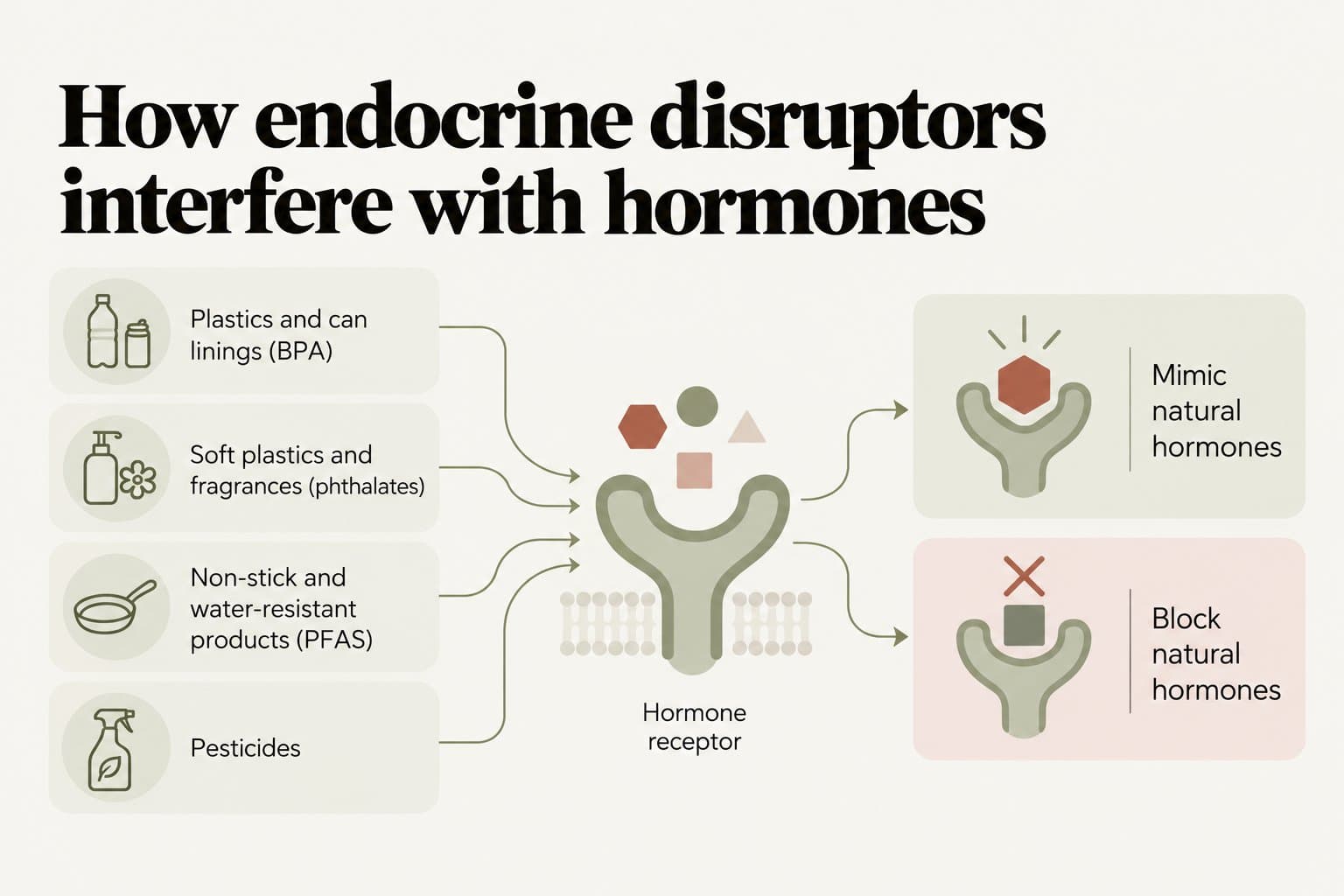
Endocrine-disrupting chemicals (EDCs) are substances that interfere with the body's hormones. They include bisphenol A (BPA) in some plastics and can linings, phthalates in soft plastics and fragranced products, some pesticides, and "forever chemicals" (PFAS) used in non-stick and water-resistant products. Because fertility depends on finely balanced hormones, there's concern that EDCs contribute to falling sperm counts and other reproductive problems. The Endocrine Society's scientific statement found strong mechanistic, animal and human evidence that EDCs affect both female and male reproduction, with the fetus and infant especially vulnerable. Human evidence is strongest for phthalates: a systematic review found "robust" evidence linking two common phthalates to poorer male reproductive outcomes. The American College of Obstetricians and Gynecologists links toxic environmental exposures to infertility, miscarriage and other problems and advises reducing them. The good news is that some exposures fall quickly: in a small US study, eating fresh, unpackaged food for three days cut BPA levels by over 60% and a major phthalate by over 50%. There's no proof yet that reducing exposure improves pregnancy rates, but simple steps are low-cost and sensible. This article explains what's known and what you can do.
Key numbers
| Finding | Detail |
|---|---|
| Endocrine Society scientific statement | Strong mechanistic, animal and human evidence for effects on female and male reproduction |
| Phthalates and male reproduction (systematic review) | "Robust" evidence for DEHP and DBP; moderate for several others |
| Fresh-food diet for 3 days (5 families) | BPA down by over 60%; DEHP metabolites down by over 50% |
| Most vulnerable period (Endocrine Society) | Fetal development and infancy |
| Trials showing that reducing exposure improves fertility | None yet |
What endocrine disruptors are
EDCs can mimic natural hormones such as oestrogen, block hormones such as testosterone, or interfere with how hormones are made, transported or broken down. Common examples include:
- Bisphenols (such as BPA): in some hard plastics, can linings and thermal till receipts.
- Phthalates: in soft plastics, food packaging and wrap, vinyl, and fragrances in personal care and cleaning products.
- PFAS ("forever chemicals"): in non-stick cookware, water- and stain-resistant fabrics, some food packaging and firefighting foam; they persist for years in the body and the environment.
- Some pesticides: used on crops and in homes.
- Persistent pollutants: such as PCBs and dioxins, which build up in animal fat.
The Endocrine Society notes that EDCs can act at low doses, may not follow a simple "more is worse" pattern, and are most harmful during development in the womb and early life.
Evidence strength
Strong: EDCs disrupt reproductive hormones in experimental and animal studies. The Endocrine Society's second scientific statement found "strong mechanistic, experimental, animal, and epidemiological evidence" that EDCs affect female and male reproduction, among other systems. The chemicals with the most information were BPA, phthalates, pesticides and persistent pollutants. It emphasised "developmental vulnerability", especially exposure in the fetus and infant, which may affect reproductive health many years later.
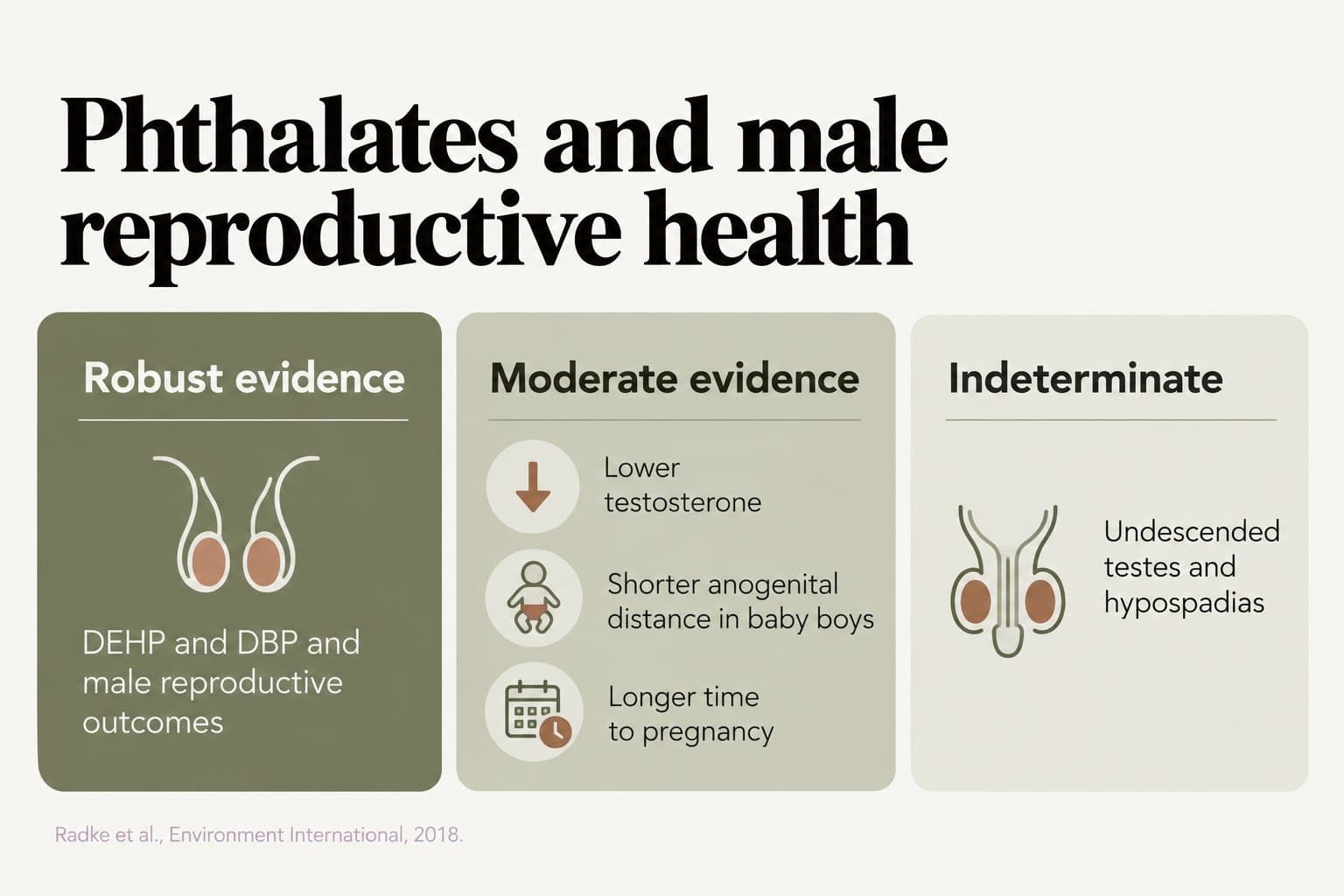
Moderate to strong: phthalates and male reproductive health in humans. A systematic review of human studies of phthalates and male reproduction rated the evidence as:
- Robust for DEHP and DBP and male reproductive outcomes, including semen quality for DBP.
- Moderate for links with lower testosterone, shorter anogenital distance in baby boys (a marker of reduced testosterone exposure in the womb) and longer time to pregnancy for some phthalates.
- Indeterminate or slight for birth defects such as undescended testes or hypospadias.
The authors concluded that phthalate exposure "at levels seen in human populations may have male reproductive effects". These are observational studies, so they show associations rather than proof of cause, but they are consistent with animal evidence (see Male Fertility and Sperm Health).
Moderate: other EDCs and female fertility. Studies have linked BPA, PFAS and some pesticides with outcomes such as reduced fertility, longer time to pregnancy and poorer IVF results, but findings are less consistent than for phthalates in men. The American College of Obstetricians and Gynecologists (ACOG) states that exposure to toxic environmental agents is associated with infertility, miscarriage, premature birth and low birth weight, and recommends that doctors consider asking about exposures before and during pregnancy.
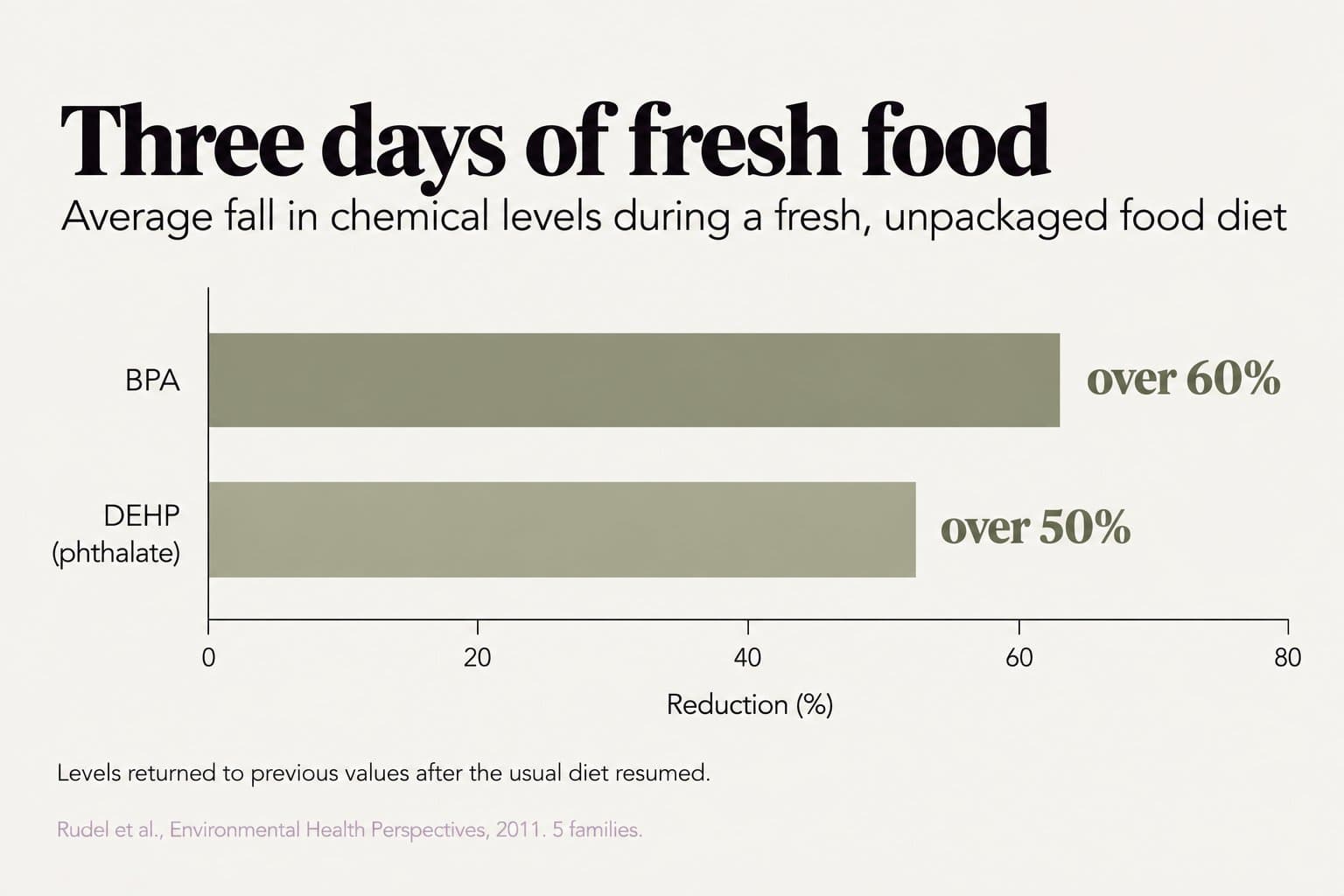
Moderate: changing what you eat and use lowers exposure quickly. Many EDCs, including BPA and phthalates, leave the body within hours to days. In a US study, five families ate fresh, unpackaged food prepared without plastic for three days. Their BPA levels fell by over 60% on average, and their levels of a common phthalate (DEHP) by over 50%, with drops of over 70% and over 90% in the most exposed people. Levels went back up when they returned to their usual diet. PFAS and persistent pollutants, by contrast, remain in the body for years.
Limited: reducing exposure improves fertility. No trials have yet shown that lowering EDC exposure increases pregnancy or birth rates. The advice to reduce exposure is based on the evidence of harm and the low cost and risk of simple changes, not on proof of fertility benefit.
Important limitations.
- Exposure is almost universal, and people are exposed to mixtures, making single chemicals hard to study.
- Most human studies are observational and measure exposure at one point in time.
- Individual control is limited: much exposure comes from food, water, air and products, so policy changes matter as much as personal choices.
- Anxiety isn't helpful: reasonable steps are worthwhile, but perfect avoidance isn't possible or necessary.
Recommendations by situation
| Situation | What the evidence supports |
|---|---|
| Planning a pregnancy (either partner) | Reduce exposure with simple steps for at least three months before trying |
| Pregnant or breastfeeding | Prioritise reducing exposure; the developing baby is most vulnerable |
| Work with pesticides, solvents, metals or chemicals | Discuss workplace protection with your employer and doctor |
| Abnormal semen analysis | Address lifestyle and exposures alongside medical assessment |
| Worried about "forever chemicals" in water | Check local water quality information; some filters reduce PFAS |
| General household | Fresh food, fewer plastics and fragrance-free products are sensible, low-cost steps |
Practical steps to reduce exposure
- Eat more fresh, unprocessed food, and fewer canned and heavily packaged foods.
- Don't heat food in plastic: use glass, ceramic or stainless steel in the microwave and for hot food.
- Store food in glass or steel, and avoid cling film touching fatty or hot foods.
- Choose fragrance-free personal care and cleaning products, and use simple cleaners such as vinegar and baking soda.
- Decline paper receipts when possible, and wash hands after handling them.
- Replace scratched non-stick pans and consider stainless steel or cast iron.
- Wash fruit and vegetables, and reduce pesticide use at home.
- Avoid large predatory fish that may contain mercury during pregnancy, while still eating low-mercury fish.
Practical notes
Endocrine disruptors are everywhere, and there's strong evidence that they can disrupt reproductive hormones, particularly during development. Human evidence is strongest for phthalates and male reproductive health. Exposure to many of these chemicals can be reduced quickly through fresh food, less plastic and fragrance-free products. While there's no proof yet that this improves fertility, these steps are cheap, safe and especially worthwhile when planning a pregnancy (see Preconception Health Guide).
- Gore AC, et al. Executive summary to EDC-2: the Endocrine Society's second scientific statement on endocrine-disrupting chemicals. Endocrine Reviews, 2015;36(6):593-602.
- Radke EG, et al. Phthalate exposure and male reproductive outcomes: a systematic review of the human epidemiological evidence. Environment International, 2018;121:764-793.
- Rudel RA, et al. Food packaging and bisphenol A and bis(2-ethylhexyl) phthalate exposure: findings from a dietary intervention. Environmental Health Perspectives, 2011;119(7):914-920.
- American College of Obstetricians and Gynecologists. Reducing prenatal exposure to toxic environmental agents. Committee Opinion No. 832. Obstetrics & Gynecology, 2021;138(1):e40-e54.
Free longevity assessment
Which everyday exposures
could you cut this week?
Take the free Aevum Protocol assessment to see how your reproductive & sexual health and 6 other longevity domains are performing — and get a personalised 90-day plan.
Take the free assessmentKeep reading
Related articles
Reproductive & Sexual Health
Male Fertility and Sperm Health: What Semen Quality Says About a Man's Health
Reproductive & Sexual Health
Preconception Health Guide: How Both Partners Can Prepare for a Healthy Pregnancy
Reproductive & Sexual Health