Reproductive & Sexual Health
Fertility Supplements:
Which Ones Have Evidence and Which Don't
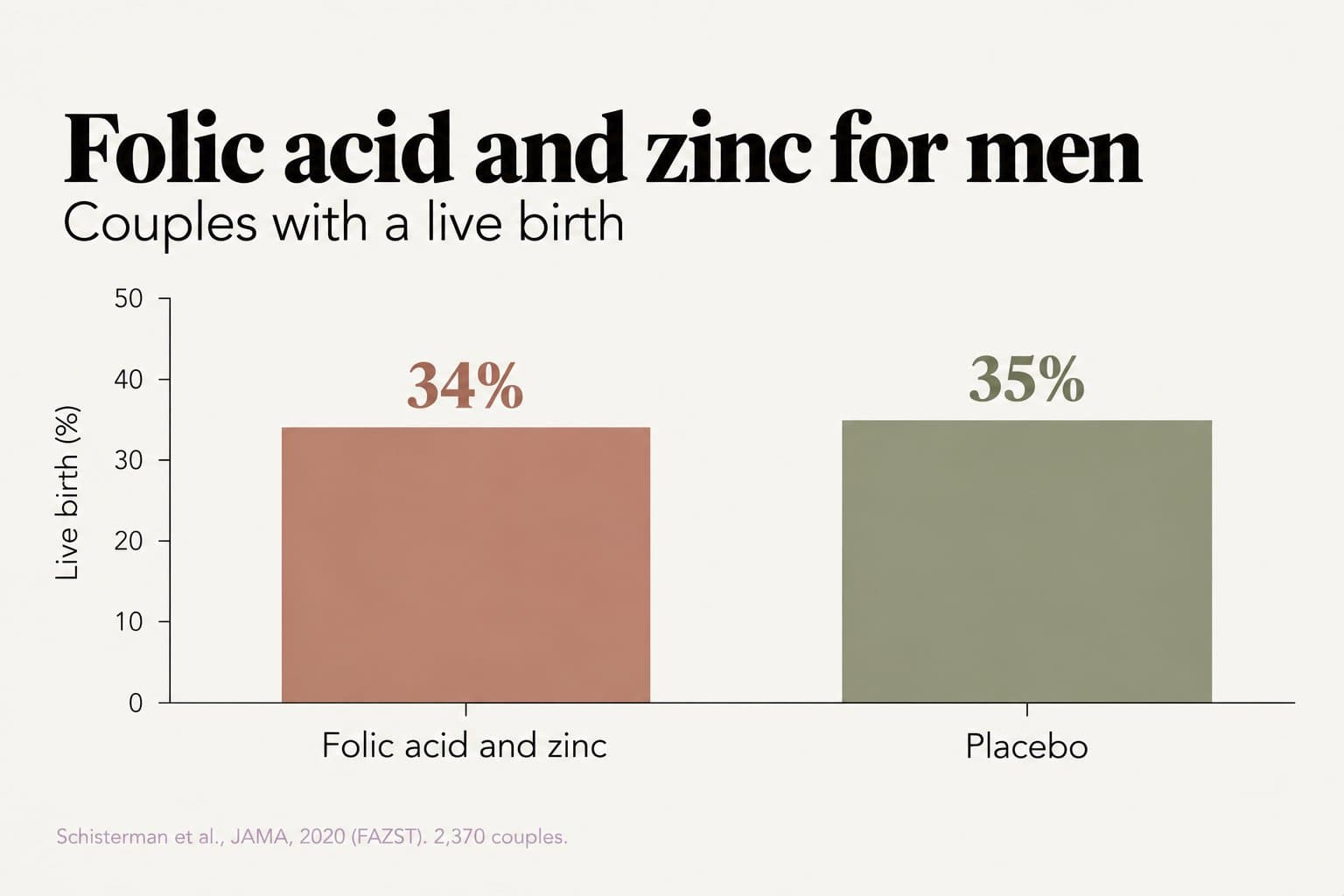
Fertility supplements are a booming market, promising better eggs, healthier sperm and faster conception. The evidence is far less impressive. One supplement has strong proof of benefit: folic acid, taken before and in early pregnancy, prevents serious birth defects of the brain and spine. In a landmark trial, it reduced neural tube defects by 72% in women who'd had a previously affected pregnancy. But for improving the chances of getting pregnant, the picture is disappointing. In the largest trial of its kind, 2,370 couples in which the man took folic acid and zinc or a placebo had almost identical live birth rates (34% vs 35%), and the supplement group had more stomach side effects. A US trial of a popular antioxidant combination for men with abnormal semen found no improvement in sperm quality or births. For women, a Cochrane review of 63 trials found only very low-quality evidence that antioxidants might help. This article explains what the evidence shows for common fertility supplements and where your money and effort are better spent.
Key numbers
| Finding | Detail |
|---|---|
| Folic acid and neural tube defects (1,817 high-risk women, 7 countries) | 72% reduction (RR 0.28) |
| Folic acid and zinc for men (2,370 couples) | Live births 34% vs 35% with placebo; no improvement in semen quality |
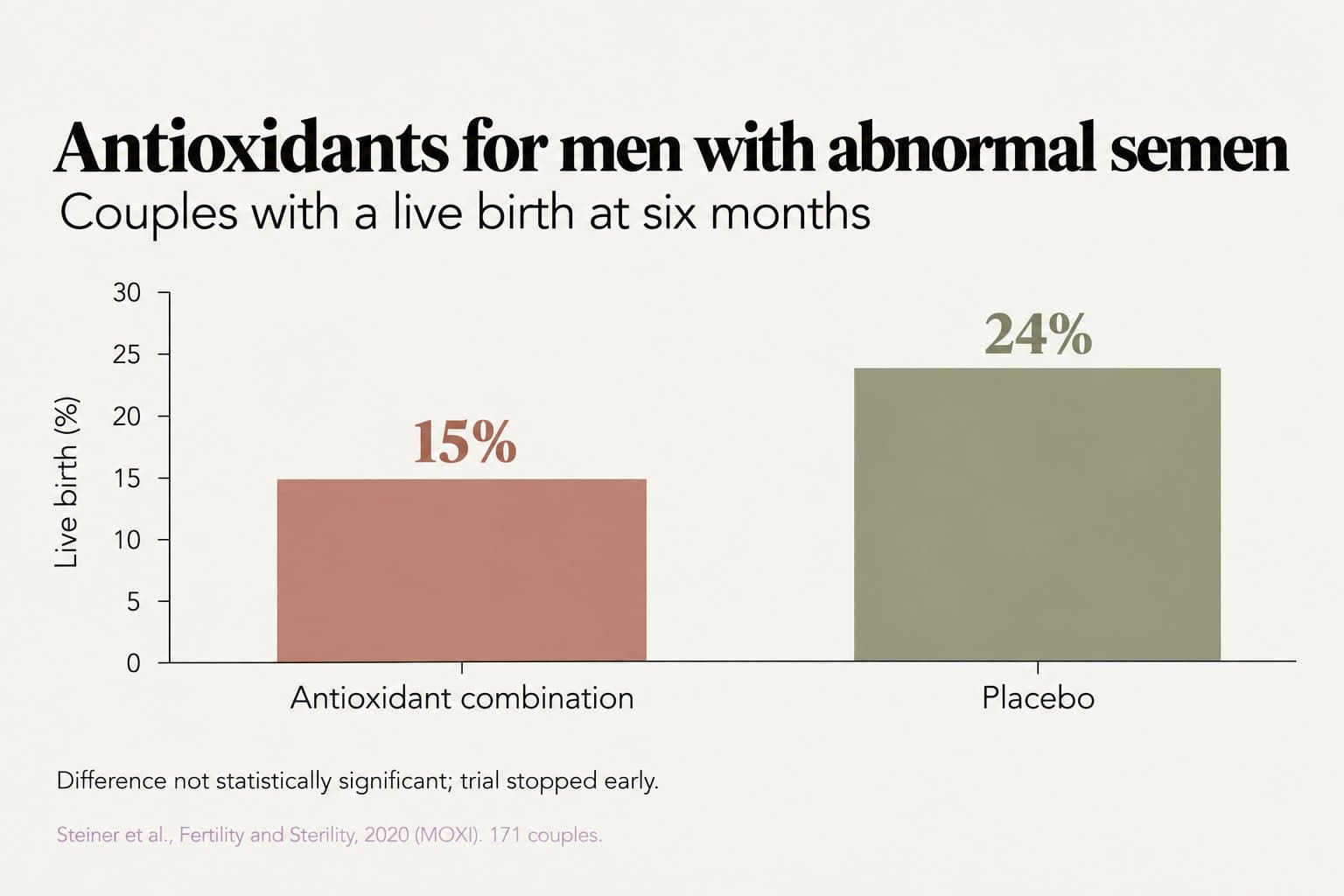
| Antioxidant combination for men with abnormal semen (171 couples) | Live births 15% vs 24% with placebo; no improvement in sperm measures |
| Antioxidants for subfertile women (Cochrane, 63 trials, 7,760 women) | Very low-quality evidence; live birth might rise from 19% to 24-36% |
| Side effects of folic acid and zinc in men (same trial as above) | More abdominal pain, nausea and vomiting; more sperm DNA fragmentation |
Why supplements are so popular
Fertility problems are stressful, treatments are expensive, and supplements feel like something positive to do. Many are marketed with claims based on laboratory studies, small trials or measures such as sperm counts rather than what really matters: a healthy baby. Antioxidants are the most common ingredient, based on the theory that oxidative stress damages eggs and sperm. The theory is plausible, but good trials haven't shown that taking antioxidants improves birth rates.
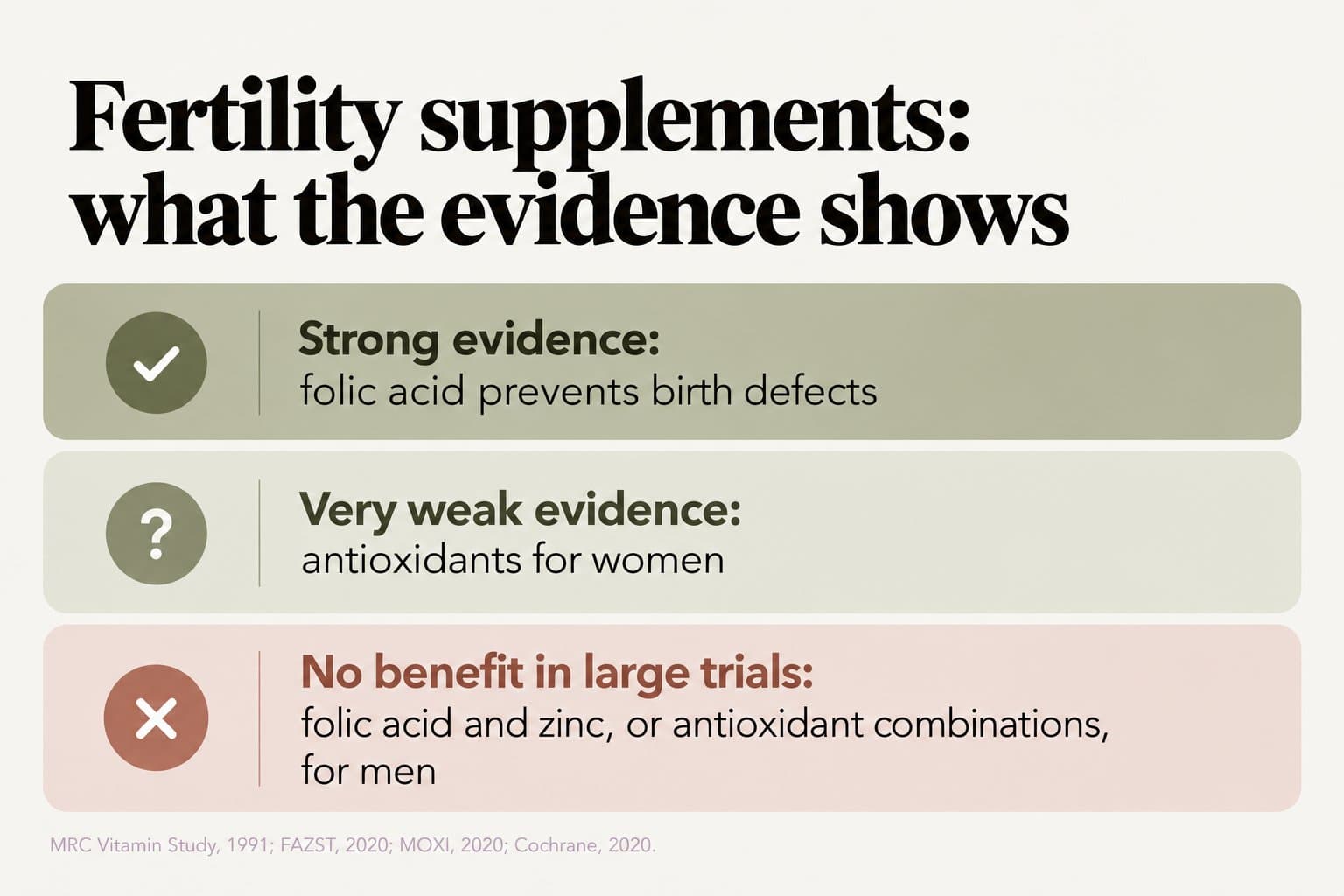
Evidence strength
Strong: folic acid prevents neural tube defects. The Medical Research Council Vitamin Study, published in 1991, enrolled 1,817 women in 33 centres across seven countries who had had a pregnancy affected by a neural tube defect, such as spina bifida. Taking 4 mg of folic acid daily, starting before pregnancy, reduced the risk of another affected pregnancy by 72% (RR 0.28). The authors recommended folic acid for all women who'd had an affected pregnancy and adequate folic acid for all women who may become pregnant. Today, standard advice is for all women trying to conceive to take 400 micrograms (0.4 mg) daily from before conception until 12 weeks of pregnancy, with a higher dose for women at higher risk, such as those with a previous affected pregnancy, diabetes, obesity or certain medicines. Folic acid protects the baby; it doesn't increase the chance of getting pregnant.
Strong: folic acid and zinc don't improve male fertility. The FAZST trial randomly assigned 2,370 couples planning fertility treatment in four US cities. The men took 5 mg of folic acid and 30 mg of zinc daily, or a placebo, for six months. There were 404 live births (34%) in the supplement group and 416 (35%) in the placebo group. Sperm count, movement and shape were similar, but the supplement group had more sperm DNA fragmentation and more abdominal pain, nausea and vomiting. A lead researcher concluded that these supplements "really don't improve the chances of a couple getting pregnant".
Moderate: antioxidant combinations don't improve male fertility. The MOXI trial, run by the US National Institutes of Health network, gave 171 men with at least one abnormal semen result either a placebo or an antioxidant combination containing vitamins C, E and D, selenium, L-carnitine, zinc, folic acid and lycopene for three to six months. There were no significant differences in sperm concentration, movement, shape or DNA quality. Live birth rates at six months were 15% with antioxidants and 24% with placebo. The trial was stopped early because no benefit was seen, which limits its conclusions about births. Older reviews of smaller trials suggested a possible benefit, but the evidence was of very low quality.
Limited: antioxidants for women. A 2020 Cochrane review of 63 trials with 7,760 subfertile women looked at many antioxidants, including myo-inositol, CoQ10, melatonin, omega-3 fatty acids, N-acetylcysteine, L-arginine, carnitine, selenium and vitamins. It found very low-quality evidence that antioxidants might increase live births, from 19% to between 24% and 36%, and low-quality evidence that they might improve pregnancy rates. No increase in miscarriage or other harms was found. The authors concluded that there is "limited evidence in support of supplemental oral antioxidants for subfertile women". Because the trials were small and often poorly designed, these possible benefits may not be real.
Limited: specific supplements often recommended.
- Myo-inositol is widely promoted for polycystic ovary syndrome, but the evidence that it improves fertility is limited and of low quality (see Polycystic Ovary Syndrome (PCOS)).
- CoQ10 and DHEA are used by some IVF clinics for women with low ovarian reserve, but trials are small and results inconsistent.
- Vitamin D: correcting a genuine deficiency is good for general health, but there's no strong evidence that extra vitamin D improves fertility in women with normal levels.
Important limitations.
- Supplements aren't tested like medicines. Doses, purity and contents vary between products.
- Many studies measure sperm counts or egg numbers, not babies born. Improvements in lab measures don't always translate into births.
- More isn't better. High doses can cause side effects, and the FAZST trial found more sperm DNA damage with supplements.
- Supplements can distract from proven steps, such as timing sex well, stopping smoking, reaching a healthy weight and seeking assessment at the right time.
Recommendations by situation
| Situation | What the evidence supports |
|---|---|
| Any woman trying to conceive | Take folic acid 400 micrograms daily from before conception to 12 weeks of pregnancy |
| Previous pregnancy with a neural tube defect, diabetes or other high-risk factors | Ask your doctor about a higher dose of folic acid |
| Man trying to conceive with a partner | Folic acid, zinc or antioxidant combinations aren't proven to help; focus on weight, smoking, alcohol and heat |
| Man with abnormal semen | Antioxidant supplements haven't improved births in good trials; see a doctor to look for causes |
| Woman with subfertility considering antioxidants | Evidence is very weak; discuss with your doctor and avoid high doses |
| PCOS | Lifestyle change and proven treatments come first; inositol evidence is limited |
| Known vitamin deficiency | Treat the deficiency as advised by your doctor |
Practical notes
Folic acid is the one supplement every woman trying to conceive should take, because it prevents serious birth defects. Beyond that, fertility supplements have little good evidence: large trials found that folic acid with zinc and antioxidant combinations don't improve male fertility, and evidence for antioxidants in women is weak. The most effective steps remain understanding how fertility works, timing sex well, keeping a healthy weight, not smoking, limiting alcohol and seeking assessment early (see How Fertility Works and Male Fertility and Sperm Health). Preparing for pregnancy is covered in Preconception Health Guide.
- MRC Vitamin Study Research Group. Prevention of neural tube defects: results of the Medical Research Council Vitamin Study. The Lancet, 1991;338(8760):131-137.
- Schisterman EF, et al. Effect of folic acid and zinc supplementation in men on semen quality and live birth among couples undergoing infertility treatment: a randomized clinical trial. JAMA, 2020;323(1):35-48.
- Steiner AZ, et al. The effect of antioxidants on male factor infertility: the Males, Antioxidants, and Infertility (MOXI) randomized clinical trial. Fertility and Sterility, 2020;113(3):552-560.
- Showell MG, et al. Antioxidants for female subfertility. Cochrane Database of Systematic Reviews, 2020;8:CD007807.
Free longevity assessment
Are your supplements
backed by evidence?
Take the free Aevum Protocol assessment to see how your reproductive & sexual health and 6 other longevity domains are performing — and get a personalised 90-day plan.
Take the free assessmentKeep reading
Related articles
Reproductive & Sexual Health
Preconception Health Guide: How Both Partners Can Prepare for a Healthy Pregnancy
Reproductive & Sexual Health
Male Fertility and Sperm Health: What Semen Quality Says About a Man's Health
Reproductive & Sexual Health