Reproductive & Sexual Health
Polycystic Ovary Syndrome (PCOS):
More Than a Fertility Condition
Polycystic ovary syndrome (PCOS) is the most common hormonal condition in women of reproductive age, affecting an estimated 140 million women worldwide. In a community study in Sri Lanka, 6.3% of women aged 15-39 had PCOS, and the 2023 international guideline notes that it's more common in South Asian women. PCOS is usually thought of as a cause of irregular periods, acne, excess hair growth and difficulty getting pregnant, but it's also a metabolic condition closely tied to insulin resistance. In a review of 23 long-term studies, women with PCOS had three times the risk of type 2 diabetes, a 75% higher risk of high blood pressure and a 41% higher risk of stroke-related events. The international guideline now recognises PCOS as a cardiovascular risk condition. The encouraging news is that modest changes help: losing 5-10% of body weight improves both the metabolic and reproductive features of PCOS. This article explains what PCOS is, its long-term risks and what you can do.
Key numbers
| Finding | Detail |
|---|---|
| Women with PCOS worldwide (2023 international guideline) | About 140 million |
| PCOS in Sri Lanka (community study, 3,030 women aged 15-39) | 6.3% |
| Type 2 diabetes in PCOS (23 cohort studies) | 3 times the risk (RR 3.00) |
| High blood pressure and stroke-related events (same review) | 75% higher risk of high blood pressure (RR 1.75); 41% higher risk of non-fatal cerebrovascular events (RR 1.41) |
| Weight loss in PCOS with excess weight (2023 guideline) | 5-10% loss improves metabolic and reproductive features |
What PCOS is
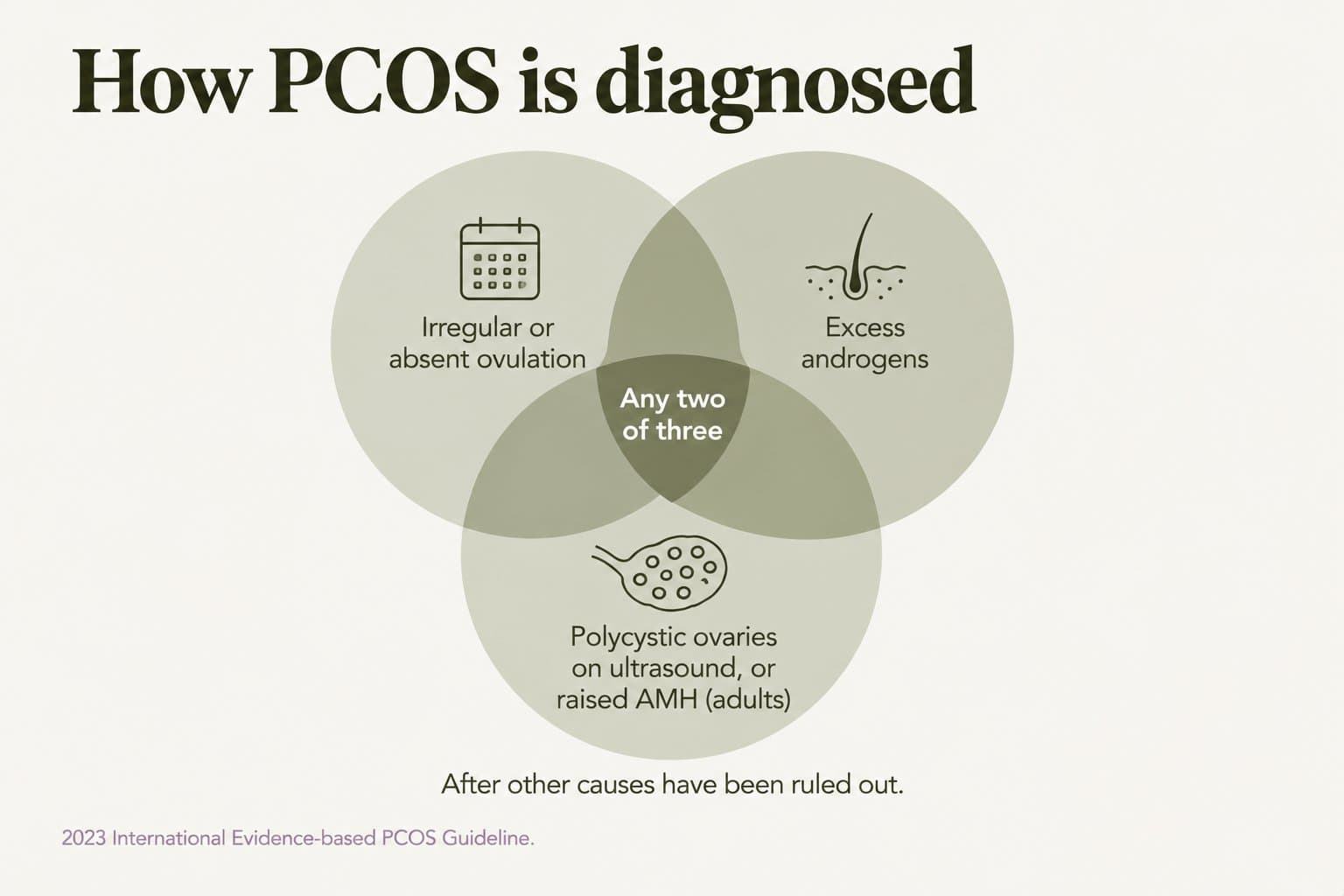
Despite the name, PCOS isn't a disease of ovarian cysts. The "cysts" are small, immature follicles that haven't developed to release an egg. According to the 2023 International Evidence-based Guideline, adults are diagnosed when they have at least two of three features, after other causes have been ruled out:
- 1. Irregular or absent ovulation, usually shown by irregular or infrequent periods (see The Menstrual Cycle as a Vital Sign).
- 2. Signs of excess androgens ("male-type" hormones), either clinically, such as excess facial or body hair, acne or scalp hair thinning, or on a blood test.
- 3. Polycystic ovaries on ultrasound or, in adults, a raised level of anti-Müllerian hormone (AMH) in the blood (see AMH and Ovarian Reserve Testing).
Why PCOS develops
PCOS runs in families and has a strong genetic component. Two linked processes drive it:
- Insulin resistance: many women with PCOS, including some who are lean, are resistant to insulin. High insulin levels stimulate the ovaries to make more androgens (see Insulin Resistance).
- Hormonal imbalance: higher levels of LH from the brain and of androgens from the ovaries disrupt the normal maturation of follicles, so ovulation becomes irregular.
Excess weight, especially around the abdomen, worsens insulin resistance and makes symptoms more pronounced, but PCOS also occurs in women of normal weight.
Why PCOS matters beyond fertility
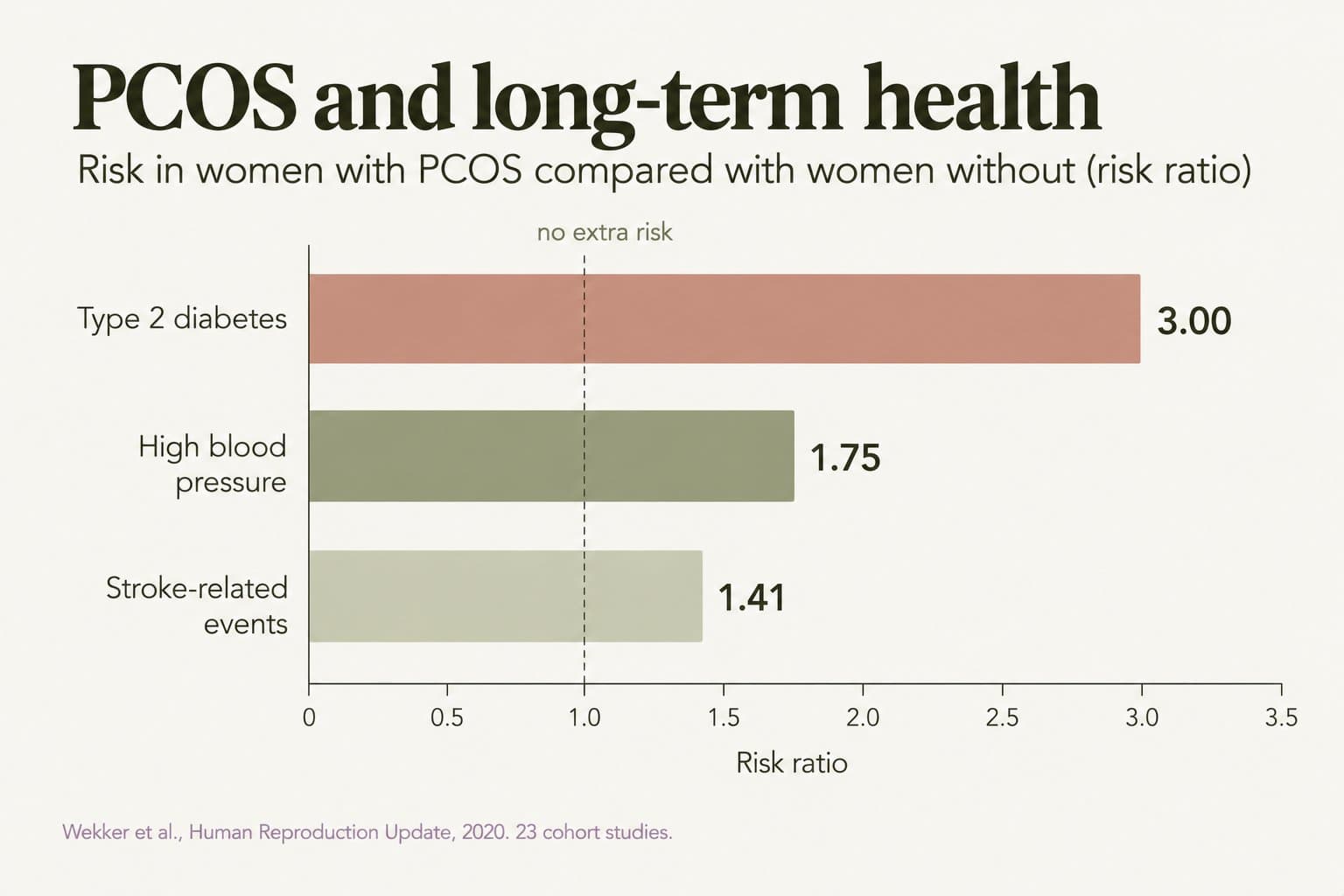
A 2020 systematic review of 23 long-term cohort studies found that women with PCOS had:
- 3 times the risk of type 2 diabetes (RR 3.00)
- A 75% higher risk of high blood pressure (RR 1.75)
- A 41% higher risk of non-fatal cerebrovascular events, such as stroke (RR 1.41)
- Higher total cholesterol and lower HDL cholesterol
The risk of coronary heart disease events also appeared higher (RR 1.78), but this didn't reach statistical significance. The 2023 international guideline concluded that people with PCOS should be recognised as having increased cardiovascular risk factors, cardiovascular disease and potentially higher cardiovascular mortality.
PCOS is also linked to:
- Fatty liver disease and sleep apnoea, particularly with excess weight.
- Depression, anxiety and eating disorders, which the guideline recommends screening for.
- Pregnancy complications, including gestational diabetes and pre-eclampsia (see Pregnancy Complications and Long-Term Health).
- Thickening of the womb lining if periods are very infrequent, which over time raises the risk of endometrial cancer.
What worsens PCOS and its long-term risks
| Factor | Effect | Modifiable? | Evidence strength |
|---|---|---|---|
| Excess weight, especially abdominal fat | Worsens insulin resistance, androgens and cycle irregularity | Yes | Strong |
| Insulin resistance | Drives androgen excess and diabetes risk | Yes | Strong |
| South Asian ancestry | PCOS more common; metabolic risk at lower body weight | No | Moderate |
| Family history of PCOS or type 2 diabetes | Raises risk | No | Strong |
| Physical inactivity | Worsens insulin resistance | Yes | Strong |
| Diet high in refined carbohydrates and sugar | Worsens blood sugar and insulin levels | Yes | Moderate |
| Poor sleep and untreated sleep apnoea | Worsen insulin resistance and mood | Yes | Moderate |
| Very infrequent periods | Raise long-term risk of endometrial thickening | Yes, treatable | Moderate |
What you can actually change
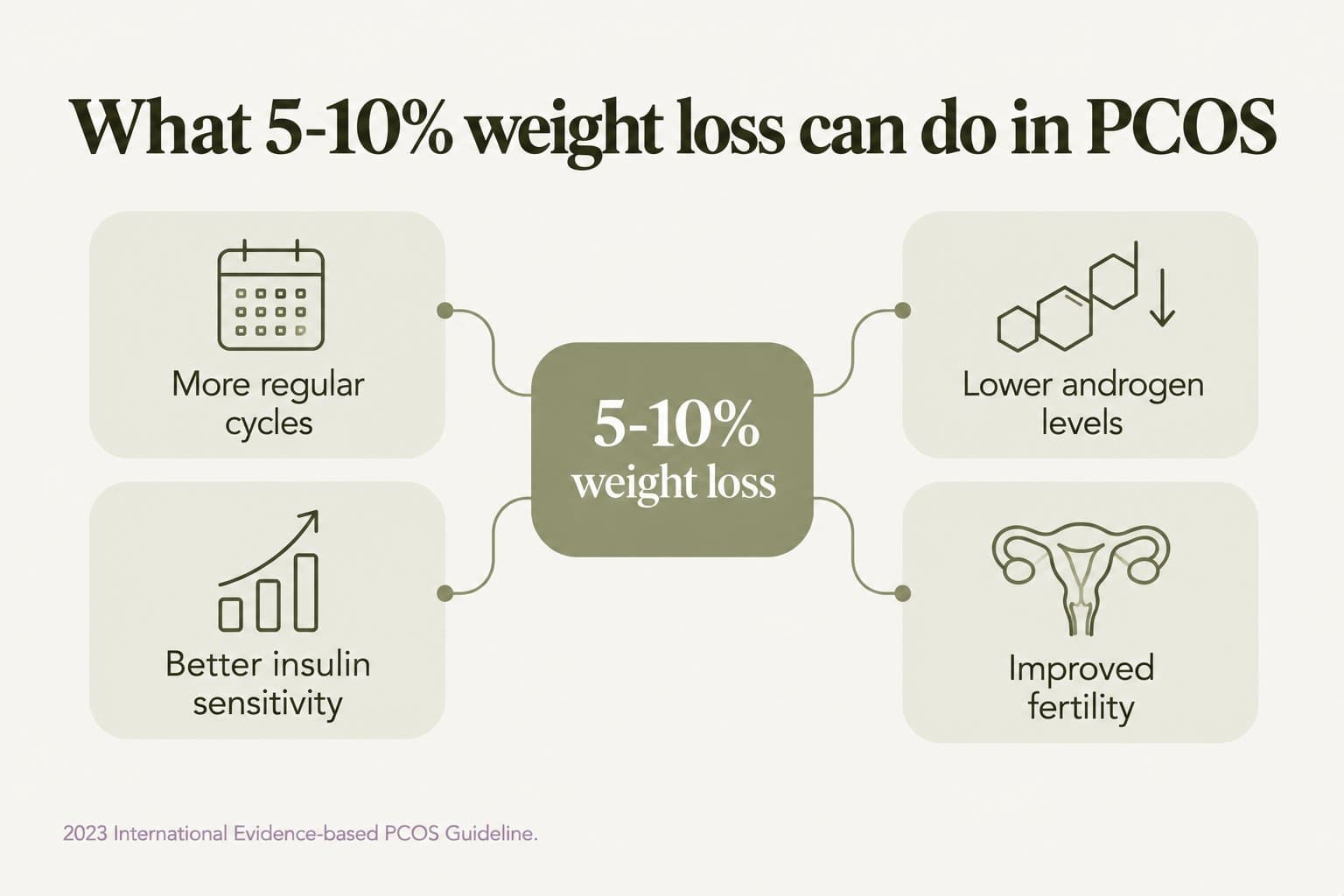
1. Aim for modest weight loss if you have excess weight. The 2023 guideline notes that losing 5-10% of body weight improves metabolic and reproductive features of PCOS, even without reaching a "normal" weight. For South Asian women, waist size and lower BMI thresholds matter (see South Asian Cardiovascular Risk).
2. Move every day. Regular activity improves insulin sensitivity, mood and cycles, independent of weight loss. Combine aerobic exercise with strength training.
3. Eat for insulin sensitivity. Focus on vegetables, pulses, whole grains, fish and lean protein, and limit sugary drinks, sweets and large portions of white rice and refined flour. No single "PCOS diet" has been shown to be best; a sustainable, healthy pattern matters most.
4. Get your metabolic health checked. The guideline recommends regular checks of blood sugar, blood pressure and cholesterol, and screening for depression, anxiety and disordered eating.
5. Discuss medicines where helpful. Combined oral contraceptives regulate periods, protect the womb lining and reduce excess hair and acne (see Hormonal Contraception and Long-Term Health). Metformin is recommended for those with a BMI of 25 or more, mainly for metabolic benefits. Fertility treatments, starting with medicines to induce ovulation, are effective for most women with PCOS who want to conceive.
6. Protect the womb lining. If you have fewer than about four periods a year, discuss treatment with your doctor to prevent the lining from thickening.
Recommendations
- See a doctor if you have irregular periods, excess hair growth, persistent acne or scalp hair thinning, or difficulty conceiving.
- If you have PCOS, treat it as a lifelong metabolic condition: have blood sugar, blood pressure and cholesterol checked regularly, not only when planning pregnancy.
- Mention PCOS when your cardiovascular risk is assessed, and before and during pregnancy.
- Look after your mental health, and seek support for low mood, anxiety or eating concerns.
Practical notes
PCOS is common, particularly in South Asian women, and it's much more than a cause of irregular periods or fertility problems. It's closely tied to insulin resistance and raises the long-term risk of type 2 diabetes, high blood pressure and cardiovascular disease. Diagnosis is based on two of three features: irregular ovulation, excess androgens and polycystic ovaries or a raised AMH. Modest weight loss, regular exercise, a healthy diet and regular metabolic checks make a real difference, and effective medicines are available for symptoms and fertility. Living well with PCOS is covered in more practical detail in Living Well with PCOS.
- Teede HJ, et al. Recommendations from the 2023 International Evidence-based Guideline for the Assessment and Management of Polycystic Ovary Syndrome. Journal of Clinical Endocrinology & Metabolism, 2023;108(10):2447-2469.
- Summary of the 2023 international evidence-based guideline for the assessment and management of polycystic ovary syndrome: an Australian perspective. Medical Journal of Australia, 2024;221(7).
- Wekker V, et al. Long-term cardiometabolic disease risk in women with PCOS: a systematic review and meta-analysis. Human Reproduction Update, 2020;26(6):942-960.
- Kumarapeli V, et al. A simple screening approach for assessing community prevalence and phenotype of polycystic ovary syndrome in a semi-urban population in Sri Lanka. American Journal of Epidemiology, 2008;168(3):321-328.
Free longevity assessment
Living with PCOS?
When were your metabolic checks?
Take the free Aevum Protocol assessment to see how your reproductive & sexual health and 6 other longevity domains are performing — and get a personalised 90-day plan.
Take the free assessmentKeep reading