Reproductive & Sexual Health
Living Well with PCOS:
A Practical Guide to Exercise, Eating, Screening and Treatment
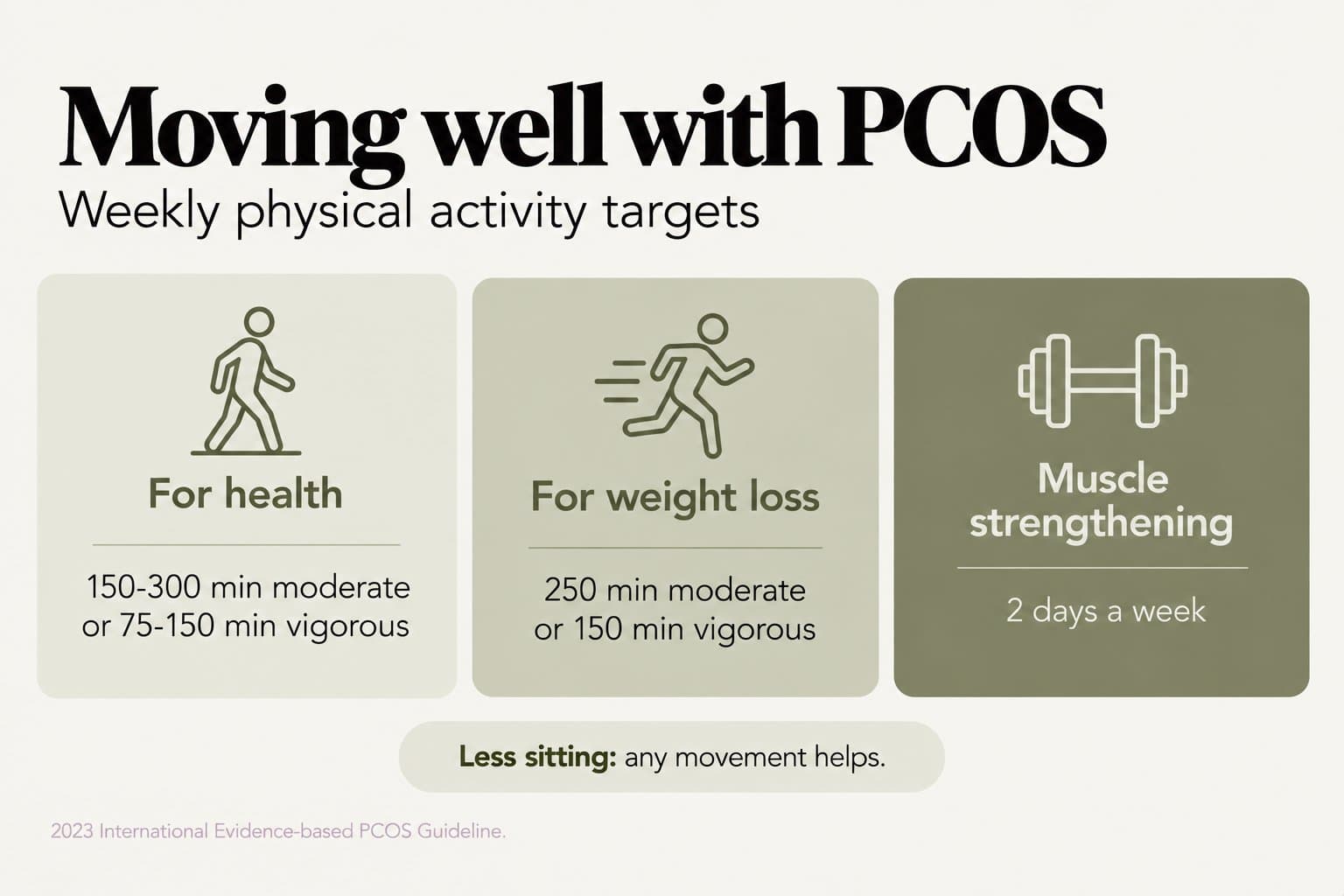
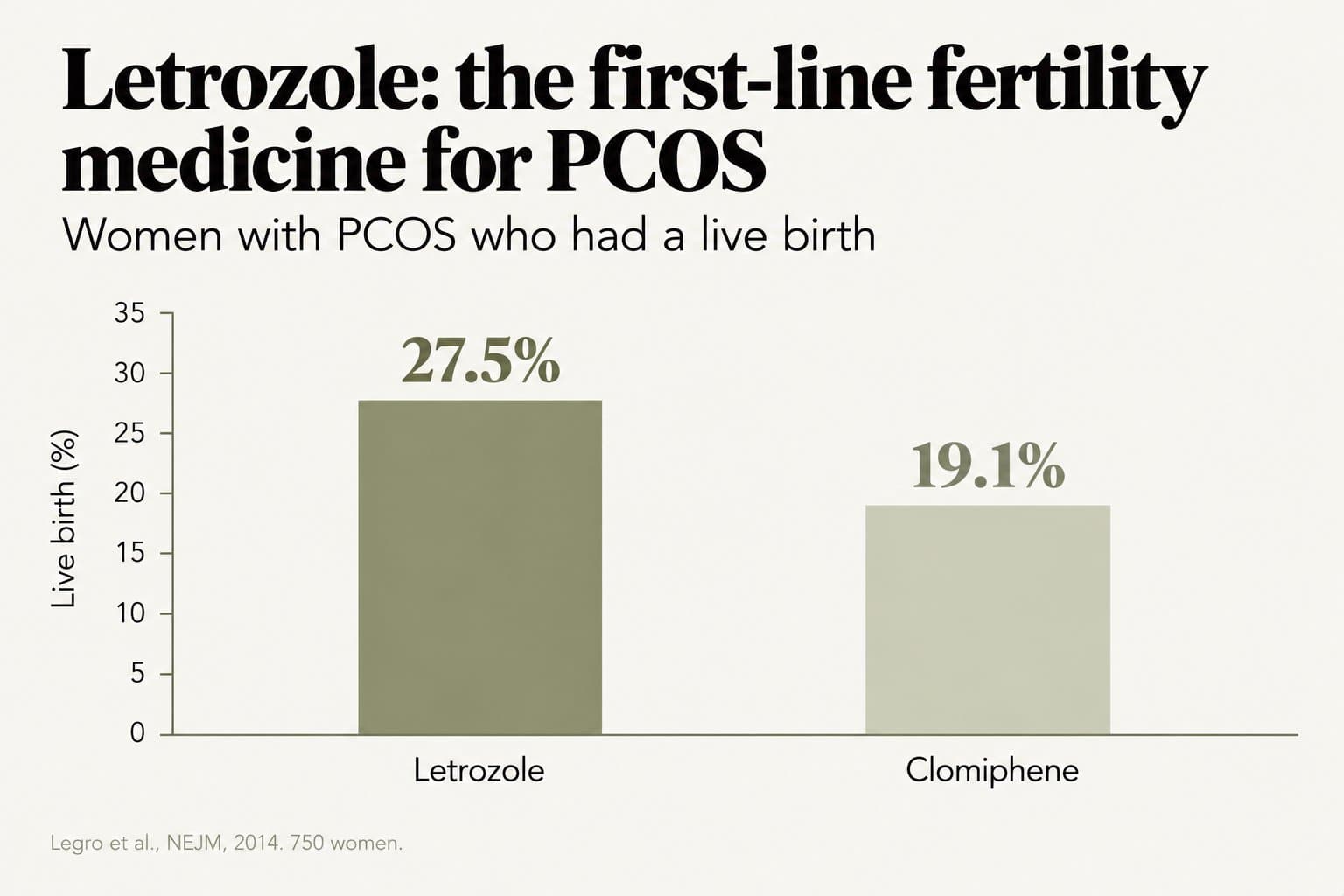
Polycystic ovary syndrome (PCOS) is a lifelong condition, but it can be managed well with the right habits, regular checks and effective treatments. The 2023 International Evidence-based Guideline, developed with input from women with PCOS, emphasises that healthy eating and physical activity bring benefits "even without weight loss". It recommends 150-300 minutes of moderate activity or 75-150 minutes of vigorous activity a week, plus muscle strengthening twice a week, with more (250 or 150 minutes) for weight loss. No single diet is best; a sustainable, healthy eating pattern that suits you is what matters. Regular screening is essential: blood sugar every one to three years, blood pressure every year, and checks for depression, anxiety, eating disorders and sleep apnoea. Effective treatments are available for every concern, from the combined pill for irregular periods and excess hair to metformin for metabolic health. For women trying to conceive, letrozole is now the first-line medicine: in a US trial of 750 women, it led to more live births than clomiphene (27.5% vs 19.1%). This guide turns the evidence into practical steps for everyday life.
Key numbers
| Finding | Detail |
|---|---|
| Physical activity for health (2023 guideline) | 150-300 min moderate or 75-150 min vigorous per week, plus muscle strengthening on 2 days |
| Physical activity for weight loss or preventing regain (same guideline) | 250 min moderate or 150 min vigorous per week |
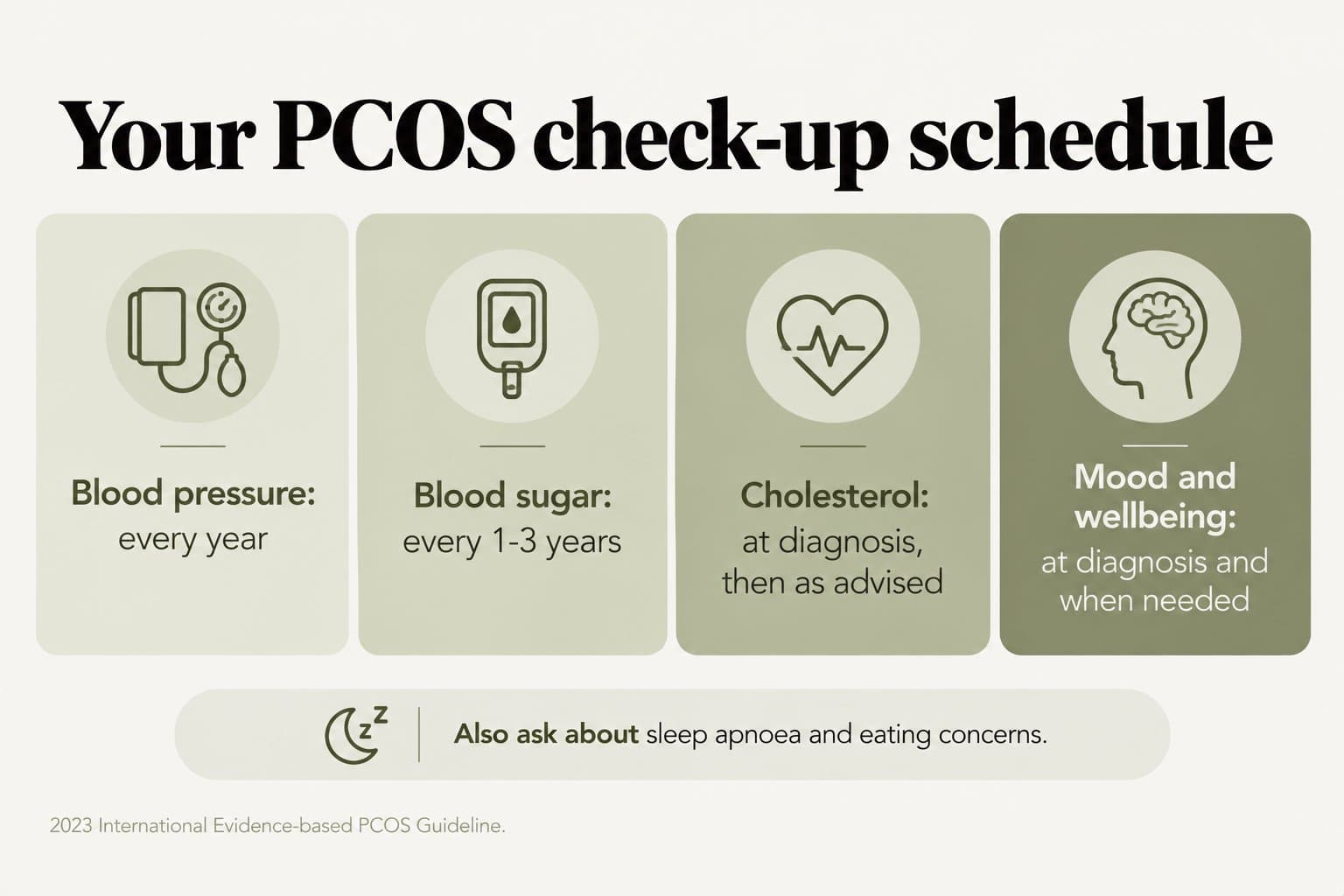
| Blood sugar and blood pressure checks (same guideline) | Blood sugar every 1-3 years; blood pressure every year and when planning pregnancy |
| Letrozole vs clomiphene for fertility (750 women) | Live births 27.5% vs 19.1% |
| Ovulation with letrozole vs clomiphene (same trial) | 61.7% vs 48.3% of treatment cycles |
Understanding your PCOS
PCOS affects each woman differently. Some mainly have irregular periods, others excess hair or acne, others weight and metabolic issues, and many a combination. Because PCOS is closely linked to insulin resistance and raises the long-term risk of type 2 diabetes and heart disease, living well with it means looking after both your symptoms and your long-term health (see Polycystic Ovary Syndrome (PCOS) and Insulin Resistance).
What the evidence shows
Physical activity: benefits with or without weight loss. The 2023 guideline recommends that adults with PCOS do 150-300 minutes of moderate-intensity activity, such as brisk walking, or 75-150 minutes of vigorous activity, such as running or fast cycling, each week, plus muscle-strengthening activities on two non-consecutive days. For modest weight loss or preventing weight regain, it suggests at least 250 minutes of moderate or 150 minutes of vigorous activity a week. It also advises cutting down sitting and screen time, noting that "replacing sedentary time with physical activity of any intensity" brings benefits.
Eating: no single "PCOS diet". The guideline found "no evidence to support any one type of diet composition over another". It recommends general healthy eating principles tailored to individual preferences, culture and goals. In practice, this means plenty of vegetables, pulses, whole grains and lean protein, and fewer sugary drinks, sweets and refined carbohydrates such as large portions of white rice and white bread. Restrictive diets you can't sustain are less helpful than steady, realistic changes.
Weight: modest change, without stigma. For women with excess weight, losing 5-10% of body weight improves both metabolic and reproductive features of PCOS. The guideline also highlights the harm of weight stigma and supports weight-neutral care where appropriate: healthy habits benefit women of all sizes. Anti-obesity medicines can be considered according to general population guidelines, with effective contraception, as some aren't safe in pregnancy.
Medicines for symptoms and metabolic health.
- The combined oral contraceptive pill is the first-line treatment for irregular periods and excess hair and acne. It also protects the womb lining.
- Metformin should be considered for adults with a BMI of 25 or more, mainly for metabolic benefits, and can be combined with the pill.
- Anti-androgen medicines can be added for excess hair when the pill alone isn't enough, with reliable contraception.
- Laser hair removal should be considered for facial hair.
- Inositol has "limited clinical benefits", and the guideline advises that metformin should be considered over inositol (see Fertility Supplements).
Fertility: letrozole first. The guideline recommends letrozole as the "first-line pharmacological treatment for ovulation induction". In a US trial of 750 women with PCOS, letrozole led to more live births than the older medicine clomiphene (27.5% vs 19.1%) and more ovulation (61.7% vs 48.3% of cycles), with no significant difference in birth defects. Twin rates were 3.4% with letrozole and 7.4% with clomiphene. If medicines don't work, other options include injected hormones, keyhole ovarian surgery and IVF.
Mental health and sleep. Depression and anxiety are common in PCOS. The guideline recommends screening for depression and anxiety in all adults with PCOS, considering eating disorders "regardless of weight", and assessing for obstructive sleep apnoea, which is more common in PCOS independent of weight. Psychological therapy is a first-line treatment for depression and anxiety, and treating symptoms such as acne and excess hair also improves wellbeing.
Your screening schedule
| Check | How often |
|---|---|
| Blood sugar (oral glucose tolerance test or HbA1c) | Every 1-3 years, depending on risk; before pregnancy |
| Blood pressure | Every year and when planning pregnancy |
| Cholesterol | At diagnosis, then depending on results and risk |
| Weight and waist | Regularly, with your agreement |
| Depression and anxiety | At diagnosis and when concerns arise |
| Eating disorders | Consider, whatever your weight |
| Sleep apnoea symptoms (snoring, daytime sleepiness) | Ask your doctor to assess |
The guideline notes that endometrial cancer risk is higher in PCOS, but the overall chance is low, so routine screening isn't recommended. Very infrequent periods, or bleeding between periods, should be checked.
Recommendations by scenario
| Scenario | What to do |
|---|---|
| Irregular periods, not trying to conceive | Combined pill is first-line; it also protects the womb lining |
| Excess hair or acne | Combined pill first; add anti-androgen medicine or laser for facial hair if needed |
| BMI 25 or more | Healthy habits plus metformin; consider anti-obesity medicines if appropriate |
| Normal weight with PCOS | Still have regular blood sugar and blood pressure checks |
| Trying to conceive | Prepare with healthy habits and folic acid; letrozole is first-line to induce ovulation |
| Low mood, anxiety or eating concerns | Ask for screening and support; psychological therapy helps |
| Snoring or daytime sleepiness | Ask about sleep apnoea assessment |
| Pregnant with PCOS | Expect early testing for gestational diabetes |
Preparing for pregnancy is covered in Preconception Health Guide.
Practical notes
Living well with PCOS is about steady habits and regular checks rather than perfection. Aim for regular physical activity, including muscle strengthening, and a sustainable healthy eating pattern; benefits come even without weight loss. Have your blood sugar, blood pressure and mental health checked regularly, and use effective treatments for symptoms and fertility. With the right support, most women with PCOS can manage their symptoms, conceive if they wish, and protect their long-term heart and metabolic health.
- Teede HJ, et al. International evidence-based guideline for the assessment and management of polycystic ovary syndrome 2023: guideline summary. Monash University.
- Summary of the 2023 international evidence-based guideline for the assessment and management of polycystic ovary syndrome: an Australian perspective. Medical Journal of Australia, 2024;221(7).
- Legro RS, et al. Letrozole versus clomiphene for infertility in the polycystic ovary syndrome. New England Journal of Medicine, 2014;371(2):119-129.
Free longevity assessment
Living with PCOS?
Are your checks up to date?
Take the free Aevum Protocol assessment to see how your reproductive & sexual health and 6 other longevity domains are performing — and get a personalised 90-day plan.
Take the free assessmentKeep reading