Reproductive & Sexual Health
Preconception Health Guide:
How Both Partners Can Prepare for a Healthy Pregnancy
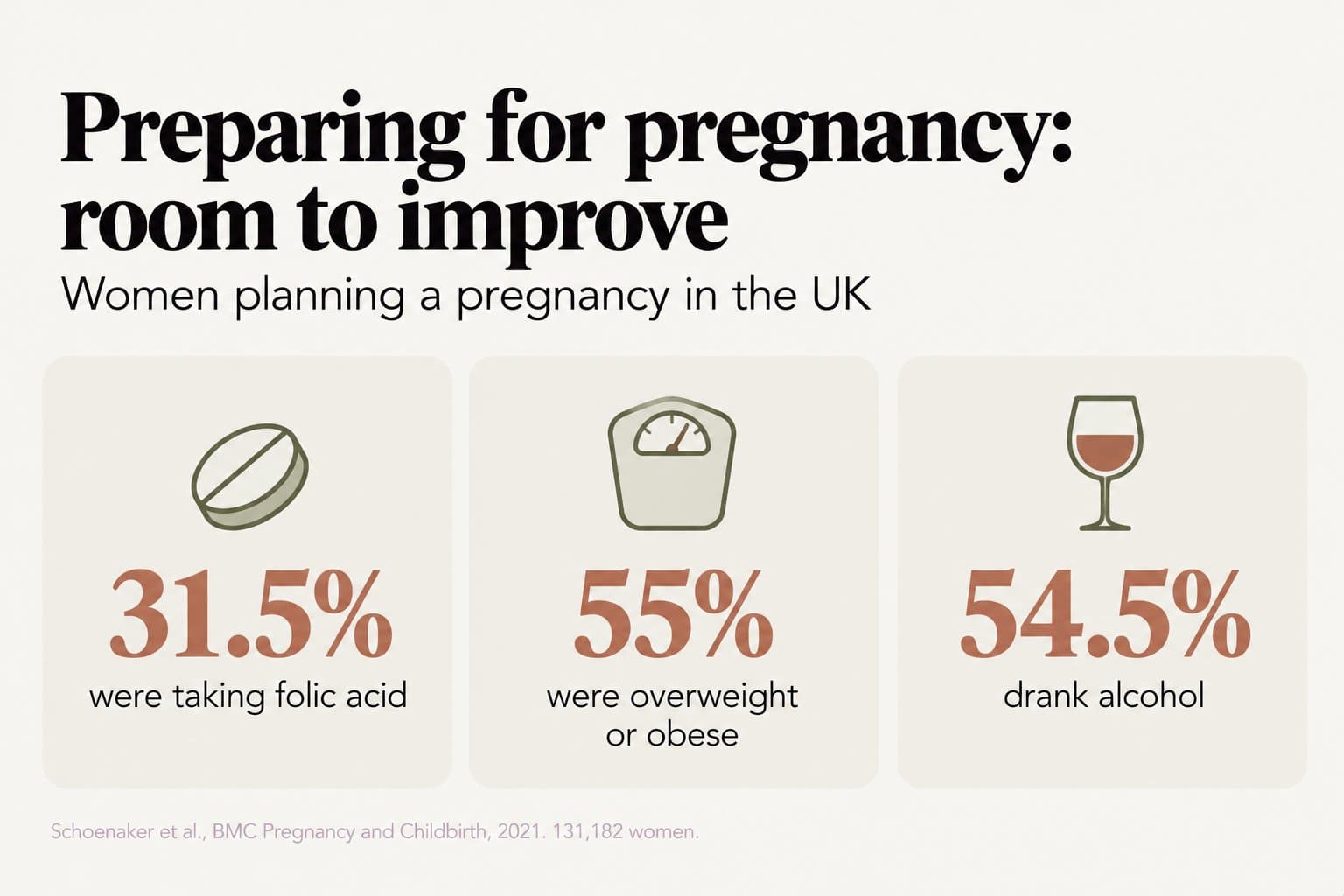
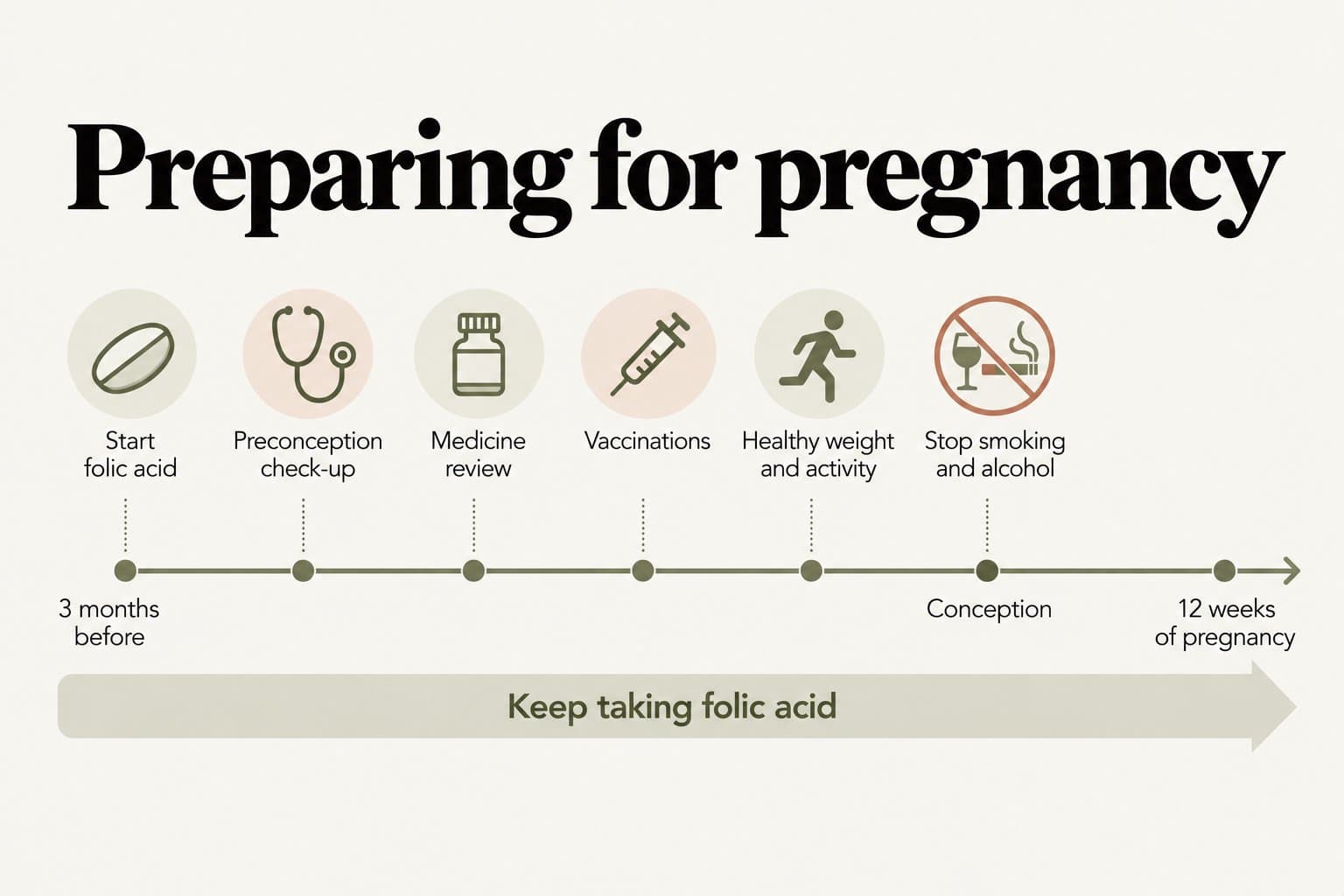
The months before conception shape the health of a pregnancy and a baby's future. Many of a baby's organs, including the brain and spine, start forming in the first weeks, often before a woman knows she's pregnant, so the most protective steps need to start beforehand. Yet preparation is often missing. In a study of 131,182 UK women planning a pregnancy, only about 1 in 3 (31.5%) were taking folic acid, 55% were overweight or obese, about 1 in 5 smoked and over half drank alcohol. Getting ready doesn't require anything complicated. The key steps are taking folic acid for at least three months before conception, reaching a healthy weight, stopping smoking and alcohol, reviewing medicines, getting vaccinations up to date and bringing long-term conditions such as diabetes and high blood pressure under control. Men's health matters too, because sperm take about three months to develop. Taking folic acid for three months before conception can reduce the risk of neural tube defects by up to 70%. This guide sets out what each partner can do, and when.
Key numbers
| Finding | Detail |
|---|---|
| UK women planning pregnancy taking folic acid (131,182 women) | 31.5% |
| Overweight or obese (same study) | 55% |
| Smoking and drinking alcohol (same study) | About 20% smoked; 54.5% drank alcohol |
| Women with health conditions who sought advice before pregnancy (same study) | 40.6% |
| Folic acid for 3 months before conception (NICHD) | Reduces neural tube defects by up to 70% |
| Pregnancy complications attributable to overweight and obesity (265,270 births) | 23.9% |
Why the preconception period matters
By the time most women find out they're pregnant, usually 4-6 weeks after their last period, the baby's neural tube, heart and other organs are already forming. Factors such as folate levels, blood sugar, smoking, alcohol, medicines and weight affect this early development. Excess weight before pregnancy also increases the risk of gestational diabetes, pre-eclampsia and other complications, which in turn affect a woman's long-term heart and metabolic health (see Pregnancy Complications and Long-Term Health). A large analysis of 265,270 births estimated that 23.9% of pregnancy complications were attributable to overweight or obesity.
The UK study of women planning pregnancy found that health behaviours often fell short: only 31.5% took folic acid, 42% did less than 150 minutes of activity a week, and only 40.6% of women with existing health conditions had sought medical advice. Behaviours also tended to slip after a year of trying.
What the evidence shows
Folic acid: the single most important supplement. Taking 400 micrograms (0.4 mg) of folic acid daily, starting at least three months before conception and continuing to 12 weeks of pregnancy, can reduce the risk of neural tube defects such as spina bifida by up to 70%, according to the US National Institute of Child Health and Human Development (NICHD). Women at higher risk, such as those with a previous affected pregnancy, diabetes, obesity or taking certain epilepsy medicines, may need a higher dose on prescription (see Fertility Supplements).
Weight. Reaching a healthier weight before pregnancy improves fertility and lowers the risks of gestational diabetes, pre-eclampsia and other complications. Even modest weight loss helps, particularly for women with polycystic ovary syndrome (see Polycystic Ovary Syndrome (PCOS)). Very low weight can also reduce fertility.
Smoking, alcohol and drugs. The NICHD advises stopping tobacco, alcohol and drugs before trying to conceive, because they increase the risks of miscarriage, stillbirth, sudden infant death and fetal alcohol spectrum disorders. No safe level of alcohol in pregnancy has been established.
Long-term conditions and medicines. According to the NICHD, getting health problems "under control before and during pregnancy reduces the risk of miscarriage and stillbirth". This includes diabetes, high blood pressure, thyroid disease, asthma and epilepsy. Some medicines, including certain blood pressure medicines, epilepsy medicines, acne treatments and statins, may need to be changed before pregnancy, so review all prescription and over-the-counter medicines with your doctor. Don't stop medicines without advice.
Vaccinations and infections. Check immunity to rubella (German measles) and chickenpox, which can harm a baby, and get vaccinated before pregnancy if needed, as these vaccines can't be given during pregnancy. Being up to date with other vaccines also matters.
Genetic and family history. Discuss your family history with your doctor. In Sri Lanka and other South Asian countries, carrier testing for thalassaemia is particularly worth considering, as couples who both carry the trait can have a child with a serious inherited blood disorder.
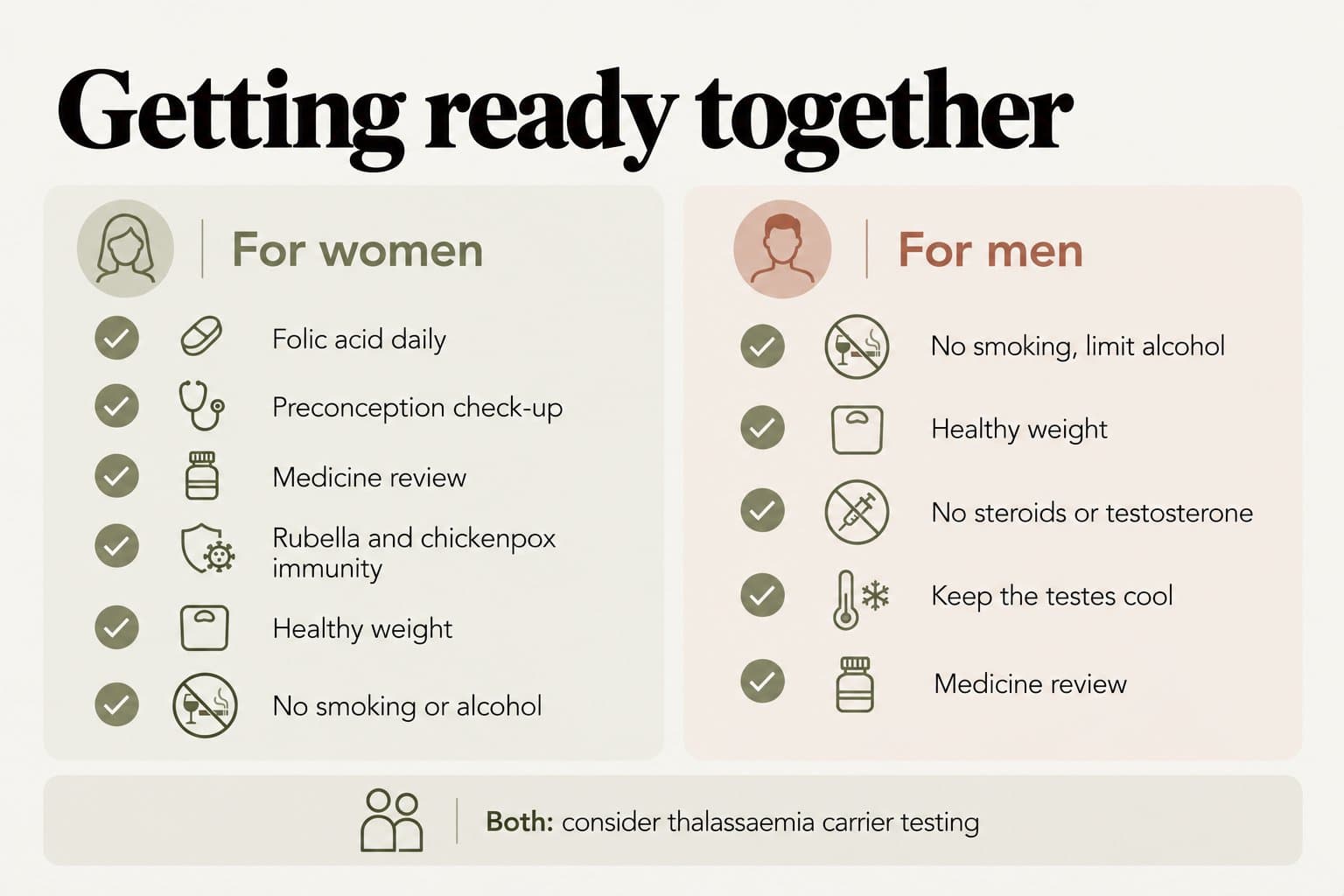
Men's health. Sperm take about three months to develop, so changes made by the male partner now affect sperm quality at conception. Stopping smoking, limiting alcohol, keeping a healthy weight, avoiding anabolic steroids and testosterone, and keeping the testes cool all help (see Male Fertility and Sperm Health).
Environmental exposures. Reduce exposure to lead, solvents, pesticides and chemicals in plastics and fragranced products, and discuss workplace hazards with your doctor (see Endocrine Disruptors and Fertility).
A preconception checklist
For women
- Start folic acid 400 micrograms daily, at least three months before trying.
- Book a preconception check-up with your doctor.
- Review all medicines and supplements.
- Check blood pressure, blood sugar, thyroid and blood count if advised.
- Check rubella and chickenpox immunity, and update vaccinations.
- Aim for a healthy weight and regular physical activity.
- Stop smoking and alcohol.
- Track your cycle (see The Menstrual Cycle as a Vital Sign).
- Consider thalassaemia carrier testing and discuss family history.
- Visit a dentist.
For men
- Stop smoking and limit alcohol.
- Aim for a healthy weight and stay active.
- Avoid anabolic steroids and testosterone.
- Review medicines with your doctor.
- Avoid heat to the testes, such as hot baths, saunas and laptops on the lap.
- Consider thalassaemia carrier testing.
Recommendations by scenario
| Scenario | What to do |
|---|---|
| Planning pregnancy in the next year | Start folic acid now, book a check-up and make lifestyle changes together |
| Diabetes | Aim for good blood sugar control before conceiving; you may need a higher dose of folic acid |
| High blood pressure | Review blood pressure medicines with your doctor before trying |
| Epilepsy or other long-term medicines | Don't stop medicines; see your doctor to review them before trying |
| Overweight or obese | Even modest weight loss before conception lowers pregnancy risks |
| Previous pre-eclampsia or gestational diabetes | Get checked before trying again; discuss preventive measures such as low-dose aspirin |
| Woman aged 35 or over | Prepare as above and seek assessment after 6 months of trying |
| Family history of an inherited condition | Ask about genetic counselling and carrier testing |
| Unplanned pregnancy | Start folic acid immediately and see your doctor as soon as possible |
When to seek help if pregnancy doesn't happen is explained in How Fertility Works.
Practical notes
Preparing for pregnancy is one of the most effective things a couple can do for the health of their baby and the mother's long-term health. The essentials are simple: folic acid for at least three months beforehand, a healthy weight, no smoking or alcohol, a medicine review, up-to-date vaccinations and good control of long-term conditions. Men's health matters too, as sperm take about three months to develop. Because many pregnancies are unplanned, any woman who could become pregnant benefits from taking folic acid and keeping these habits.
- Stephenson J, et al. Before the beginning: nutrition and lifestyle in the preconception period and its importance for future health. The Lancet, 2018;391(10132):1830-1841.
- Schoenaker DAJM, et al. Health behaviours in 131,182 UK women planning pregnancy. BMC Pregnancy and Childbirth, 2021;21:530.
- LifeCycle Project-Maternal Obesity and Childhood Outcomes Study Group. Impact of maternal body mass index and gestational weight gain on pregnancy complications: an individual participant data meta-analysis of European, North American and Australian cohorts. BJOG, 2019;126(8):984-995.
- Eunice Kennedy Shriver National Institute of Child Health and Human Development (NICHD). Preconception care and prenatal care.
Free longevity assessment
Are you and your partner
ready for a healthy pregnancy?
Take the free Aevum Protocol assessment to see how your reproductive & sexual health and 6 other longevity domains are performing — and get a personalised 90-day plan.
Take the free assessmentKeep reading
Related articles
Reproductive & Sexual Health
Pregnancy Complications and Long-Term Health: What Pregnancy Reveals About Your Future Heart and Metabolic Risk
Reproductive & Sexual Health
Fertility Supplements: Which Ones Have Evidence and Which Don't
Reproductive & Sexual Health