Reproductive & Sexual Health
How Fertility Works:
Conception, Timing and Your Chances of Pregnancy
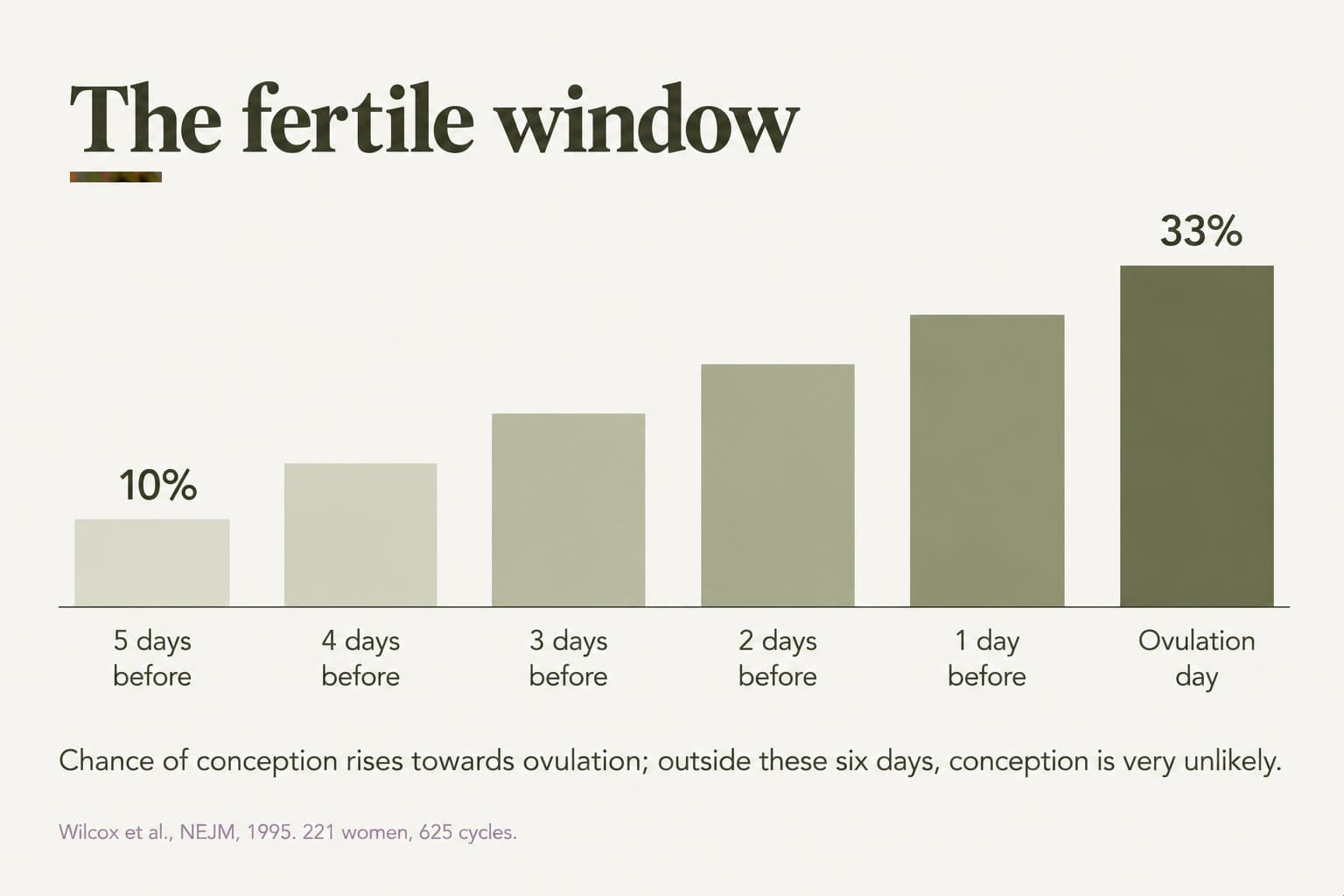
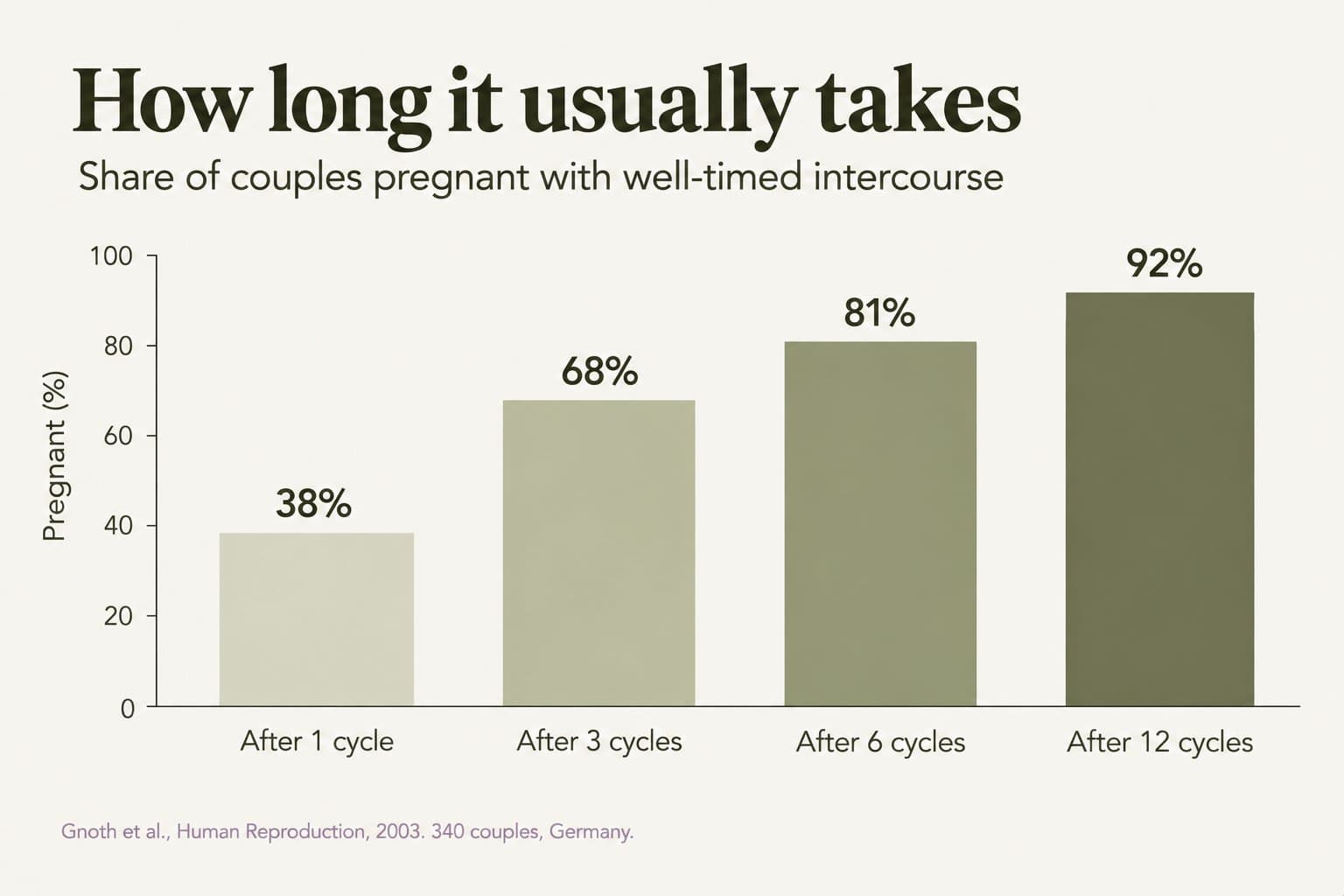
Getting pregnant depends on a precise sequence of events: an egg must be released, meet healthy sperm at the right time, be fertilised, and implant in the womb. Timing matters more than most people realise. In a landmark study, conception happened only when sex took place during a six-day window ending on the day of ovulation, with the chance of pregnancy rising from about 10% five days before ovulation to about 33% on the day itself. Even for healthy couples timing sex well, pregnancy rarely happens straight away: in a German study, 38% conceived in the first cycle, 81% within six cycles and 92% within a year. Age affects both partners, and infertility, defined as no pregnancy after a year of trying, affects about 1 in 6 people worldwide at some point. Male factors are involved in many cases, so both partners matter. This article explains how conception works, how long it usually takes and when to seek help.
Key numbers
| Finding | Detail |
|---|---|
| The fertile window (221 women, 625 cycles) | Six days ending on the day of ovulation; chance of conception from about 10% five days before to 33% on ovulation day |
| Time to pregnancy with well-timed sex (340 couples, Germany) | 38% pregnant in 1 cycle, 68% in 3, 81% in 6 and 92% in 12 |
| Not conceiving within a year, by woman's age (782 couples) | About 8% at 19-26, rising to 18% at 35-39 |
| Infertility worldwide (WHO, 2023) | About 17.5% of adults, roughly 1 in 6, affected at some point in their lives |
| When to seek assessment | After 12 months of trying under 35; after 6 months at 35 and over; sooner over 40 |
How conception happens
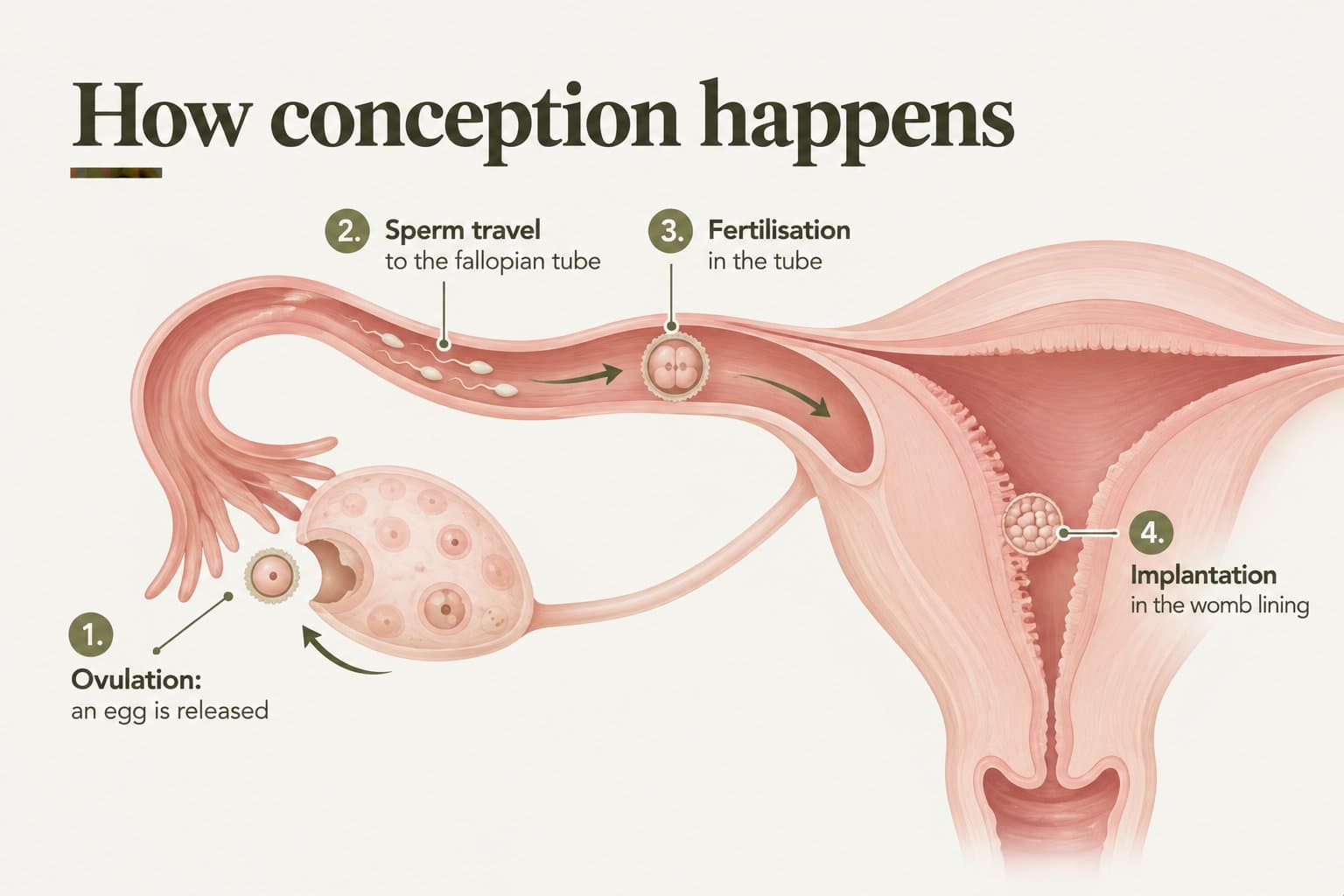
- 1. Ovulation: around the middle of the cycle, a surge of the hormone LH releases a mature egg from the ovary. The egg survives for about 12-24 hours.
- 2. Sperm travel: after sex, sperm swim through the cervix and womb to the fallopian tubes. In fertile cervical mucus, sperm can survive for up to about five days.
- 3. Fertilisation: if sperm meet the egg in the fallopian tube, one may fertilise it, forming an embryo.
- 4. Implantation: over the next few days, the embryo travels to the womb and implants in its lining, usually 6-10 days after ovulation. Pregnancy hormones then rise.
Each step depends on healthy reproductive organs and hormones in both partners, which is why fertility problems can arise in many different ways.
The fertile window
Because sperm can survive for several days but the egg for only about a day, the fertile window is the few days before ovulation plus ovulation day itself. In a classic US study, 221 women planning a pregnancy recorded daily urine samples and intercourse over 625 cycles, allowing researchers to pinpoint ovulation. Conception occurred only when sex took place during the six days ending on the day of ovulation. The chance of pregnancy rose from about 10% when sex happened five days before ovulation to about 33% when it happened on the day of ovulation.
In practice, ovulation day varies from cycle to cycle, even in women with regular periods (see The Menstrual Cycle as a Vital Sign). Having sex every one to two days throughout the fertile window is a simple way to cover it. Ovulation predictor kits, which detect the LH surge, and changes in cervical mucus can help identify the most fertile days.
How long it usually takes
Even at peak fertility, the chance of pregnancy in any single cycle is well under 50%. A German study followed 346 women using natural family planning methods to time sex from the first cycle. Among all couples, 38% conceived in the first cycle, 68% within three cycles, 81% within six cycles and 92% within twelve. The authors concluded that most couples conceive within six well-timed cycles, and that after this point, around half of couples who haven't conceived may have a fertility problem.
How age affects fertility
Female fertility declines from around 32 and more steeply after 37, mainly because both the number and quality of eggs fall (see Reproductive Ageing Explained). In a study of 782 European couples timing sex, about 8% of women aged 19-26 didn't conceive within a year, compared with about 18% of women aged 35-39. The man's age also began to matter from the late 30s. The researchers noted that older couples mainly have lower fertility rather than absolute sterility, so many conceive if they keep trying, but time becomes more precious with age.
Both partners matter
Infertility is a shared issue. Problems can arise in the woman (such as ovulation disorders including polycystic ovary syndrome, blocked fallopian tubes, endometriosis or age-related decline), in the man (low sperm count, poor motility or abnormal shape), in both, or have no identifiable cause. Lifestyle factors affect both partners: smoking, excess weight or very low body weight, heavy alcohol use and some medicines and anabolic steroids can all reduce fertility. Male fertility is covered in Male Fertility and Sperm Health.
Why this matters for longevity
Fertility is closely linked to overall health. Conditions that affect fertility, such as polycystic ovary syndrome, obesity, diabetes and thyroid disease, also affect long-term metabolic and heart health, and fertility difficulties can be an early prompt to address them. Understanding how fertility works, and how it changes with age, helps people make informed choices about family planning.
Practical notes
- Have sex every 1-2 days during the fertile window, the five days before ovulation and ovulation day itself.
- Don't worry if it doesn't happen straight away: most couples take several months.
- Seek assessment after 12 months of trying if the woman is under 35, after 6 months if she's 35 or over, and sooner if she's over 40.
- Seek help earlier if periods are irregular or absent, there's a known history of pelvic infection, endometriosis, testicular problems or cancer treatment, or either partner has a known fertility issue.
- Both partners should be assessed: a semen analysis is a simple, early test.
- Prepare together: see a doctor before trying to conceive, start folic acid, stop smoking and aim for a healthy weight (see Preconception Health Guide).
- Wilcox AJ, et al. Timing of sexual intercourse in relation to ovulation: effects on the probability of conception, survival of the pregnancy, and sex of the baby. New England Journal of Medicine, 1995;333(23):1517-1521.
- Gnoth C, et al. Time to pregnancy: results of the German prospective study and impact on the management of infertility. Human Reproduction, 2003;18(9):1959-1966.
- Dunson DB, et al. Increased infertility with age in men and women. Obstetrics & Gynecology, 2004;103(1):51-56.
- World Health Organization. 1 in 6 people globally affected by infertility. News release, 4 April 2023.
- American College of Obstetricians and Gynecologists and American Society for Reproductive Medicine. Female age-related fertility decline. Committee Opinion No. 589. Fertility and Sterility, 2014;101(3):633-634.
Free longevity assessment
Trying to conceive?
Know your fertile window
Take the free Aevum Protocol assessment to see how your reproductive & sexual health and 6 other longevity domains are performing — and get a personalised 90-day plan.
Take the free assessmentKeep reading
Related articles
Reproductive & Sexual Health
The Menstrual Cycle as a Vital Sign: What Your Period Says About Your Health
Reproductive & Sexual Health
Male Fertility and Sperm Health: What Semen Quality Says About a Man's Health
Reproductive & Sexual Health