Reproductive & Sexual Health
The Menstrual Cycle as a Vital Sign:
What Your Period Says About Your Health
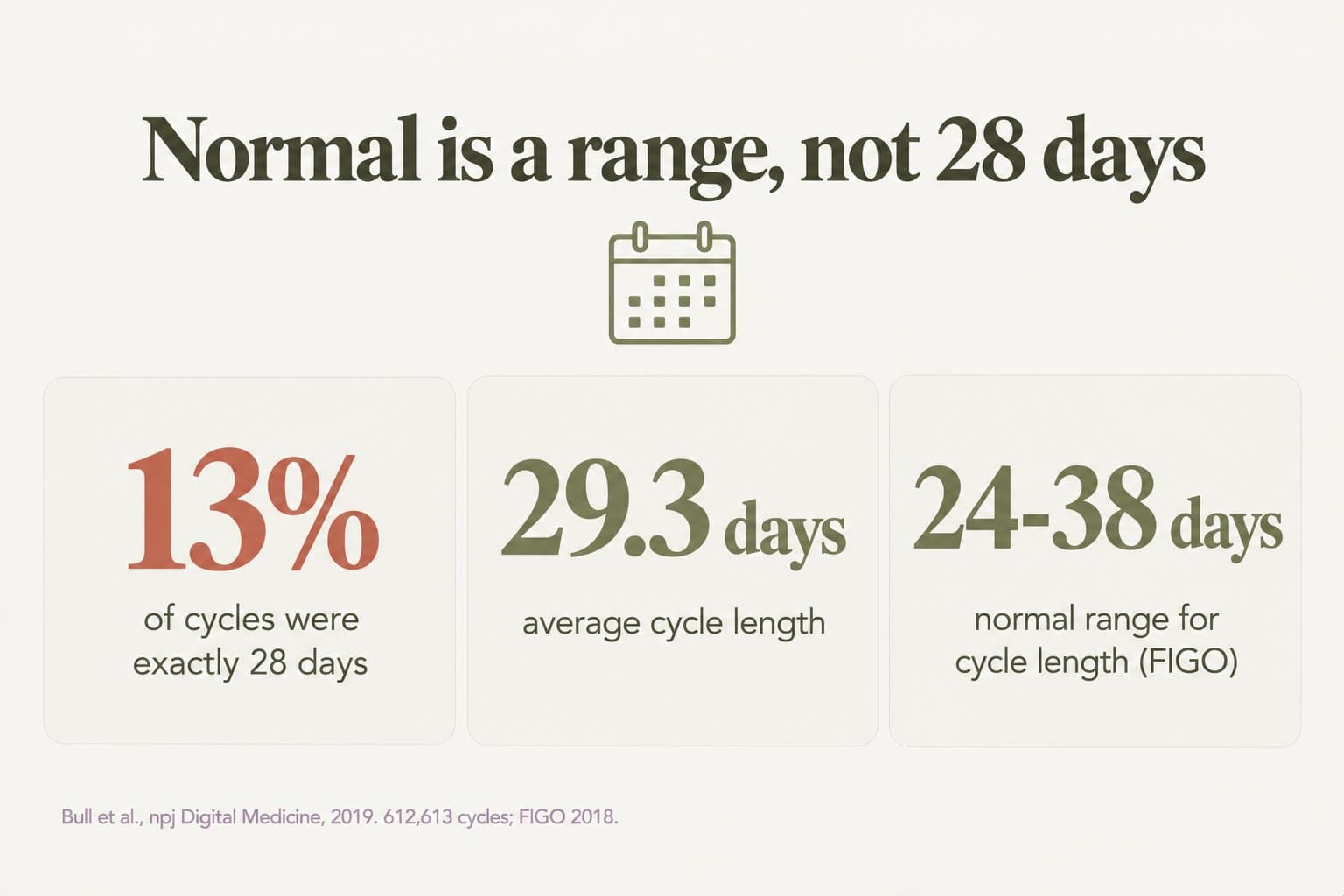
Doctors check pulse, blood pressure and temperature as "vital signs" because they reveal what's happening inside the body. The American College of Obstetricians and Gynecologists recommends treating the menstrual cycle the same way, because changes in it can be an early sign of problems ranging from thyroid disease and polycystic ovary syndrome (PCOS) to low energy intake, anaemia and, later in life, perimenopause. A normal cycle is more variable than many people think: in an analysis of over 600,000 cycles, the average was 29.3 days, and only 13% were exactly 28 days. Internationally agreed limits for a normal cycle are every 24 to 38 days, with bleeding for up to 8 days. Cycle patterns also seem to reflect long-term health: in a study of nearly 80,000 women, those whose cycles were always irregular in their 30s and 40s had higher rates of early death than those with very regular cycles, especially from cardiovascular disease. This article explains what's normal, what changes mean and when to see a doctor.
Key numbers
| Finding | Detail |
|---|---|
| Normal cycle (international FIGO definition) | Every 24-38 days; bleeding up to 8 days; cycle length varying by no more than 7-9 days |
| Real-world cycles (612,613 cycles from 124,648 app users) | Average length 29.3 days; only 13% exactly 28 days |
| Cycle length with age (same study, ages 25-45) | Falls by about 0.18 days a year, mainly because the first half of the cycle shortens |
| Median age at first period (well-nourished populations) | 12.43 years |
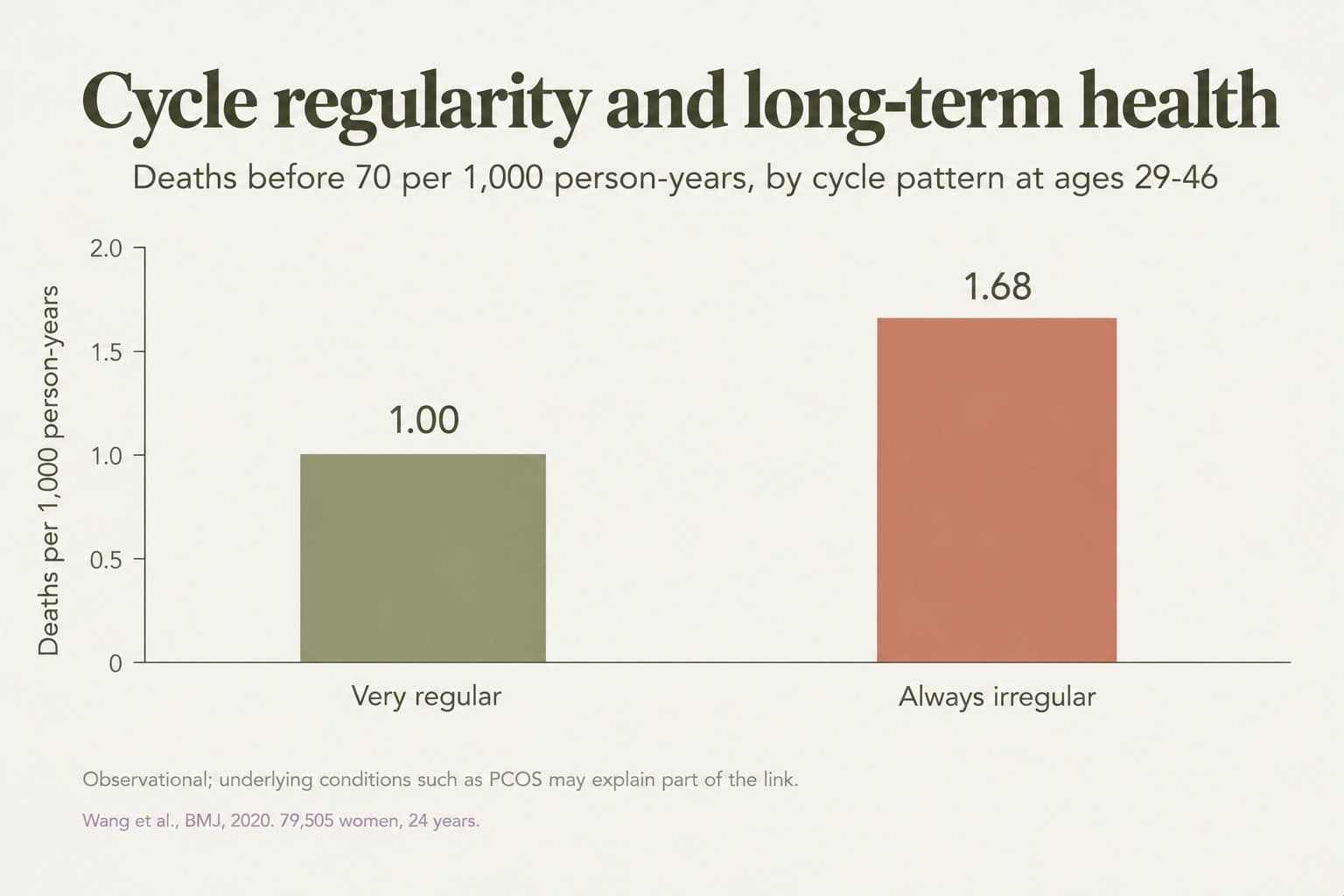
| Irregular cycles and early death (79,505 women, 24 years) | Death rates of 1.68 vs 1.00 per 1,000 person-years at ages 29-46 for always irregular vs very regular cycles |
What a normal cycle looks like
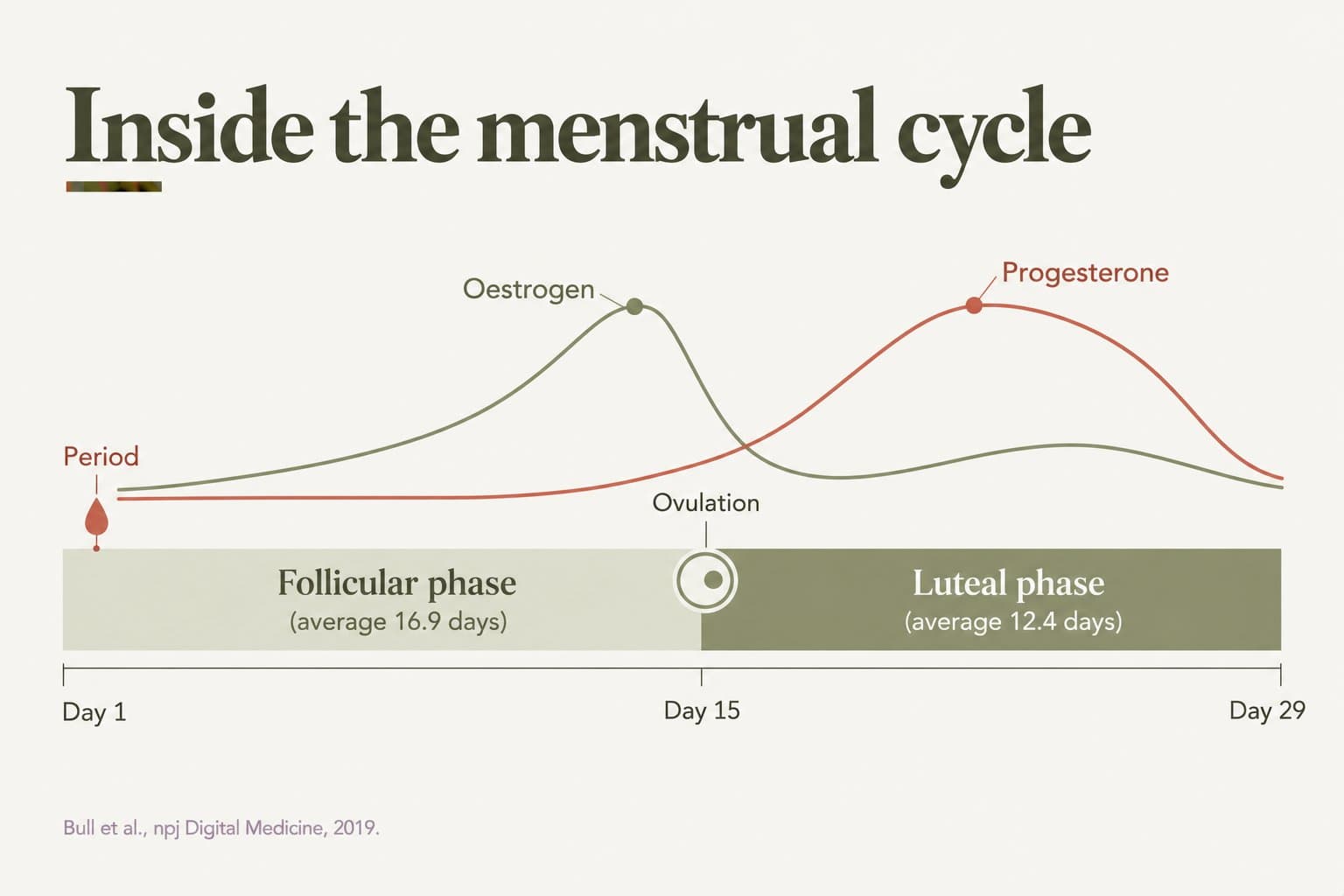
The menstrual cycle is driven by hormones from the brain (FSH and LH) and the ovaries (oestrogen and progesterone). It has two main halves:
- The follicular phase, from the first day of bleeding to ovulation. An egg matures and oestrogen rises, thickening the lining of the womb. This phase varies most in length.
- The luteal phase, from ovulation to the next period. Progesterone from the ovary prepares the lining for pregnancy. If no pregnancy occurs, hormones fall and the lining is shed as a period.
In a study of 612,613 ovulatory cycles tracked through a fertility app, the average follicular phase lasted 16.9 days and the luteal phase 12.4 days. Between ages 25 and 45, cycles shortened by about 0.18 days a year, mostly because the follicular phase got shorter, an early sign of reproductive ageing (see Reproductive Ageing Explained). Cycle lengths were also more variable in women with a BMI over 35.
| Feature | Normal range (FIGO) |
|---|---|
| How often | Every 24-38 days |
| How regular | Shortest and longest cycles differ by no more than 7-9 days |
| How long | Bleeding lasts up to 8 days |
| How heavy | Doesn't interfere with daily life; roughly under 80 mL per period |
What your cycle can tell you
Changes in the cycle are often the first visible sign of an underlying issue:
- Periods stopping or becoming infrequent (not caused by pregnancy or contraception) can reflect low energy intake or excessive exercise, high stress, thyroid problems, a raised prolactin level, PCOS or, from the 40s, perimenopause.
- Long or irregular cycles are a hallmark of PCOS, which is linked to insulin resistance, type 2 diabetes and heart disease (see Insulin Resistance).
- Heavy periods can be caused by fibroids, polyps, bleeding disorders or hormonal changes, and are a common cause of iron deficiency and tiredness.
- Severe period pain that disrupts daily life can be a sign of endometriosis.
- Changes in cycle length or flow in the 40s often signal perimenopause (see Perimenopause: Recognising the Signs and Symptoms).
- Thyroid disease, both underactive and overactive, can change cycle length and flow (see Thyroid Function and Ageing).
PCOS, endometriosis, fibroids and heavy periods are each covered in this section: see Polycystic Ovary Syndrome (PCOS), Endometriosis and Fibroids and Heavy Periods.
What the research shows about cycles and long-term health
Starting early: the cycle as a vital sign in teenagers. The American College of Obstetricians and Gynecologists recommends that doctors ask about periods at routine visits for girls and young women, because abnormal patterns can reveal health problems early. The median age of a first period in well-nourished populations is 12.43 years. Within three years of the first period, 60-80% of cycles are 21-34 days long, similar to adults.
Irregular cycles and long-term risk. The Nurses' Health Study II followed 79,505 women, average age 38, for 24 years, during which 1,975 died before age 70. Women who reported always-irregular cycles at ages 29-46 had a death rate of 1.68 per 1,000 person-years, compared with 1.00 for those with very regular cycles, and the link was strongest for deaths from cardiovascular disease. Similar, smaller differences were seen for irregular cycles reported in the teenage years and early 20s, and for cycles of 40 days or longer.
This was an observational study based on self-reported cycles, so it can't prove that irregular cycles cause early death. Experts noted that underlying conditions such as PCOS, which is linked to insulin resistance and heart disease, are a likely part of the explanation. The practical message is that persistently irregular cycles deserve investigation, not that they're dangerous in themselves.
Why this matters for longevity
The menstrual cycle reflects the health of the brain's hormone centres, the ovaries, the thyroid, metabolism and energy balance. Paying attention to it can lead to earlier diagnosis of PCOS, thyroid disease, anaemia and other conditions with long-term consequences for the heart, bones and metabolism. Later in life, changes in the cycle mark the transition to menopause, a time when cardiovascular and bone risk begins to rise.
Practical notes
- Track your cycle with a calendar or app: note the first day of each period, how long it lasts, how heavy it is, and any pain or symptoms.
See a doctor if:
- Periods haven't started by 15.
- Cycles are regularly shorter than 21-24 days or longer than 38-45 days, or a period is missed for 90 days or more without pregnancy.
- Bleeding lasts more than 7-8 days, or you're soaking a pad or tampon every 1-2 hours.
- You have bleeding between periods or after sex.
- Period pain stops you from doing normal activities.
- You have any bleeding after menopause, which always needs checking.
Mention irregular cycles when your heart and metabolic health are assessed, as they may point to PCOS or insulin resistance.
- American College of Obstetricians and Gynecologists. Menstruation in girls and adolescents: using the menstrual cycle as a vital sign. Committee Opinion No. 651. Obstetrics & Gynecology, 2015;126(6):e143-e146.
- Munro MG, et al. The two FIGO systems for normal and abnormal uterine bleeding symptoms and classification of causes of abnormal uterine bleeding in the reproductive years: 2018 revisions. International Journal of Gynecology & Obstetrics, 2018;143(3):393-408.
- Bull JR, et al. Real-world menstrual cycle characteristics of more than 600,000 menstrual cycles. npj Digital Medicine, 2019;2:83.
- Wang YX, et al. Menstrual cycle regularity and length across the reproductive lifespan and risk of premature mortality: prospective cohort study. BMJ, 2020;371:m3464.
Free longevity assessment
Do you track your cycle,
and know what's normal for you?
Take the free Aevum Protocol assessment to see how your reproductive & sexual health and 6 other longevity domains are performing — and get a personalised 90-day plan.
Take the free assessmentKeep reading
Related articles
Reproductive & Sexual Health
Polycystic Ovary Syndrome (PCOS): More Than a Fertility Condition
Reproductive & Sexual Health
Reproductive Ageing Explained: How Fertility Changes with Age in Women and Men
Reproductive & Sexual Health