Reproductive & Sexual Health
Endometriosis:
Recognising Painful Periods That Aren't Normal
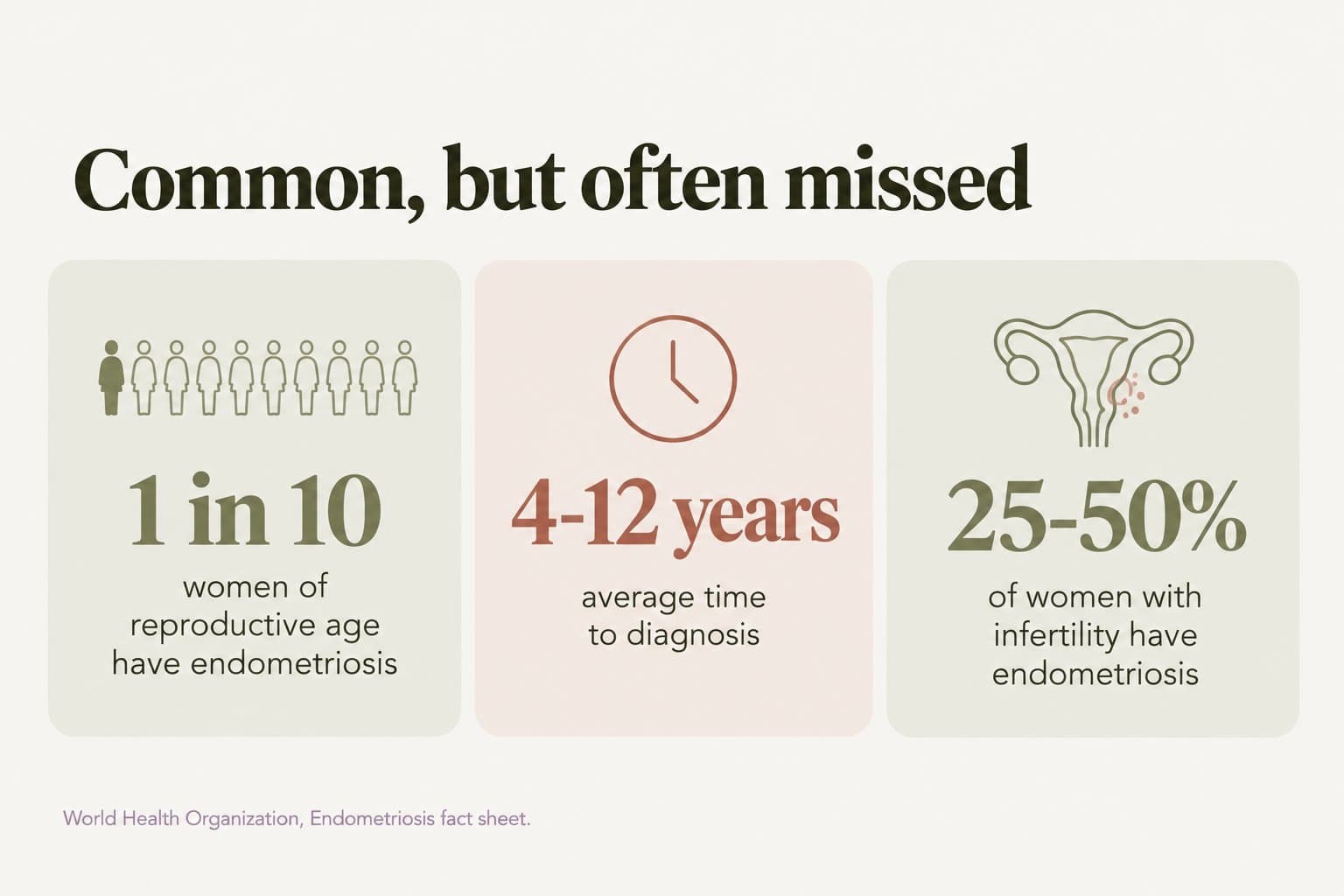
Endometriosis is a common, long-term condition in which tissue similar to the lining of the womb grows outside it, usually on the ovaries, fallopian tubes and lining of the pelvis. According to the World Health Organization, it affects about 10% of women and girls of reproductive age, roughly 190 million worldwide. Its hallmark is pelvic pain, especially severe period pain, but it can also cause pain during sex, heavy bleeding, bowel and bladder symptoms, fatigue and difficulty getting pregnant: as many as 25-50% of women with infertility have endometriosis. Because period pain is often dismissed as normal, the average time to diagnosis is 4 to 12 years. Endometriosis also has links beyond the pelvis. In a study of over 116,000 women followed for 20 years, those with endometriosis had a 62% higher risk of coronary heart disease, and the risk of some types of ovarian cancer is higher, although the overall risk remains low. Diagnosis no longer always requires surgery, and effective treatments are available. This article explains the condition, its long-term risks and what you can do.
Key numbers
| Finding | Detail |
|---|---|
| Women and girls of reproductive age affected (WHO) | About 10%, roughly 190 million worldwide |
| Average time to diagnosis (WHO) | 4 to 12 years |
| Endometriosis among women with infertility (WHO) | As many as 25-50% |
| Coronary heart disease (116,430 women, 20 years) | 62% higher risk (RR 1.62); about 3 times the risk in women aged 40 and under |
| Ovarian cancer (meta-analysis, 24 studies) | About twice the relative risk (SRR 1.93), mainly clear cell and endometrioid types; overall risk remains low |
What endometriosis is
In endometriosis, tissue similar to the womb lining grows in places it shouldn't, most often on the ovaries, the fallopian tubes, the ligaments around the womb and the lining of the pelvis, and sometimes on the bowel or bladder. Like the womb lining, it responds to the hormones of the menstrual cycle. This causes inflammation, pain and, over time, scar tissue (adhesions) that can bind organs together. Cysts on the ovaries filled with old blood, called endometriomas or "chocolate cysts", are a common form.
The severity of symptoms doesn't always match the amount of disease: some women with extensive endometriosis have few symptoms, while others with small deposits have severe pain.
Symptoms to recognise
The WHO lists these as the main symptoms:
- Severe period pain that stops you from doing normal activities, or isn't relieved by usual painkillers.
- Chronic pelvic pain, including outside periods.
- Pain during or after sex.
- Pain when opening the bowels or passing urine, especially during periods.
- Heavy periods.
- Bloating and nausea, and fatigue.
- Difficulty getting pregnant.
Endometriosis can also affect mental health, relationships, work and study. Period pain that disrupts daily life isn't normal and deserves assessment (see The Menstrual Cycle as a Vital Sign).
How it's diagnosed
For many years, diagnosis required keyhole surgery (laparoscopy). The 2022 European Society of Human Reproduction and Embryology (ESHRE) guideline changed this: laparoscopy is "no longer the diagnostic gold standard". Transvaginal ultrasound and MRI can identify endometriomas and deep endometriosis about as accurately as surgery. Superficial disease is harder to see on scans, so a normal scan doesn't rule endometriosis out. Doctors can start hormonal treatment based on symptoms alone, and surgery is advised mainly when imaging is negative and treatment hasn't worked or isn't suitable.
Why endometriosis matters beyond the pelvis
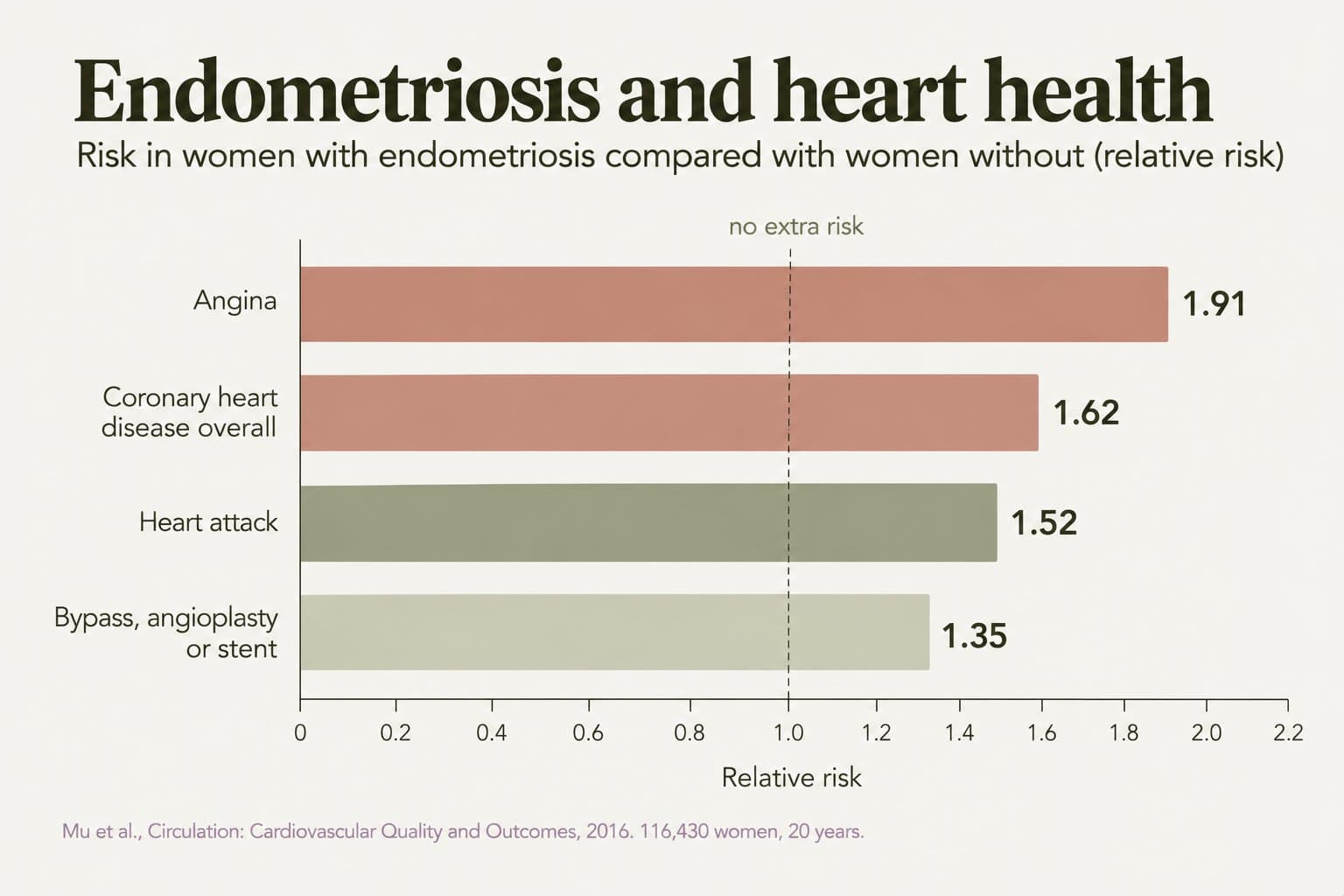
Heart disease. The Nurses' Health Study II followed 116,430 women for 20 years, including 11,903 with surgically confirmed endometriosis. Compared with women without the condition, those with endometriosis had:
- A 62% higher risk of coronary heart disease overall (RR 1.62)
- A 52% higher risk of heart attack (RR 1.52)
- Almost twice the risk of angina confirmed by angiography (RR 1.91)
- A 35% higher risk of needing bypass surgery, angioplasty or a stent (RR 1.35)
The risk was about three times higher in women aged 40 and under (RR 3.08). About 42% of the link was explained by higher rates of hysterectomy and removal of the ovaries, and earlier age at surgery. Chronic inflammation is thought to play a part too. As an observational study, it can't prove cause and effect, but it suggests women with endometriosis deserve attention to their heart health (see Women's Heart Disease).
Cancer. A 2021 meta-analysis of 38 studies found that women with endometriosis had about twice the relative risk of ovarian cancer (SRR 1.93), mainly the clear cell (SRR 3.44) and endometrioid (SRR 2.33) types, and a modestly higher risk of thyroid cancer (SRR 1.39). There was little or no increase in breast cancer and no clear link with endometrial or colorectal cancer. Because ovarian cancer is uncommon, the absolute increase in risk is small, and routine cancer screening isn't recommended for women with endometriosis.
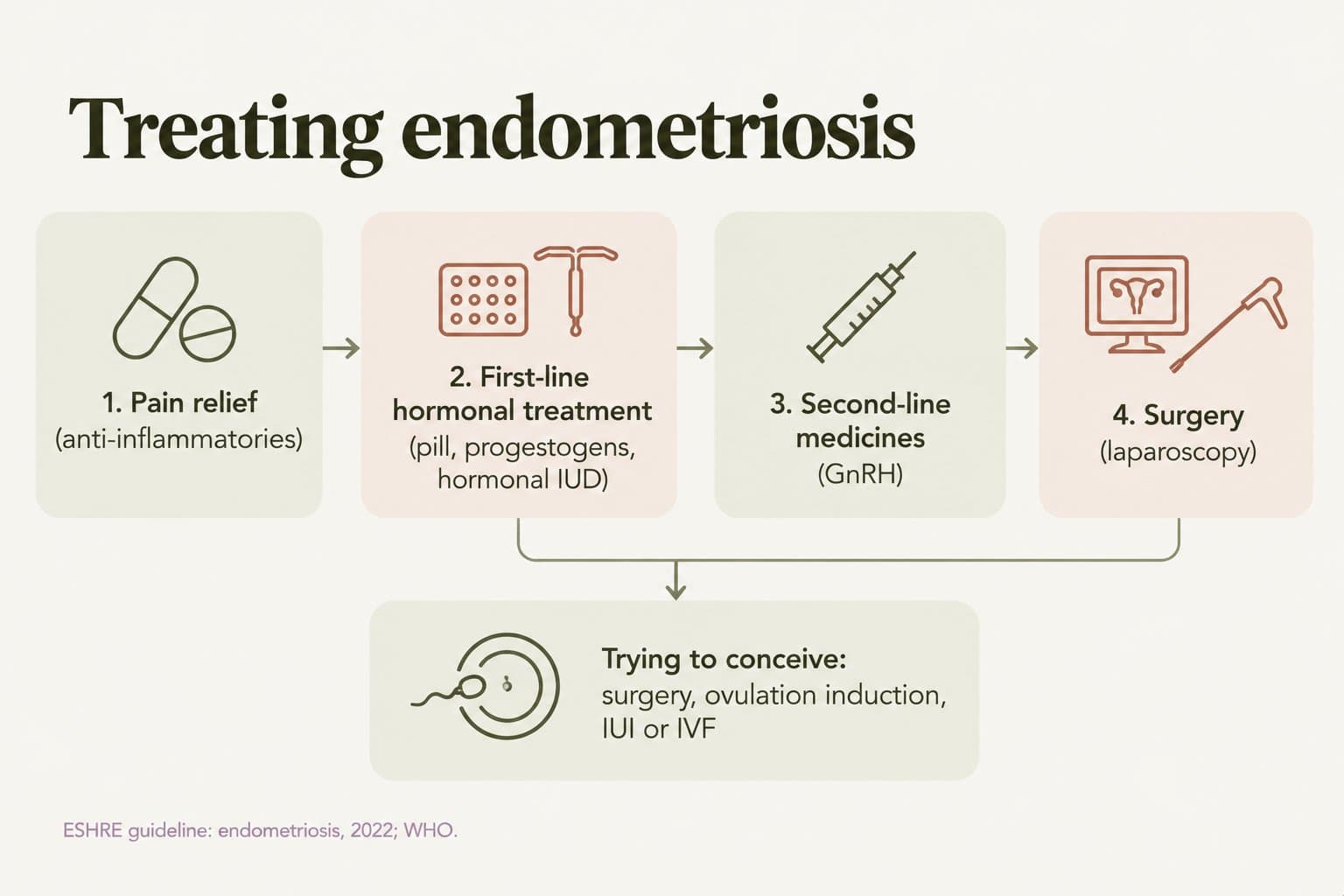
Fertility. Endometriosis can reduce fertility by distorting the pelvic anatomy, blocking the tubes and creating an inflammatory environment that affects eggs, sperm and embryos. Many women with endometriosis still conceive naturally, and treatments including surgery, ovulation induction, intrauterine insemination and IVF help many others (see How Fertility Works).
What's linked to endometriosis and its long-term risks
| Factor | Effect | Modifiable? | Evidence strength |
|---|---|---|---|
| Mother or sister with endometriosis | Raises risk of developing it | No | Strong |
| Early first period, short cycles, heavy periods | Linked to higher risk, probably through more menstrual flow | No | Moderate |
| Long delay in diagnosis | More years of pain and possible progression | Yes | Moderate |
| Hysterectomy with removal of both ovaries at a young age | Explains part of the higher heart disease risk | Sometimes, through treatment choices | Moderate |
| Smoking, inactivity, excess weight, high blood pressure | Add to cardiovascular risk | Yes | Strong |
| Chronic pain and poor sleep | Worsen mood, fatigue and quality of life | Yes, with treatment | Moderate |
What you can actually change
1. Don't accept disabling period pain as normal. Seek assessment if period pain stops you from going to work, school or daily activities, or if you have pain during sex, painful bowel movements or difficulty conceiving. Keeping a symptom diary helps your doctor.
2. Start effective pain relief and hormonal treatment. Anti-inflammatory painkillers such as ibuprofen or naproxen can ease pain. Hormonal treatments, including the combined pill, patch or ring, progestogen-only pills, injections or a hormonal IUD, reduce or stop periods and suppress endometriosis (see Hormonal Contraception and Long-Term Health). If these don't work, GnRH medicines that lower oestrogen levels are a second-line option. Hormonal treatments don't cure endometriosis, and symptoms often return when they're stopped.
3. Consider surgery when it's needed. Laparoscopic surgery to remove endometriosis, scar tissue and cysts can relieve pain and may improve fertility. Hysterectomy, usually with removal of the ovaries, is a last resort. Because removing the ovaries early brings on menopause and is linked to heart and bone risks, these decisions deserve careful discussion.
4. Plan ahead for fertility. If you have endometriosis and want children, discuss timing and options with your doctor early, especially before any surgery on the ovaries, which can reduce egg reserve.
5. Protect your heart. Have your blood pressure, cholesterol and blood sugar checked regularly, don't smoke, stay active and keep a healthy weight. The ESHRE guideline advises a healthy lifestyle and diet, reduced alcohol and regular physical activity.
6. Look after your wellbeing. Pain management programmes, pelvic physiotherapy and psychological support can help with chronic pain, fatigue and low mood.
Recommendations
- See a doctor for period pain that disrupts daily life, pain during sex, or bowel or bladder pain around your period.
- Ask about imaging: transvaginal ultrasound by an experienced operator, or MRI, can detect many forms of endometriosis without surgery.
- Discuss fertility plans early if you have endometriosis.
- Mention endometriosis when your cardiovascular risk is assessed, especially if you had a hysterectomy or ovaries removed at a young age.
- Don't worry unduly about cancer: the relative risk of some ovarian cancers is higher, but the overall risk remains low.
Practical notes
Endometriosis affects about 1 in 10 women of reproductive age and often takes years to diagnose because severe period pain is mistaken for normal. It can cause pelvic pain, painful sex, heavy periods, bowel and bladder symptoms and infertility, and it's linked to a higher risk of heart disease and some ovarian cancers. Diagnosis no longer always needs surgery, and pain relief, hormonal treatment and surgery can control symptoms for most women. Looking after heart health and planning ahead for fertility are important parts of long-term care.
- World Health Organization. Endometriosis. Fact sheet.
- Becker CM, et al. ESHRE guideline: endometriosis. Human Reproduction Open, 2022;2022(2):hoac009.
- Mu F, et al. Endometriosis and risk of coronary heart disease. Circulation: Cardiovascular Quality and Outcomes, 2016;9(3):257-264.
- Kvaskoff M, et al. Endometriosis and cancer: a systematic review and meta-analysis. Human Reproduction Update, 2021;27(2):393-420.
Free longevity assessment
Does period pain stop you
from doing what you need to?
Take the free Aevum Protocol assessment to see how your reproductive & sexual health and 6 other longevity domains are performing — and get a personalised 90-day plan.
Take the free assessmentKeep reading
Related articles
Reproductive & Sexual Health
The Menstrual Cycle as a Vital Sign: What Your Period Says About Your Health
Reproductive & Sexual Health
Fibroids and Heavy Periods: Causes, Long-Term Effects and Treatment Options
Reproductive & Sexual Health