Reproductive & Sexual Health
Hormonal Contraception and Long-Term Health:
Weighing the Real Risks and Benefits
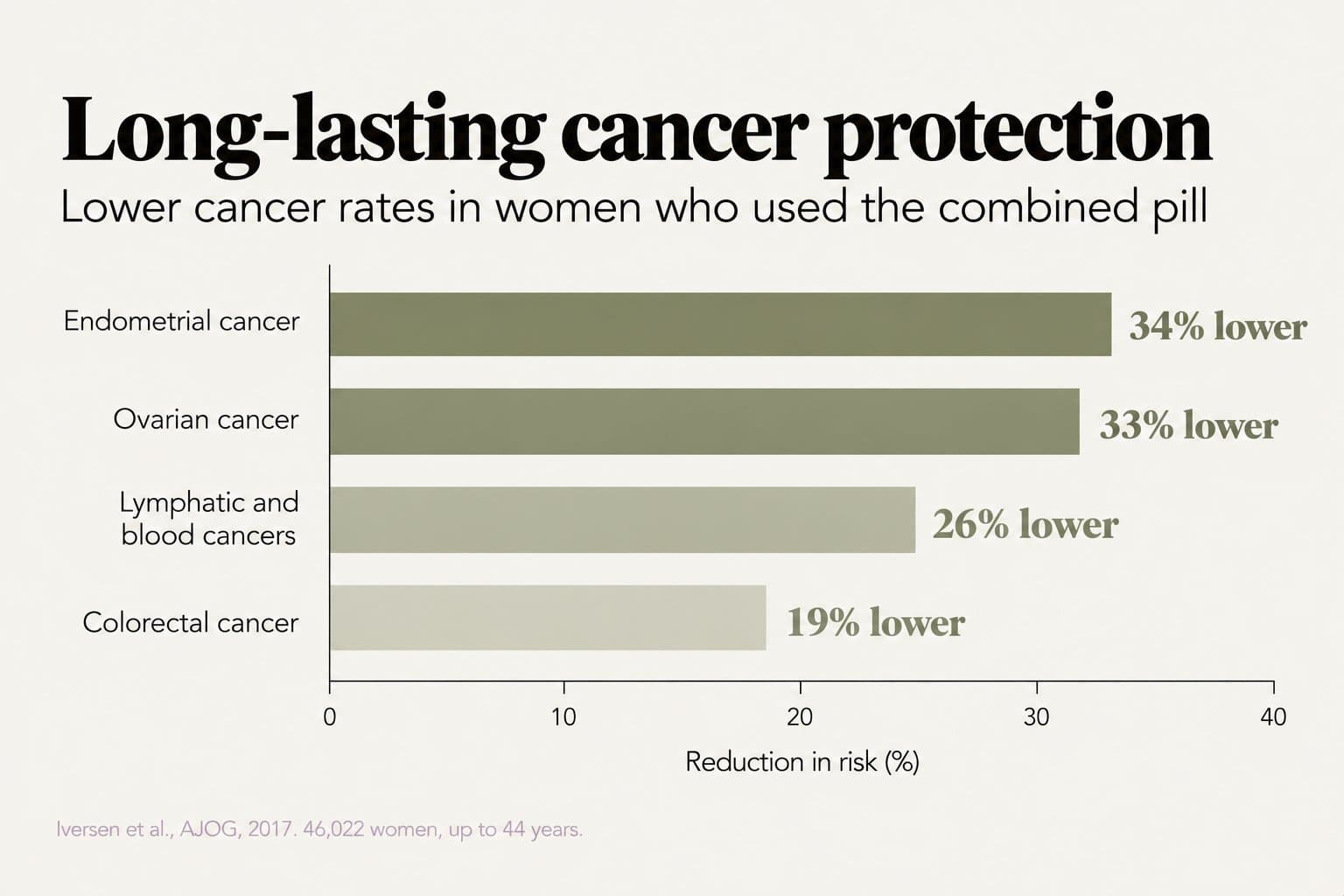
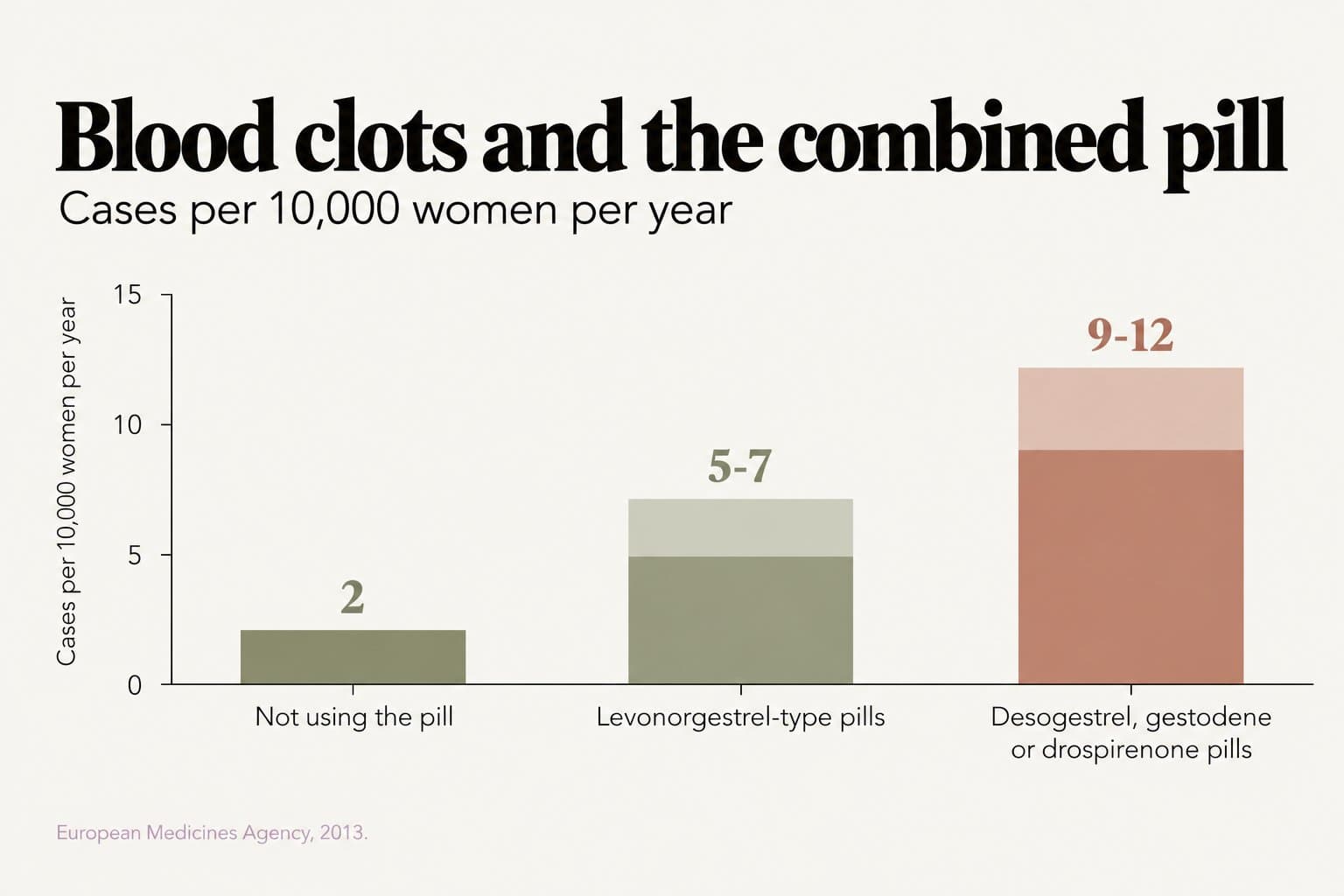
Hundreds of millions of women use hormonal contraception, including the pill, patch, ring, injection, implant and hormonal IUD. Questions about long-term safety are common, and the answers are more reassuring than many people expect. The UK Royal College of General Practitioners' study followed 46,022 women for up to 44 years and found that pill users had about a third lower risk of ovarian and endometrial cancer and about a fifth lower risk of bowel cancer, protection lasting at least 30 years after stopping. A small increase in breast cancer risk during and shortly after use disappeared within about five years of stopping, and the overall balance of cancer risk was neutral. Combined methods do raise the risk of blood clots, from about 2 per 10,000 women a year in non-users to 5-12 per 10,000 depending on the type, which is why medical history matters when choosing a method. Over almost 40 years, women who had used the pill didn't have a higher risk of death; in older age, they had fewer deaths. This article explains the evidence on the main long-term benefits and risks and how to choose safely.
Key numbers
| Finding | Detail |
|---|---|
| Cancer risk in pill users (46,022 UK women, up to 44 years) | Endometrial 34% lower; ovarian 33% lower; bowel 19% lower; overall balance neutral |
| Breast cancer with current or recent hormonal contraception (Denmark) | 20% higher relative risk; about 1 extra case per 7,690 users per year |
| Blood clots per 10,000 women per year (European Medicines Agency) | About 2 in non-users; 5-7 with levonorgestrel-type pills; 9-12 with desogestrel, gestodene or drospirenone pills |
| Deaths in ever-users vs never-users (46,000 UK women, nearly 40 years) | 52 fewer deaths per 100,000 woman-years |
| Use of antidepressants (Danish cohort of over 1 million women) | 23% higher with combined pills; observational, cause not proven |
How hormonal contraception works
Combined methods (the pill, patch and ring) contain an oestrogen and a progestogen and mainly work by stopping ovulation. Progestogen-only methods include the progestogen-only pill, injection, implant and hormonal IUD; they thicken cervical mucus and, depending on the method, stop ovulation or thin the womb lining. Fertility returns after stopping, though it can take several months after the injection.
Evidence strength
Strong: long-lasting protection against ovarian, endometrial and bowel cancer. The Royal College of General Practitioners' Oral Contraception Study recruited 46,022 women in 1968-1969 and followed them for up to 44 years. Compared with never-users, women who had used the combined pill had lower rates of:
- Endometrial cancer: 34% lower (IRR 0.66)
- Ovarian cancer: 33% lower (IRR 0.67)
- Lymphatic and blood cancers: 26% lower (IRR 0.74)
- Colorectal cancer: 19% lower (IRR 0.81)
Protection against endometrial, ovarian and colorectal cancer lasted at least 30 years after stopping. The authors concluded that "most women who choose to use oral contraceptives do not expose themselves to long-term cancer harms; instead, with some cancers, many women benefit from important reductions of risk".
Strong: a small, temporary increase in breast cancer risk. A national Danish study found that women currently or recently using hormonal contraception had a 20% higher relative risk of breast cancer than never-users (RR 1.20), rising from 1.09 with less than a year of use to 1.38 with more than 10 years. Because breast cancer is uncommon in younger women, the absolute increase was small: about 1 extra case for every 7,690 women using hormonal contraception for a year, and 1 for every 50,000 women under 35. The UK study found that the extra risk disappeared within about five years of stopping. The American College of Obstetricians and Gynecologists advises that the overall risk "remains very low".
Strong: combined methods raise the risk of blood clots. The European Medicines Agency's review found that blood clots in the veins (venous thromboembolism) affect about 2 in 10,000 women a year who don't use combined hormonal contraception and aren't pregnant. The risk is:
- 5-7 per 10,000 with pills containing levonorgestrel, norethisterone or norgestimate
- 6-12 per 10,000 with the patch (norelgestromin) and ring (etonogestrel)
- 9-12 per 10,000 with pills containing desogestrel, gestodene or drospirenone
The agency concluded that the benefits "continue to outweigh their risks" but that each woman's risk factors should be assessed. The risk is highest in the first year of use and higher in smokers, women with obesity, and those with a personal or family history of clots. Pregnancy and the weeks after birth carry a higher clot risk than the pill. Progestogen-only methods don't appear to raise clot risk in the same way.
Moderate: no increase in long-term mortality. In the UK study, nearly 40 years of follow-up and over a million woman-years of observation showed that pill users had 52 fewer deaths per 100,000 woman-years than never-users. Small excess risks in women under 40 were outweighed by fewer deaths at older ages, from heart disease and bowel, womb and ovarian cancer. The authors concluded that oral contraception "is not significantly associated with an increased long-term risk of death". These women used older, higher-dose pills; modern pills contain less oestrogen.
Limited: mood and depression. A Danish study of over a million women found that those using combined pills were 23% more likely, and those using progestogen-only pills 34% more likely, to start antidepressants, with higher figures in adolescents. Experts noted that the study "does not prove" that the pill causes depression, and other studies have been mixed. Some women do notice mood changes on particular methods; switching to another option often helps.
Important limitations.
- Much long-term evidence comes from older, higher-dose pills, so results for modern methods are extrapolated.
- Risks depend on the individual, including age, smoking, weight, blood pressure, migraine and family history.
- Methods differ: combined and progestogen-only methods have different risk profiles, and the hormonal IUD releases very low doses mainly into the womb.
Recommendations by situation
| Situation | What the evidence supports |
|---|---|
| Healthy, non-smoking woman | Most methods are suitable; discuss preferences and side effects |
| Smoker aged 35 or over | Combined methods usually not recommended; progestogen-only or non-hormonal methods are safer |
| Personal or family history of blood clots | Avoid combined methods; seek medical advice |
| Migraine with aura | Combined methods not recommended because of stroke risk; progestogen-only methods are options |
| Family history of ovarian or bowel cancer | Combined pill may offer added protection; discuss with your doctor |
| Strong family history or genetic risk of breast cancer | Discuss options individually |
| Heavy periods, endometriosis or PCOS | Hormonal methods are also an effective treatment |
| Low mood on a method | Discuss switching; don't stop without another plan for contraception |
The hormonal IUD and combined pill are also treatments for heavy periods, endometriosis and polycystic ovary syndrome (see Fibroids and Heavy Periods, Endometriosis and Polycystic Ovary Syndrome (PCOS)).
Practical notes
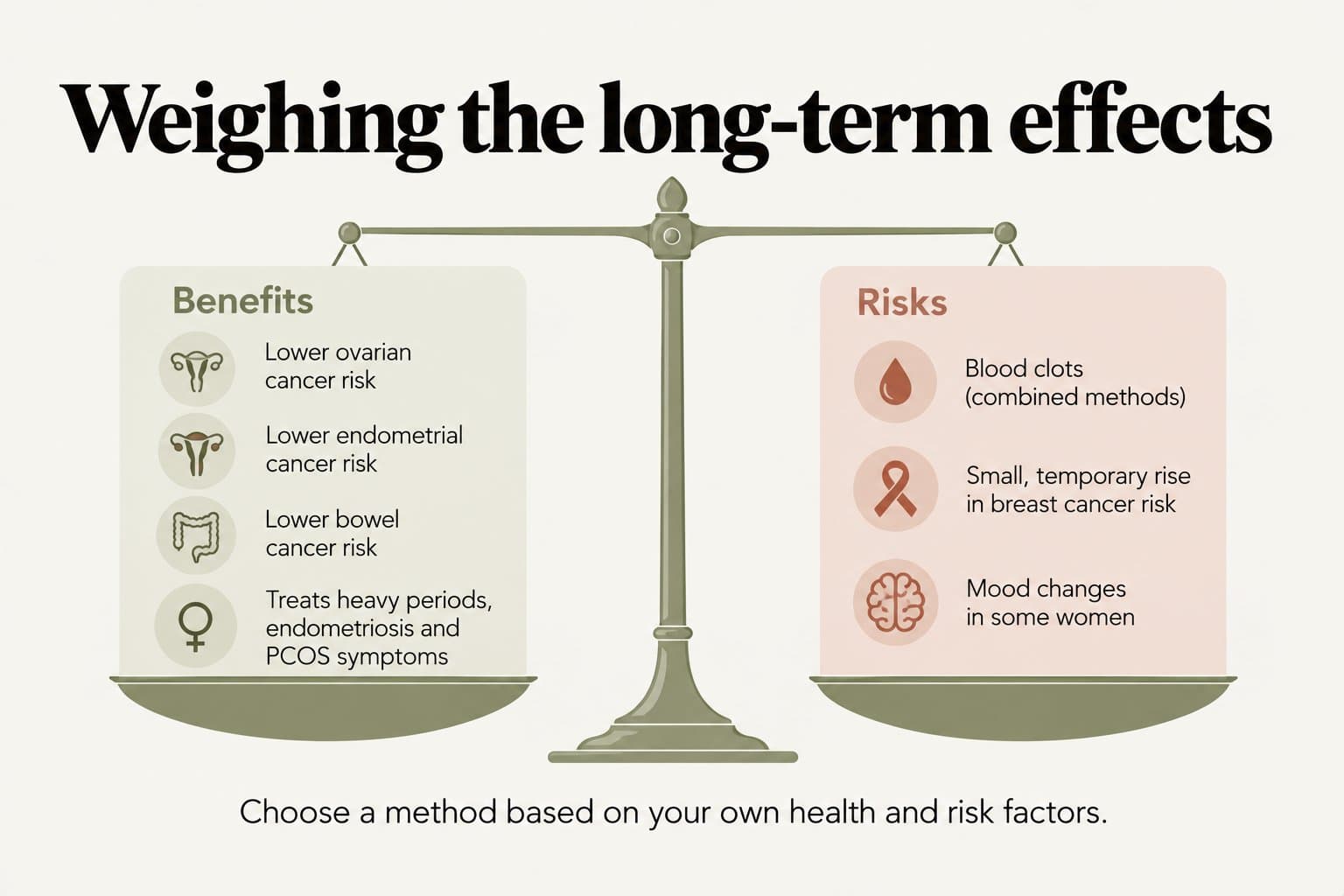
For most women, hormonal contraception is safe, and its long-term effects on cancer are, on balance, protective: lower risks of ovarian, endometrial and bowel cancer that last for decades, against a small, temporary rise in breast cancer risk. Combined methods raise the risk of blood clots, so smoking, weight, migraine with aura and personal or family history of clots should guide the choice of method. Long-term studies show no increase in overall mortality. The best method is one chosen with a doctor based on your health, risks and preferences.
- Iversen L, et al. Lifetime cancer risk and combined oral contraceptives: the Royal College of General Practitioners' Oral Contraception Study. American Journal of Obstetrics & Gynecology, 2017;216(6):580.e1-580.e9.
- Mørch LS, et al. Contemporary hormonal contraception and the risk of breast cancer. New England Journal of Medicine, 2017;377(23):2228-2239.
- European Medicines Agency. PRAC confirms that benefits of all combined hormonal contraceptives (CHCs) continue to outweigh risks. 2013.
- Hannaford PC, et al. Mortality among contraceptive pill users: cohort evidence from Royal College of General Practitioners' Oral Contraception Study. BMJ, 2010;340:c927.
- Skovlund CW, et al. Association of hormonal contraception with depression. JAMA Psychiatry, 2016;73(11):1154-1162.
Free longevity assessment
Is your contraception
still the right fit for your health?
Take the free Aevum Protocol assessment to see how your reproductive & sexual health and 6 other longevity domains are performing — and get a personalised 90-day plan.
Take the free assessmentKeep reading