Cardiovascular & Metabolic Health
Women's Heart Disease:
Different Risks, Different Symptoms, and What to Watch For
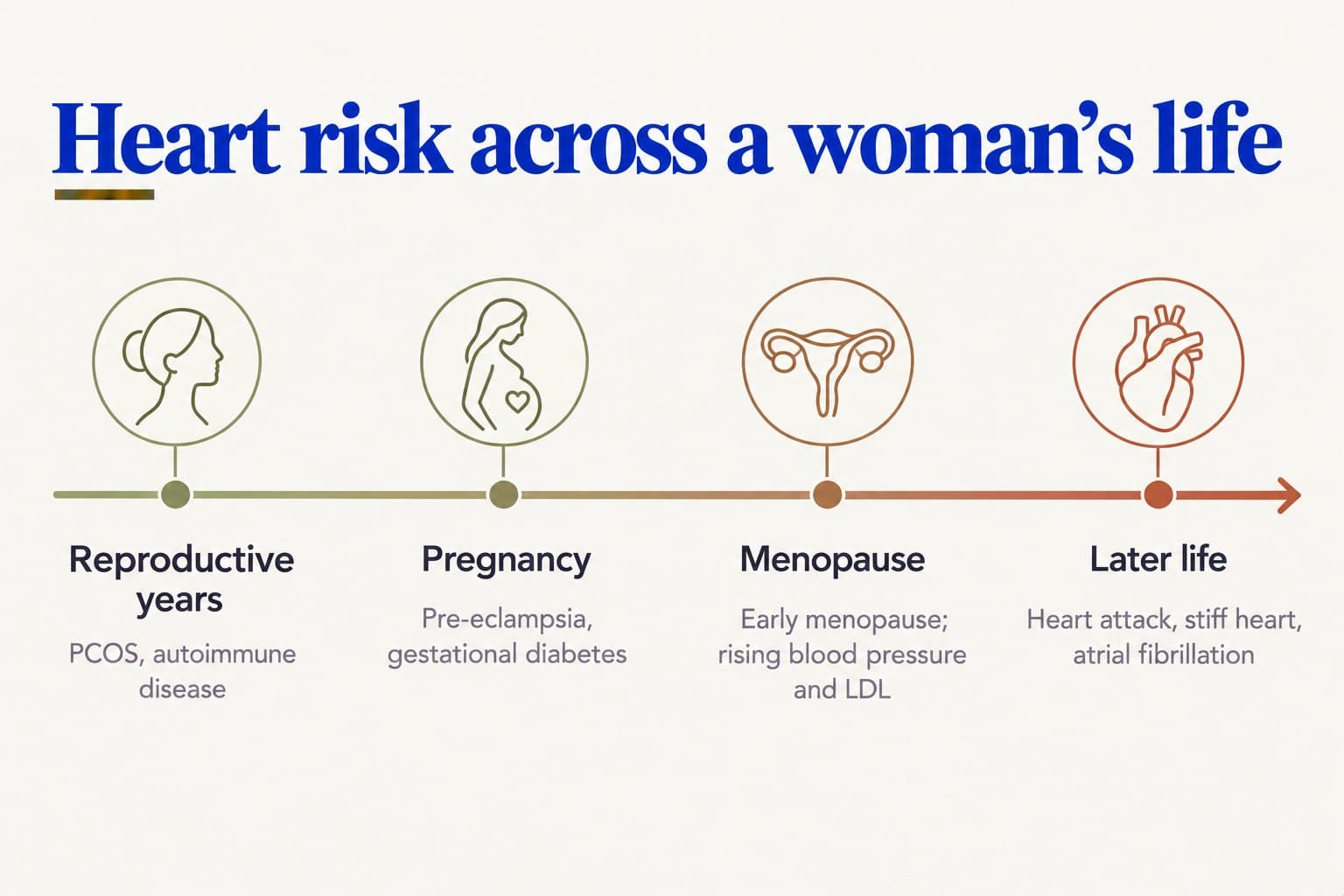
Heart disease is often thought of as a man's problem, but it's a leading cause of death in women too, and awareness is falling: in a US survey, the share of women who knew heart disease is their leading cause of death dropped from 65% in 2009 to 44% in 2019. Women tend to develop heart disease later than men, but they face some risks that men don't, and some shared risks hit them harder. Diabetes raises coronary heart disease risk 44% more in women than in men. Pre-eclampsia during pregnancy is linked to four times the later risk of heart failure and about twice the risk of heart attack and stroke. Menopause before 40 is linked to a 55% higher risk of cardiovascular disease. Women are also more likely to have heart attacks without chest pain: in a study of more than 1.1 million heart attack patients, 42% of women had no chest pain, compared with 31% of men. This article explains what's different about heart disease in women and what to do about it.
Key numbers
| Finding | Detail |
|---|---|
| US women aware heart disease is their leading cause of death | Fell from 65% in 2009 to 44% in 2019 |
| Heart attack without chest pain (1,143,513 patients) | 42% of women vs 31% of men |
| Diabetes and coronary heart disease risk (64 cohorts, 858,507 people) | 2.8 times higher in women with diabetes vs 2.2 times in men: a 44% greater excess risk in women |
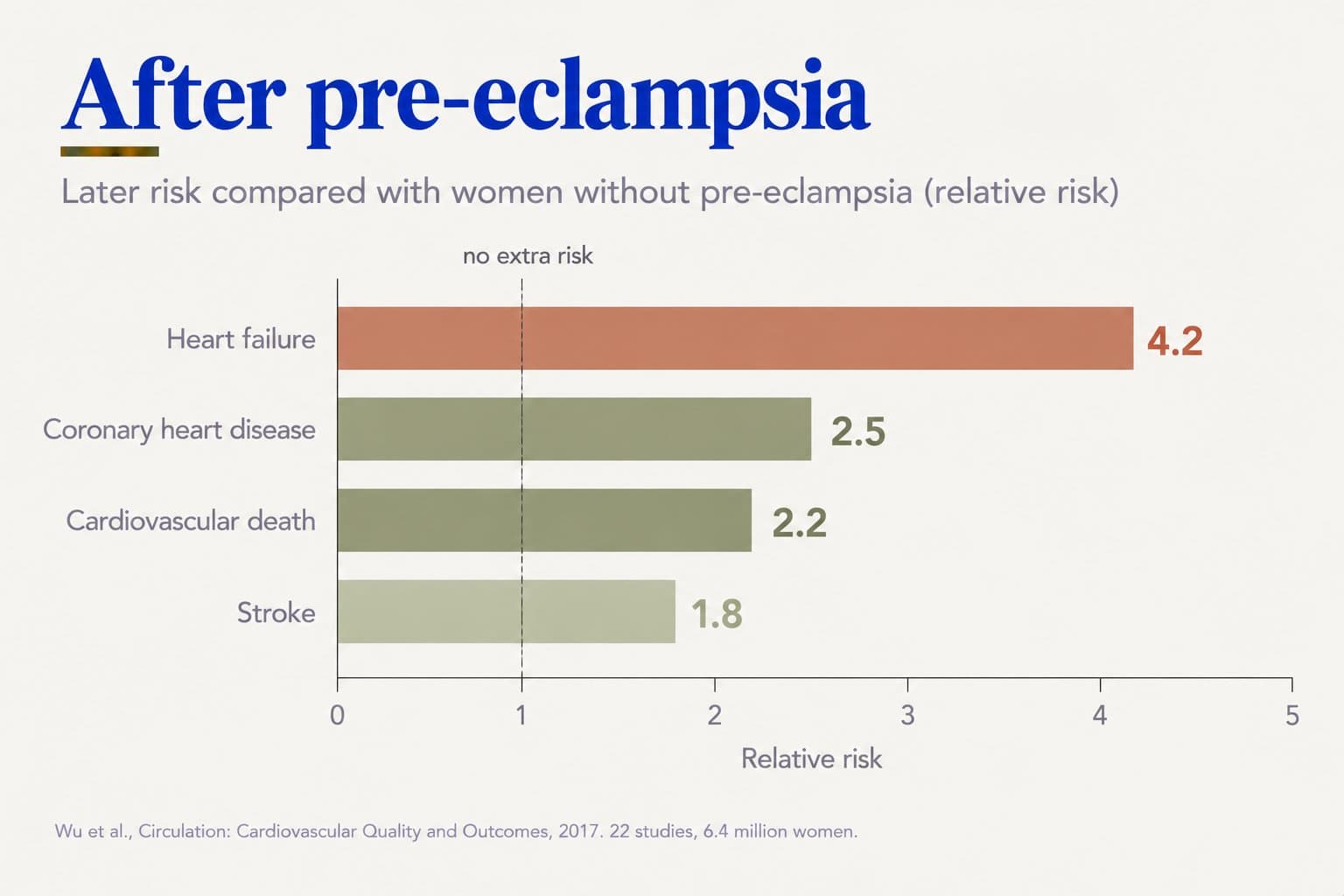
| Pre-eclampsia and later heart disease (22 studies, 6.4 million women) | Heart failure 4.2 times; coronary heart disease 2.5 times; stroke 1.8 times |
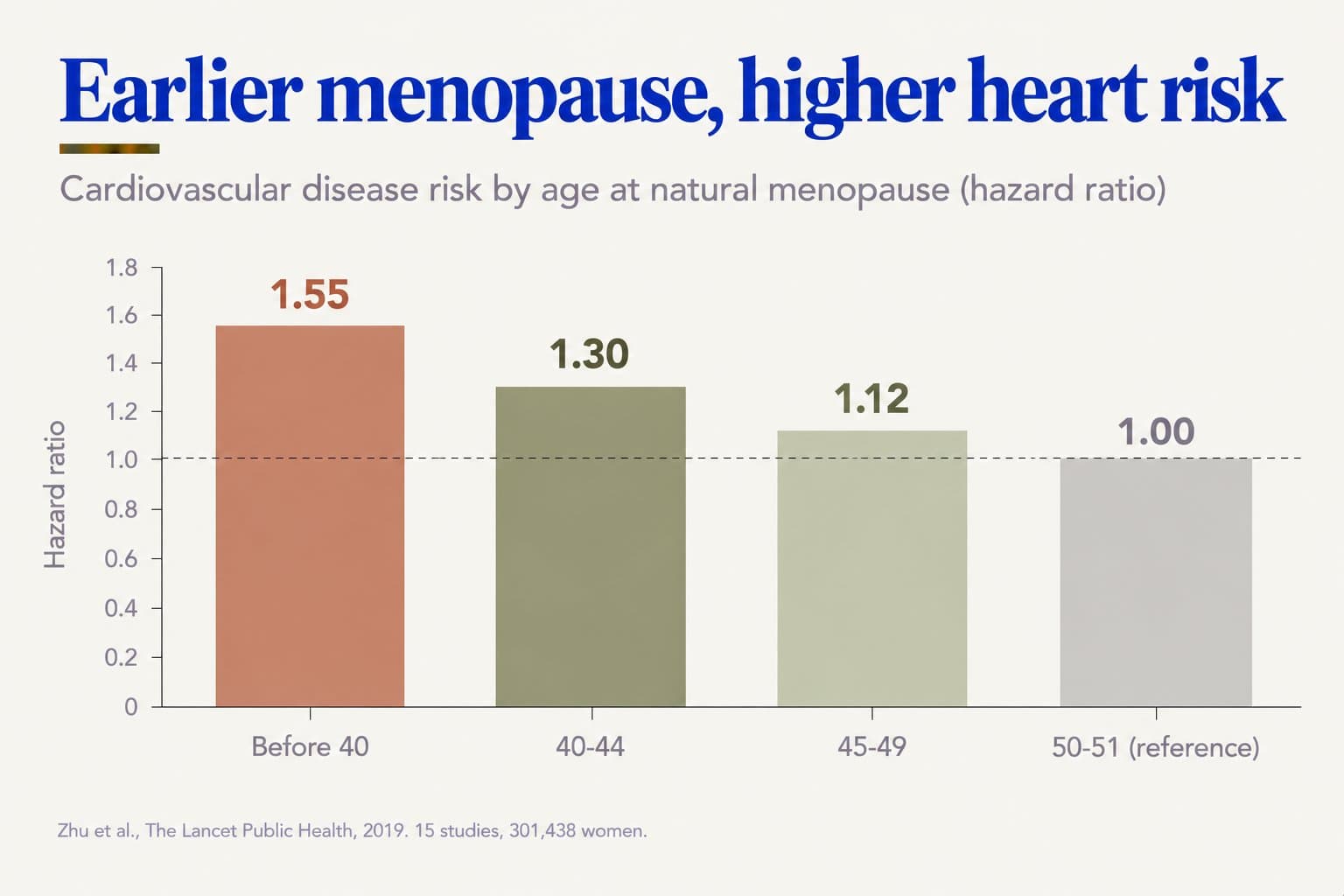
| Menopause before age 40 (15 studies, 301,438 women) | 55% higher risk of cardiovascular disease than menopause at 50-51 |
How heart disease differs in women
Women generally develop coronary heart disease about a decade later than men, partly because oestrogen has favourable effects on blood vessels and cholesterol before menopause. But this doesn't mean women are protected:
- Risk rises sharply after menopause, as LDL cholesterol, blood pressure and abdominal fat tend to increase.
- Women are more likely to have disease in the small blood vessels of the heart (coronary microvascular dysfunction), which can cause chest pain and heart attacks even when the main arteries look relatively clear on an angiogram.
- Some causes of heart attack are more common in women, such as a tear in the wall of a coronary artery (spontaneous coronary artery dissection, or SCAD), which tends to affect younger women, including around pregnancy.
- Heart failure with preserved ejection fraction, a stiff rather than weak heart, is more common in older women.
- Symptoms can be less typical, which can delay diagnosis and treatment.
What raises women's heart risk
| Factor | Effect | Modifiable? | Evidence strength |
|---|---|---|---|
| Diabetes | Raises coronary heart disease risk more in women than in men | Yes | Strong |
| High blood pressure | A major driver; often rises after menopause | Yes | Strong |
| Smoking | Greatly raises risk | Yes | Strong |
| Pre-eclampsia and high blood pressure in pregnancy | Linked to about twice the risk of heart attack and stroke, and four times the risk of heart failure | No, but a signal to monitor | Strong |
| Gestational diabetes | Raises later risk of type 2 diabetes and heart disease | No, but a signal to monitor | Moderate |
| Early menopause (before 45, especially before 40) | Higher cardiovascular risk | No | Strong |
| Polycystic ovary syndrome (PCOS) | Linked to insulin resistance and metabolic risk | Partly | Moderate |
| Autoimmune diseases (such as lupus and rheumatoid arthritis) | Raise risk; more common in women | Partly | Moderate |
| Depression and chronic stress | Linked to higher risk | Yes | Moderate |
What the research shows
Awareness is going backwards. In American Heart Association surveys of US women, awareness that heart disease is the leading cause of death in women fell from 65% in 2009 to 44% in 2019, with the steepest declines among younger women and women from ethnic minority groups. In Sri Lanka, the national Health and Ageing Survey of 6,513 adults found angina symptoms were about twice as common in women as in men (3.9% vs 1.9%), and the researchers suggested that heart disease in women may more often go undiagnosed.
Diabetes hits women harder. A 2014 meta-analysis pooled 64 cohorts with 858,507 people. Diabetes raised the risk of coronary heart disease 2.82-fold in women and 2.16-fold in men, meaning the excess risk from diabetes was 44% greater in women. Possible reasons include women's risk factors being more advanced by the time diabetes is diagnosed, and being less intensively treated (see Diabetes and Heart Disease).
Pregnancy is a cardiovascular stress test. Pre-eclampsia, high blood pressure with signs of organ strain that develops in pregnancy, affects about 5-8% of pregnancies. A 2017 meta-analysis of 22 studies with more than 6.4 million women found that, after adjusting for other factors, women who'd had pre-eclampsia had a 4.2 times higher risk of heart failure, 2.5 times the risk of coronary heart disease, 2.2 times the risk of cardiovascular death and 1.8 times the risk of stroke. The raised risk began within a year of delivery. Pregnancy complications don't cause all this risk; they may reveal an underlying tendency that pregnancy unmasks, which makes them a valuable early warning.
Earlier menopause, higher risk. A 2019 analysis pooled 15 studies with 301,438 women. Compared with menopause at 50-51, menopause before 40 was linked to a 55% higher risk of cardiovascular disease, at 40-44 a 30% higher risk and at 45-49 a 12% higher risk. The extra risk was most marked before age 60. For women with early menopause, hormone therapy until the usual age of menopause is generally recommended, partly to protect the heart and bones (see Menopausal Hormone Therapy).
Heart attacks can look different. In a US registry of 1,143,513 people having a heart attack, 42% of women arrived at hospital without chest pain, compared with 31% of men. Women were older on average (74 vs 67 years) and more likely to die in hospital (14.6% vs 10.3%), and the gap was greatest in younger women without chest pain. Chest pain or pressure is still the most common symptom in both sexes, but women more often also have, or only have, breathlessness, nausea, sweating, unusual tiredness, or pain in the jaw, neck, back or arms.
What you can actually change
1. Treat pregnancy complications as a heart health warning. If you've had pre-eclampsia, high blood pressure in pregnancy, gestational diabetes or a premature delivery, tell your doctor, even years later, and have your blood pressure, blood sugar and cholesterol checked regularly.
2. Know your numbers through the menopause transition. Blood pressure, LDL cholesterol and waist size often rise during and after menopause. Check them regularly from your 40s, and act early (see Hypertension and Longevity).
3. Take early menopause seriously. If your periods stopped before 45, discuss hormone therapy and a cardiovascular risk assessment with your doctor.
4. Manage diabetes and PCOS actively. Both raise metabolic and heart risk. Regular activity, strength training and weight management improve insulin sensitivity.
5. Don't smoke. Smoking is a particularly strong risk factor for heart attacks in younger women.
6. Learn the symptoms, and act on them. Don't dismiss breathlessness, unusual fatigue, nausea, or jaw, neck, back or arm discomfort, especially with exertion.
Recommendations
- Include pregnancy history in your heart risk assessment: most risk calculators don't ask about it, so you may need to raise it.
- Ask your doctor to account for early menopause, PCOS or autoimmune disease when estimating your risk.
- Call emergency services for chest pain or pressure, or sudden breathlessness, sweating or nausea that could be a heart attack. Don't wait to see if it passes.
- Push for answers if you have ongoing chest pain but "clear" arteries on an angiogram: small vessel disease may be the cause.
- South Asian women face additional risk at younger ages and lower body weights (see South Asian Cardiovascular Risk).
Practical notes
Heart disease is a leading cause of death in women, but it's often underestimated by women themselves and sometimes by doctors. Women face unique risk factors, including pregnancy complications and early menopause, and shared ones such as diabetes can hit them harder. Symptoms may be less typical. Knowing your risk history, checking your numbers regularly, especially through menopause, and acting promptly on symptoms can make a significant difference.
- Cushman M, et al. Ten-year differences in women's awareness related to coronary heart disease: results of the 2019 American Heart Association national survey. Circulation, 2021;143(7):e239-e248.
- Canto JG, et al. Association of age and sex with myocardial infarction symptom presentation and in-hospital mortality. JAMA, 2012;307(8):813-822.
- Peters SAE, Huxley RR, Woodward M. Diabetes as risk factor for incident coronary heart disease in women compared with men: a systematic review and meta-analysis of 64 cohorts including 858,507 individuals and 28,203 coronary events. Diabetologia, 2014;57(8):1542-1551.
- Wu P, et al. Preeclampsia and future cardiovascular health: a systematic review and meta-analysis. Circulation: Cardiovascular Quality and Outcomes, 2017;10(2):e003497.
- Zhu D, et al. Age at natural menopause and risk of incident cardiovascular disease: a pooled analysis of individual patient data. The Lancet Public Health, 2019;4(11):e553-e564.
- Wijemunige N, et al. The prevalence and epidemiological features of ischaemic heart disease in Sri Lanka. Global Heart, 2024;19(1):49.
Free longevity assessment
Has your pregnancy or menopause history
been part of your heart check?
Take the free Aevum Protocol assessment to see how your cardiovascular & metabolic health and 6 other longevity domains are performing — and get a personalised 90-day plan.
Take the free assessmentKeep reading
Related articles
Stress & Hormones
Menopausal Hormone Therapy: What the Evidence Shows About Benefits and Risks
Cardiovascular & Metabolic Health
Diabetes and Heart Disease: Why They're Linked and How to Break the Connection
Cardiovascular & Metabolic Health