Nutrition & Metabolism
Meat, Fish and Eggs:
What the Evidence Says About Animal Proteins and Long-Term Health
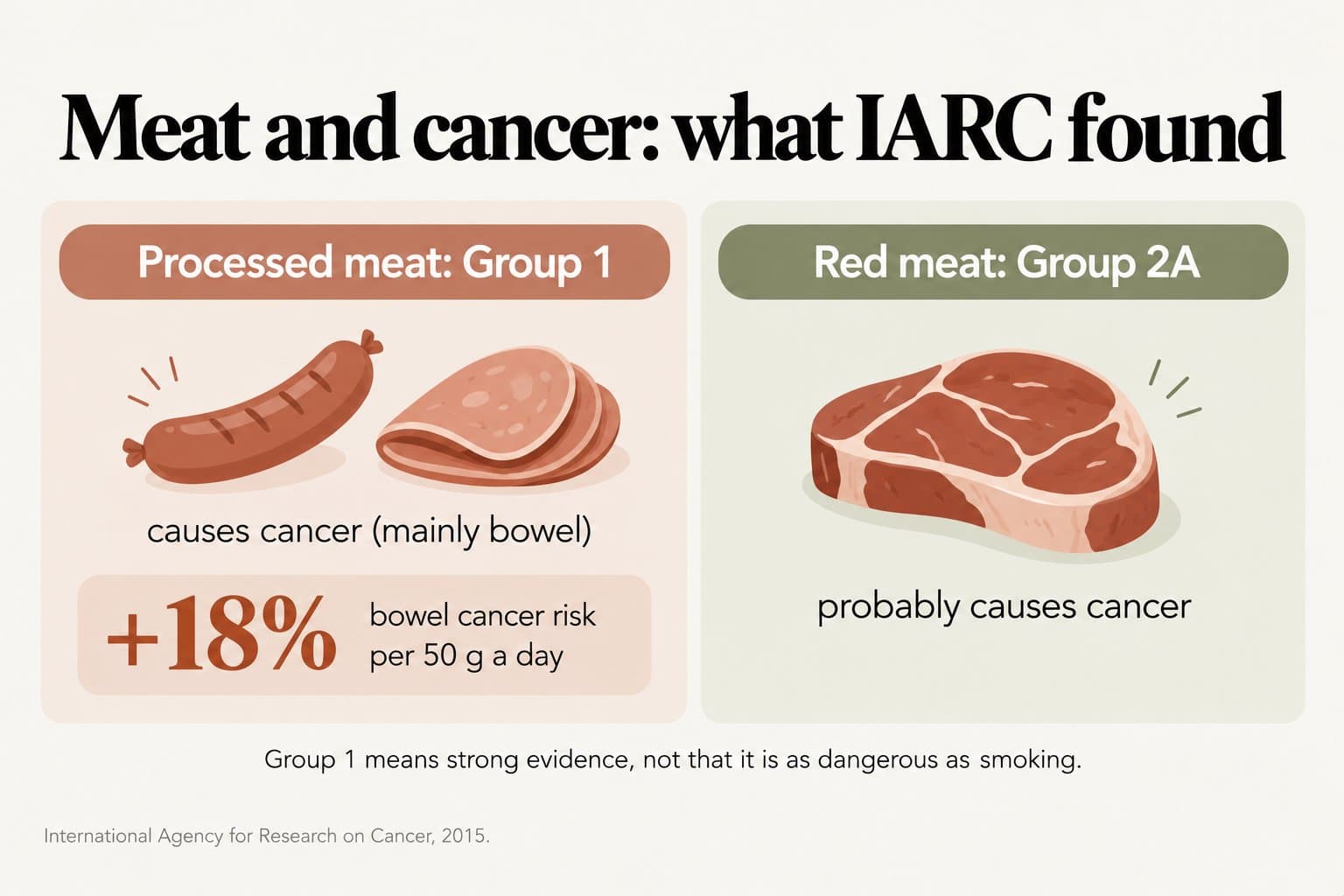
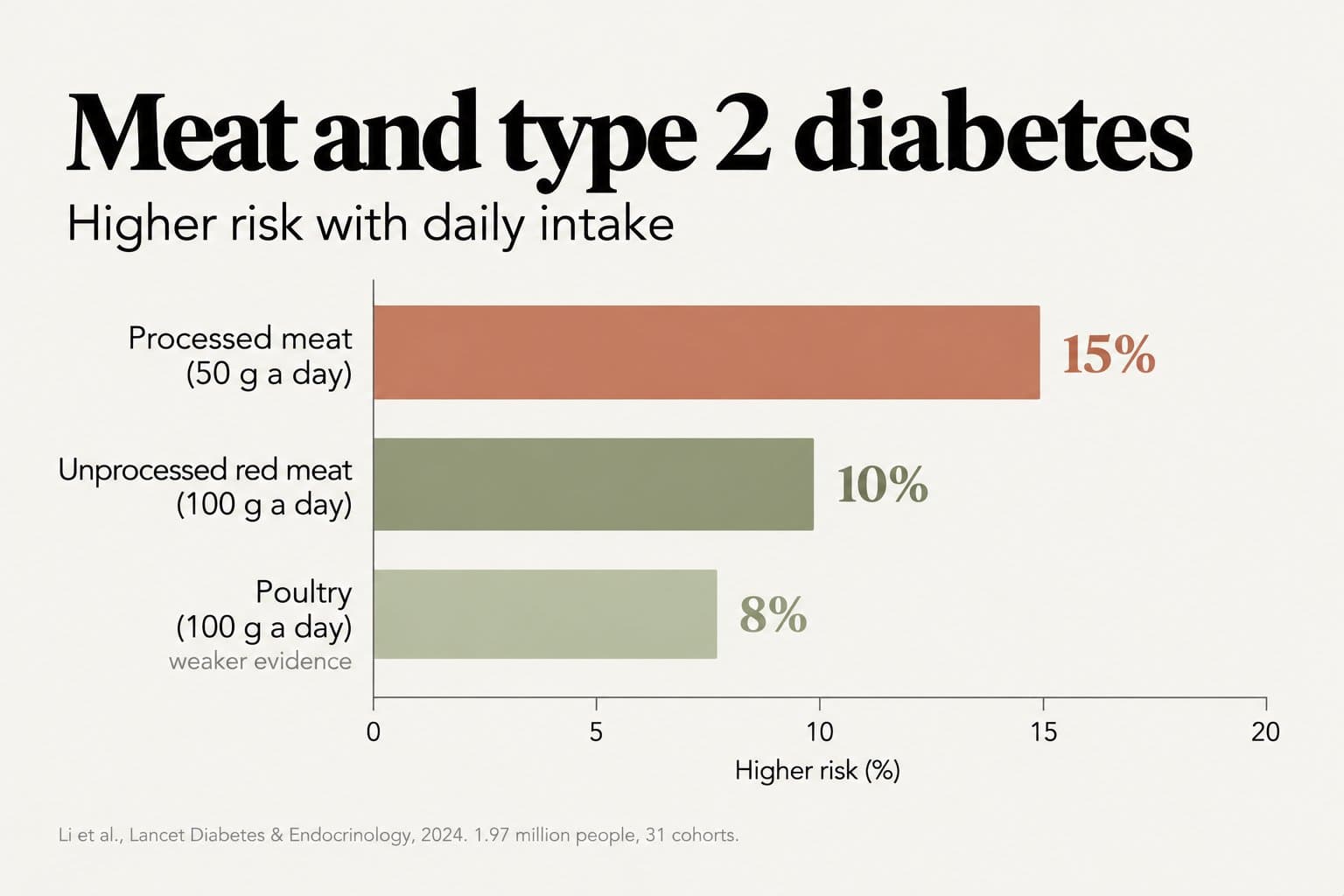
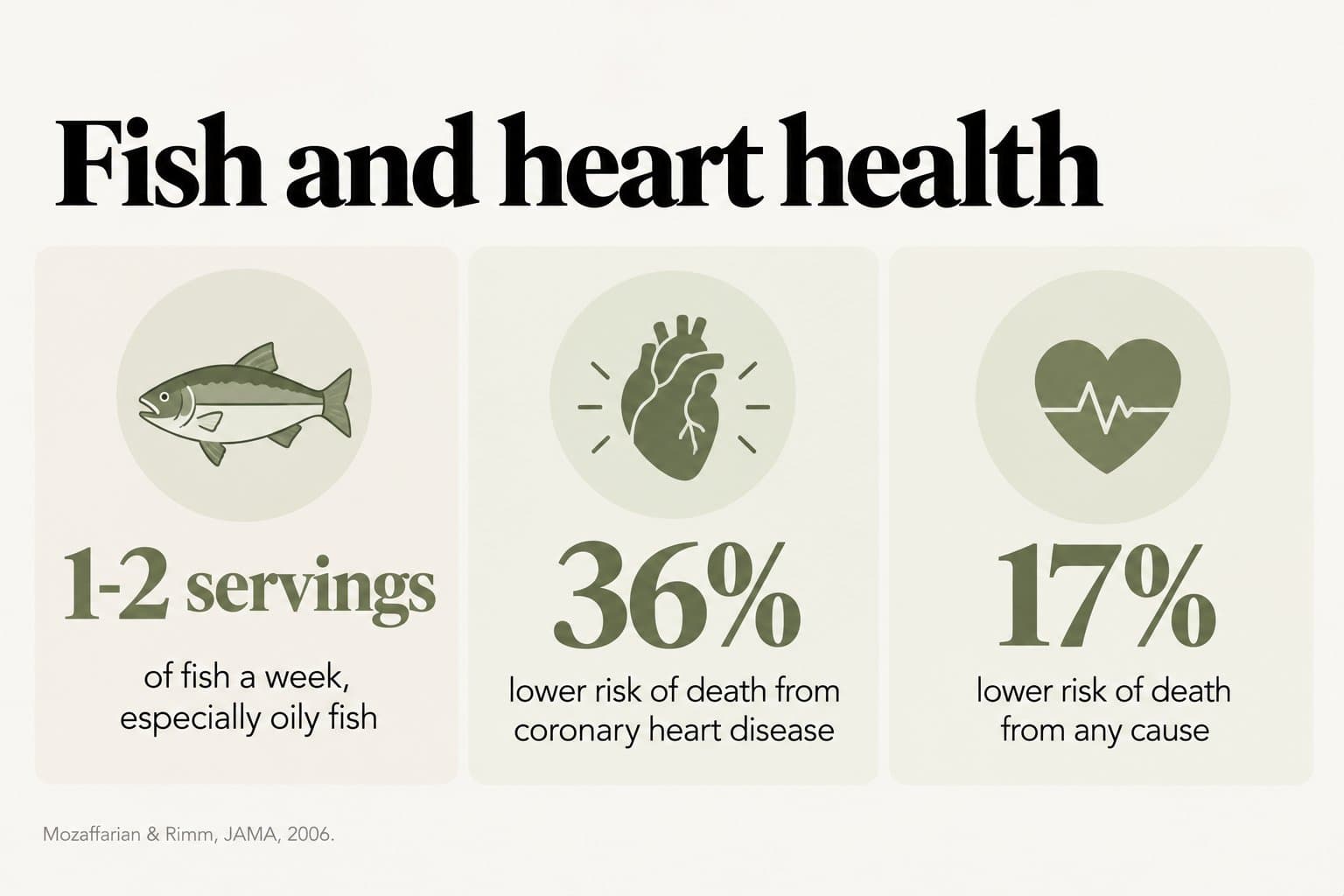
Animal foods provide high-quality protein, vitamin B12, iron and other nutrients, but they differ greatly in their effects on long-term health. Processed meats, such as sausages, ham, bacon and meatballs, carry the clearest risks: the International Agency for Research on Cancer (IARC) classifies them as a cause of cancer, with each 50 g eaten daily raising the risk of bowel cancer by 18%. Red meat is classified as a probable cause. A 2024 study of nearly 2 million people in 20 countries found that 50 g of processed meat a day was linked to a 15% higher risk of type 2 diabetes, and 100 g of unprocessed red meat to a 10% higher risk. Fish looks very different: a Harvard review found that about one to two servings of fish a week, especially oily fish, reduced the risk of death from coronary heart disease by 36%. And for eggs, a large Harvard analysis found that up to one egg a day wasn't linked to higher cardiovascular risk. This article explains the evidence and how to choose animal proteins for a longer, healthier life.
Key numbers
| Finding | Detail |
|---|---|
| Processed meat and cancer (IARC, 22 experts, over 800 studies) | Group 1 carcinogen; each 50 g a day raises bowel cancer risk by 18% |
| Red meat and cancer (same review) | Group 2A, probably carcinogenic |
| Meat and type 2 diabetes (1.97 million people, 31 cohorts) | 15% higher risk per 50 g processed meat a day; 10% per 100 g unprocessed red meat; 8% per 100 g poultry (weaker evidence) |
| Fish and heart disease (Harvard review) | About 1-2 servings a week linked to 36% lower risk of coronary death |
| Eggs and cardiovascular disease (28 cohorts, about 1.7 million people) | Up to one egg a day not linked to higher risk |
The different types of animal protein
- Processed meat: meat preserved by salting, curing, fermentation or smoking, such as sausages, ham, bacon, salami, meatballs, luncheon meat, hot dogs and many chicken nuggets and processed chicken products.
- Red meat: muscle meat from mammals, including beef, pork, mutton and goat.
- Poultry: chicken and other birds.
- Fish and seafood: including oily fish such as sardines (salaya), mackerel (kumbalawa), tuna and salmon.
- Eggs.
They differ in fat type, salt, cooking by-products and the foods they tend to replace, which partly explains their different effects.
Risks and benefits
Processed meat: the clearest risk. In 2015, 22 experts from 10 countries convened by the IARC reviewed more than 800 studies. They classified processed meat as Group 1, carcinogenic to humans, based mainly on bowel cancer, and found that each 50 g portion eaten daily, about two slices of ham, increases the risk of bowel cancer by 18%. Red meat was classified as Group 2A, probably carcinogenic, mainly for bowel cancer, with links also to pancreatic and prostate cancer. Being in Group 1 means the evidence of a link is strong, not that processed meat is as dangerous as smoking; the absolute risk for an individual is modest, but meat is eaten so widely that the population impact matters.
Meat and type 2 diabetes. The 2024 InterConnect study, published in The Lancet Diabetes & Endocrinology, analysed individual data from 31 cohorts in 20 countries, including 1.97 million people. Over about 10 years:
- 50 g of processed meat a day was linked to a 15% higher risk of type 2 diabetes.
- 100 g of unprocessed red meat a day to a 10% higher risk.
- 100 g of poultry a day to an 8% higher risk, although this link weakened in further analyses.
The authors concluded that the findings support limiting processed and unprocessed red meat. Diabetes risk is especially relevant in Sri Lanka (see Sugar and Refined Carbohydrates).
Fish: a heart-healthy choice. A 2006 Harvard review in JAMA found that eating about one to two servings of fish a week, especially oily fish rich in omega-3 fats, reduced the risk of death from coronary heart disease by 36%, and fish or fish oil reduced death from any cause by 17%. The researchers concluded that the benefits of eating fish "far outweigh" the risks from contaminants such as mercury, PCBs and dioxins. Women who are or may become pregnant, nursing mothers and young children should still choose low-mercury fish and avoid large predatory species such as shark, swordfish and king mackerel. Omega-3s and brain health are covered in Omega-3s and Cognitive Function.
In Sri Lanka, small oily fish such as sardines and herrings are affordable, nutritious choices. Dried fish (karawala) and Maldive fish are very high in salt, so they're best used in small amounts.
Eggs: moderate intake is fine for most people. A 2020 BMJ study followed 173,563 women and 90,214 men for up to 32 years and found that up to one egg a day wasn't linked to higher cardiovascular risk. An updated meta-analysis of 28 cohort studies with about 1.7 million participants supported this and suggested that moderate egg intake may even be linked to lower risk in Asian populations, although this may reflect overall diet. Eggs are an affordable source of protein, choline and vitamins. People with diabetes or high LDL cholesterol may need to be more cautious and should seek individual advice (see Lowering LDL Cholesterol).
Risk factor table: animal proteins and long-term health
| Factor | Effect | Modifiable? | Evidence strength |
|---|---|---|---|
| Processed meat (sausages, ham, bacon, meatballs) | Higher risk of bowel cancer and type 2 diabetes | Yes | Strong |
| High red meat intake | Probable cancer risk; higher diabetes risk | Yes | Moderate |
| Charring and high-temperature grilling | Forms potentially harmful compounds | Yes | Moderate |
| Very salty fish (dried fish, Maldive fish) | High sodium raises blood pressure | Yes | Moderate |
| Regular fish, especially oily fish | Lower risk of coronary death | Yes | Strong |
| Up to one egg a day | No higher cardiovascular risk for most people | Yes | Moderate |
| Replacing meat with legumes, nuts or fish | Linked to lower chronic disease risk | Yes | Moderate |
What you can actually change
1. Cut processed meat the most. Keep sausages, ham, bacon, meatballs and luncheon meat as occasional foods rather than everyday ones (see Ultra-Processed Foods).
2. Limit red meat. Keep beef, pork and mutton to small portions a few times a week at most.
3. Eat fish twice a week. Choose oily fish such as sardines, mackerel and tuna, cooked by steaming, boiling, baking or in a curry rather than deep-frying.
4. Enjoy eggs in moderation. Up to one egg a day fits a healthy diet for most people.
5. Make plant proteins a daily habit. Dhal, chickpeas, green gram, soya and nuts provide protein with fibre and are linked to better health (see Know Your Legumes and Protein in the Sri Lankan Diet).
6. Cook gently. Avoid burning or charring meat; curries, stews and steaming are gentler methods.
Recommendations
- Base most meals on plants, with fish, eggs and poultry as the main animal proteins and red meat as an occasional food (see Eating Patterns for Longevity).
- Choose fresh over processed whenever possible.
- Older adults need enough protein to protect muscle, so focus on quality rather than cutting protein.
- Pregnant women and young children should eat low-mercury fish.
Practical notes
Not all animal proteins are equal. Processed meat has the strongest links to cancer and diabetes, red meat carries probable risks, fish is linked to lower heart disease risk, and moderate egg intake appears safe for most people. A longevity-focused diet emphasises fish, legumes and eggs, keeps red meat modest and makes processed meat an occasional food.
- International Agency for Research on Cancer. IARC Monographs evaluate consumption of red meat and processed meat. Press release No. 240, 26 October 2015.
- Li C, et al. Meat consumption and incident type 2 diabetes: an individual-participant federated meta-analysis of 1.97 million adults with 100,000 incident cases from 31 cohorts in 20 countries. The Lancet Diabetes & Endocrinology, 2024;12(9):619-630.
- Mozaffarian D, Rimm EB. Fish intake, contaminants, and human health: evaluating the risks and the benefits. JAMA, 2006;296(15):1885-1899.
- Drouin-Chartier JP, et al. Egg consumption and risk of cardiovascular disease: three large prospective US cohort studies, systematic review, and updated meta-analysis. BMJ, 2020;368:m513.
Free longevity assessment
How often is processed meat
on your plate?
Take the free Aevum Protocol assessment to see how your nutrition & metabolism and 6 other longevity domains are performing — and get a personalised 90-day plan.
Take the free assessmentKeep reading
Related articles
Nutrition & Metabolism
Protein in the Sri Lankan Diet: Sources, Quality, Requirements & How to Close the Gap
Cognitive Longevity
Omega-3s and Cognitive Function: Separating Signal From Supplement Hype
Nutrition & Metabolism