Nutrition & Metabolism
Know Your Legumes: A Practical Guide to
Types, Nutrition & Benefits
Legumes are one of the most researched food groups in longevity science — and one of the most underused in the average Sri Lankan kitchen beyond the daily dhal. They're inexpensive, plant-based, rich in protein and fibre, and consistently linked in longitudinal studies to lower rates of cardiovascular disease, type 2 diabetes, and all-cause mortality. This guide breaks down the major legume families so you can build a more intentional, varied rotation rather than defaulting to the same dhal curry every week.
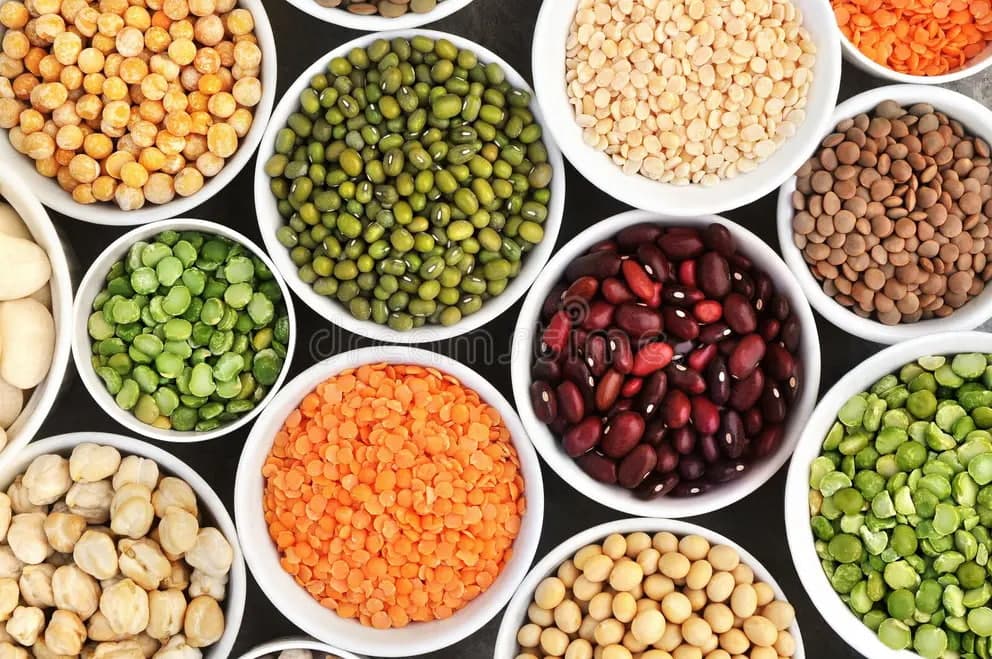
What are legumes?
Legumes belong to the botanical family Fabaceae. These plants produce seeds enclosed within pods, and humans have relied on many of these seeds as staple foods for thousands of years for their protein, fibre, and complex carbohydrates. Examples include lentils, chickpeas, beans, peas, soybeans, and peanuts. Legumes are also agriculturally unique — they form a symbiotic relationship with nitrogen-fixing bacteria in their roots, enriching the soil naturally and reducing the need for synthetic fertilizers, making them one of the most environmentally sustainable food crops available.
Legumes vs. pulses vs. beans
These three terms are often used interchangeably, but they have distinct meanings. Legumes (රනිල බෝග) refer to the entire Fabaceae family — soybeans, peanuts, green peas, chickpeas, lentils, and beans all included. Pulses (පියලි බෝග) are specifically the dried edible seeds harvested from legume plants — lentils, dry beans, chickpeas, and dry peas. Soybeans and peanuts are legumes but generally aren't classified as pulses, since they contain a much higher proportion of fat. Beans (බෝංචි) are a subgroup of legumes characterised by kidney-shaped or oval seeds — kidney beans, black beans, pinto beans, navy beans, and cannellini beans are common examples.
Why legumes matter for longevity
- →Fibre — among the richest dietary sources of both soluble and insoluble fibre, feeding beneficial gut bacteria and supporting healthy cholesterol and blood sugar levels
- →Protein with a low metabolic cost — most legumes provide 7–9g of protein per 100g cooked, without the saturated fat load of red meat
- →Low glycaemic index — fibre and resistant starch content produce a slower, gentler rise in blood glucose than refined carbohydrates
- →Micronutrient density — iron, folate, magnesium, potassium, and zinc are consistently high across the whole family
- →Polyphenols — particularly in darker beans and lentils, contributing antioxidant effects
- →Naturally cholesterol-free and low in saturated fat — unlike most animal protein sources
- →Affordable and environmentally sustainable — a high-quality protein source that costs less, both financially and environmentally, than most animal protein
Some of the world's longest-living populations consume legumes almost daily, which is part of why they feature so consistently in longevity research. One trade-off worth knowing: legumes are generally low in the amino acid methionine, so pairing them with rice, grains, nuts, or seeds over the course of the day gives you a more complete amino acid profile — it doesn't need to happen in the same meal.
1. Lentils (පරිප්පු)
The most familiar legume on the Sri Lankan table — lentils cook quickly and don't require soaking.
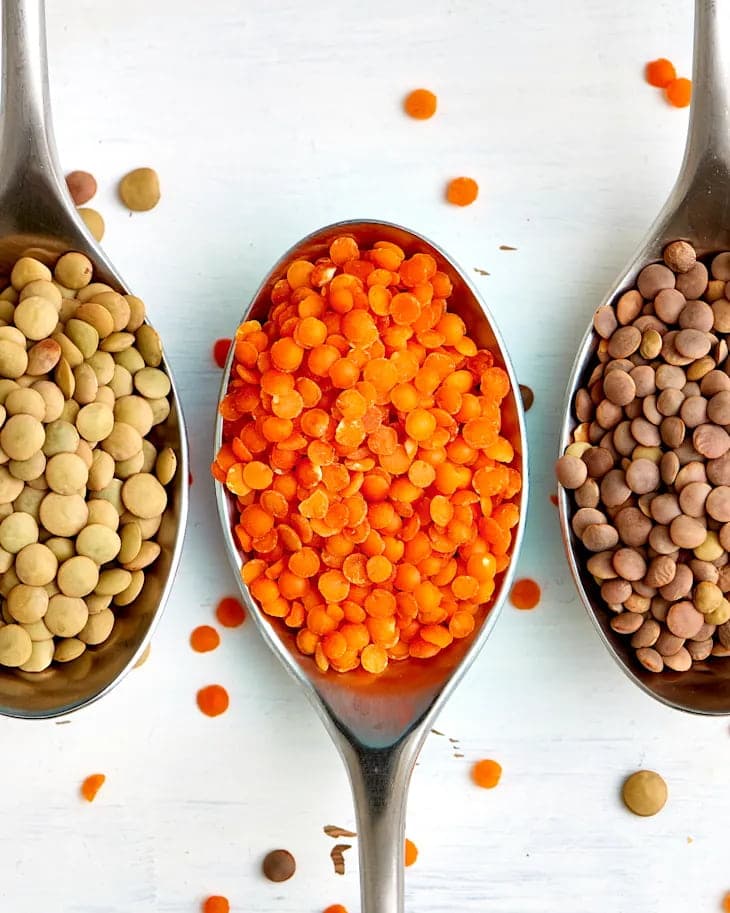
- 1Red/Pink Lentils
Hulled and split, cook down soft and fast. Most common in everyday dhal curry.
- 2Whole Brown/Green Lentils (Masoor, whole)
Hold their shape better, slightly firmer bite, more fibre retained since the hull isn't removed.
- 3Yellow Lentils
Milder in flavour, common in soups.
Per 100g cooked, approx.: 9g protein, 8g fibre, 230mcg folate, 3.3mg iron, good source of potassium and manganese. High folate content supports cell division and is particularly relevant during preconception and pregnancy; the combination of fibre and resistant starch supports healthy fasting glucose and post-meal glucose response.
2. Chickpeas (කඩල)
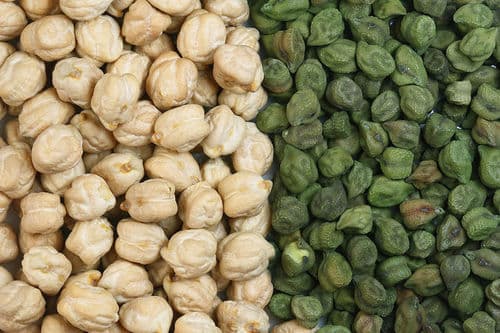
- 1Desi chickpeas
Smaller, darker, thicker-skinned, higher in fibre — the type most commonly used in Sri Lankan chickpea curry.
- 2Kabuli chickpeas
Larger, lighter-coloured, thinner skin — the type used for hummus and most Western recipes.
Per 100g cooked, approx.: 8–9g protein, 7–8g fibre, high in manganese, folate, and copper. Strong satiety effect relative to calorie content, useful for weight management; fibre type supports favourable changes in LDL cholesterol over sustained intake.
3. Green Gram / Mung Beans (මුං-ඇට)
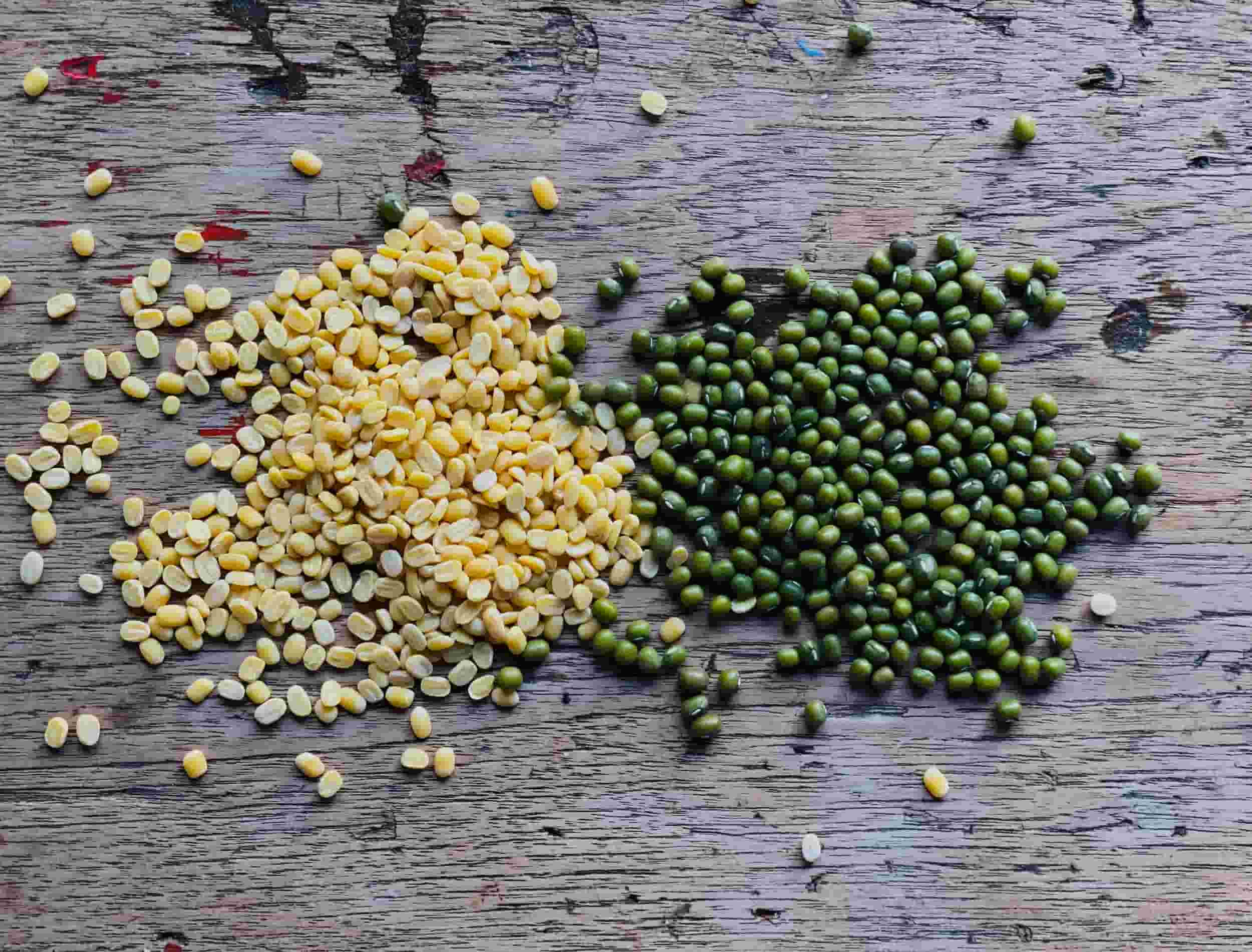
- 1Whole green mung beans
Used sprouted or whole in curries and salads.
- 2Split mung with skin
Cooks faster than whole, retains some fibre from the hull.
- 3Split, skinless yellow mung (moong dal)
Very quick-cooking, gentle on digestion — often the first legume introduced to infants or recommended during recovery from illness.
Per 100g cooked, approx.: 7g protein, 7g fibre, high in folate, magnesium, and vitamin K (especially when sprouted). Sprouting increases vitamin C and antioxidant content substantially; considered one of the more easily digestible legumes, useful for anyone rebuilding gut tolerance to fibre.
4. Black Gram (උඳු)
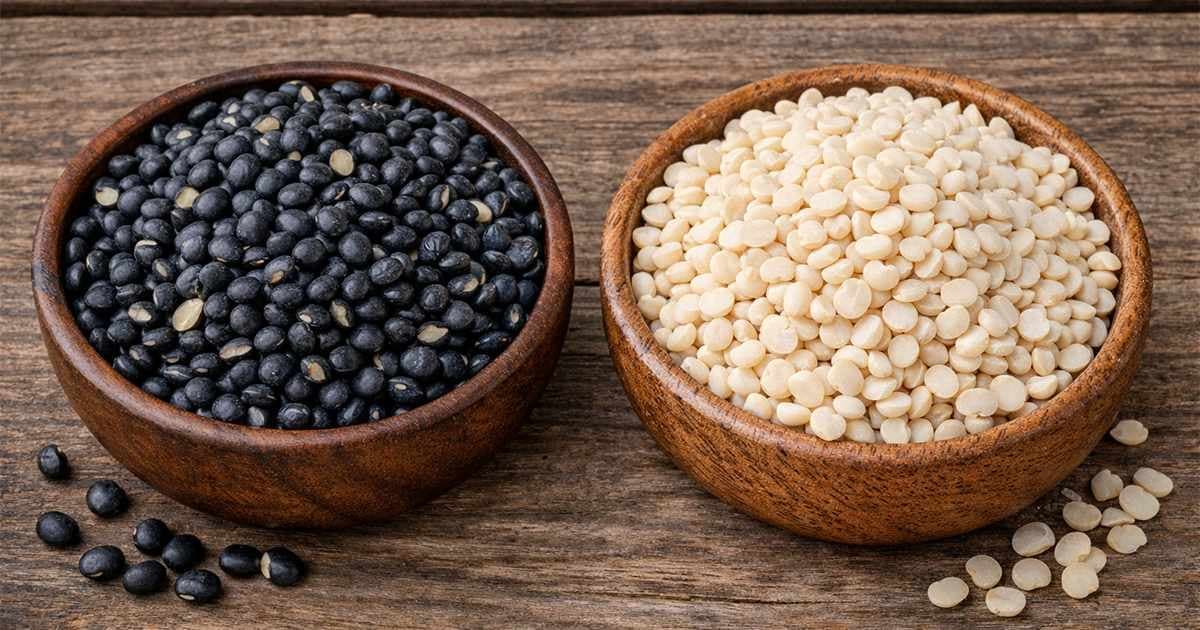
- 1Whole black gram, skin-on
Dense, earthy, used in some traditional Sri Lankan sweetmeats and South Indian idli/dosa batters.
- 2Split black gram, skinless (urad dal)
Creamy white interior once split and hulled, high in protein, used in dhal preparations and batters.
Per 100g cooked, approx.: 9–10g protein — one of the higher-protein legumes — with a good source of iron, folate, and phosphorus. Among the more protein-dense pulses; the mucilage released during cooking is traditionally used to aid smoother digestion.
5. Cowpea (කව්පි)
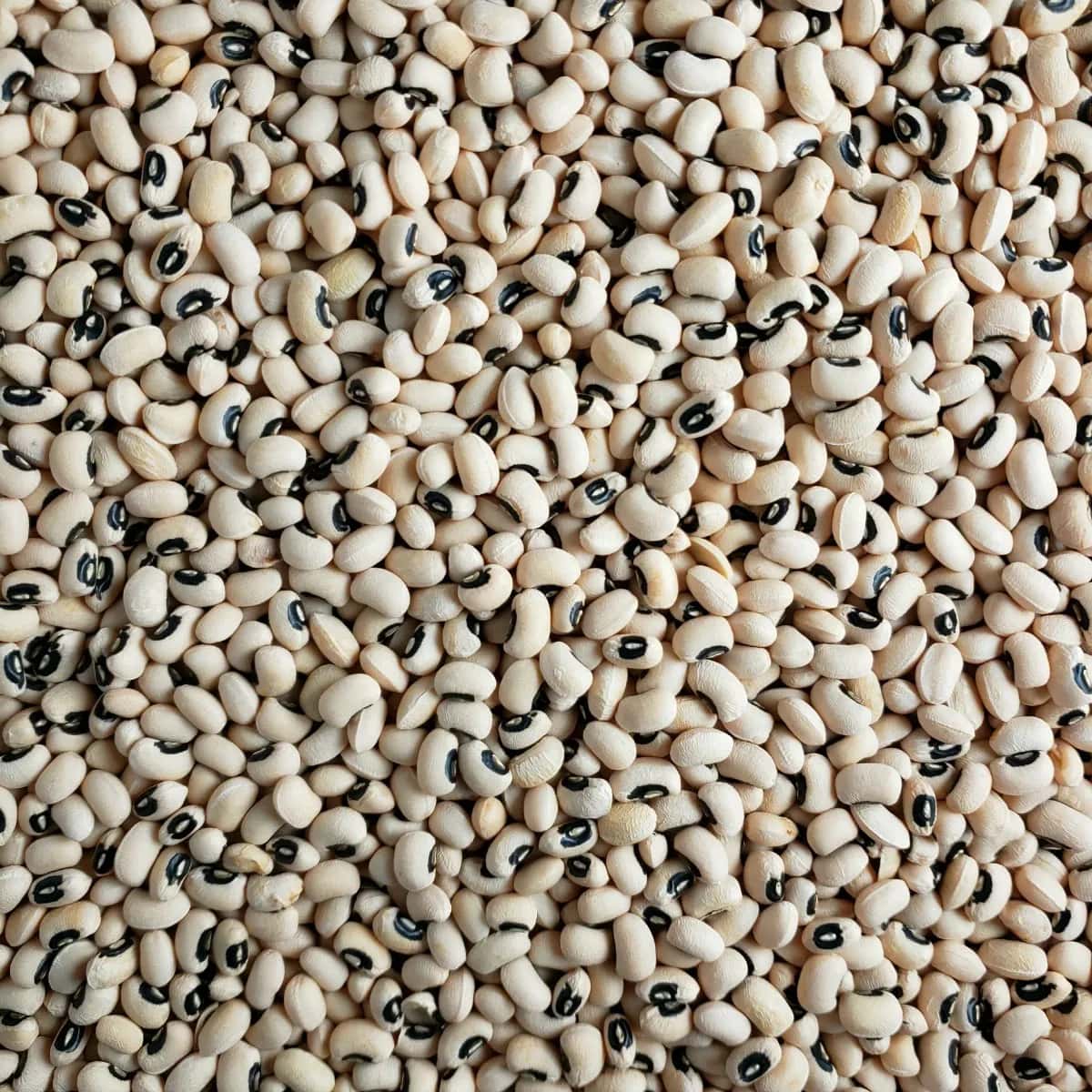
- 1Red cowpea
Common in local cowpea curries.
- 2Black-eyed pea
A cowpea variety with a distinctive black "eye" marking — slightly milder, common internationally in stews.
Per 100g cooked, approx.: 8g protein, 6–7g fibre, notably high in folate and potassium. One of the more heat- and drought-tolerant legumes agriculturally, and nutritionally comparable to other beans in supporting healthy blood pressure due to potassium content.
6. Common Beans (බෝංචි)
In Sri Lanka this family is best known through fresh green beans, but the same plant family (Phaseolus vulgaris) includes many dried bean subtypes worth knowing.
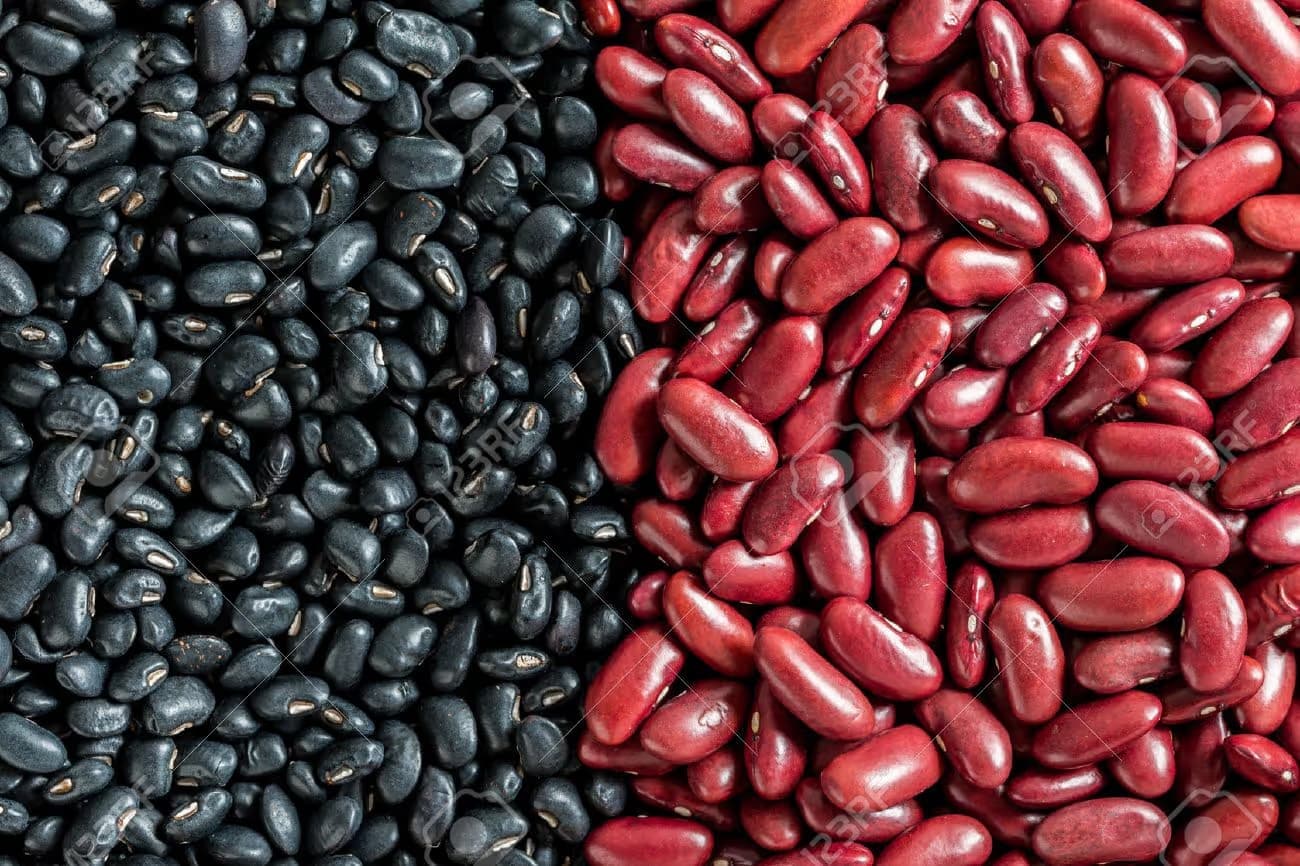
- 1Kidney beans (රට මෑ)
Deep red, common in salads and rajma-style curries.
- 2Black beans
Slightly sweeter, very high in anthocyanin antioxidants (the dark pigment).
- 3Pinto beans (මල් රටකජු)
Less common locally, but increasingly available — mild, creamy texture.
- 4Cannellini beans (සුදු බෝංචි)
Mild, creamy white beans, increasingly available locally.
Per 100g cooked, approx.: 8–9g protein, 6–9g fibre depending on variety, high in molybdenum, folate, and iron. Dark-coloured beans (black, kidney) carry meaningfully higher polyphenol and antioxidant content than lighter beans — worth rotating colours, not just varieties.
7. Peas
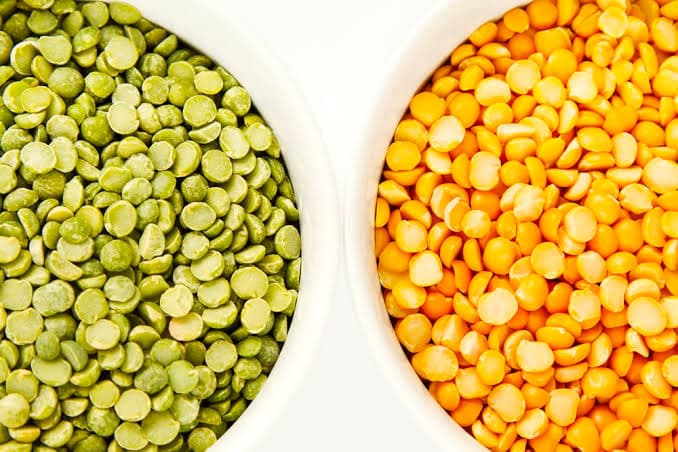
- 1Fresh green peas (ග්රීන් පීස්)
Higher water content, sweeter, more vitamin C.
- 2Dried split peas (කඩල පරිප්පු)
Concentrated in protein and fibre once dried, used in soups.
Per 100g cooked, approx.: 8g protein, 8g fibre, good source of vitamin K and manganese. Split peas have one of the highest fibre-to-calorie ratios among legumes, useful for satiety-focused meal planning.
8. Soybean (සෝයා බෝංචි)
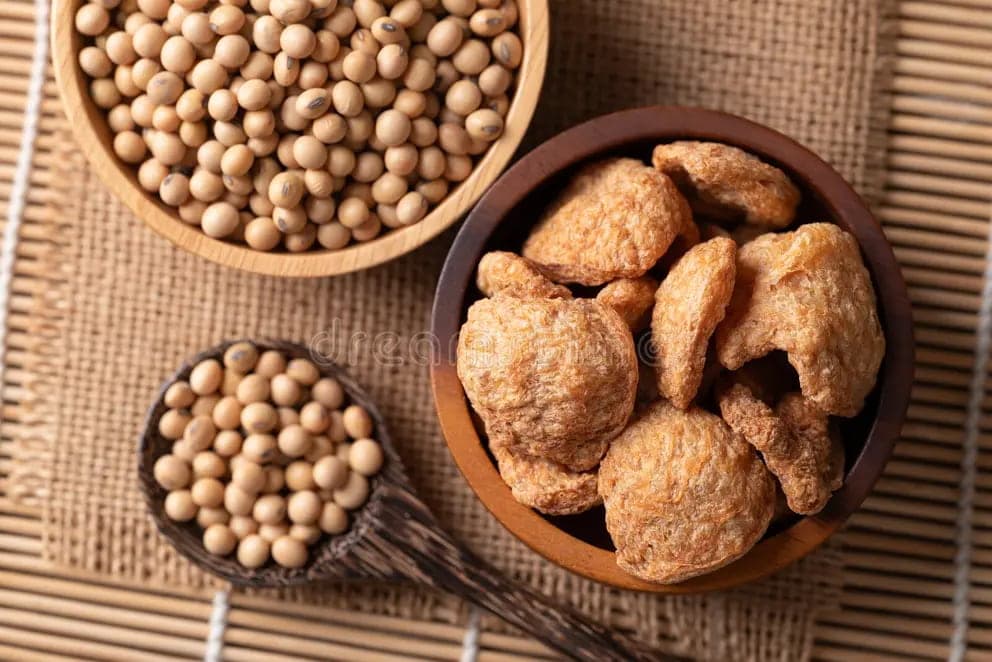
- 1Whole soybeans
The base for tofu, soy milk, and tempeh.
- 2Textured/defatted soy (soy meal)
The dried, textured form widely sold and used locally as a meat substitute in curries.
Per 100g cooked whole soybeans, approx.: 17g protein — the highest of any common legume — a source of all essential amino acids, and rich in isoflavones. Soy is the one legume that provides a genuinely complete protein profile on its own. Isoflavone content has been studied for cardiovascular and post-menopausal bone health, though individuals with thyroid conditions should discuss soy intake timing around medication with their doctor.
9. Peanuts (රට කජු)
Botanically a legume (a groundnut), not a tree nut — worth knowing since it changes how it's categorised nutritionally.
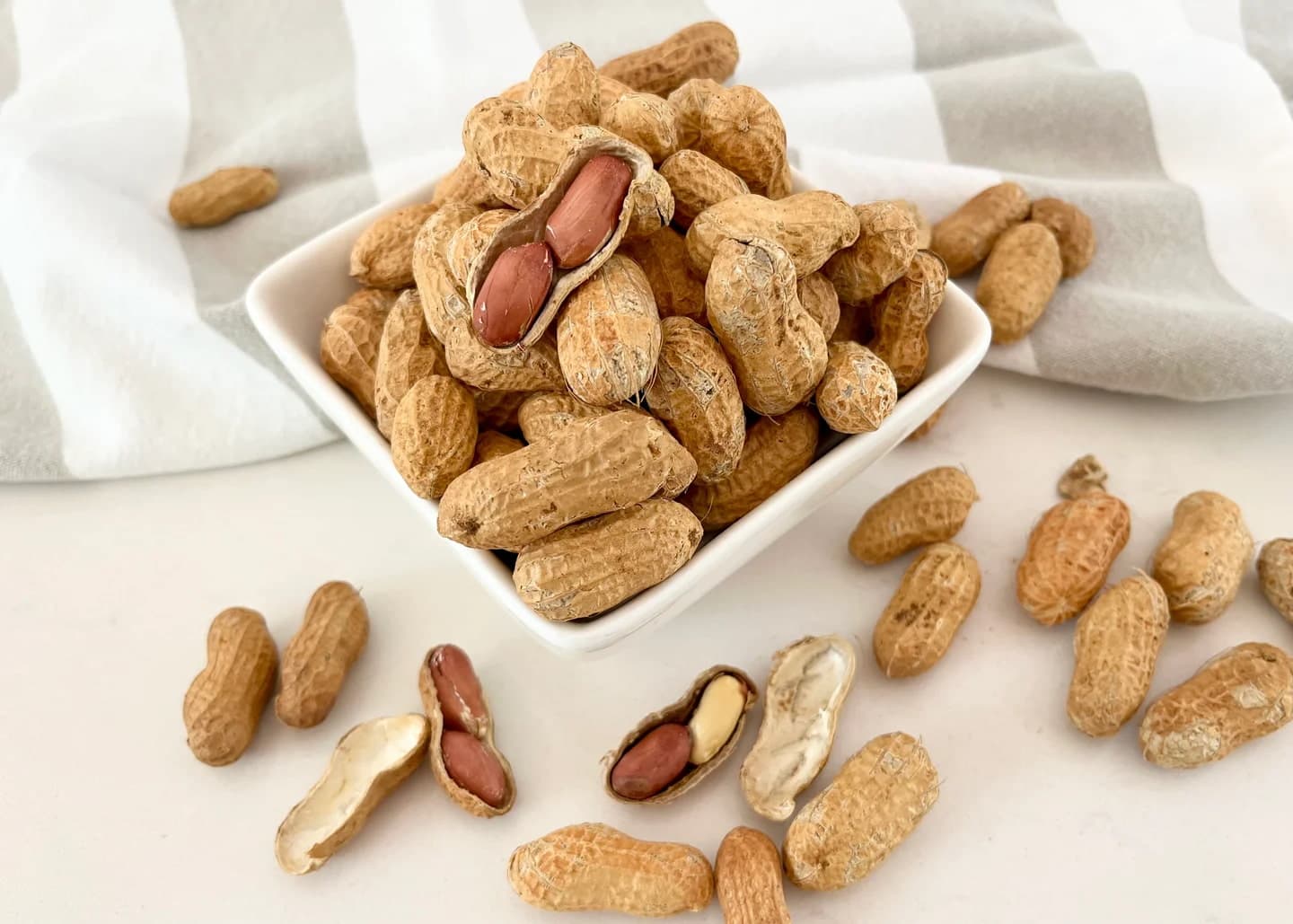
- 1Raw/boiled peanuts
Closer to other legumes nutritionally, higher moisture.
- 2Roasted peanuts
More concentrated in fat and calories per gram.
Per 100g roasted, approx.: 25g protein, high in monounsaturated fat, niacin, and vitamin E. Unlike most legumes, peanuts are calorie-dense due to fat content — valuable in small portions for healthy fat and protein, but worth portioning deliberately rather than eating from a large bowl.
10. Broad Beans / Fava Beans (අවර)
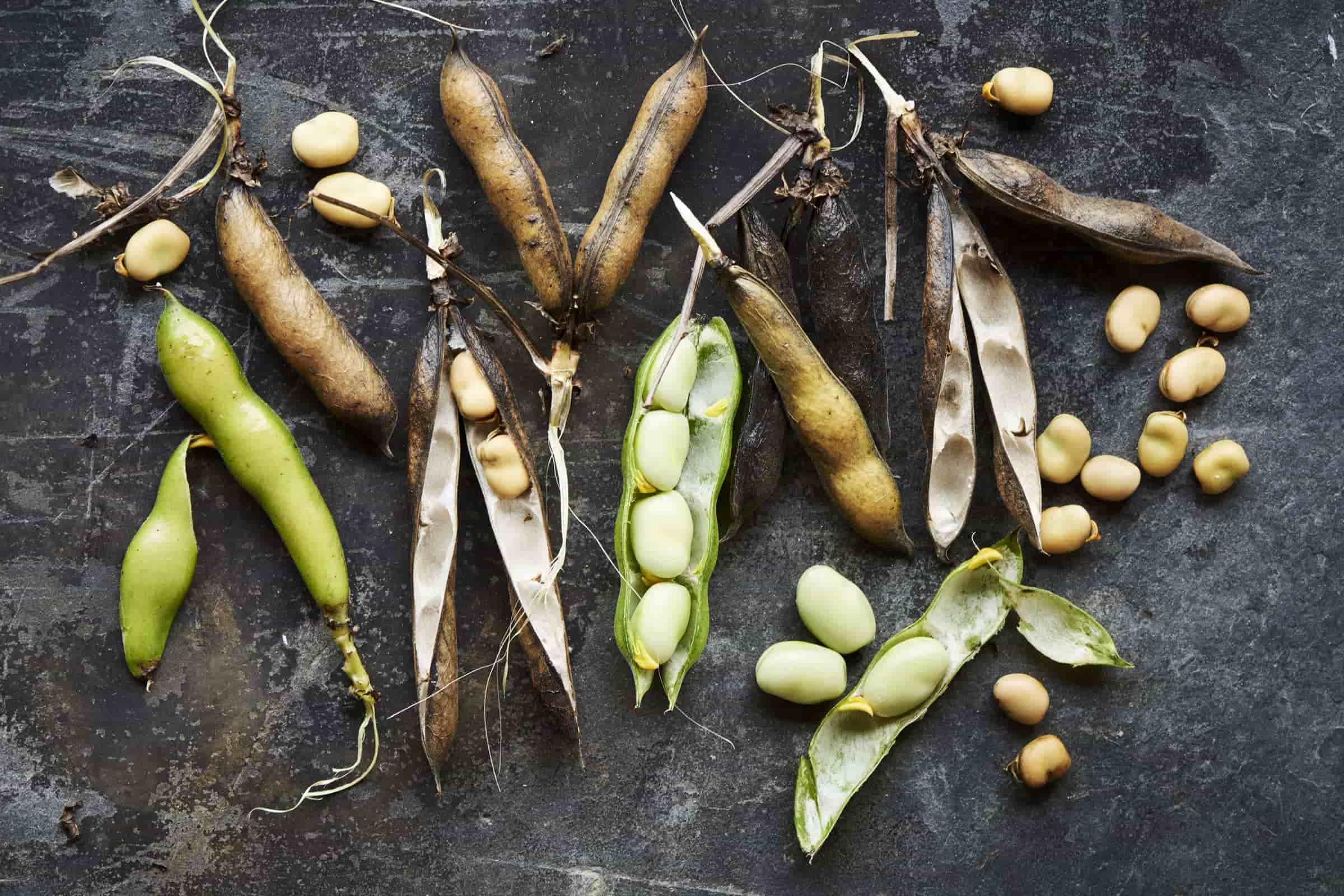
- 1Fresh green fava beans
Milder, less commonly available locally.
- 2Dried, split fava beans
Denser, used in some Middle Eastern and Mediterranean legume dishes gaining popularity locally.
Per 100g cooked, approx.: 8g protein, 5g fibre, good source of folate and manganese. Worth knowing: a small subset of people (particularly those of Mediterranean or Middle Eastern descent) have a G6PD enzyme deficiency and can react to fava beans (favism) — worth knowing your own history before introducing this one regularly.
Quick reference
| Legume | Protein (per 100g cooked) | Standout Nutrient |
|---|---|---|
| Lentils (පරිප්පු) | 9g | Folate |
| Chickpeas (කඩල) | 8–9g | Manganese |
| Green Gram/Mung Beans (මුං-ඇට) | 7g | Folate, Vit K |
| Black Gram (උඳු) | 9–10g | Iron |
| Cowpea (කව්පි) | 8g | Potassium |
| Kidney/Black Beans (බෝංචි) | 8–9g | Polyphenols |
| Peas/Split Peas | 8g | Fibre density |
| Soybean (සෝයා බෝංචි) | 17g | Complete protein |
| Peanut (රට කජු) | 25g | Healthy fats |
| Broad Bean (අවර) | 8g | Folate |
Practical notes for cooking and eating legumes
- →Soak before cooking (whole legumes) — soaking for 6–8 hours reduces phytic acid and lectin content, improves mineral absorption, and shortens cooking time
- →Combine with rice or grains — this completes the amino acid profile across the day; it doesn't need to happen in the same meal, despite the common belief that it does
- →Introduce gradually if you're not used to high fibre — a sudden jump in legume intake can cause bloating; increasing slowly over 2–3 weeks allows the gut microbiome to adapt
- →Rotate colours and families, not just recipes — dark beans, pale lentils, and split peas each bring a slightly different micronutrient and polyphenol profile; variety matters more than any single "best" legume
- →Canned legumes are a reasonable convenience option — rinsing before use reduces added sodium by a meaningful margin
Legumes are a simple, low-cost lever in a longevity-focused diet — the goal isn't to eat more of one "superfood" legume, but to rotate through several families over the course of a month. If you'd like to know where your current diet and metabolic markers stand before making changes, our Longevity Doctors offer a free longevity assessment as a starting point.
Curious where your own
nutrition stands today?
Take the free Aevum Protocol assessment to see how your nutrition & metabolism and 6 other longevity domains are performing — and get a personalised 90-day plan.
Take the Free Assessment →