Nutrition & Metabolism
Know Your Grains: A Practical Guide to
Types, Nutrition & Benefits
Grains form the base of most meals in Sri Lanka and around the world — but "grains" is a far broader category than the polished white rice most of us grew up eating. Whole grains, in particular, are one of the most consistently studied food groups in longevity research, linked to lower rates of cardiovascular disease, type 2 diabetes, and all-cause mortality. This guide breaks down the major grain families so you can build a more intentional, varied rotation rather than defaulting to the same refined staple every day.
What are grains?
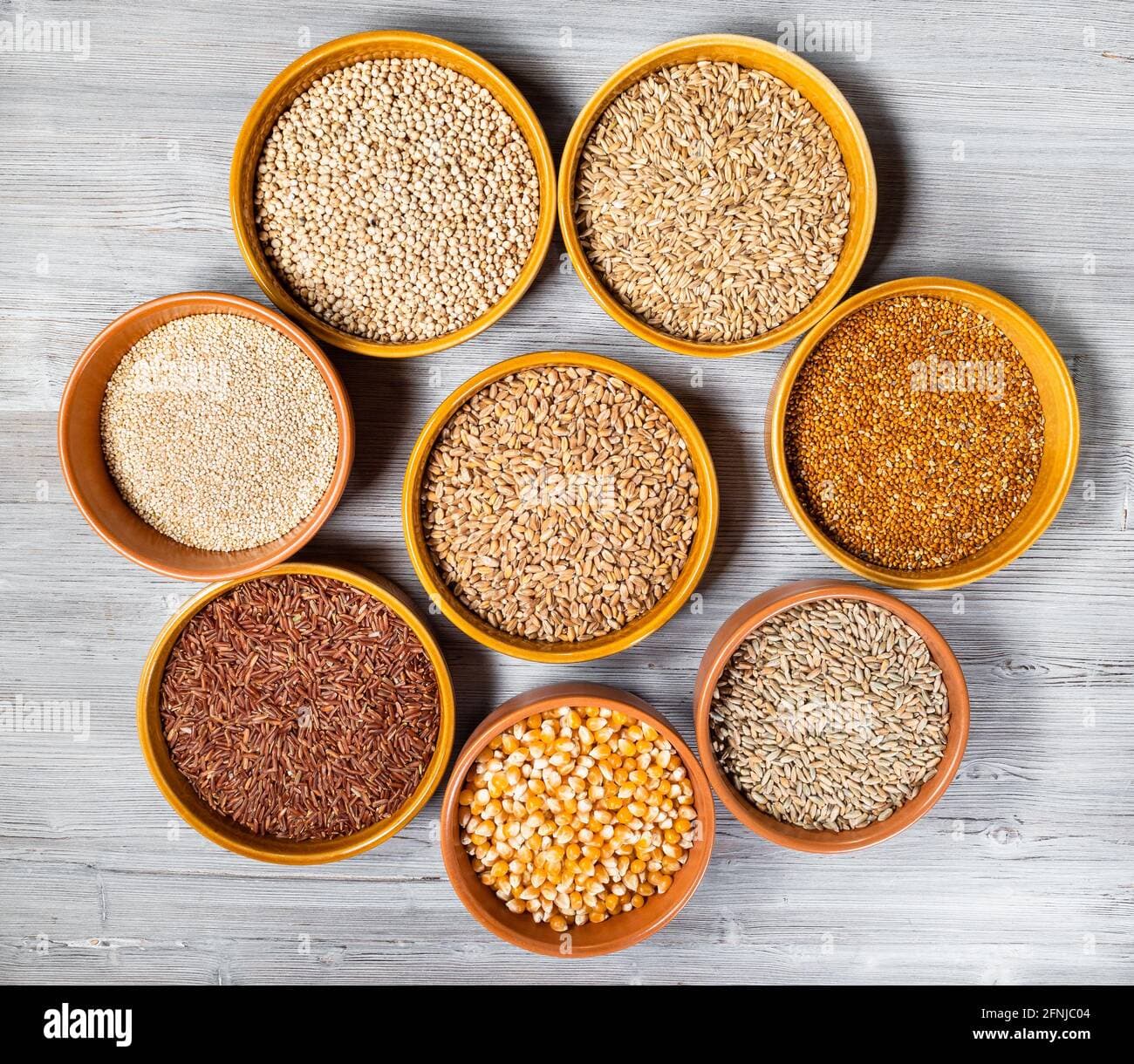
Grains are the small, hard, edible seeds of grasses (the botanical family Poaceae) — rice, wheat, corn, millet, barley, and oats all belong here. A small group of foods often eaten and cooked the same way — quinoa, buckwheat, and amaranth — aren't true grasses but are called "pseudocereals" because they're used interchangeably with grains in the kitchen.
- 1Bran
The fibre-rich outer layer, packed with B vitamins and minerals.
- 2Germ
The nutrient-dense embryo, rich in healthy fats, vitamin E, and antioxidants.
- 3Endosperm
The starchy core, mostly carbohydrate with a small amount of protein.
Every intact grain kernel has these three parts. What happens to them during processing is what separates a whole grain from a refined one.
Whole grains vs. refined grains vs. ancient grains
Whole grains retain all three parts of the kernel — bran, germ, and endosperm — either intact or ground together. This is what gives whole grains their fibre, slower digestion, and higher micronutrient content. Refined grains have had the bran and germ removed during milling, leaving only the starchy endosperm — this produces a finer texture and longer shelf life (white rice, white flour, refined maize flour) but strips out most of the fibre, B vitamins, and minerals. Ancient grains is a marketing-friendly term for varieties that have remained largely unchanged by modern selective breeding — millet, sorghum, spelt, farro, and quinoa are common examples. They aren't inherently more nutritious than other whole grains, but they tend to be consumed in their whole form and bring genuine variety to a grain rotation.
Why grains matter for longevity
- →Fibre — whole grains are a major dietary source of fibre, supporting gut bacteria, cholesterol levels, and healthy bowel function
- →Sustained energy — the complex carbohydrate and fibre combination in whole grains produces a slower, steadier release of glucose than refined grains
- →B vitamins — thiamine, niacin, and folate are concentrated in the bran and germ layers, both removed during refining
- →Minerals — magnesium, selenium, manganese, and zinc are all well represented across whole grains
- →Low glycaemic load (whole form) — intact or minimally processed grains raise blood glucose more gradually than their refined, milled counterparts
- →Affordable, staple-food status — grains remain one of the most accessible sources of daily energy and nutrition worldwide
Populations with some of the longest, healthiest lifespans on record — from Okinawa to Sardinia — build their diets around whole, minimally processed grains rather than refined ones, which is a large part of why this category features so heavily in longevity research.
1. Rice (හාල් / බත්)
Sri Lanka's staple grain, with more traditional variety than most people realise. "හාල්" refers to raw uncooked rice, and "බත්" to cooked rice.
- 1White rice (Nadu, Samba)
Polished, refined, fastest cooking, lowest fibre.
- 2Red rice (රතු කැකුළු හාල්)
Unpolished or lightly milled, retains bran layer, higher fibre and antioxidants, traditional to Sri Lankan meals.
- 3Brown rice
Hulled but not polished, retains bran and germ.
- 4Heritage/traditional varieties (සුවඳැල්, හීනටි, කුරුළුතුඩ)
Indigenous Sri Lankan rice varieties, typically lower yield but higher in fibre and micronutrients than modern polished rice.
- 5Parboiled rice (steamed before milling)
Partial steaming pushes some nutrients from the bran into the grain before milling.
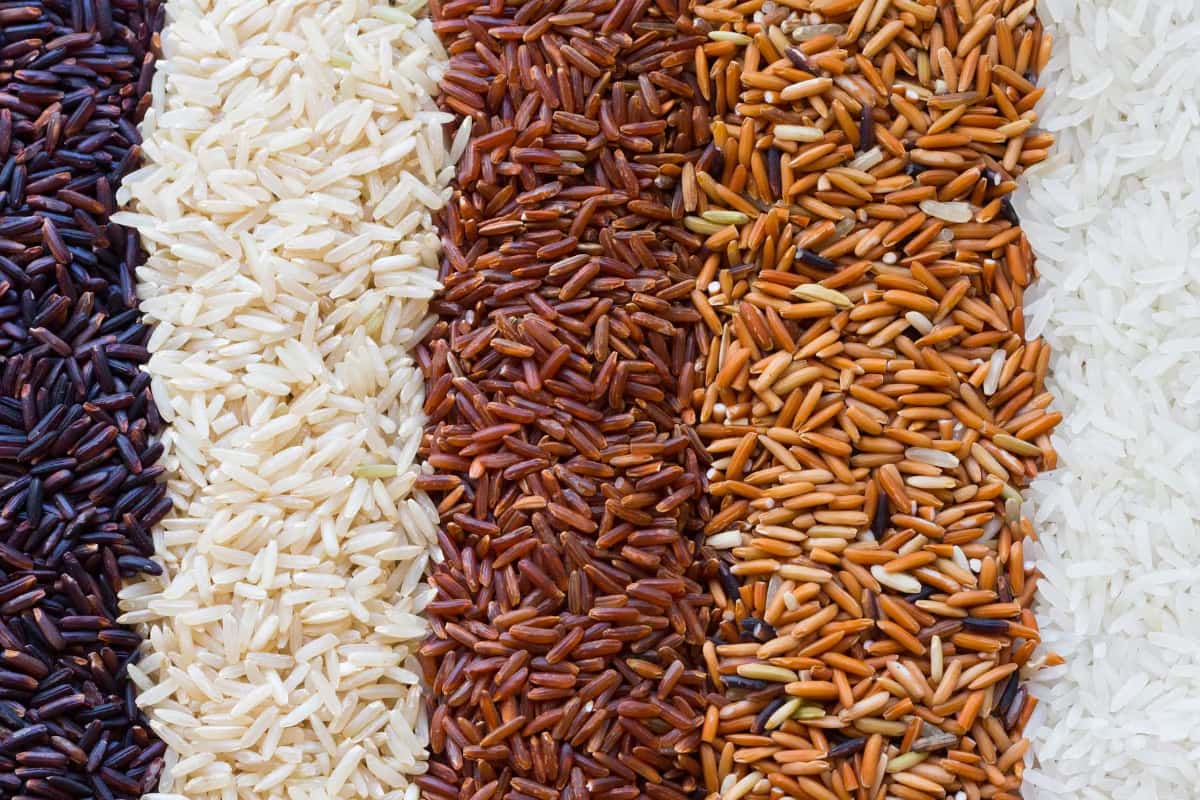
Per 100g cooked, approx.: white rice ~2.7g protein, under 1g fibre; red/brown rice ~2.5g protein, 1.5–3.5g fibre, notably higher in magnesium and B vitamins than white rice. Red and brown rice retain the bran layer, giving a meaningfully lower glycaemic response and more sustained energy than white rice — a simple swap with an outsized effect for anyone managing blood sugar.
Why rice comes in different colours
White, brown, red, and black rice aren't separate varieties of rice so much as the same grain at different stages of processing. Every grain starts as paddy rice with four layers: an inedible outer hull, a coloured bran layer, a nutrient-rich germ, and a starchy white endosperm at the core. Once the hull is removed, whatever's left is called whole-grain rice — and its colour simply reflects its bran: brown bran gives brown rice, red bran gives red rice, black or purple bran gives black rice. Milling it further strips away the bran and germ entirely, leaving only the white endosperm underneath — which is identical no matter which colour you started with. That's why any red or black rice, once fully polished, becomes indistinguishable from white rice; and why "brown rice" is really just a white-rice variety (Basmati, Nadu, Samba) with its bran left on, the same way "red rice" is a naturally red-bran variety (Red Nadu, Red Samba, Red Kekulu) left unpolished.
The colour lives entirely in the bran, not the grain itself — remove it, and every variety exposes the same white endosperm underneath. This is also why milling is the real nutritional dividing line, not the variety name on the packet.
In Sri Lankan terminology, රතු හාල් is the general term for any red-bran rice, while රතු කැකුළු හාල් specifically means raw, non-parboiled red rice, and රතු තැම්බූ හාල් means parboiled red rice — රතු describes the bran's colour, while කැකුළු and තැම්බූ describe how the rice was processed afterward.
2. Wheat (තිරිඟු)
- 1Whole wheat (ආටා පිටි)
Retains bran and germ, higher fibre and protein.
- 2Refined wheat flour (පිටි)
Bran and germ removed, used in most bread, noodles, and short-eats locally.
- 3Semolina/rava (රුලං)
Coarsely ground durum wheat, used in local sweets and some savoury dishes.
- 4Bulgur/cracked wheat
Parboiled and cracked whole wheat, quick-cooking, retains most of the bran.
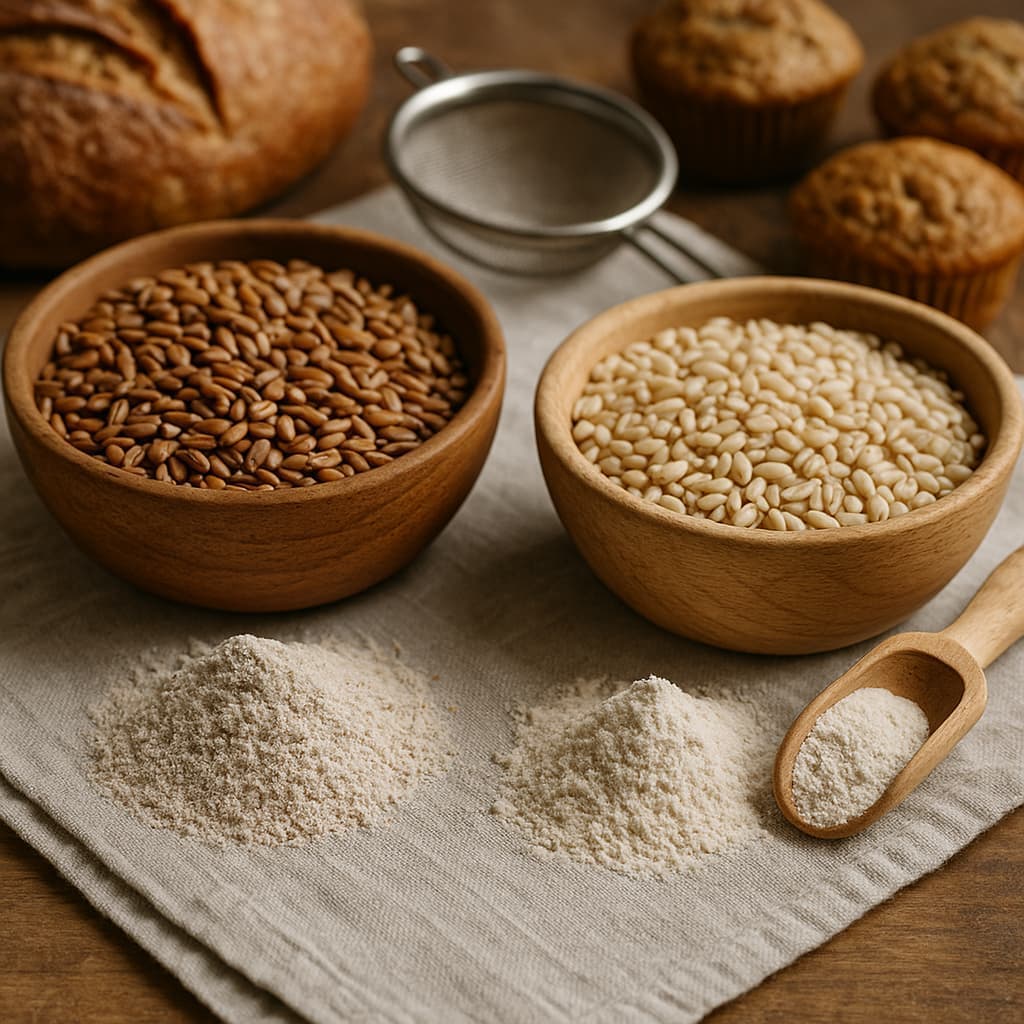
Per 100g cooked whole wheat, approx.: 5g protein, 6g fibre, good source of manganese, selenium, and B vitamins. Whole wheat retains roughly four times the fibre of refined wheat flour by weight — a meaningful difference when wheat products are eaten daily, as they often are.
3. Corn / Maize (බඩ ඉරිඟු)
- 1Sweet corn
Higher sugar content, eaten as a vegetable more than a grain.
- 2Popcorn
A specific variety that expands when heated; one of the few whole-grain snack foods when air-popped.
- 3Cornmeal/maize flour
Ground dried corn, used in porridges and flatbreads.
- 4Whole dried corn kernels (වියළි බඩඉරිඟු ඇට)
Used in some traditional preparations, retains the full bran and germ.
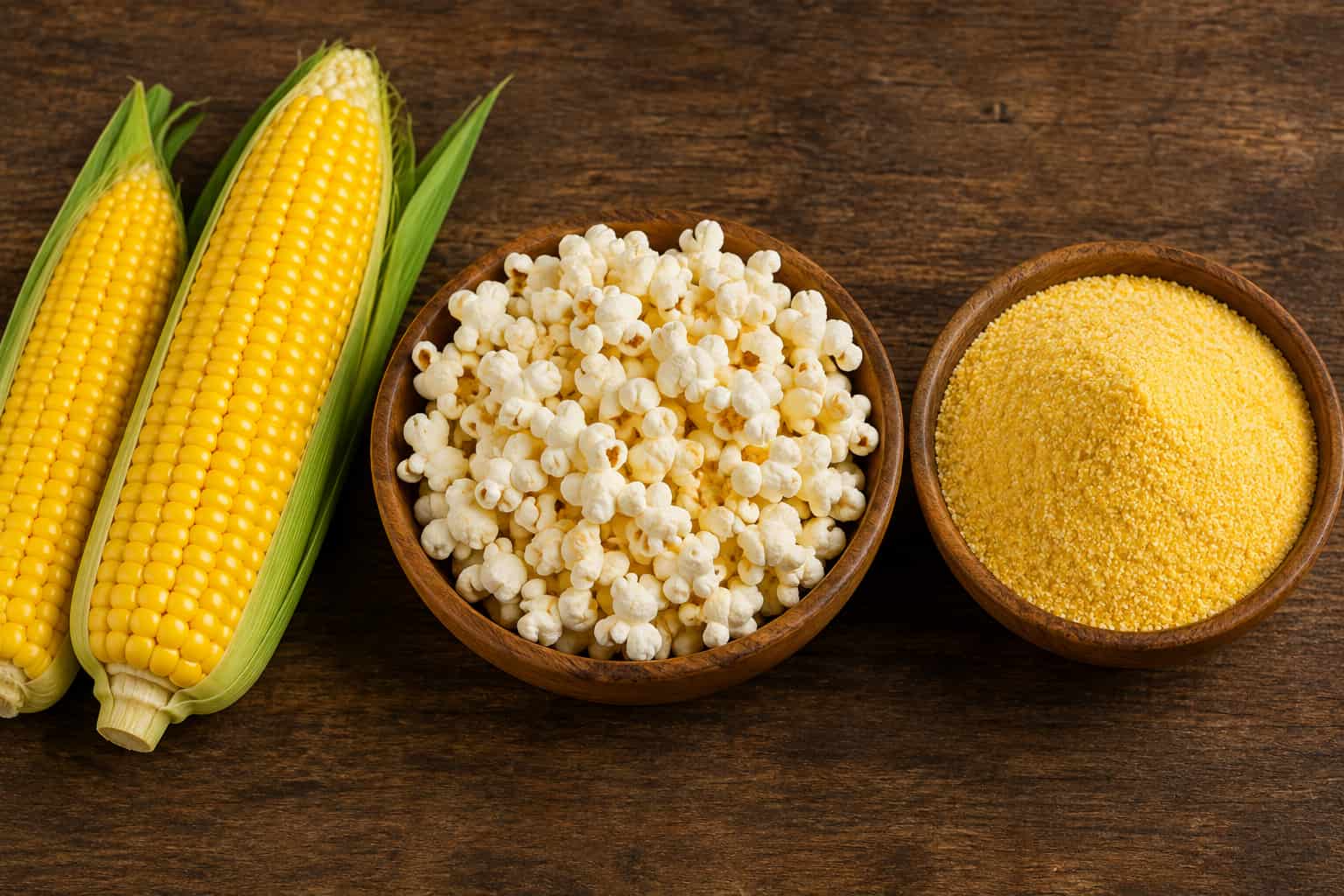
Per 100g cooked, approx.: 3–4g protein, 2–3g fibre, good source of vitamin C (fresh), lutein, and zeaxanthin (eye health antioxidants). Corn is one of the few grains rich in lutein and zeaxanthin, carotenoids studied for their role in eye health, particularly age-related macular degeneration.
4. Millets (කුරක්කන් and other varieties)
An underused grain family in most modern diets, though finger millet has deep roots in Sri Lankan cuisine.
- 1Finger millet (කුරක්කන්)
The most established millet locally, used in kurakkan flour, roti, and porridge.
- 2Pearl millet (මුතු මෙනේරි)
Less traditional locally but increasingly available — high fibre, mineral-dense, gluten-free.
- 3Foxtail millet (තණ හාල්)
Less traditional locally but increasingly available — high fibre, mineral-dense, gluten-free.
- 4Kodo millet (අමු)
Less traditional locally but increasingly available — high fibre, mineral-dense, gluten-free.
- 5Proso millet
Less traditional locally but increasingly available — high fibre, mineral-dense, gluten-free.
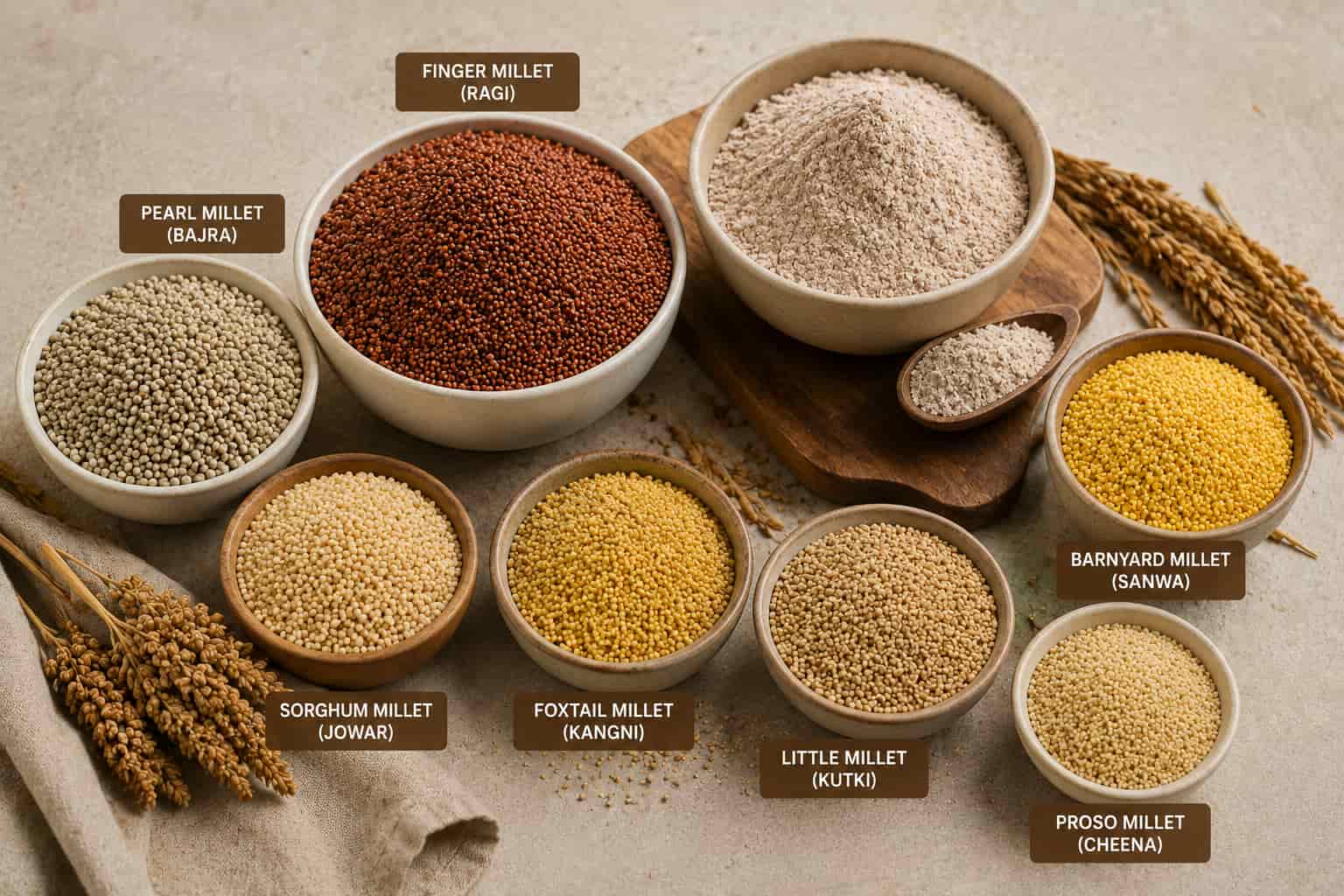
Per 100g cooked finger millet, approx.: 3–4g protein, 3–4g fibre, exceptionally high in calcium relative to other grains, good source of iron. Finger millet's calcium content is unusually high for a grain — relevant for anyone building a plant-forward diet with less dairy. Millets as a group also have a lower glycaemic index than rice or wheat.
5. Oats (ඕට්ස්)
- 1Steel-cut oats
Whole oat groats chopped into pieces, least processed, longest cooking time.
- 2Rolled/old-fashioned oats
Steamed and flattened, moderate processing.
- 3Instant oats
Pre-cooked and dried, most processed, faster glycaemic response than the other forms.
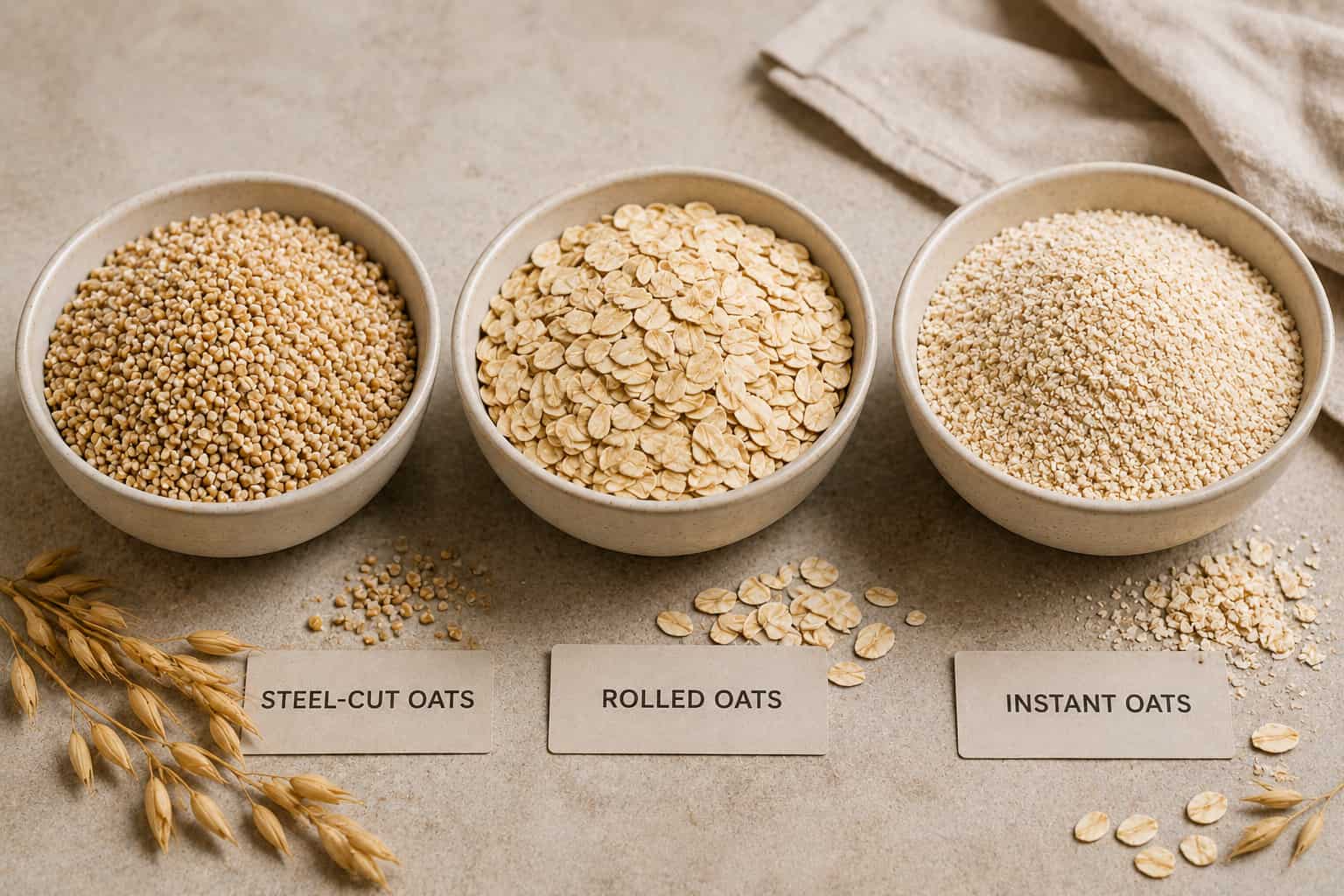
Per 100g cooked, approx.: 2.5g protein, 1.7g fibre (including beta-glucan), good source of manganese and phosphorus. Oats are one of the richest sources of beta-glucan, a soluble fibre specifically studied for lowering LDL cholesterol.
6. Barley (බාර්ලි)
- 1Hulled barley
Only the outermost inedible husk removed, closest to the whole grain, retains bran and germ.
- 2Pearl barley
More heavily milled, some bran removed, faster cooking, somewhat lower fibre than hulled barley.
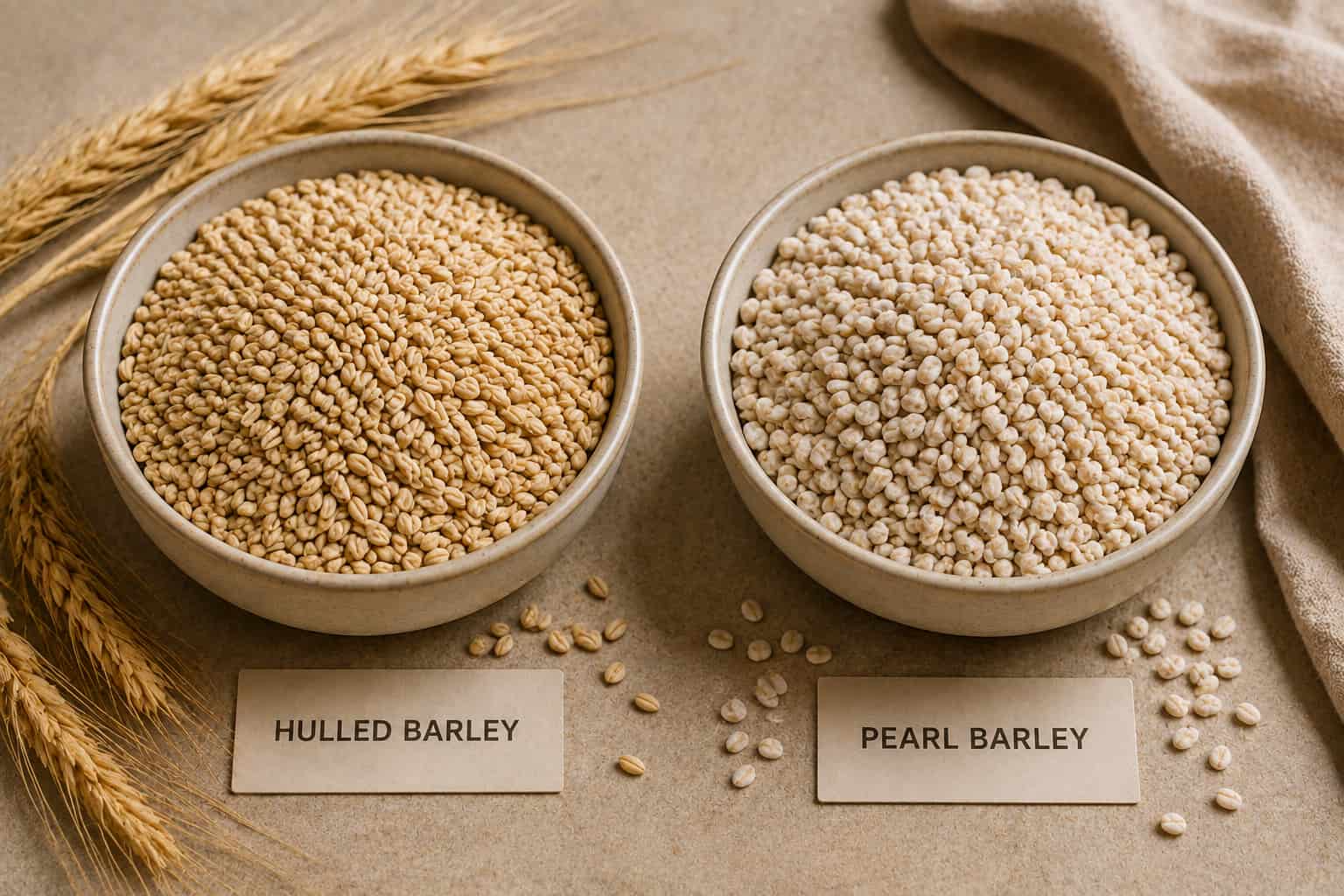
Per 100g cooked, approx.: 3.5g protein, 6g fibre (hulled), rich in beta-glucan, selenium, and manganese. Alongside oats, barley is one of the best dietary sources of beta-glucan fibre, with research supporting its role in healthy cholesterol and post-meal blood sugar response.
7. Rye (රයි)
- 1Whole rye grain (rye berries)
Least processed form.
- 2Rye flour
Ground whole or partially milled, used in dense breads.
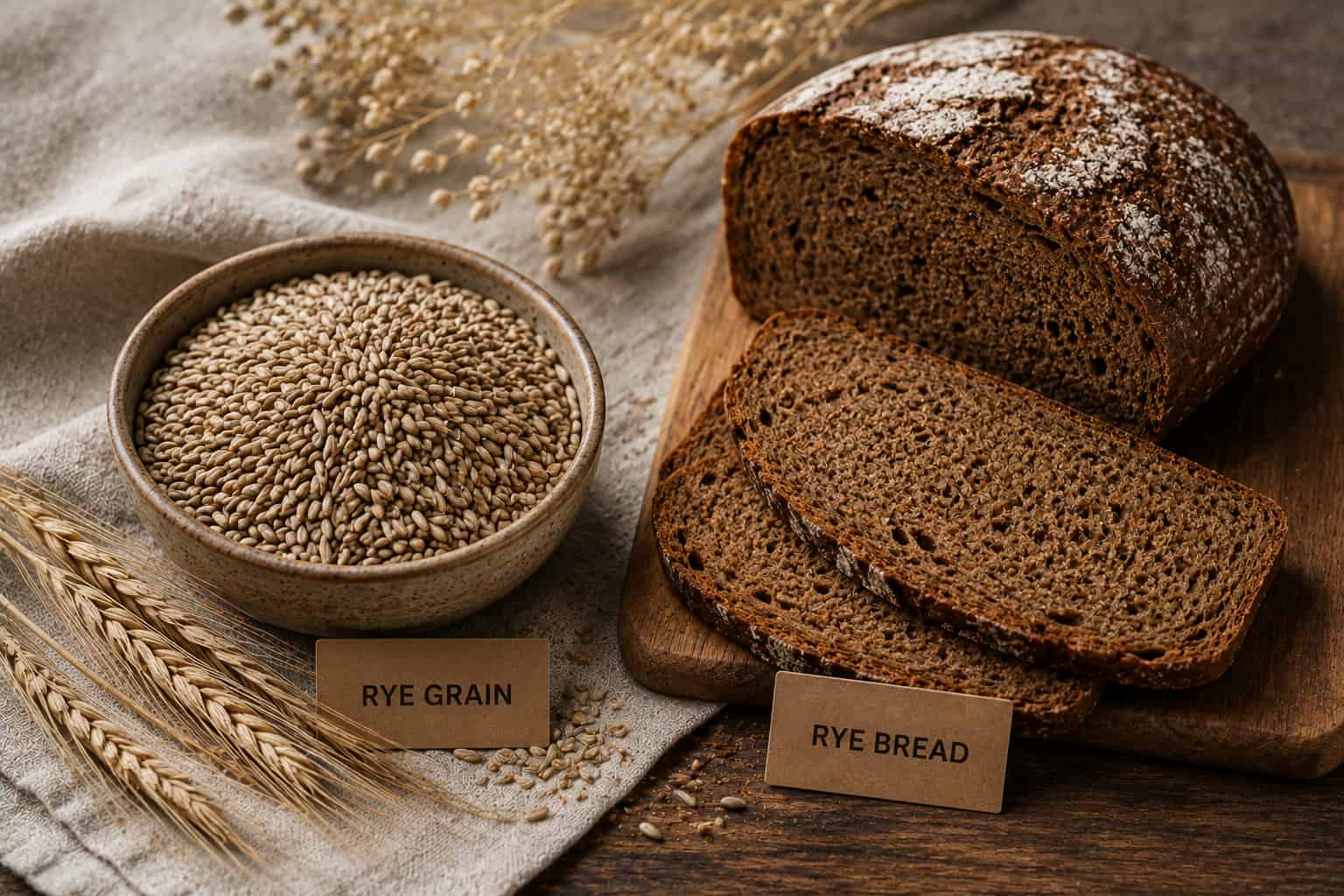
Per 100g cooked, approx.: 3.5g protein, 6–8g fibre, one of the higher-fibre common grains. Rye tends to produce a notably lower and slower blood glucose response than wheat, even when both are consumed as bread, largely due to its dense fibre structure.
8. Sorghum (සෝගම් / ඉදල් ඉරිඟු)
- 1Whole grain sorghum
Used whole, popped, or milled into flour.
- 2Sorghum flour
Naturally gluten-free, used as a wheat flour alternative.
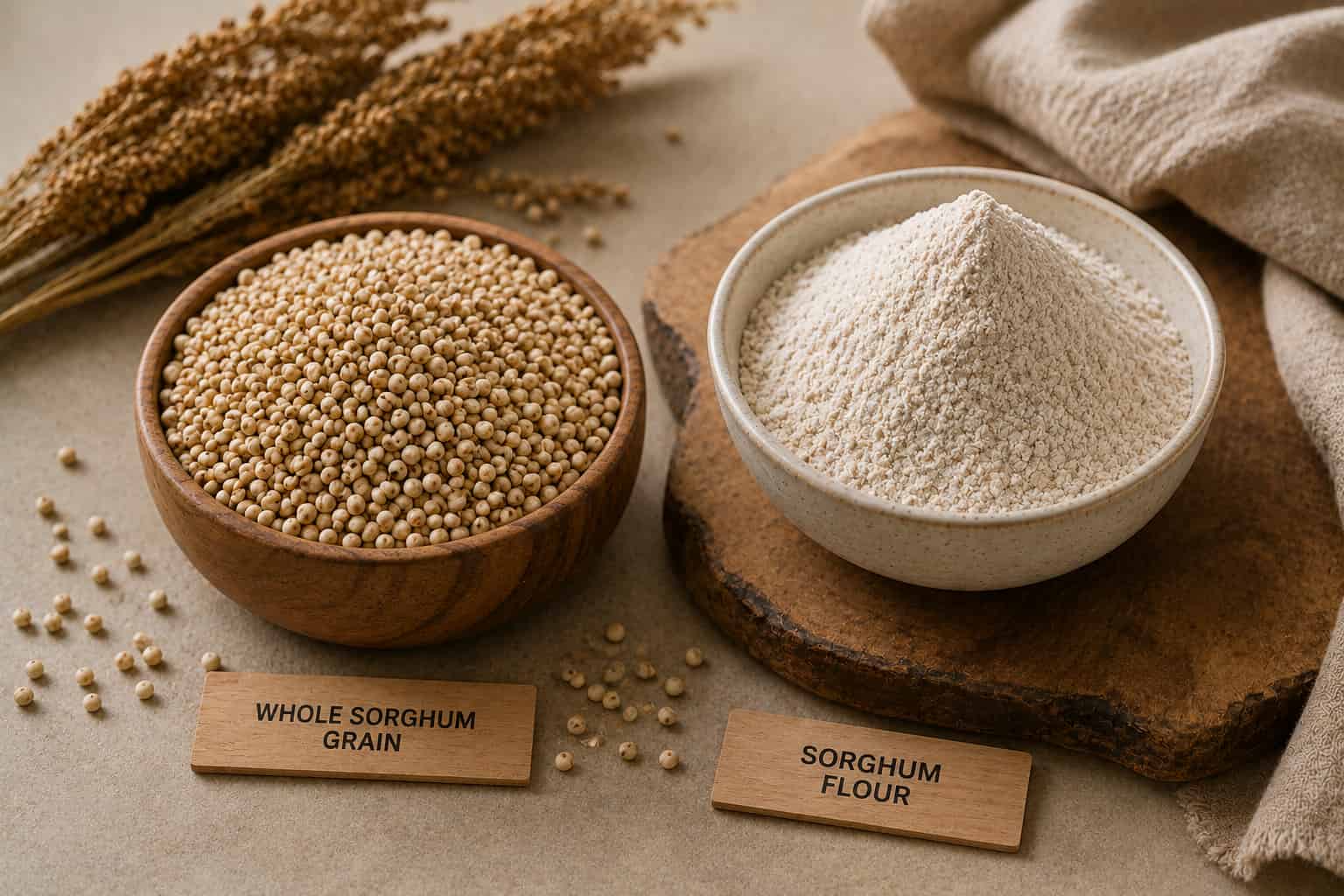
Per 100g cooked, approx.: 3–4g protein, 3g fibre, good source of iron and antioxidant compounds (particularly in darker varieties). Sorghum's antioxidant profile, especially in red and black varieties, compares favourably with many fruits and vegetables per gram — a useful addition for anyone building a naturally gluten-free grain rotation.
9. Quinoa (කීනුවා)
- 1White quinoa
Mildest flavour, most widely available.
- 2Red and black quinoa
Slightly nuttier, firmer texture, marginally higher polyphenol content.
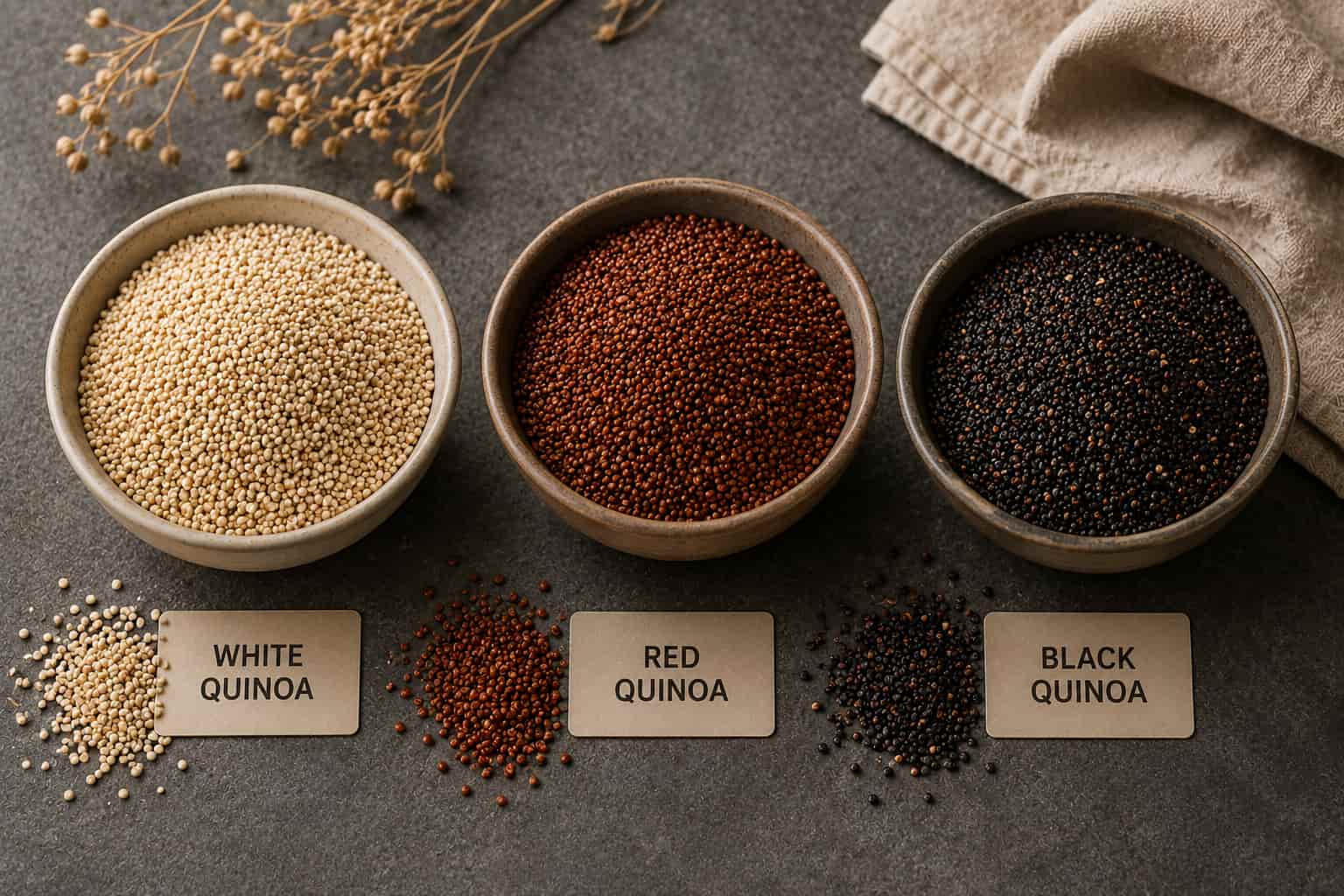
Per 100g cooked, approx.: 4.4g protein, 2.8g fibre, one of the few plant foods providing all essential amino acids. As a pseudocereal, quinoa provides a genuinely complete protein profile — useful in a grain rotation for anyone reducing animal protein intake.
10. Buckwheat
- 1Whole buckwheat groats
Used whole in porridges and salads.
- 2Buckwheat flour
Ground groats, used in noodles (soba) and pancakes.
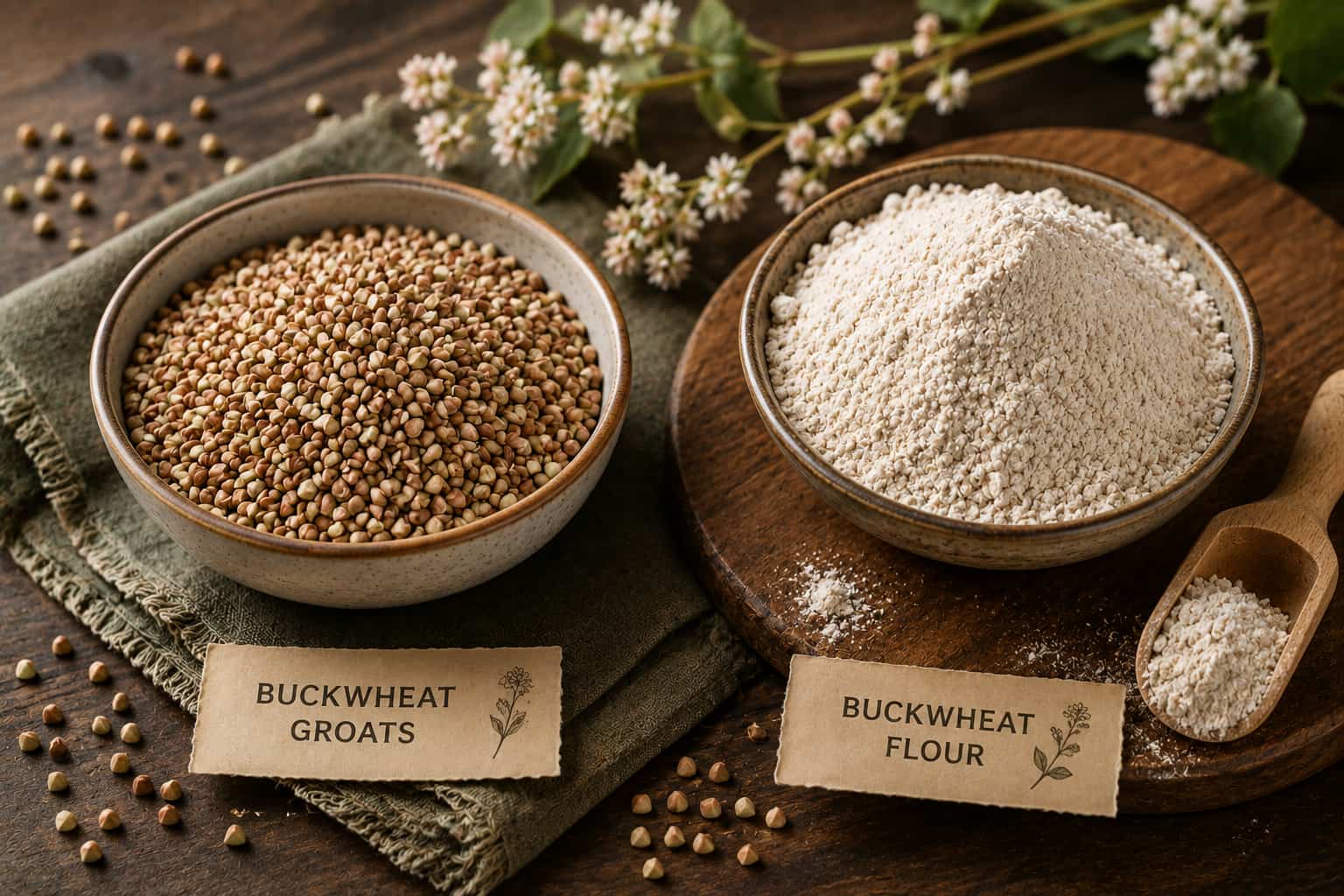
Per 100g cooked, approx.: 3.4g protein, 2.7g fibre, rich in rutin, a polyphenol studied for vascular health. Worth knowing: despite the name, buckwheat isn't related to wheat and contains no gluten. It's not traditionally grown in Sri Lanka and has no established Sinhala name. Its rutin content is one of the more distinctive polyphenol profiles among pseudocereals, with research interest in its effects on blood vessel health.
Quick reference
| Grain | Protein (per 100g cooked) | Standout Nutrient |
|---|---|---|
| Rice, red/brown (හාල්) | 2.5g | Magnesium, B vitamins |
| Wheat, whole (තිරිඟු) | 5g | Fibre |
| Corn/Maize (බඩ ඉරිඟු) | 3–4g | Lutein, zeaxanthin |
| Finger Millet (කුරක්කන්) | 3–4g | Calcium |
| Oats (ඕට්ස්) | 2.5g | Beta-glucan |
| Barley (බාර්ලි) | 3.5g | Beta-glucan |
| Rye (රයි) | 3.5g | Fibre |
| Sorghum (සෝගම්/ඉදල් ඉරිඟු) | 3–4g | Antioxidants |
| Quinoa (කීනුවා) | 4.4g | Complete protein |
| Buckwheat | 3.4g | Rutin |
Practical notes for cooking and eating grains
- →Read past the word "wheat" — bread labelled "wheat bread" isn't necessarily whole grain; look for "100% whole wheat" or "whole grain" specifically as the first ingredient
- →Swap gradually — replacing white rice with red or brown rice, even partially (mixing the two), is an easier long-term habit than switching all at once
- →Rinse and soak where relevant — brown rice, barley, and whole wheat berries benefit from a short soak to reduce cooking time and improve texture
- →Store whole grains properly — because the germ contains natural oils, whole grains (especially whole wheat flour and oats) can turn rancid faster than refined ones; keep them cool, dry, and use within a reasonable timeframe
- →Rotate grain families, not just rice type — millet, barley, and oats each bring a different micronutrient and fibre profile from rice or wheat; variety matters more than finding one "best" grain
Grains are the foundation of most meals, and the shift from refined to whole forms is one of the highest-leverage changes available in a longevity-focused diet. If you'd like to know where your current diet and metabolic markers stand before making changes, our Longevity Doctors offer a free longevity assessment as a starting point. If you found this useful, you may also want to read our guide to legumes — the other major plant-based staple worth rotating through your week.
Curious where your own
nutrition stands today?
Take the free Aevum Protocol assessment to see how your nutrition & metabolism and 6 other longevity domains are performing — and get a personalised 90-day plan.
Take the Free Assessment →