Cardiovascular & Metabolic Health
Lowering LDL Cholesterol:
A Practical Guide to Diet, Lifestyle and Medicines
LDL cholesterol is a direct cause of atherosclerosis, and the lower it is, and the earlier it's lowered, the lower the risk of heart attack and stroke. Diet can make a bigger difference than many people expect. In a well-known trial, a "portfolio" diet combining plant sterols, soy protein, soluble fibre and almonds lowered LDL by 28.6% in a month, almost as much as a starter statin (30.9%). Cutting saturated fat reduced cardiovascular events by 17% in a review of 15 trials. This matters in Sri Lanka, where coconut oil is the main cooking fat: coconut oil raised LDL by about 10 mg/dL compared with other vegetable oils. For people at high risk, medicines are usually needed, and newer treatments can lower LDL to very low levels safely. This guide explains how much each change achieves and how to combine them.
Key numbers
| Finding | Detail |
|---|---|
| Portfolio diet vs statin (46 adults with high cholesterol, 1 month) | LDL lowered by 28.6% with the diet, 30.9% with lovastatin and 8.0% with a low-fat control diet |
| Reducing saturated fat (15 trials, 56,675 people) | 17% fewer cardiovascular events |
| Coconut oil vs non-tropical vegetable oils (16 trials) | LDL 10.47 mg/dL higher with coconut oil |
| Plant sterols about 2 g a day | LDL lowered by about 8-10% |
| PCSK9 inhibitor added to a statin (FOURIER, 27,564 people) | LDL lowered from a median of 92 to 30 mg/dL, with fewer cardiovascular events |
Why lower LDL, and how low?
Plaque builds up in proportion to how much LDL, and other ApoB-containing particles, your arteries are exposed to over time (see How Atherosclerosis Develops). Each 1 mmol/L (39 mg/dL) reduction in LDL cuts major vascular events by about a fifth (see Statins: What the Evidence Shows About Benefits and Side Effects). Your target depends on your overall risk: under 116 mg/dL (3.0 mmol/L) at low risk, down to under 55 mg/dL (1.4 mmol/L) for people at very high risk, such as those with heart disease (see LDL, ApoB and Lipoprotein(a)).
What the evidence shows
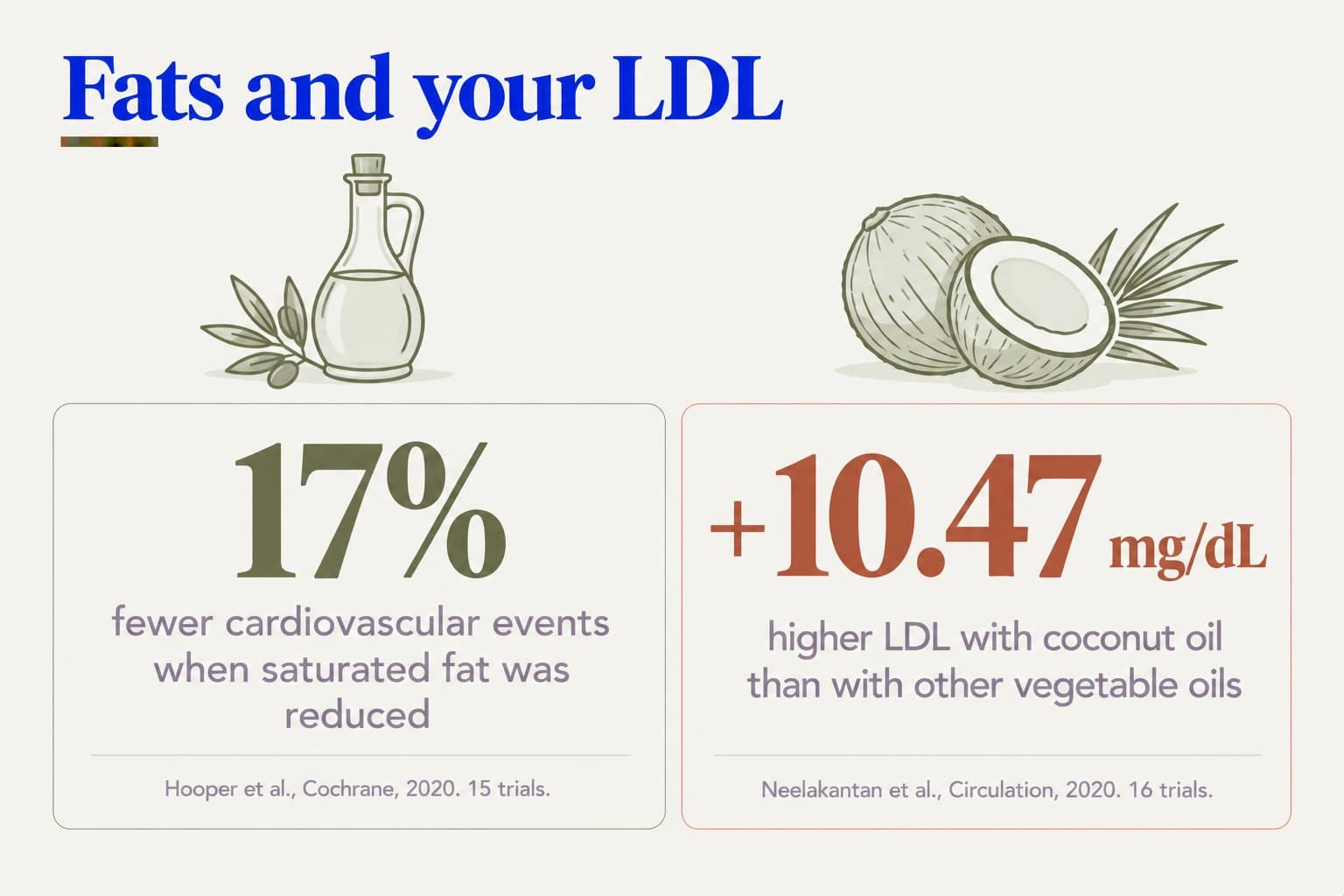
Replace saturated fat with unsaturated fats. Saturated fat raises LDL more than any other part of the diet. A 2020 Cochrane review of 15 trials with 56,675 people found that reducing saturated fat lowered the risk of cardiovascular events by 17%, with the greatest benefit when it was replaced with polyunsaturated fats. About 56 people needed to cut their saturated fat for around four years for one to avoid a cardiovascular event.
Main sources of saturated fat include fatty and processed meats, butter, ghee, full-fat dairy, palm oil and coconut oil.
Coconut oil: an important issue in Sri Lanka. Coconut oil and coconut milk are central to Sri Lankan cooking, but coconut oil is about 90% saturated fat. A 2020 meta-analysis of 16 trials found that coconut oil raised LDL cholesterol by 10.47 mg/dL compared with non-tropical vegetable oils such as olive, sunflower, soybean and canola oil. It also raised HDL, but raising HDL isn't protective in itself. The practical message is to use less coconut oil for cooking, and to use it alongside or swap it for vegetable oils, rather than cutting coconut out entirely.
Build a "portfolio" of cholesterol-lowering foods. Several foods lower LDL through different mechanisms, and their effects add up:
- Soluble (viscous) fibre: oats, barley, pulses, aubergine, okra and psyllium bind cholesterol in the gut.
- Plant sterols and stanols: about 2 g a day, from fortified foods, lowers LDL by about 8-10% (see Heart Health Supplements).
- Soy protein: tofu, soy milk and soybeans.
- Nuts: a handful of almonds or other nuts a day.
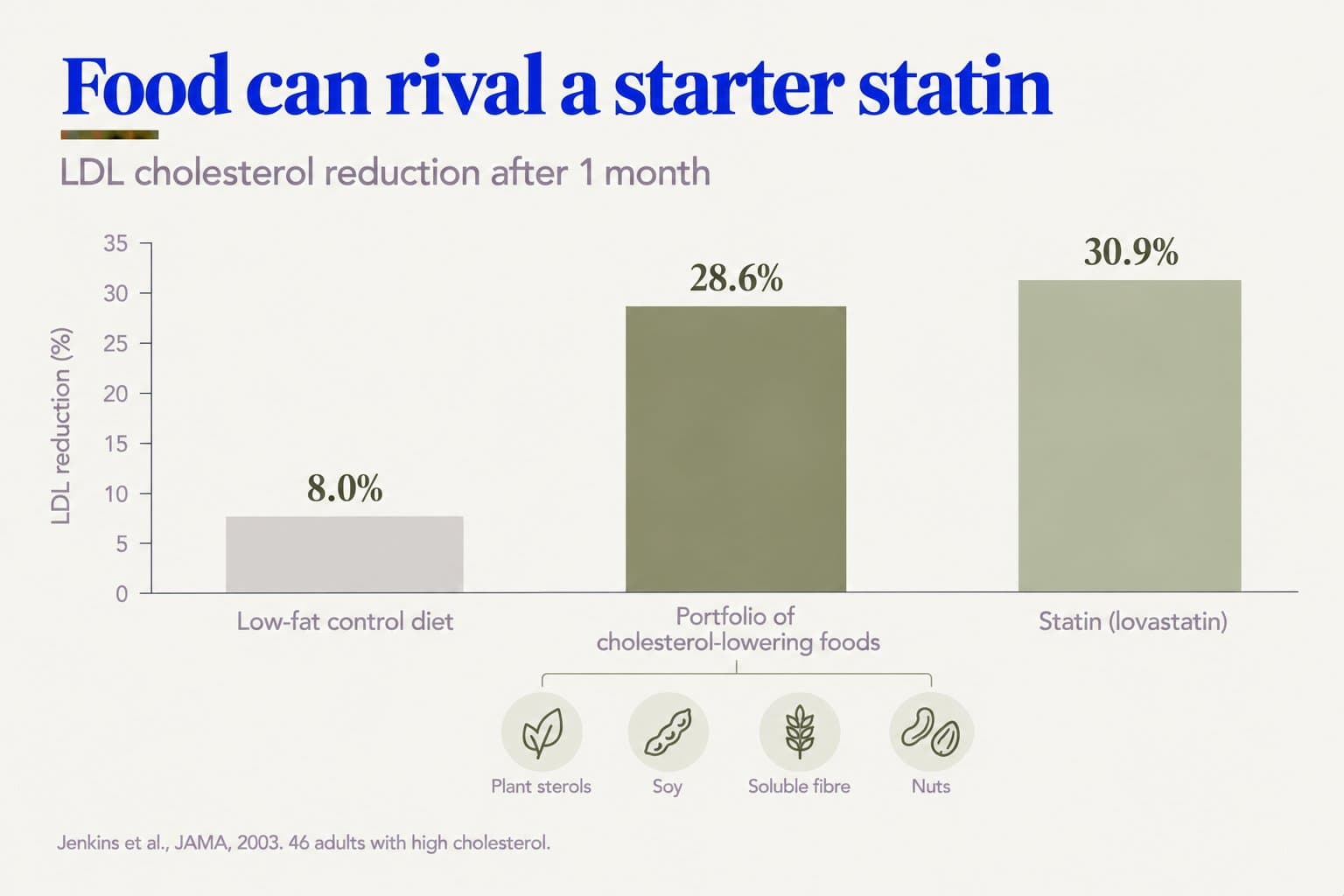
In a 2003 trial, 46 adults with high cholesterol ate each of three diets for a month: a low-saturated-fat control diet, the same diet with lovastatin, or a portfolio diet including these four foods. LDL fell by 8.0% on the control diet, 30.9% with the statin and 28.6% with the portfolio diet, with no significant difference between the statin and portfolio diets. In real life, sticking to such a diet is harder, and reductions are usually smaller, but the principle holds.
Other lifestyle factors.
- Weight loss lowers LDL modestly and improves triglycerides and HDL.
- Regular exercise has a small effect on LDL but improves triglycerides, HDL and overall cardiovascular risk.
- Cutting refined carbohydrates and sugar mainly lowers triglycerides and ApoB-containing remnant particles, particularly in people with insulin resistance (see Insulin Resistance).
- Not smoking protects arteries from damage.
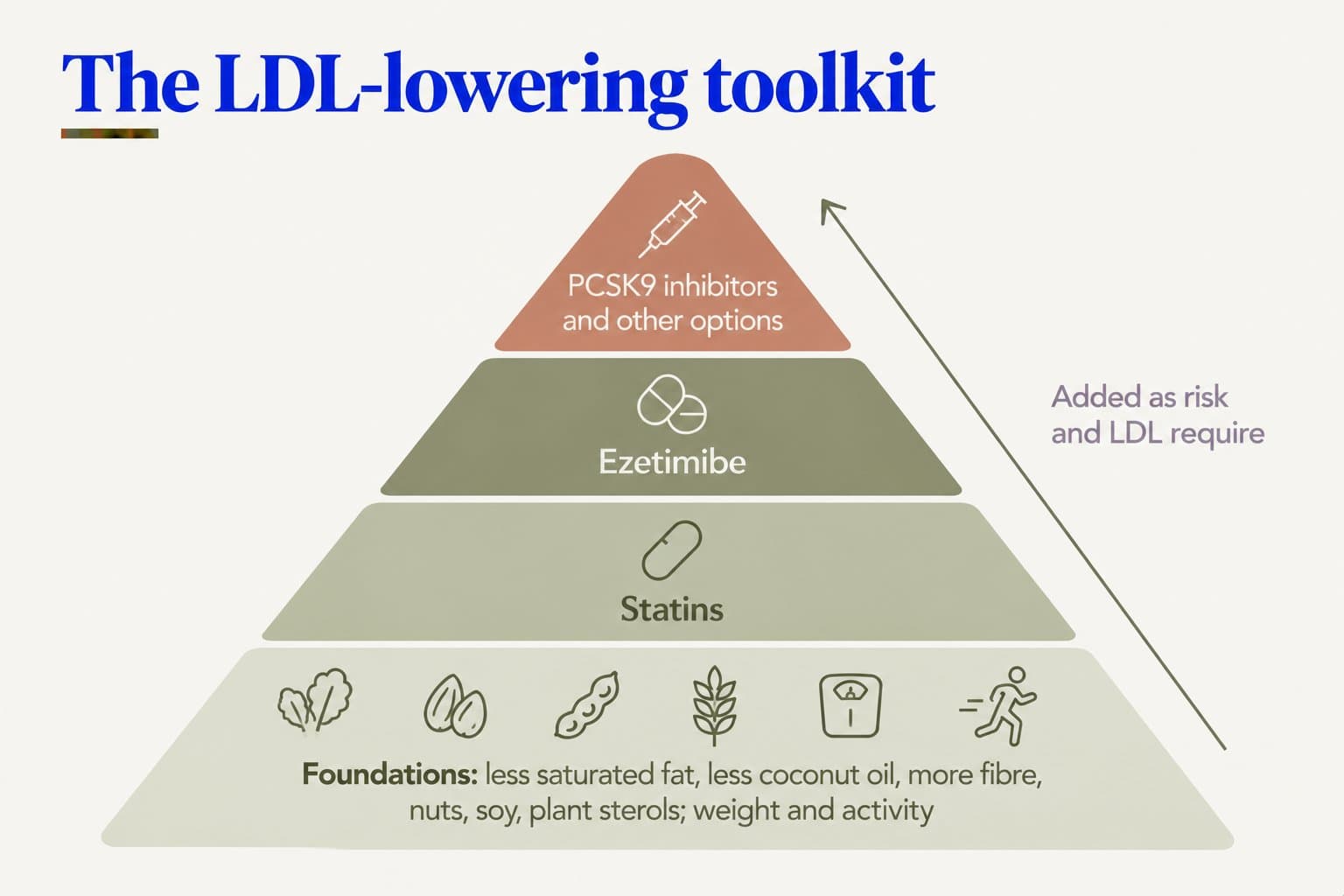
When medicines are needed. Diet alone rarely lowers LDL by more than 10-25% in everyday life, and inherited high cholesterol, high lipoprotein(a) or high overall risk often need medicines too.
- Statins are the first choice, lowering LDL by about 30% to over 50% depending on the dose.
- Ezetimibe reduces cholesterol absorption and is often added to a statin.
- PCSK9 inhibitors, given by injection, lower LDL dramatically. In the FOURIER trial of 27,564 people with heart disease on statins, evolocumab lowered LDL from a median of 92 to 30 mg/dL and reduced cardiovascular events, with no safety concerns at these very low levels.
- Other options, such as bempedoic acid and inclisiran, are available for some people, particularly those who can't tolerate statins.
Recommendations by scenario
| Scenario | What to prioritise |
|---|---|
| Borderline high LDL, low overall risk | Diet first: cut saturated fat, reduce coconut oil, add soluble fibre, nuts, pulses and plant sterols; recheck in 3 months |
| High LDL (190 mg/dL, 4.9 mmol/L, or more) | Likely inherited; medicines are usually needed alongside diet; test family members |
| Existing heart disease, stroke or diabetes | A statin, often high intensity, plus diet; aim for the lower targets |
| On a statin but not at target | Improve diet, check you're taking it regularly, then discuss adding ezetimibe or other medicines |
| Can't tolerate statins | Try a different statin or dose first; alternatives include ezetimibe, bempedoic acid or PCSK9 inhibitors |
| Cook mainly with coconut oil | Use less, and swap part or all for vegetable oils such as sunflower, soybean, canola or olive oil |
| High triglycerides as well | Cut sugar, refined carbohydrates and alcohol, lose weight and exercise; check ApoB |
Practical notes
LDL cholesterol can be lowered substantially. Diet changes, especially cutting saturated fat, using less coconut oil, and eating more soluble fibre, nuts, soy and plant sterols, can lower LDL by 10-25% or more. For people with high LDL or high risk, medicines such as statins are safe and highly effective, and newer options allow very low LDL levels when needed. Lowering LDL early and keeping it low over the years gives the greatest protection.
- Jenkins DJA, et al. Effects of a dietary portfolio of cholesterol-lowering foods vs lovastatin on serum lipids and C-reactive protein. JAMA, 2003;290(4):502-510.
- Hooper L, et al. Reduction in saturated fat intake for cardiovascular disease. Cochrane Database of Systematic Reviews, 2020;(5):CD011737.
- Neelakantan N, et al. The effect of coconut oil consumption on cardiovascular risk factors: a systematic review and meta-analysis of clinical trials. Circulation, 2020;141(10):803-814.
- Sabatine MS, et al. Evolocumab and clinical outcomes in patients with cardiovascular disease (FOURIER). New England Journal of Medicine, 2017;376(18):1713-1722.
- Cleveland Clinic. Phytosterols (sterols and stanols).
Free longevity assessment
Do you know your LDL,
and the target that's right for you?
Take the free Aevum Protocol assessment to see how your cardiovascular & metabolic health and 6 other longevity domains are performing — and get a personalised 90-day plan.
Take the free assessmentKeep reading
Related articles
Cardiovascular & Metabolic Health
LDL, ApoB and Lipoprotein(a): Understanding Cholesterol Beyond the Basic Test
Cardiovascular & Metabolic Health
Statins: What the Evidence Shows About Benefits and Side Effects
Cardiovascular & Metabolic Health